Marina do Engenho, Brazil · February 2019
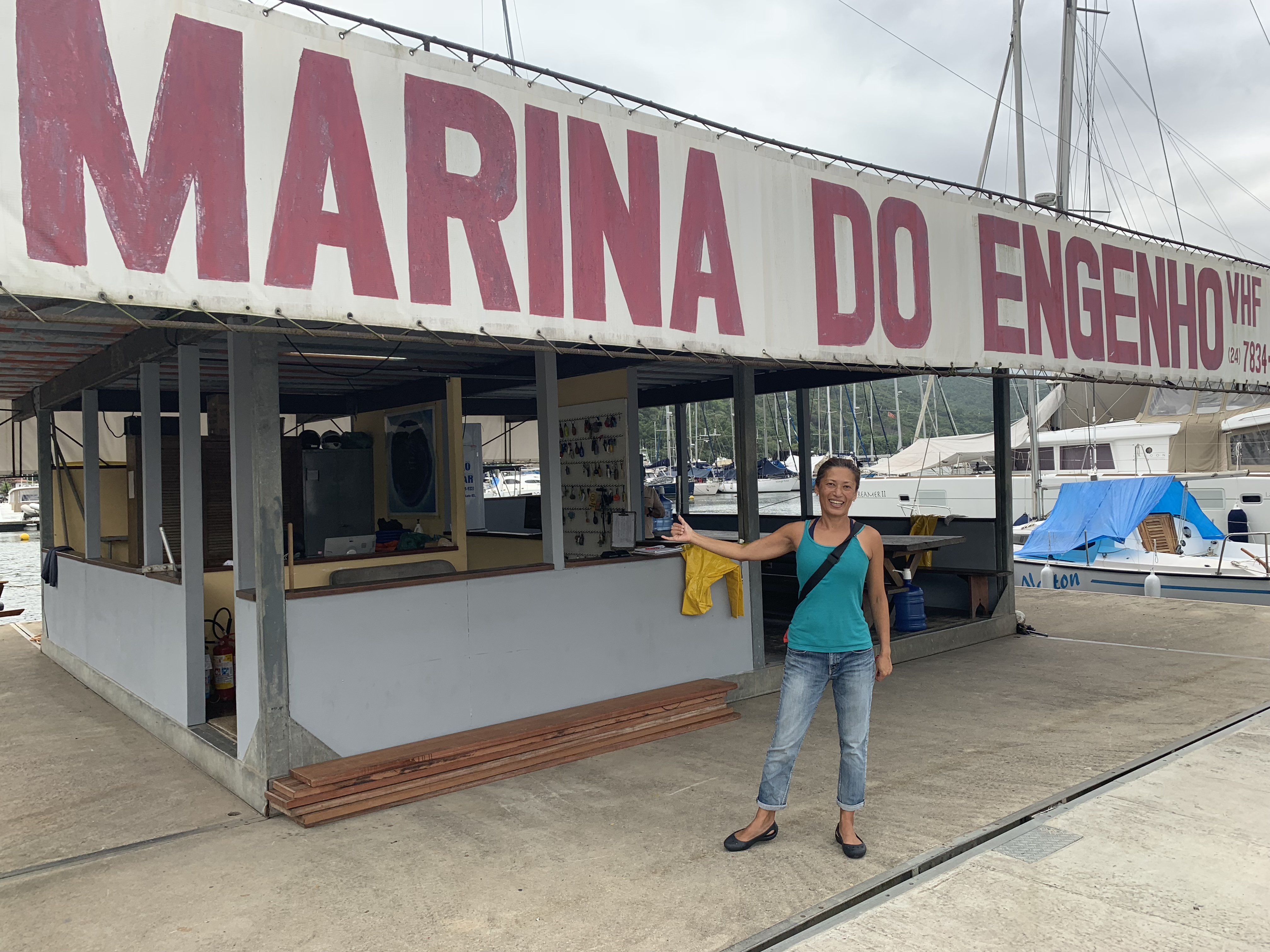
There are encounters you don't plan for — the ones you almost stumble into on an ordinary errand — that stay with you long after the anchor is up. Marina do Engenho was one of those.
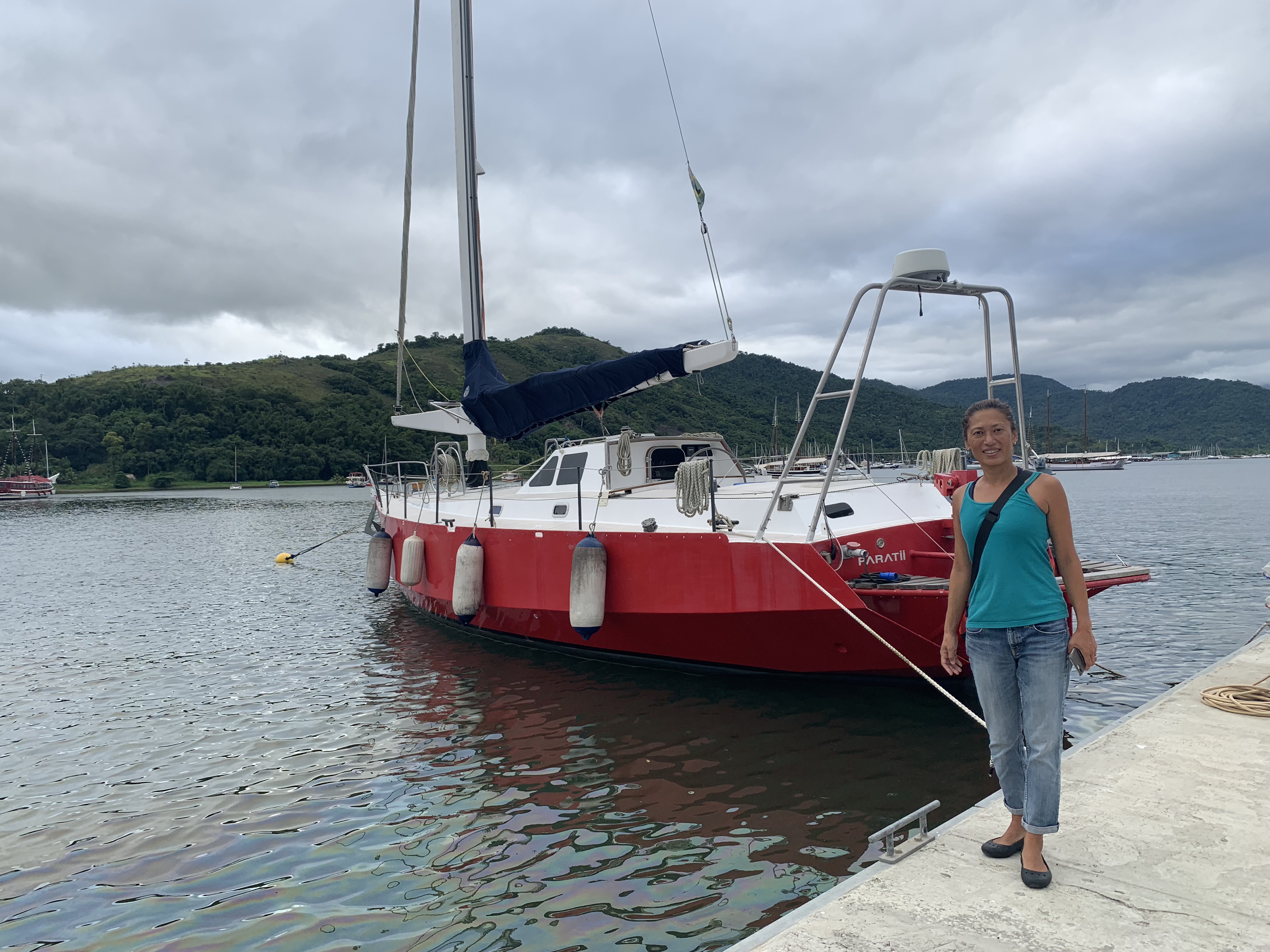
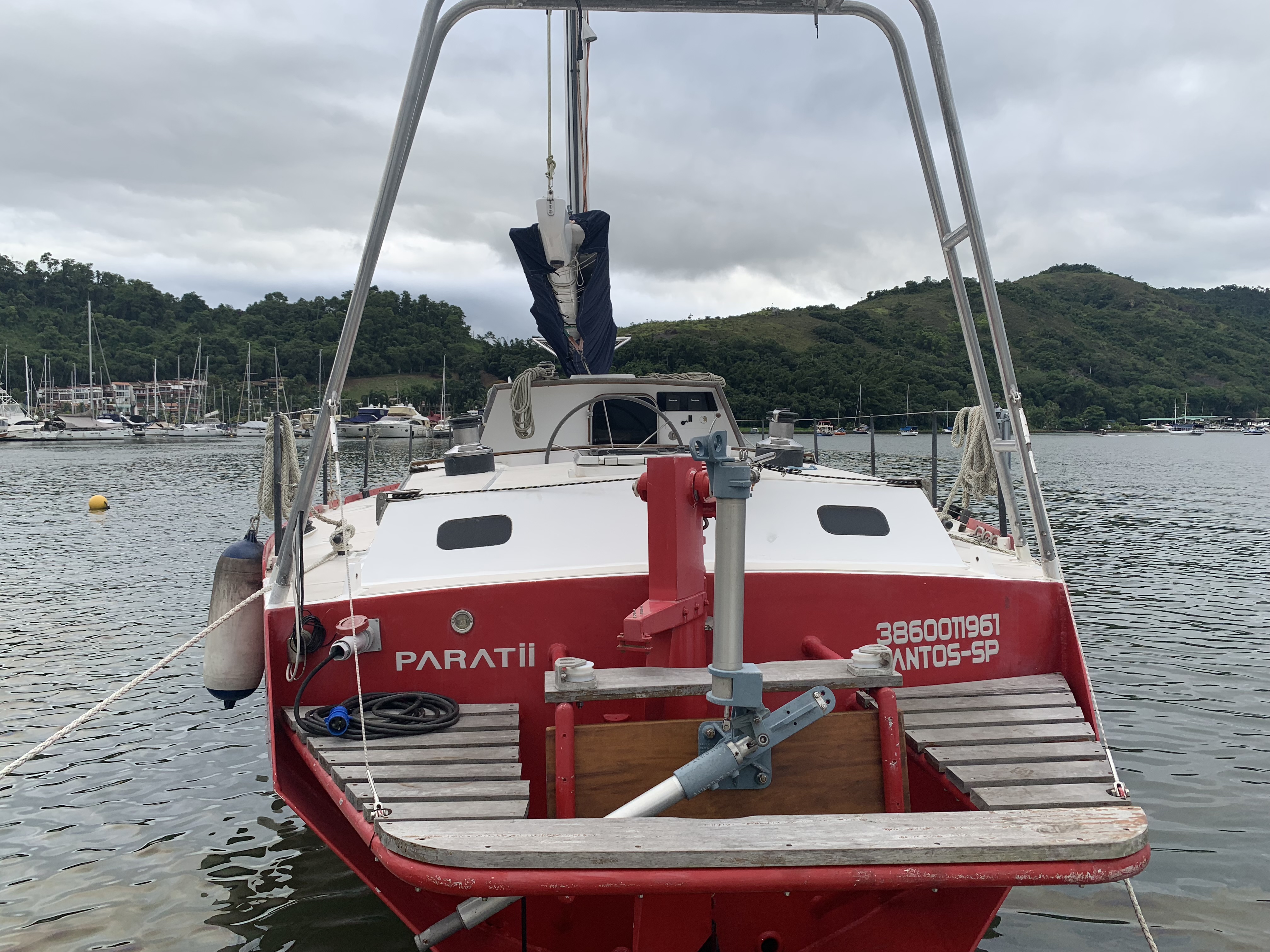
We had come by dinghy from Oroboro, a quick trip to check the ship chandler. Nothing on the agenda but hardware. Then, moored quietly among the white fibreglass boats, we spotted a red hull. Unmistakable. Slightly out of place in the best possible way.
It was Paratii — Amyr Klink's boat.
Who is Amyr Klink?
If you sail, you already know the name. If you don't, here is why it matters.
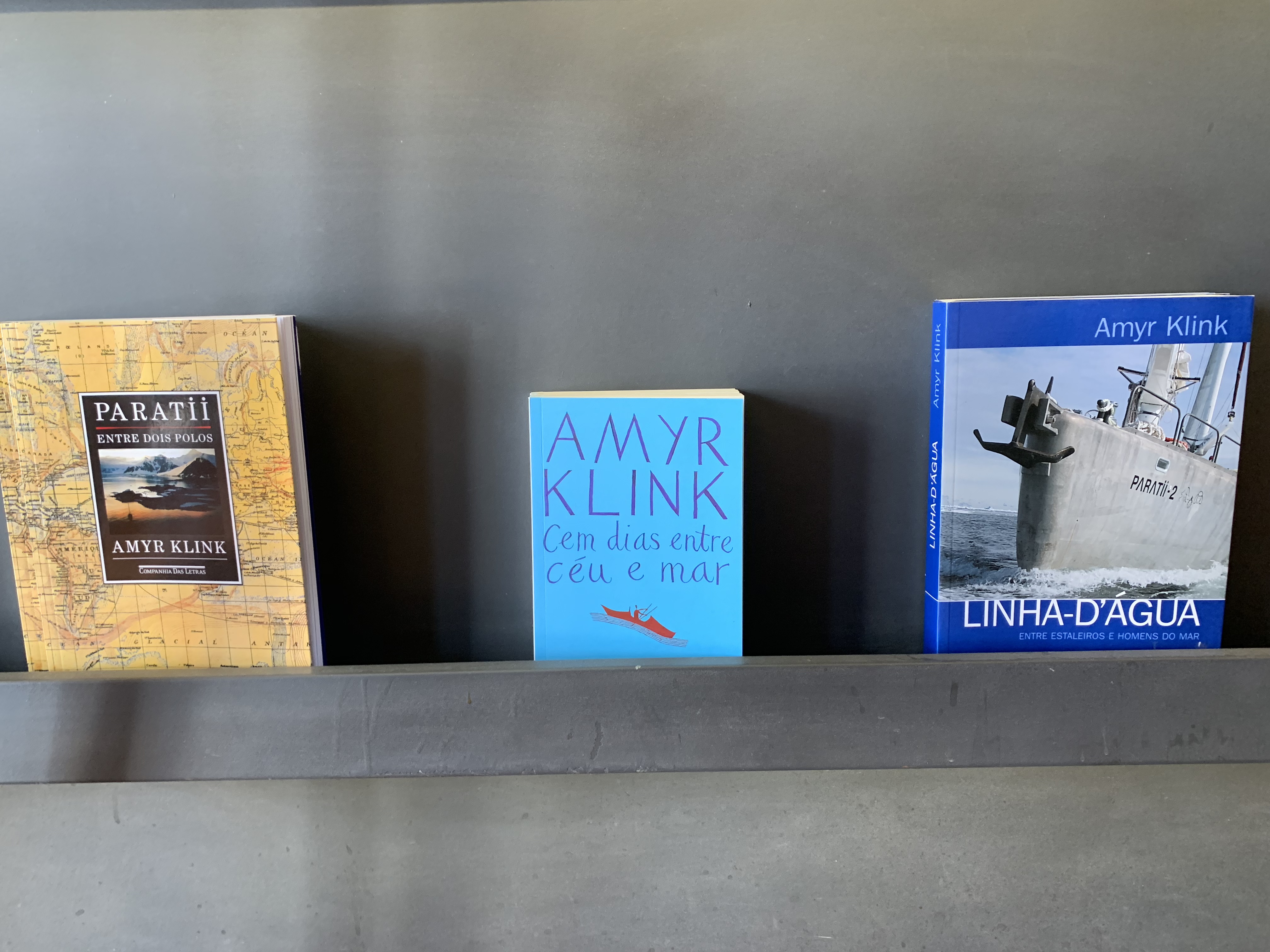
Amyr Klink is a Brazilian sailor and explorer who has made a career out of doing things other people consider impossible, and then writing about them so well that you feel you were there. In 1984, he rowed solo across the South Atlantic — from Dakar to Bahia. Not sailed. Rowed. One hundred days alone at sea in a small open boat, 7,400 kilometres of open ocean. His account of that crossing, Cem dias entre céu e mar (A Hundred Days Between Sky and Sea), became one of the most celebrated books in Brazilian literature. It still is.
He didn't stop there. He went to Antarctica, froze his boat into the pack ice intentionally, and wintered at 70° south — alone, in the dark, for months. He wrote about that too, in Paratií — Entre Dois Polos. He has crossed oceans most people only ever see on a map, in conditions most sailors would turn back from. And through it all he has maintained a quality rare among the genuinely accomplished: a complete absence of self-importance.
The encounter
We introduced ourselves dockside, half expecting the polite brush-off that a famous person at rest is entitled to give. What we got instead was warmth, curiosity, and an invitation to look around the boat. He talked about Paratii with the quiet pride of someone who built something with a purpose — not to show it off, but to go somewhere in it. He asked about Oroboro, about our crossing from Cape Town, about where we were headed. The conversation was easy and unhurried, the way conversations at sea tend to be when nobody has anywhere they absolutely have to be.
We came back the next morning with his books and asked him to sign them. He did, without hesitation, and with a few words that I won't share here because they were meant for us. We left feeling the way you sometimes feel after meeting someone who has actually done what they set out to do: a little humbled, and a little more convinced that it's worth trying.
Brazilian sailors
Marina do Engenho gave us something else that day. A fellow sailor on the dock noticed we were struggling with the shore power connection — our plug didn't match the Brazilian standard. He disappeared without a word, came back twenty minutes later with the right adapter, and insisted on fitting it himself. No fuss, no expectation of anything in return. Just a sailor solving a problem for another sailor.
This, we came to understand over our months along the Brazilian coast, is simply how things work here. The sailing community is generous, resourceful, and genuinely pleased to help. We were never made to feel like outsiders. People showed up with spare parts, with local knowledge, with an invitation to dinner. The warmth of Brazilian sailors matches the climate, and their seamanship matches the demanding conditions of this coast — strong currents, unpredictable squalls, a coastline that rewards those who know it and punishes those who don't.
Amyr Klink is perhaps the most famous expression of that tradition. But meeting him made clear that he is not an exception — he is the best version of something that exists throughout the culture. A country that produces sailors like him, and dock neighbours like ours, is doing something right.