Azores, Portugal, June 2021
Some landfalls you forget by the next passage. Horta is not one of them.
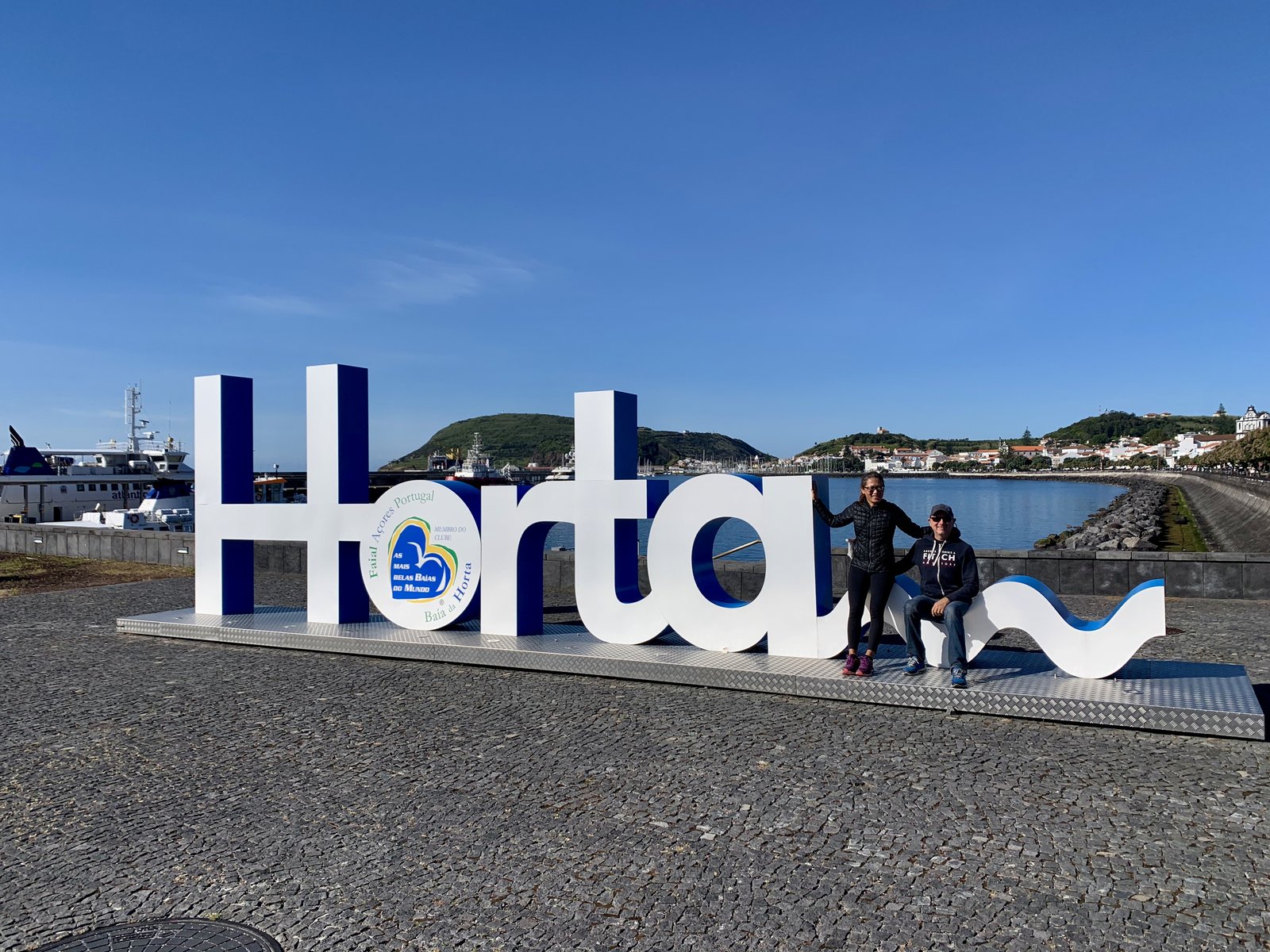
Arriving in Horta, Faial — the landfall every Atlantic sailor dreams about.
We arrived in the middle of the night, salt-crusted and wide-eyed after the storm we told you about in the last post — and out of the darkness came a dinghy. In it: Michael and Jill of S/V Gerty, the "welcome committee" we mentioned back then, holding a bottle of champagne and a SIM card. True sailors know exactly what you need after an ocean: bubbles to celebrate, and internet to find out what the world had done to itself while you were gone. It was COVID time; we hadn't even cleared in yet. We celebrated anyway, right there in the cockpit, and became lifelong friends in the process. Extraordinary human beings.
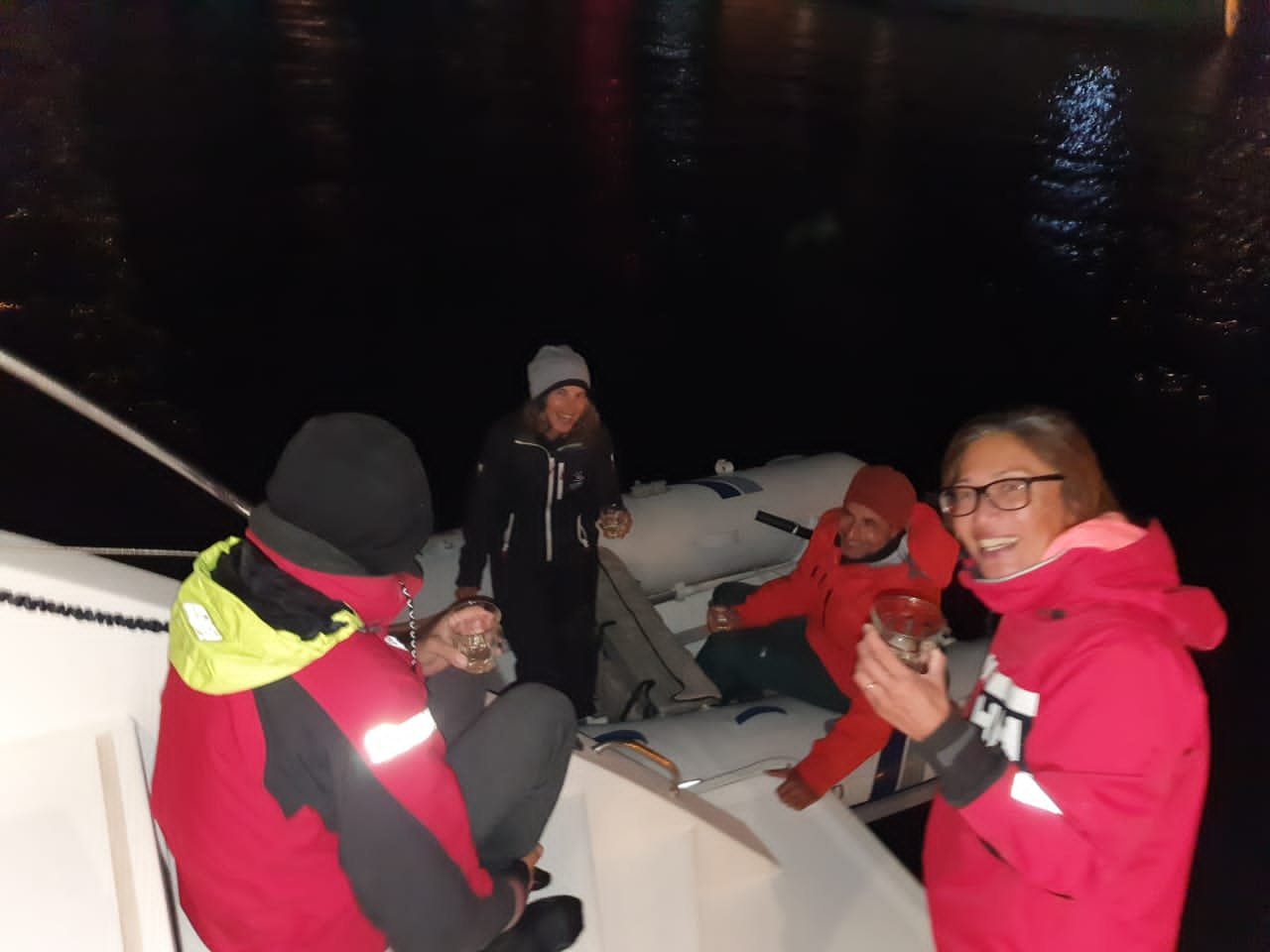
Michael and Jill of S/V Gerty alongside in the dark — champagne, a SIM card, and a lifelong friendship.
Clearing in was its own theater. The next morning an orange dinghy came alongside carrying two figures in full white suits — gloves, hoods, the works — just to check us in.
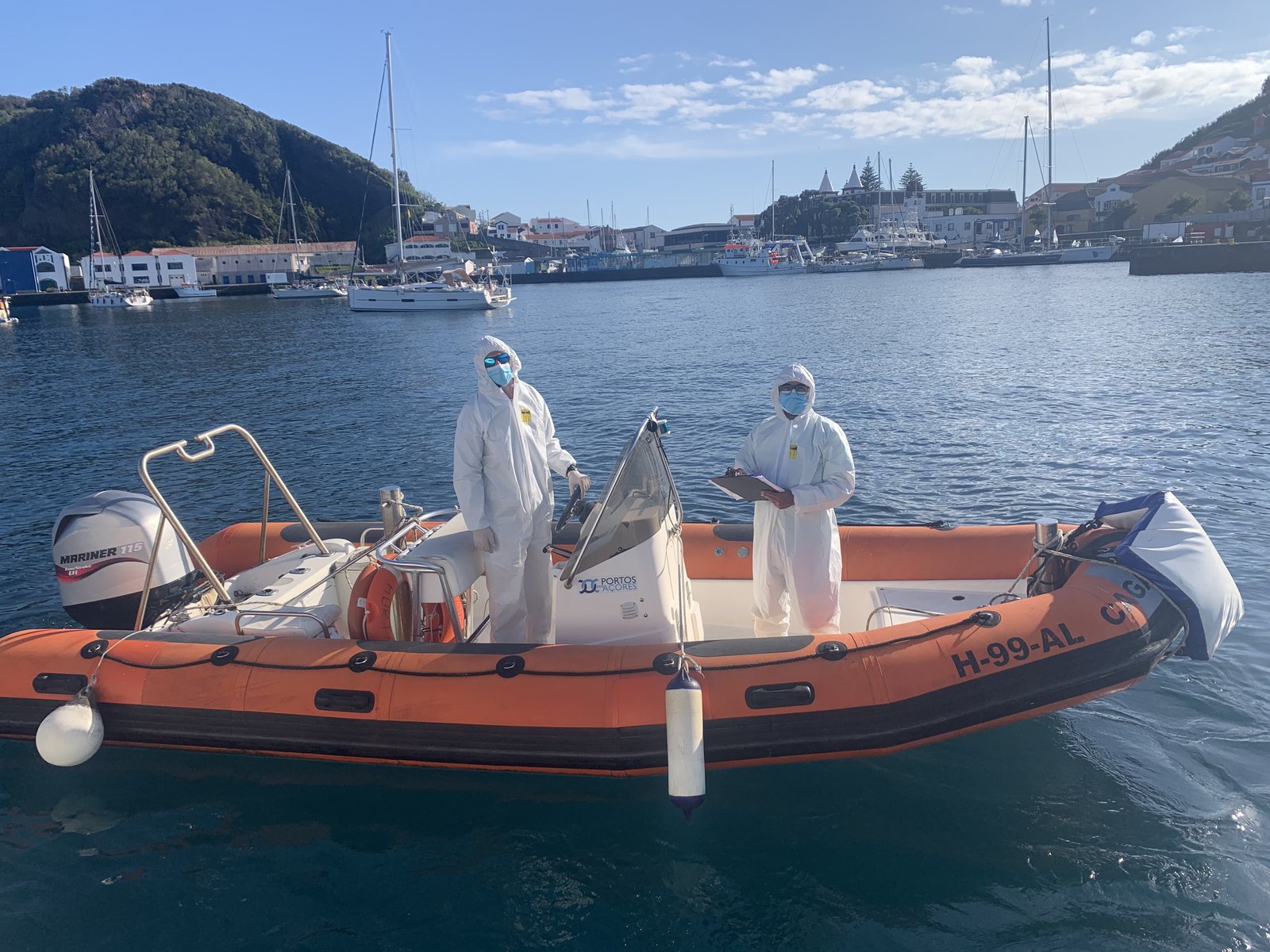
The COVID check-in crew alongside Oroboro — full PPE on an orange dinghy in the Atlantic.
If you've seen E.T., the scene where they tent the house: that was us, at anchor in the Atlantic. The actual tests came later at the hospital in town, where Yuka got swabbed like everyone else. Surreal, all of it. The results came back negative, and the islands were ours.
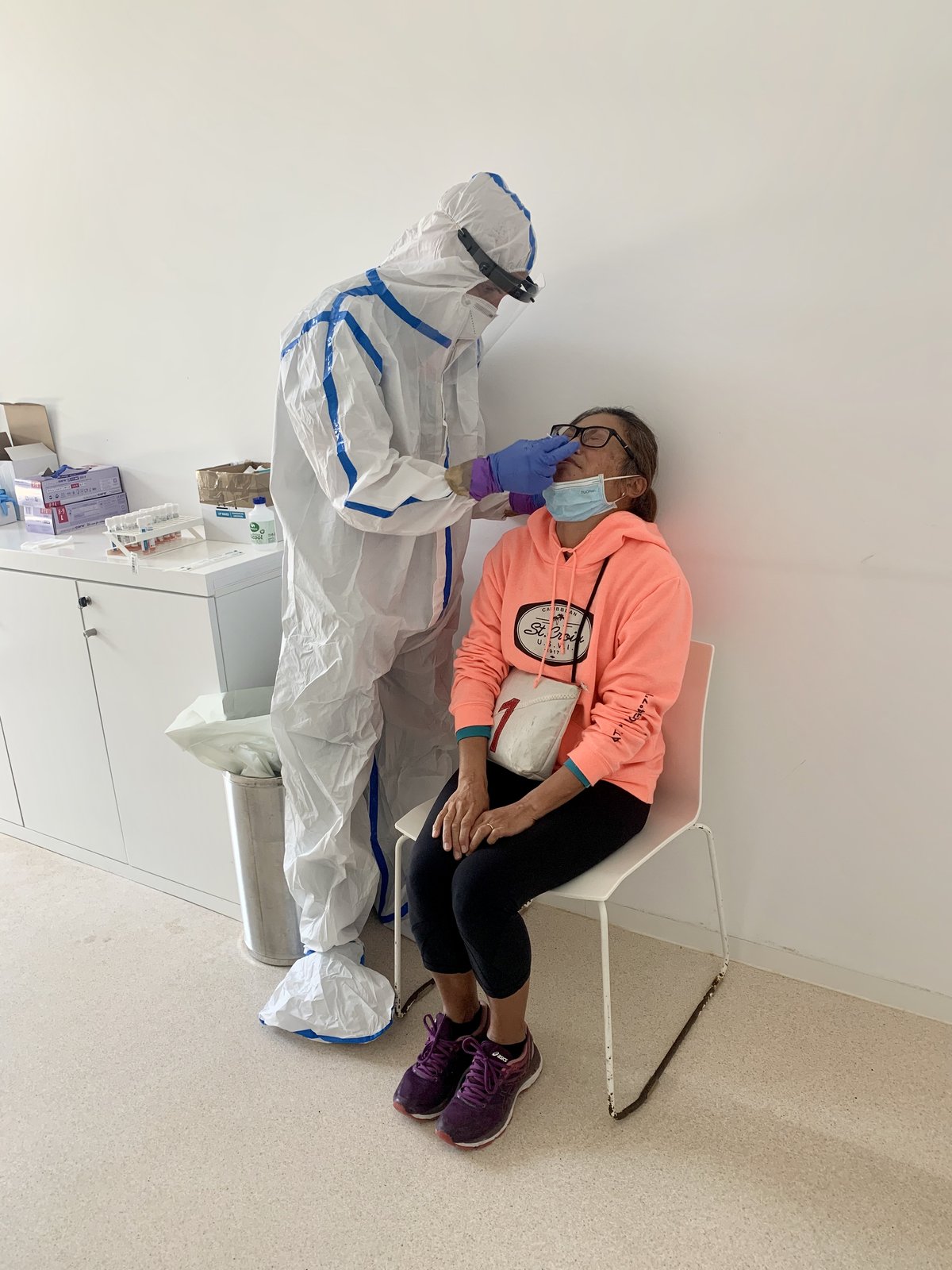
Yuka at the Horta hospital — the COVID PCR test that unlocked the islands.
And what islands. Spring in the Azores is unreasonably beautiful — everything lush and green after two weeks of blue, hydrangeas lining the roads so thick you drive through corridors of them.
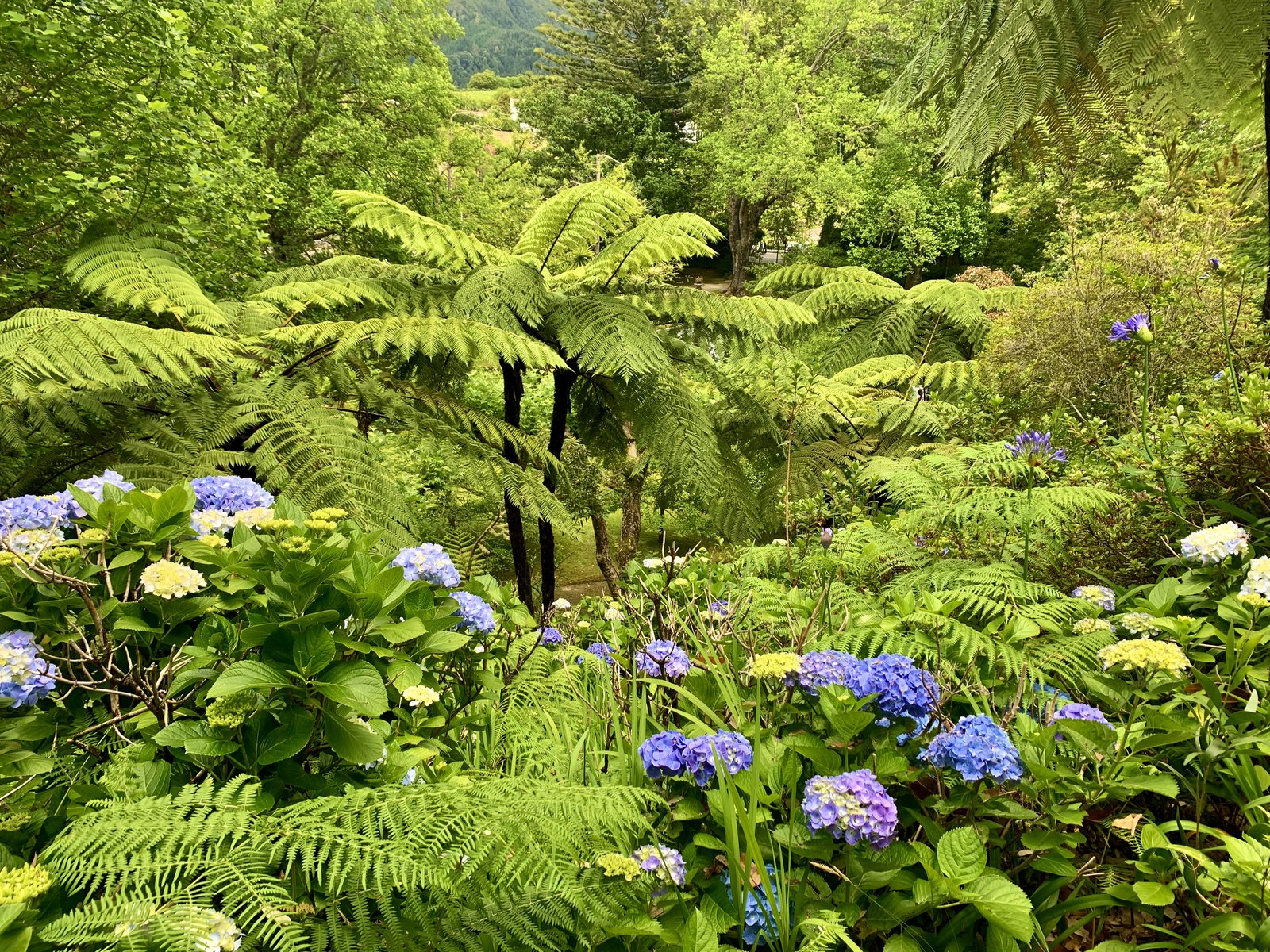
Blue hydrangeas and tree ferns at Furnas — spring in the Azores is corridors of purple and blue.
And the asphalt! Smooth, curving, not a pothole on the archipelago. I have never missed my Ducati more. We roamed by car and ferry instead: up to the Caldeira, and through the vineyards, where generations have built little stone terraces to shelter each vine from the wind.
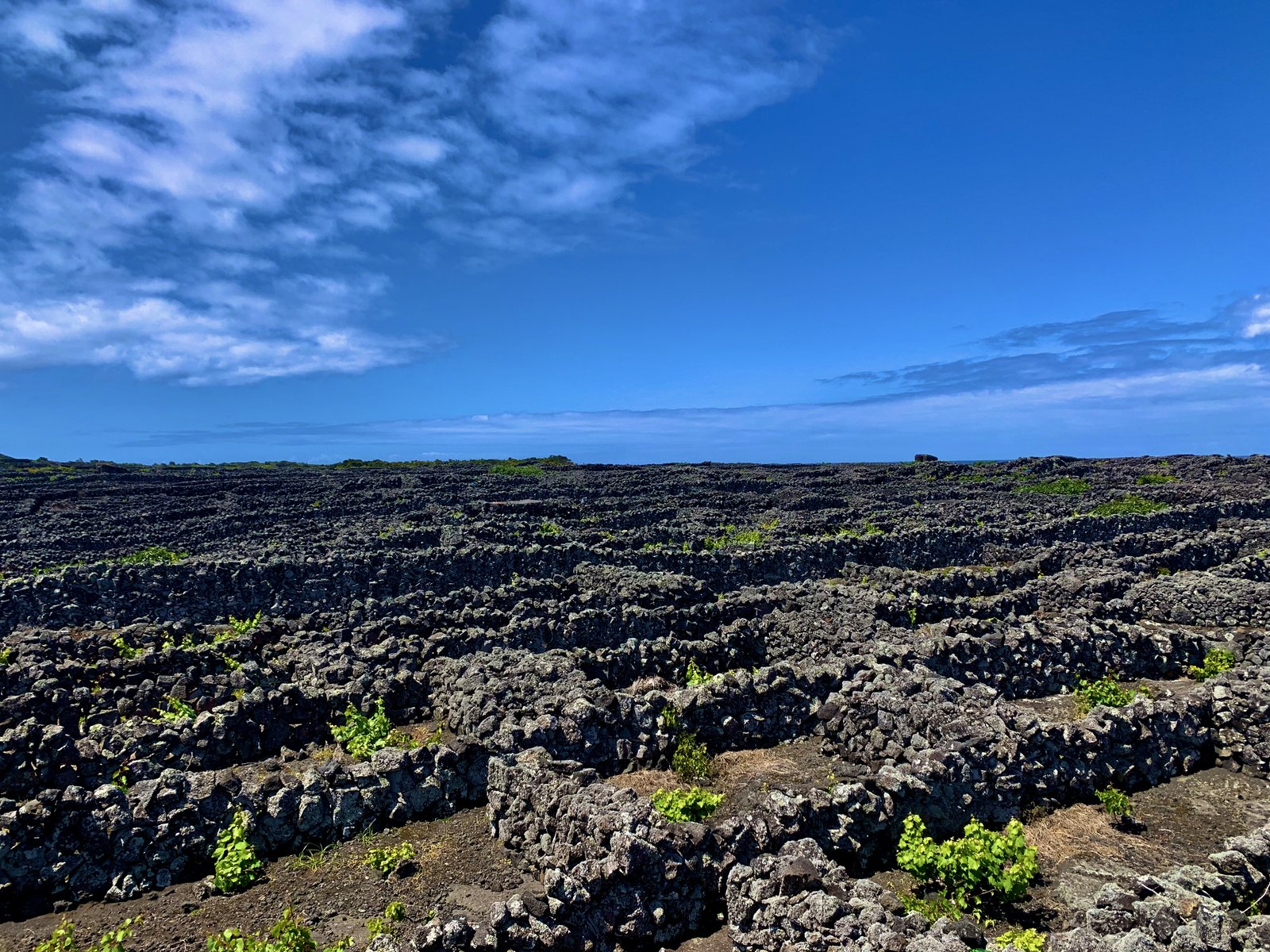
Stone-walled vineyards on Pico — generations of work to shelter each vine from the Atlantic wind.
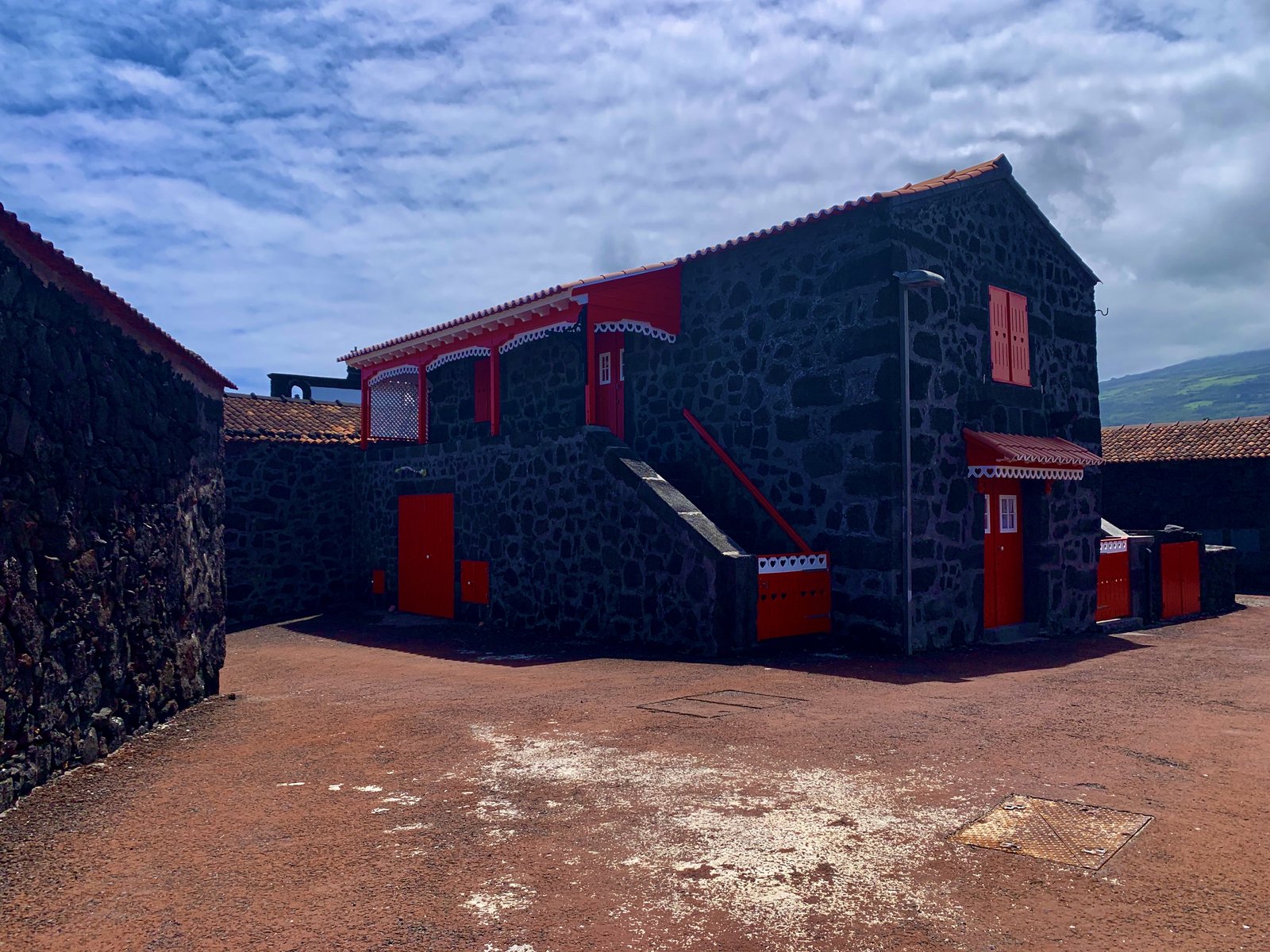
Pico island winery — black lava stone, red doors, not a straight line anywhere.
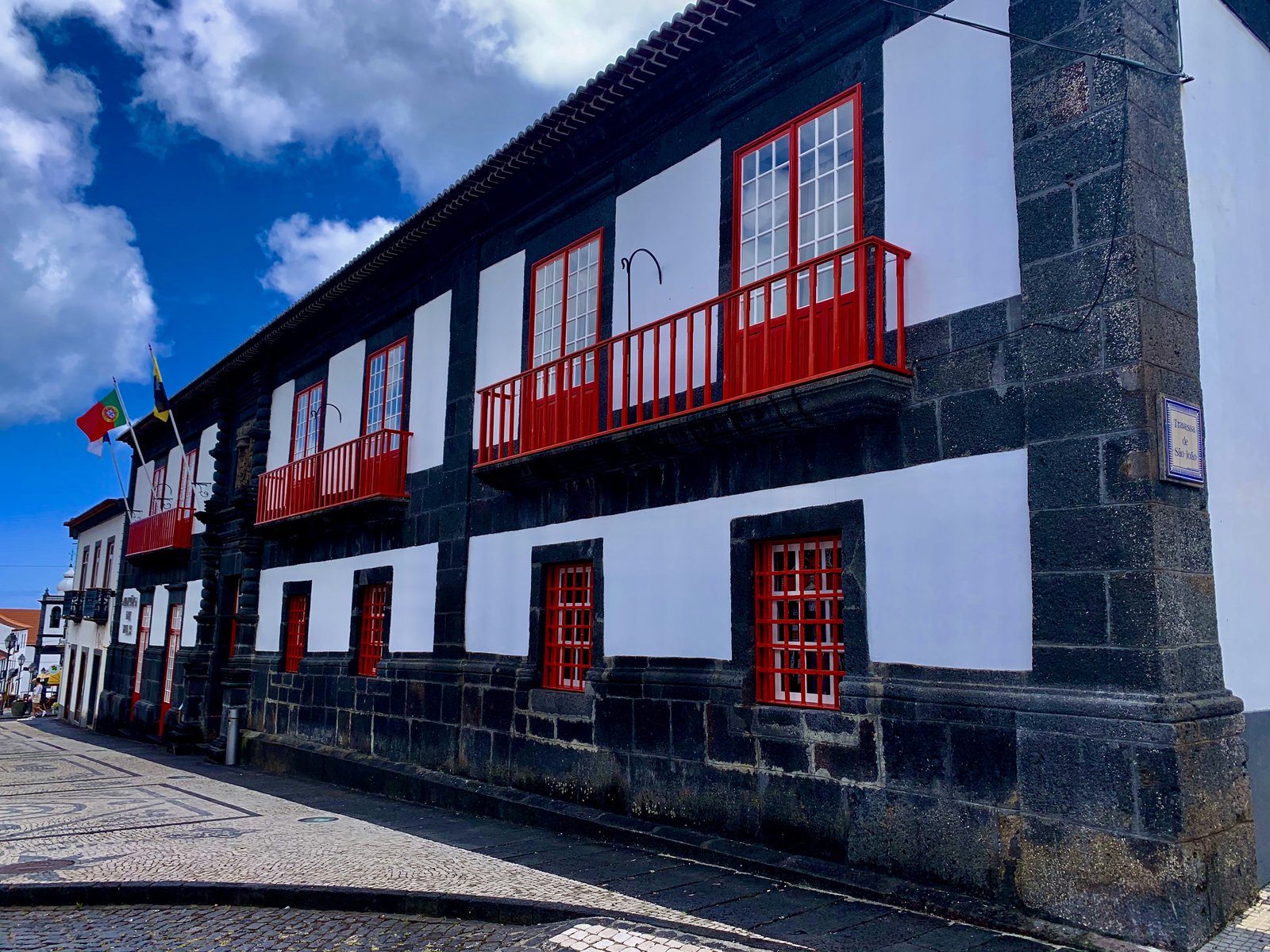
Traditional Azorean architecture — volcanic black stone and red shutters, Pico island.
The wine is amazing. Philippe — the best crew you could wish for on an ocean crossing, and a Frenchman — conducted a rigorous personal survey of every cheese the islands produce and declared himself satisfied.
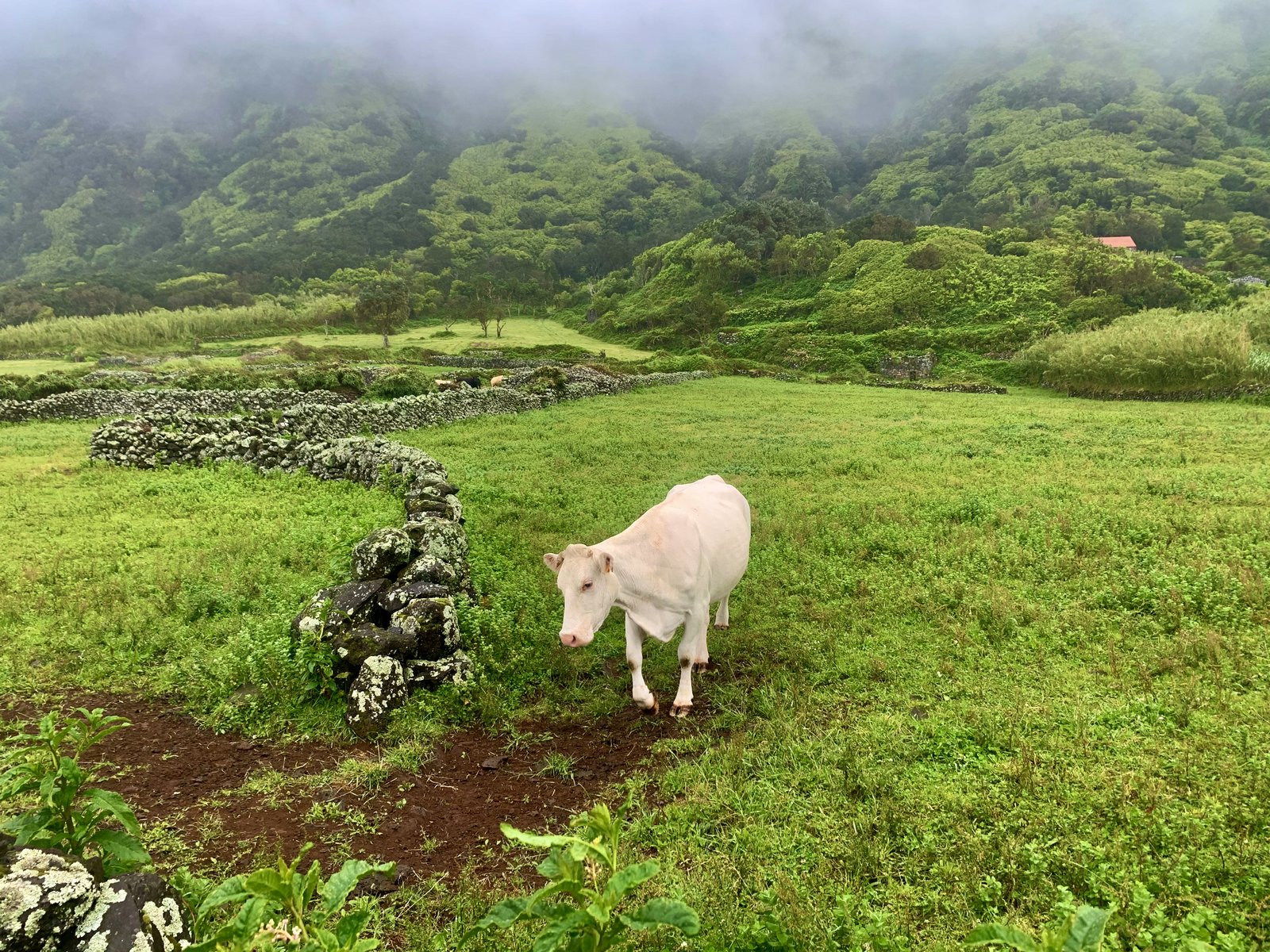
Lush Azorean pasture, stone walls, fog coming down the hills — the reason the cheese is so good.
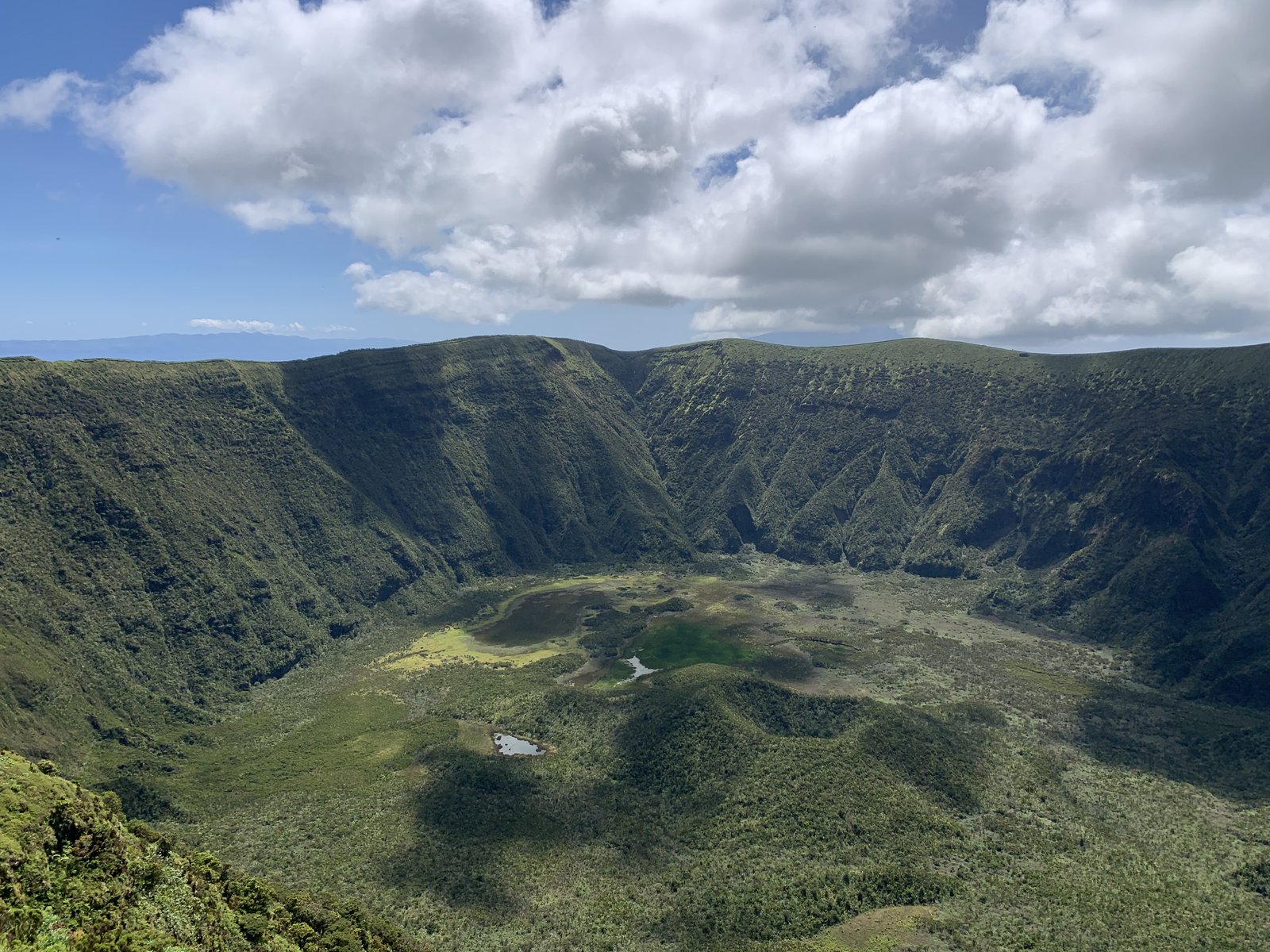
The Caldeira of Faial — a 2km wide volcanic crater, lush jungle dropping straight to the sea.
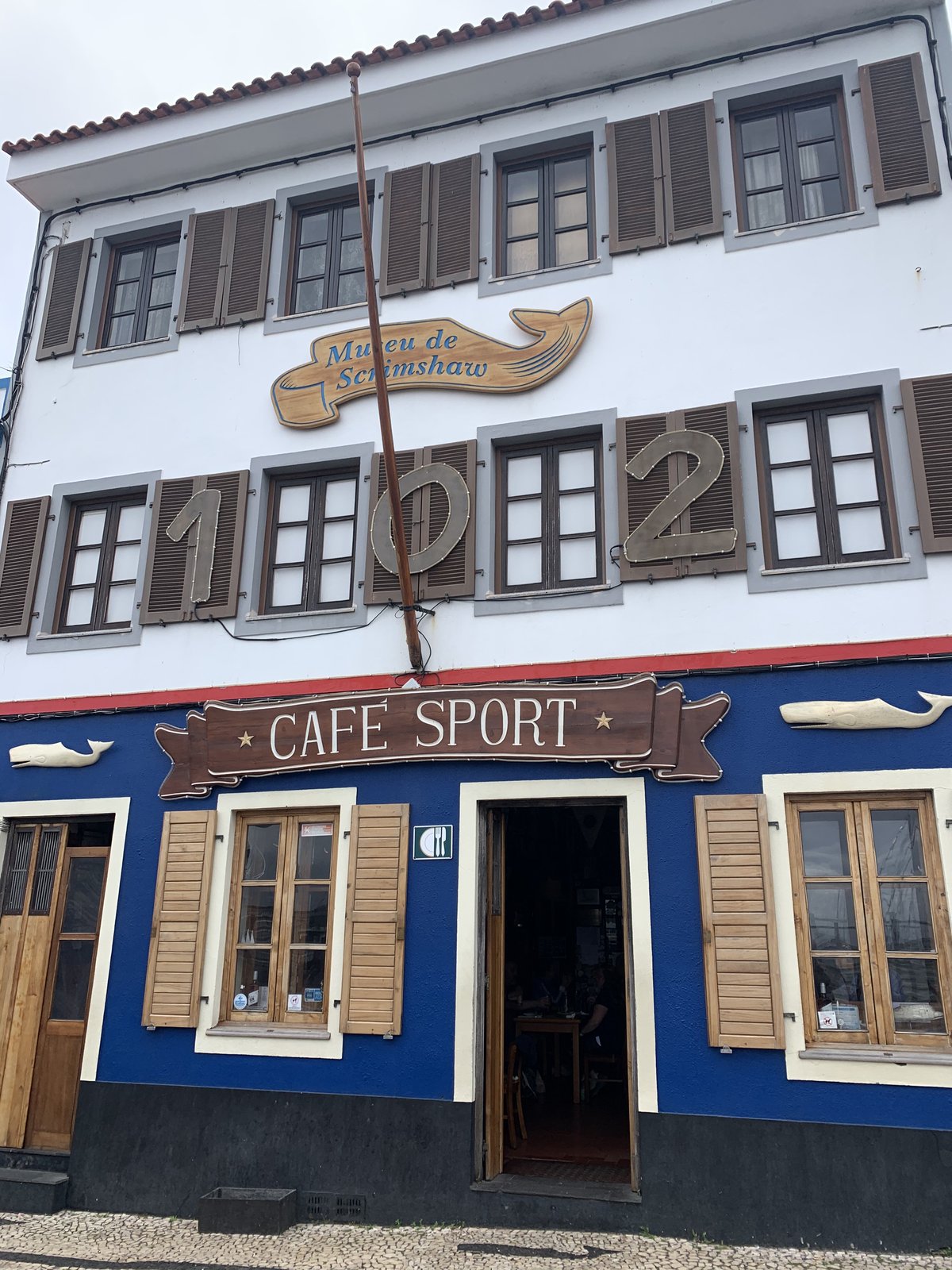
Peter Café Sport in Horta — sailors' landfall tradition since 1918, gin and tonic mandatory.
We did the sacred things too: gin and tonic at Peter Café Sport, and our Oroboro mural painted on the concrete breakwater of Horta marina, in a good spot. Tradition says a crew that doesn't leave a painting collects bad luck; we weren't going to test it. I wonder if it's still there, or if some newer boat has painted over us by now.
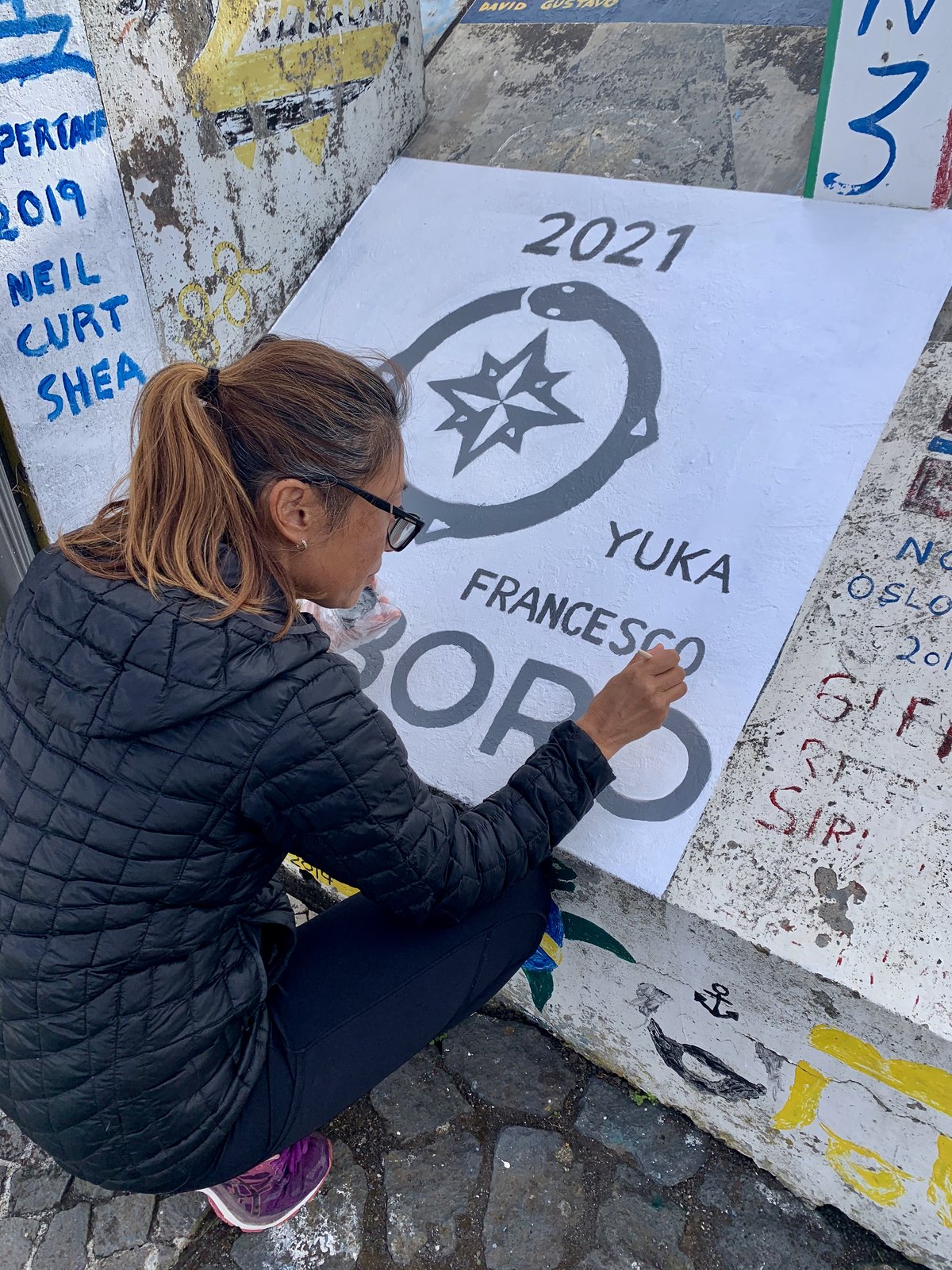
Yuka painting the Oroboro mural on the Horta breakwater — June 2021.
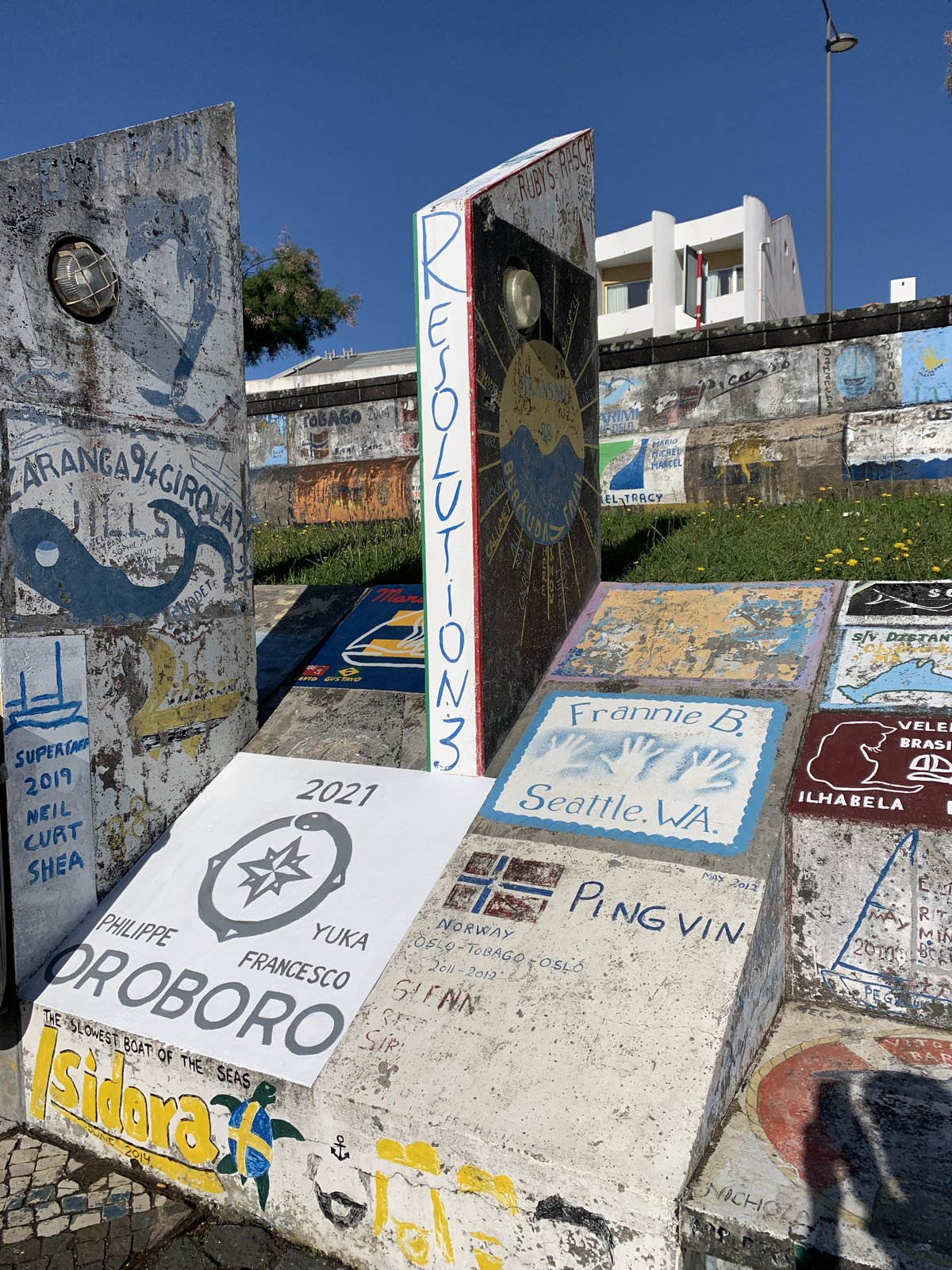
The finished Oroboro mural — Yuka, Francesco, Philippe, 2021.
From Faial we sailed on to São Miguel and spent a few days around Ponta Delgada before the calendar caught up with us. We could have stayed a month — easily. But Sicily was booked for the winter and the whole western Med lay between us and it, so we hurried, the way you always regret hurrying. What I remember about leaving isn't the leaving: it's the knot in my stomach about what waited on the Portuguese coast, where orcas had been attacking sailboats' rudders all season. That thought rode with me the whole way east. But that's the next story.
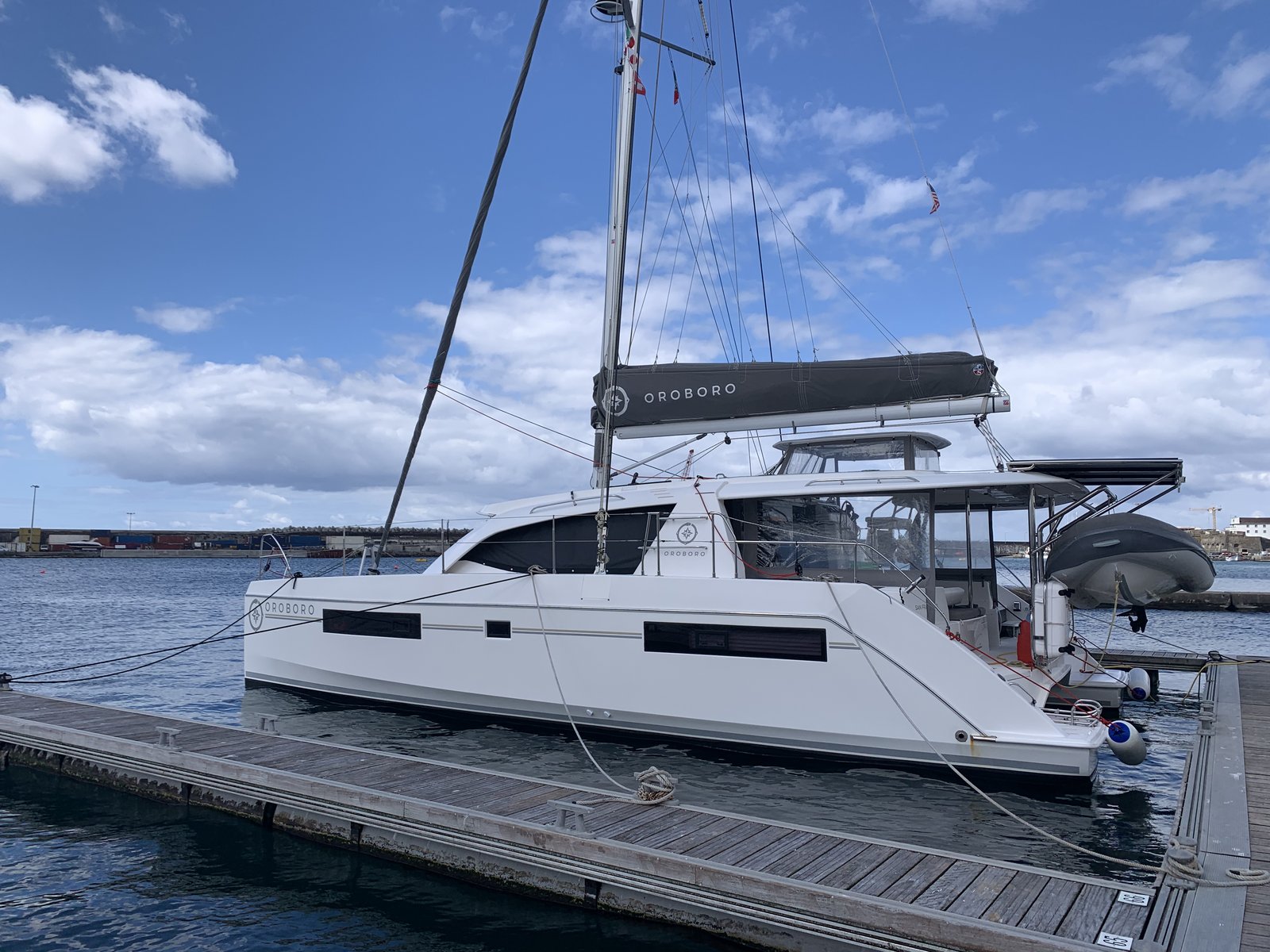
Oroboro in Ponta Delgada, São Miguel — one of the best marinas in the Atlantic.
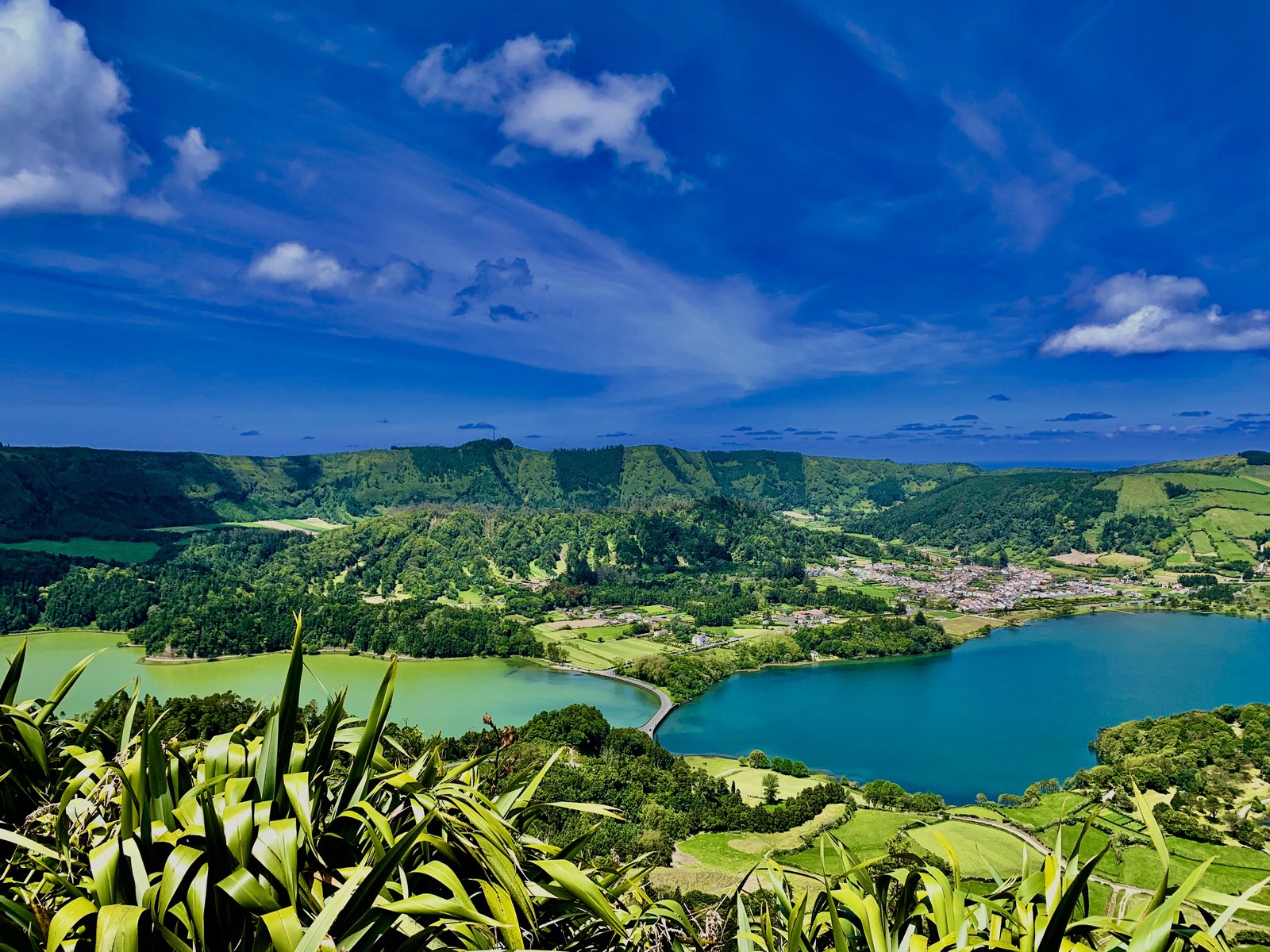
Sete Cidades, São Miguel — twin crater lakes where the Azores green meets the Atlantic blue.
The Azores may be the happiest I've ever been on this voyage. No high-rises, no mass tourism, just green islands and welcoming people who haven't been discovered yet. May the influencers never find them.
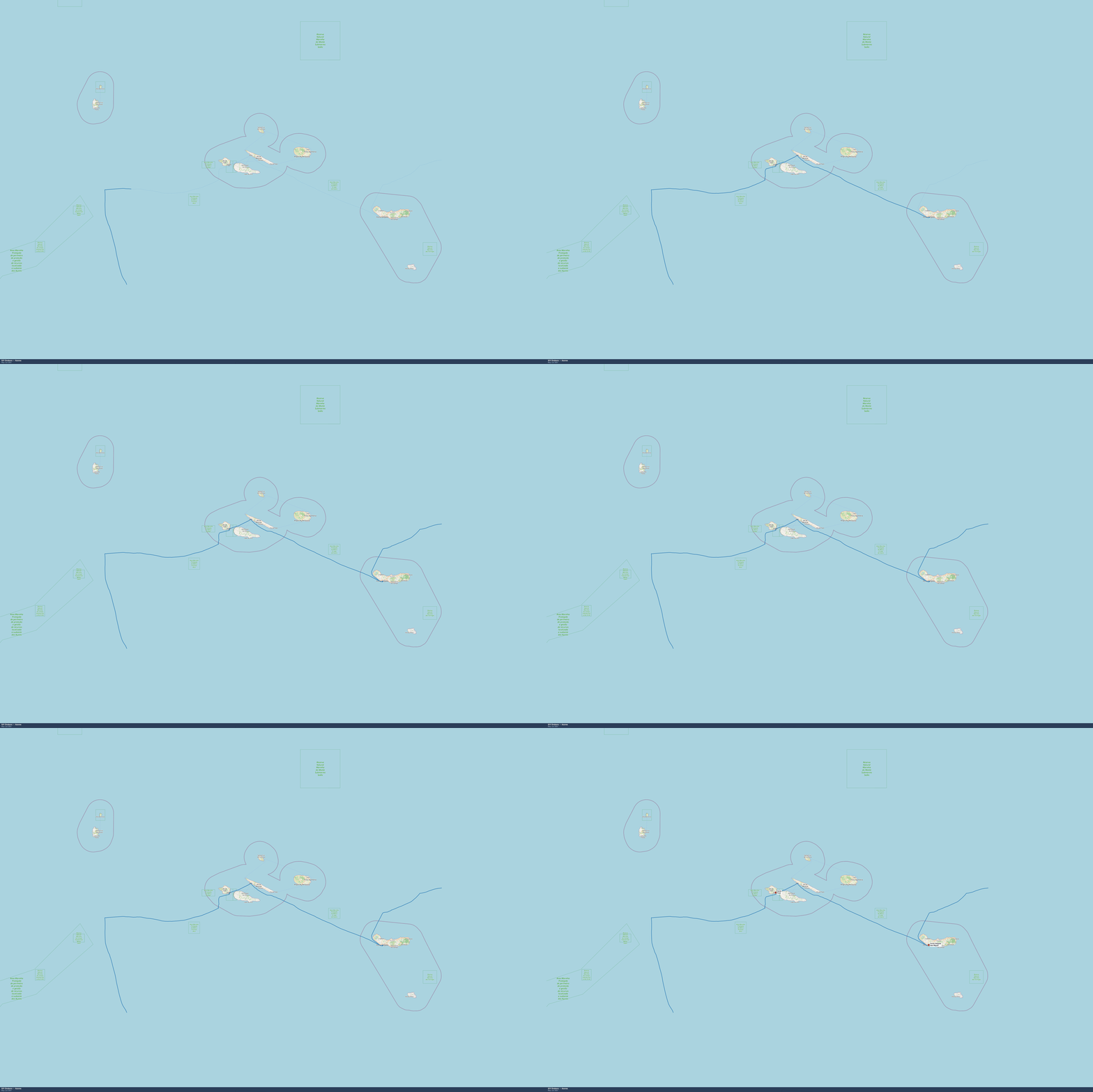
S/V Oroboro GPS track — Azores, Portugal — May–Jun 2021 • GPS data from Raymarine chartplotter • Map © OpenStreetMap contributors
Every anchorage — Azores, May–Jun 2021
Two mid-Atlantic island stepping stones on the way to Europe.
| Stop | Date | Notes |
|---|---|---|
| Horta — Faial | May–Jun 2021 | GIF welcome from S/V Gerty · Peter Café Sport · Oroboro mural on the breakwater |
| Ponta Delgada — São Miguel | Jun 2021 | Sete Cidades · one of the best marinas in the Atlantic |
Anchorage maps
Zoomed charts of Horta (Faial) and Ponta Delgada (São Miguel), with GPS track overlay.
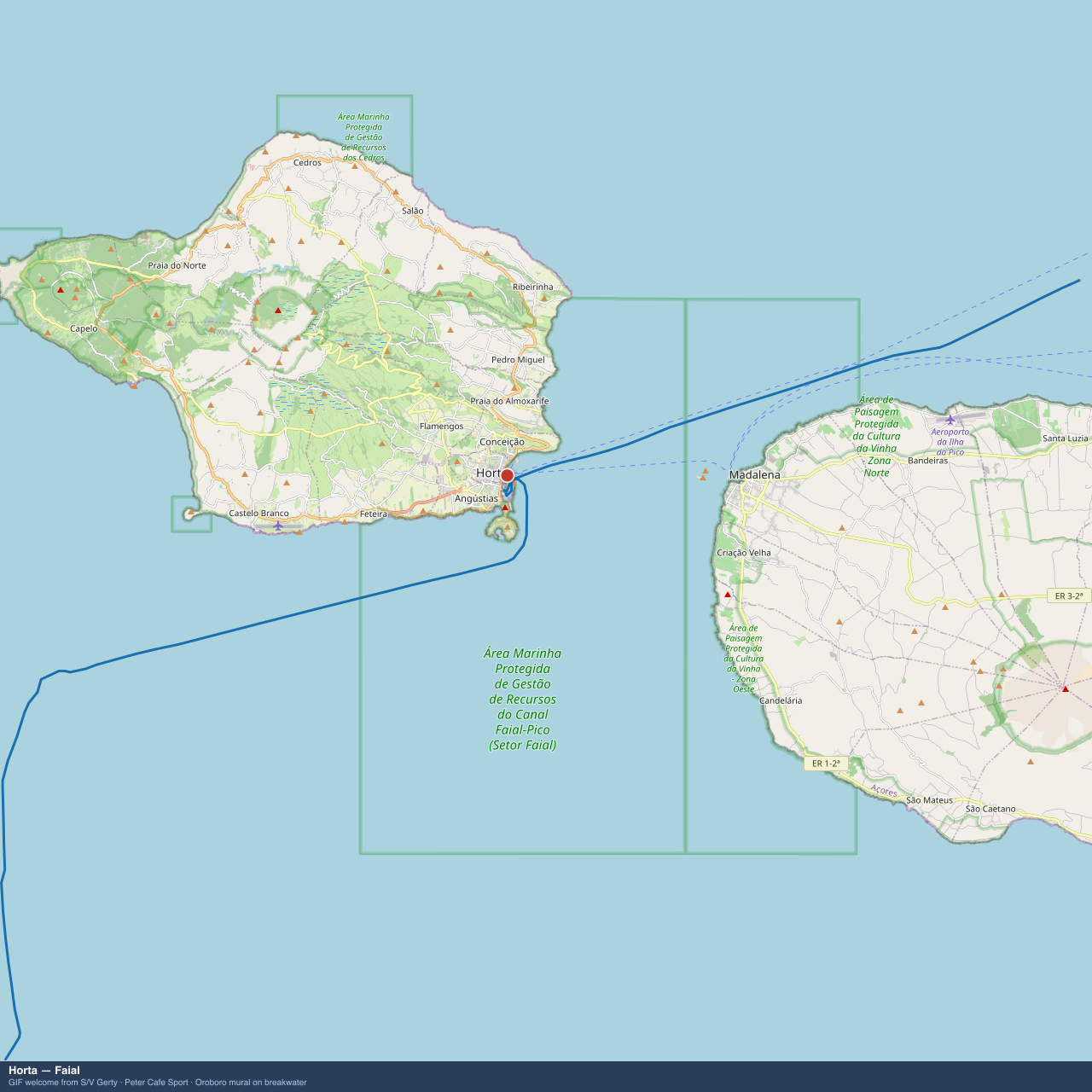
Horta — Faial
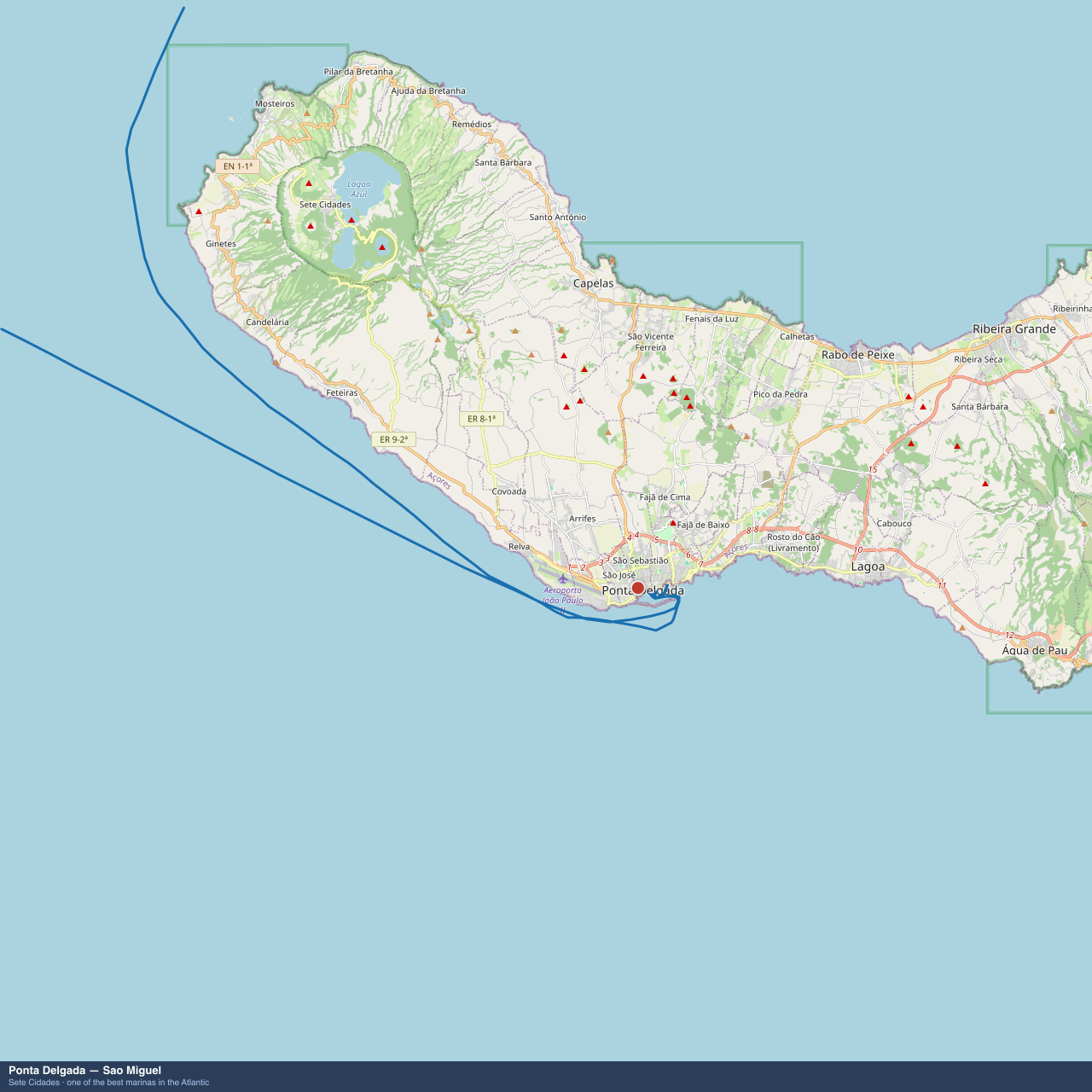
Ponta Delgada — São Miguel
Map data © OpenStreetMap contributors. GPS tracks from Raymarine chartplotter, archived May–June 2021.