Brasília, April 2019
From Vitoria, we flew to Brasilia to spend a couple of days exploring this unique town. Brasilia is the modernist city that a very cool and visionary and charismatic president of Brazil, Juscelino Kubitschek, wanted to be created from scratch.
Among many other architects, Lucio Costa was selected by a jury to carry out this huge undertaking. Oscar Niemeyer was the chief architect of most public buildings, Joaquim Cardozo was the structural engineer, and Roberto Burle Marx was the landscape designer.
Brasília was built in only 4 years, from 1956 to 1960, when it was officially inaugurated. In those days, Brazil was excelling on the international stage in many fields, from architecture to art and even sport (they won the 1958 Soccer World Cup with Pelé). Very interesting times for Brazil.
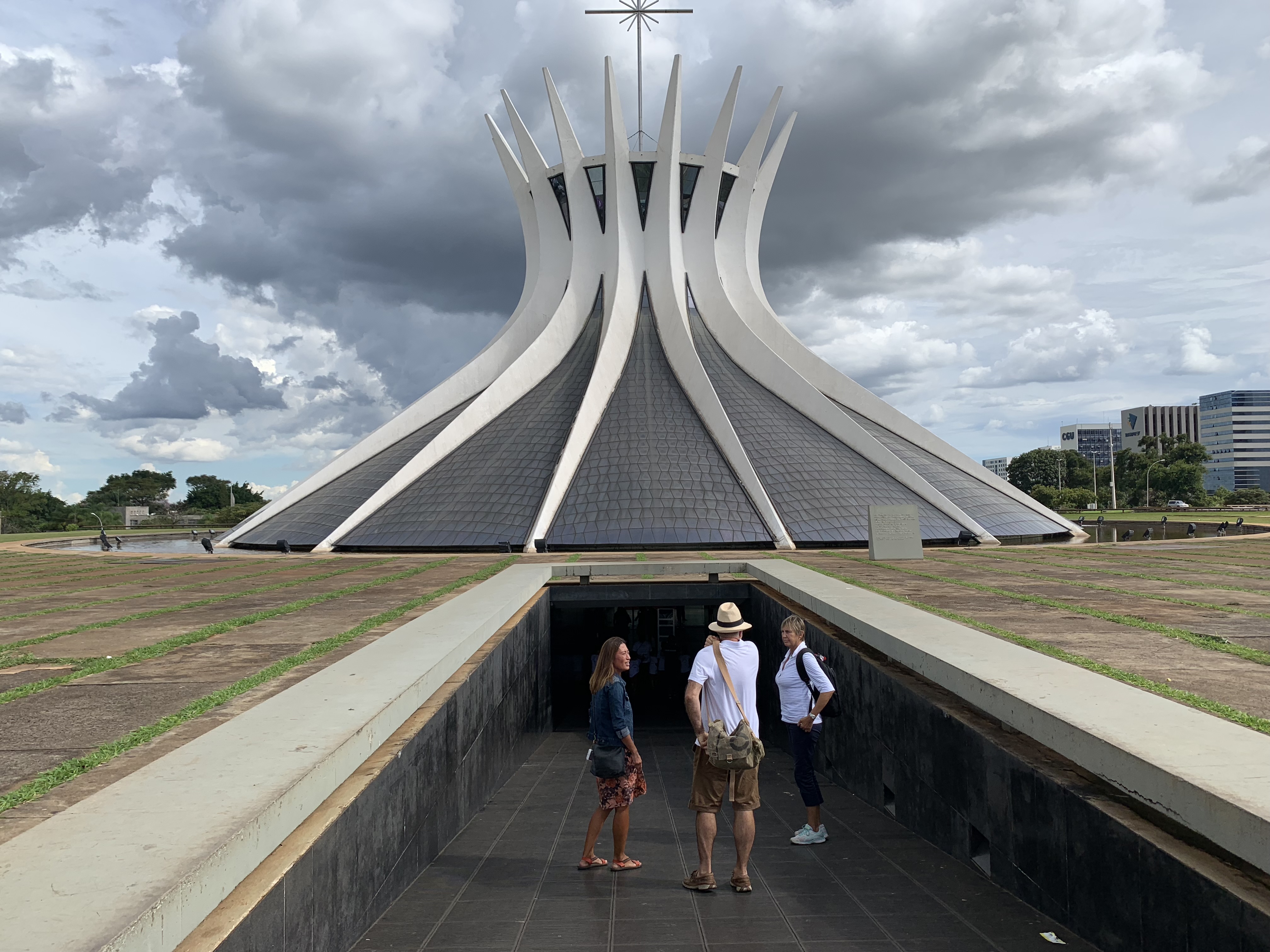
Entering the Metropolitan Cathedral (Catedral Metropolitana) by Oscar Niemeyer — the sixteen curved concrete columns rise like hands in prayer
The Metropolitan Cathedral was one of the first things we visited. The building descends underground so that the first thing you see when entering is the stained glass ceiling, with no walls — just 16 parabolic columns of reinforced concrete converging above you, filled entirely with blue and green glass.
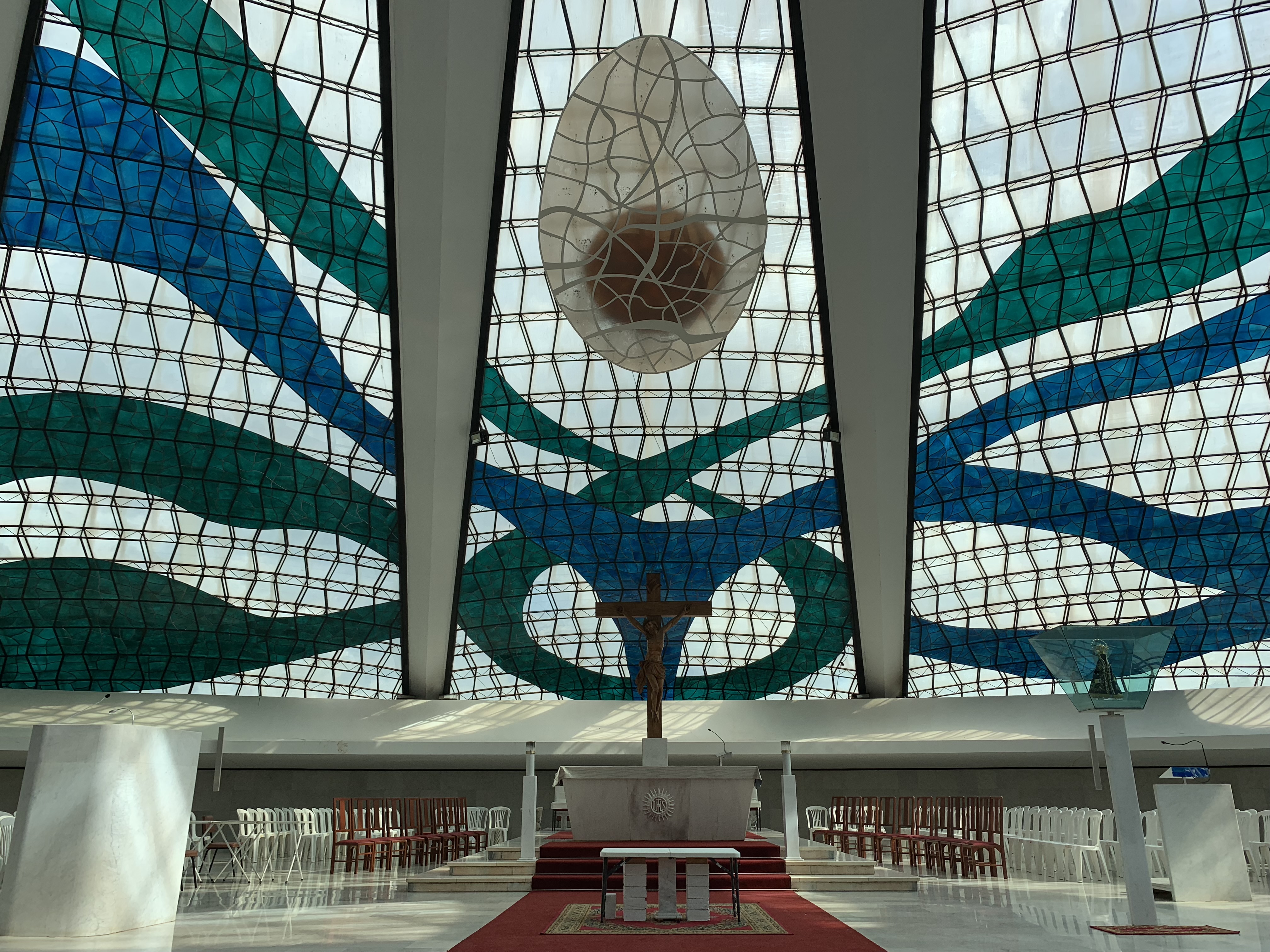
The stained glass ceiling of the Metropolitan Cathedral by artist Marianne Peretti — blues and greens flood the interior with light
From there we went to the Museu Nacional. Niemeyer designed the building in 2002, his own gift to the city he helped create. It is a 28-metre white dome sitting on a circular base, connected to a long ramp. Inside, we caught an exhibition by Japanese sculptor Yutaka Toyota.
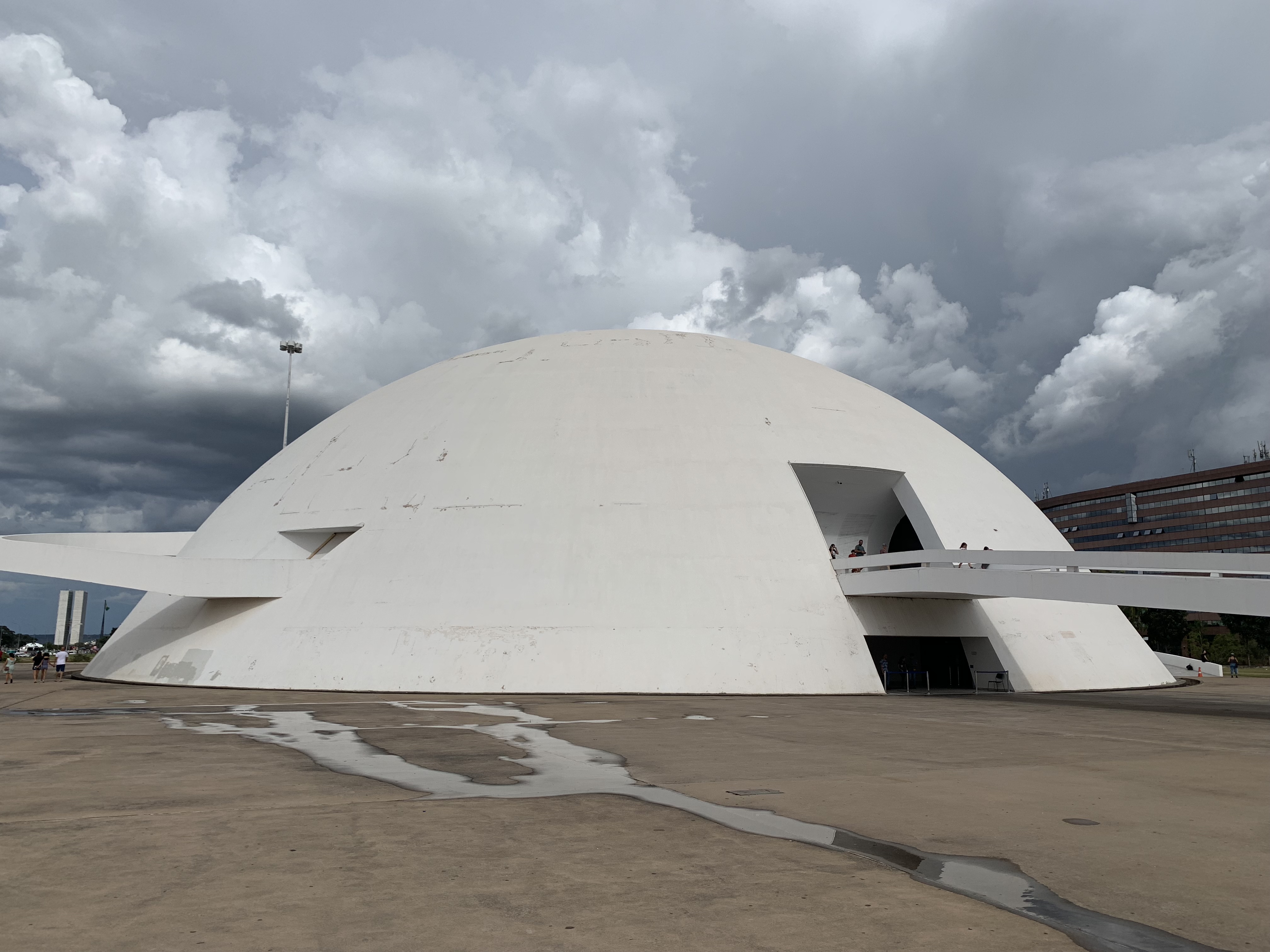
The Museu Nacional (National Museum of Brazil) by Niemeyer — a 28-metre dome on the Monumental Axis
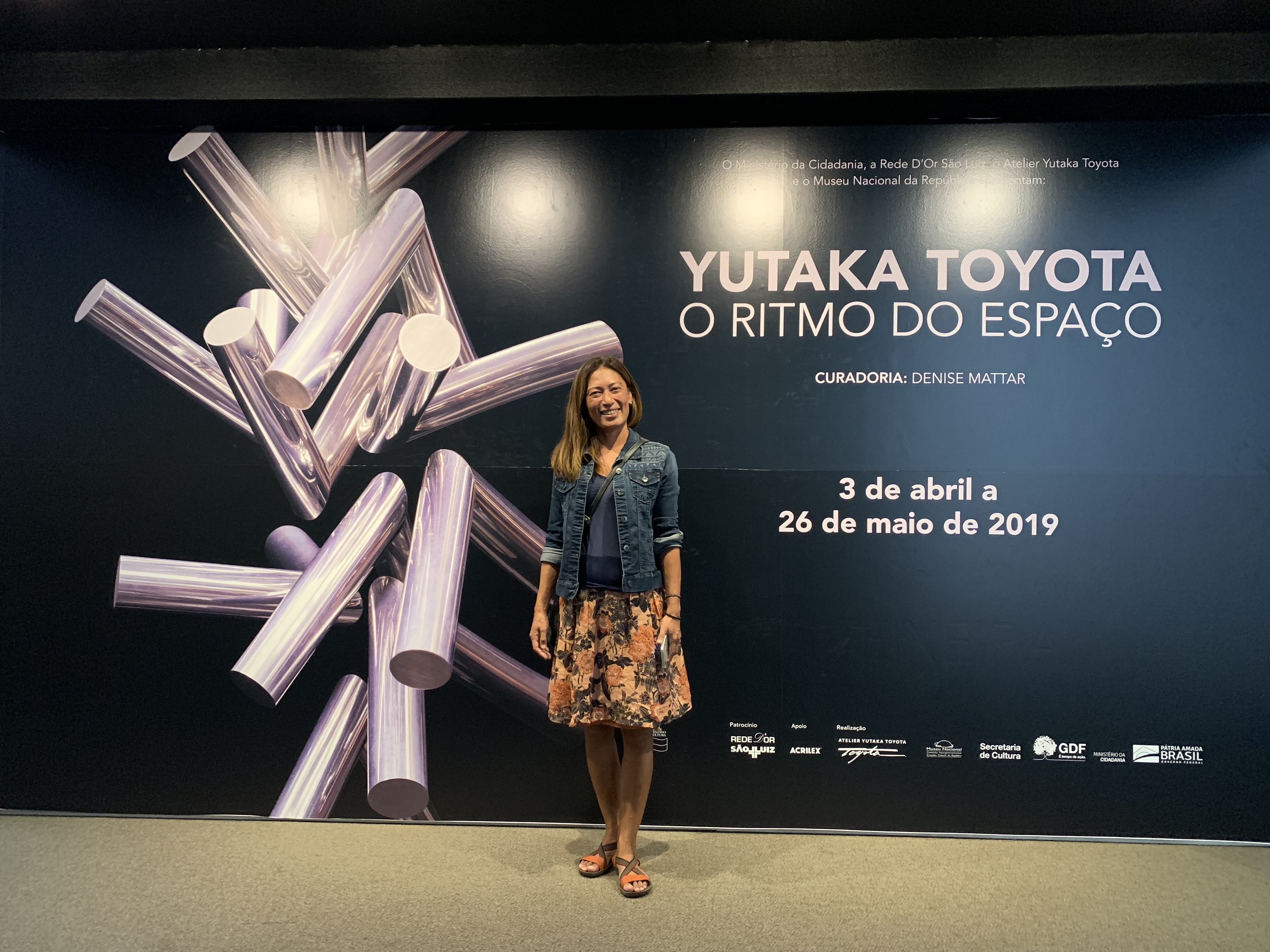
Yuka at the "Yutaka Toyota — O Ritmo do Espaço" exhibition at the Museu Nacional
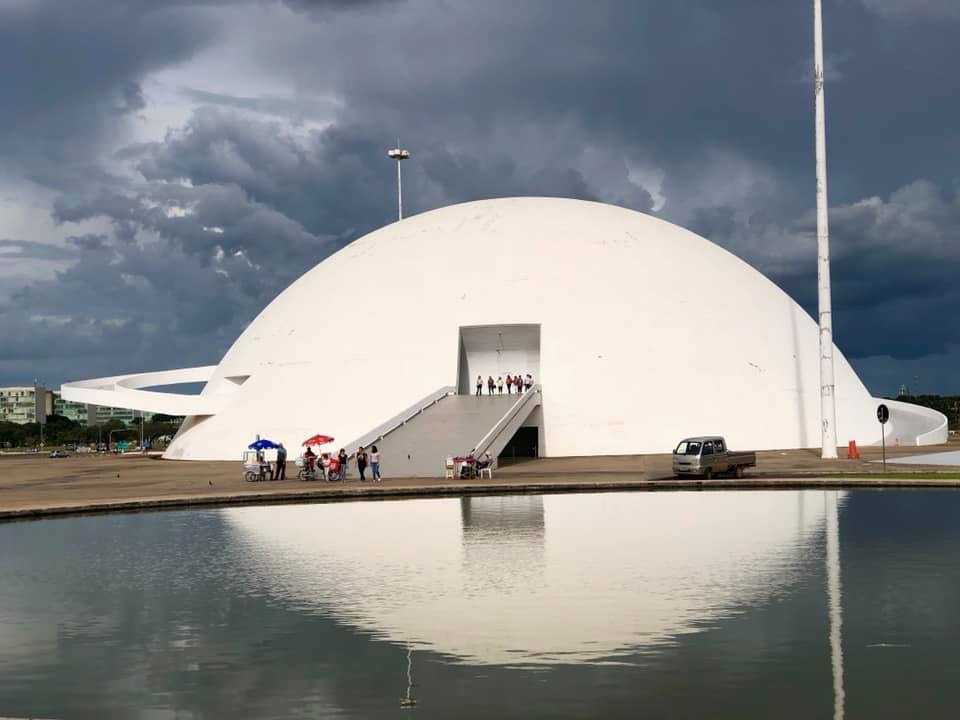
The Museu Nacional dome reflected in the Espelho d'Água (Mirror Pool) under dramatic storm clouds
If you visit Brasilia you can see symbolism everywhere. Costa used a cross-axial design indicating the possession and conquest of this new place with a cross that resembles a dragonfly, an airplane or a bird. The plan of the city includes two principal components, the Monumental Axis (east to west) and the Residential Axis (north to south).
The Congresso Nacional is at the end of the Monumental Axis, with its two towers flanked by the convex dome of the Senate and the concave bowl of the Chamber of Deputies — one open to the sky, one inverted as if gathering water. At dusk, reflected in the long pool, it is extraordinary.
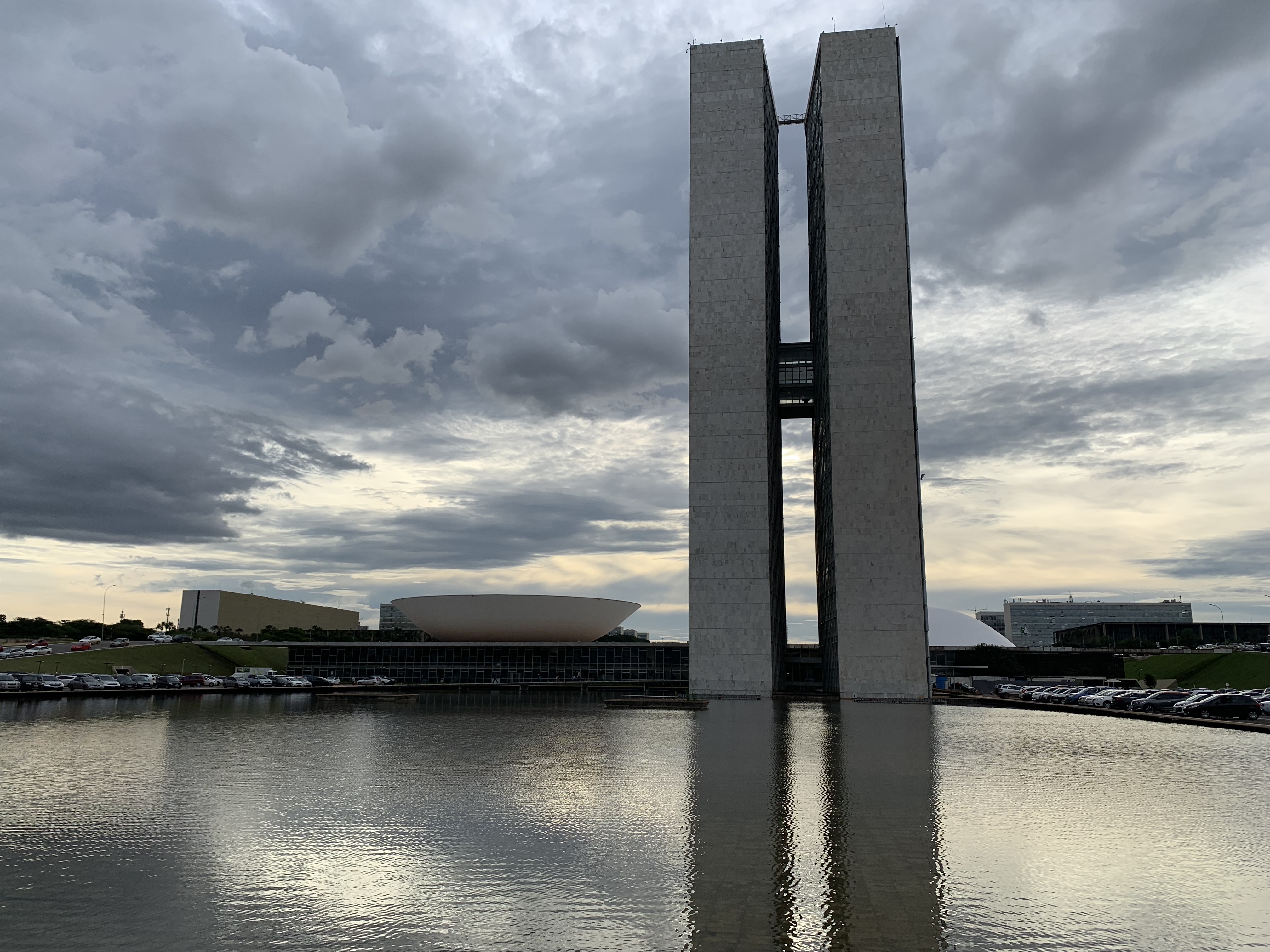
The twin towers of the Congresso Nacional reflected at dusk in the Espelho d'Água
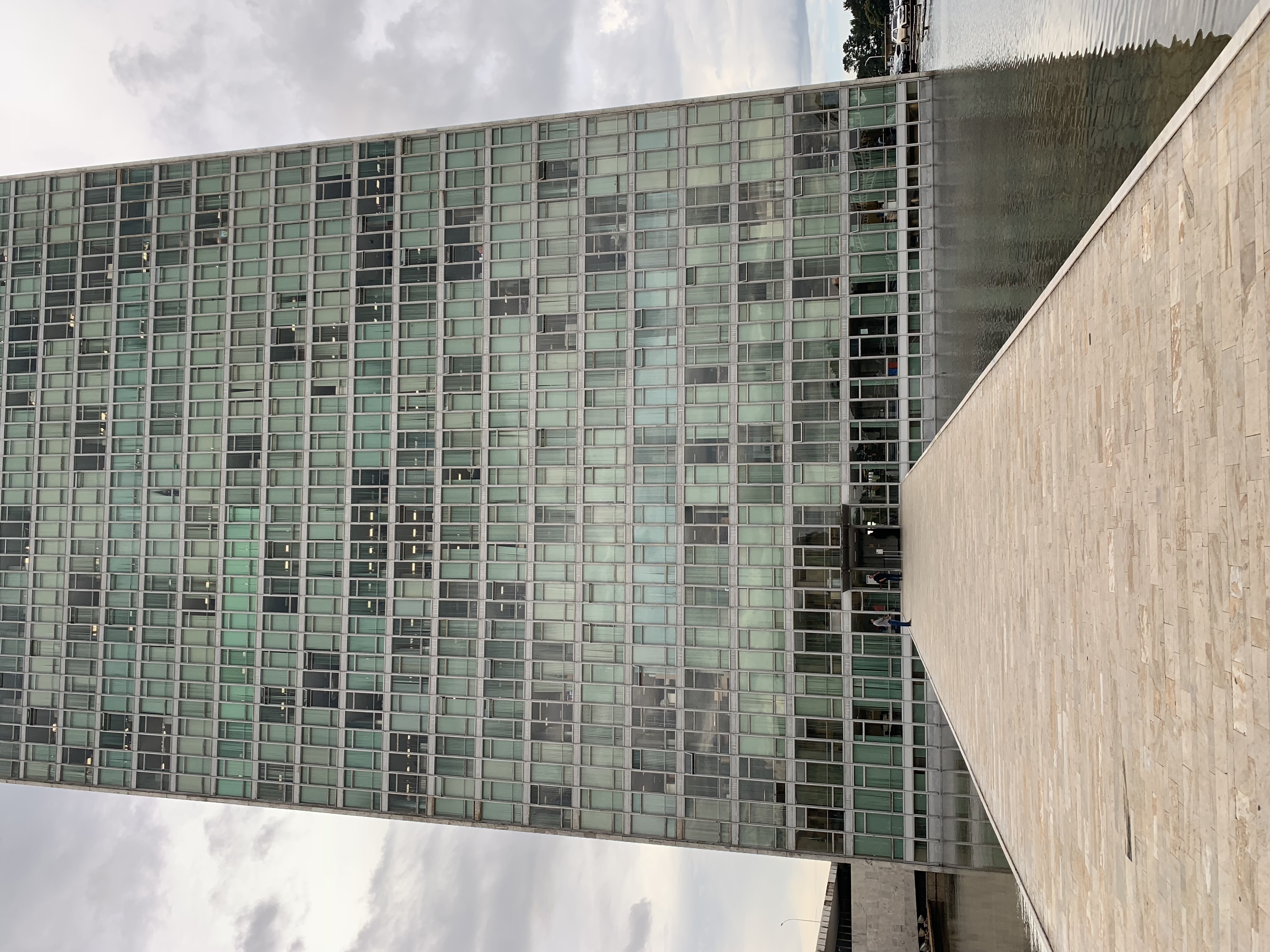
Close-up of one of the Congresso Nacional towers — green glass curtain wall meeting concrete
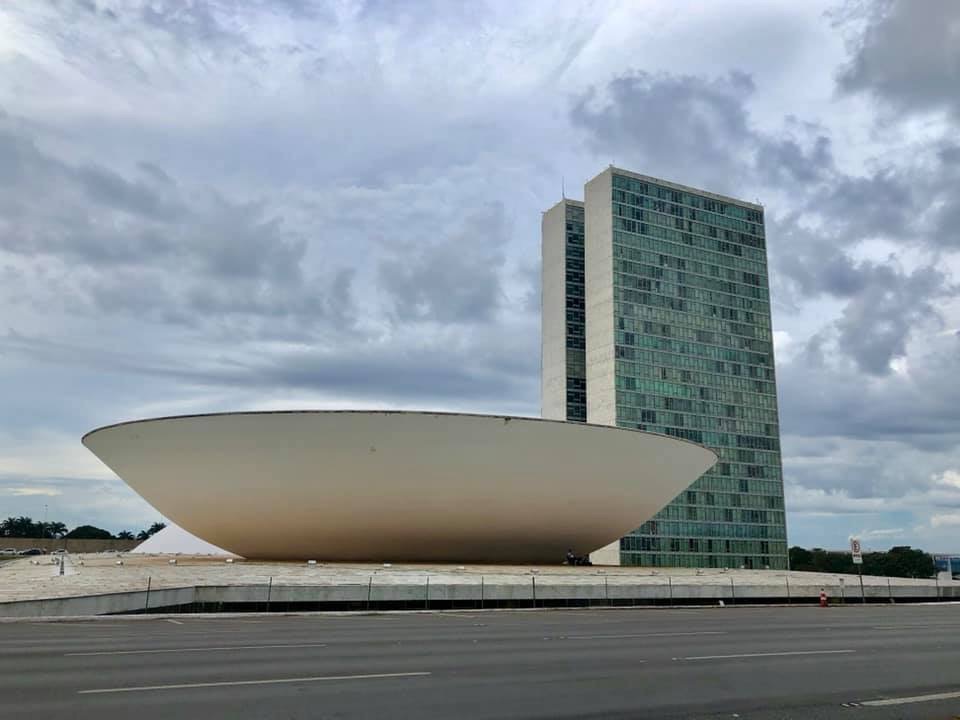
The concave bowl of the Chamber of Deputies (Câmara dos Deputados) and the Congress tower
At the far end of the Monumental Axis lies the Praça dos Três Poderes — the Three Powers Plaza — where the Congress, Supreme Court, and Presidential Palace face each other across an enormous esplanade. The scale is meant to impress, and it does.
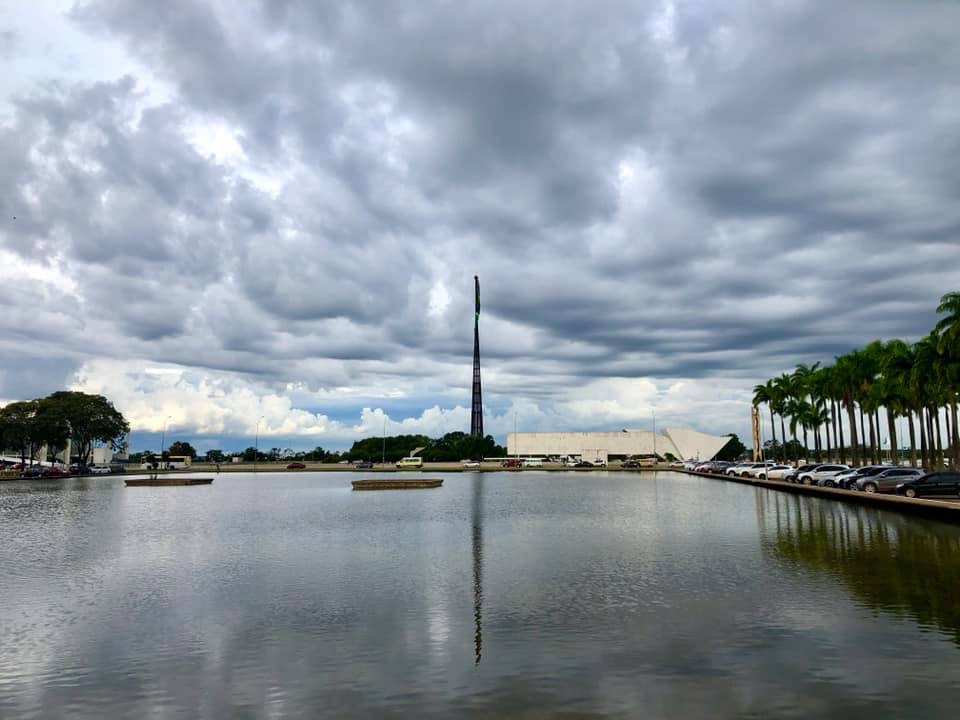
The Three Powers Plaza (Praça dos Três Poderes) reflecting pool with the Brazilian flag mast
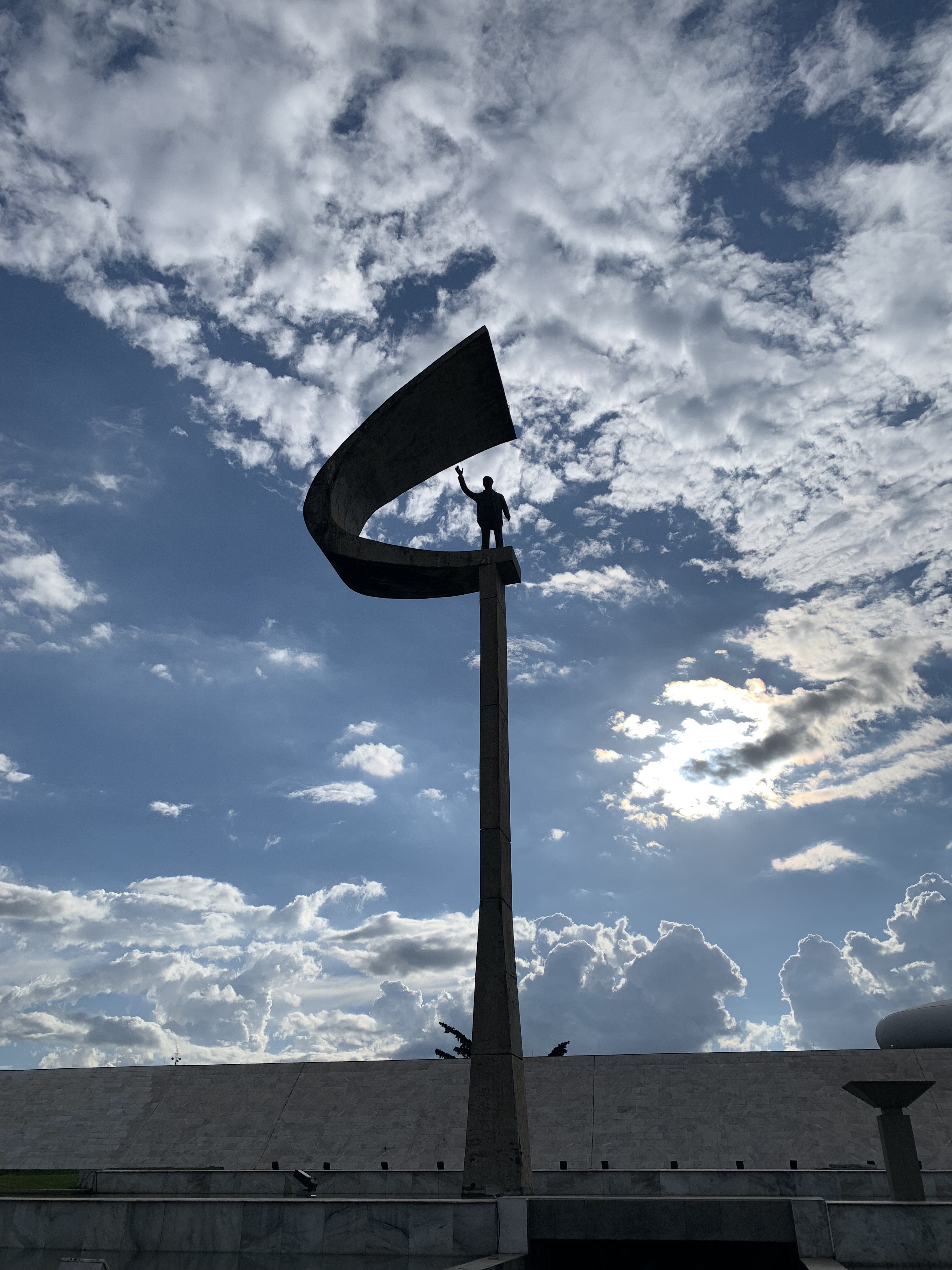
Bronze monument silhouetted against the Brasília sky at the Three Powers Plaza
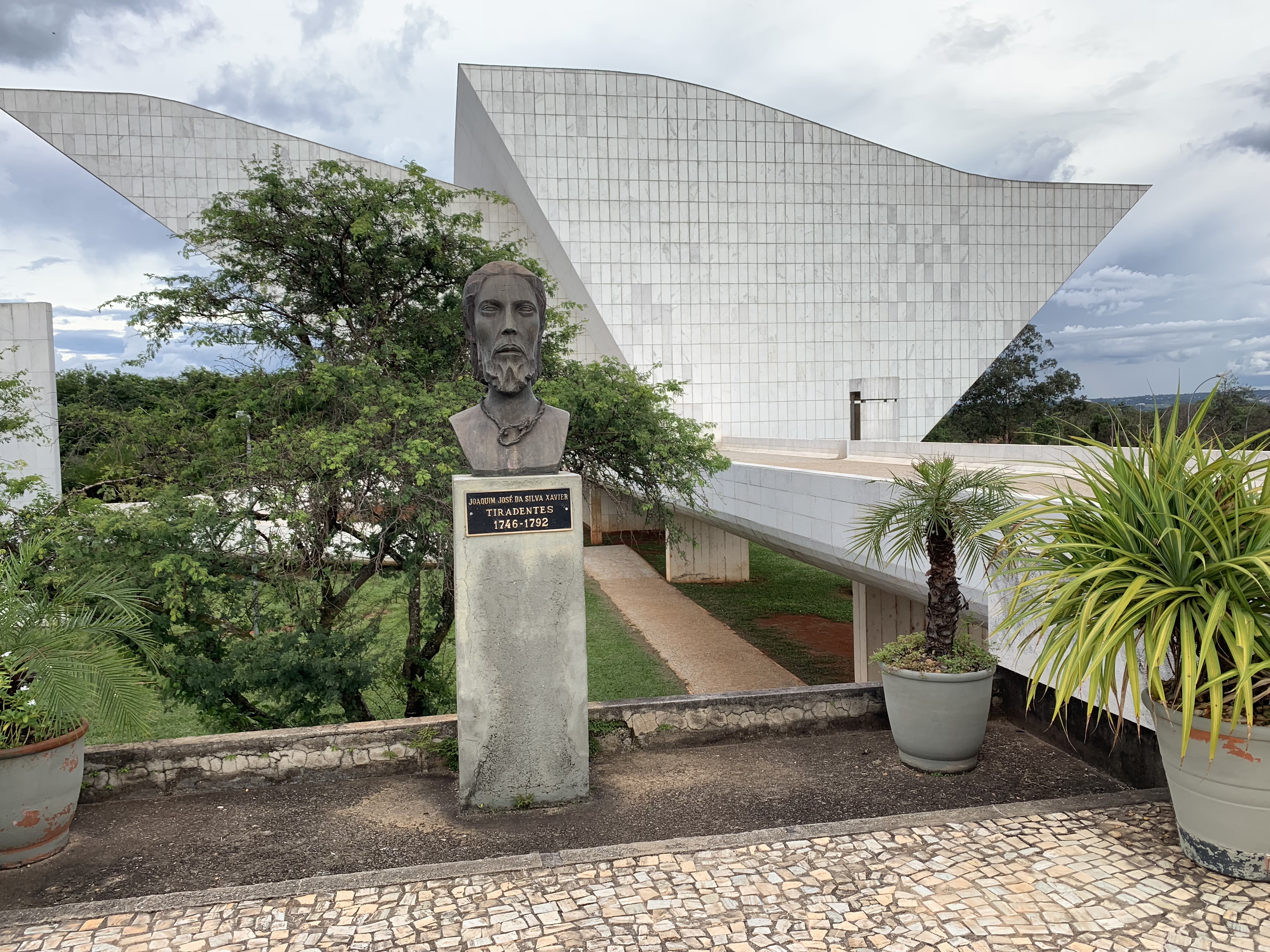
Bust of Tiradentes (1746–1792) in front of the Panteão da Pátria (National Pantheon) by Niemeyer
The Palácio do Itamaraty — the Ministry of Foreign Affairs — is one of the most elegant buildings in the city. A long arcaded marble block hovering over a water garden, with Bruno Giorgi's abstract sculpture "Meteoro" rising from the reflecting pool. The building is open to visitors and absolutely worth it.
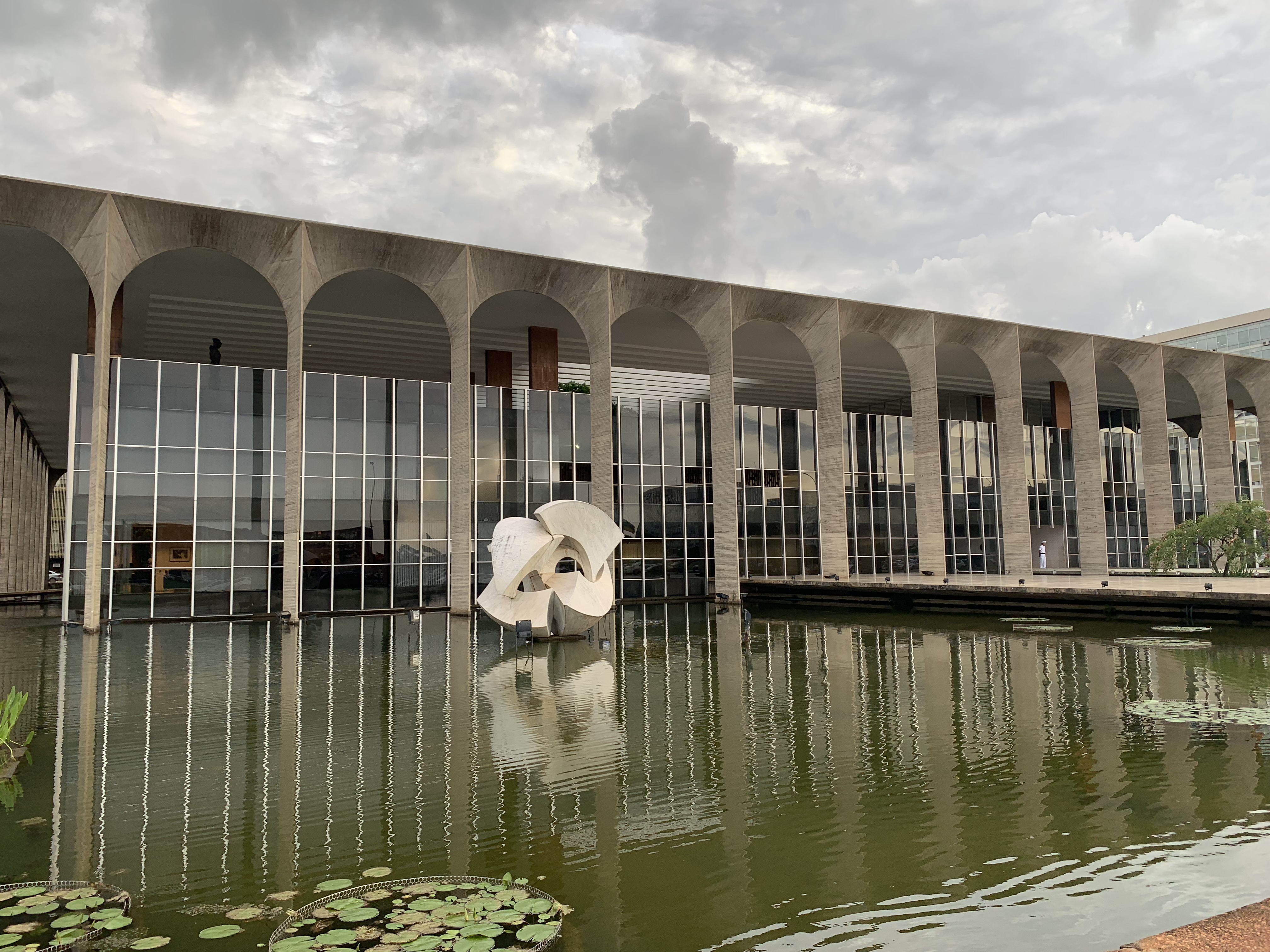
The Palácio do Itamaraty (Ministry of Foreign Affairs) with Bruno Giorgi's "Meteoro" sculpture in the reflecting pool
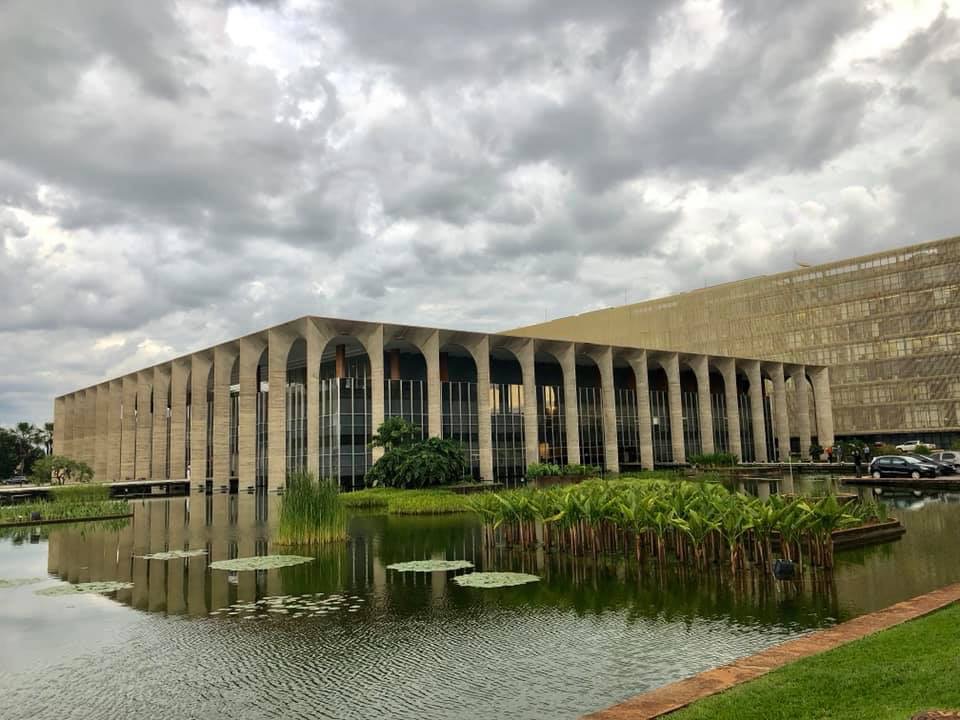
The Palácio do Itamaraty from across the water garden — arcaded marble façade reflected among water lilies
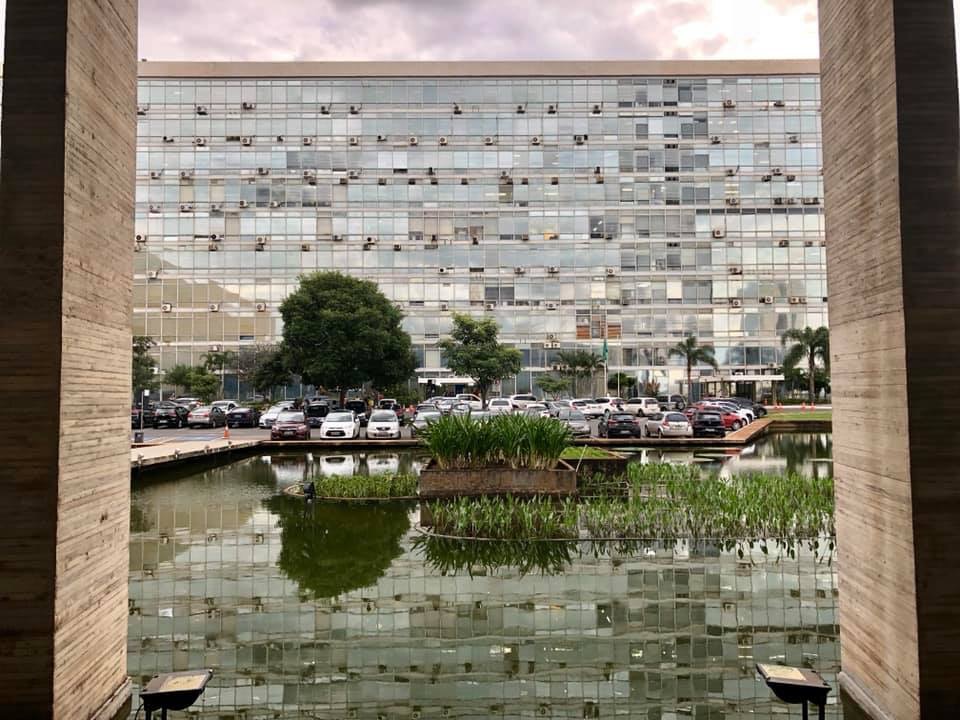
Looking through the marble columns of the Palácio do Itamaraty toward the reflecting pool and government buildings
Brasilia was designed for work. There are no beaches like in Rio, and people are more cold. You need a car to move around, there are shopping malls that make you think you are in a midwest American town rather than in Brazil. We didn't see many tourists around, we heard that no one goes there to spend a weekend or a vacation.
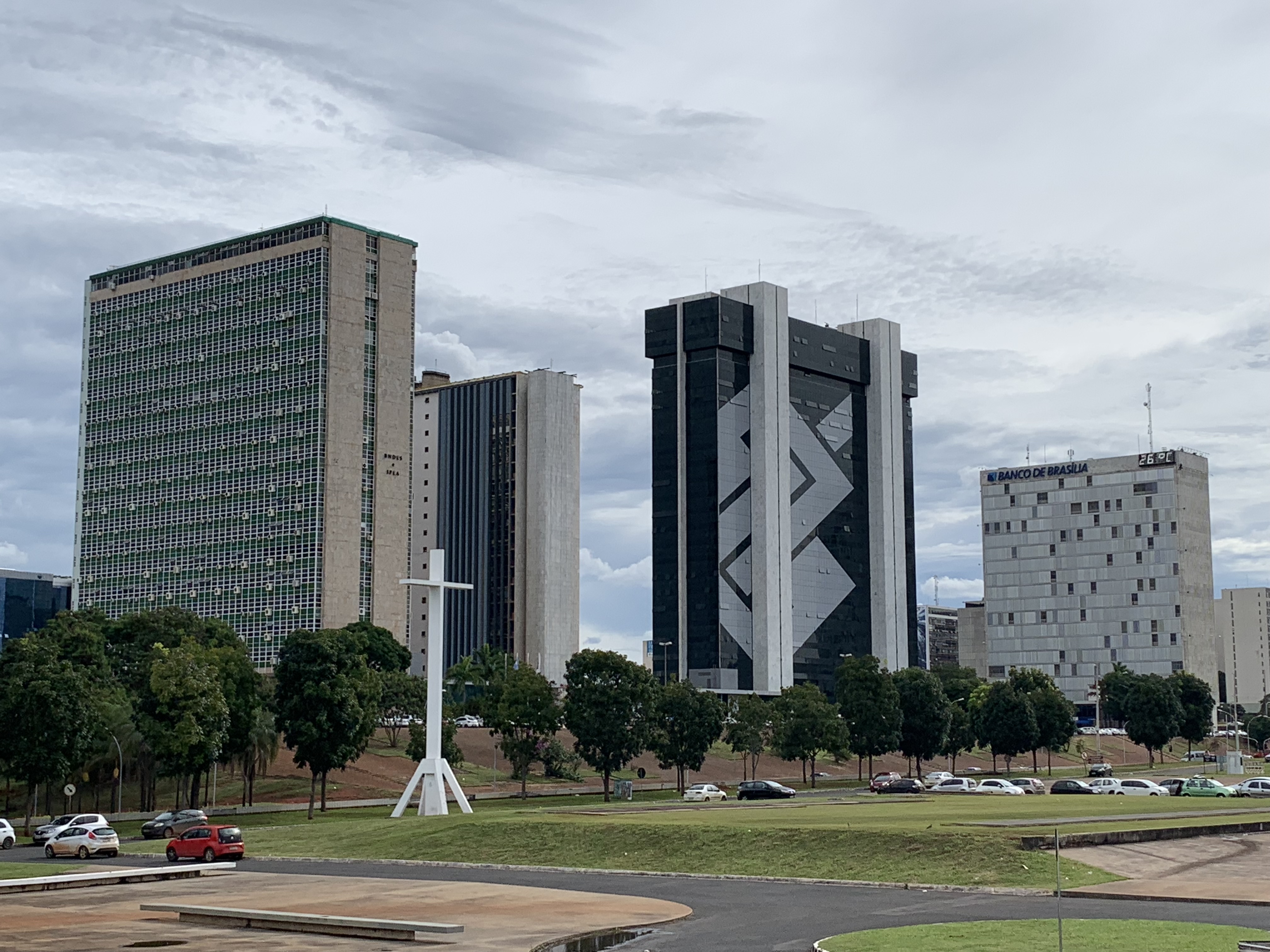
The banking district (Setor Bancário) along the Monumental Axis — modernist towers designed within the same urban grid
On the second evening we visited the Santuário Dom Bosco. This church has no paintings or sculptures — its walls are made entirely of 12,000 pieces of Murano glass in shades of blue, creating an effect like being inside a deep ocean, or a starry sky. At night, lit from within, it is unforgettable.
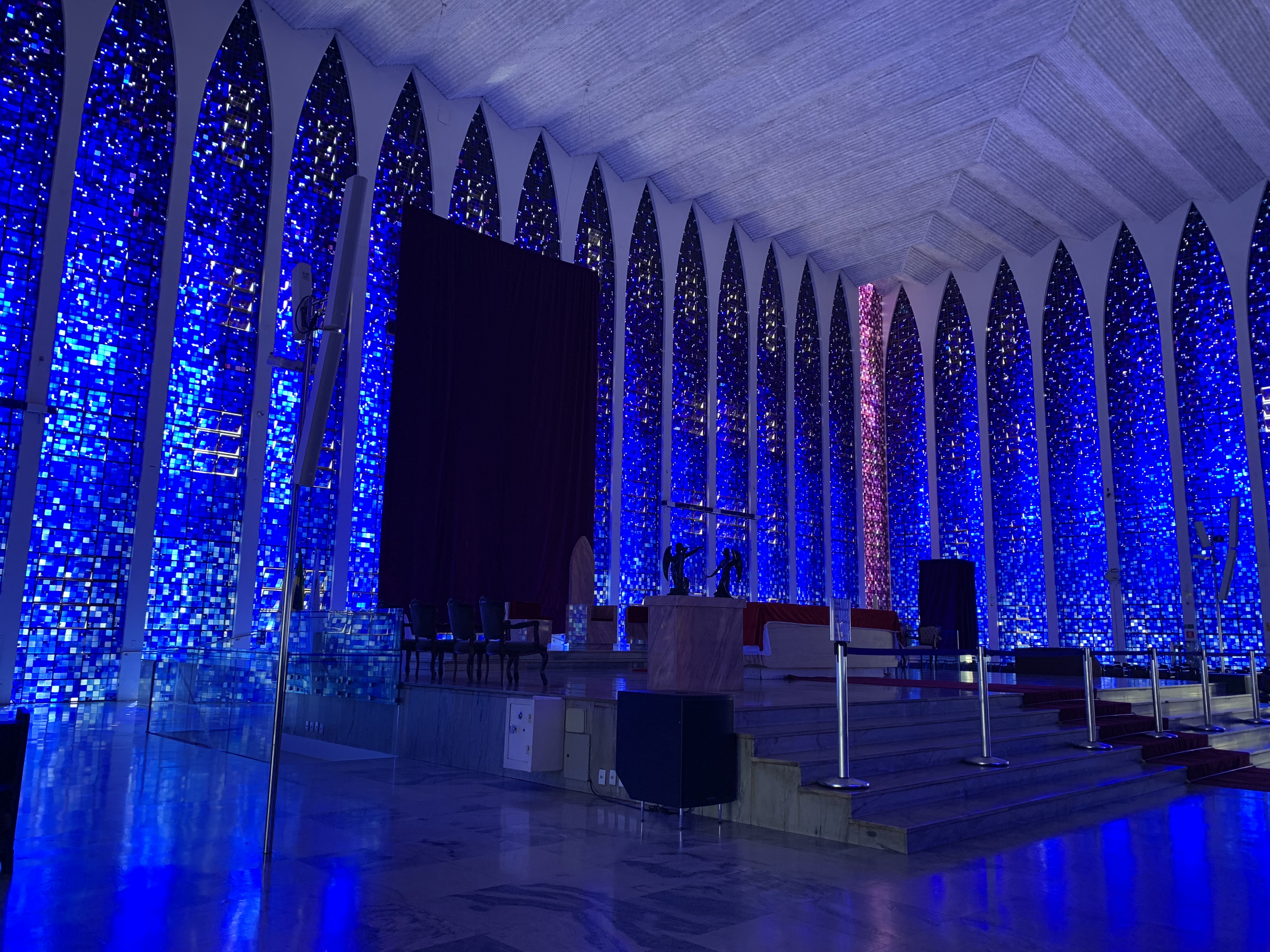
Interior of the Santuário Dom Bosco — 12,000 pieces of blue Murano glass glow against the night
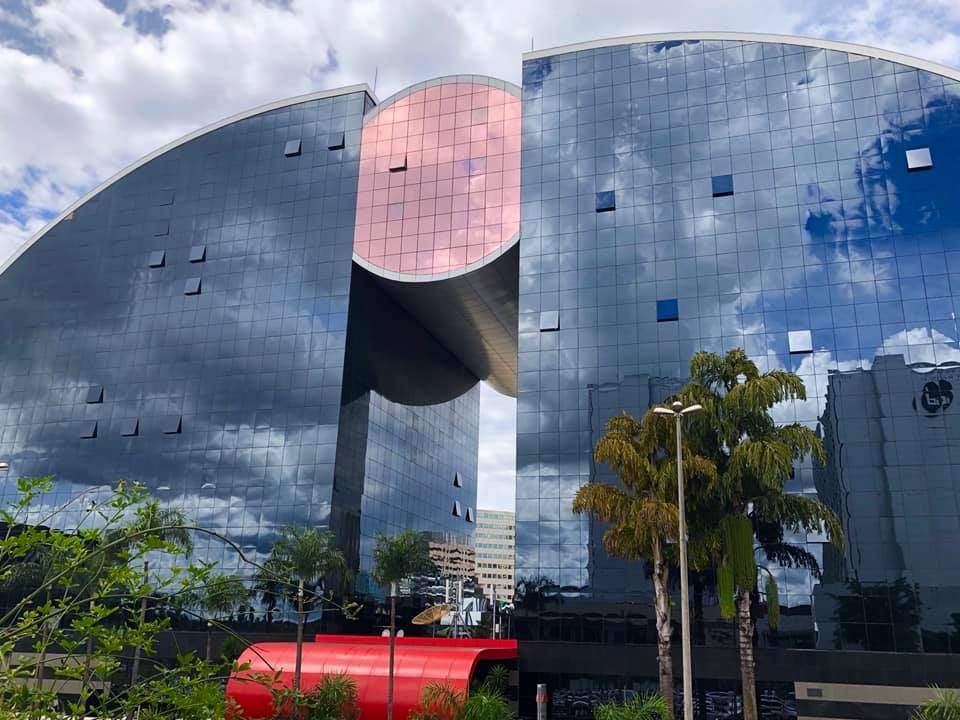
A striking modernist building with curved glass façade in Brasília's commercial district
Well, I'm glad we did. We knew almost nothing about the history of Brazil, about Juscelino Kubitschek and Tancredo Neves, and about architects like Lucio Costa and Oscar Niemeyer. Well, now we do. Learning this way is fun.
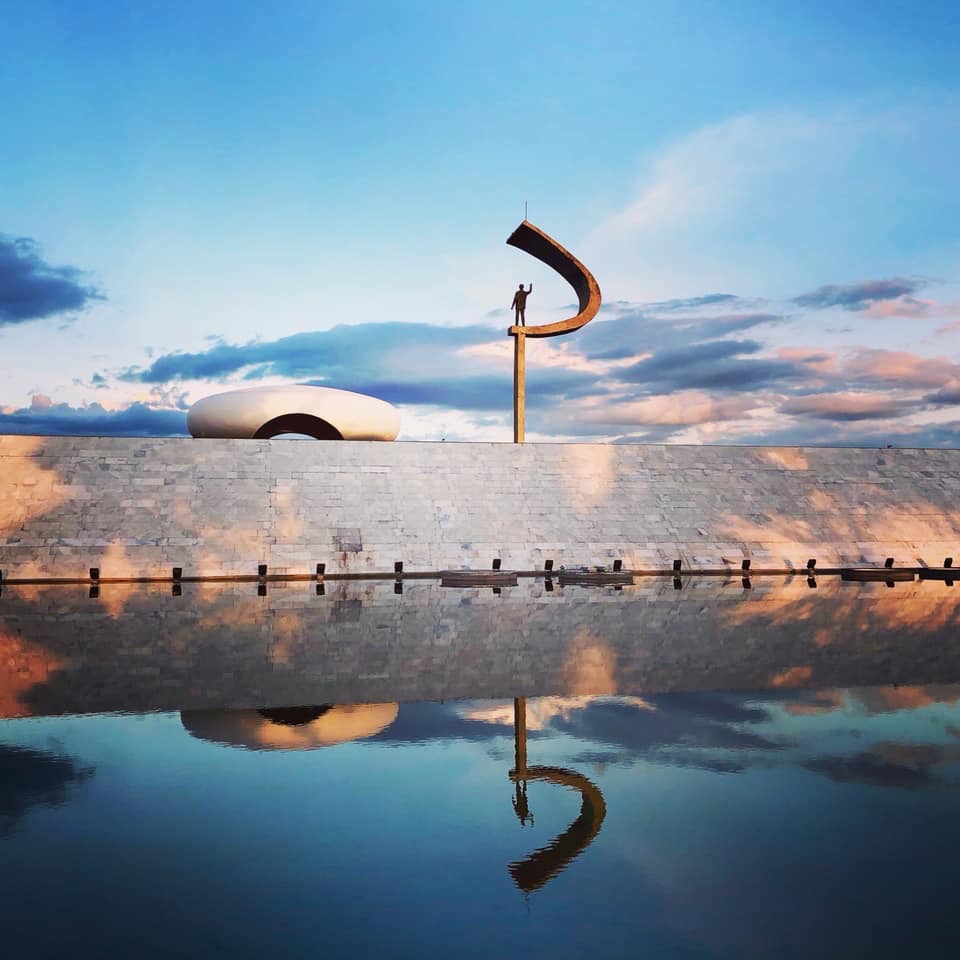
The Panteão da Pátria Tancredo Neves and its reflecting pool at golden hour