Ilha de Boipeba, Bahia, Brazil — August 2019
South of Morro de São Paulo, separated by a narrow tidal channel, lies Ilha de Boipeba — quieter, wilder, and almost entirely free of the things that complicate modern life. No cars are allowed on Boipeba. The island's sandy paths are shared between horses pulling wooden carts, a handful of ATVs, and anyone willing to walk barefoot through the coconut groves.
The name Boipeba comes from the Tupi: bo'i pe'ba, meaning "flat snake." The island is indeed long and low, barely rising above the sea level, hemmed in by reef on one side and mangrove on the other. The Jesuit missionaries came here in the 16th century, following the coast southward from Salvador. They found a Tupi-speaking population and a coastline of extraordinary beauty — white sand beaches fronted by clear, shallow water in shades of jade and turquoise that shifted with every cloud.
The Jesuits are long gone, expelled from Brazil by the Marquis of Pombal in 1759 in a burst of Enlightenment anti-clericalism. The horses, however, remained. On the afternoon we explored the island's southern end by ATV, we found a horse and cart standing patiently in the shade of a leaning palm tree, exactly where a horse and cart would have stood 200 years ago. The driver dozed on the wooden bench. Nothing hurried.
We anchored off the northern village and rowed ashore to walk the sandy lanes between colourful wooden houses built on stilts above the tidal line. Fishing boats floated off the stilted waterfront. Children swam. The afternoon light on the bay was flawless — deep blue sky, white-capped water, a palm island glowing in the distance. We agreed: of all the beautiful places in Brazil's deep south, Boipeba is the one you tell no one about.
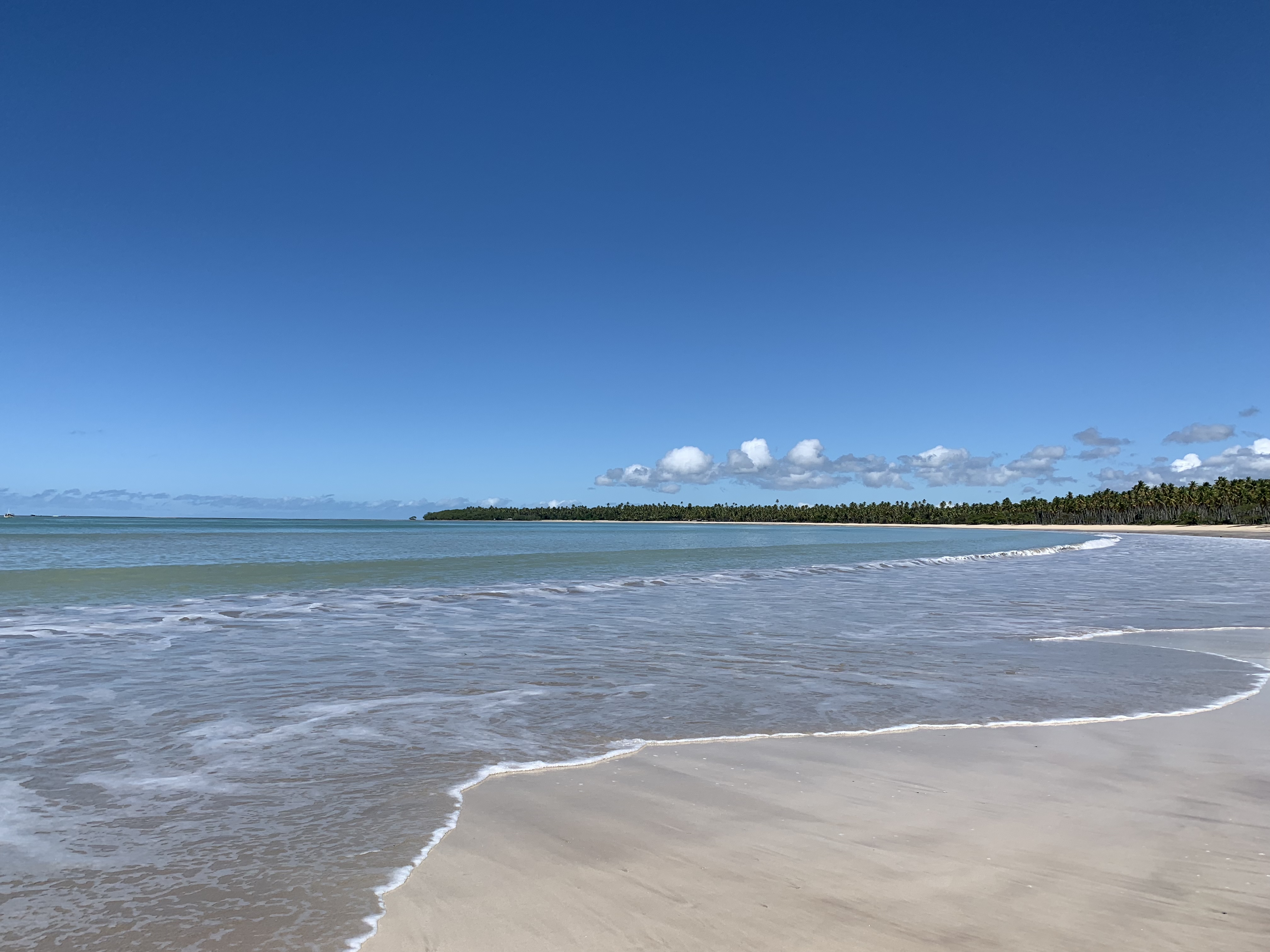
The beach at Boipeba — white sand, jade water, and a palm island across the channel; as remote as it looks
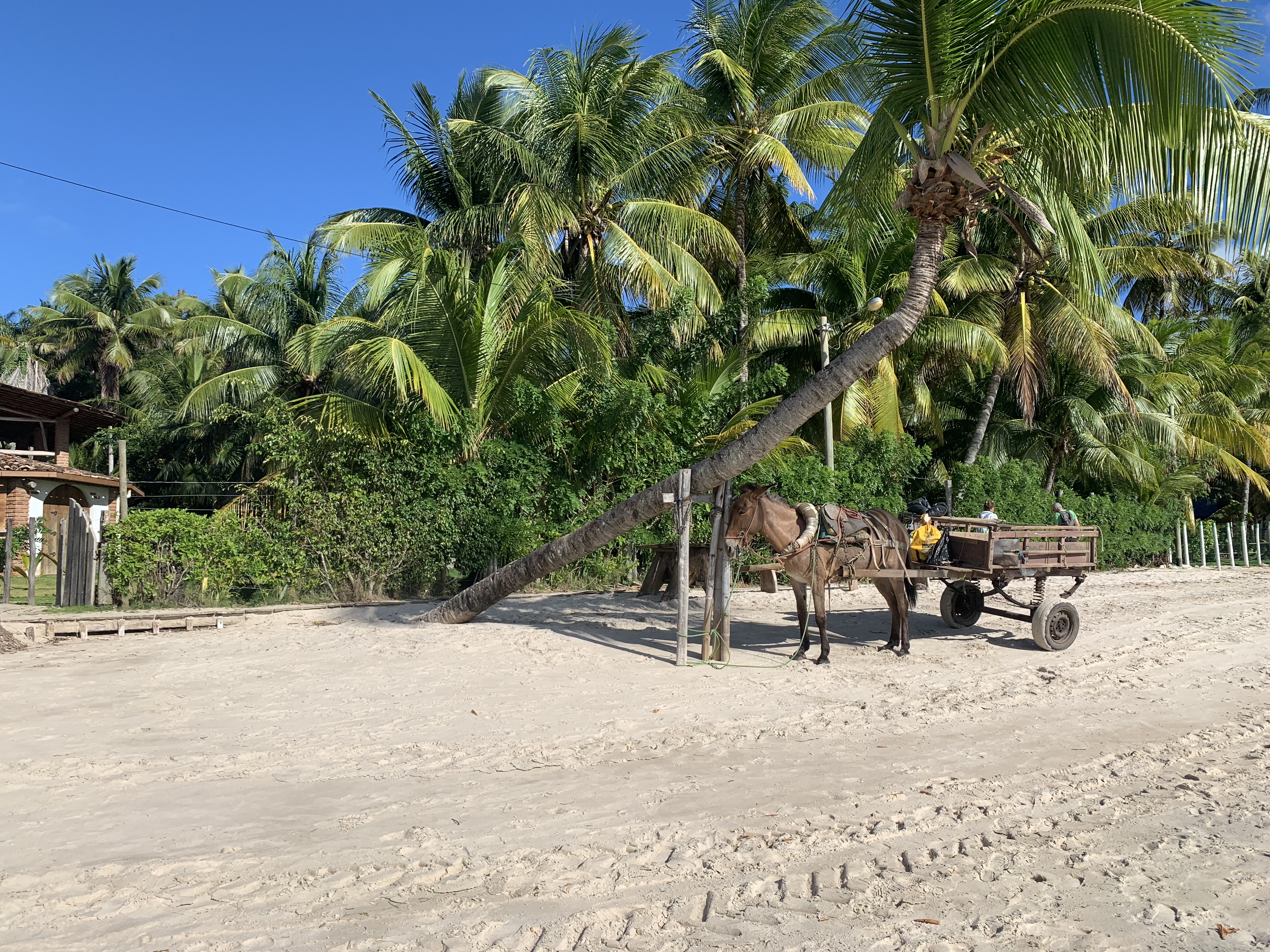
The horse cart — the island's taxi, delivery truck, and ambulance, all in one. No cars are permitted on Boipeba
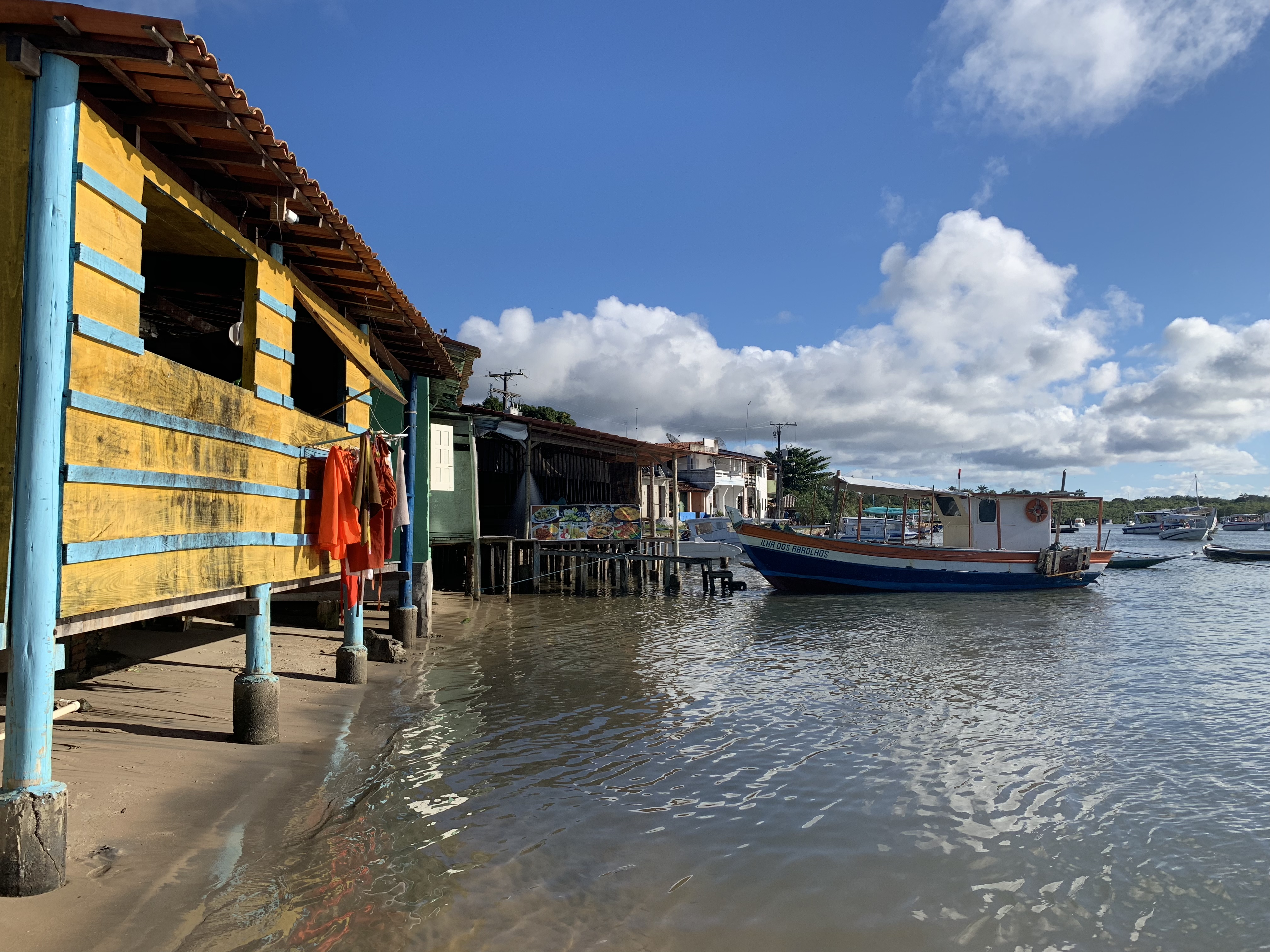
The Boipeba village waterfront — yellow and blue wooden houses on stilts, fishing boats moored below