Jaguaripe, Bahia de Todos os Santos — July 2019
After weeks anchored off Salvador, we set off to explore the southern reaches of the Bahia de Todos os Santos — Brazil's largest bay, studded with 56 islands. We landed the dinghy at a small village in the Jaguaripe municipality, a region whose Tupi name means river of the jaguar.
The bay carries one of Brazil's most evocative place names. Tradition holds that the Portuguese navigator Américo Vespúcio sailed in on 1 November 1501 — All Saints' Day — and named these waters in honor of the feast. What greeted him was a vast inland sea flanked by Atlantic forest, home to the Tupinambá people, who had lived here for centuries before the colonial wave engulfed them.
In the 17th century the Dutch occupied this corner of Bahia during the Portuguese-Dutch War (1624–1654). Sugar plantations changed hands. The Jaguaripe river became a corridor for contraband and conflict. Three centuries later, walking the cobbled lanes of this small bay village, that turbulent past feels very present in the faded colonial walls and the unhurried pace of life.
The real surprise was the bar — ED3. Built around a converted shipping container, draped in Festa Junina bunting, it had a proper craft brewery in a back room: stainless-steel fermentation tanks, pressure gauges, and all. Someone in this tiny village had decided to make artisanal beer. The fishing boat Dengosa — retired from service — lounged inside the bar as a table. Only in Brazil would a fishing boat become furniture.
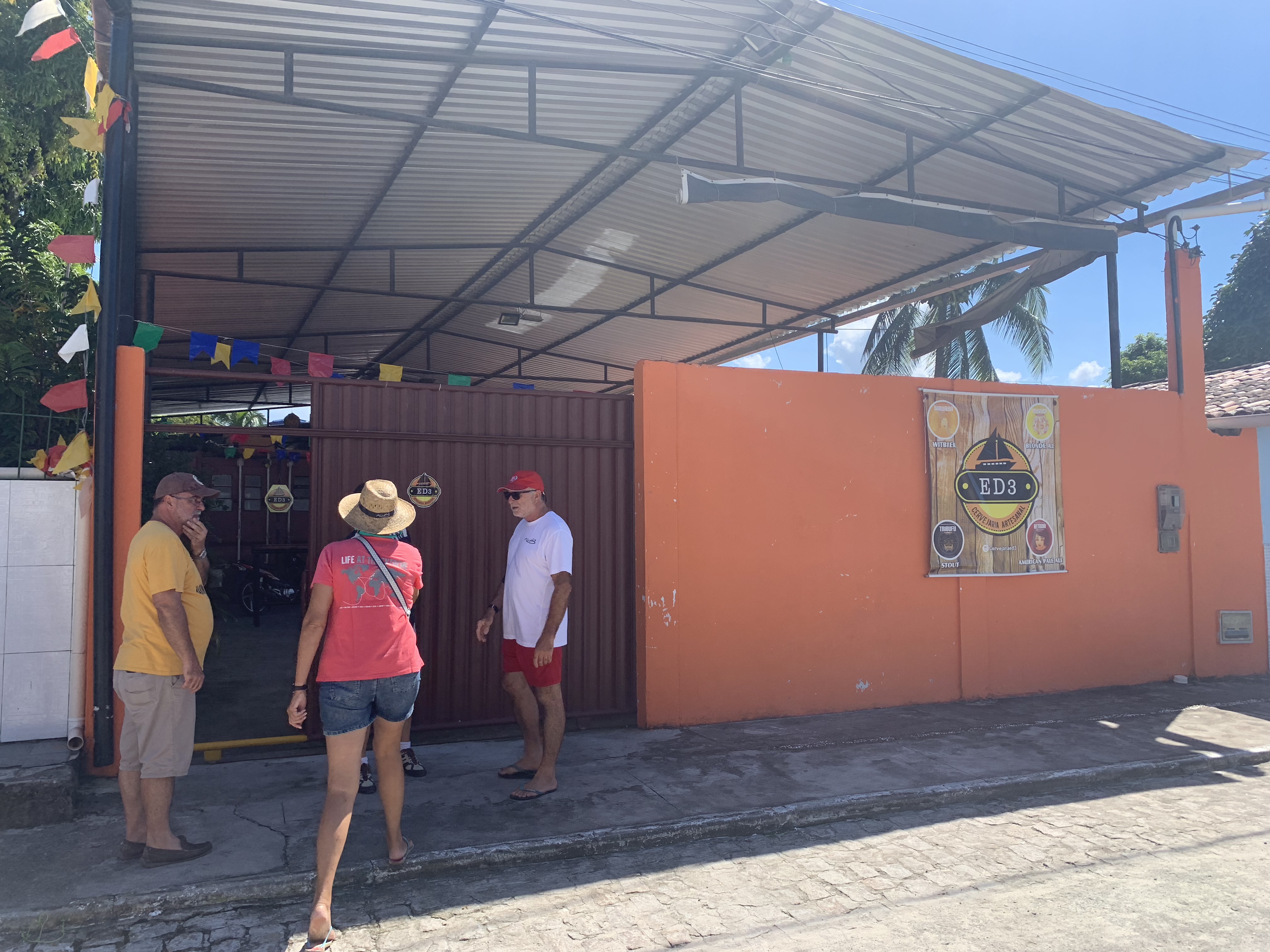
Outside the ED3 bar — Festa Junina bunting over an orange colonial-style façade
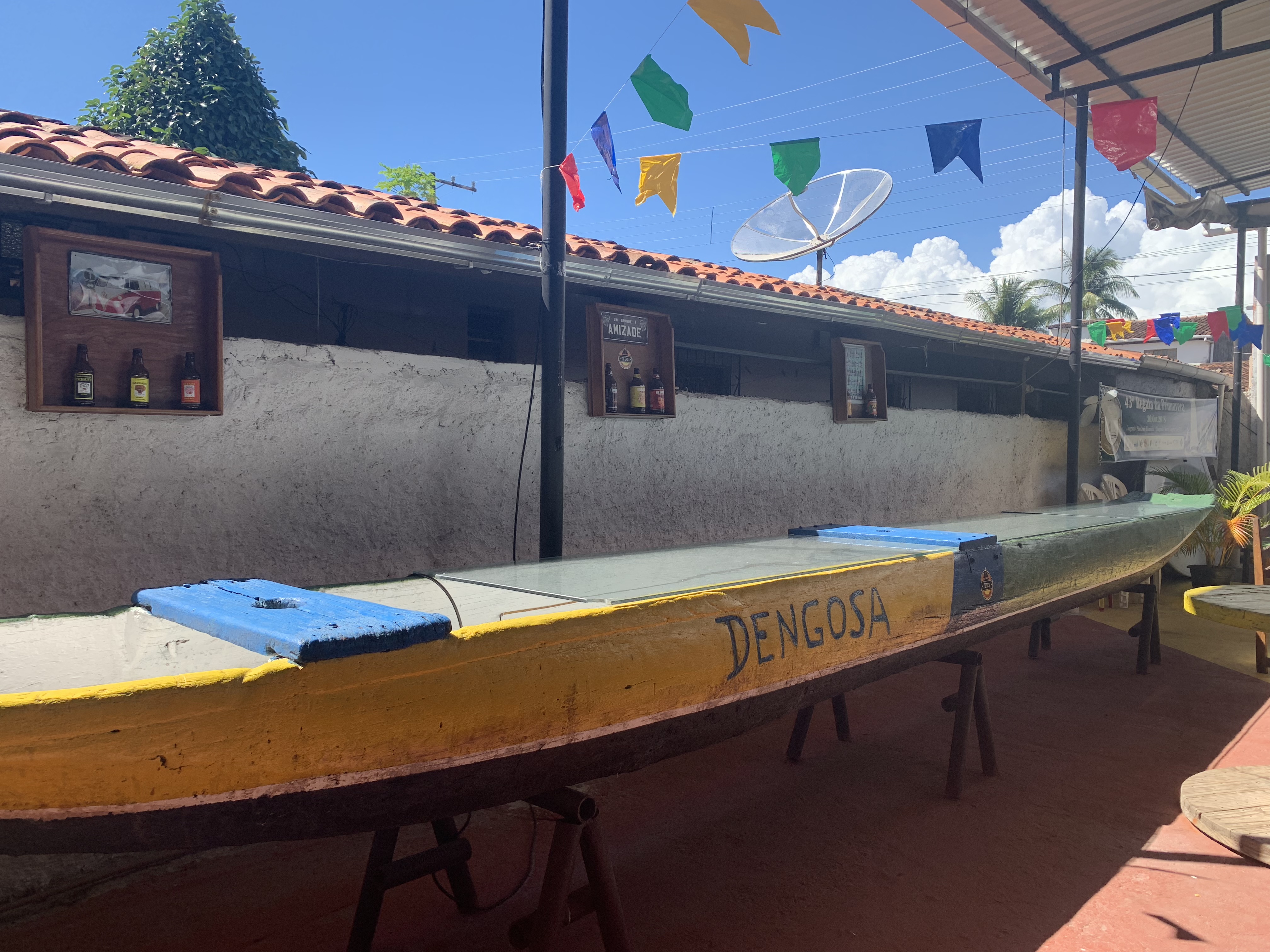
The fishing boat Dengosa, retired from the bay and repurposed as the bar's centrepiece
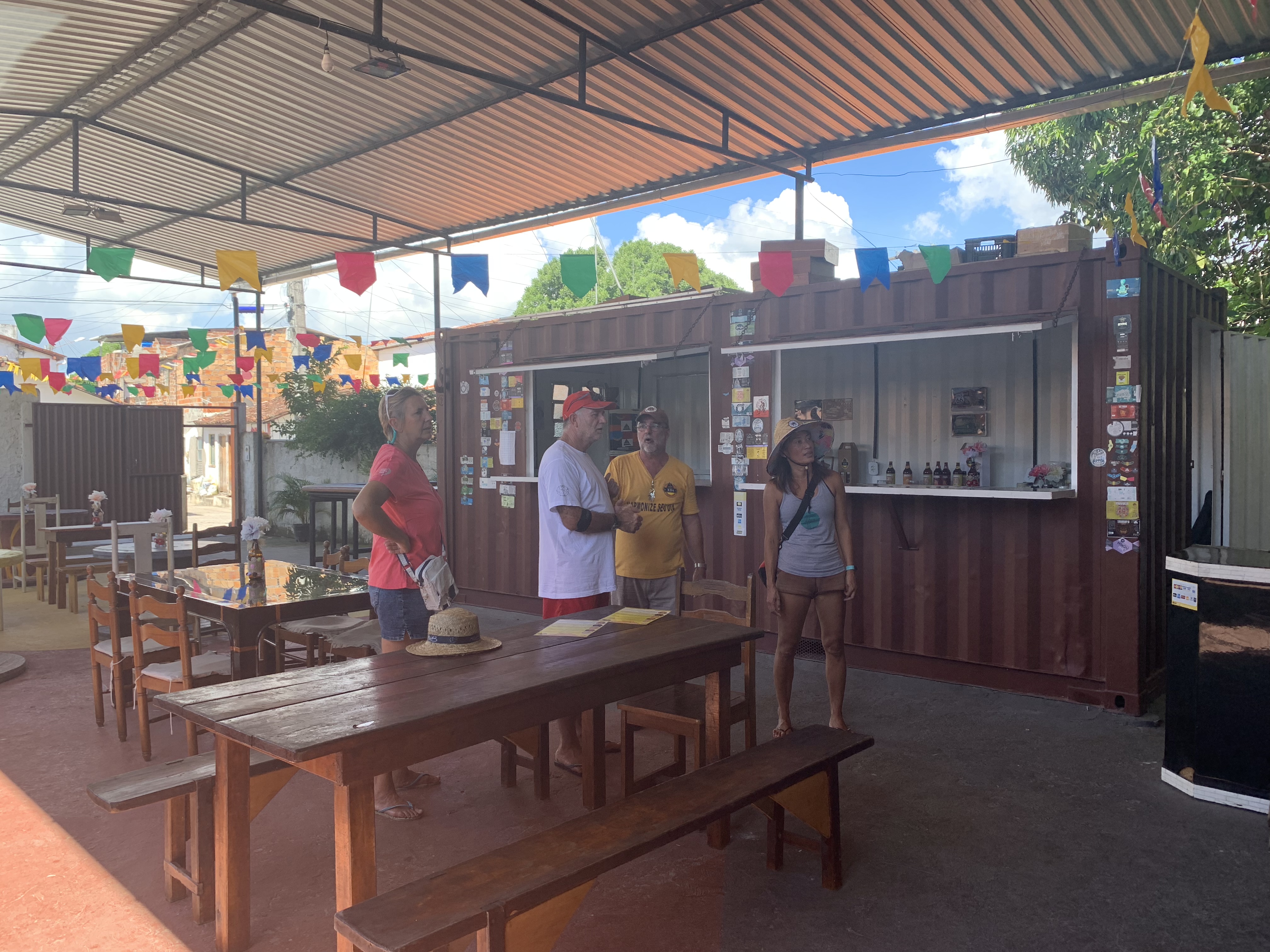
Inside ED3 — the bar counter is a repurposed shipping container; a craft brewery is hidden in the room behind