Porto Seguro, May 2019
According to popular belief, Pedro Álvares Cabral landed here in 1500 and that's why the town was named Porto Seguro (Safe harbor). However, what is officially considered the first Portuguese landfall in Brazil is Coroa Vermelha, some 16 kilometers north.
Cabral sighted land most probably at Monte Pascoal, located between Cumuruxatiba and Porto Seguro, then sailed north and skipped Porto Seguro because the entrance in the river was not safe. When they reached Cabralia which is protected from the winds from the north and also the south, and this makes it a good anchorage, they went on land, erected a cross and held a mass to mark the occasion.
Apparently, it was only three years later Gonçalvo Coelho’s expedition arrived and planted a marker in what is now Porto Seguro.
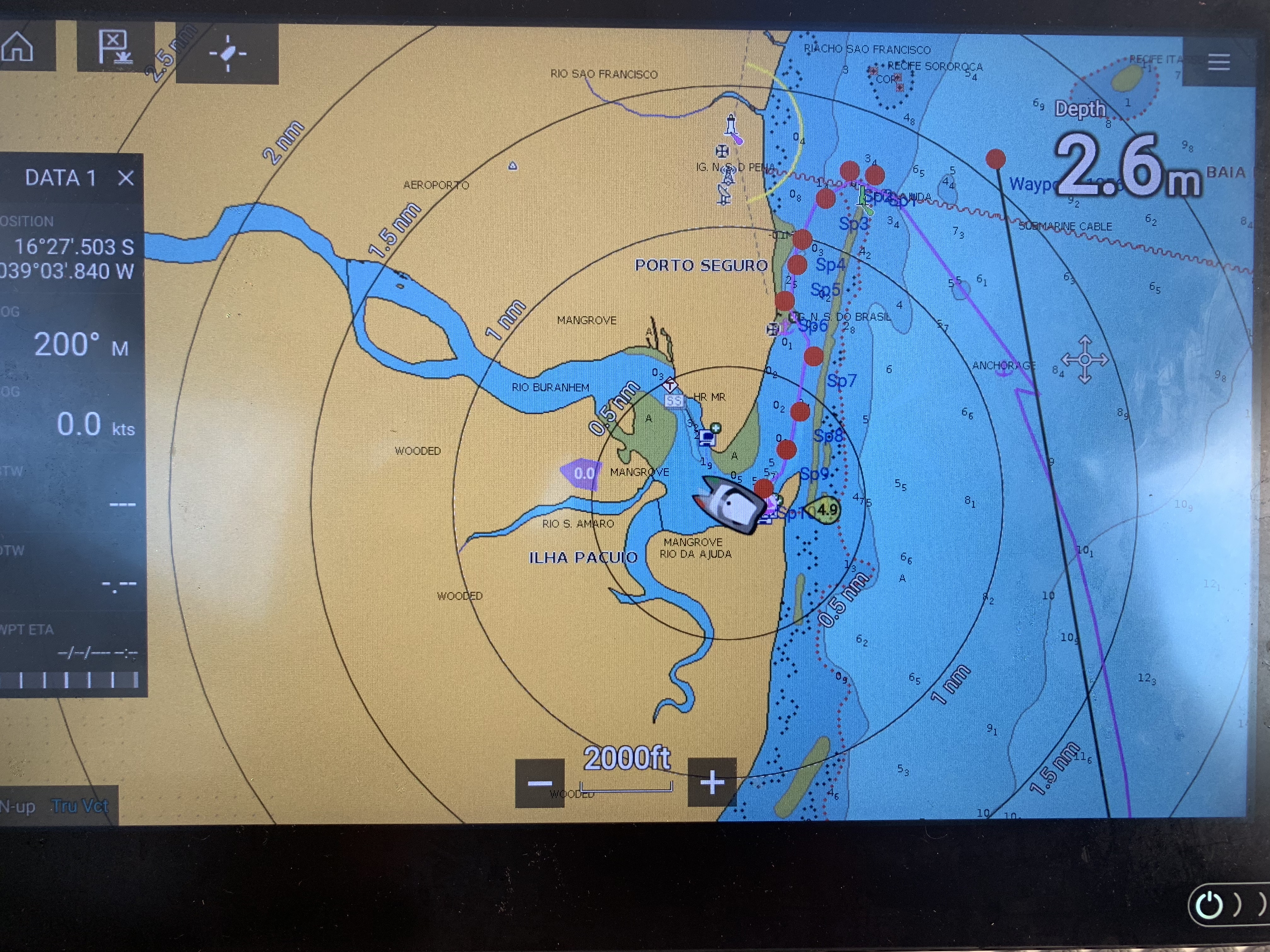
Raymarine Axiom chart plotter
The entrance into Porto Seguro is very tricky, because there are sand bars and reefs. Luckily, we met a fisherman at the entrance that guided us in. Anchoring in Porto Seguro is even trickier because there is very little room to swing, the currents are very strong (up to 4 knots) and you need to set bow and stern anchors.
This is what happened to a boat that was moored in the marina during the night:
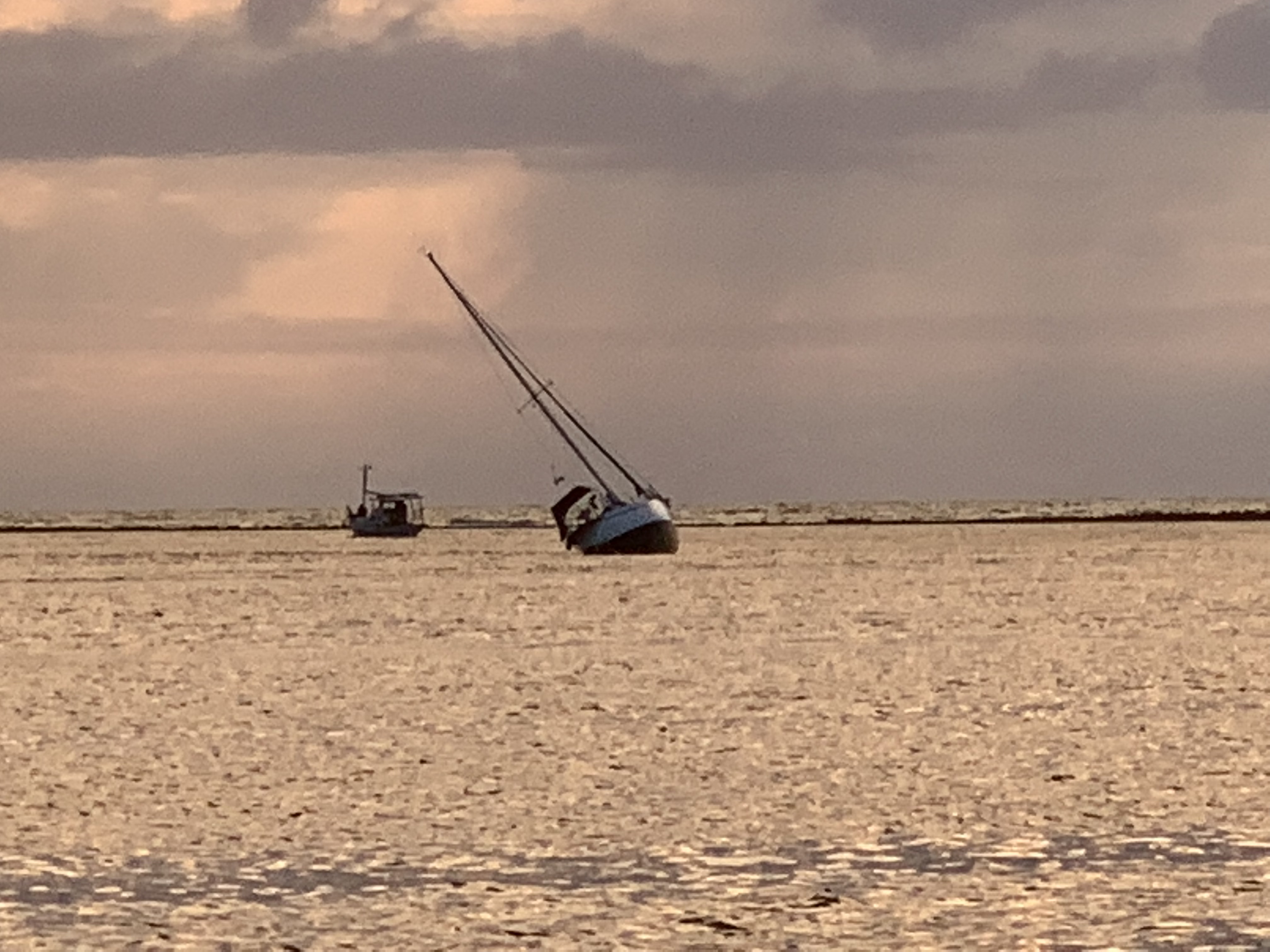
Boat aground in Porto Seguro
We anchored very close to the channel where you have these strange ferries carrying cars and passengers from one bank of the river to the other, the nearest bridge being some 30 km away.
Of course having no experience in anchoring in rivers with strong current, the operation took us quite a while. By the time we finished, it was dark and I was exhausted. Of course, as soon as I get into the shower, the Navy shows up with their patrol boat and the blue and red light flashing.
They kindly informed us about the formalities and they had me promise that I would show up at their base the following day. Next morning both me and Joaquin, armed with a thick stack of paper, paid a visit to the Navy. The person in charge was very nice, and everything went well.
The town itself seems very touristic, with dozens of bars and restaurant. But being off season, we were probably the only tourists.
Leaving Porto Seguro was even trickier: my stern anchor, an aluminum Danforth anchor was stuck in the mud. Luckily, a fisherman come to my rescue and helped me retrieving it.
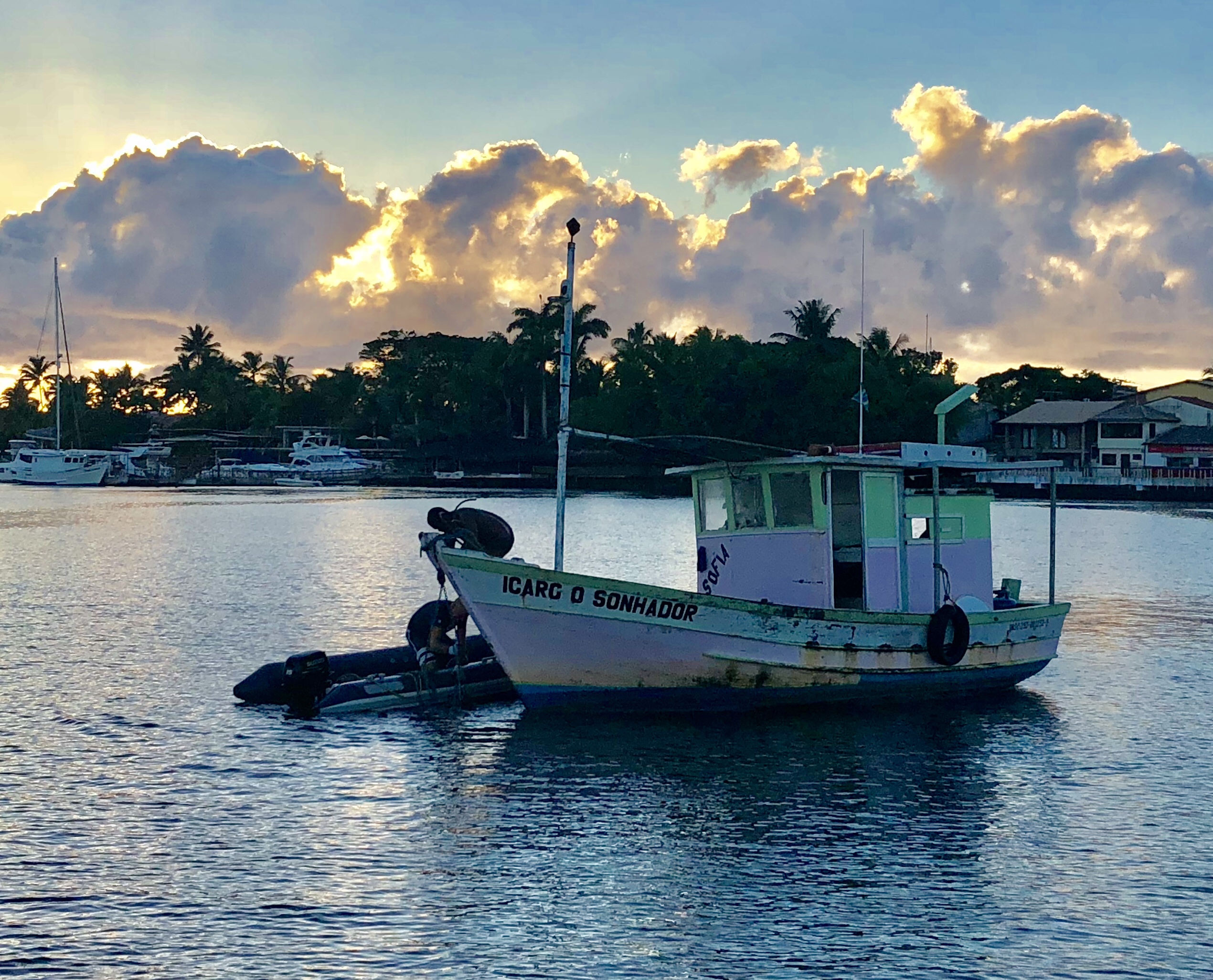
Anchor fauled in Porto Seguro
Then, my primary anchor got fouled with an old fisherman anchor. Luckily, Yuka and I were able to get the chain untangled.
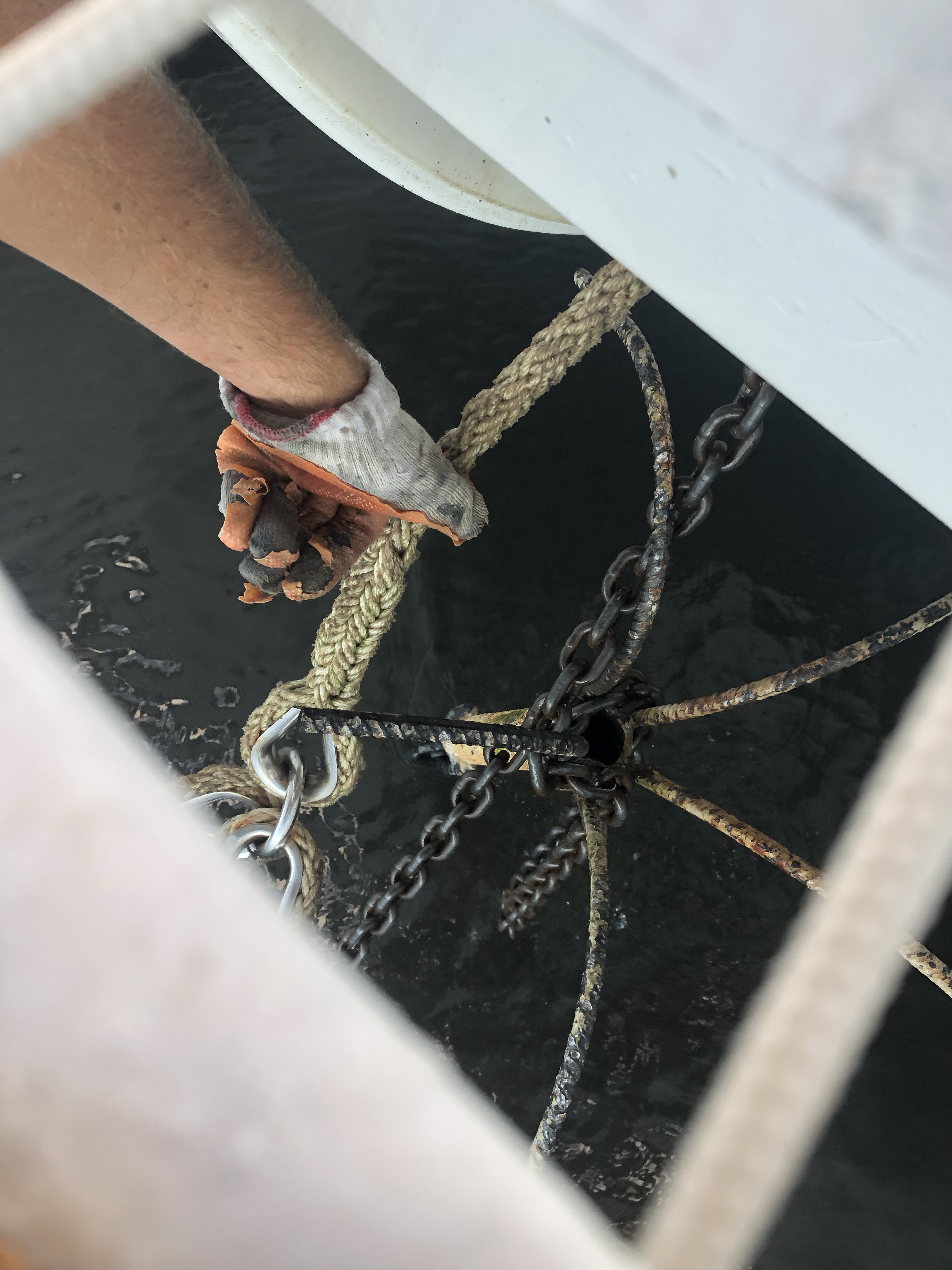
Fisherman's anchor on top of mine in Porto Seguro
Now we understand why most cruisers avoid Porto Seguro and opt to anchor in Santo André instead (some 10nm north). Then they take a bus to visit Porto Seguro. It's just not worth the hassle.
We just come here because we thought this was the first Portuguese landfall in Brazil. And at the end we discovered that it was not.
Cidade Alta — The Colonial Upper Town
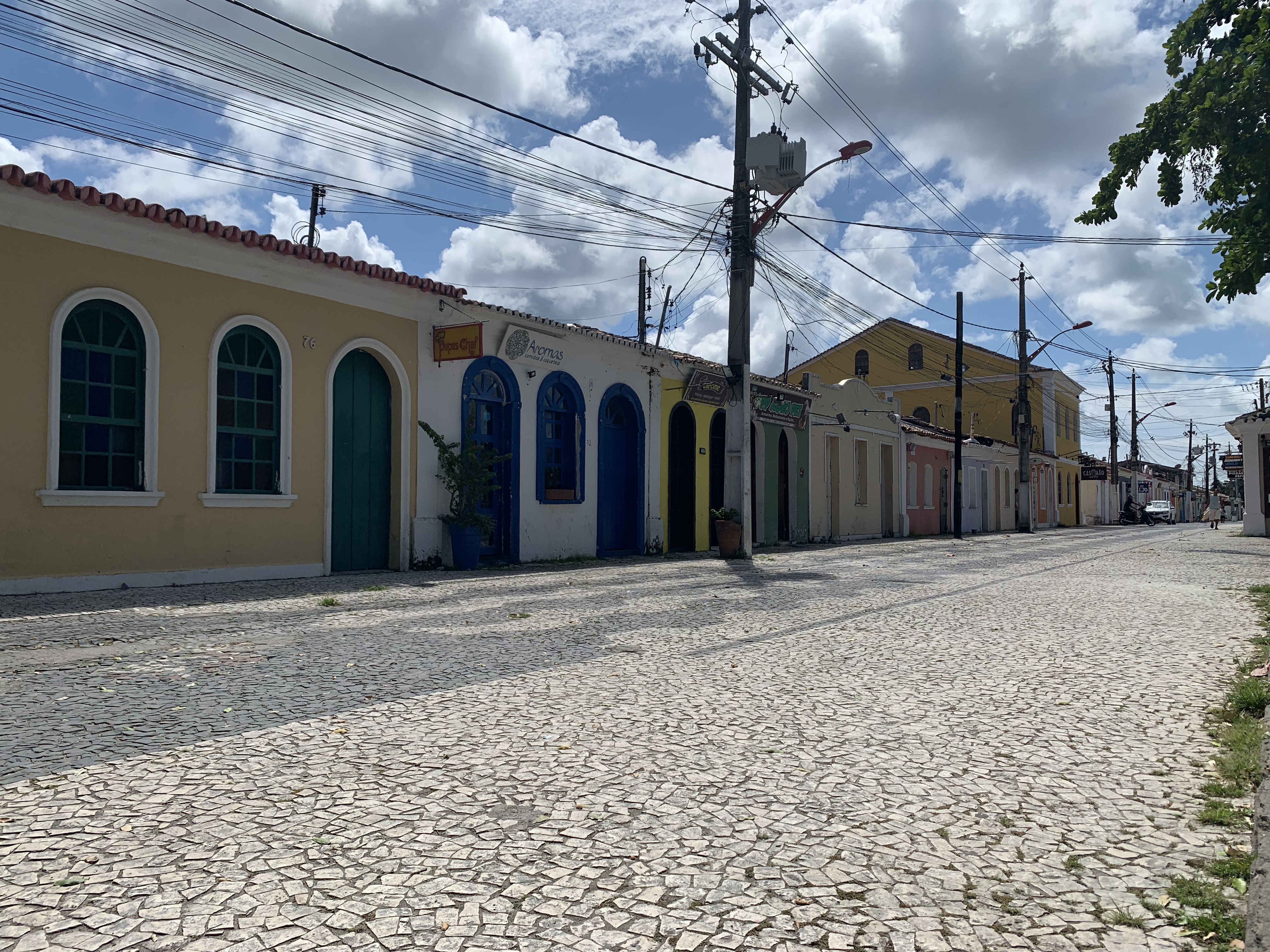
Despite the anchoring ordeal, Porto Seguro has a genuinely appealing historic centre. The Cidade Alta — the old colonial upper town — sits on a bluff above the river, reached by a steep stepped lane. Off-season, the cobblestone streets were almost deserted: arched doorways painted in terracotta and blue, whitewashed walls, a church dating to the 16th century. The kind of quiet that makes you feel you arrived somewhere before the crowds did.
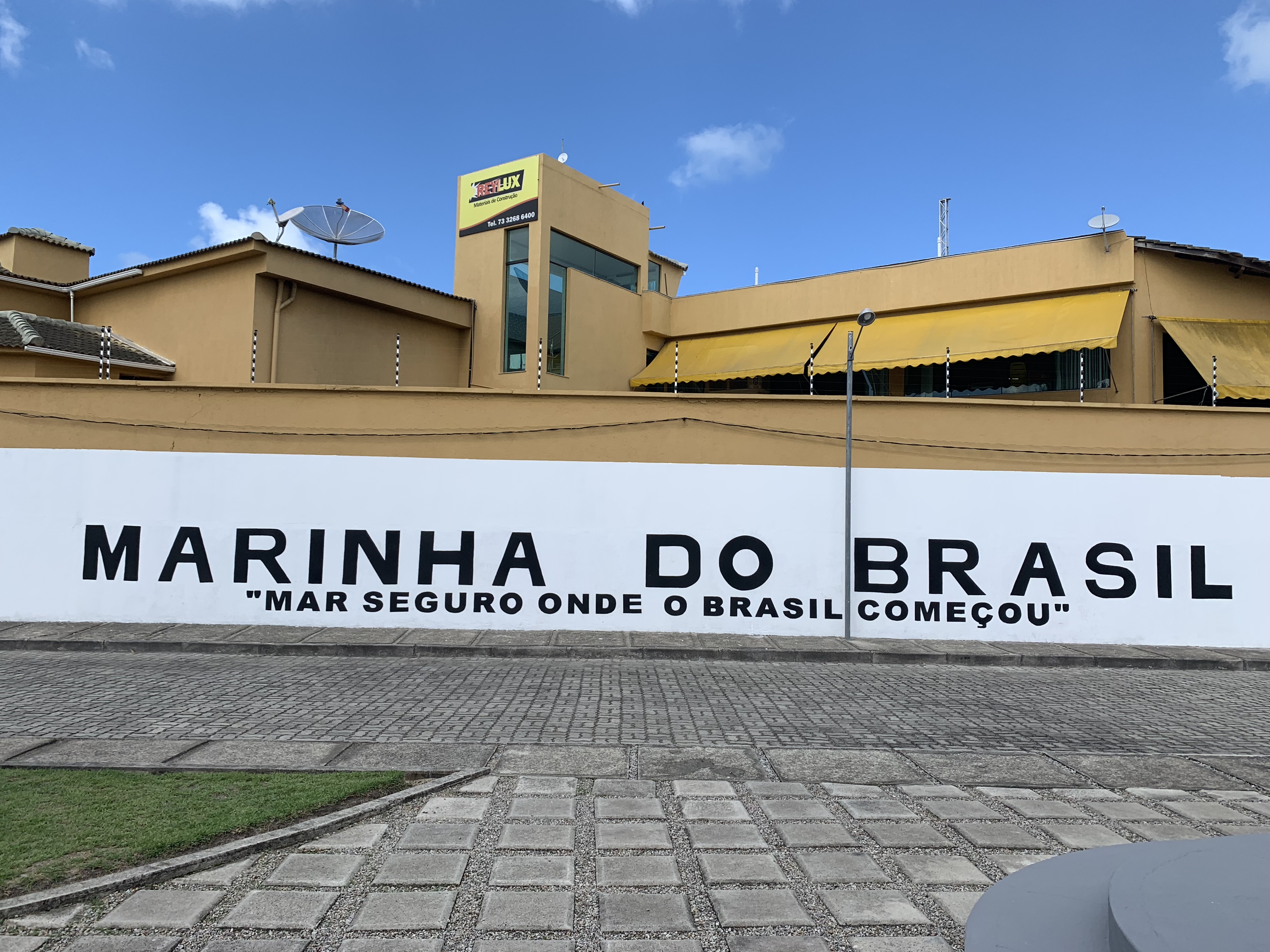
The Marinha do Brasil base on the waterfront carries a motto that sums up the town’s founding identity: “Mar seguro onde o Brasil começou” — Safe sea where Brazil began. Whether or not Cabral actually came ashore here, the town knows exactly what it represents.
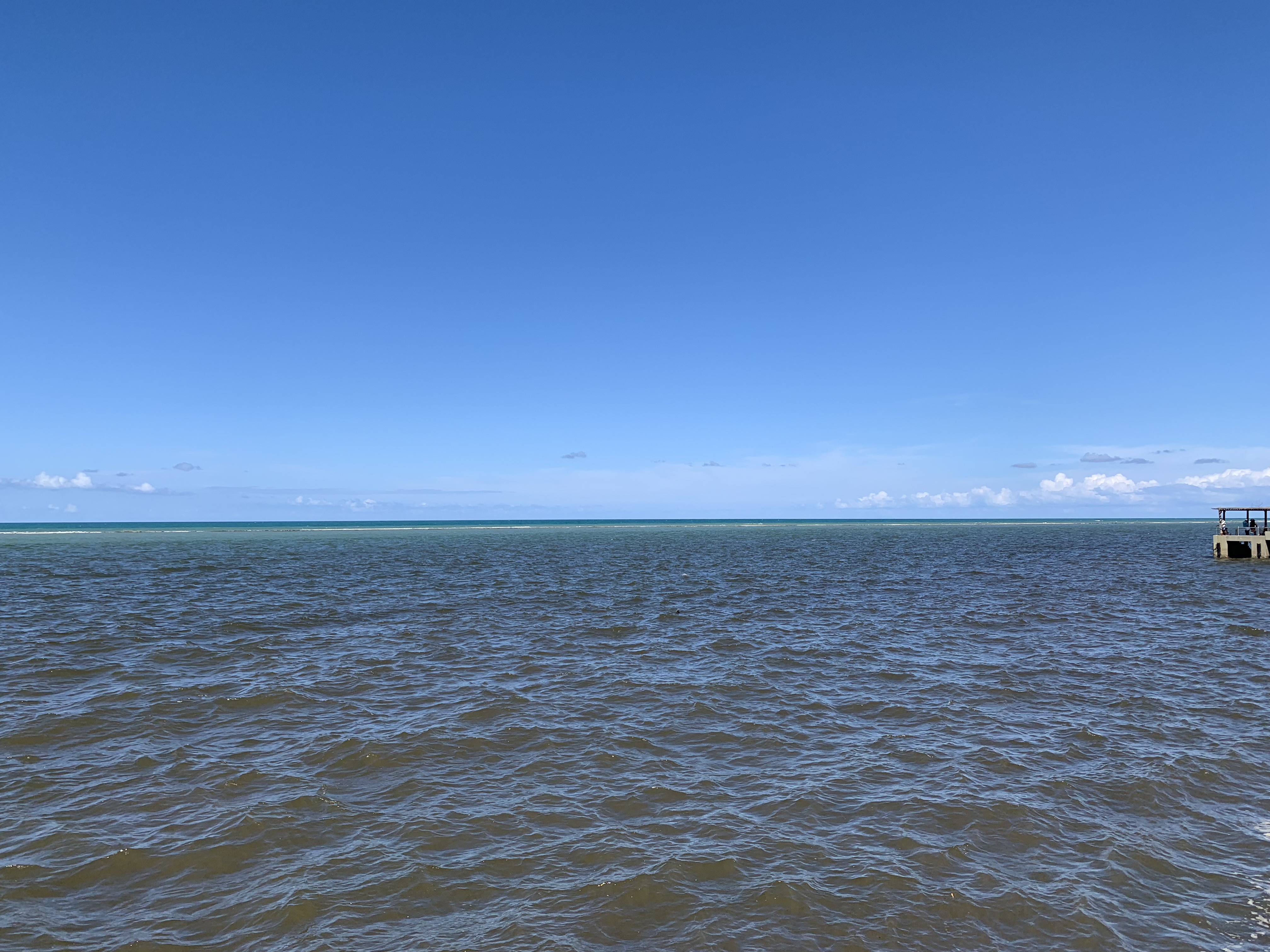
Out past the river entrance, beyond the sand bars that gave us so much trouble on the way in, the reef sits just below the surface: a stripe of turquoise against the deep blue of the open sea. From the anchorage it is beautiful to look at. From the helm on the way in it is something else entirely.
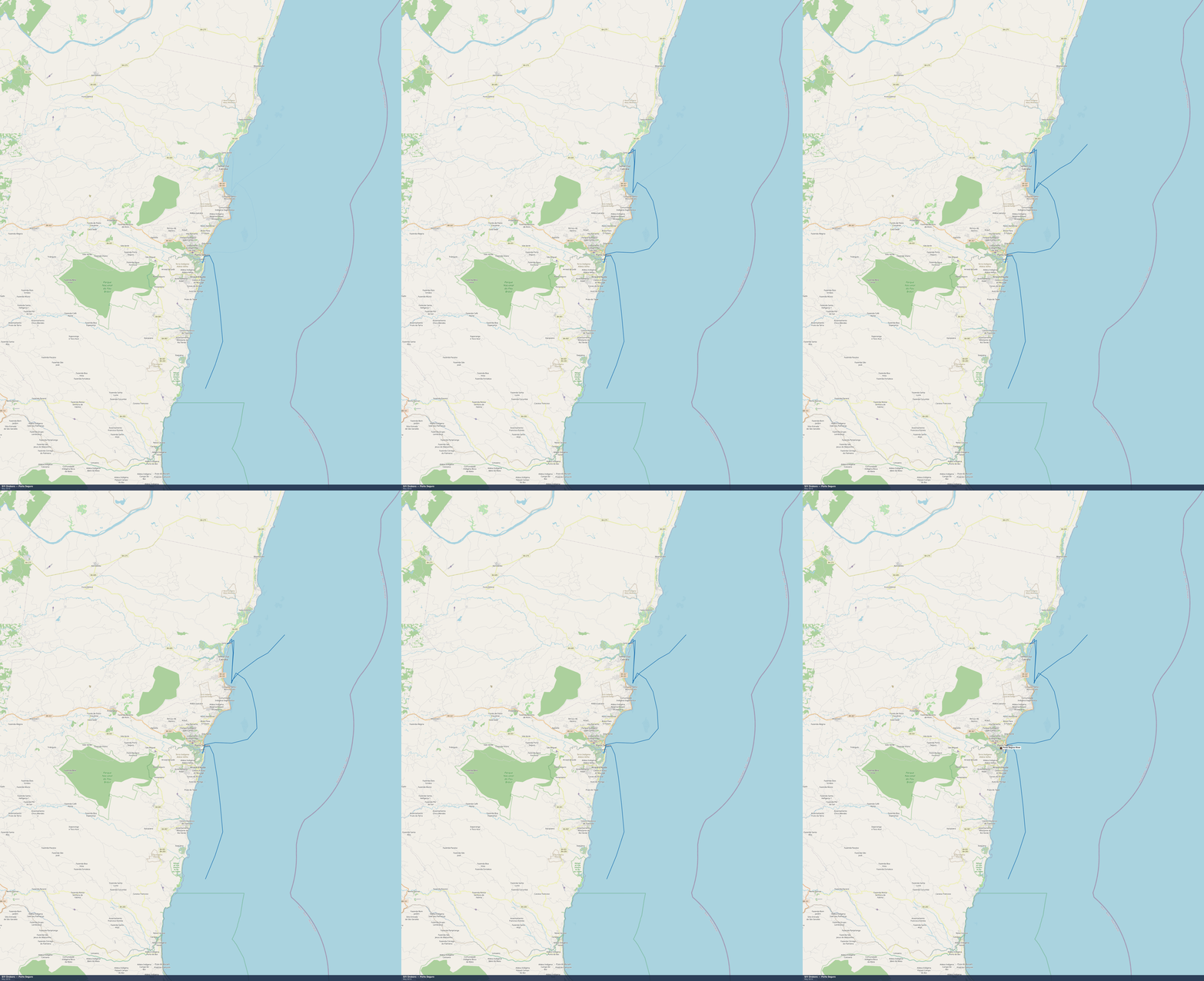
S/V Oroboro GPS track — Porto Seguro, Brazil — May 2019 • GPS data from Raymarine chartplotter • Map © OpenStreetMap contributors
Every anchorage — Porto Seguro, May 2019
A tricky river entrance with 4-knot current, Navy formalities, and a historic colonial centre.
| Stop | Date | Notes |
|---|---|---|
| Porto Seguro River | May 2019 | 4-knot current · bow & stern anchors · Navy despacho · historic colonial upper town |
Anchorage maps
Zoomed chart of the Porto Seguro river anchorage.
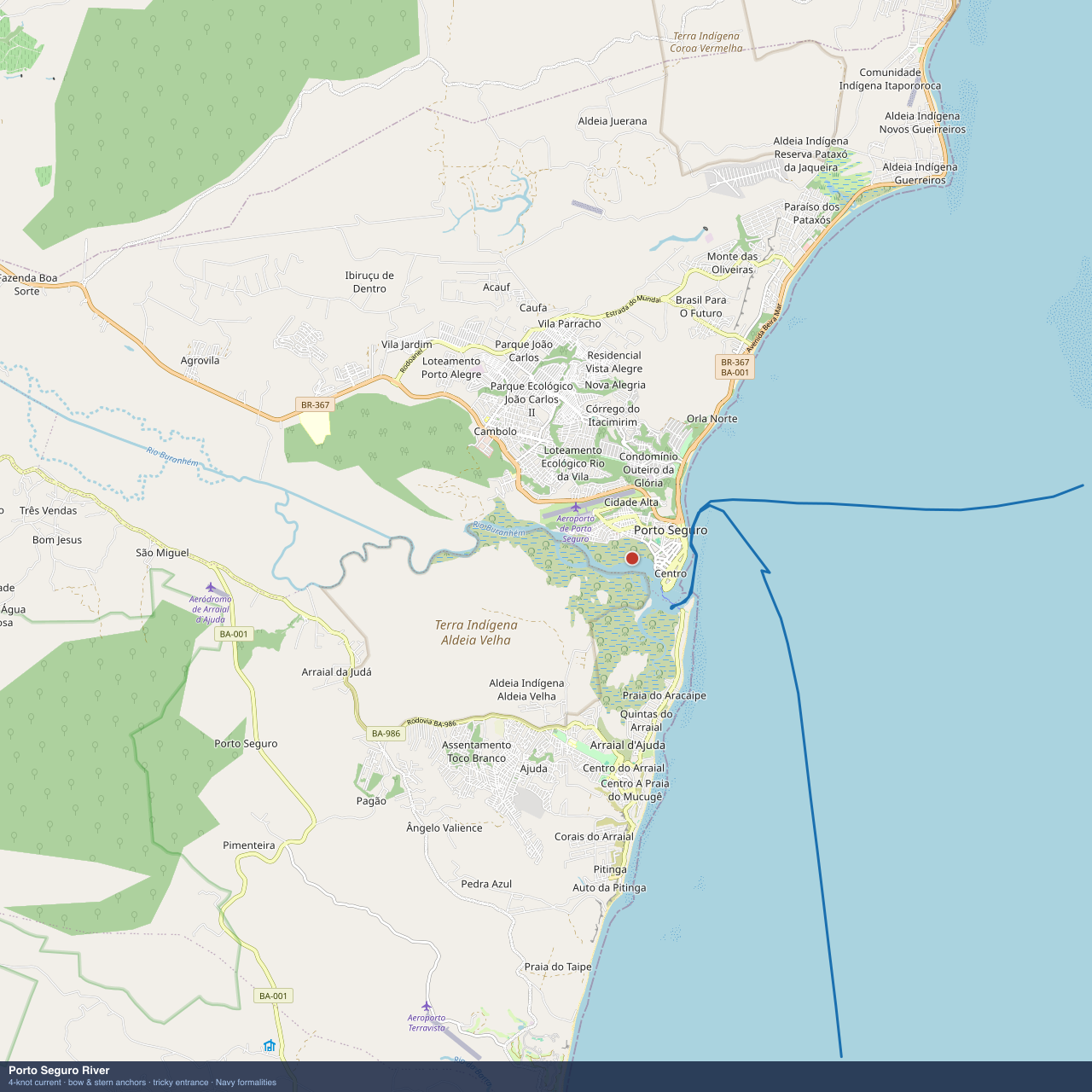
Porto Seguro River
Map data © OpenStreetMap contributors. GPS tracks from Raymarine chartplotter, archived May 2019.