St Helena, January 2019
Sailing Oroboro Podcast — Episode 3
St. Helena: Napoleon's Island
After 25 days at sea from Cape Town, Oroboro drops anchor at one of the most remote and storied islands on Earth. Napoleon died here. Halley mapped the stars here. And Jonathan — a giant tortoise born in 1832 — is still very much alive here.
Oroboro dropped anchor at St Helena on Wednesday, January 9, 2019. St Helena is an iconic place — it was cut off from the rest of the world for centuries. No wonder the British chose this island to exile Napoleon after he escaped from Elba, in Italy.
St Helena could only be reached by sea until a few years ago, when an airport was built. Now there are weekly flights from Johannesburg every Saturday, but the hoped-for wave of tourists never materialised, leaving local businesses and investors in debt and struggling to survive.
Luckily the town is still unspoiled — they built only two hotels since the airport opened. So you can still enjoy the place as it has always been.
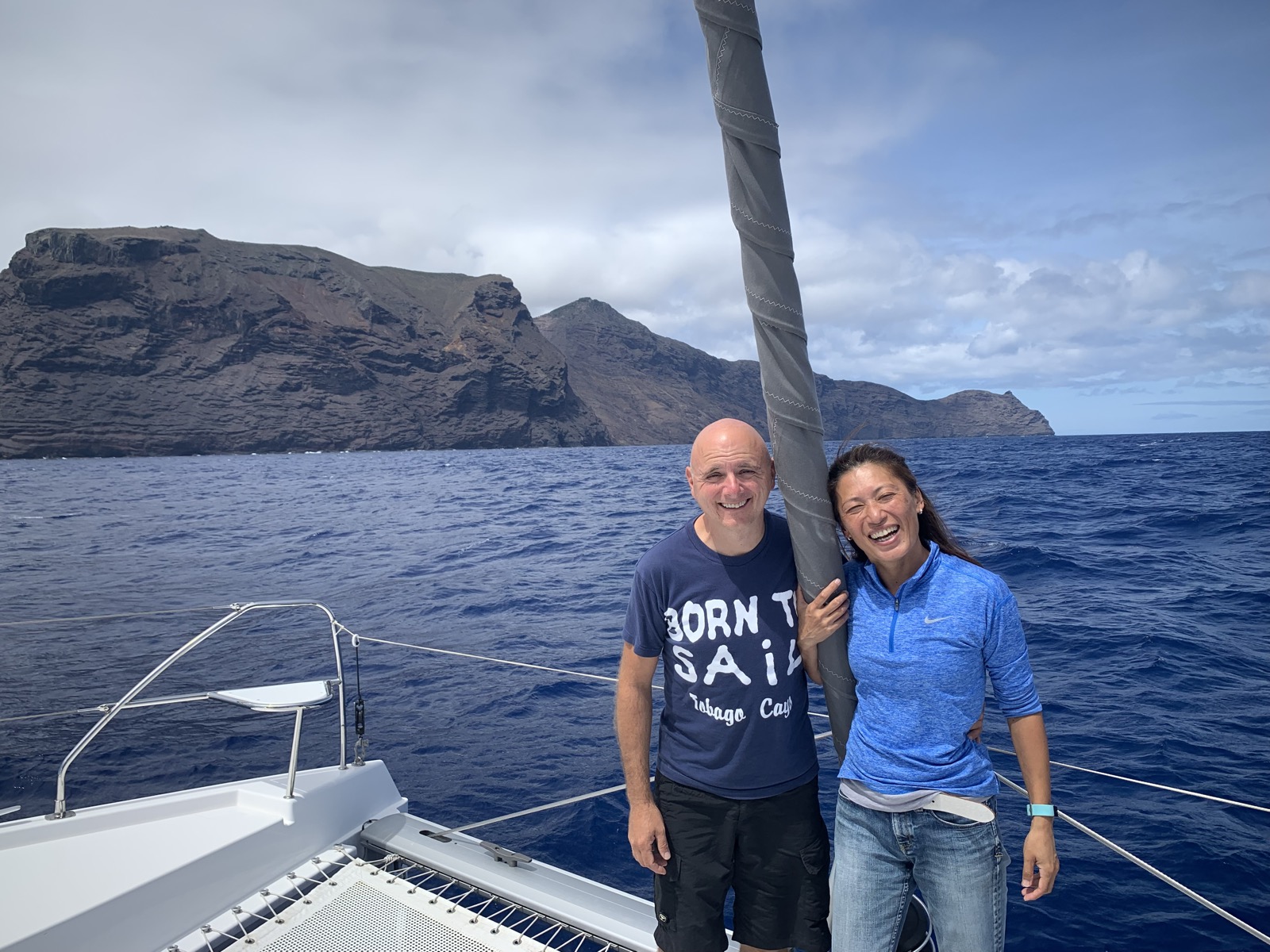
Francesco and Yuka on Oroboro's bow, St Helena's dramatic black volcanic cliffs towering behind them over deep blue ocean
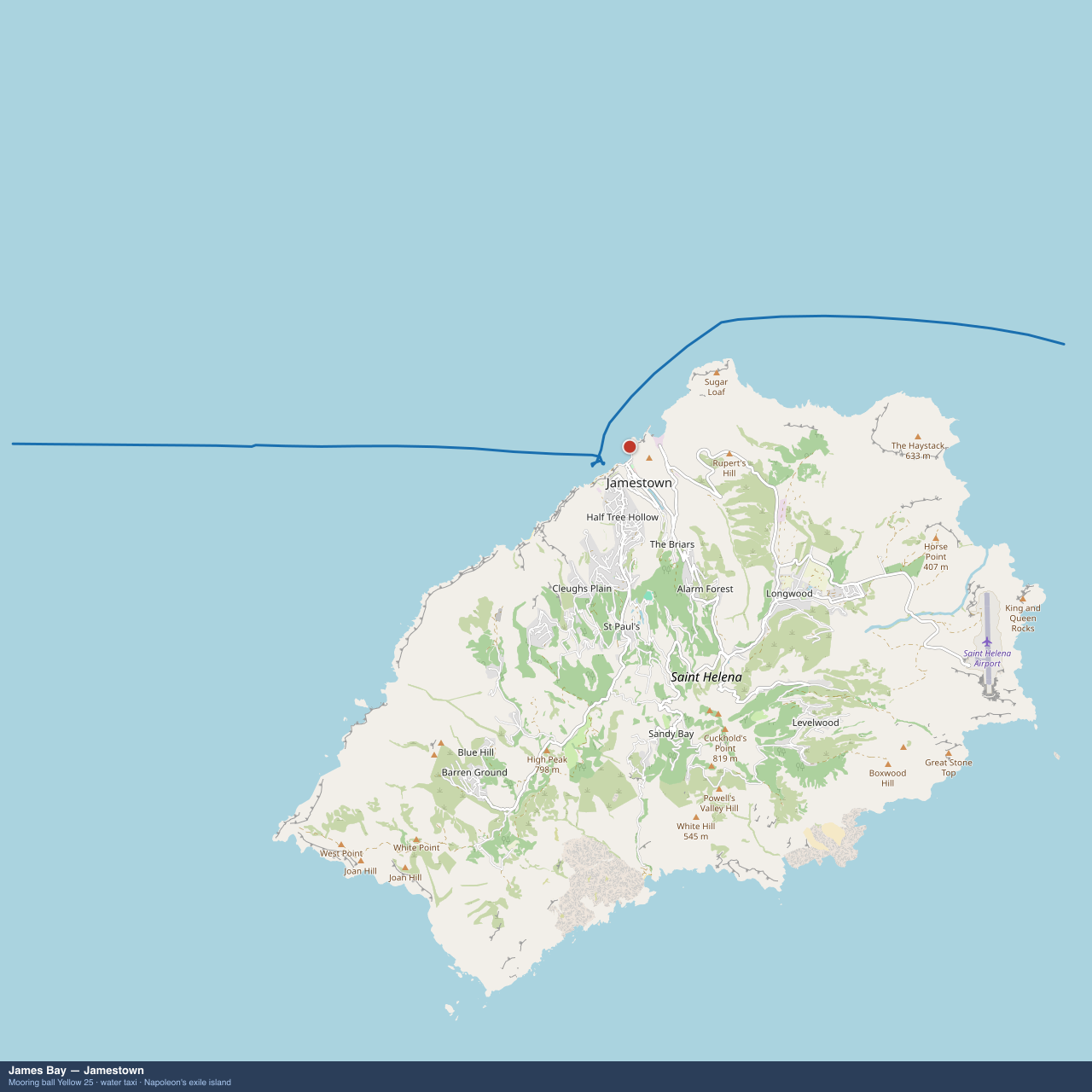
In St Helena you can't anchor: you need to pick up a mooring ball. The mooring area is on the west side of town and there are two sets of buoys — yellow for boats up to 25 tons, red up to 35 tons. Call Port Control on VHF channel 16 when approaching and they'll assign you a buoy. The buoys are clearly numbered. We picked up Yellow 25. The first day is free; after that it costs £2–3 per day.
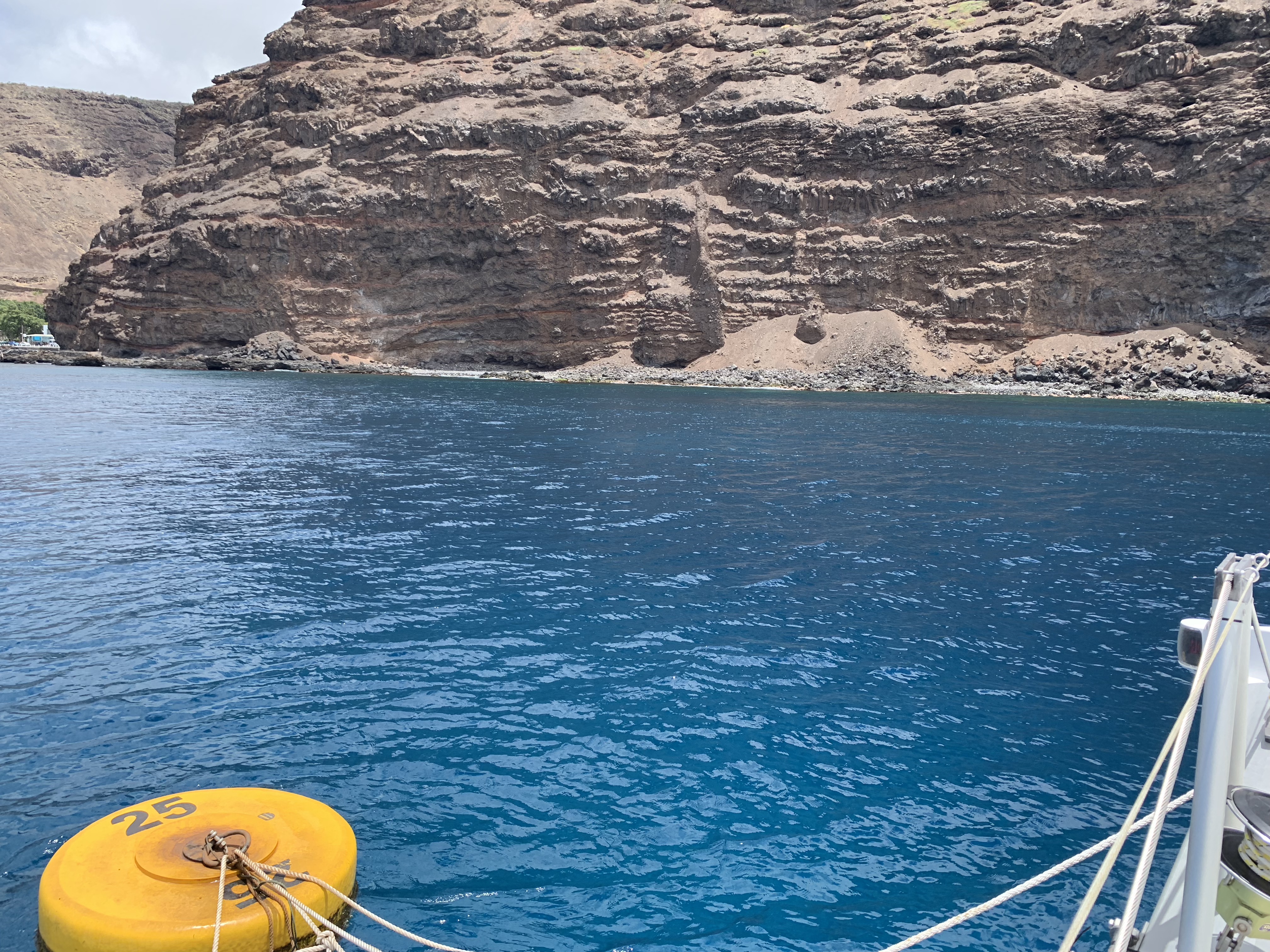
St Helena anchorage from the water
To go ashore you need to take a water taxi. You can call them on the VHF — it's a little wooden boat. You pay £1.50 each way. The driver keeps track of all the rides and you can settle up all at once before leaving the island.
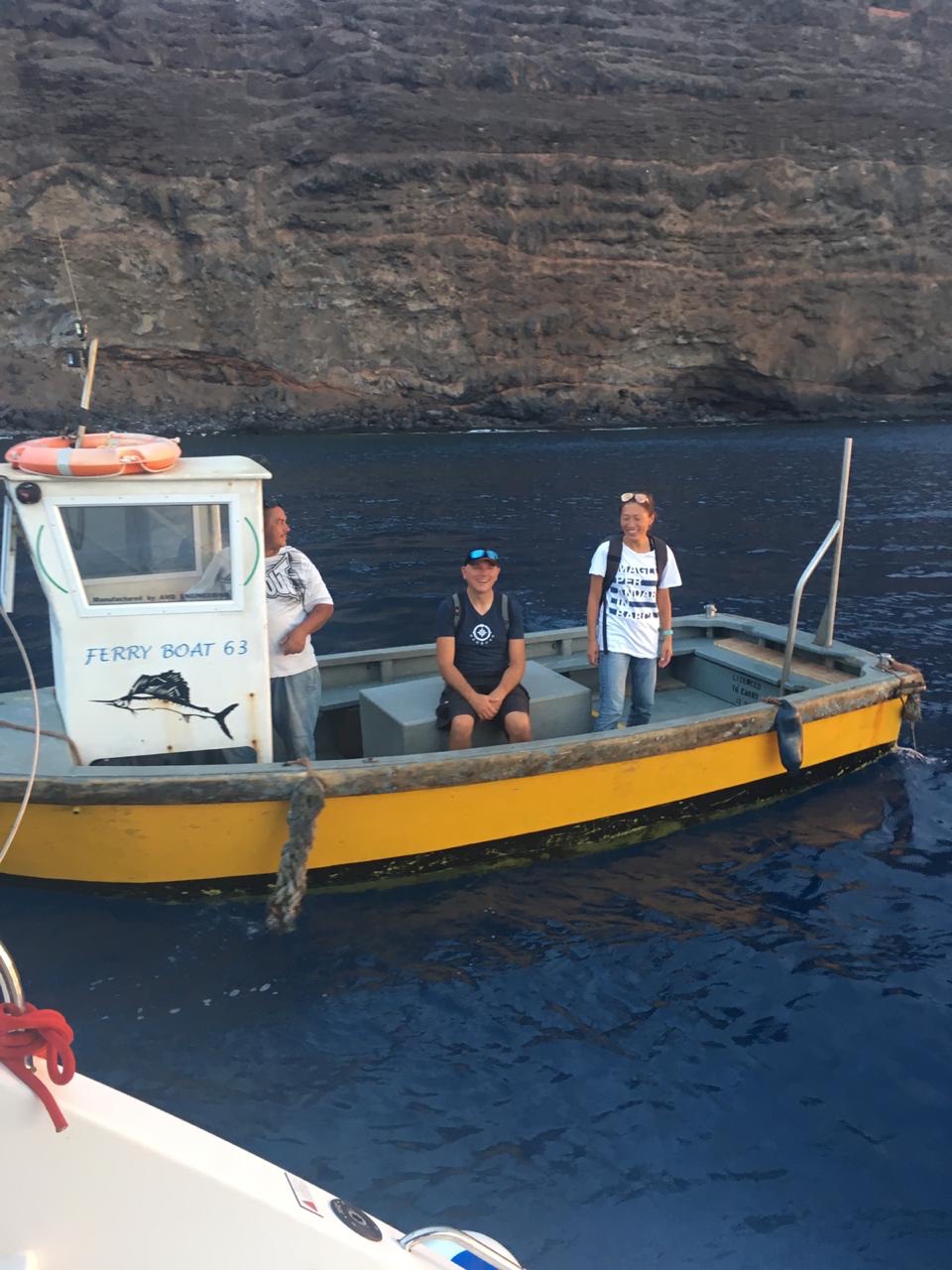
Our water taxi on St Helena island
Disembarking the water taxi can be a little tricky if the swell is up. There are ropes hanging from metal structures on the pontoon that you need to grab onto when climbing off.
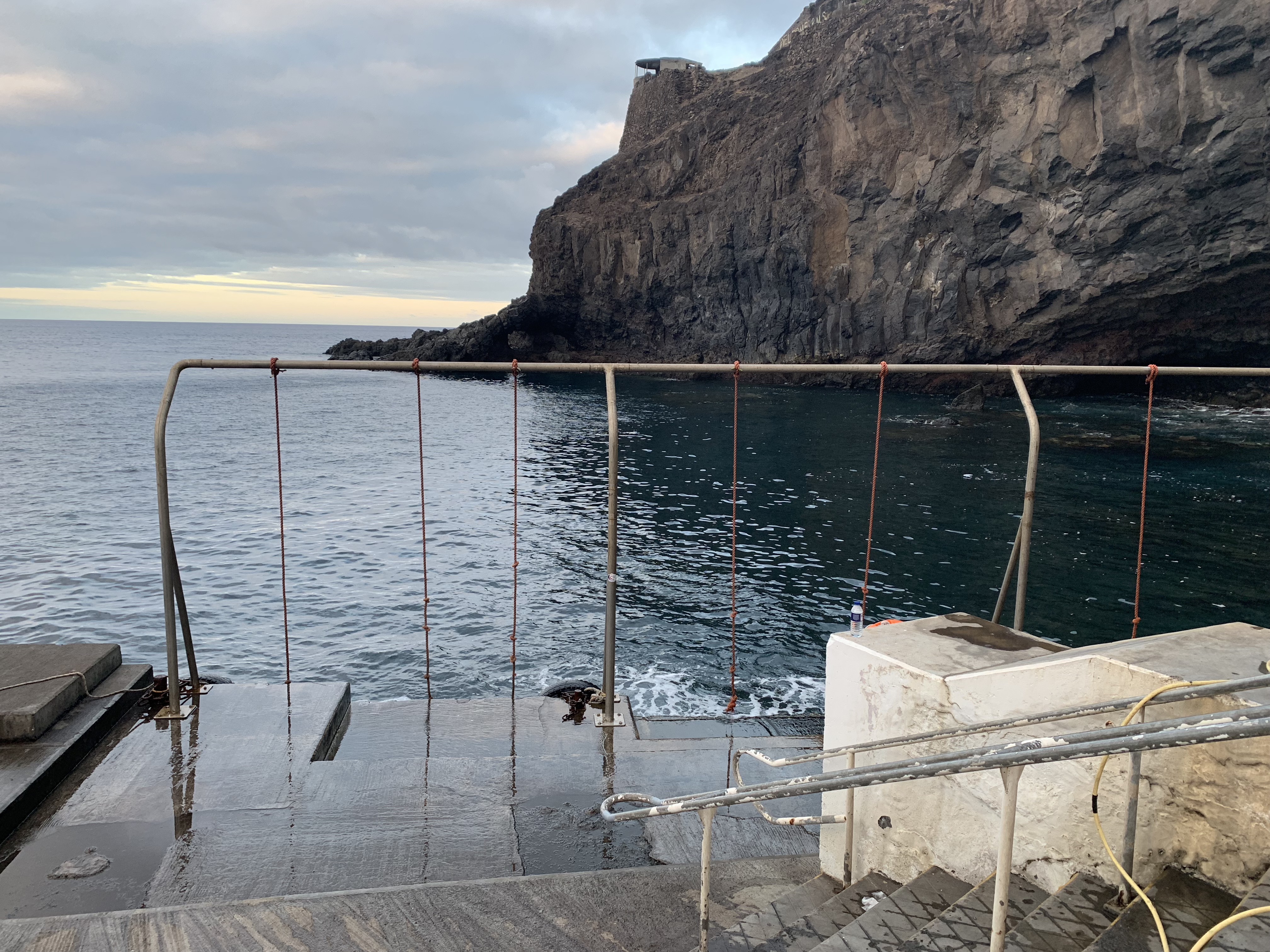
Disembarking at the Jamestown dock
Check-in formalities are straightforward. Go to Port Control first — it's right at the docks — then to Immigration, which is in the Police station up the hill (a nice walk through the village). They are open Monday through Friday. Total cost to check in is £20. When you leave, check out with Customs and Immigration; if you're leaving on a weekend, do it the Friday before. One important detail: you need to show proof of insurance that explicitly covers evacuation costs. If you don't have it, you can buy it at Solomons' Insurance Office on the island for just a few pounds.
Since 2017, there is a Yacht Club on St Helena! It is run by James and his wife, two St Helena natives who circumnavigated the globe with their kids a few years ago.
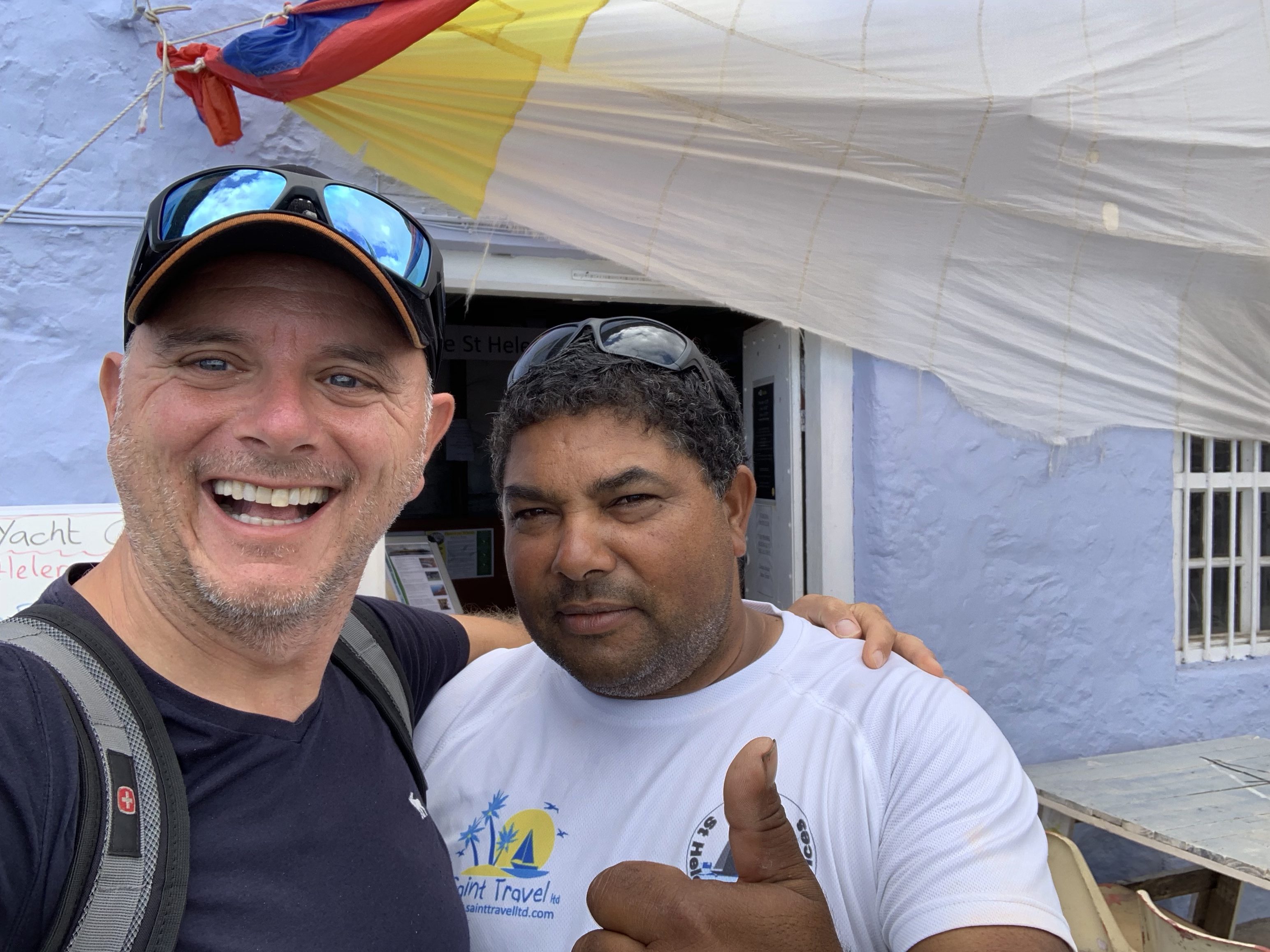
St Helena Yacht Club
At the club you can buy an internet voucher, have a beer and mingle with other sailors. Internet is super expensive on the island — a few hotspots around town all charge the same rates and are equally slow (£6.60 per hour).
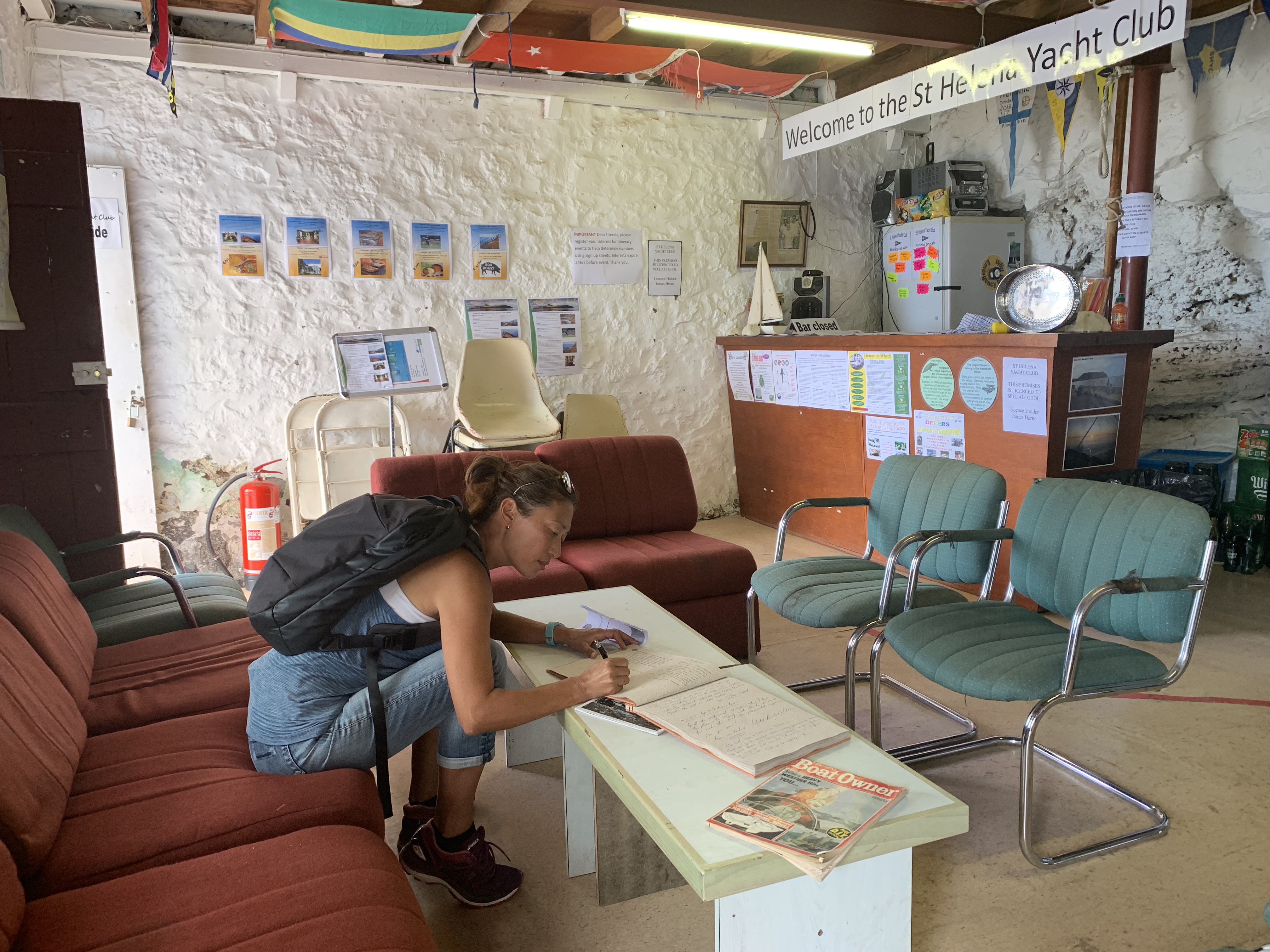
Signing the sailors' log book at the Yacht Club
7 things to see and do in St Helena
1. Anne's Place
Anne's Place is a legendary stop for sailors crossing the South Atlantic. The tradition is to sign the visitors' book — generations of bluewater sailors have passed through here. Anne's Place was the place to sign and the Yacht Club now keeps a book as well.
Anne's Place was once an iconic restaurant, but since Anne fell ill, the place is mismanaged — food is bad and service is worse. Very sad. But it's still worth stopping by to browse through the books and see what other sailors wrote when they made landfall here.
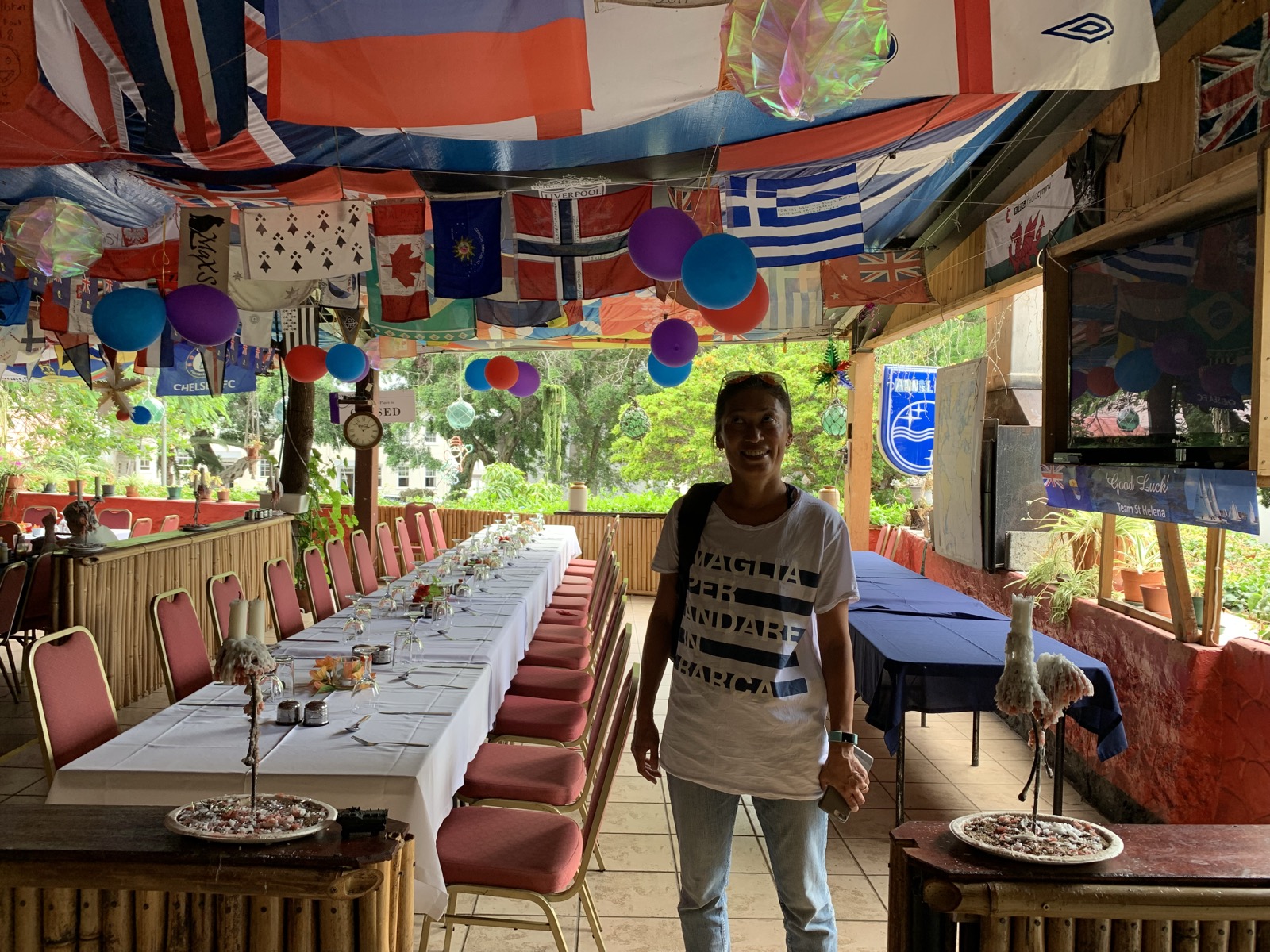
Yuka inside Anne's Place, the ceiling covered in international flags and yacht burgees from sailors who have passed through
2. Jacob's Ladder
Jacob's Ladder is one of the most extraordinary stairways in the world: 699 steps cut straight into the face of a volcanic cliff, rising 180 metres above Jamestown. The steps have a gradient of at least 40% and a walking distance of 284 metres. The fastest recorded ascent is 5 minutes and 16.78 seconds, set by Graham Doig of Scotland in 2013. We were not attempting that record.
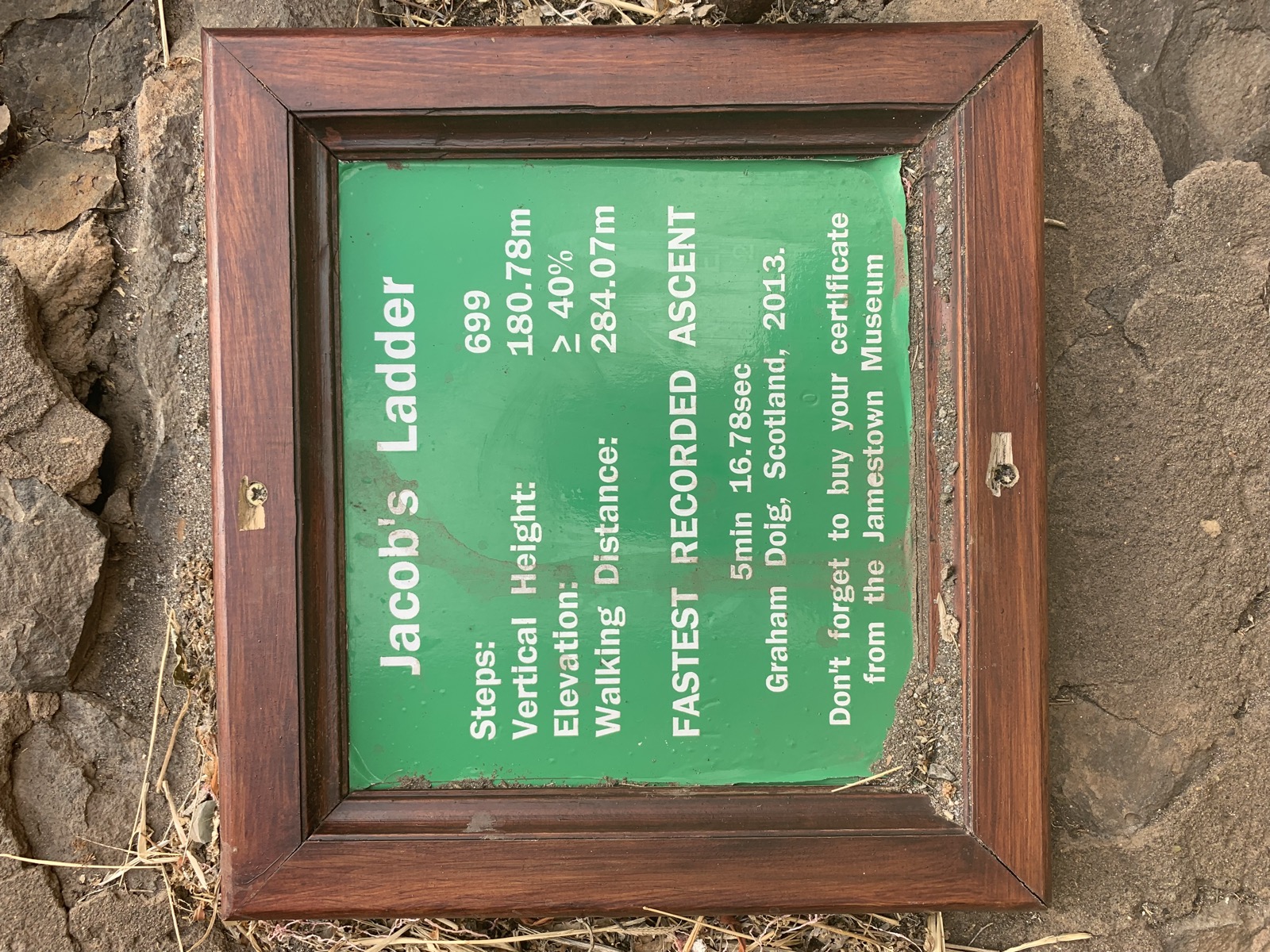
The official Jacob's Ladder sign board: 699 steps, 180.78m vertical height, fastest recorded ascent 5min 16.78sec by Graham Doig, Scotland 2013
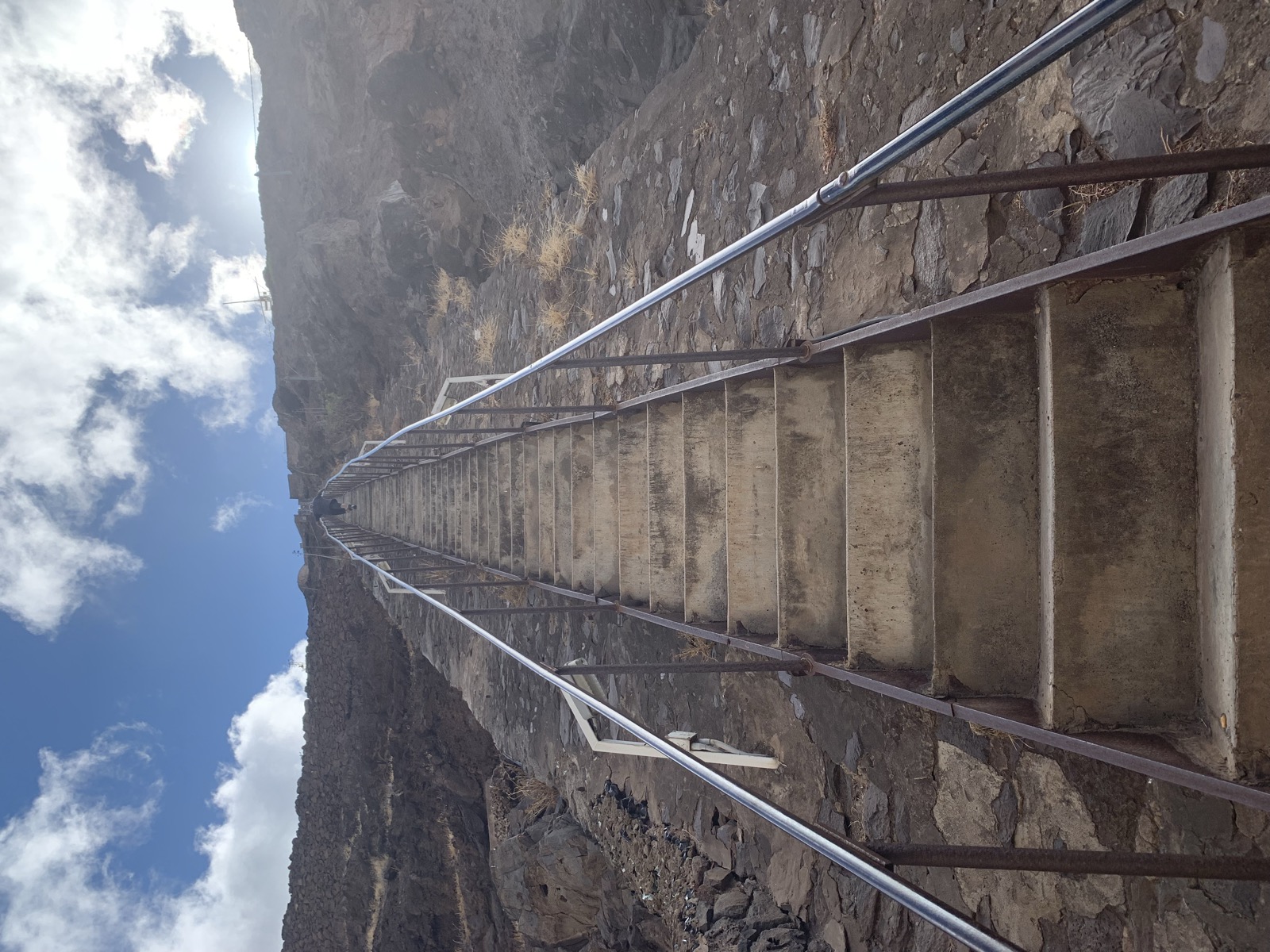
Jacob's Ladder viewed from below — concrete steps with metal railings climbing straight up the dark volcanic cliff face
The view from the top is the reward. You look back down into the Jamestown valley with the ocean at the end, and the scale of what you just climbed becomes clear.
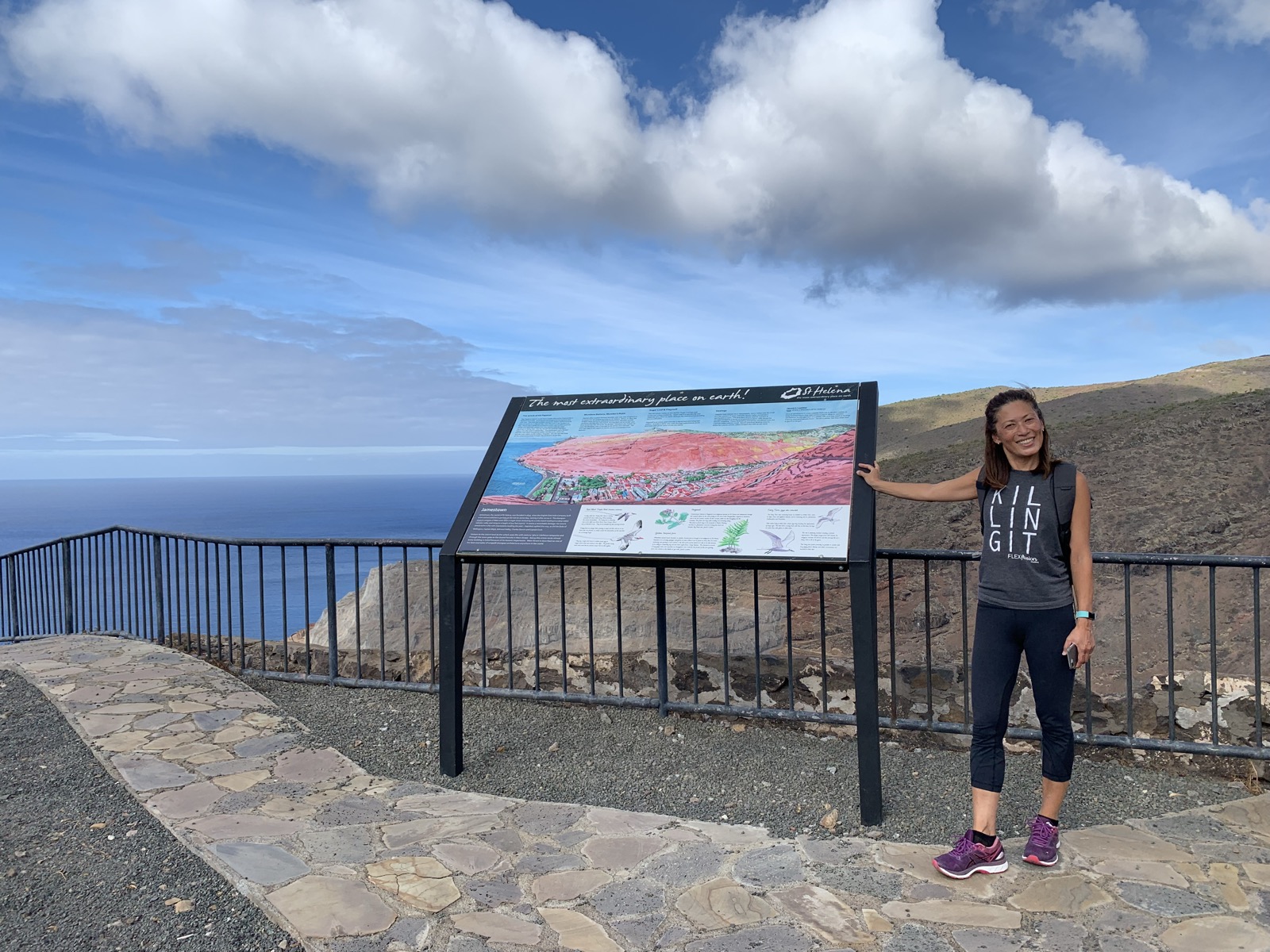
Yuka at the top of Jacob's Ladder, next to the St Helena visitor information board reading 'The most extraordinary place on earth!'
3. Napoleon's house — Longwood
Napoleon spent the last six years of his life exiled at Longwood House on St Helena. The French government owns and maintains the property today, and you can visit the rooms where he lived, worked, and eventually died. It's a sober and fascinating place — the contrast between Napoleon's imperial past and the remote, humid island where he ended his days is striking.
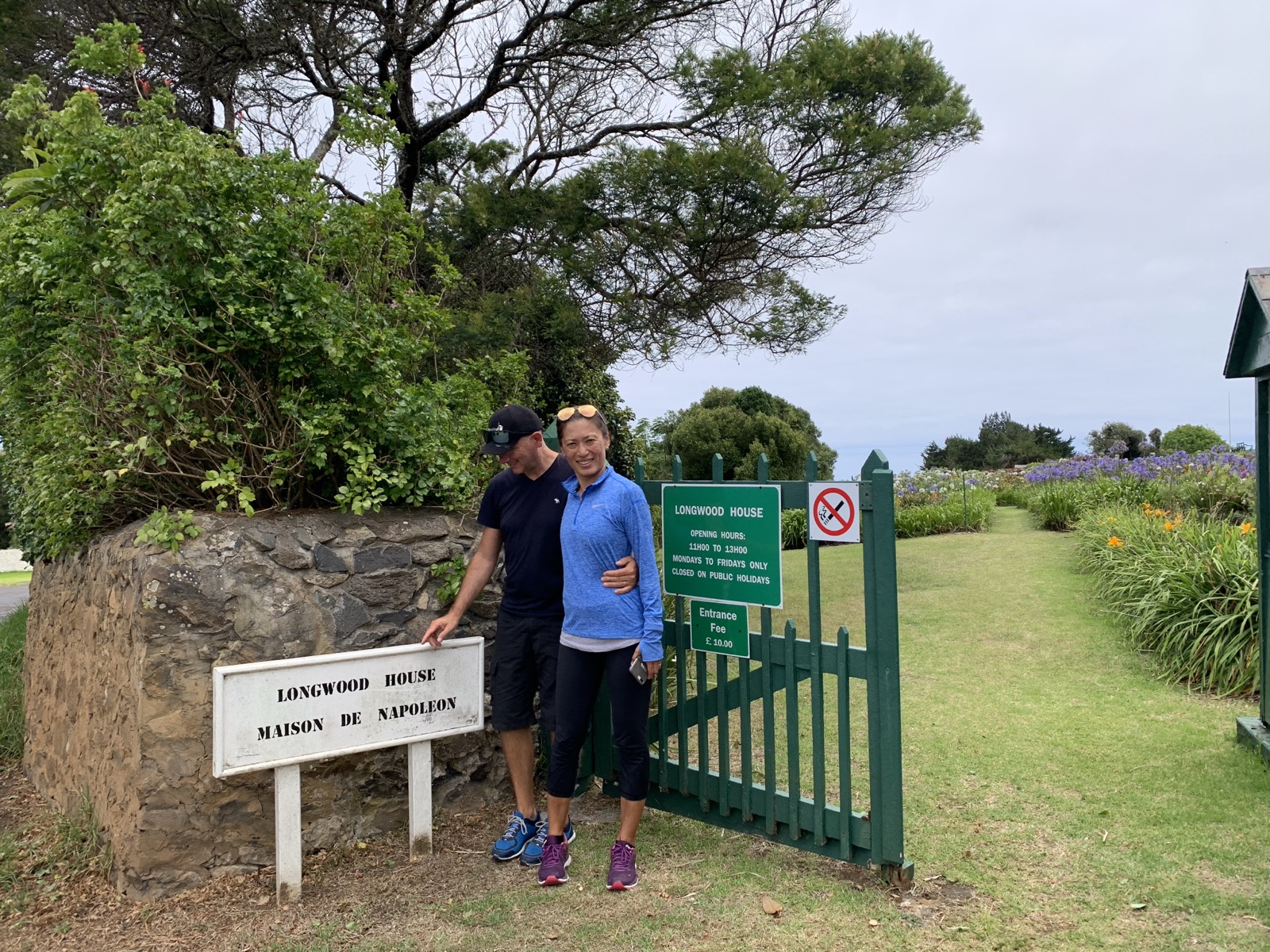
Francesco and Yuka at the Longwood House entrance gate, signed 'LONGWOOD HOUSE / MAISON DE NAPOLEON'
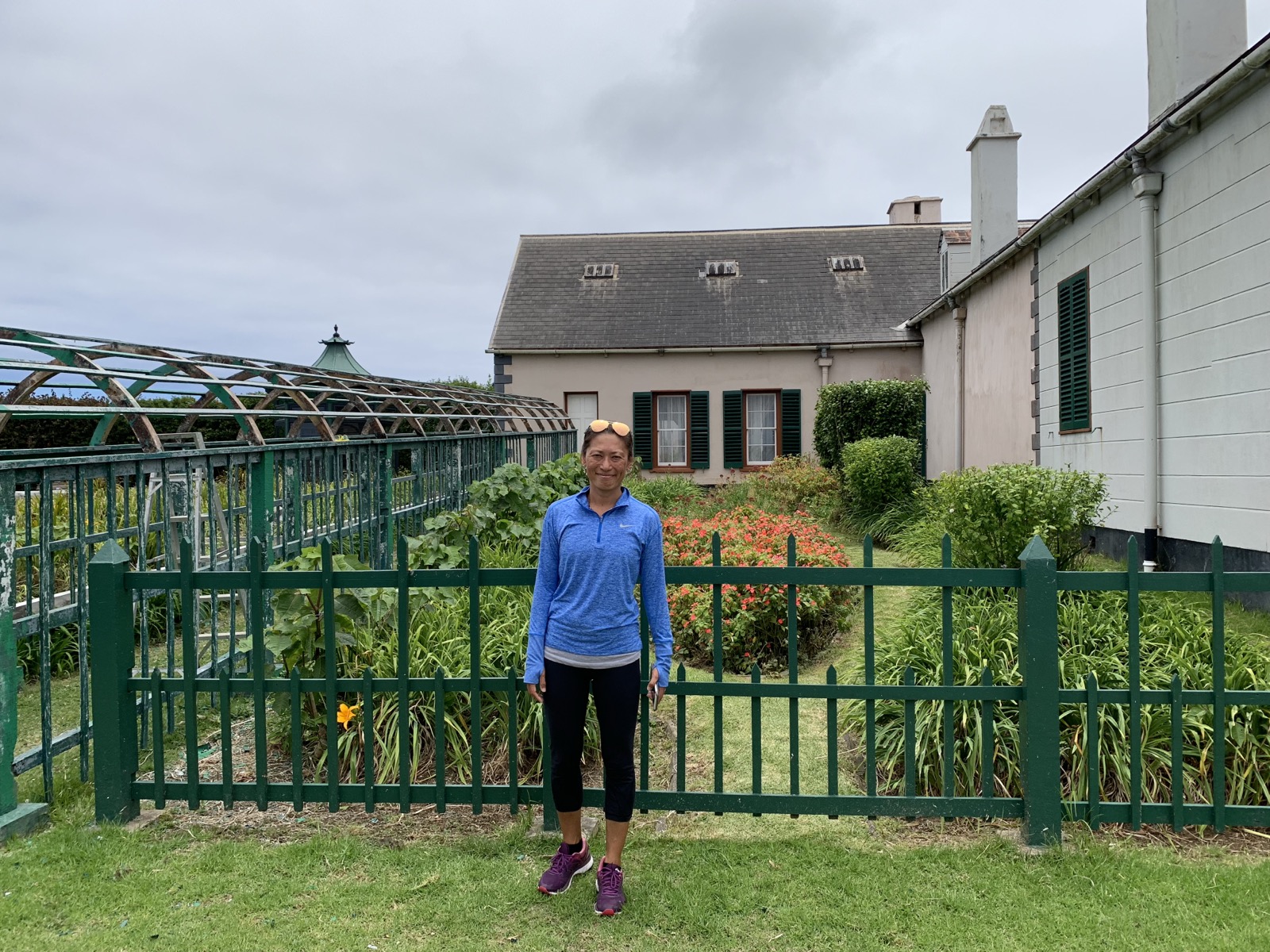
Yuka in front of Longwood House — the white building with green shutters and garden where Napoleon spent his exile
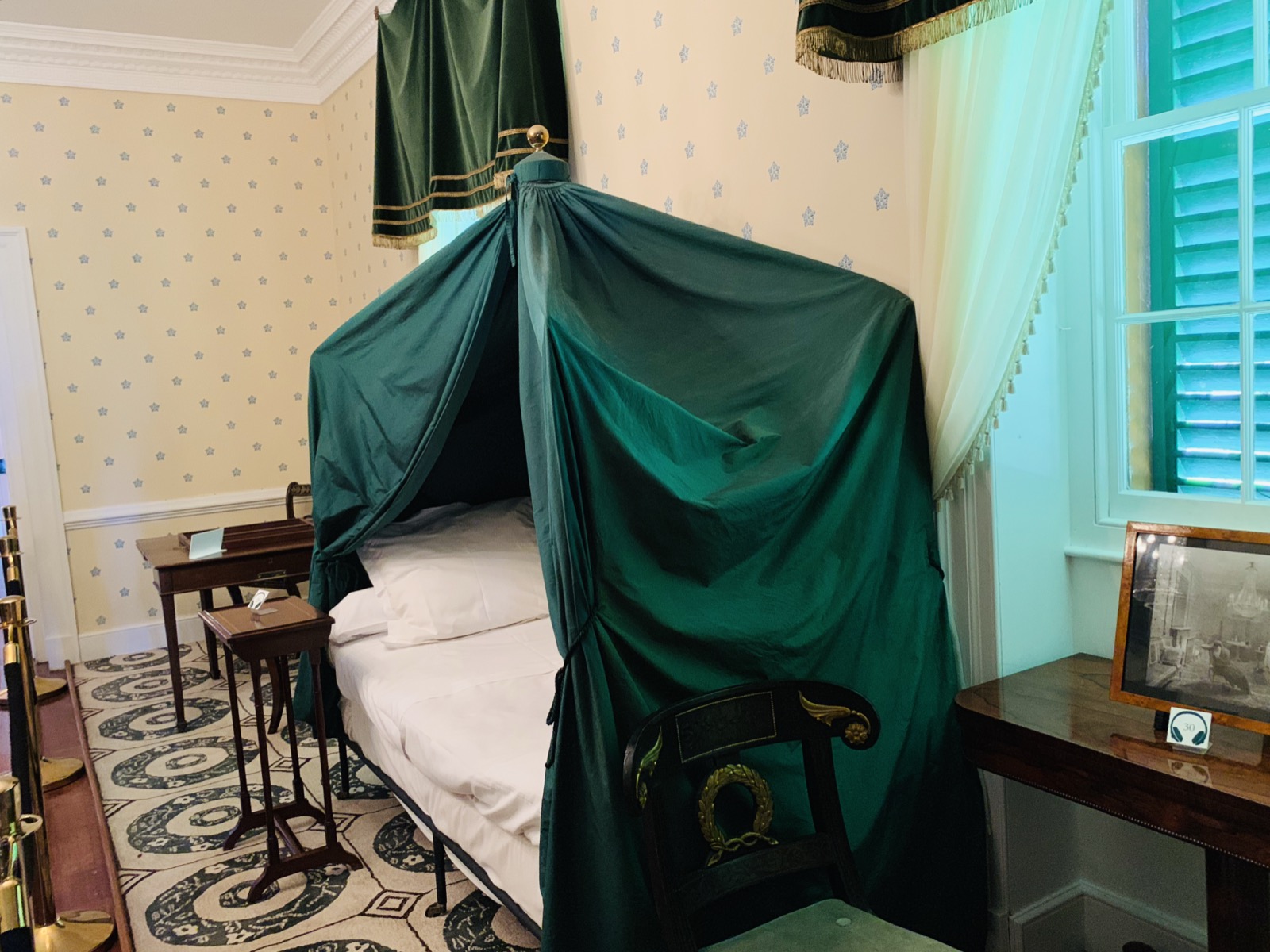
Napoleon's bedroom at Longwood House — the green canopy bed where he slept during his years of exile
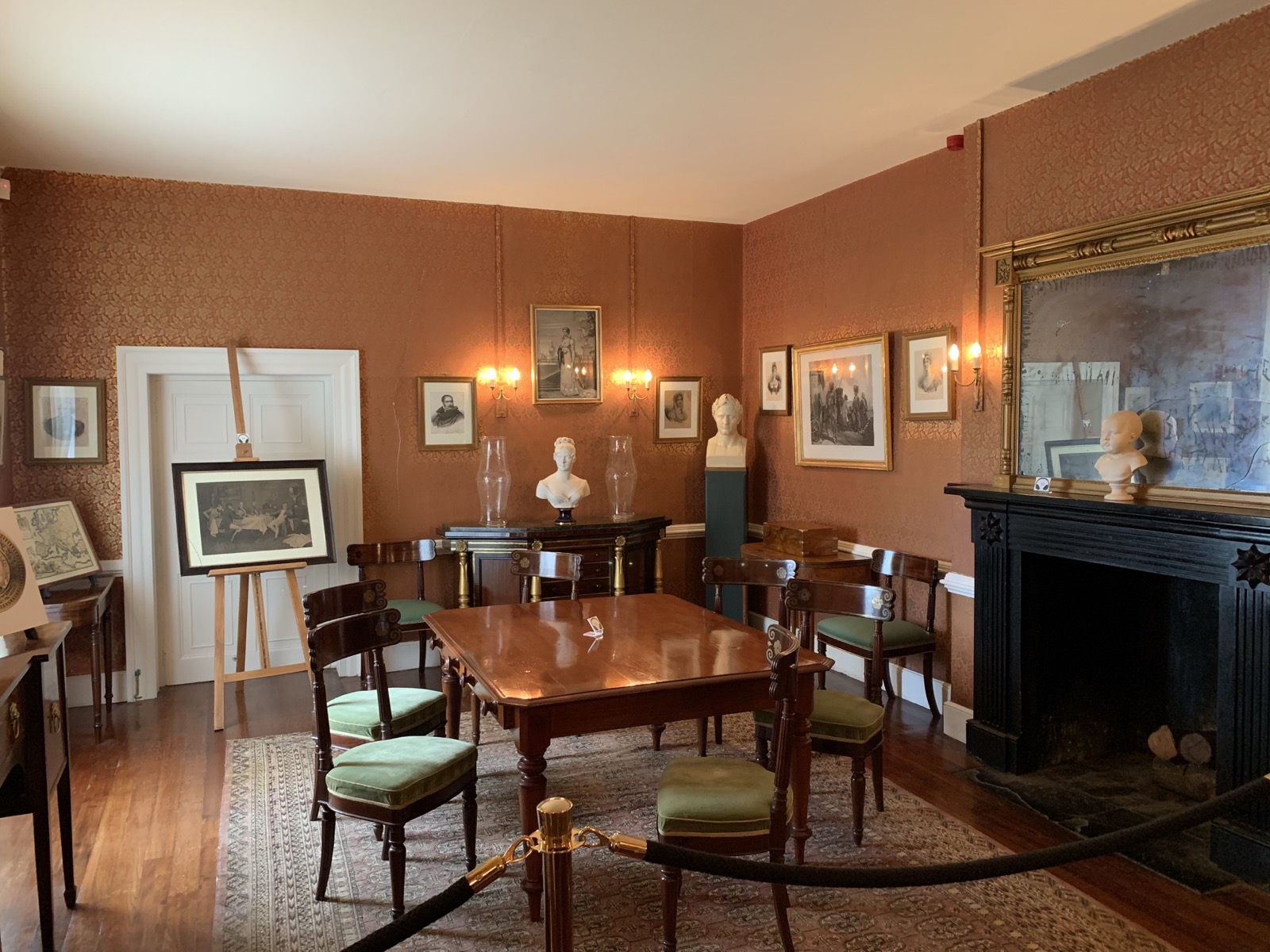
The reception room at Longwood House — Napoleon busts, mahogany table, period chairs and fireplace
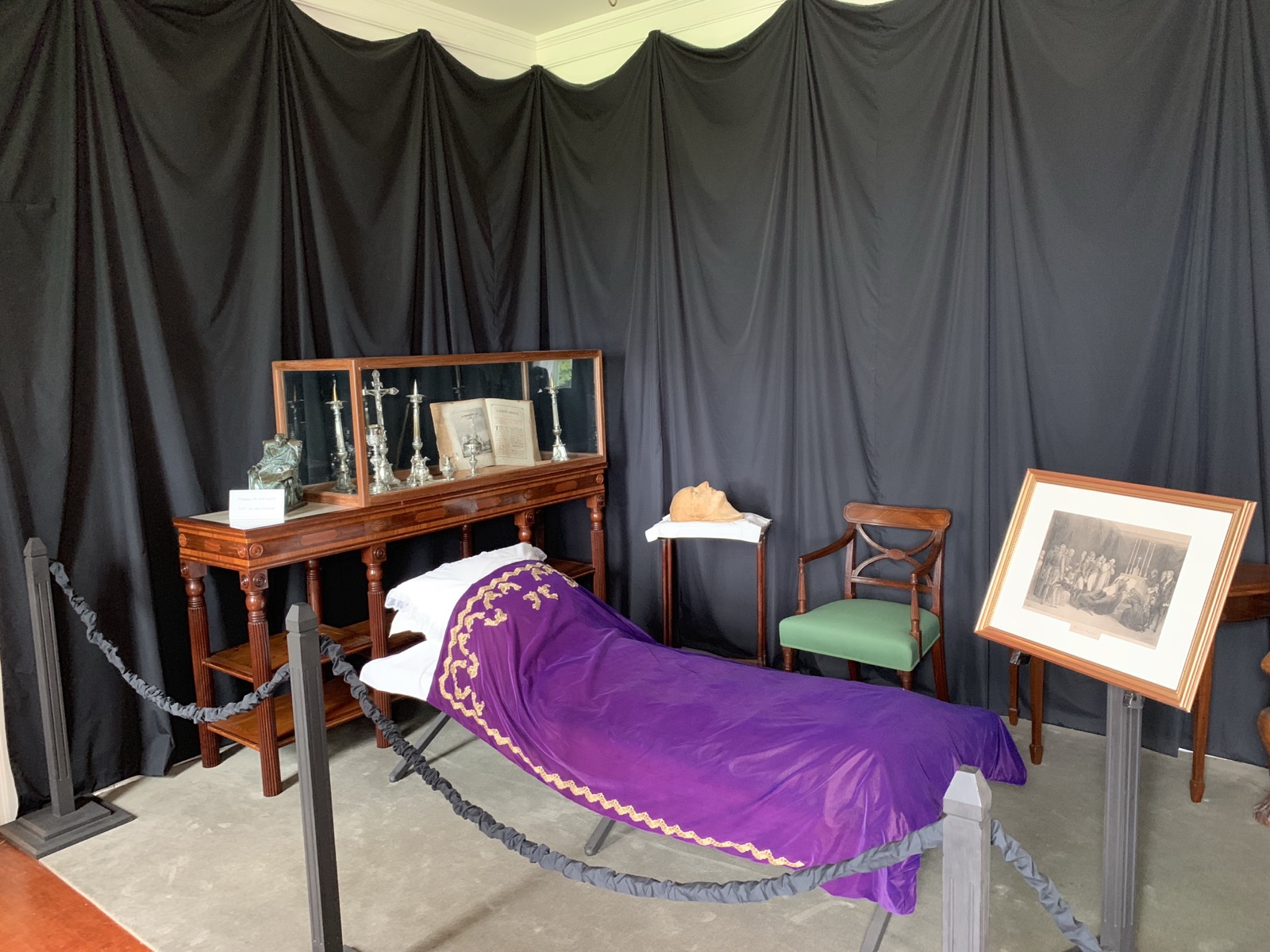
The room at Longwood House where Napoleon died — a cot draped in purple cloth with imperial gold bees
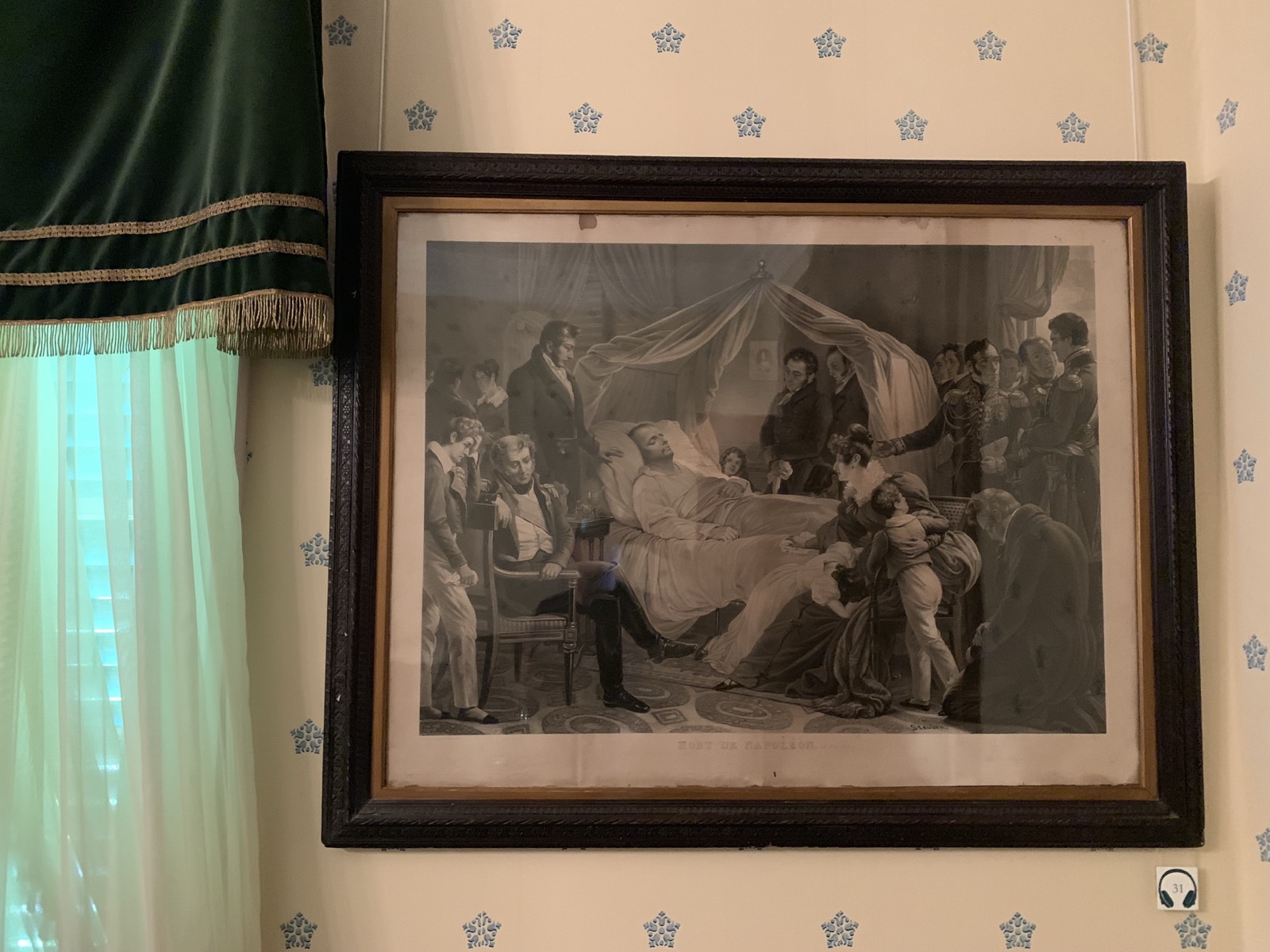
A large painting hanging in Longwood House depicting Napoleon on his deathbed, surrounded by his entourage
4. Napoleon's tomb
Napoleon was buried at St Helena when he died in 1821, in a shaded valley called Sane Valley. His remains were later repatriated to France in 1840, but the original tomb remains — a simple stone slab enclosed by iron railings in a quiet, lush enclosure. A surprisingly peaceful and moving place.
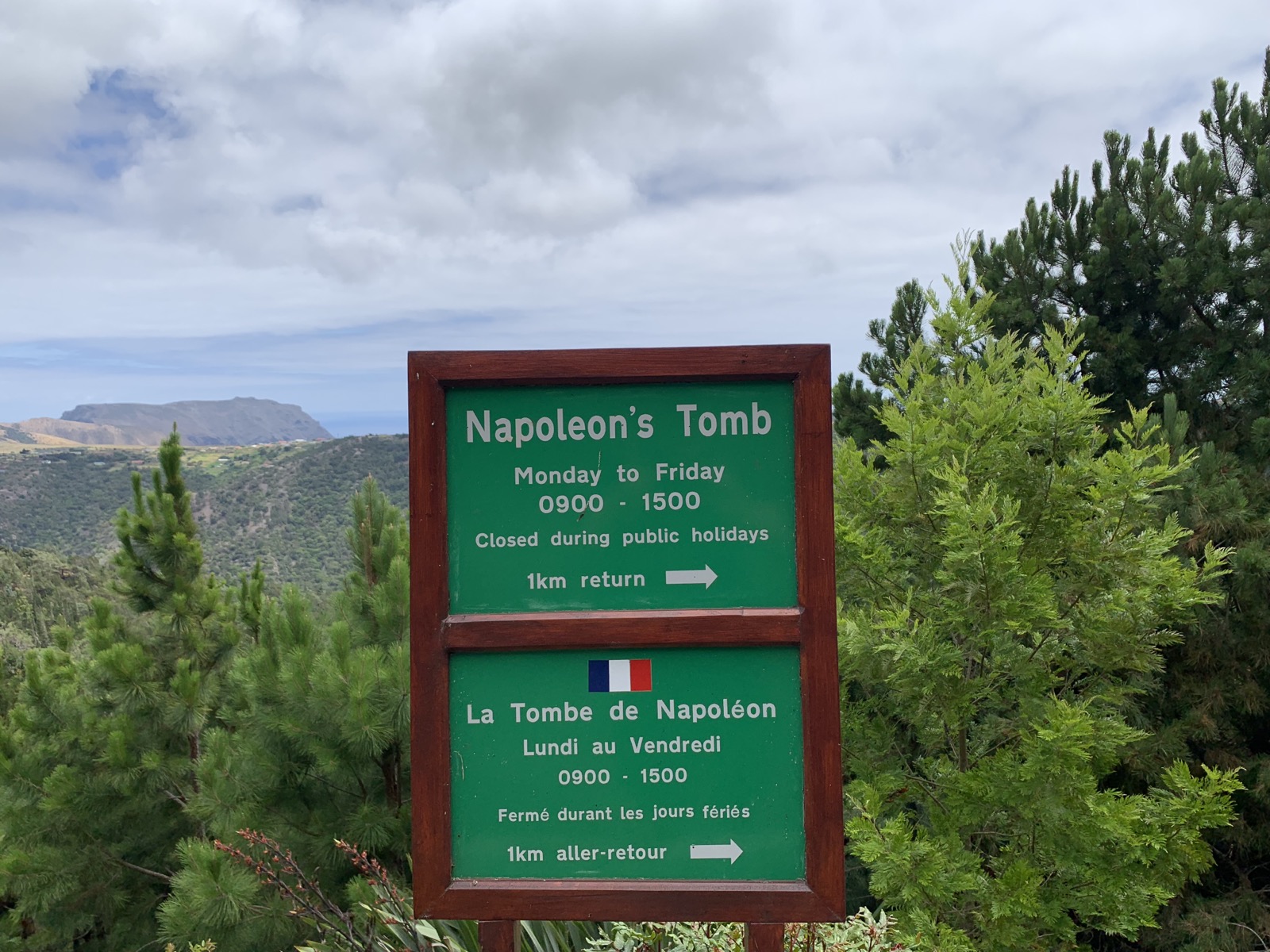
Napoleon's Tomb directional sign in English and French, with visiting hours
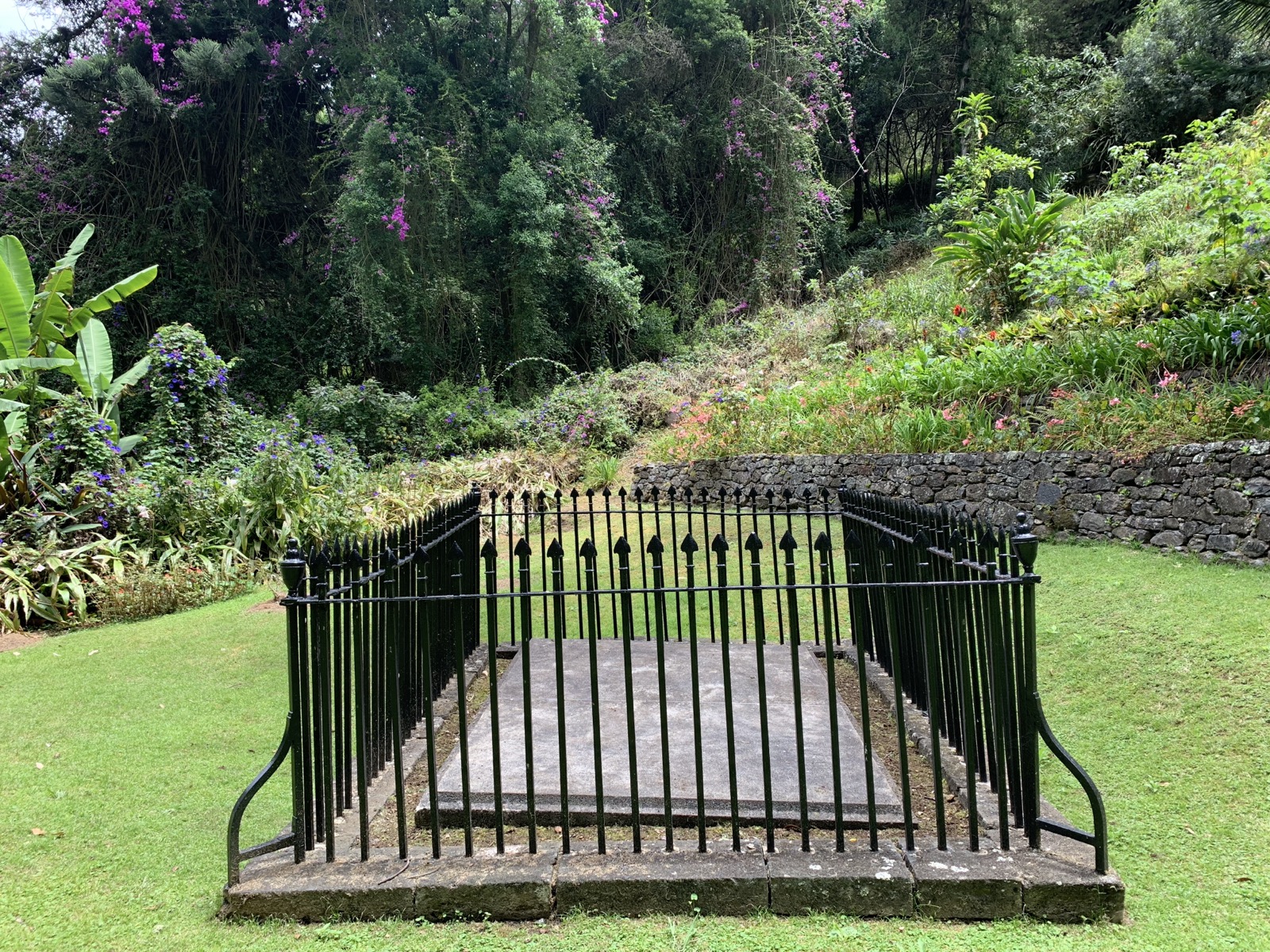
Napoleon's original tomb — a stone slab enclosed by black iron railings surrounded by lush tropical garden
5. Halley's Observatory site
Edmond Halley — of Halley's Comet fame — came to St Helena in 1676 to catalogue the stars of the Southern Hemisphere. He was the first to systematically map the southern sky, and it was here on this remote island that he built the observatory that launched his career. The site still exists near Longwood.
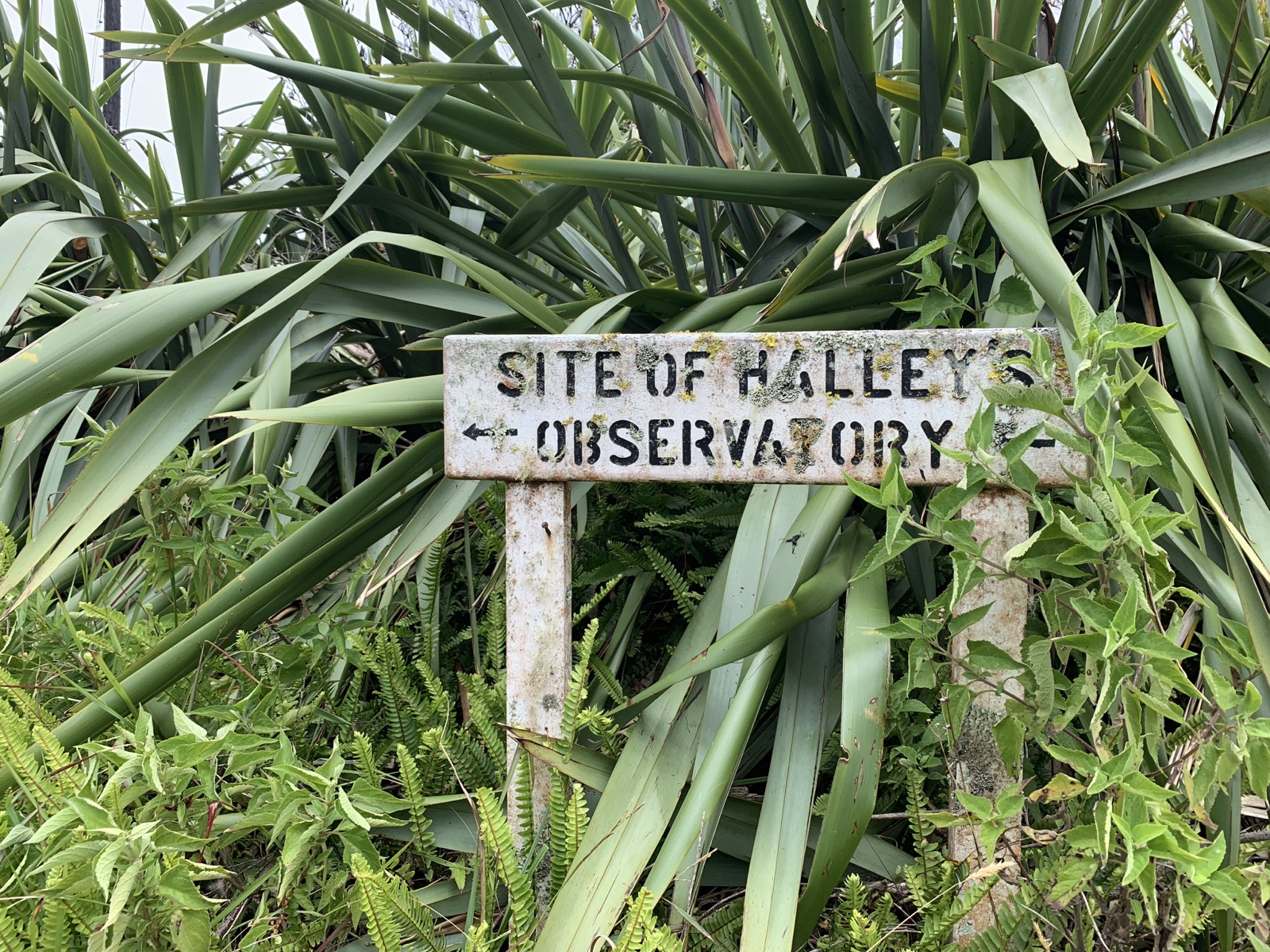
The weathered 'Site of Halley's Observatory' signpost pointing left, set among tropical plants
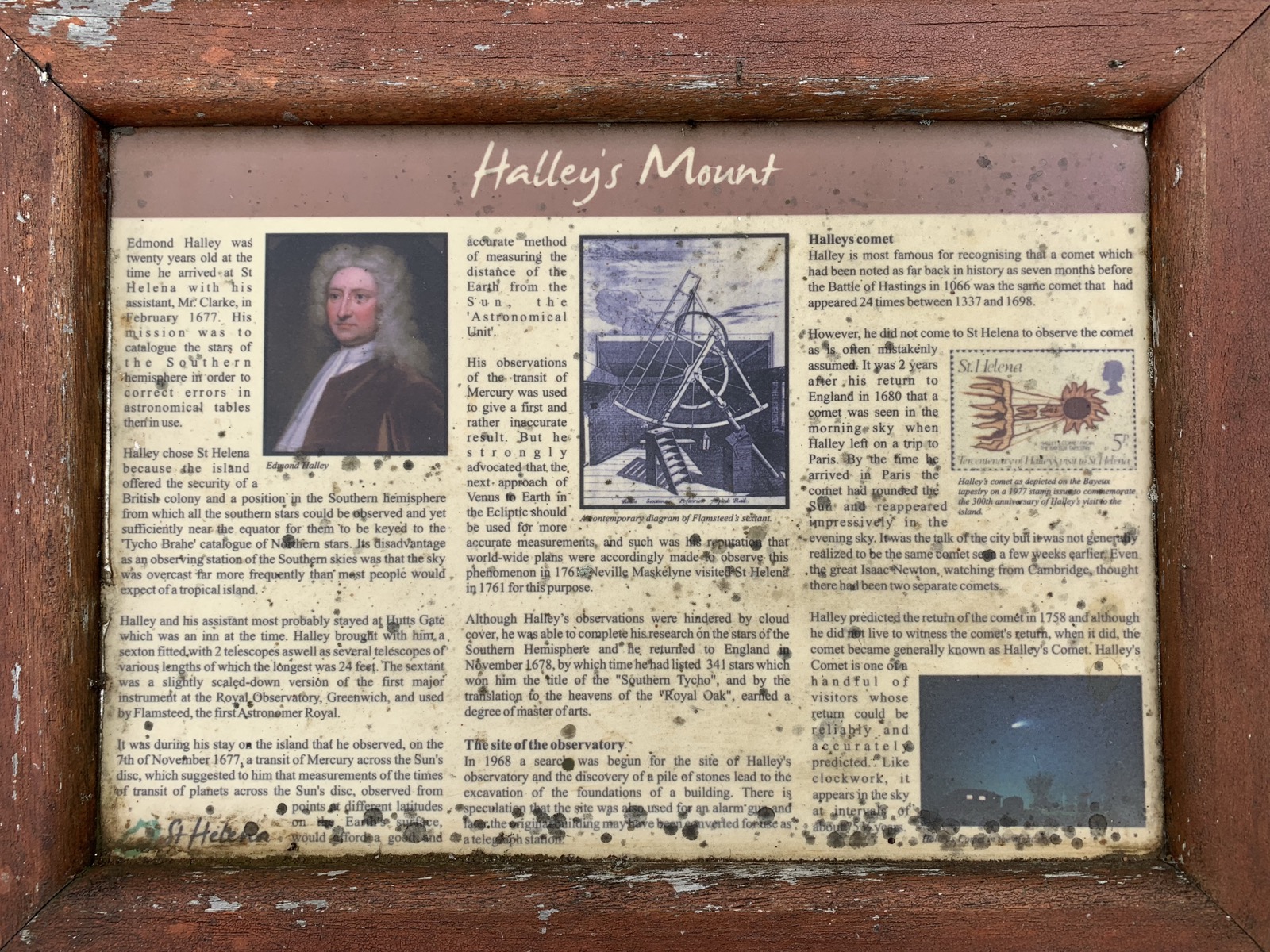
Halley's Mount information board describing Edmond Halley's mission to St Helena in 1676 to catalogue the southern stars
6. Diana's Peak
Diana's Peak is the highest point on the island at 818 metres. The interior of St Helena is a complete contrast to the barren volcanic coast you see on approach — lush, green and misty. Hiking to Diana's Peak takes you through cloud forest, with sweeping views back across the island to the ocean.
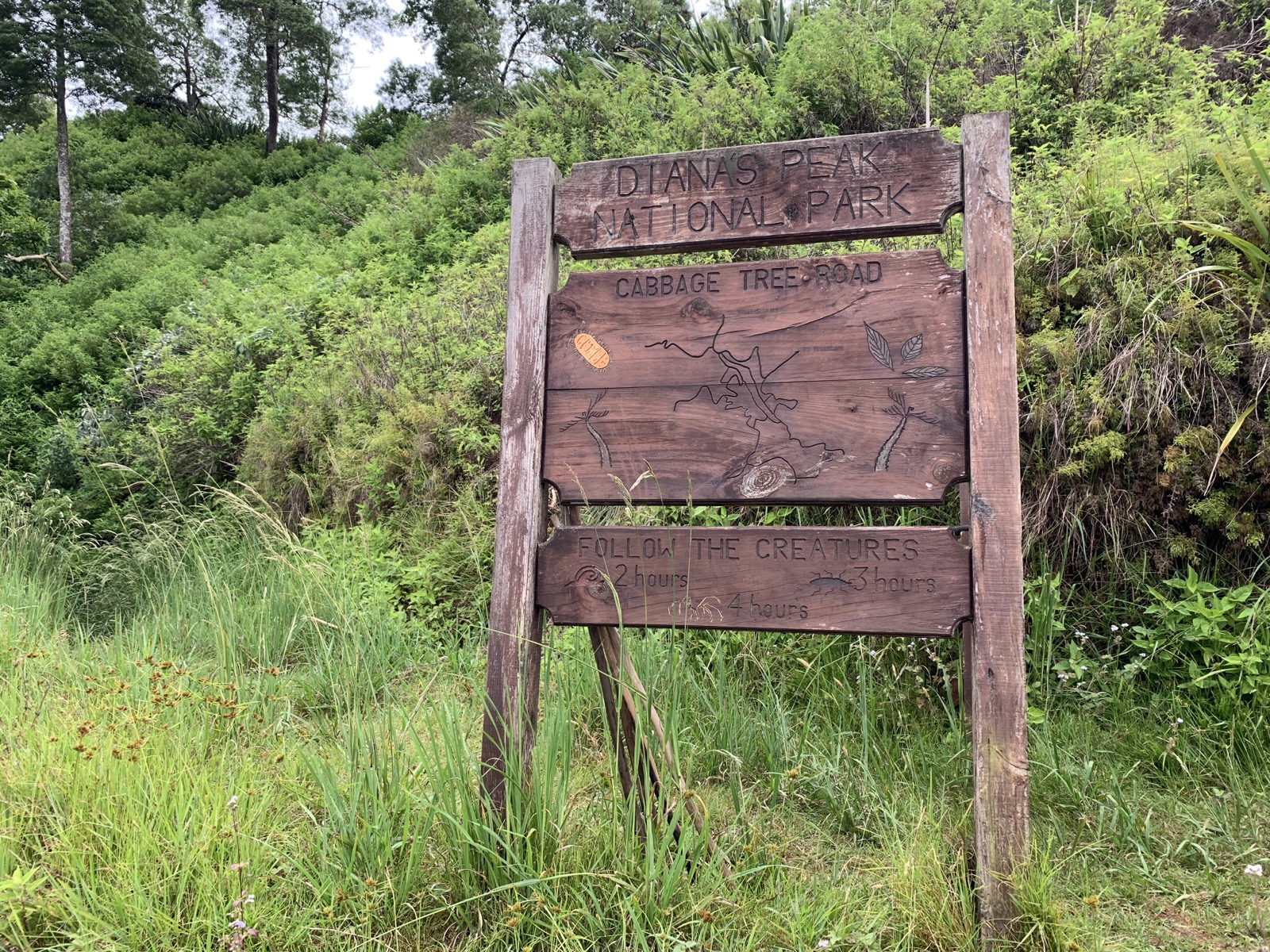
Diana's Peak National Park wooden sign at the Cabbage Tree Road trailhead — 'Follow the Creatures, 2-3 hours'
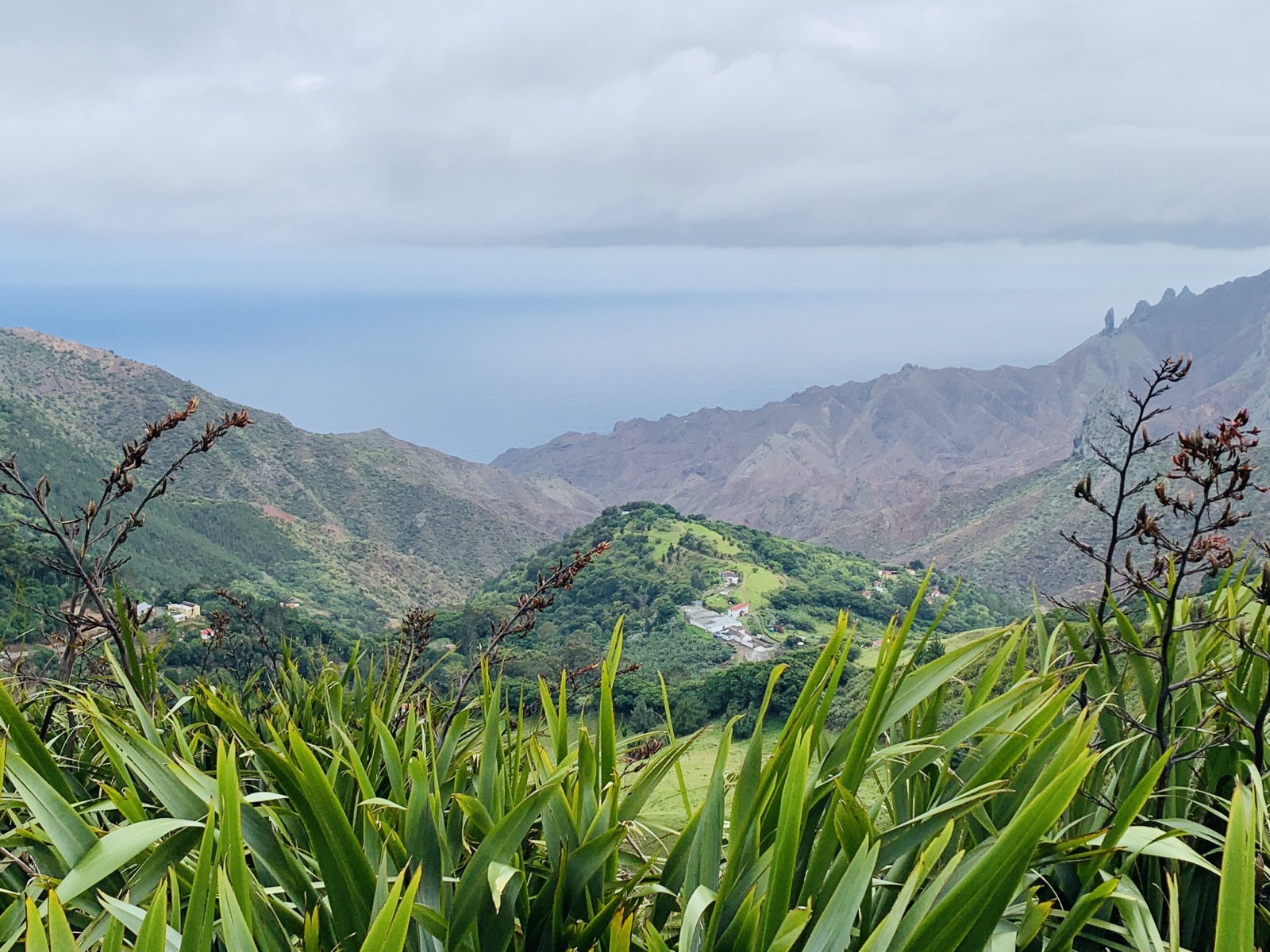
Panoramic view from Diana's Peak — lush green St Helena highlands rolling down to dramatic volcanic ridges and the South Atlantic Ocean
7. Plantation House and Jonathan the tortoise
Plantation House is the official residence of the Governor of St Helena. Its beautiful grounds are home to a small herd of giant Aldabra tortoises — and among them lives Jonathan, the oldest known living land animal on Earth. Jonathan was born around 1832 and was already fully mature when he arrived on St Helena in 1882. He was photographed in 1886 and is still alive today. You can walk up to the fence and watch him graze. He is completely unfazed by visitors.
Food and provisioning
To have a decent meal, go to the restaurant at the Mantis Hotel.
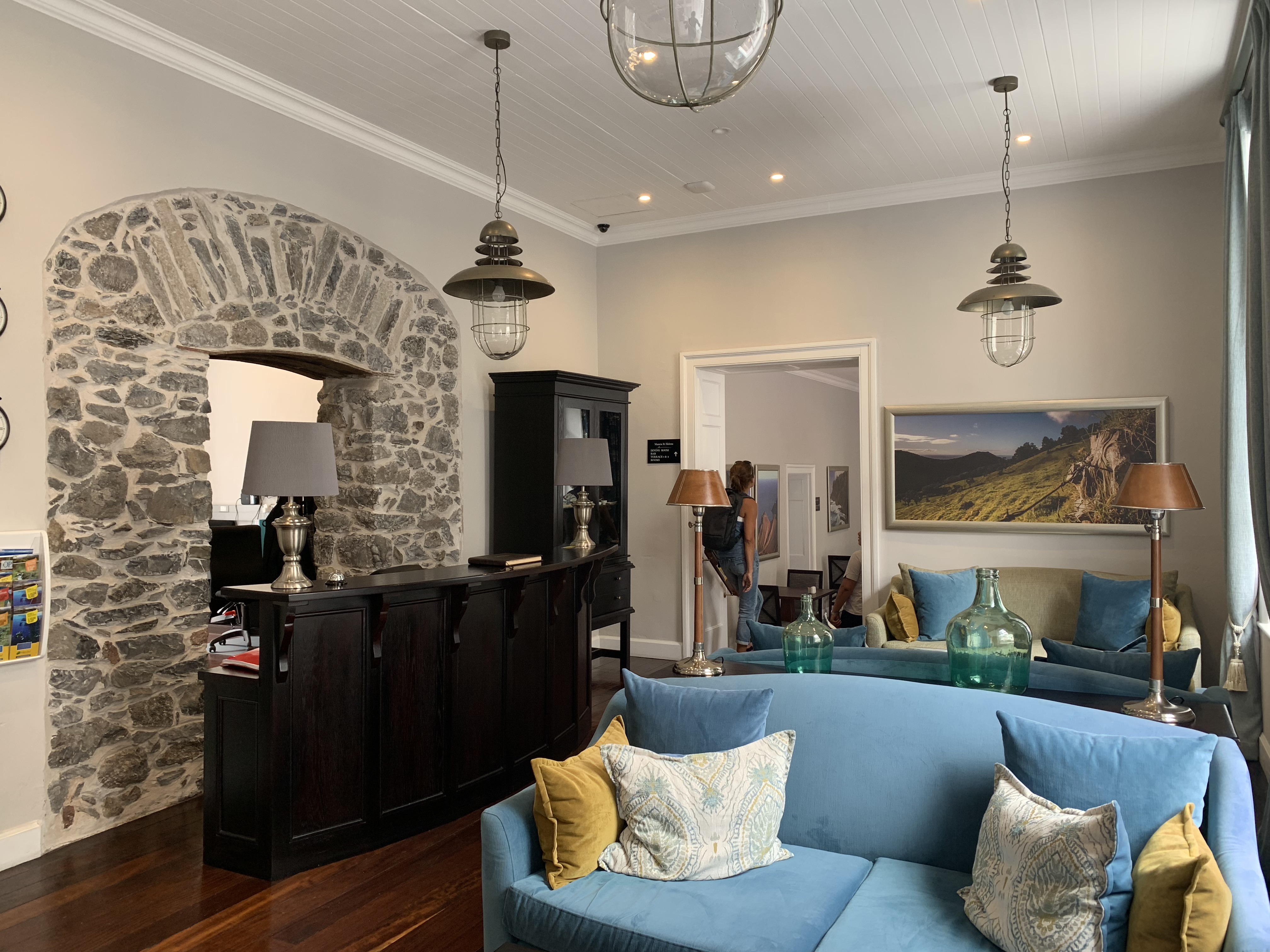
Mantis Hotel in St Helena
There is no bakery in town anymore — all shops sell only stale industrial bread. Fresh vegetables are very hard to find and provisioning here is not a good idea. Everything is expensive.
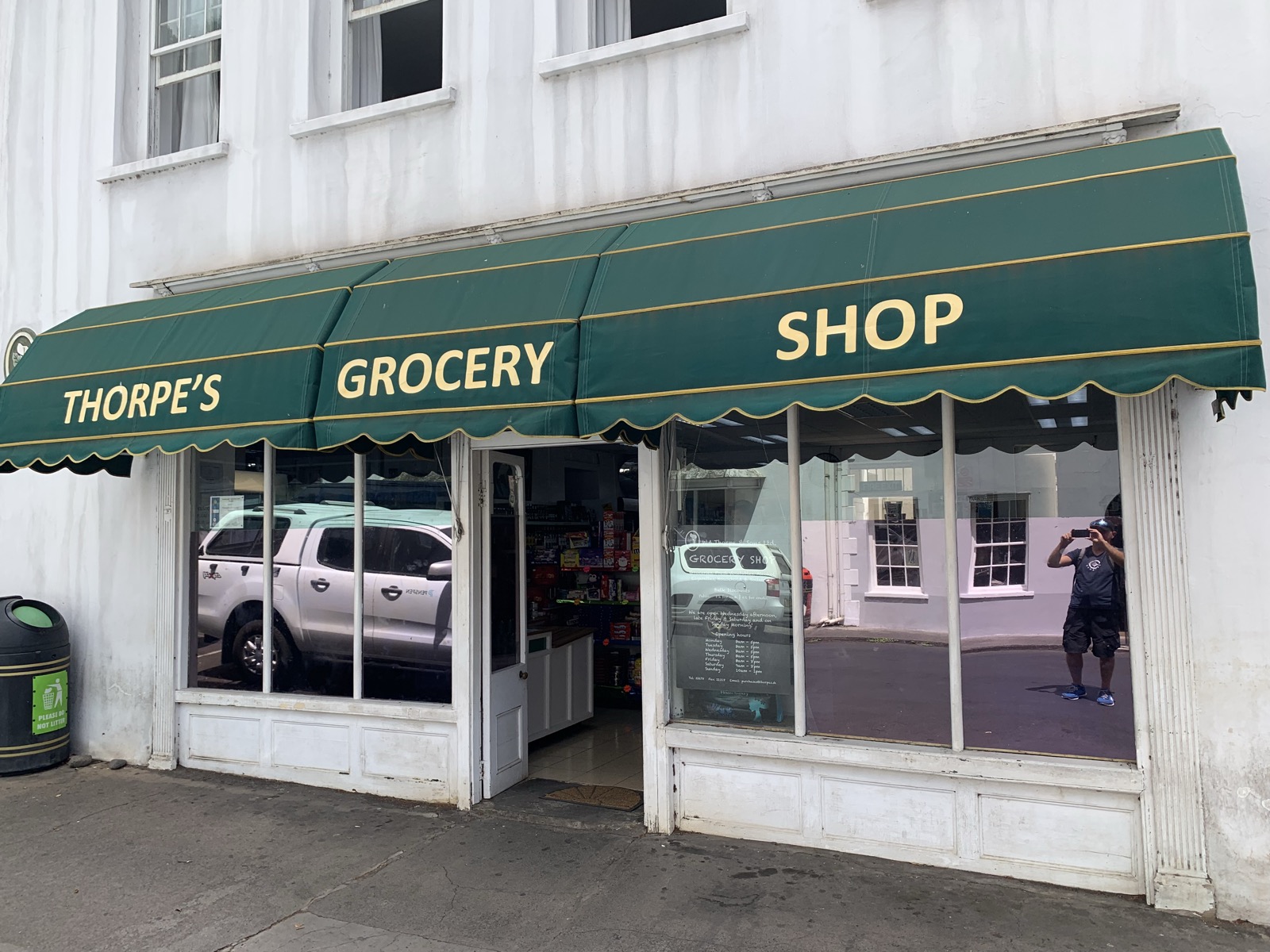
Thorpe's Grocery Shop in Jamestown — the green-awned general store on the main street
Oh, and there are no ATM machines in town. Bring British Pounds, or you'll have to go to the bank.
Jamestown
Jamestown is a beautifully preserved colonial town tucked into a narrow valley between two volcanic ridges — one of the most dramatic town settings you'll ever walk through. A leisurely stroll down the main street takes you past the post office, the market, the castle, and St James' Church, the oldest Anglican church in the Southern Hemisphere.
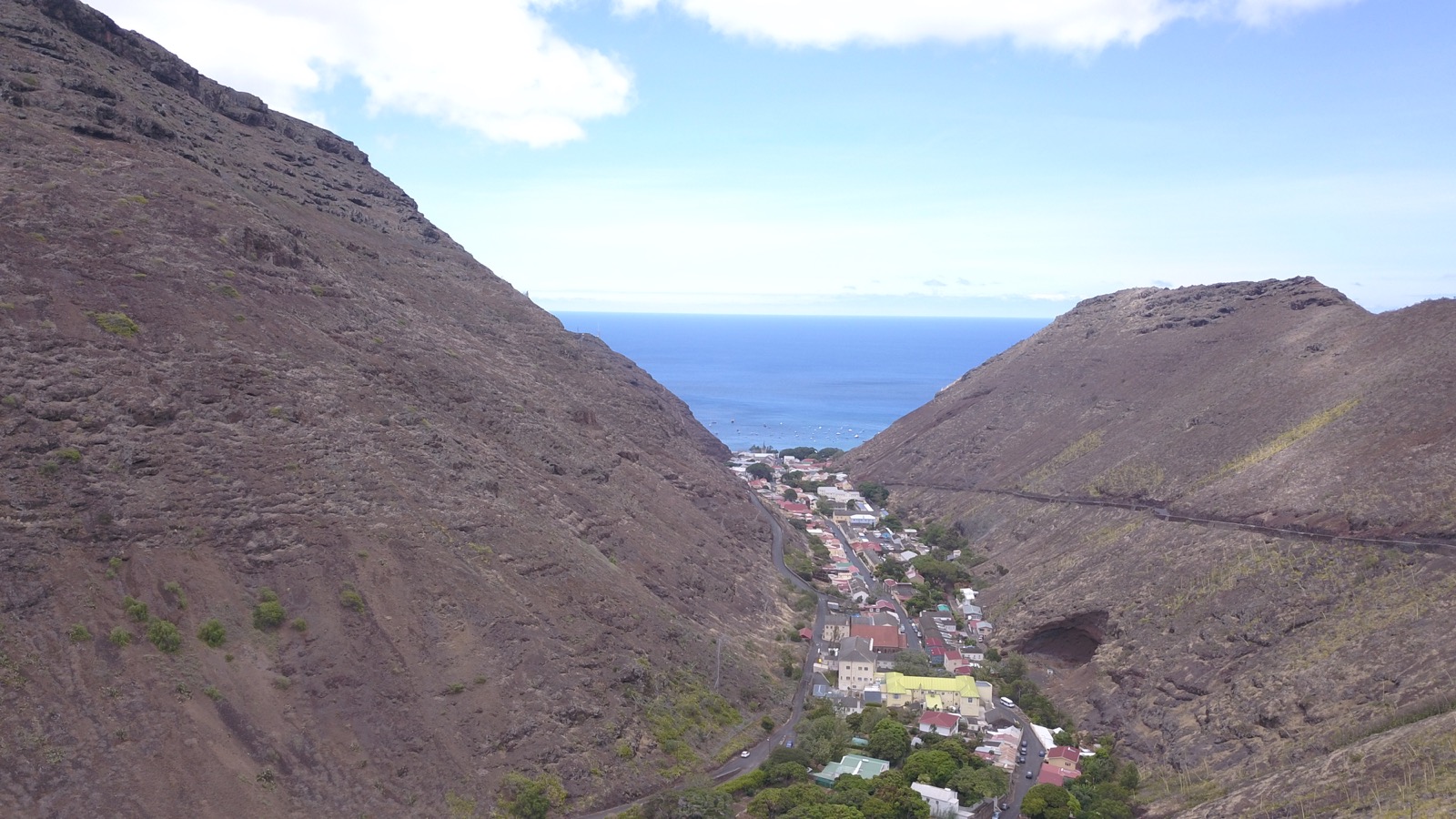
Aerial view of Jamestown from above — the town nestled between two steep black volcanic ridges with the South Atlantic at the end of the valley
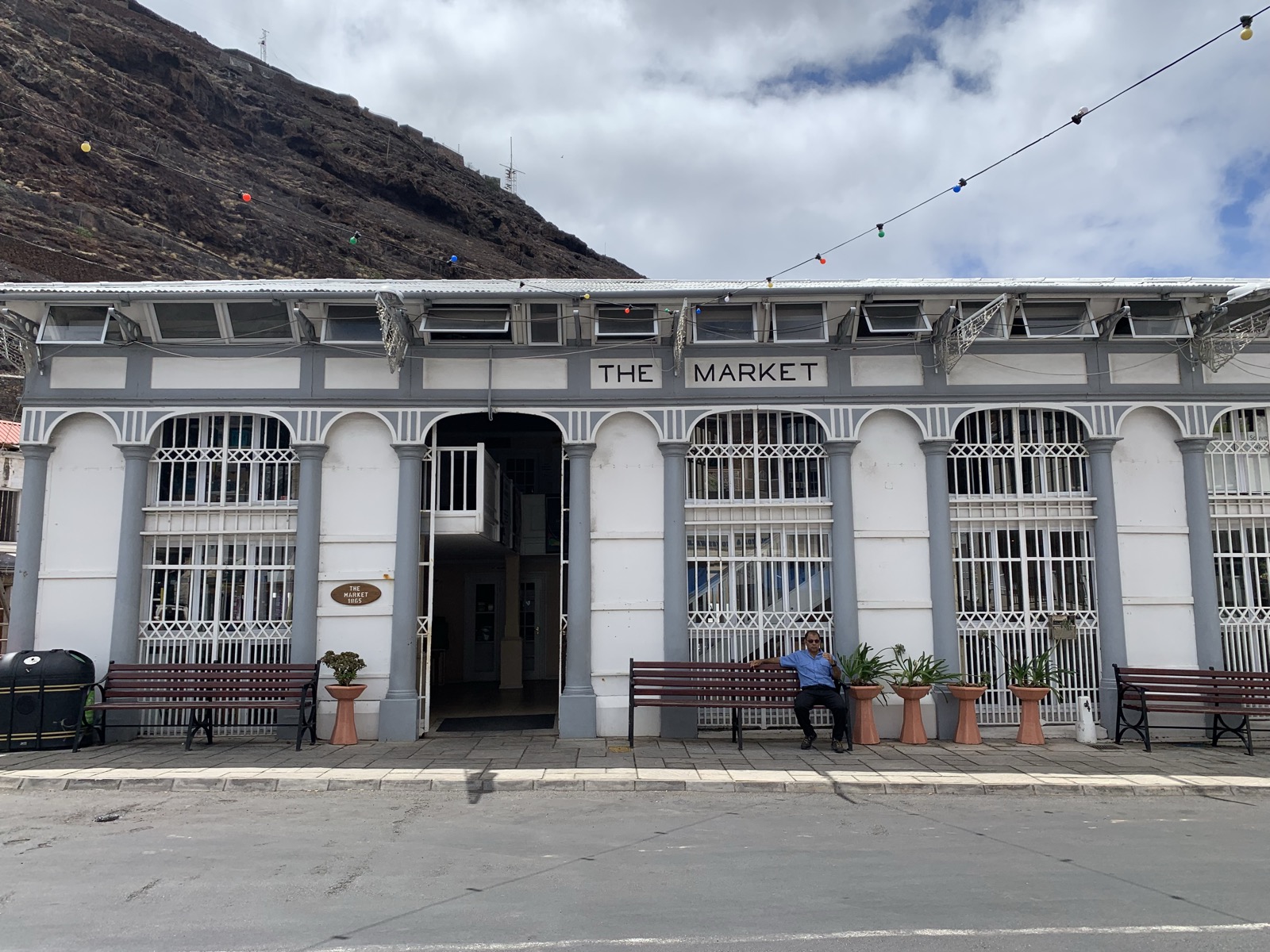
The Market building in Jamestown — a white and grey colonial market hall with arched windows and decorative ironwork, volcanic ridge visible behind
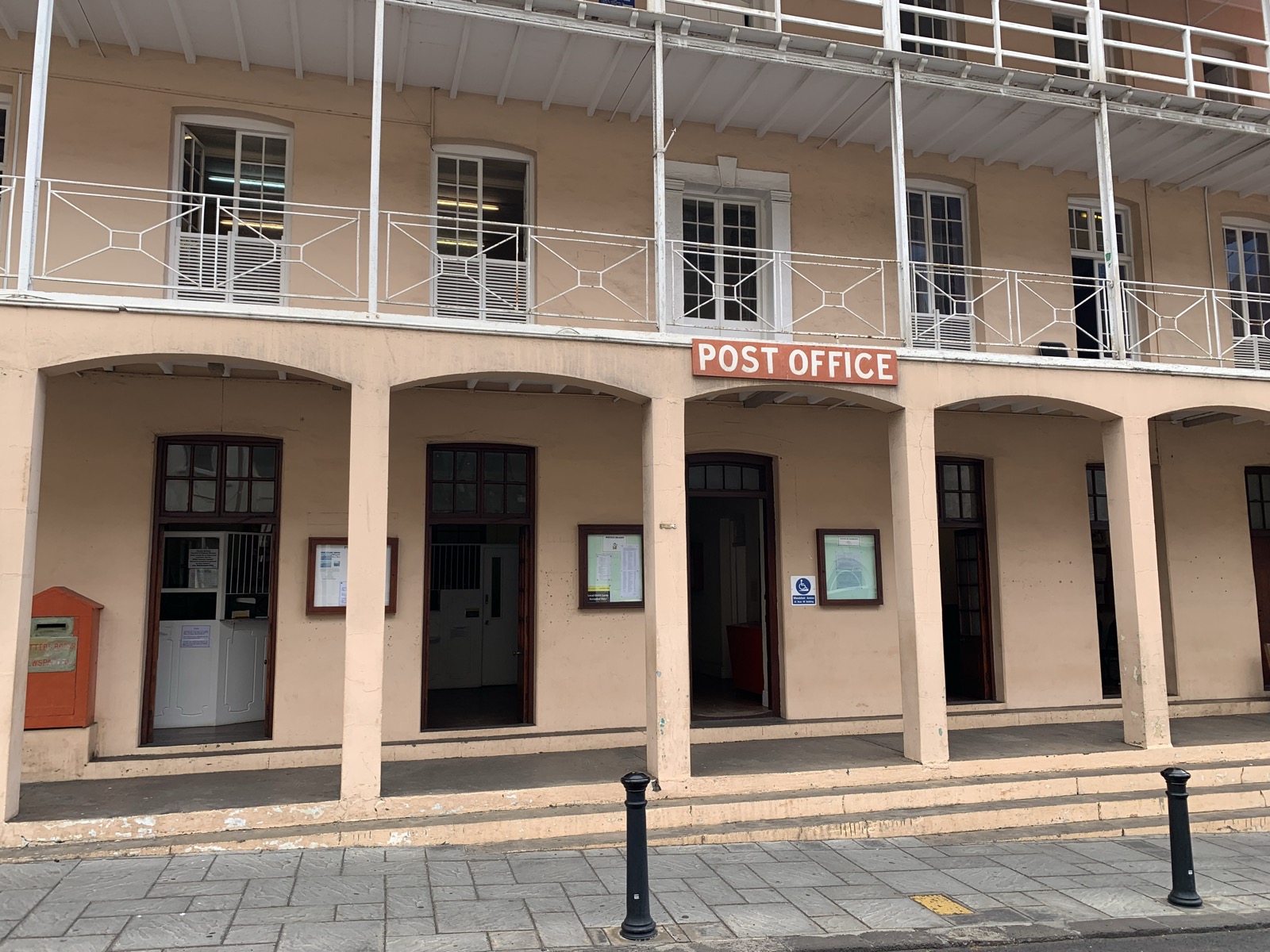
The Jamestown Post Office — a colonial peach-coloured building with arched arcade on the ground floor and iron-railed balcony above
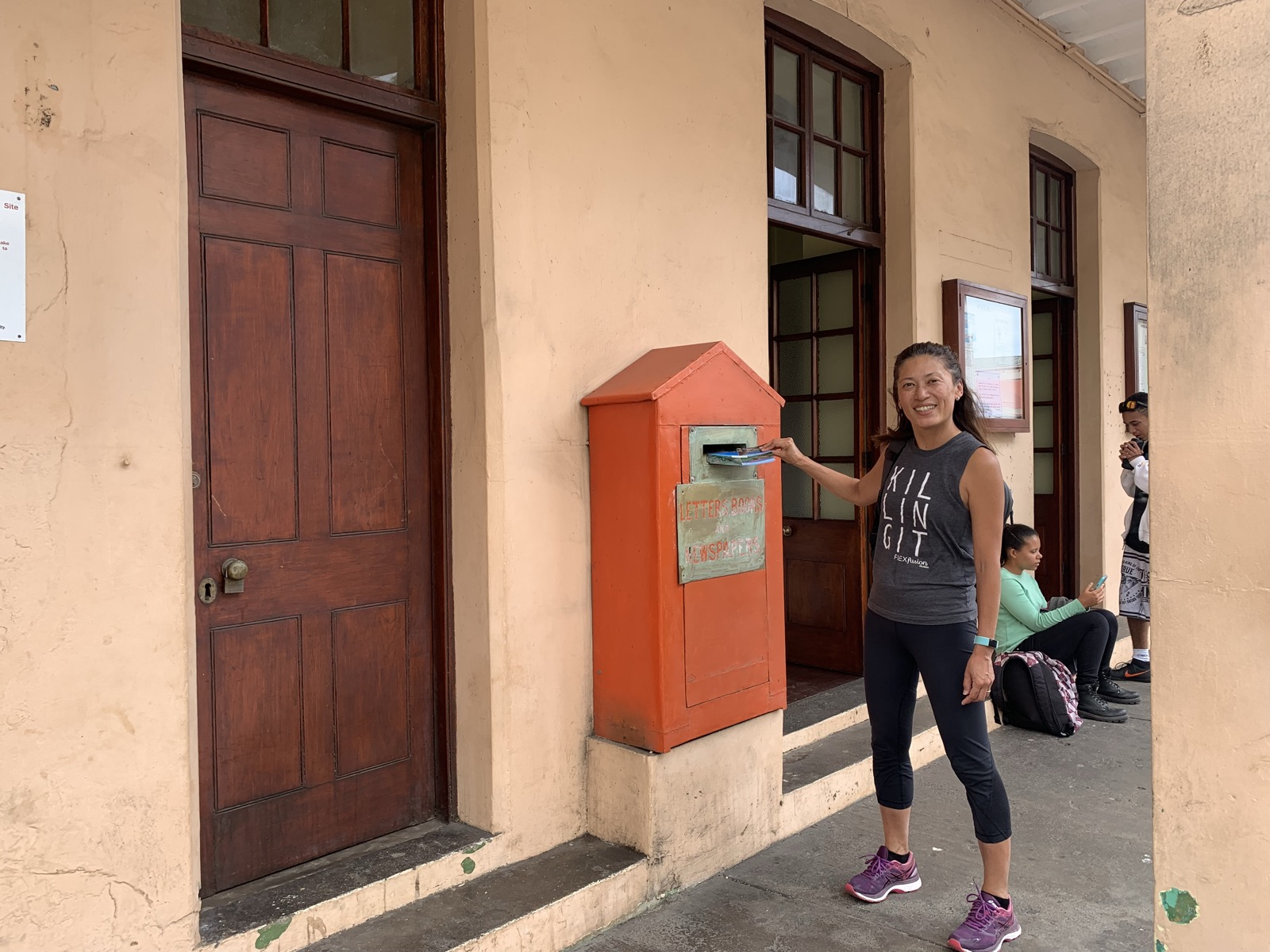
Yuka posting a letter at the vintage red British post box outside the Jamestown Post Office
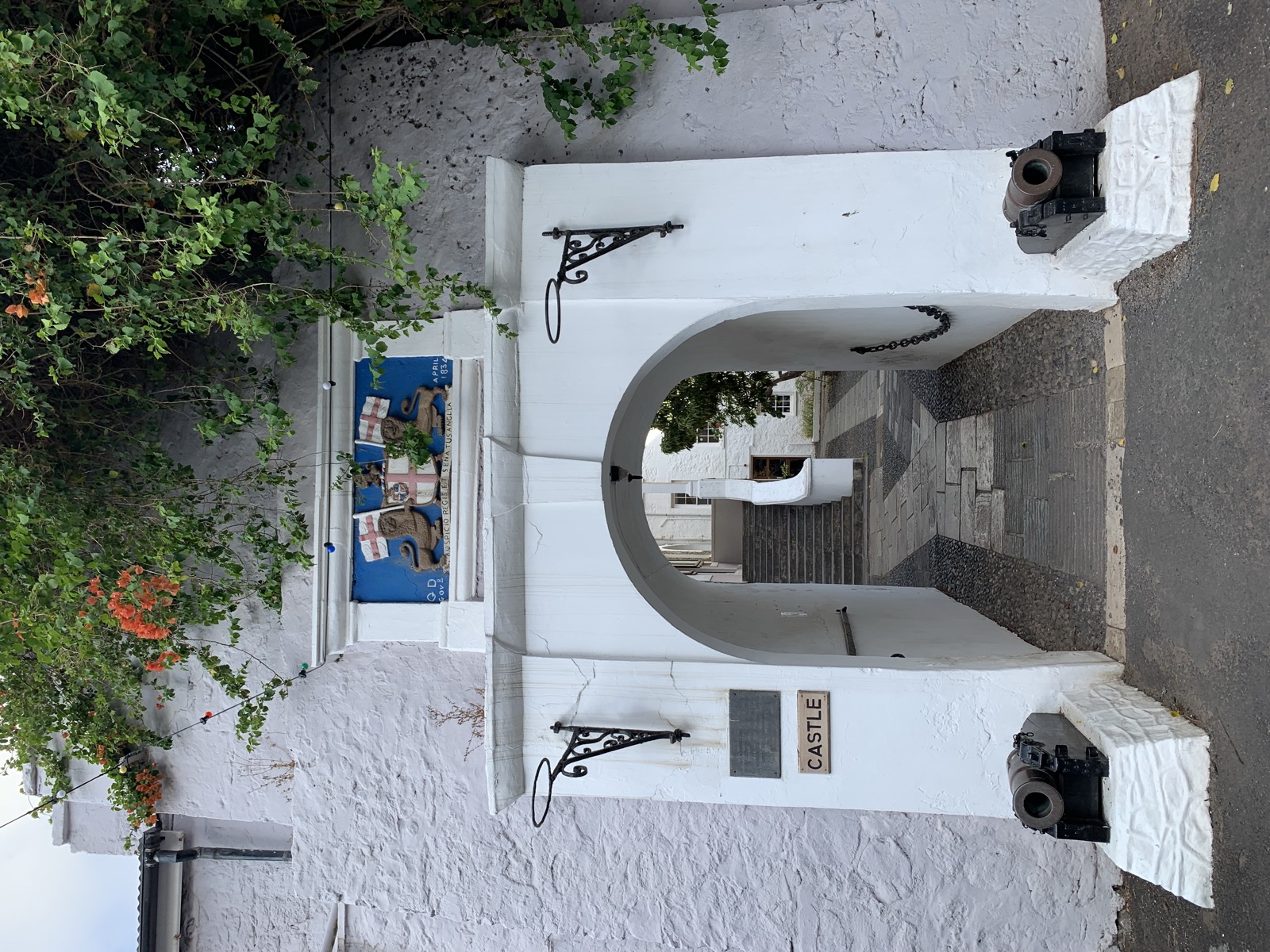
The entrance to the Castle of St Helena — a white arch gate inscribed 'CASTLE' with cannons flanking the archway
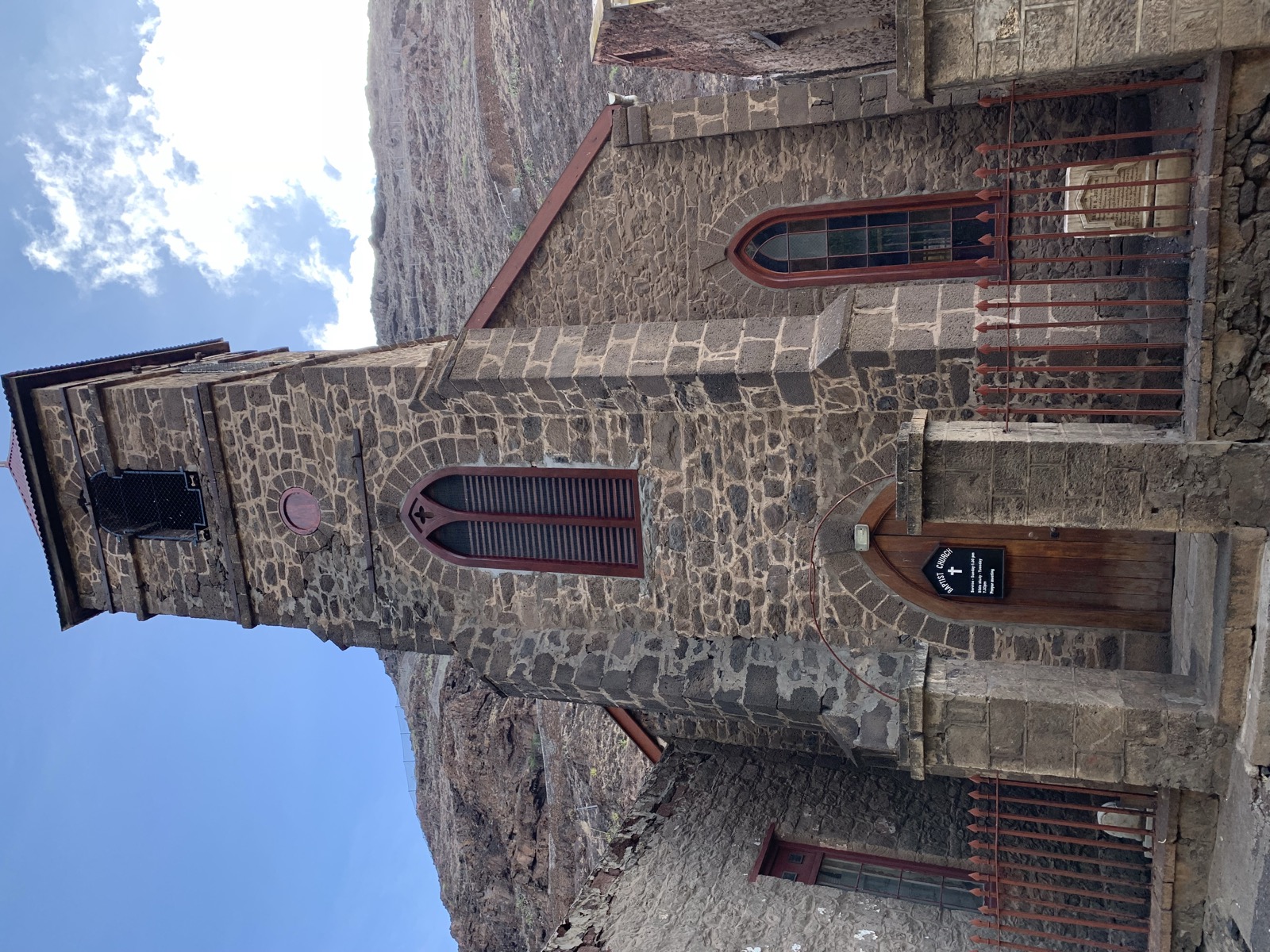
St James' Church tower in Jamestown — stone construction with Gothic arched windows, the oldest Anglican church in the Southern Hemisphere
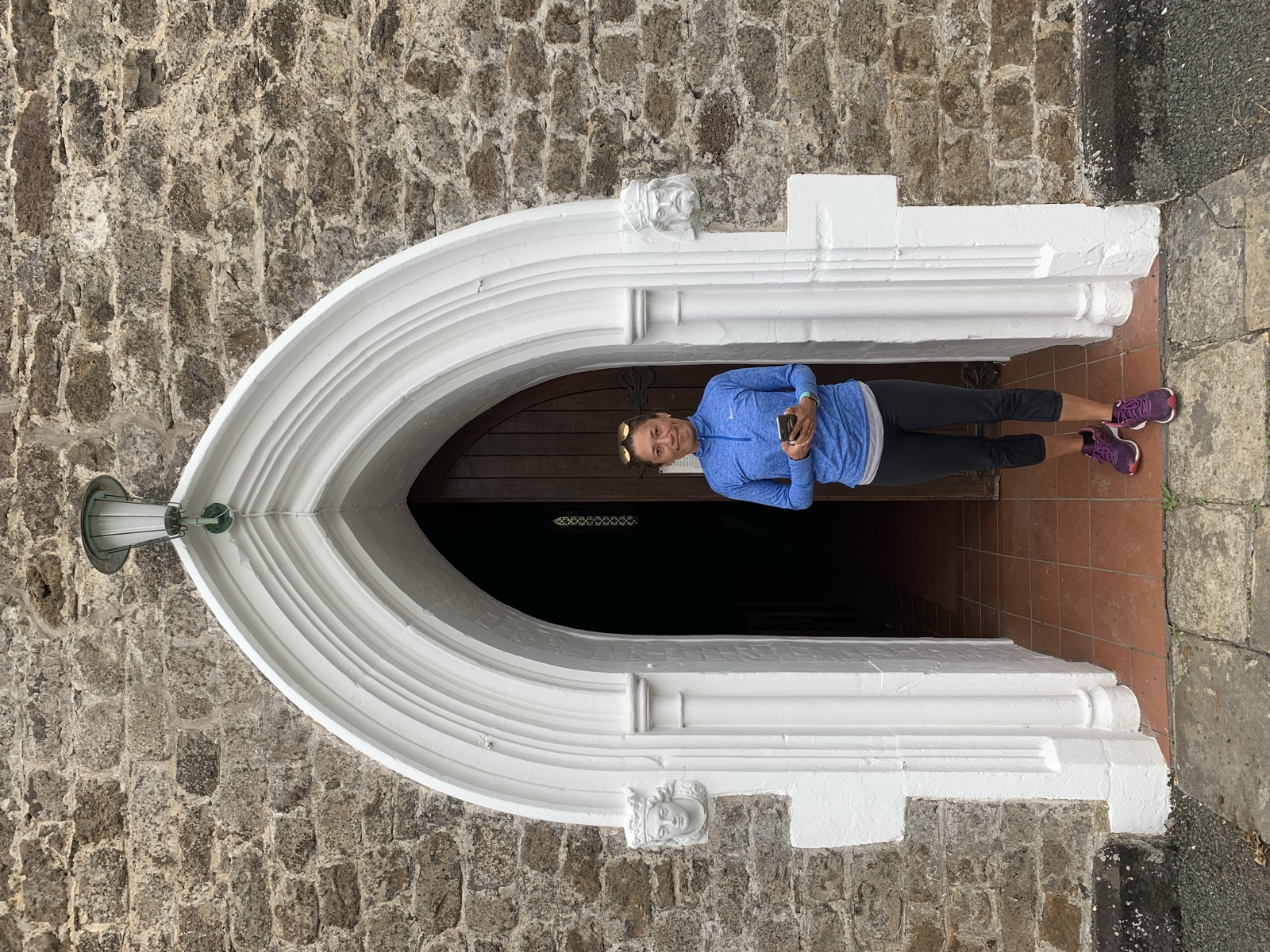
Yuka in the white arched doorway of a small church high in the St Helena highlands
Nature on the island is extraordinary. When you approach from the sea, St Helena looks bare and volcanic. But once you venture inland, the vegetation is astonishingly lush — a complete world unto itself, shaped by millions of years of isolation.
Our stay in St Helena was wonderful. It is a mandatory stop if you're crossing the South Atlantic, and we feel deeply privileged to have been here.
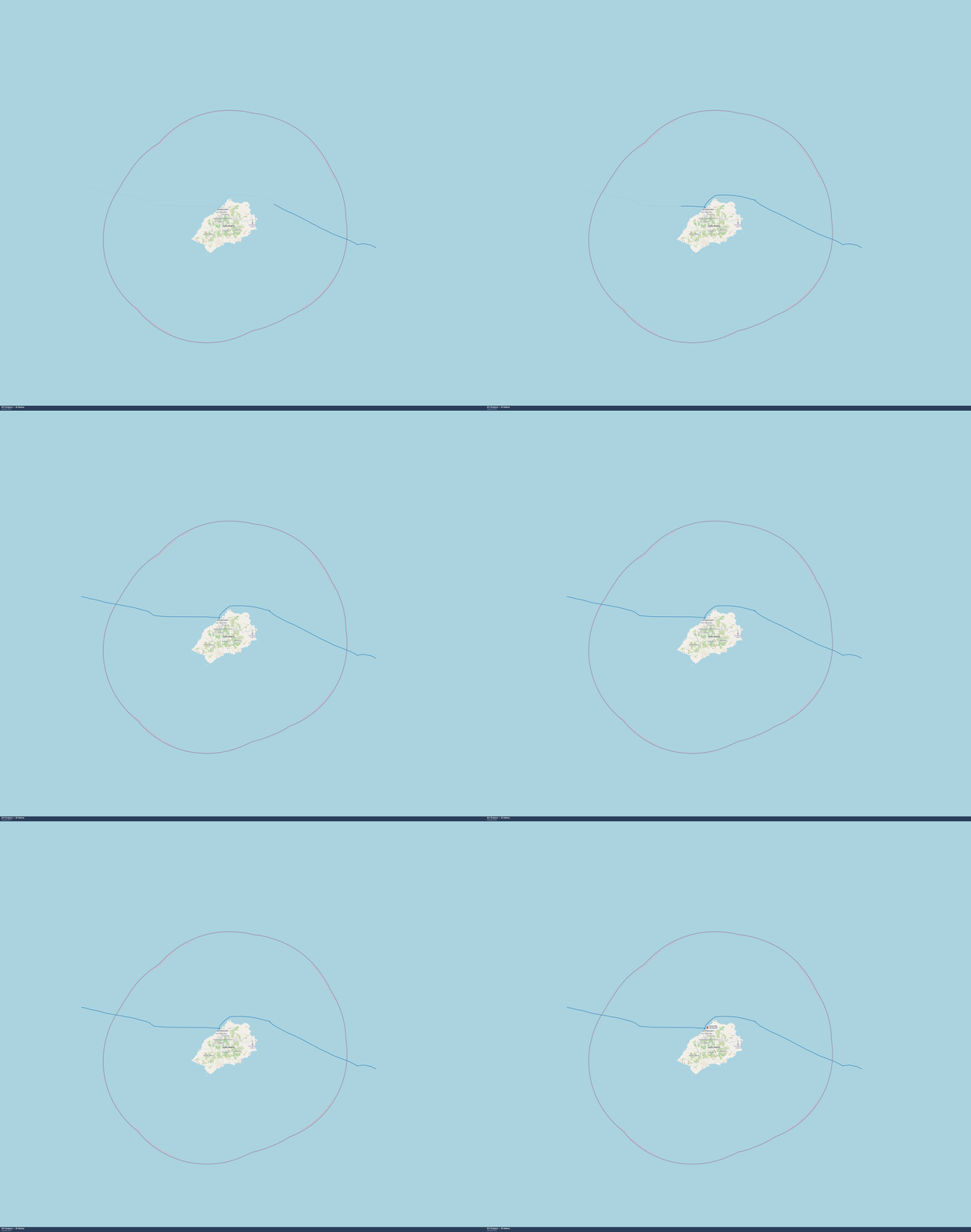
S/V Oroboro GPS track — St Helena — Jan 2019 • GPS data from Raymarine chartplotter • Map © OpenStreetMap contributors
Every anchorage — St Helena, Jan 2019
Mid-Atlantic stopover at the remote island of Napoleon's final exile.
| Stop | Date | Notes |
|---|---|---|
| James Bay — Jamestown | Jan 2019 | Mooring ball Yellow 25 · water taxi ashore · Napoleon's island |
Anchorage maps
Zoomed chart of James Bay mooring at Jamestown, St Helena.
James Bay — Jamestown
Map data © OpenStreetMap contributors. GPS tracks from Raymarine chartplotter, archived January 2019.