Near Camamu, Bahia, Brazil · 21 May 2019
The Bay of Camamu is one of the most sheltered anchorages on the Bahian coast — a wide, mangrove-fringed bay with several small rivers draining into it, low hills on all sides, and a silence at anchor that is hard to find this close to a town. We came in the afternoon, after a morning at the waterfalls of Serra Grande, and we had planned to stay one night.
We stayed longer, because we found the boatyards.
The Camamu area has been building wooden boats for centuries. The climate is right — tropical hardwoods grow abundantly — and the tradition runs through families, passed hand to hand through generations of shipwrights who never needed drawing boards or written plans. The hull forms live in the eye. The fairing comes by touch. You can recognise the work when you see it: it has a quality that tooling cannot replicate.
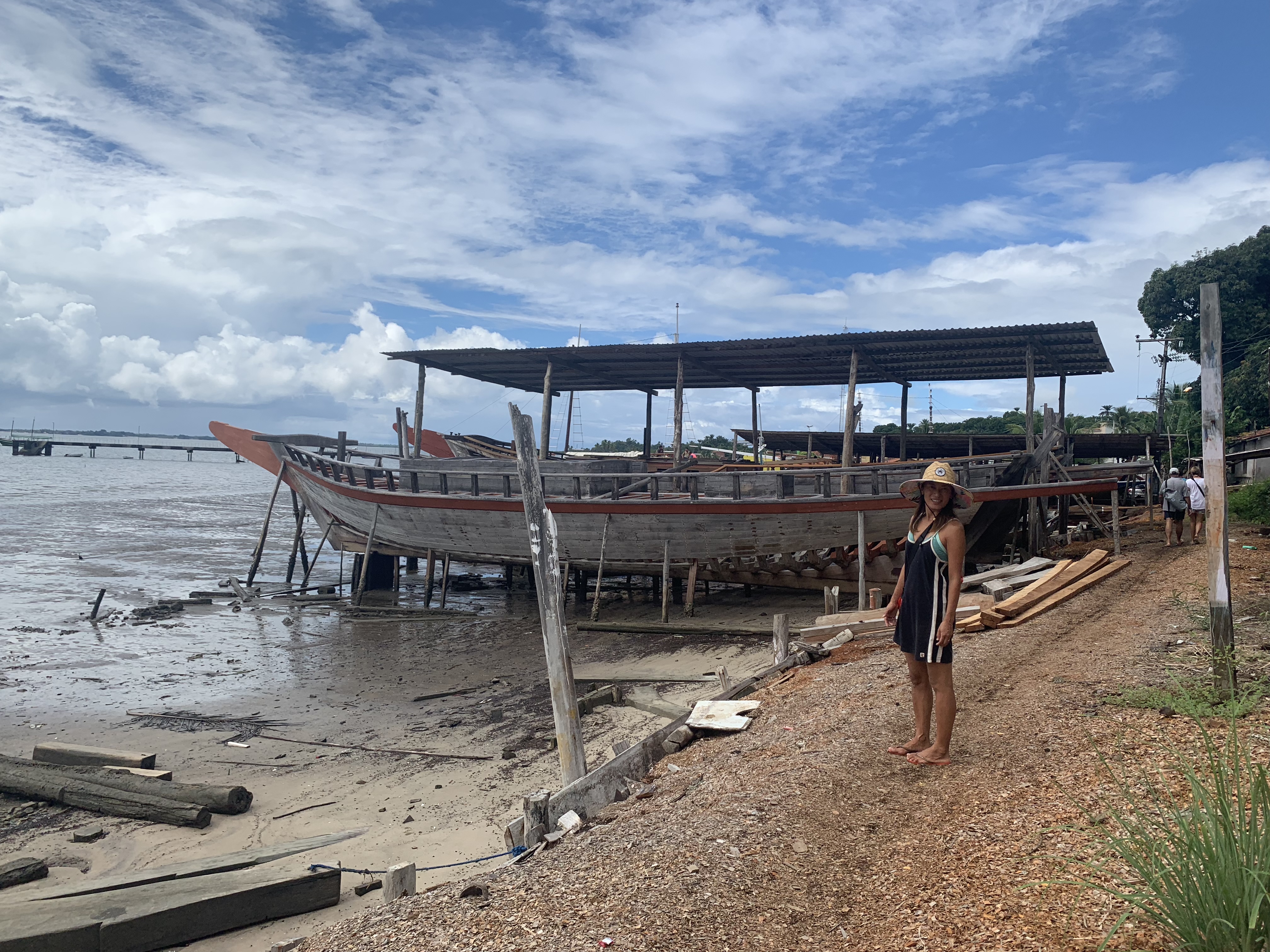
The sheds
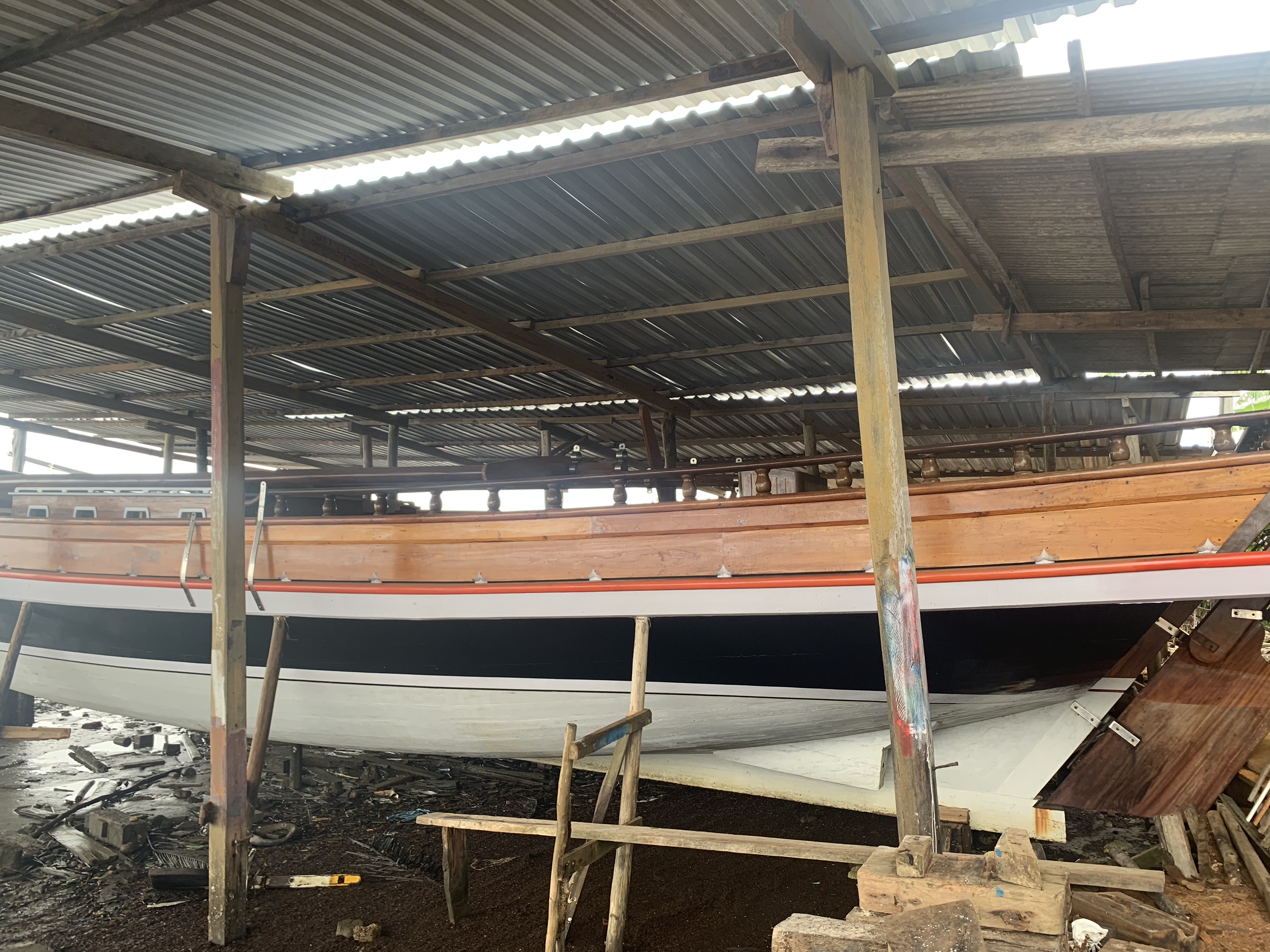
The main boatyard sits at the water's edge, a collection of corrugated-iron sheds open at the sides, each sheltering one or two hulls in different stages. The smallest are fishing boats, perhaps eight or ten metres, with the low freeboard and deep belly of something built to work a shallow bay. The largest are the big passenger launches that cross the bay between the villages — thirty, forty feet of planked hardwood, built to carry a hundred people in a squall.
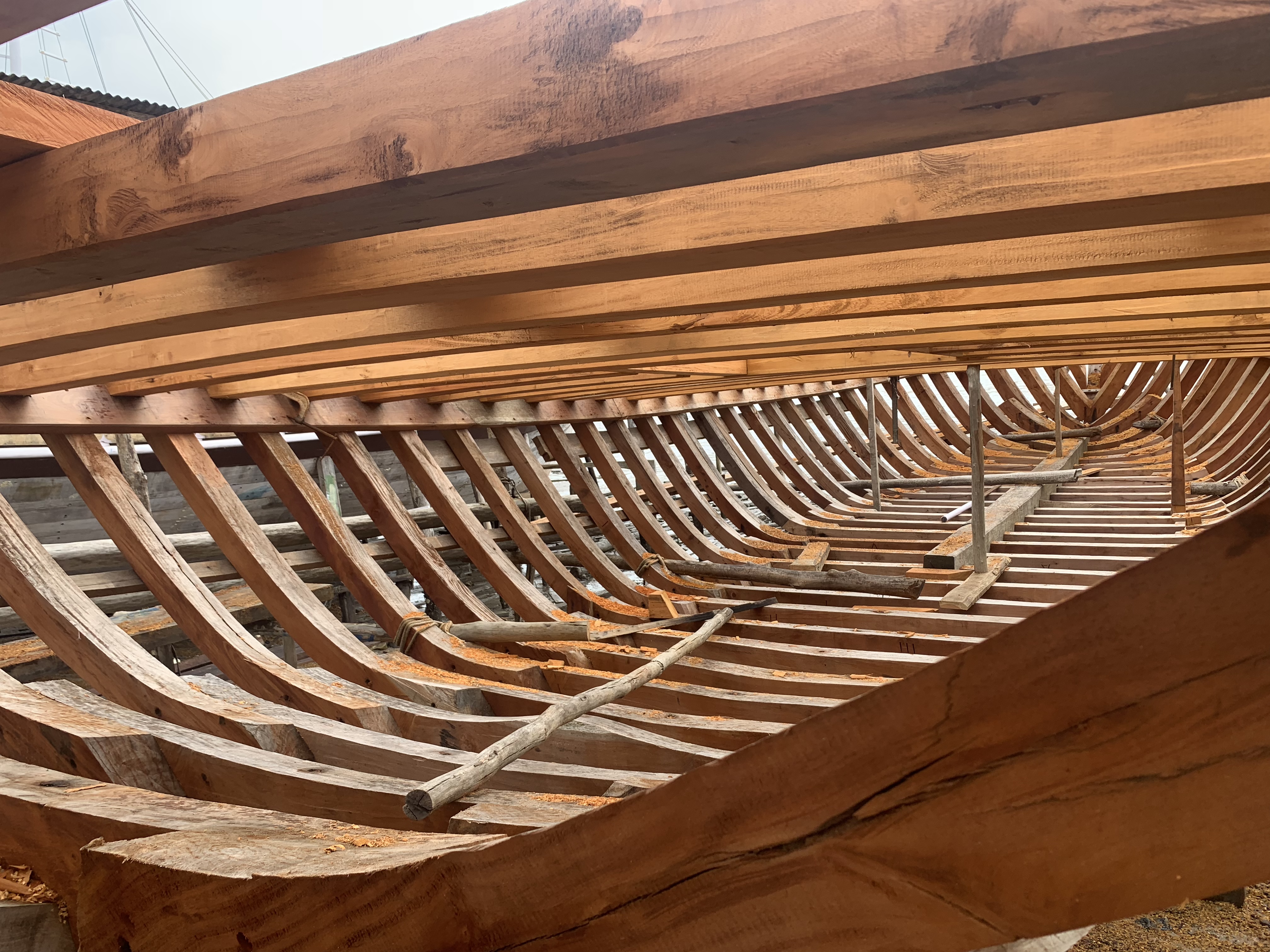
Looking into the skeleton of an unfinished hull from above, the ribs curve away in perfect symmetry, every frame a slightly different arc, the whole structure as disciplined as the nave of a church. No computer drew this. No software optimised the displacement. The builder carried the lines in his head, adjusted by eye, corrected by hand.
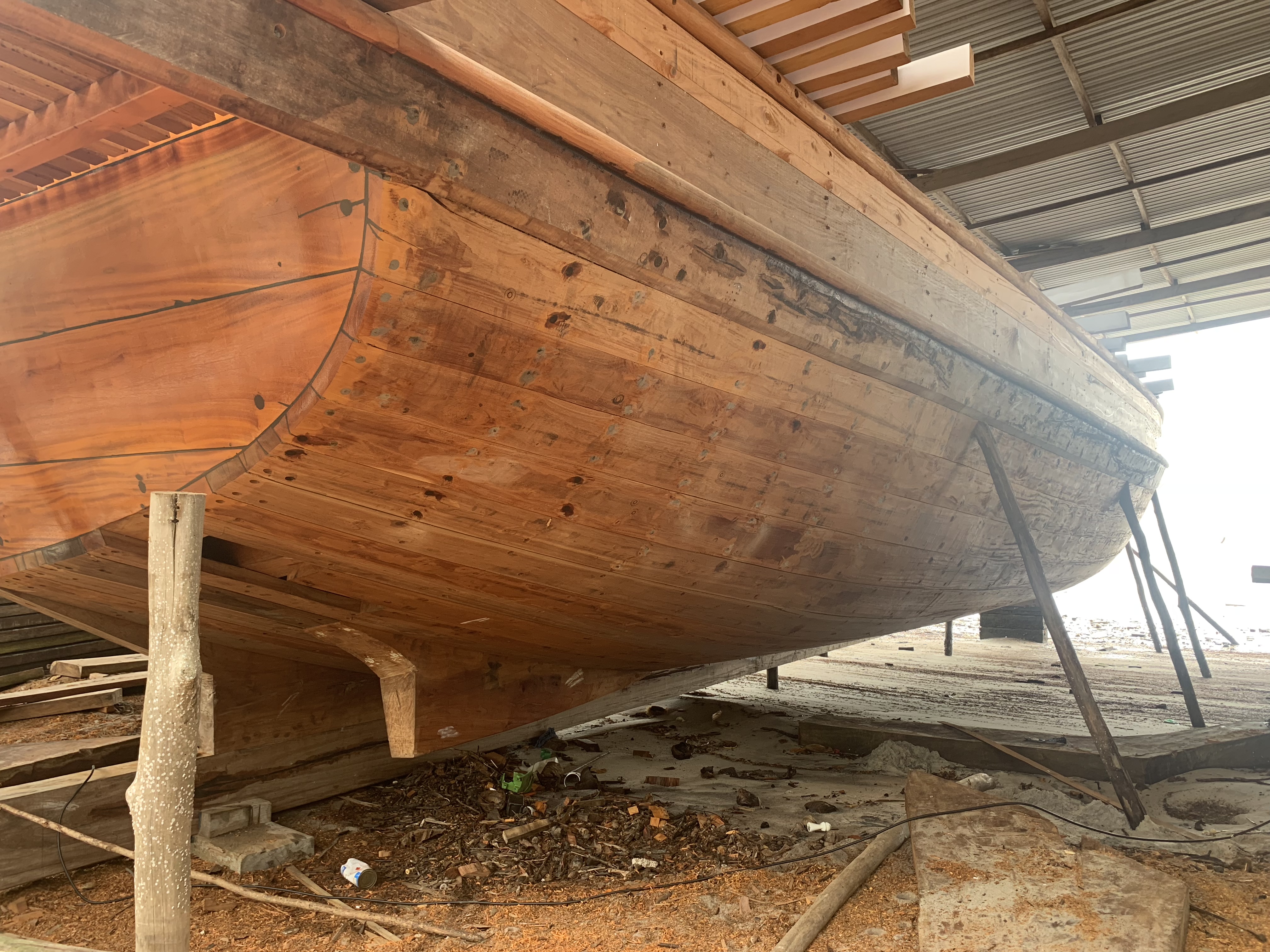
The caravela
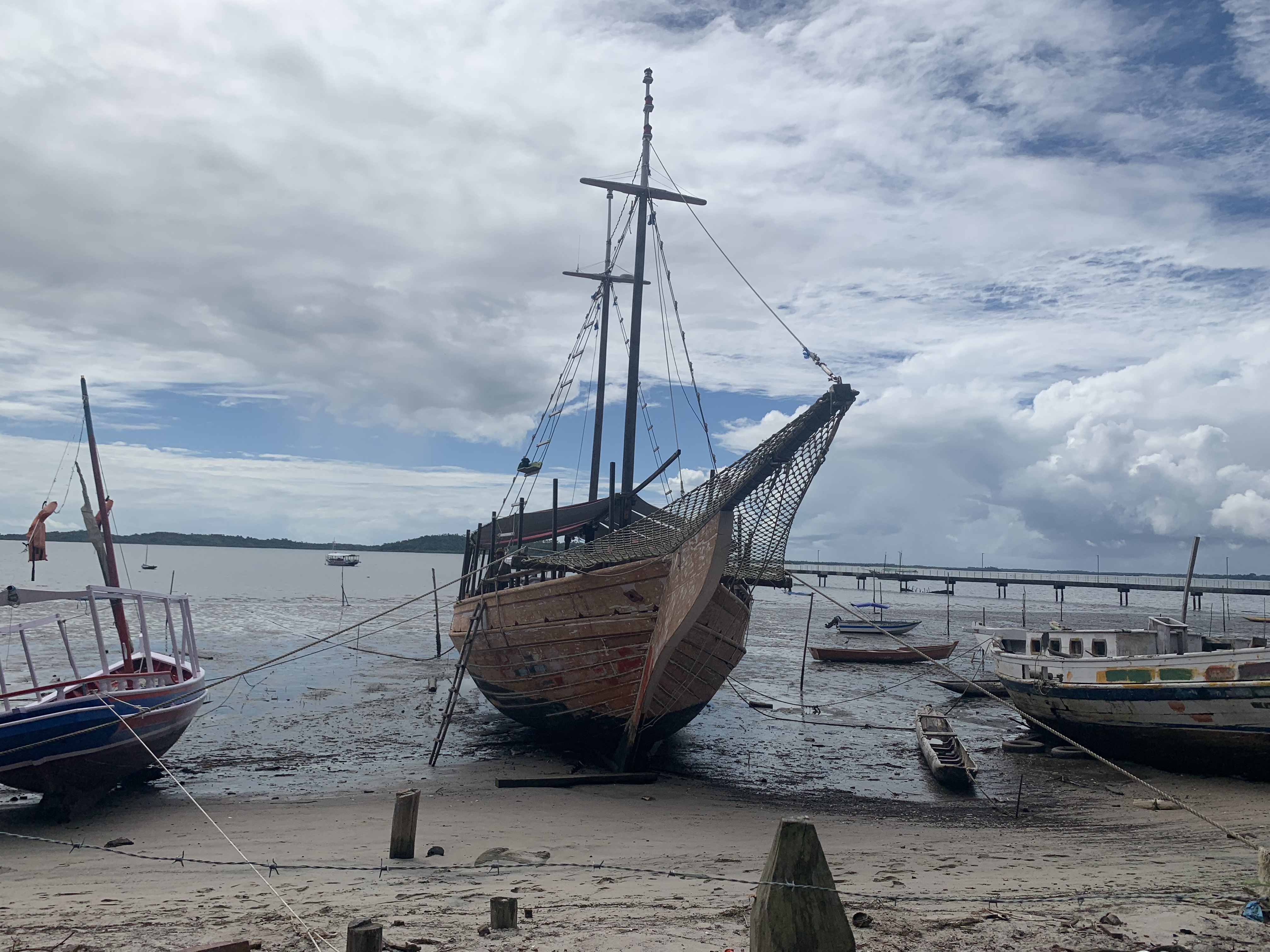
At the water's edge, grounded on tidal sand, there was something else entirely. A full-sized replica of a Portuguese caravela — the type of vessel that crossed the Atlantic in the 15th and 16th centuries — built for reasons that were not entirely clear to us, perhaps for a film, perhaps for a festival, perhaps simply because someone in Camamu wanted to know if it could be done. It was rigged with a bowsprit and spritsail, a lateen yard angled across the foremast, netting strung from the bowsprit to the waterline. Around it, the working boats of the bay: fishing skiffs, water taxis, the usual clutter of a tidal beach.
It looked like something from another century. In Camamu, it did not look out of place.
We left Camamu feeling the way you sometimes do after seeing something you didn't expect to find: a little grateful, and a little less certain that everything interesting is already on a map somewhere. The boatyards are not signposted. They are not on TripAdvisor. They are just there, on the shore, making boats the way they have always made boats, waiting for someone to come by and notice.