Salvador de Bahia, August 2019
Sailing Oroboro Podcast — Episode 6
Salvador de Bahia
Salvador de Bahia is the third largest city in Brazil, and the one where its African roots run deepest. It also has a surprising connection to Francesco's hometown of Florence — and to the very name of the Americas. Plus: a Candomblé ceremony, a lunch in a favela, and the strangest thing you can witness in a harbour.
Salvador the Bahia is an important landmark in our voyage.
After visiting Cape of Good Hope last year, seeing a full scale reproduction of the caravela used by Bartolomeu Diaz in Mossel Bay (South Africa), dropping anchor in the exact spot where Pedro Álvares Cabral made the fist landfall in Brazil 500+ years ago (which is not Porto Seguro, as some people believe), now it was time for us to learn more about an Italian explorer: Amerigo Vespucci!
There is a very interesting book about the "supposedly" 4 voyages of Amerigo Vespucci, written by M. Fernandez de Navarrete, the famous Spanish Marine Historian. The title is "Viajes de Américo Vespucio". My friend Joaquin graciously lent it to me.
The book is very well written (helped me rediscover the Spanish I learnt in college and that I seldom used in all these years).
The mystery about the authenticity of at least 2 of the 4 voyages claimed by Vespucci is also interesting for me under a professional point of view, because the investigation about the authenticity of the letters written by Vespucci involves translation. Vespucci's work can be found in Castillan Spanish, Portuguese, French, Italian and Latin as well. Through a comparative analysis of the translations Fernandez de Navarrete arrives to the conclusion that only the second and third voyages are authentic. Here you can see the Latin and Spanish versions side by side.
Reading it, brought me good memories of when I was a student at the University of Florence. I decided to take an exam in Modern History and by chance that year the seminar was on the voyages of Christopher Columbus and the accounts of Bartolomé de Las Casas. I think the title of the course was The New World.
Little did I know back then that 25 years later I would have sailed along some of the very same routes of the earlier explorers I was studying for my degree.
But I'm digressing... Back to Salvador the Bahia. Why the name of the town?
Amerigo Vespucci family lived near All Saints' Church in Borgo Ognissanti (All Saints) in Florence, which was also known as San Salvatore, hence the name Salvador de Bahia. He sighted the bay on November 1st 1502, which is the day of All Saints, hence the name of Bahia de todos os Santos (bay of All Saints). What a coincidence!
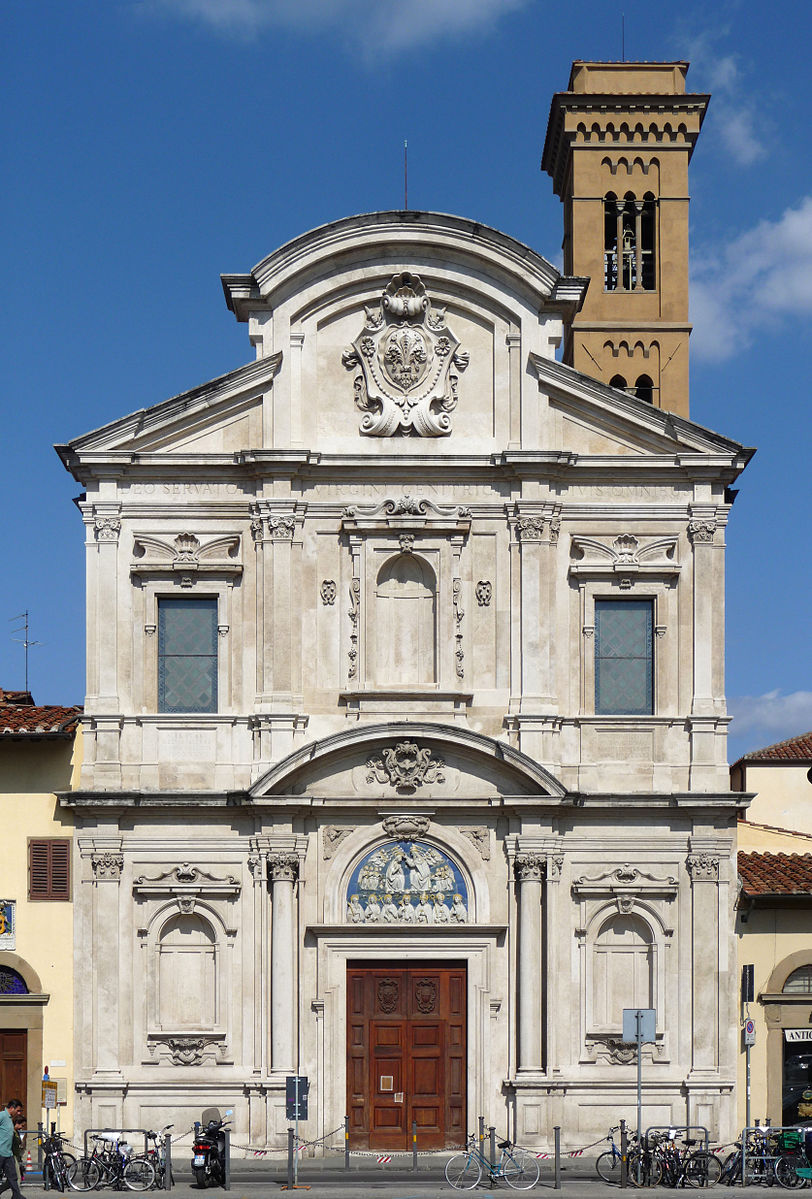
Church of All Saints, Florence
The church of All Saints in Florence is one of my favorites because it contains a fresco of St Jerome by Domenico Ghirlandaio. The fresco was commissioned by Vespucci family. Saint Jerome is best known for his translation of the Bible into Latin. He is the patron of Translators, and as I am a translator myself, I'm very keen on this fresco.

Domenico Ghirlandaio, Saint Jerome
But I'm digressing again... Back to Salvador!
Salvador has in impressive number of churches. The popular belief is that there is a church for every day of the year. In reality, there are a "little" less: According to the cognoscenti, the churches in Salvador are "only" 180.
We had great fun in Bahia, and we also had the first official guest on board Oroboro: our friend Karine, from Guadalupe.
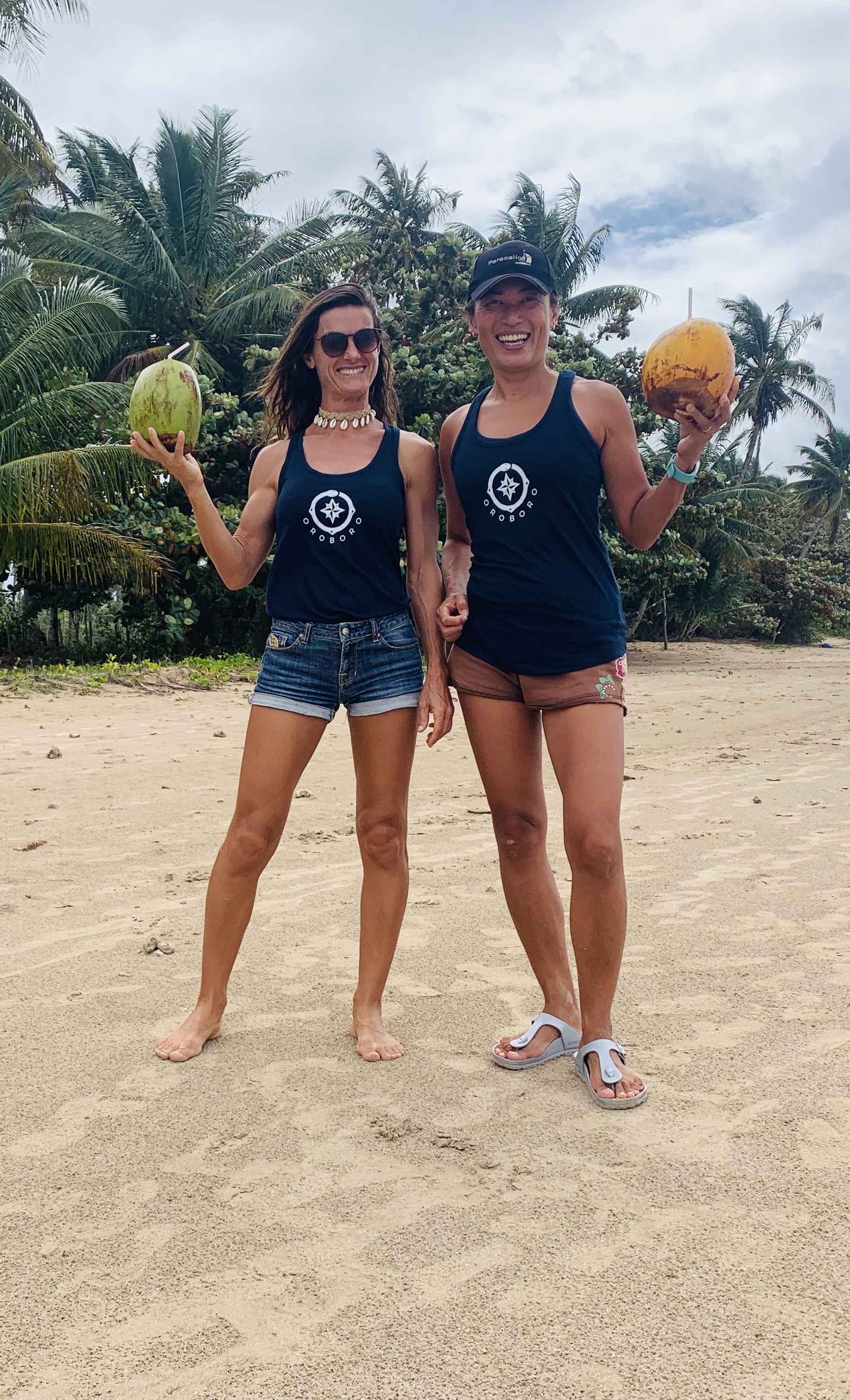
Yuka and Karine had a lot of fun in town, and they were brave enough to take a Capoeira lesson.
Yuka and Karine also liked to mix with the locals. These two ladies in typical Bahian dresses proudly show their African roots. I think they told Karine and Yuka that they have to eat more... Well, they don't know them well enough! Because they actually do eat a lot!
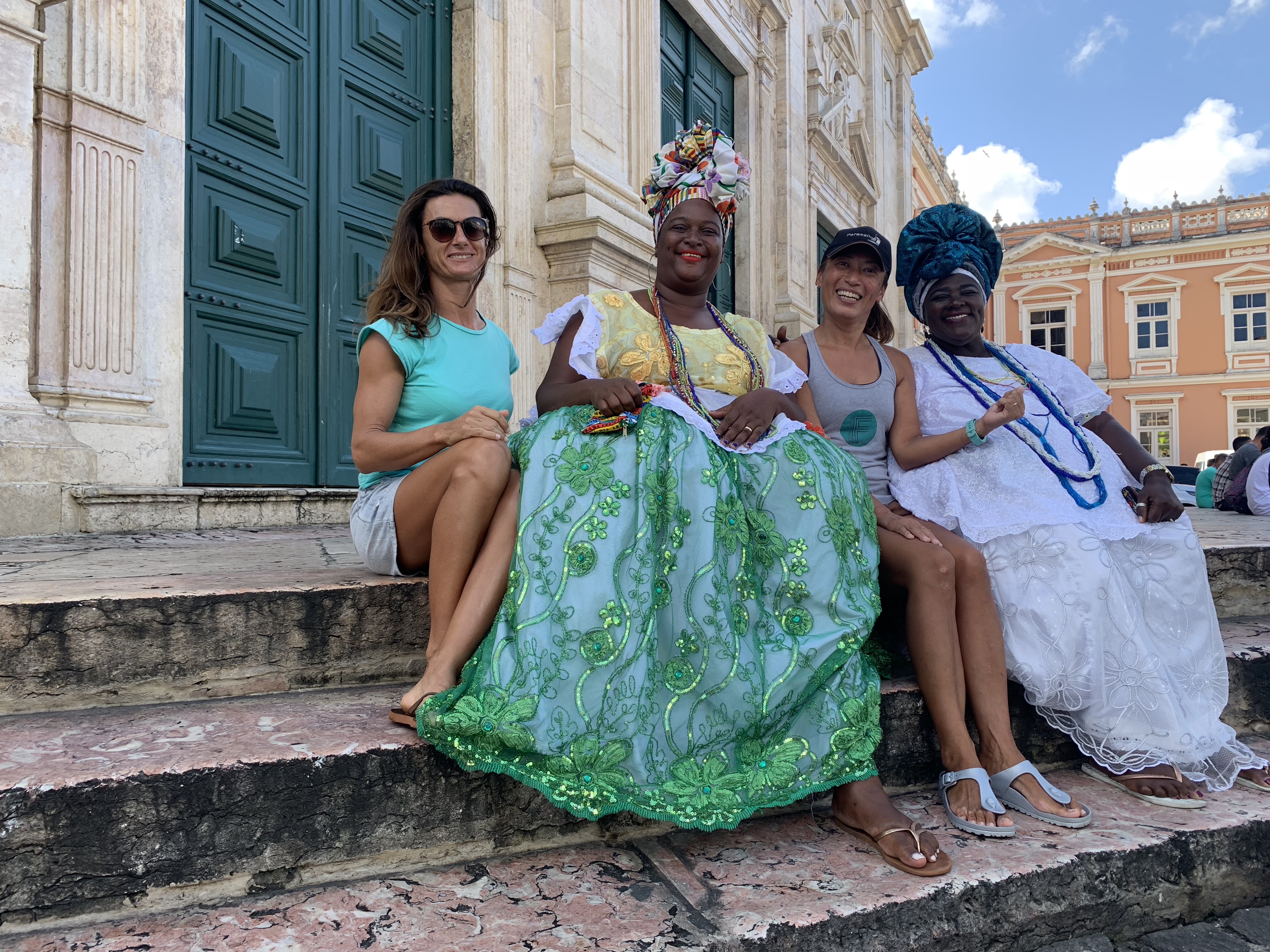
Bahian traditional dress
It's just that they keep in shape surfing, kiteboarding, doing yoga and working out...
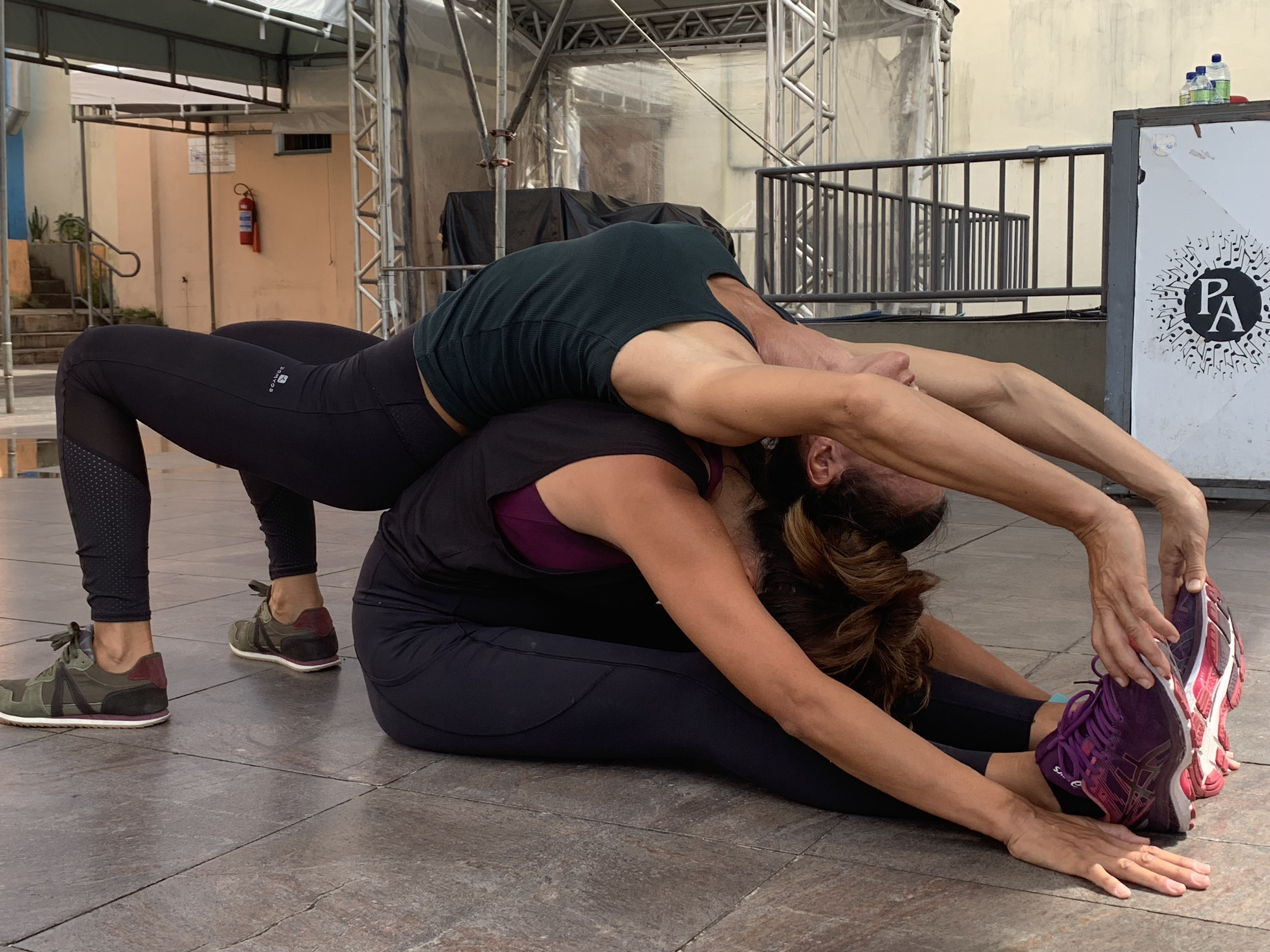
Working out
Candomblé
One day I happened to know that that night there was going to be a Candomblé ceremony, to celebrate Yemanjà, the Queen of the Ocean, the patron spirit of sailors, the feminine principle of creation, and the spirit of moonlight.
I felt it was appropriate for the Oroboro and Plan B crews to attended it. Karine and Joaquin's son and nephew were also with us.
We had mixed feeling about the ceremony. It was certainly not what we expected. But a unique experience, nonetheless...
When Karine left, our second official guest arrived from Italy: Mario!
Two years ago Mario was with us in Miami to see the boat, and he was actually the one who convinced us to pull the trigger and buy it. So Mario played a big role in our life changing decision.
With Mario, we planned to sail 400+ nautical miles from Salvador to Recife. First time for him doing such a long passage, and such a rough one! Strong winds on the nose, 2.5 meters waves on the bow, frequent squalls with gusts up to 27 knots... But when you're 19 years old, nothing scares you.
When we arrived in Recife, we had to lower and store the flag of the State of Bahia and, consequently, we had to hoist again the flag of Brazil. Has tradition dictates, you need to hoist the flag with dignity and ceremony. But... you can tell Mario hasn't done military service...
But that's a different story... Back to Salvador!
All in all we spent a lot of time in Salvador and sailing in the Bahia de Todos os Santos. It's a beautiful bay, very clean (unlike Guanabara bay in Rio).
It is very nice to see the typical Bahian fishing boats, called Saveiros, sailing around the bay.
You can see dozens of these boats in the bay. Later on, when we'll sail north, these boats will be replaced by different ones, called Jangadas.
Favelas
One day, while I was working on the boat in the marina at the Terminal Nautico, a local sailor asked me if I wanted to go have lunch with him on his boat in a nearby place. I was looking forward to have a break, and said yes. Little did I know that the "restaurant" was in the nearby favela...
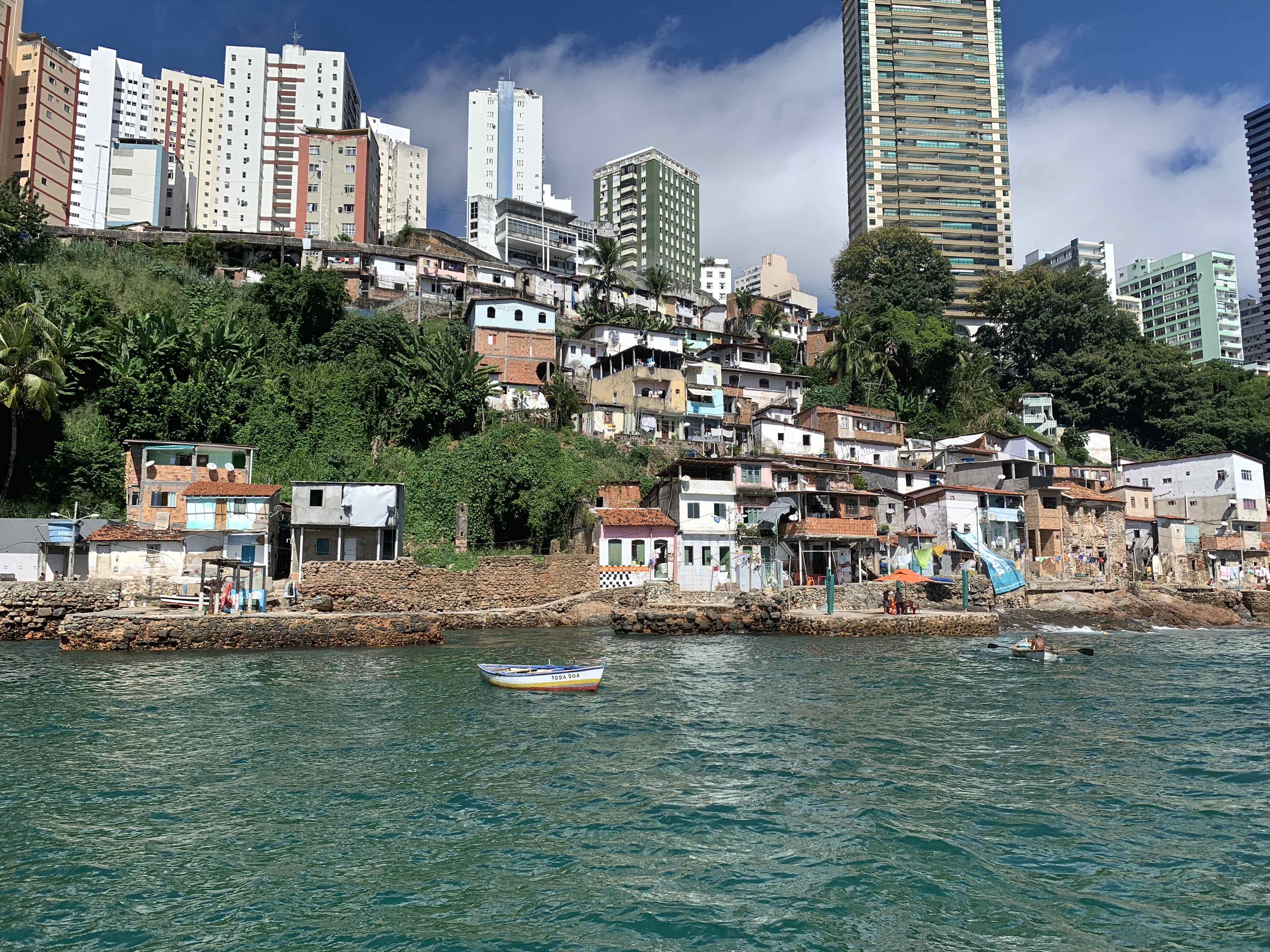
At some point, we heard a loud blast coming from the water. We turned around and we saw a strange glare over the water. First time in my life that I was someone dropping a bomb in the water to kill the fish. I saw people jumping into the water from everywhere to collect the killed fish. From nearby boats, from the shore and even from the windows of the houses. Scary!
There is a lot more to say about Salvador but I think I'll leave you with that. In the next posts I will talk about Itaparica, Morro de Sao Paulo and all the other places we visited.
Here are photographs from our first weeks of exploring Salvador — May and June 2019.
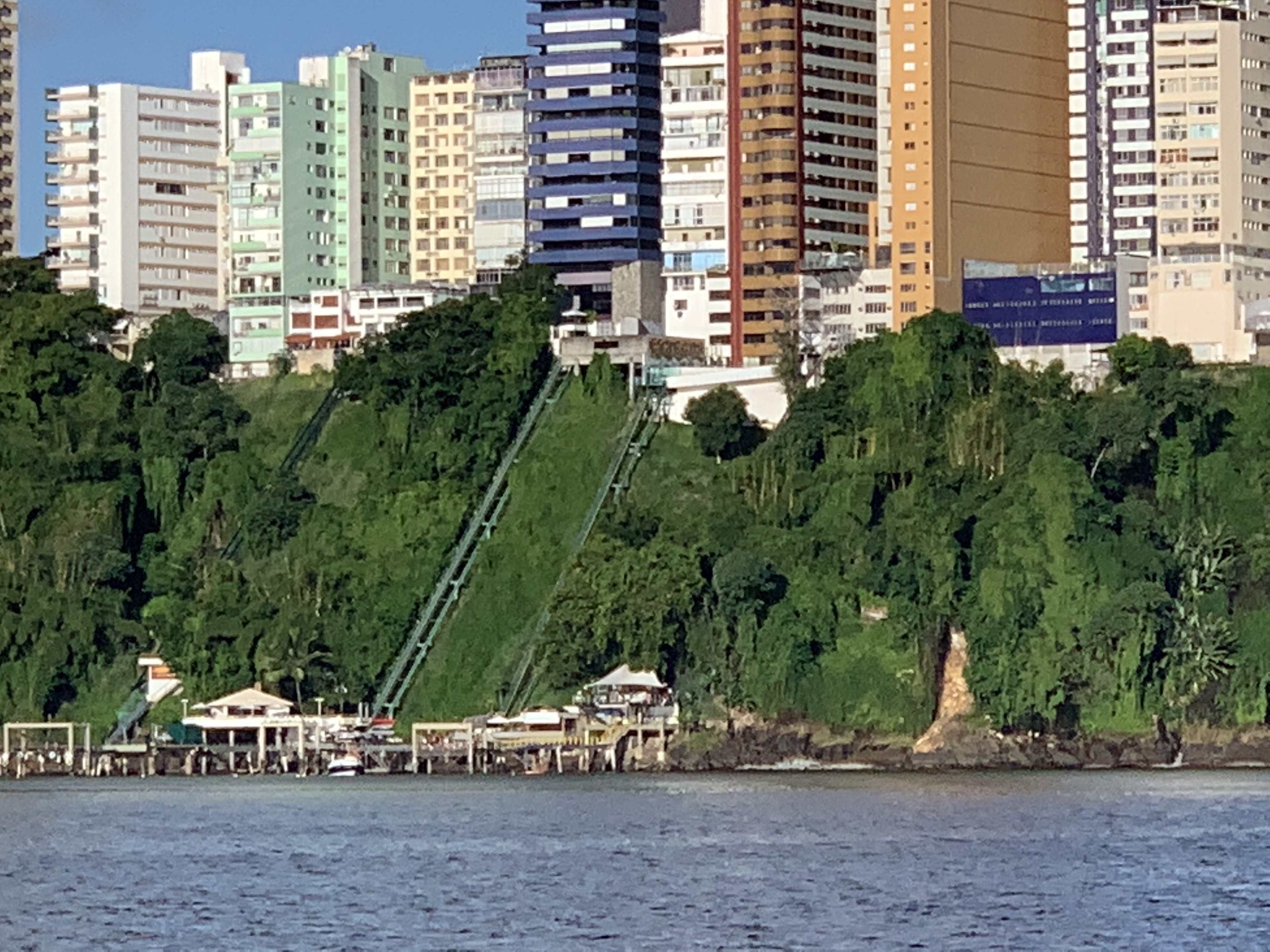
Arriving at Salvador by boat — the Lacerda Elevator visible on the cliff above the lower city
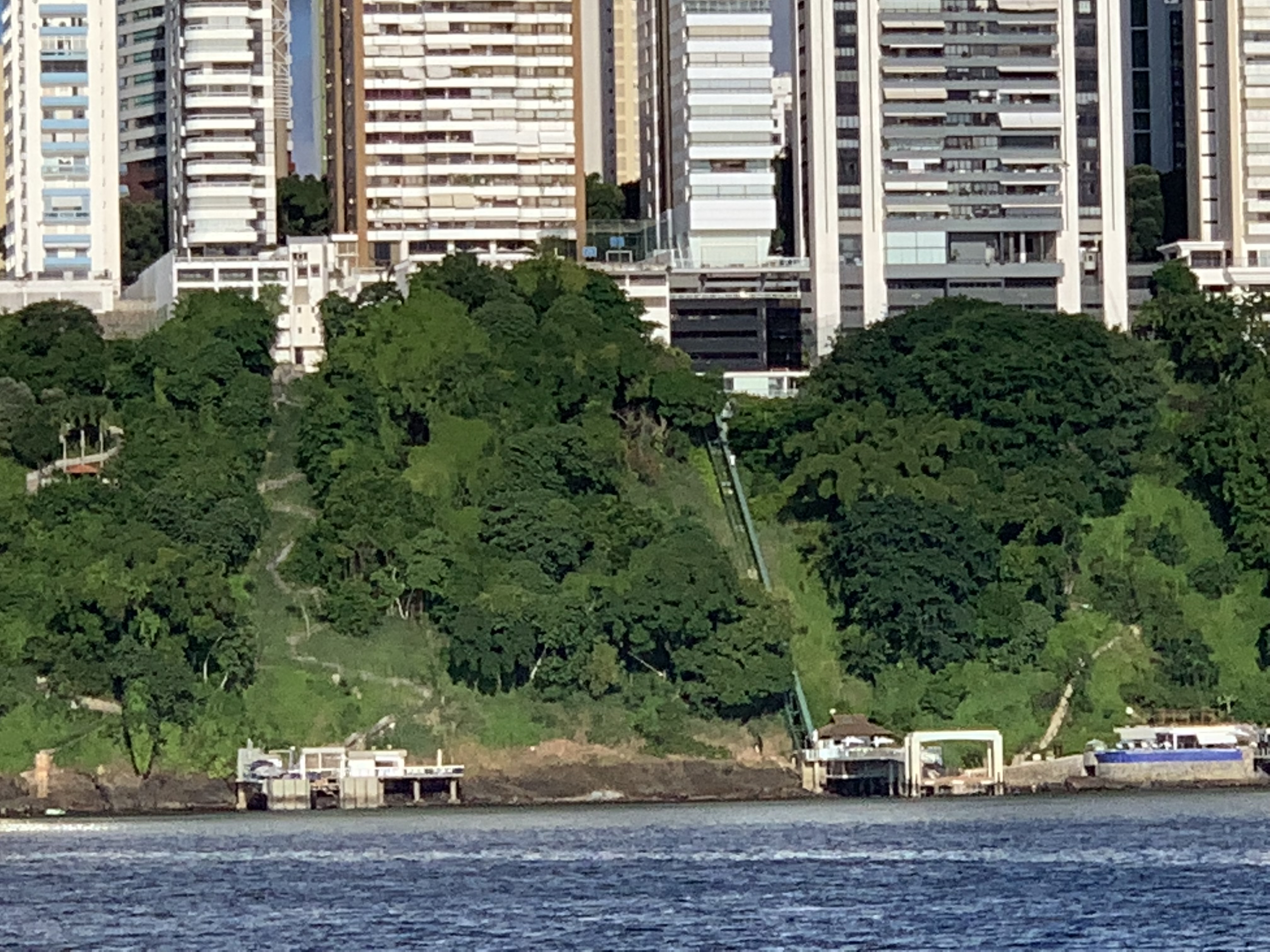
The Lacerda Elevator seen from the Baía de Todos os Santos, with the city rising behind it
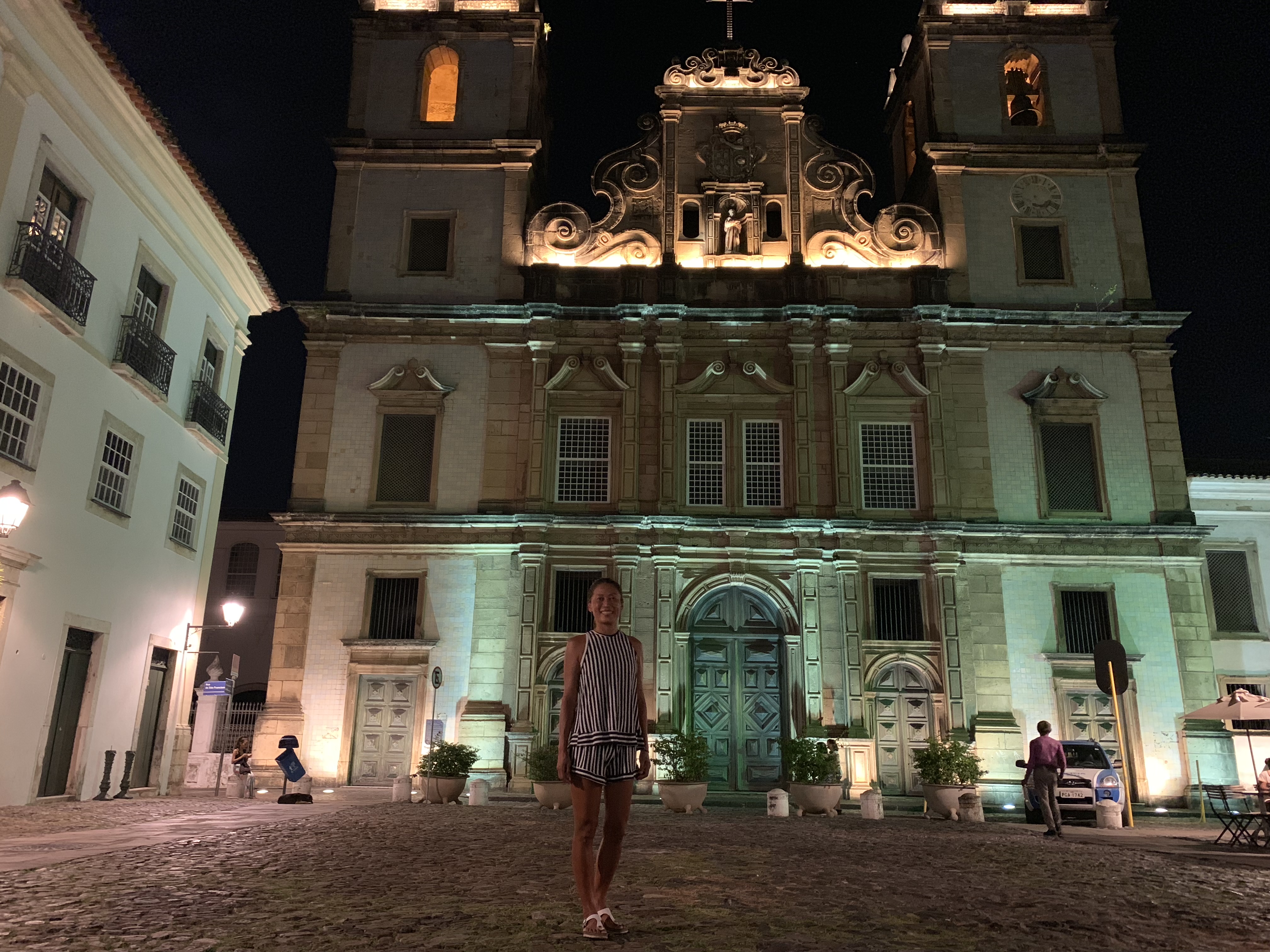
Yuka in front of a baroque church in Pelourinho, lit up at night
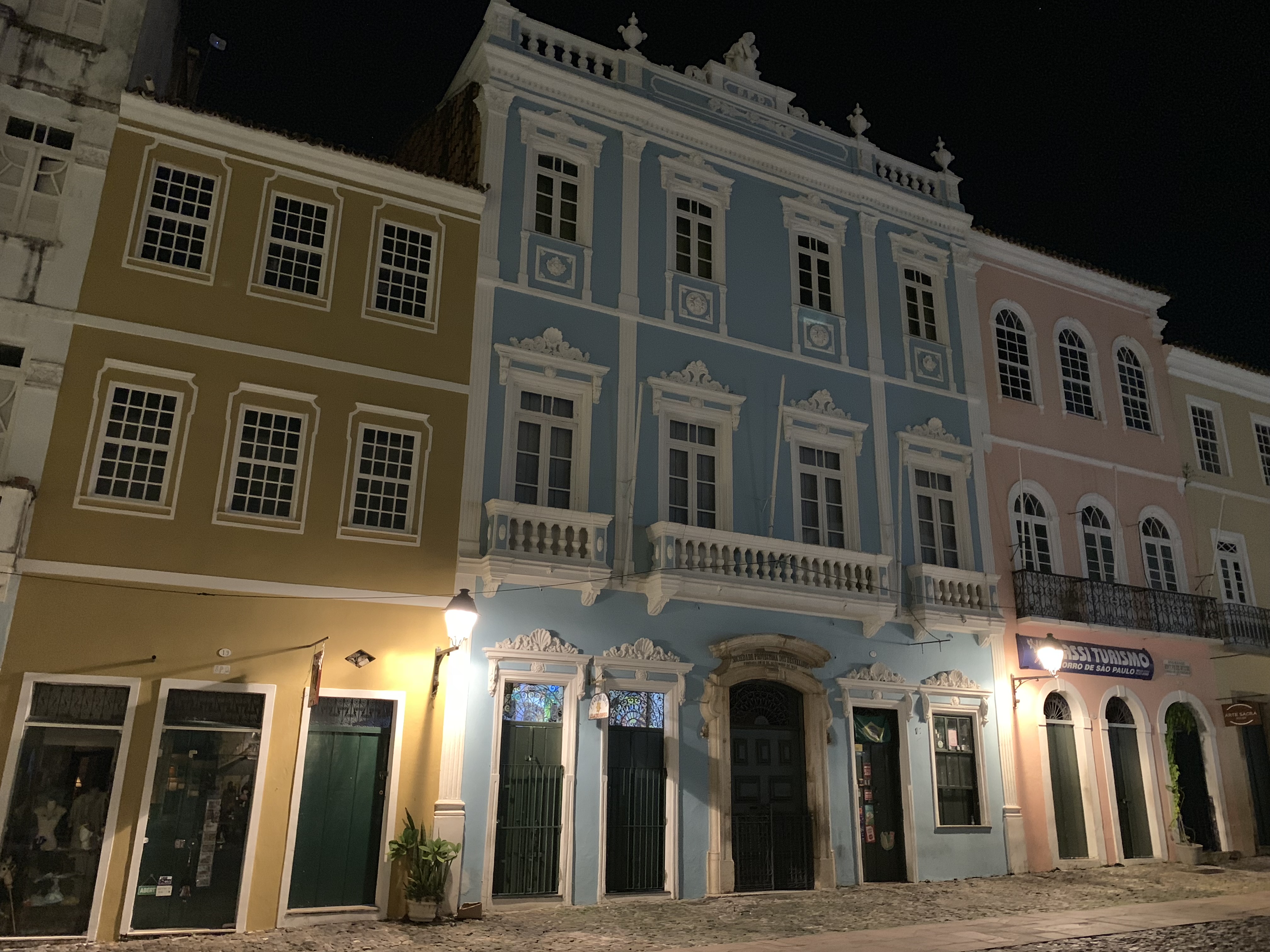
Colorful colonial building facades of Pelourinho lit at night
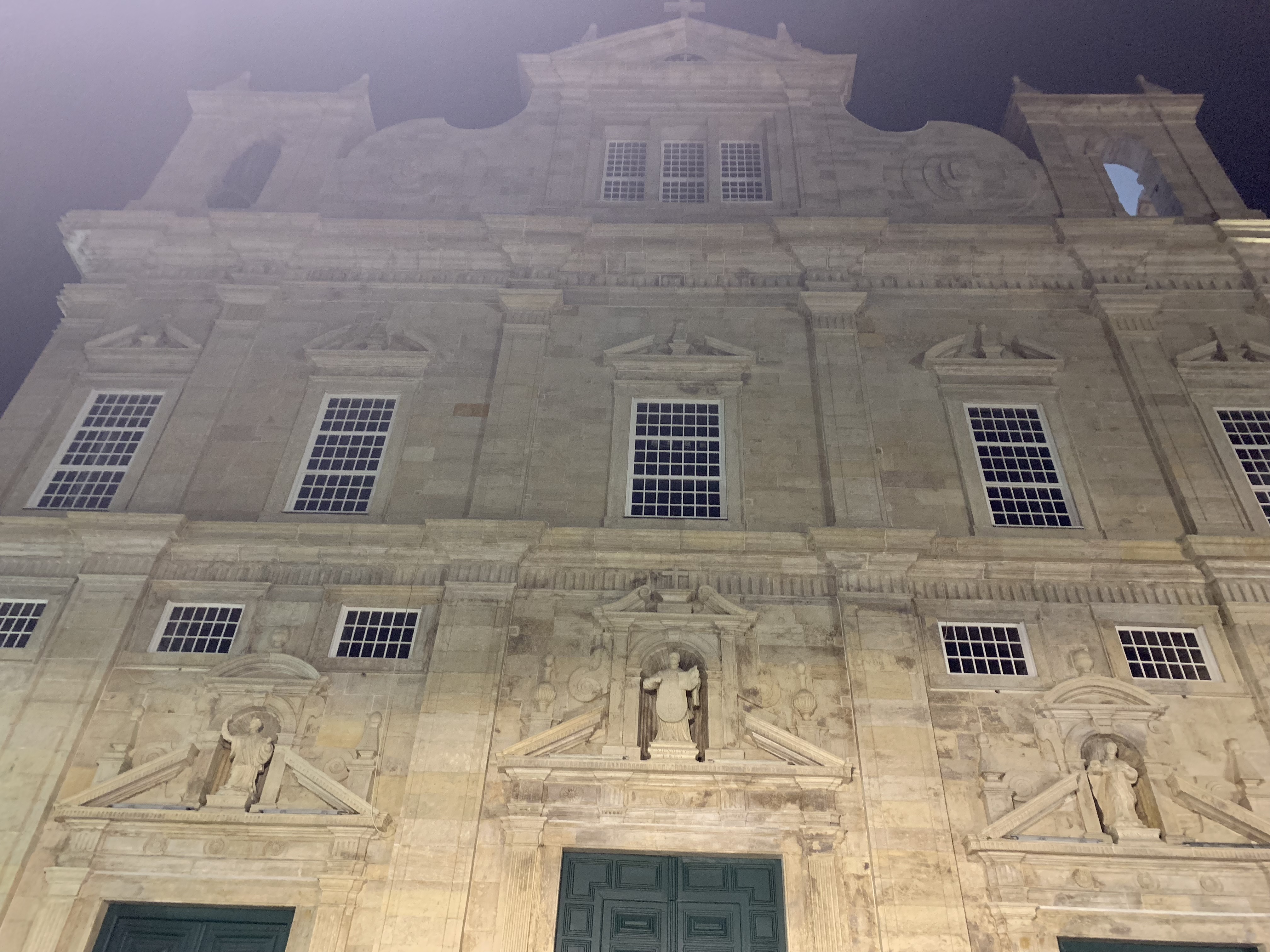
Catedral Basílica da Sé facade, illuminated at night
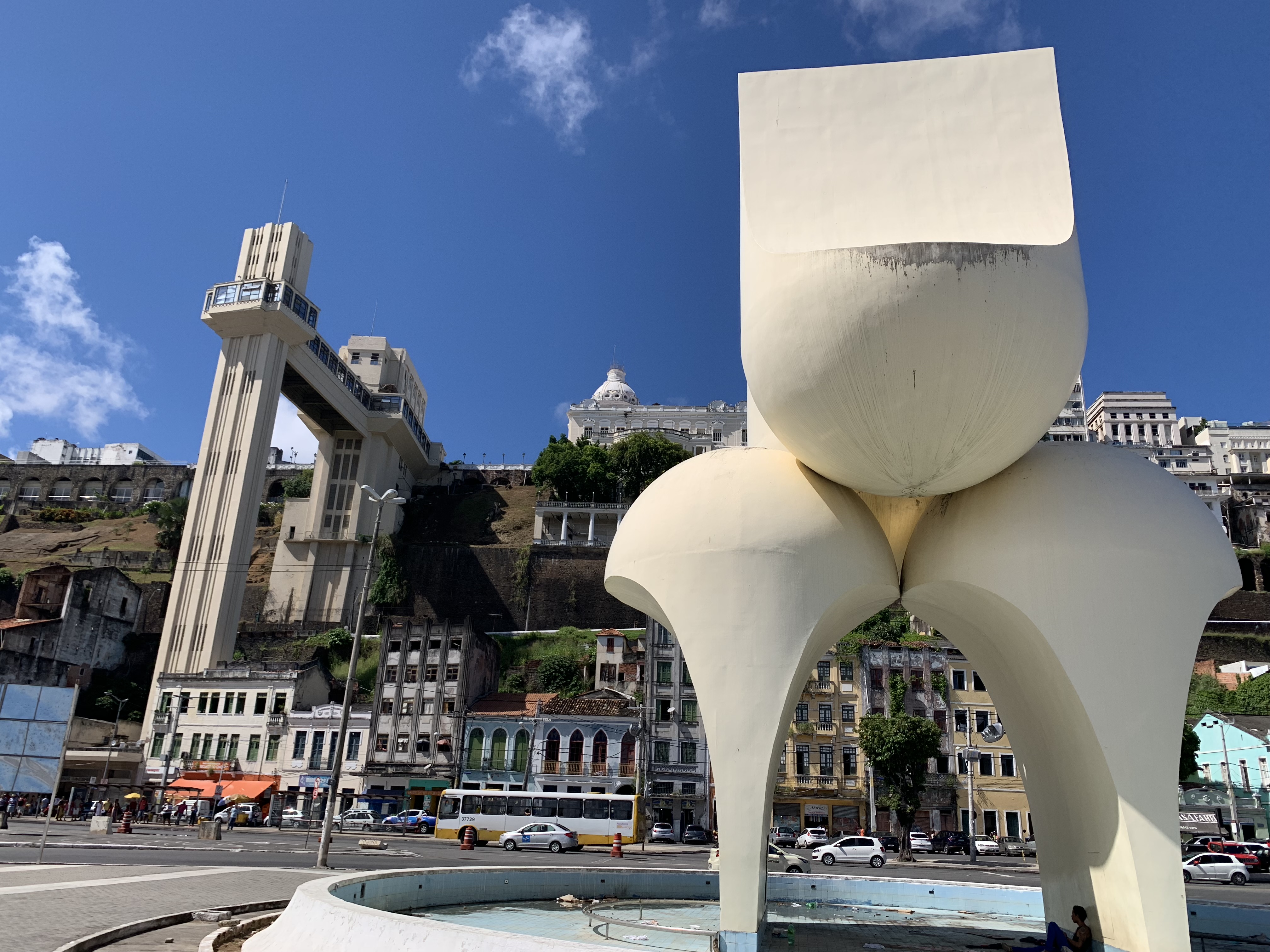
The Lacerda Elevator seen from the Comércio district, with an abstract sculpture in the foreground
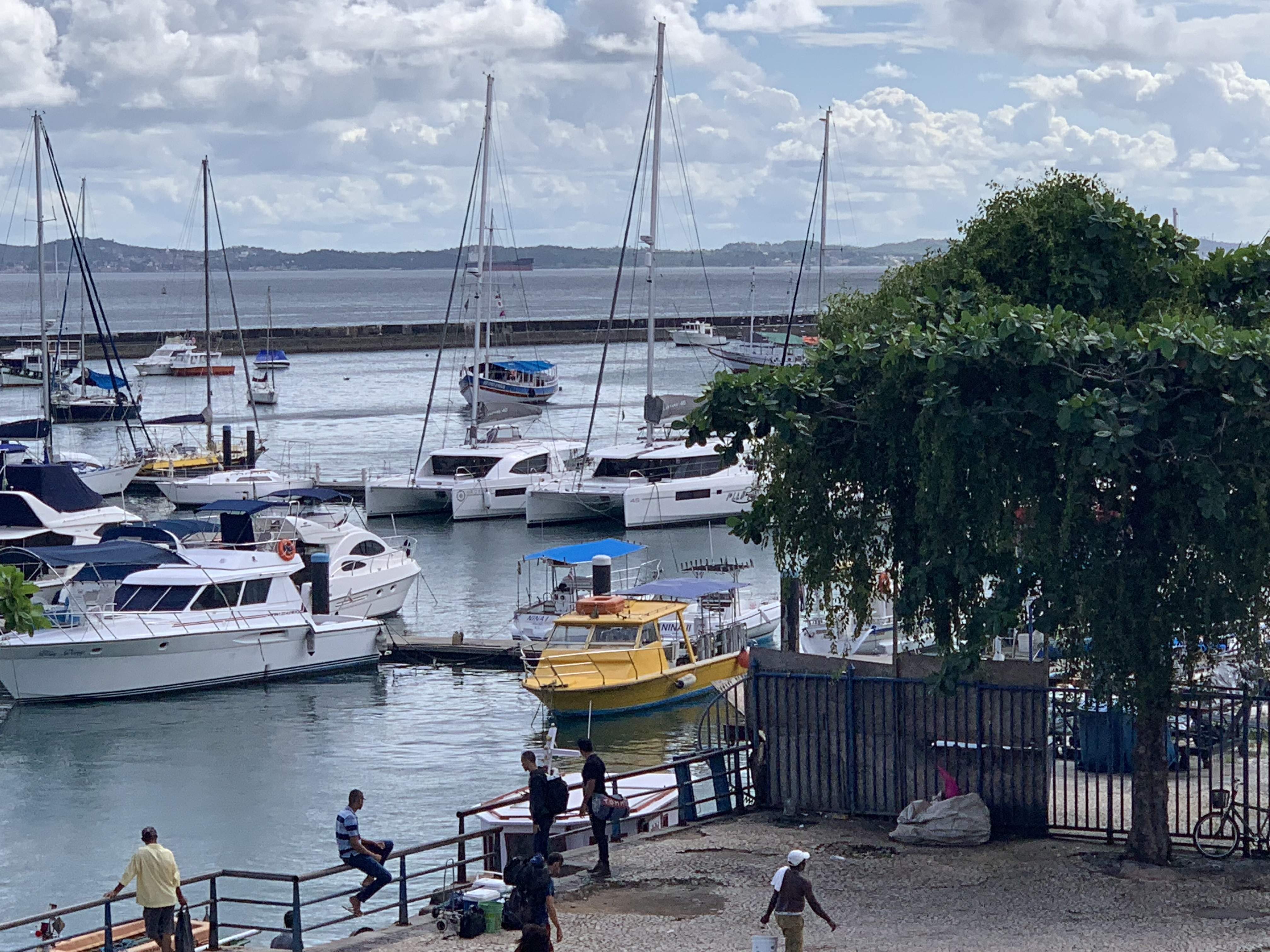
Terminal Náutico marina — our base in Salvador
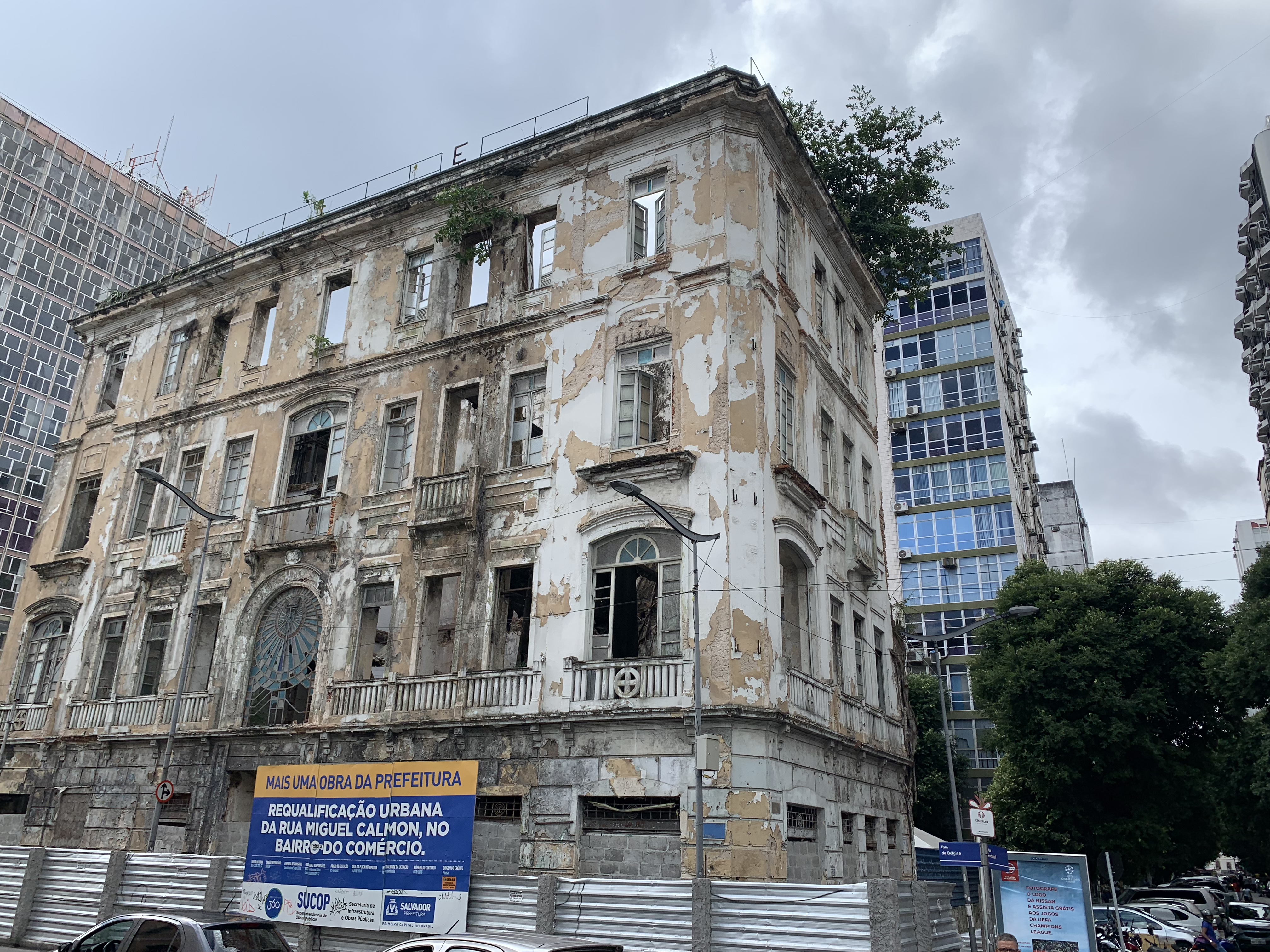
Abandoned colonial buildings on Rua Miguel Calmon in the Comércio district
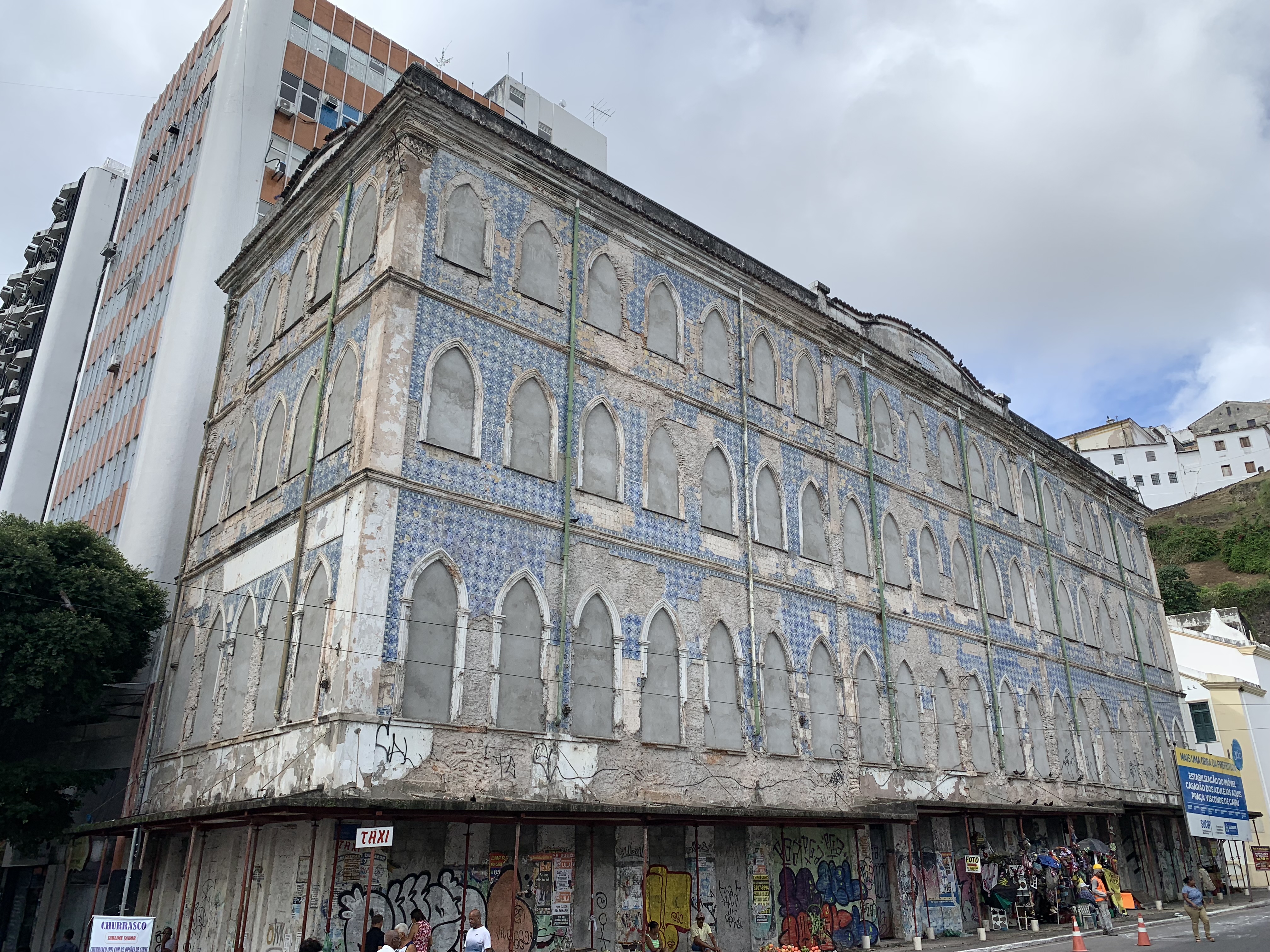
Abandoned colonial buildings on Rua Miguel Calmon, closer view
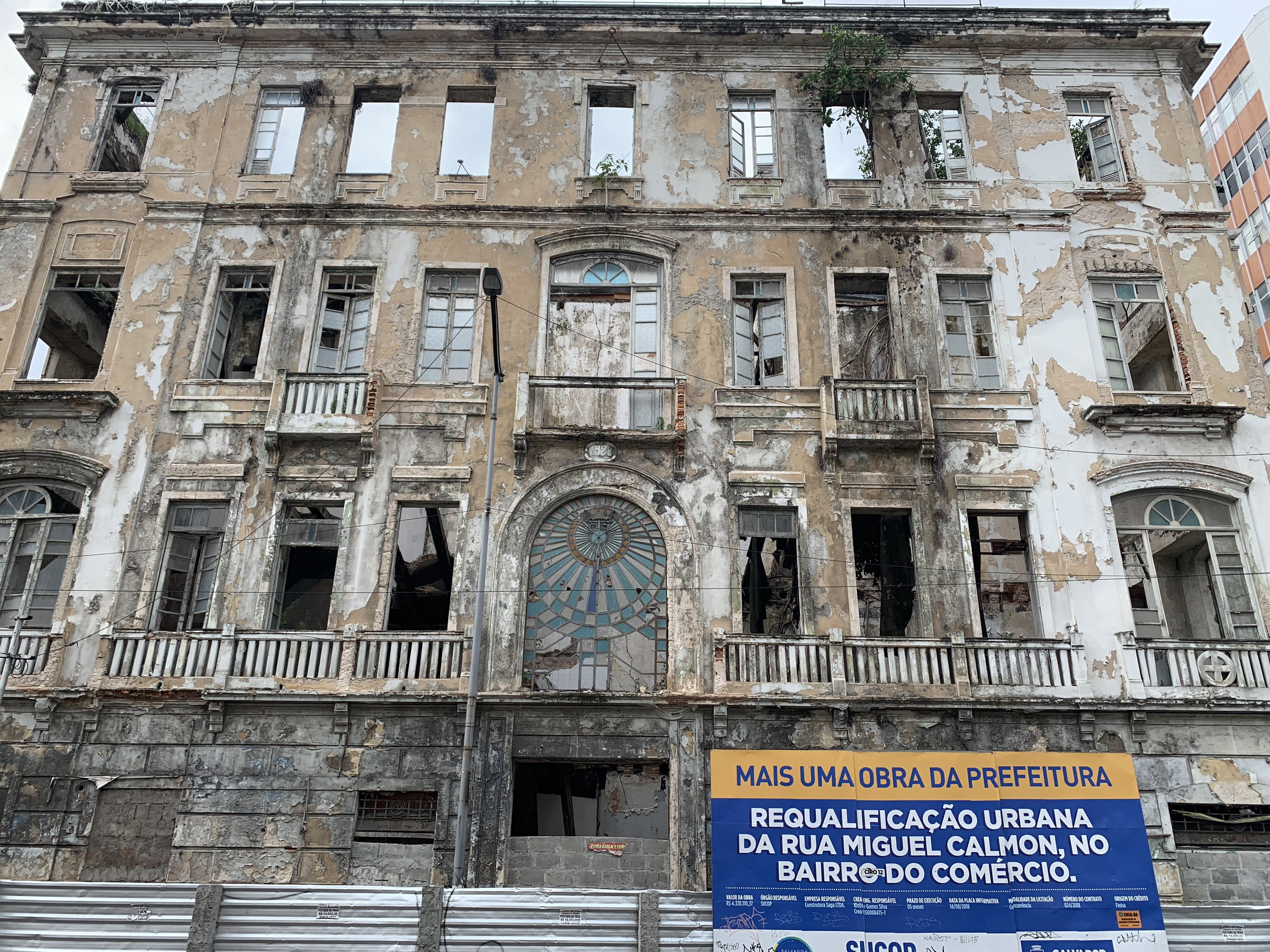
Detail of an abandoned ornate colonial facade in the Comércio district
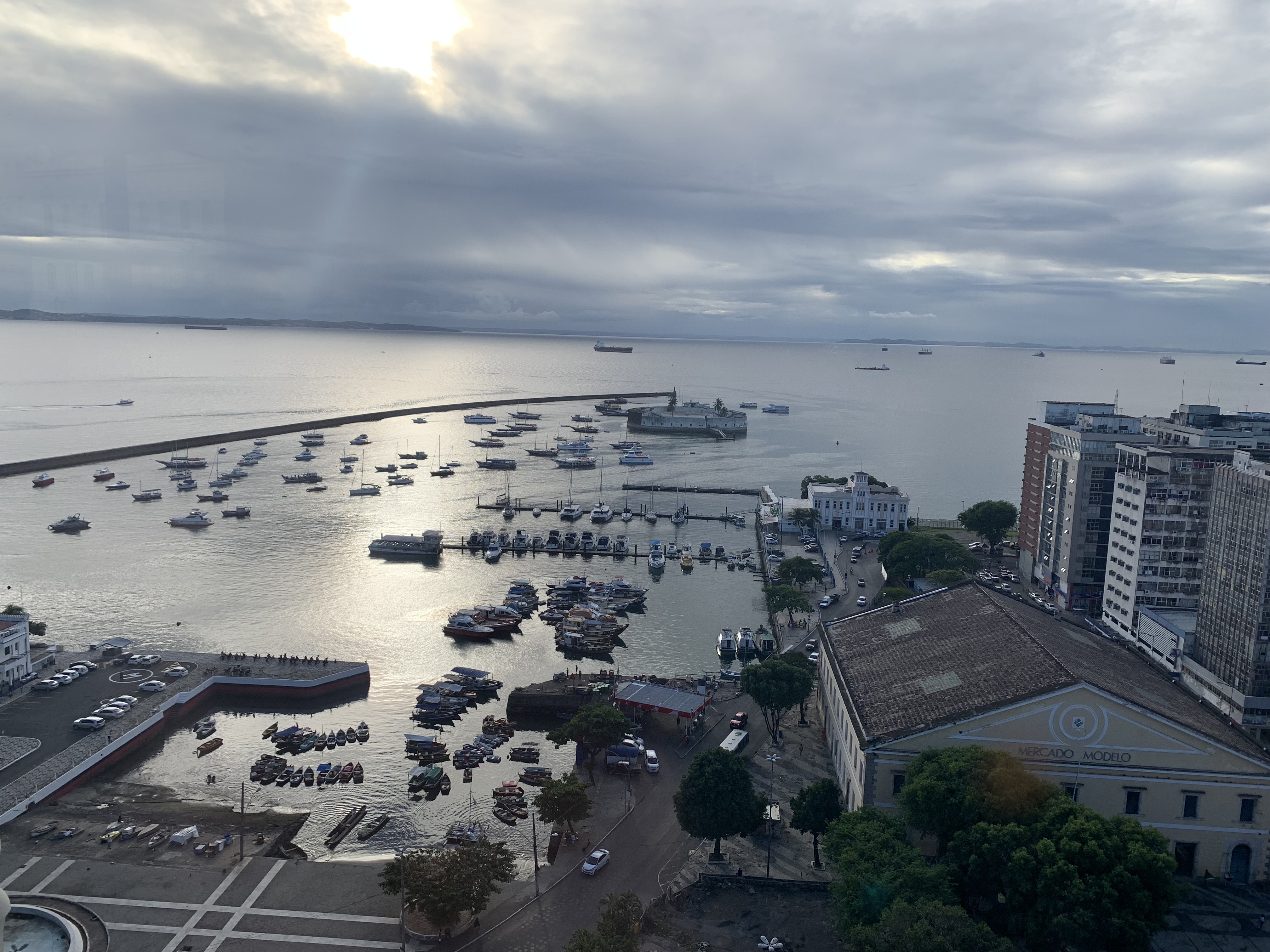
Aerial view over Mercado Modelo and the harbor from the upper city
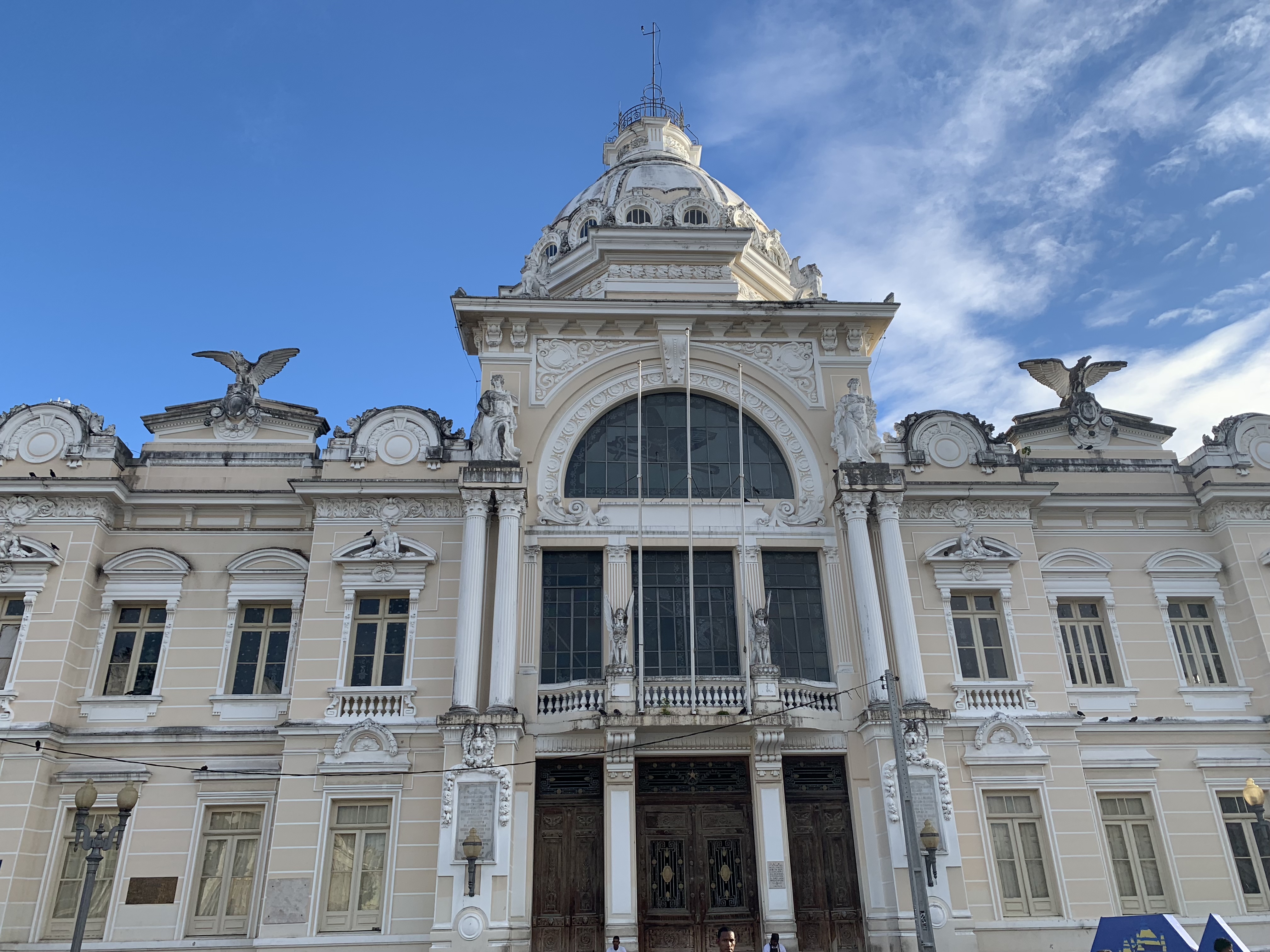
Palácio Rio Branco — the neoclassical government palace facade
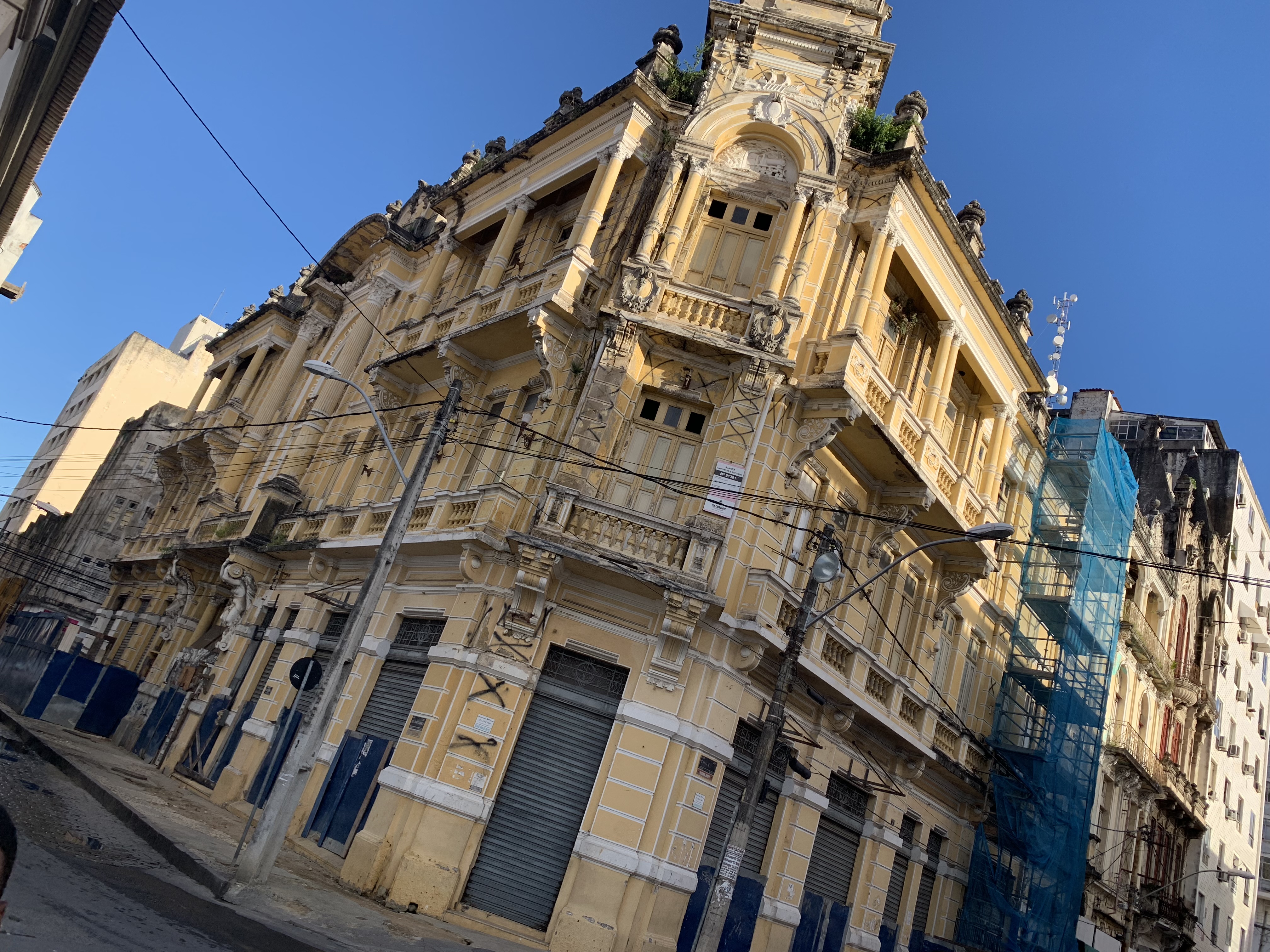
A yellow colonial building under restoration in the historic centre
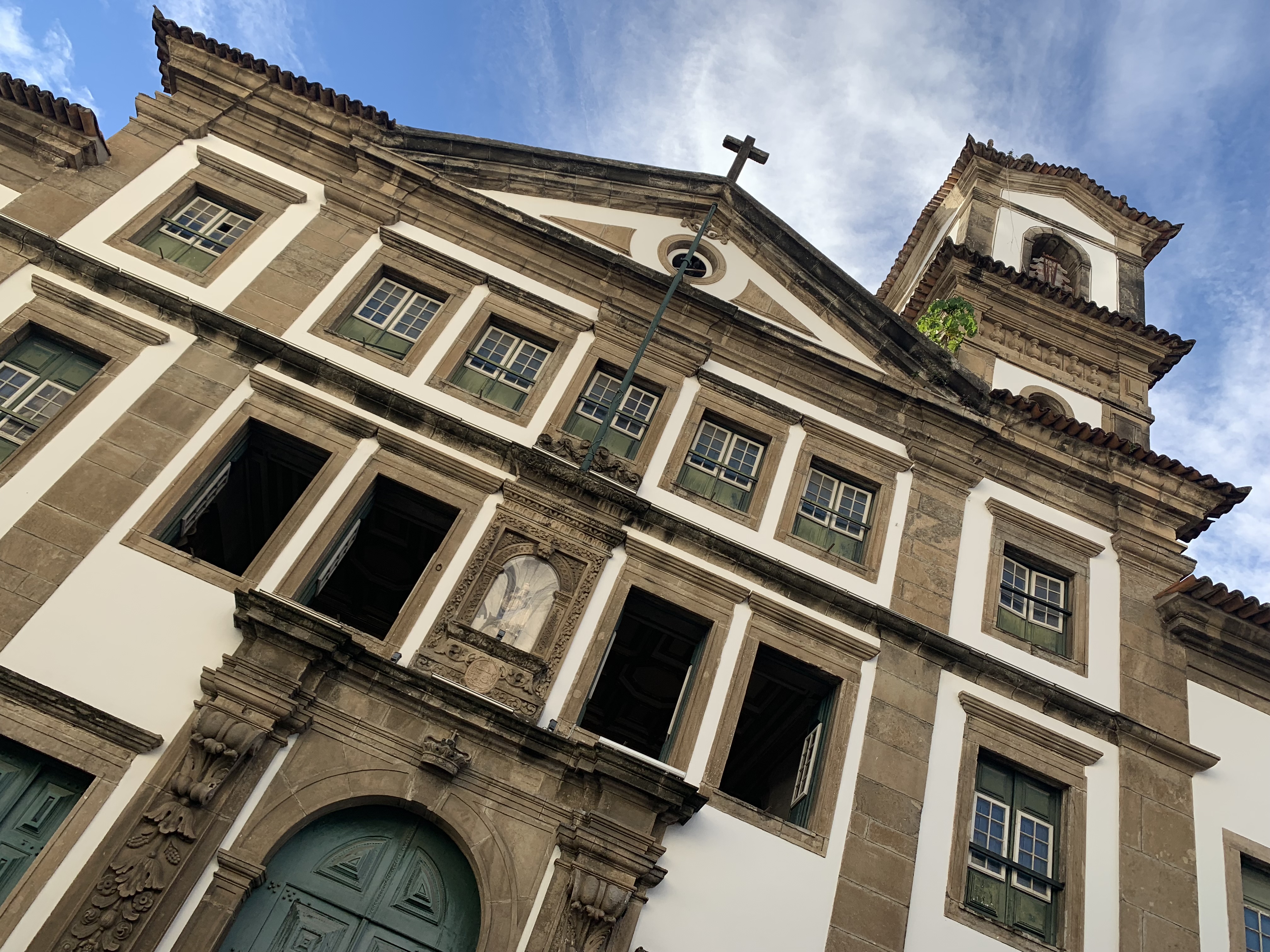
Igreja de São Pedro dos Clérigos — a stone baroque church in Pelourinho
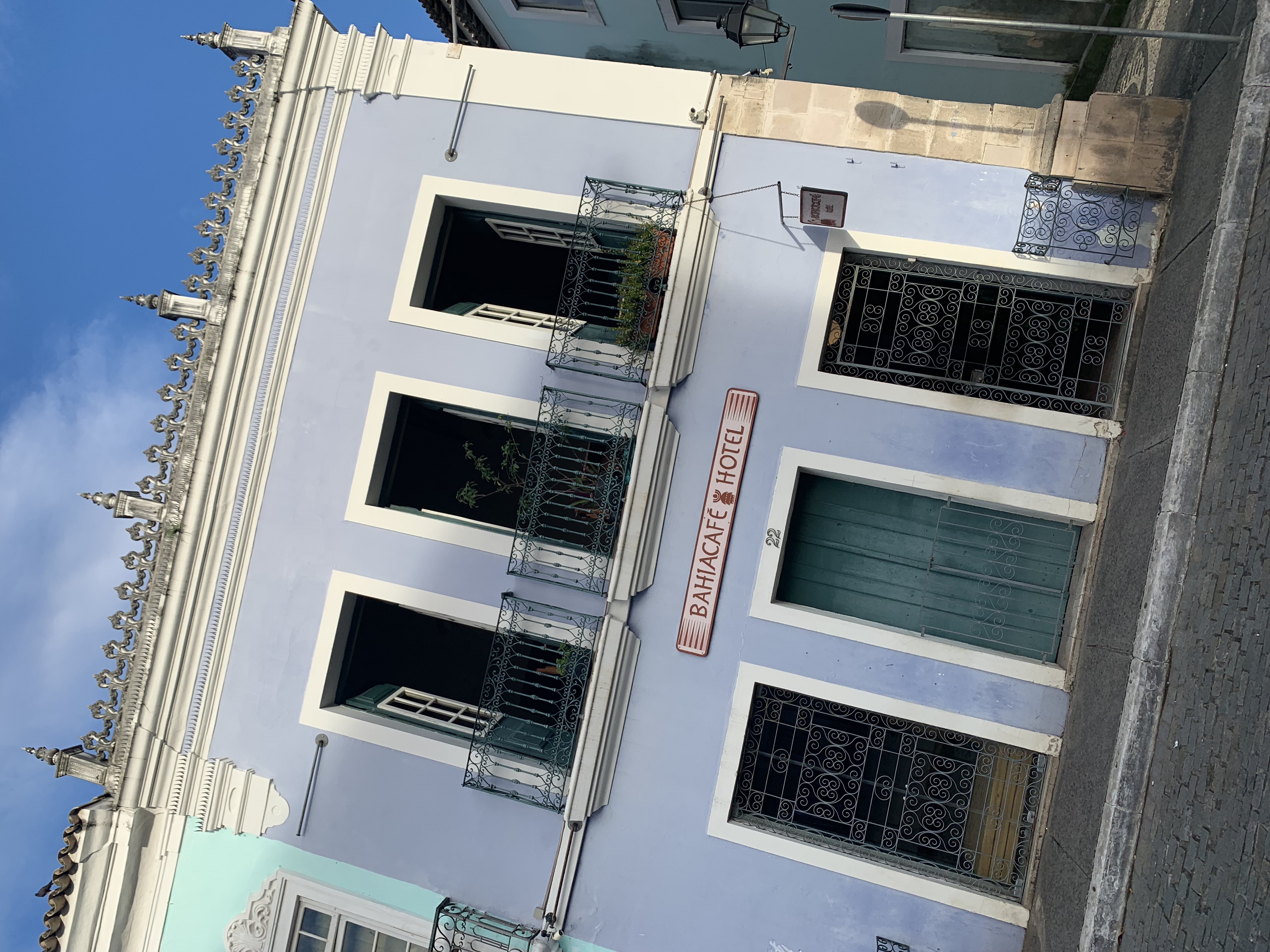
Bahiacafé Hotel blue facade in Pelourinho
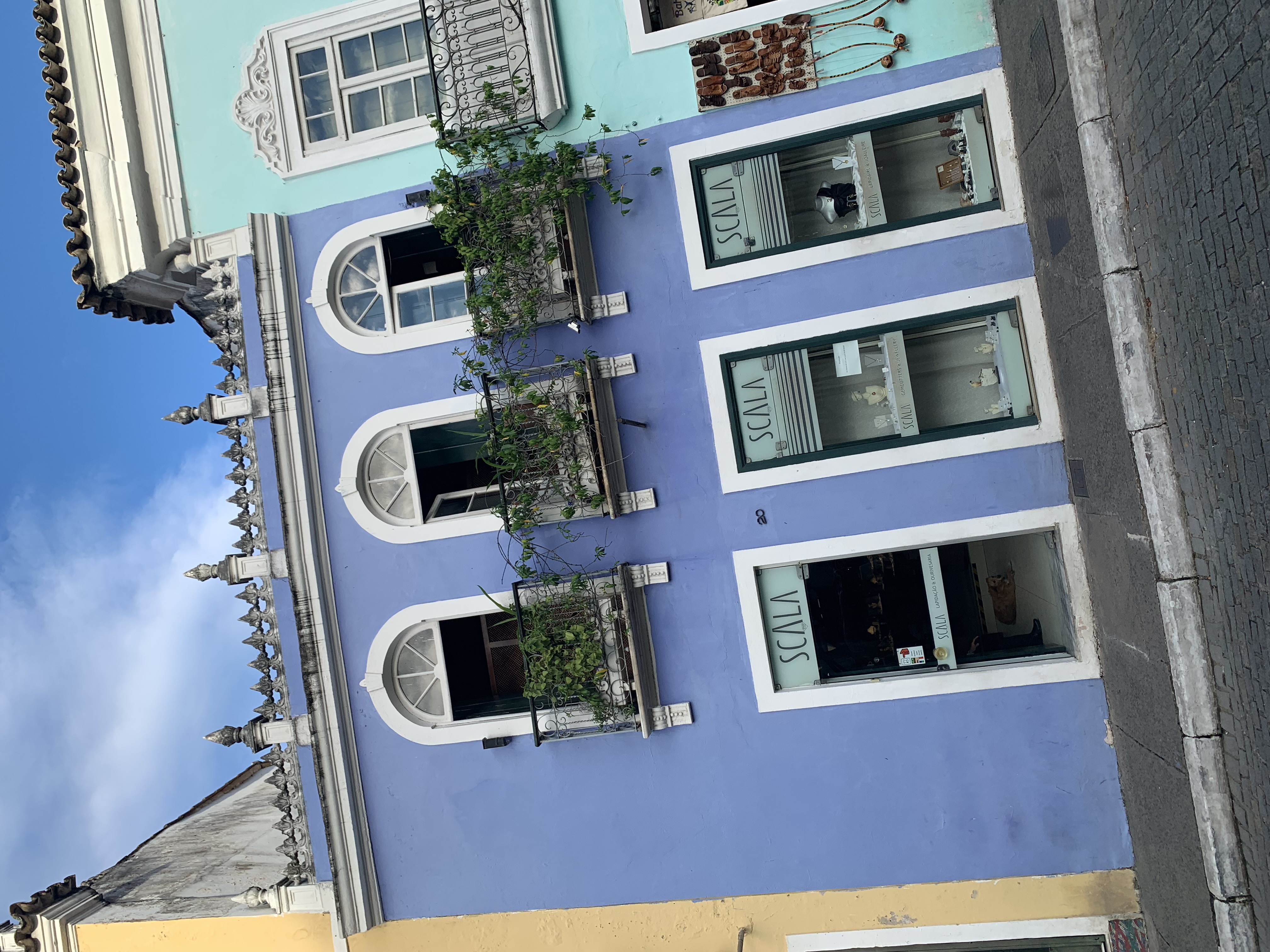
The blue 'Scena' boutique storefront in Pelourinho
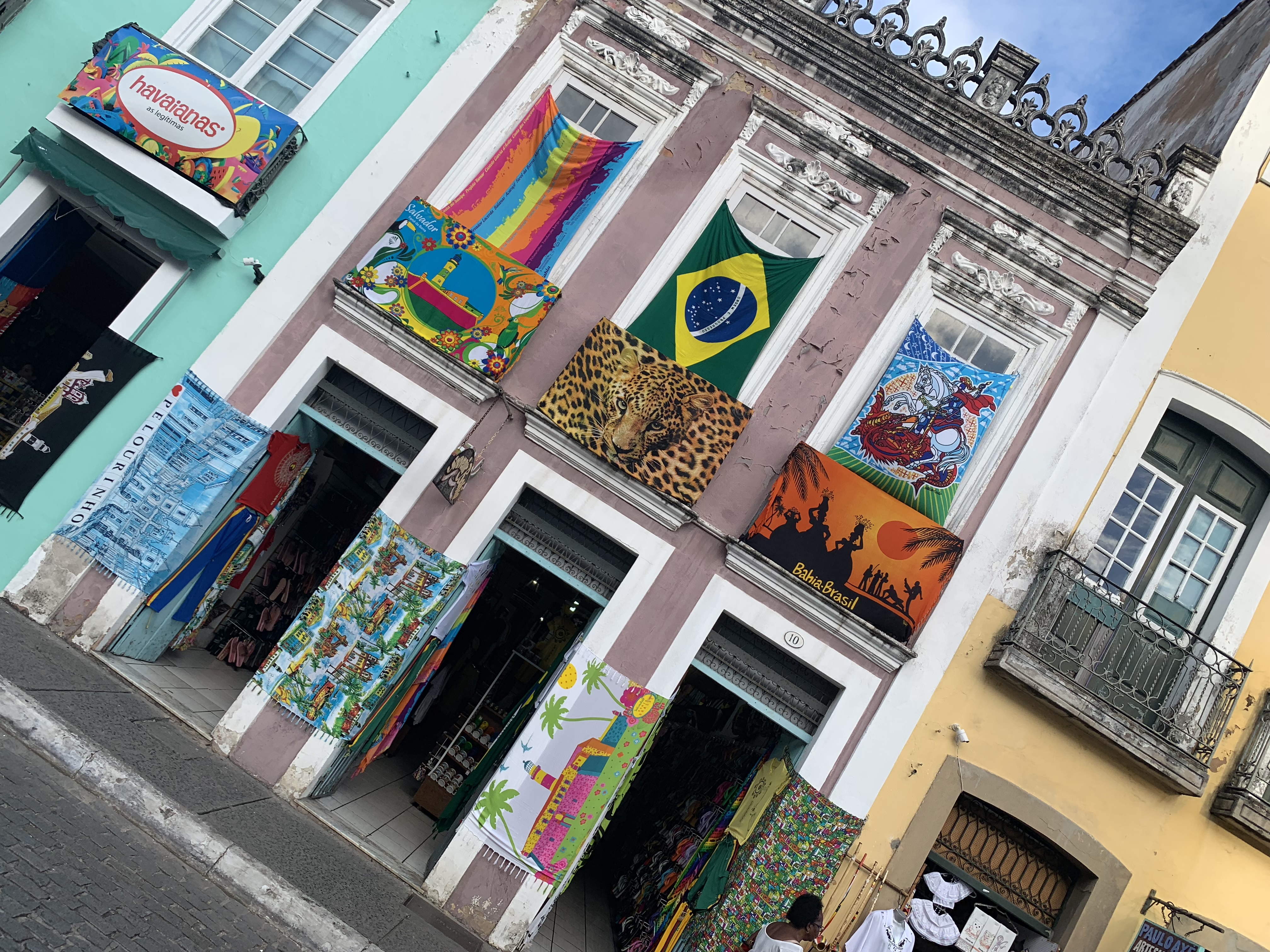
Souvenir shops with a Havaianas flag in Pelourinho
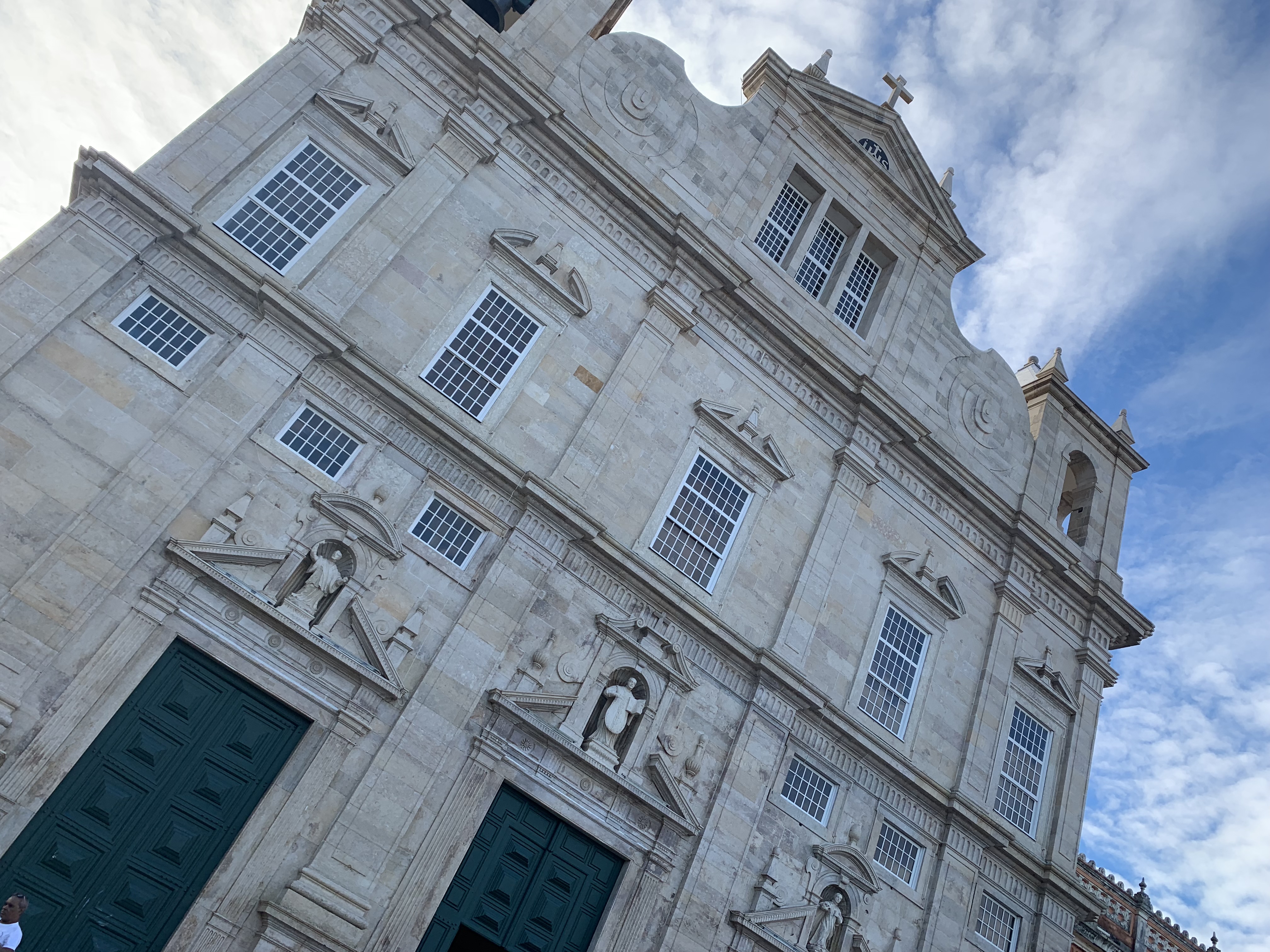
Catedral Basílica da Sé facade in daytime
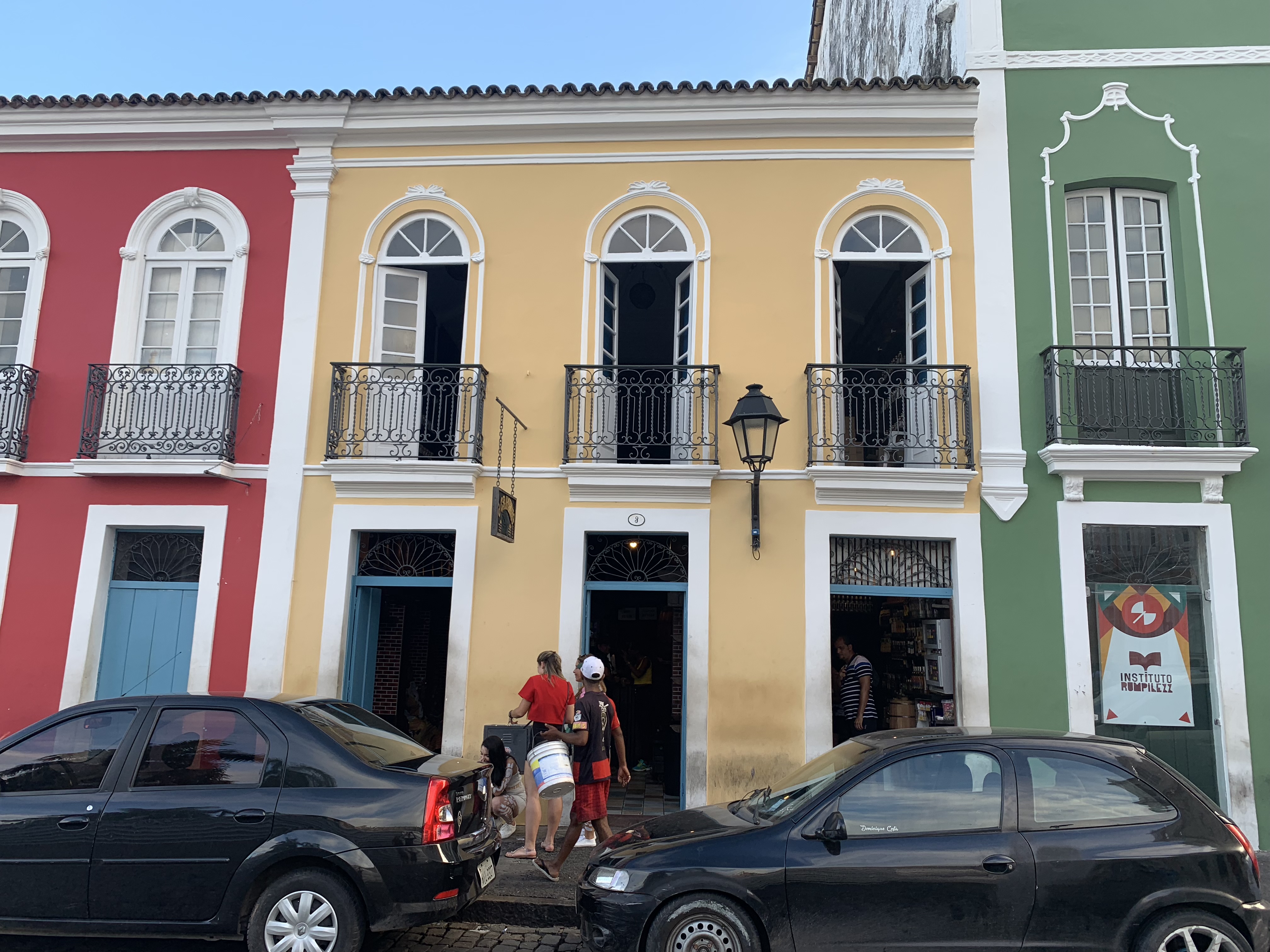
A colorful Pelourinho cobblestone street
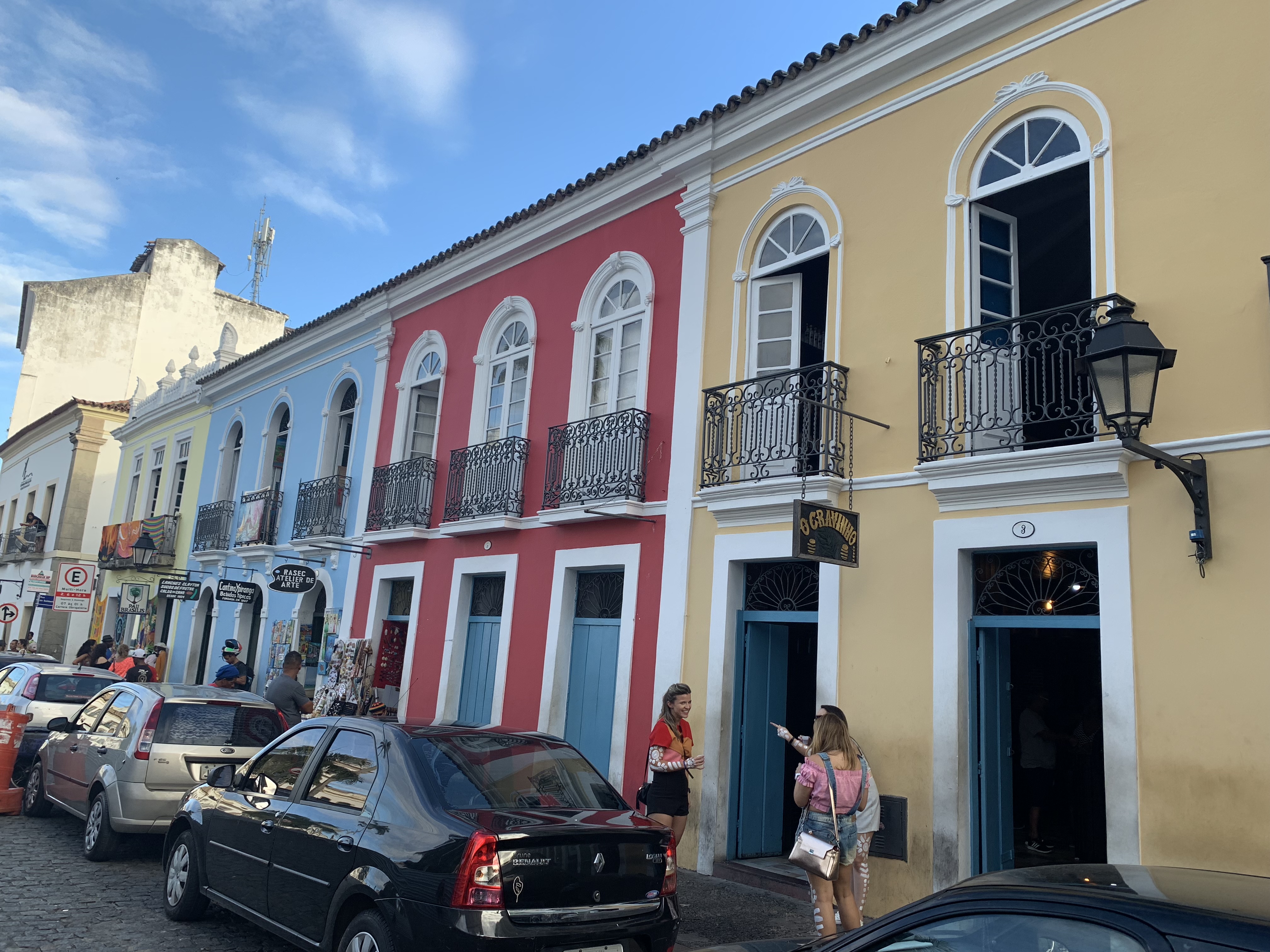
Another colorful street scene in Pelourinho
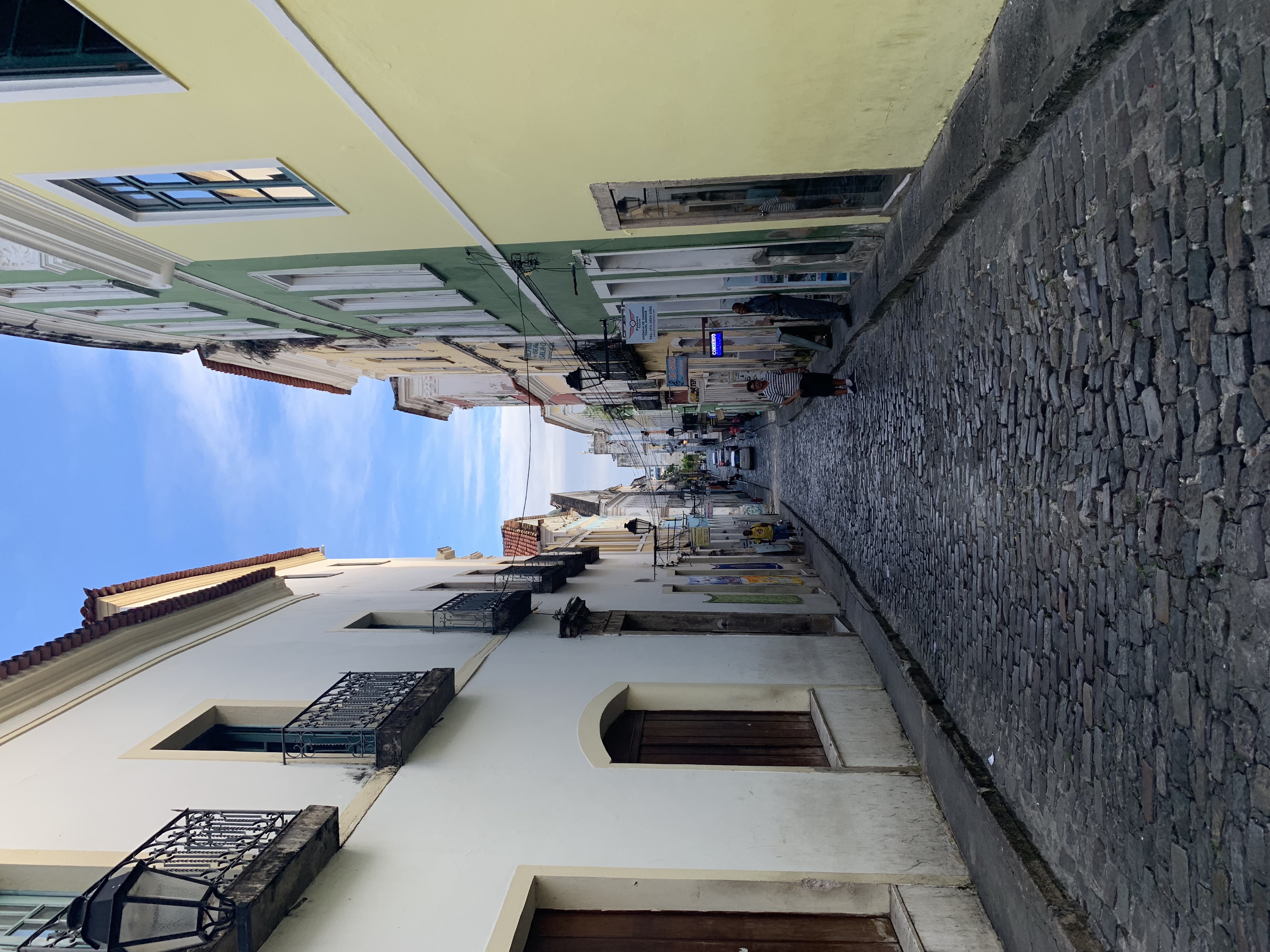
Cobblestone alley in Pelourinho
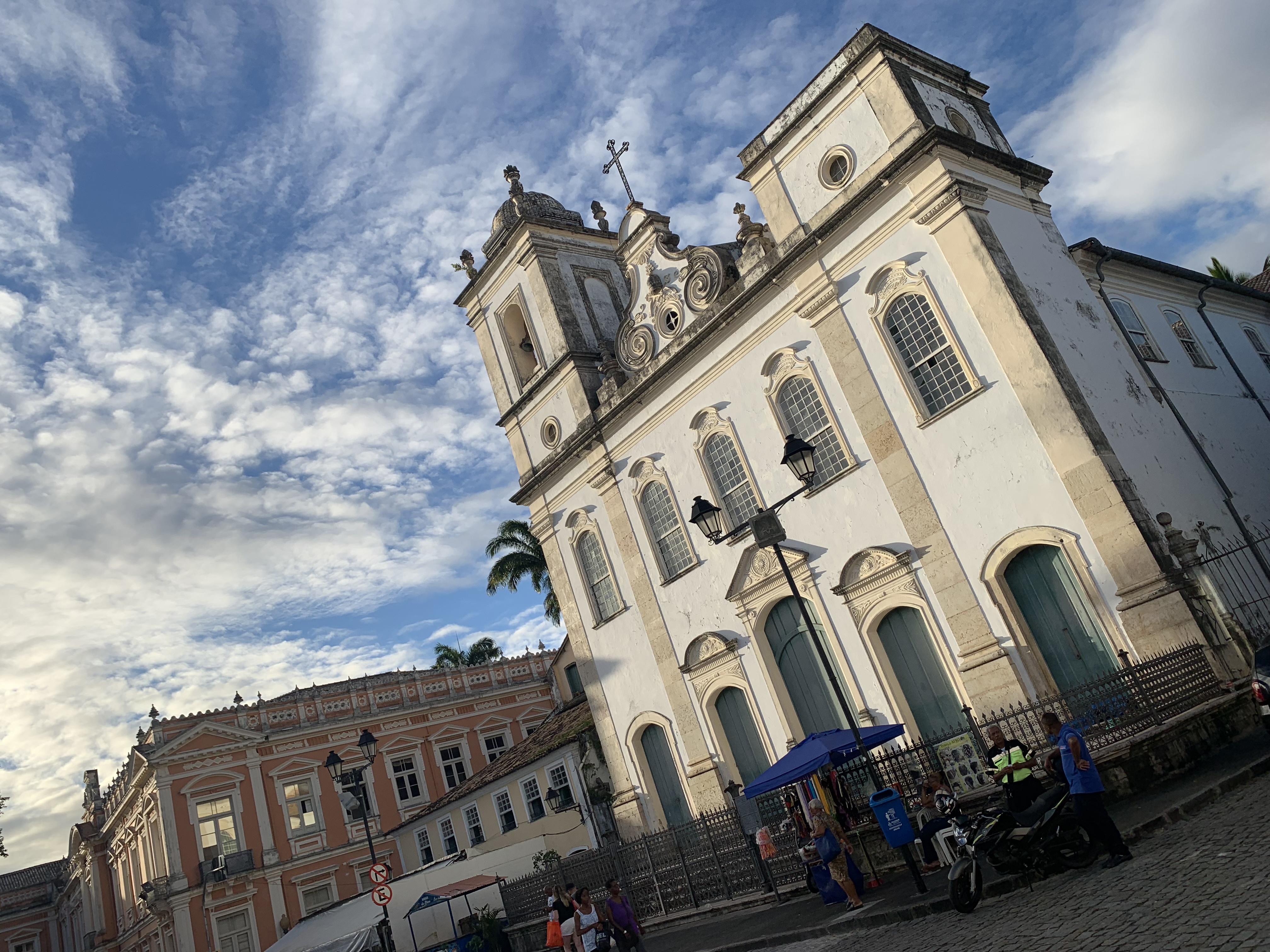
The white baroque church viewed from a different angle
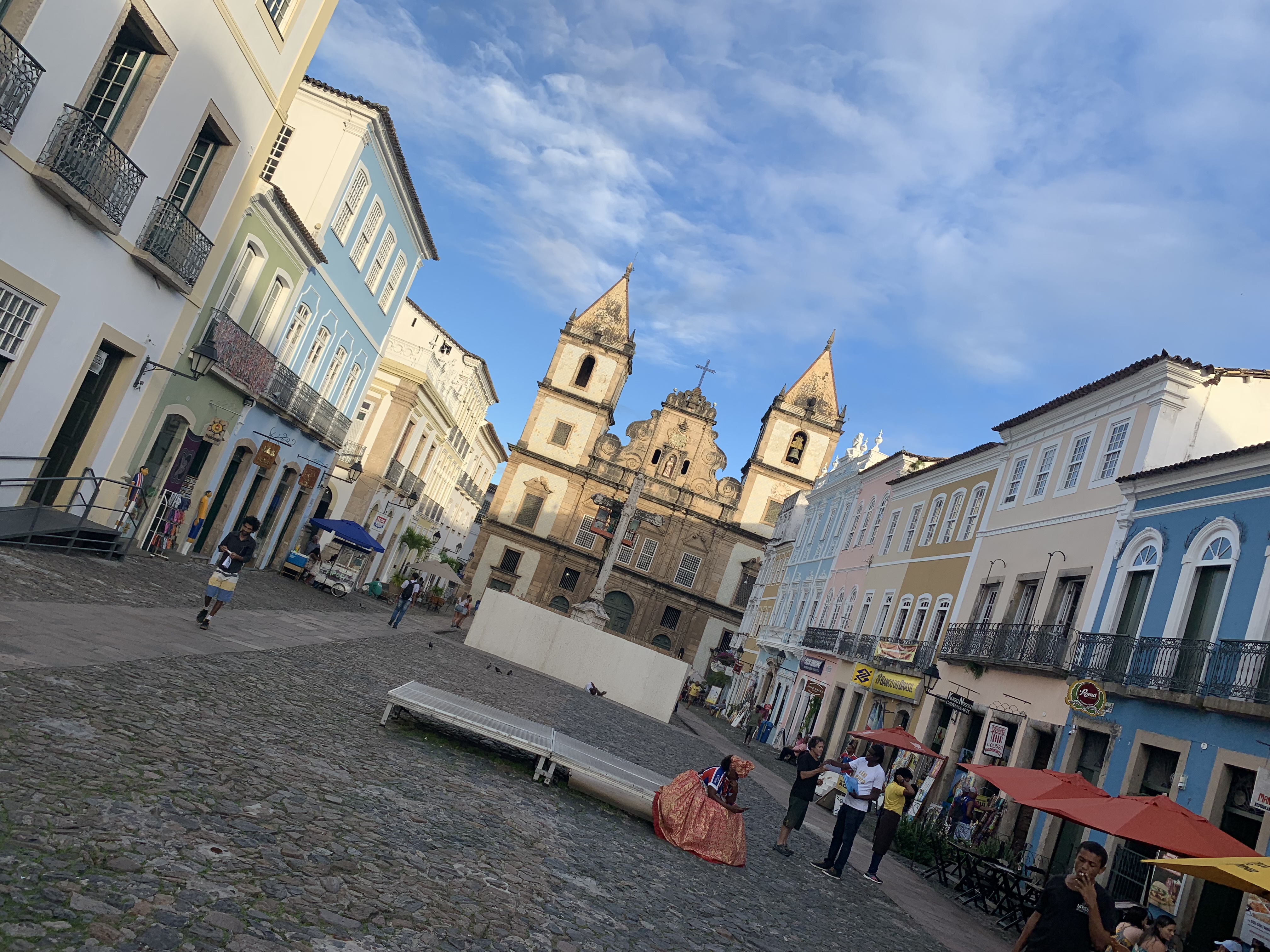
Largo do Pelourinho square with Igreja Nossa Senhora do Rosário dos Pretos
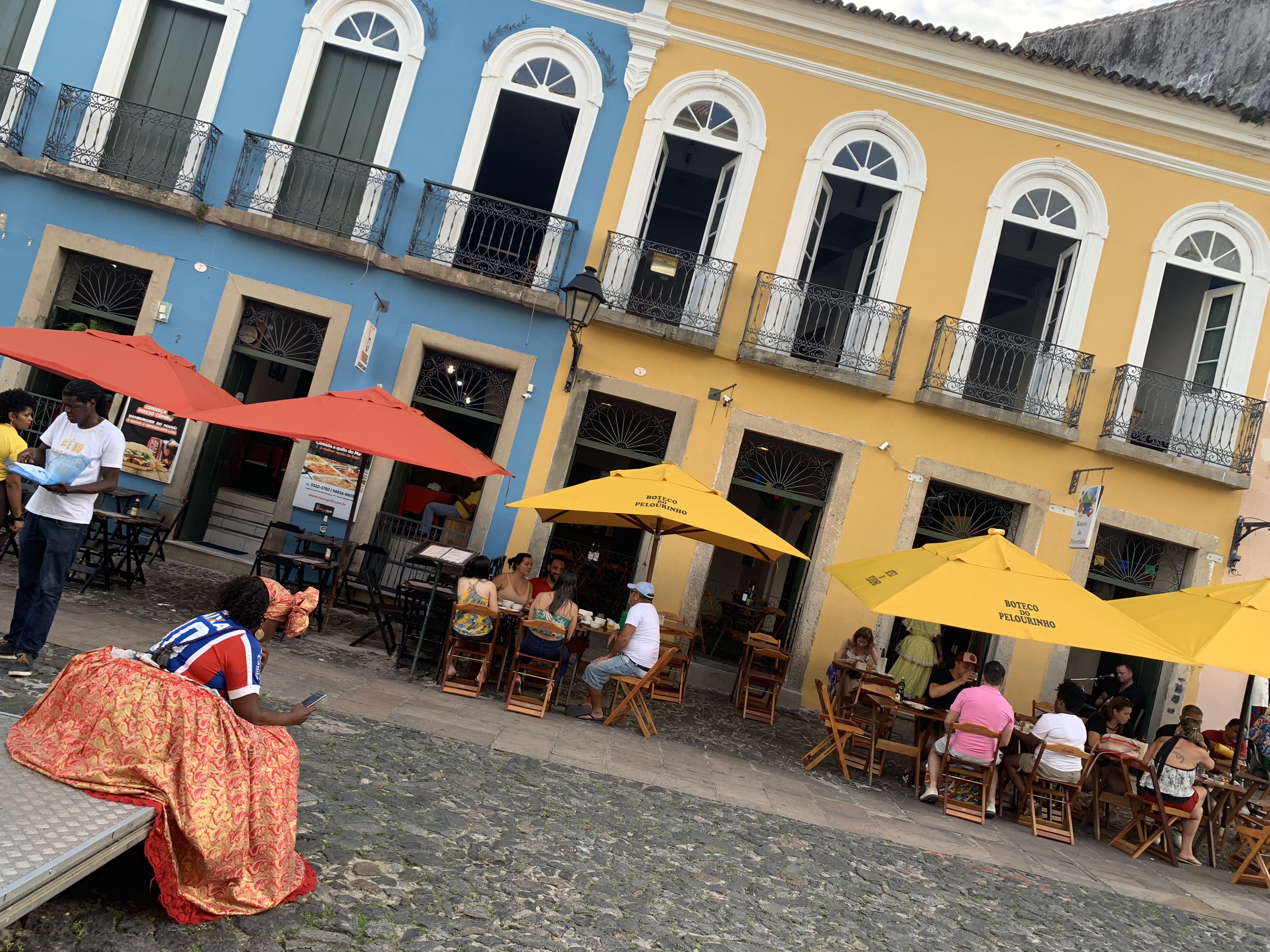
A café terrace in Pelourinho with a woman in traditional Bahian dress
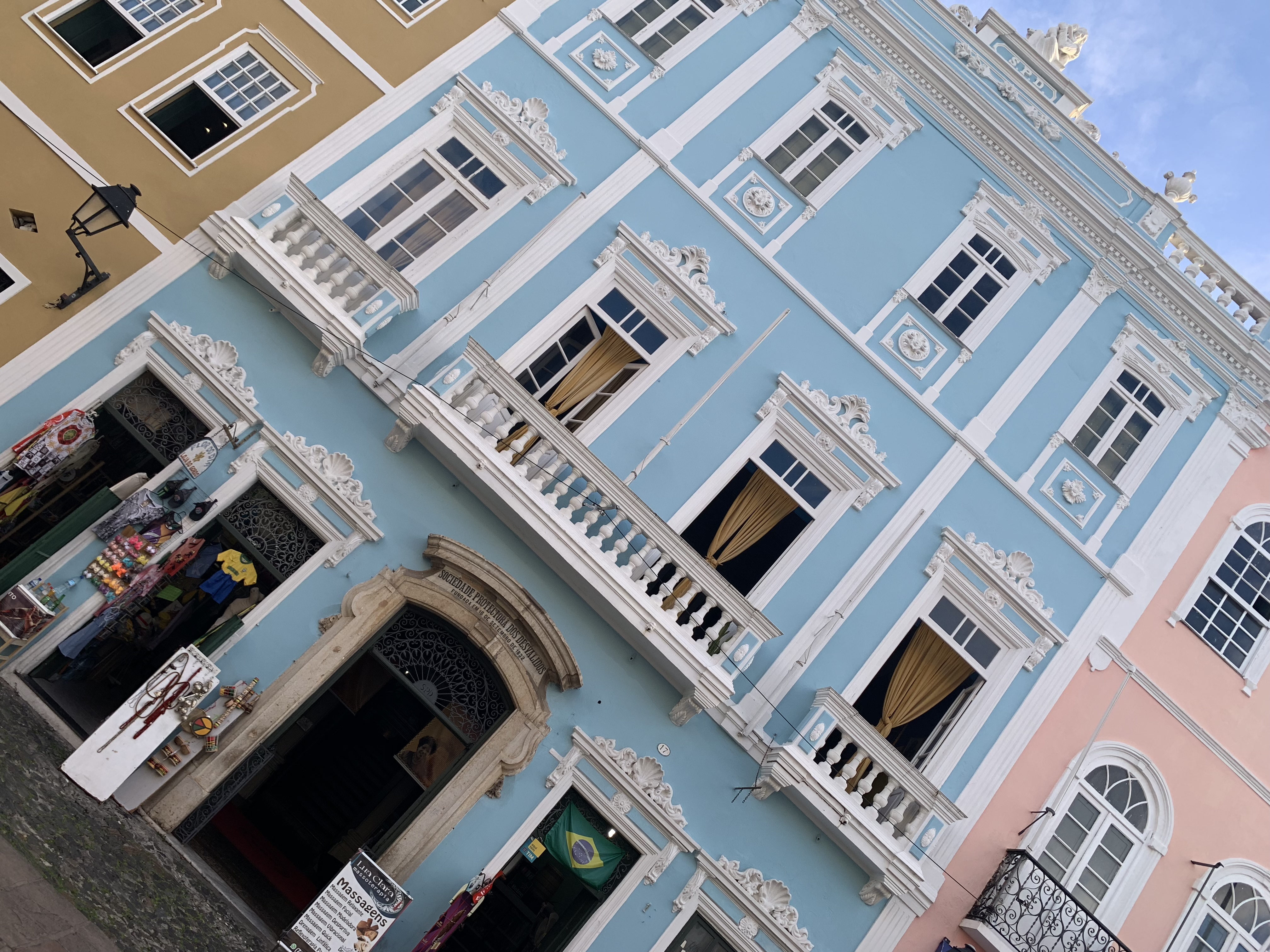
A blue colonial building facade seen from below
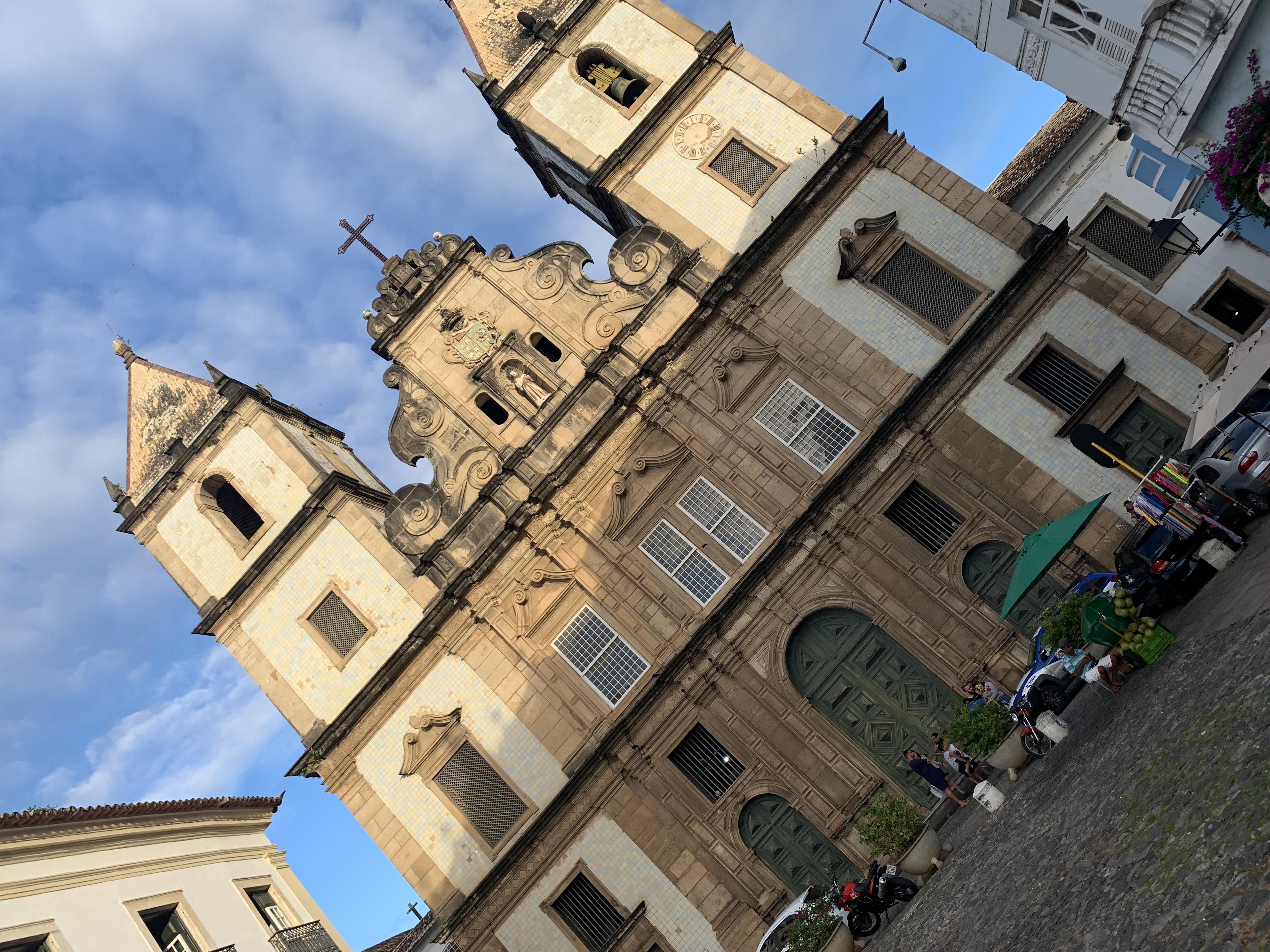
A baroque church seen from below, looking up
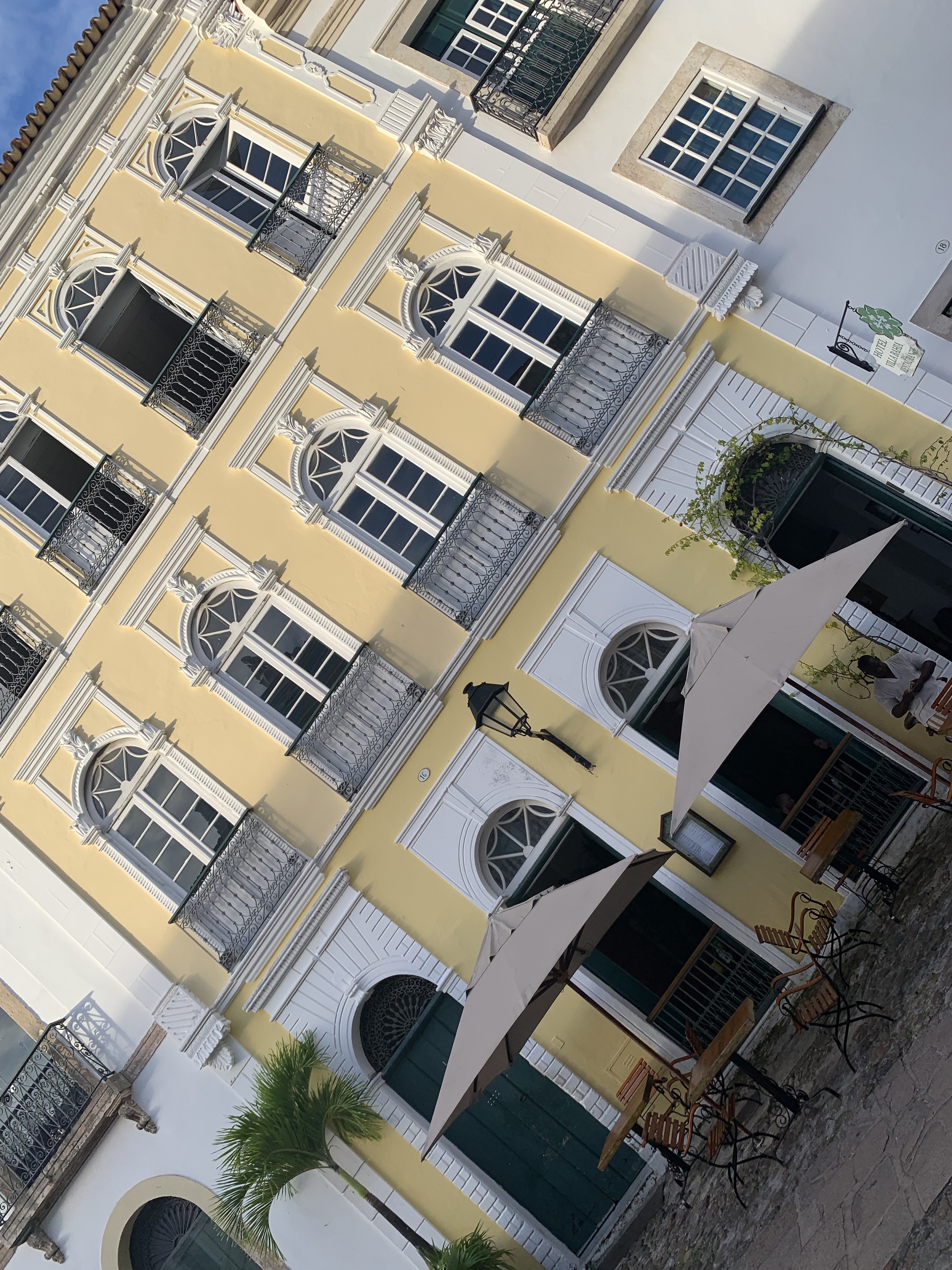
A yellow colonial café building in Pelourinho
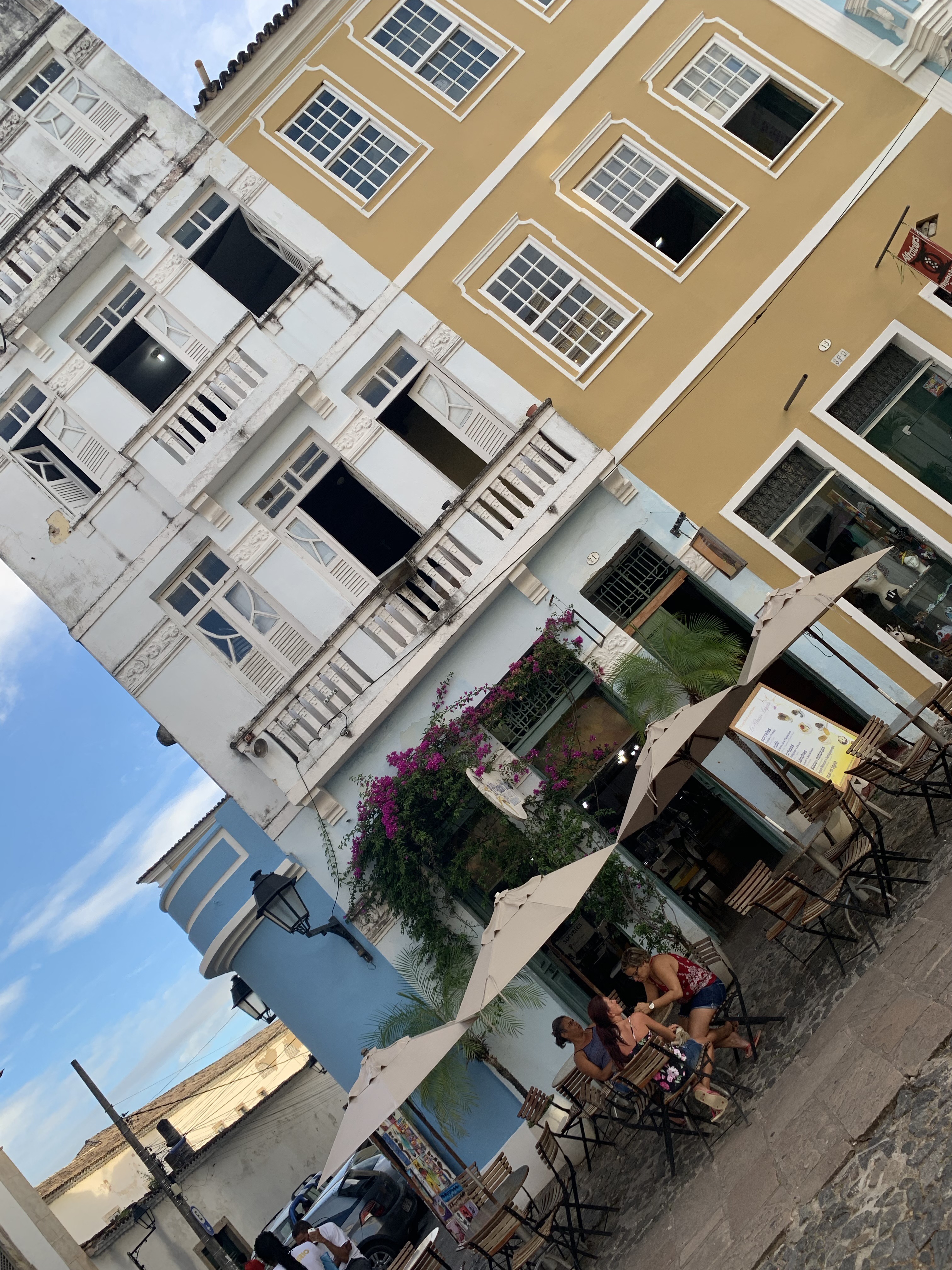
A yellow colonial café and restaurant at a Pelourinho corner
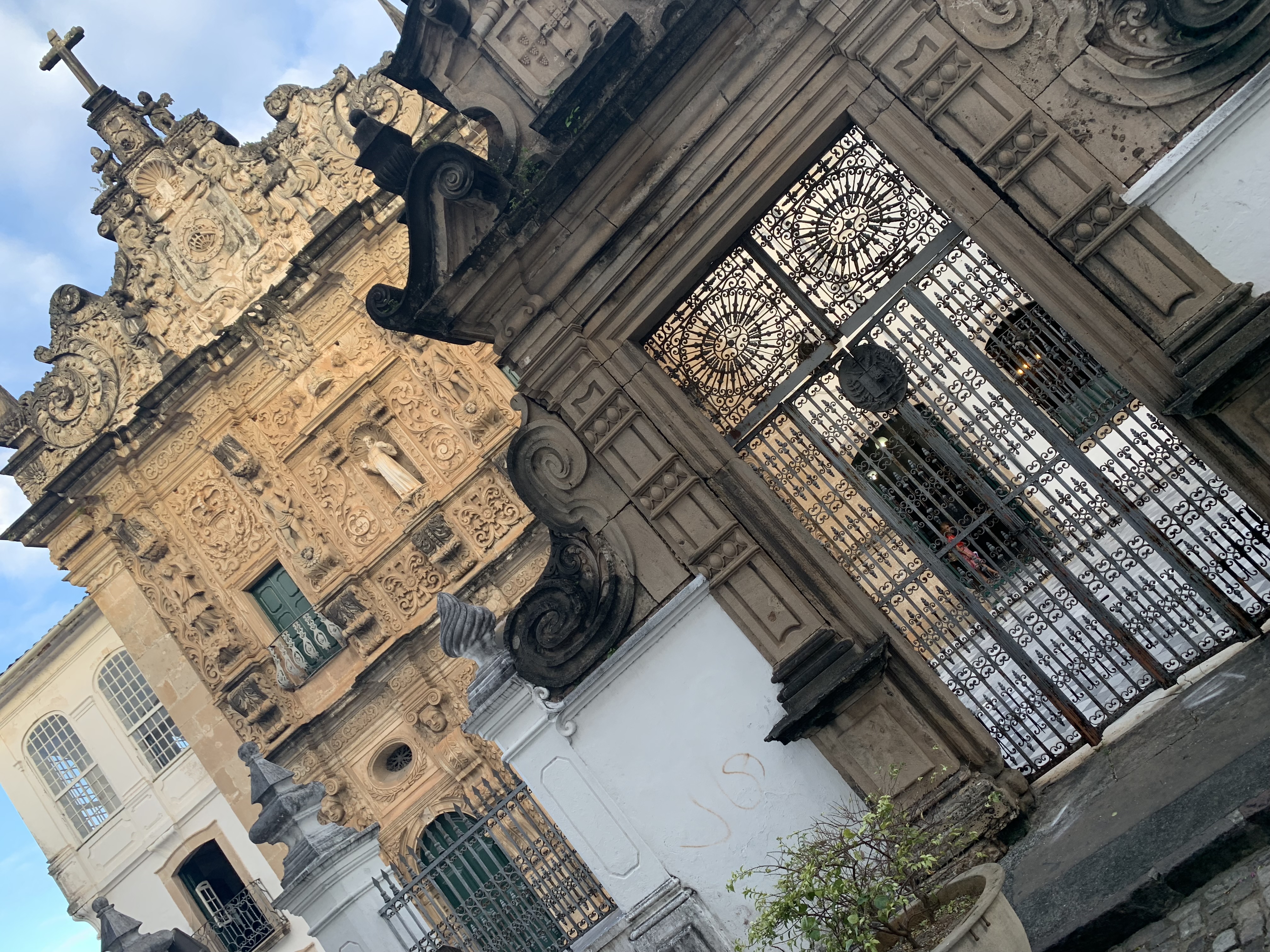
Igreja e Convento de São Francisco — ornate stone baroque facade
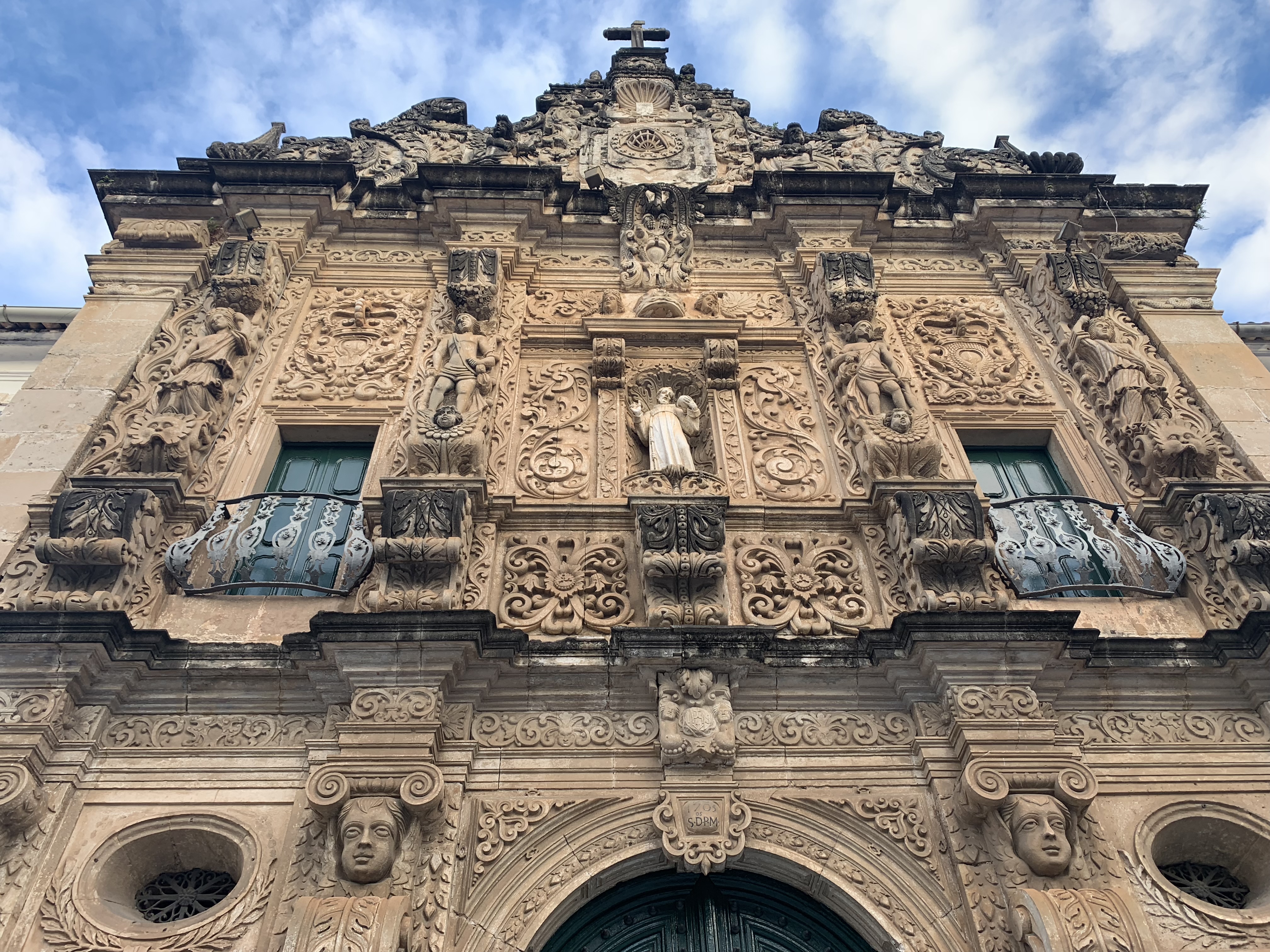
The São Francisco church doorway — detailed baroque stone carvings
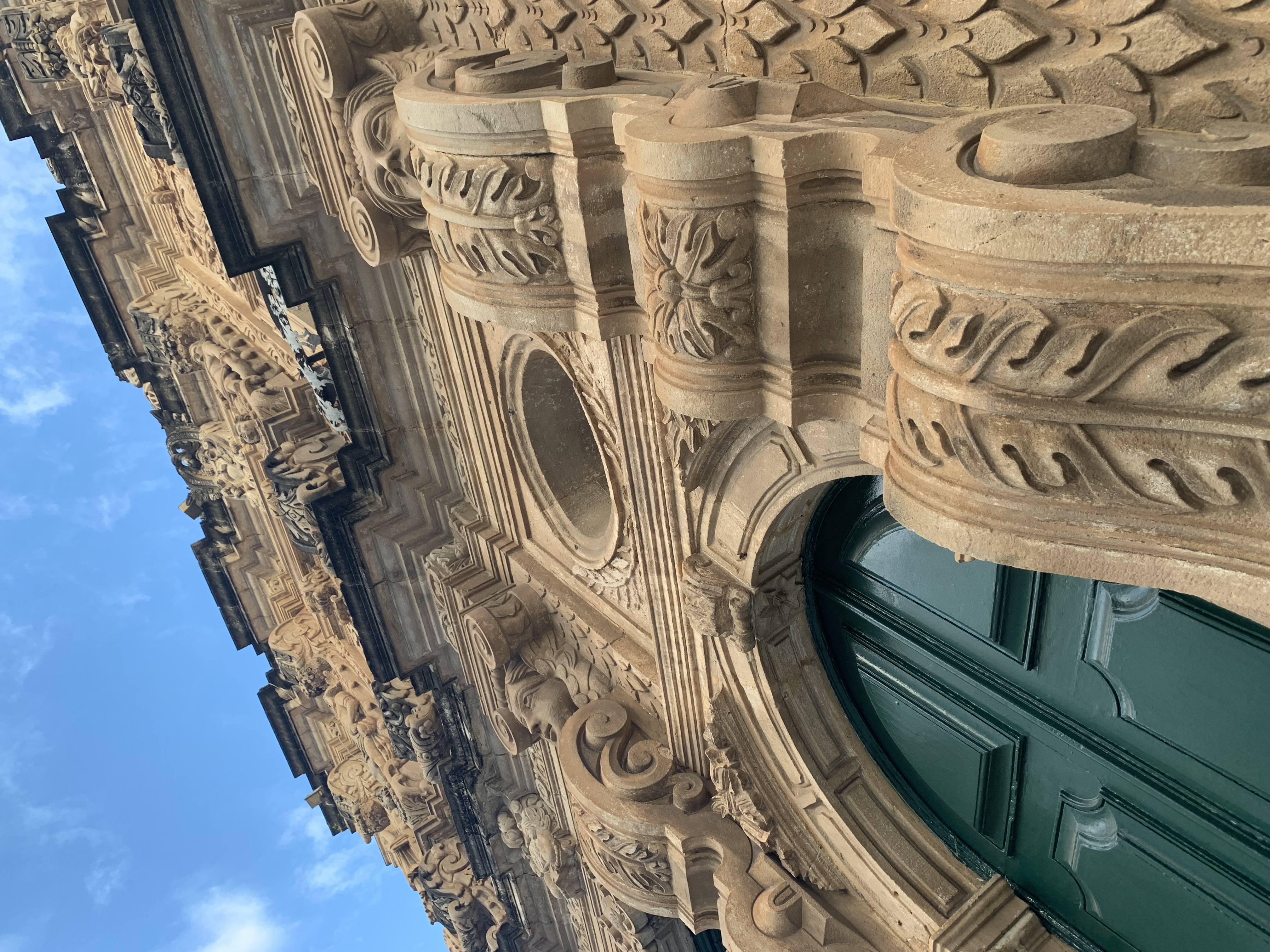
The São Francisco church doorway, wider view
São Francisco cloister — another azulejo tile panel
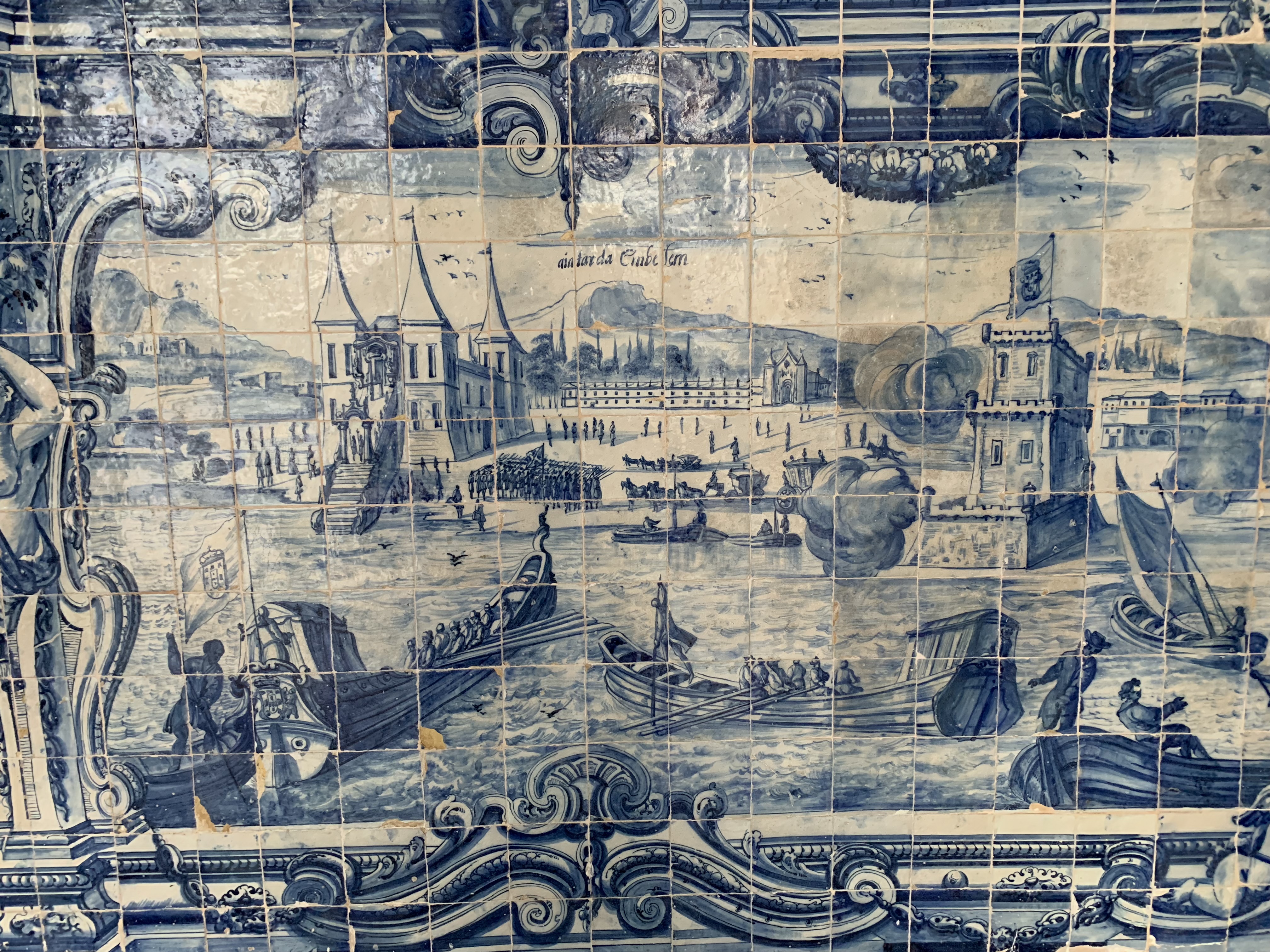
São Francisco cloister — azulejo panel, wider corridor view
The ornate polychrome painted ceiling of the Igreja de São Francisco
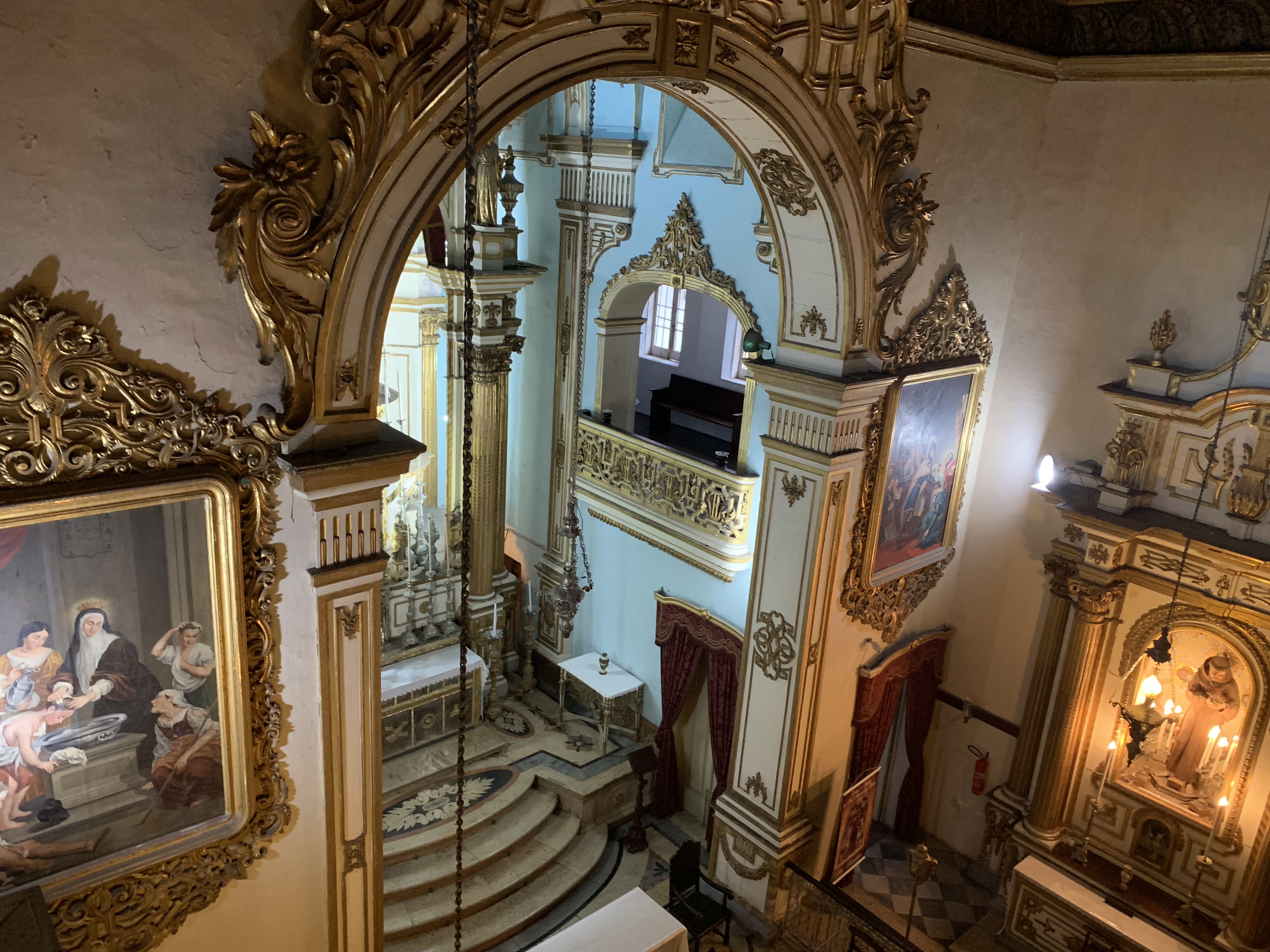
São Francisco church interior from above — gilded baroque archway over the nave
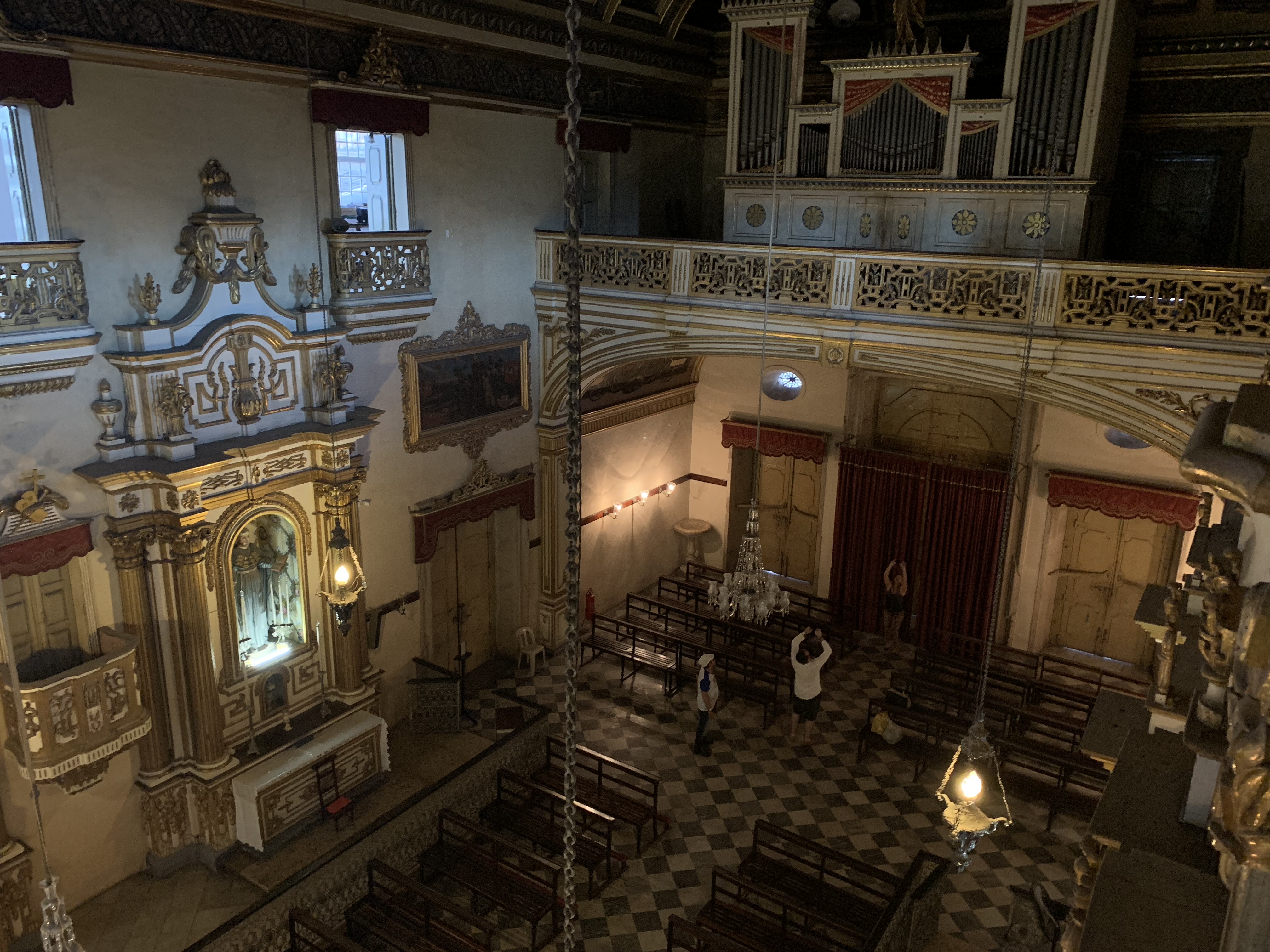
São Francisco interior from above — pews and gilded altars
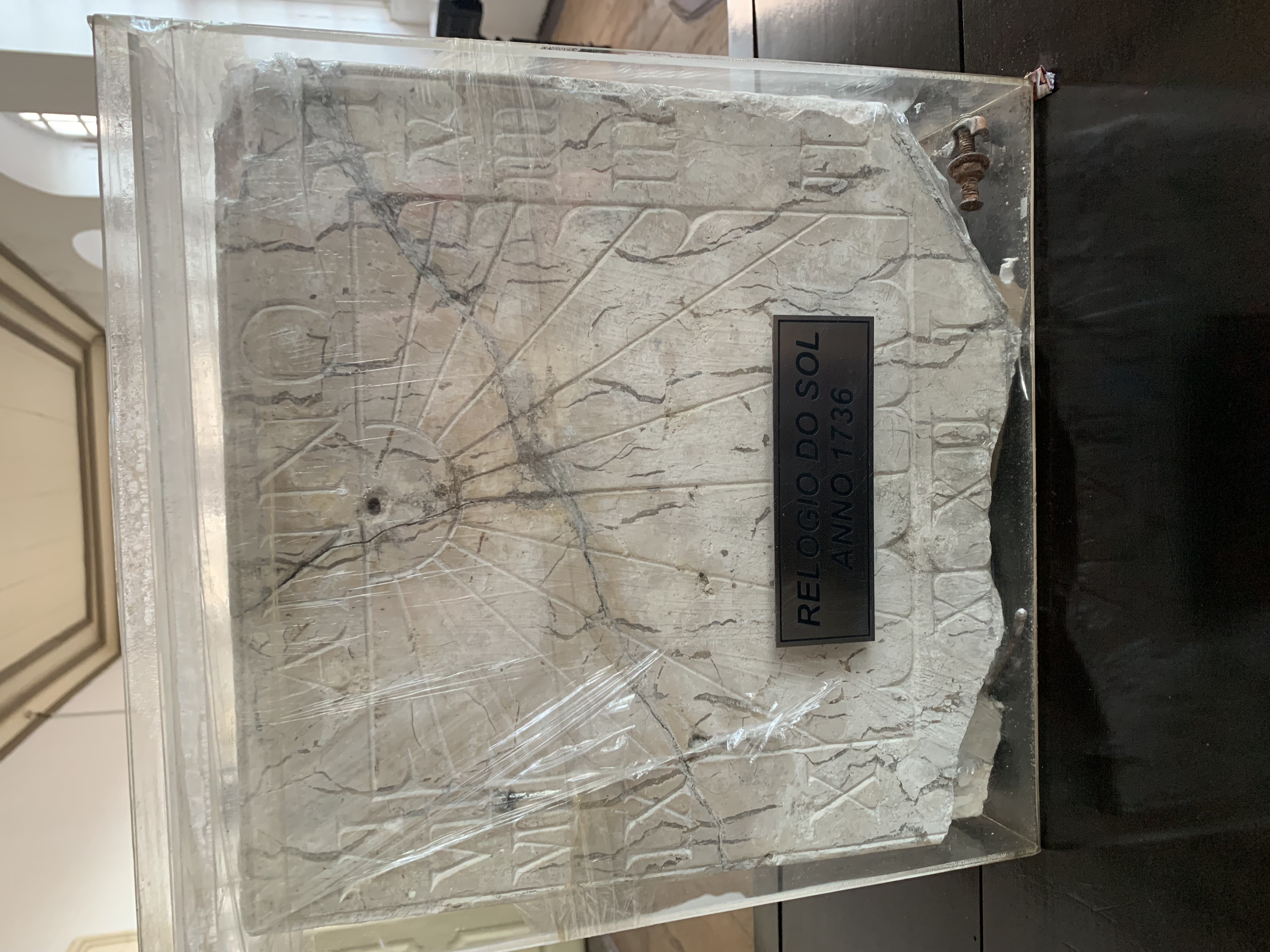
Stone sundial inscribed 'Relógio do Sol Anno 1736' in the São Francisco cloister
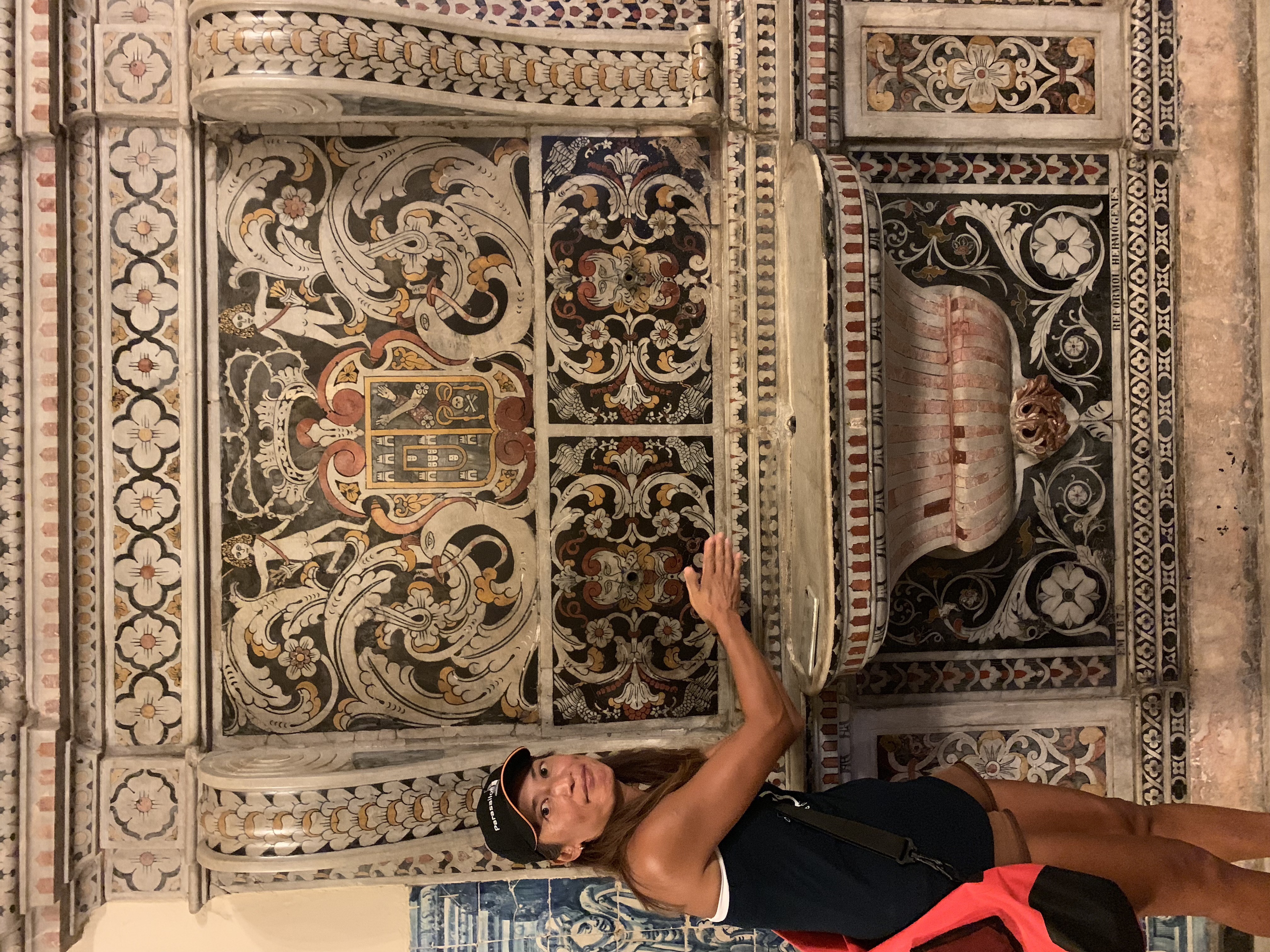
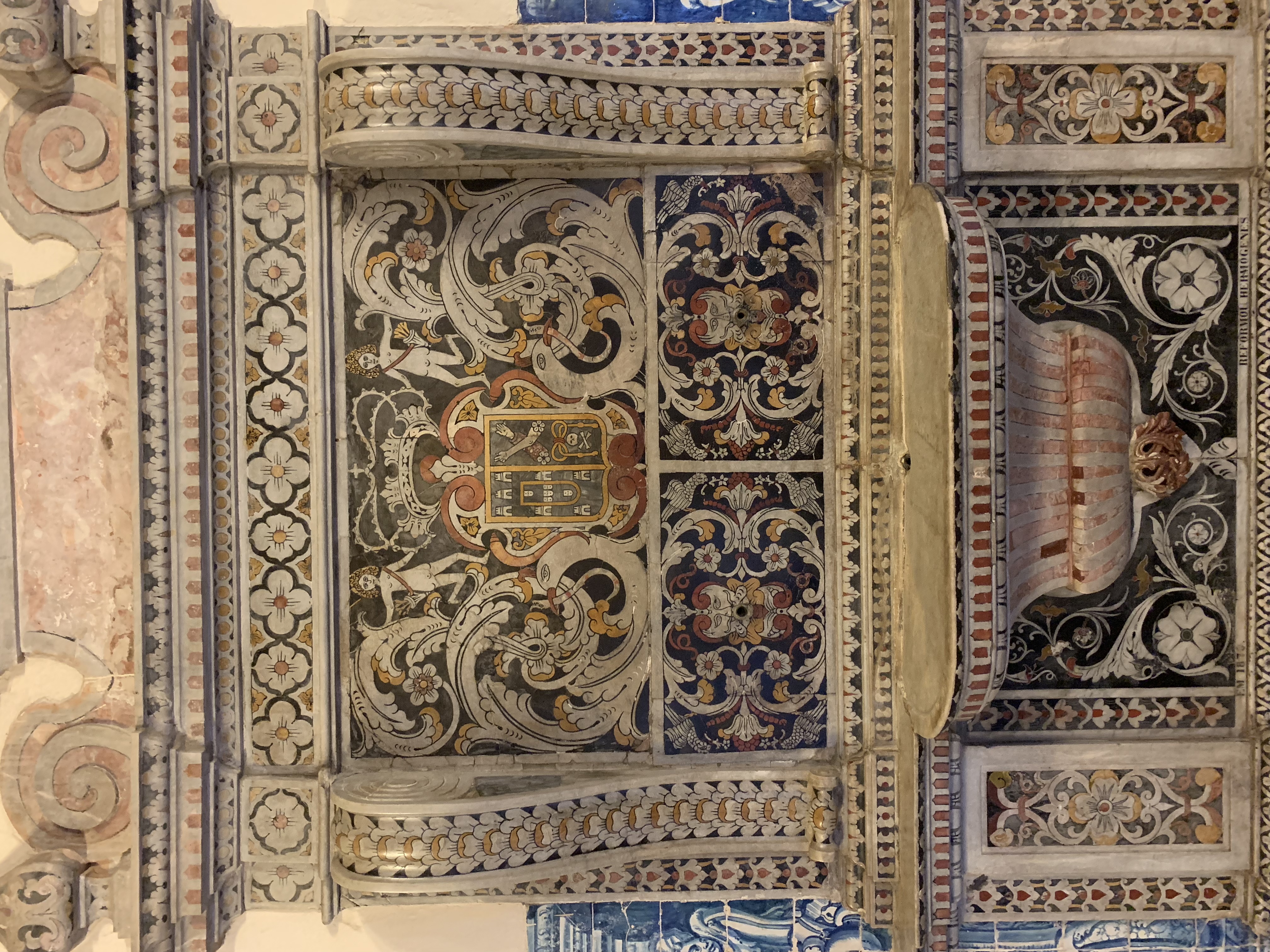
Yuka pointing at heraldic azulejo panels in the São Francisco cloister
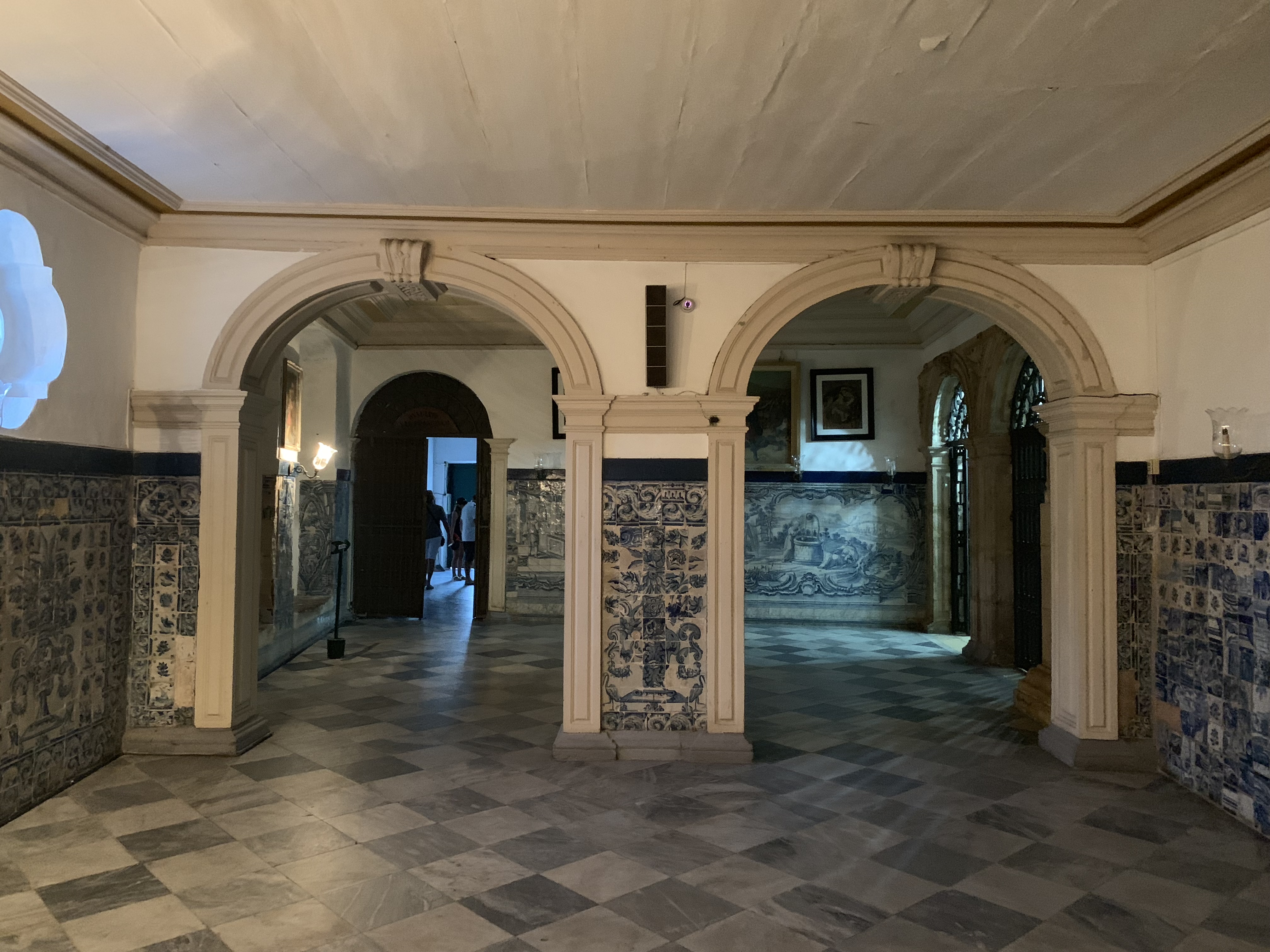
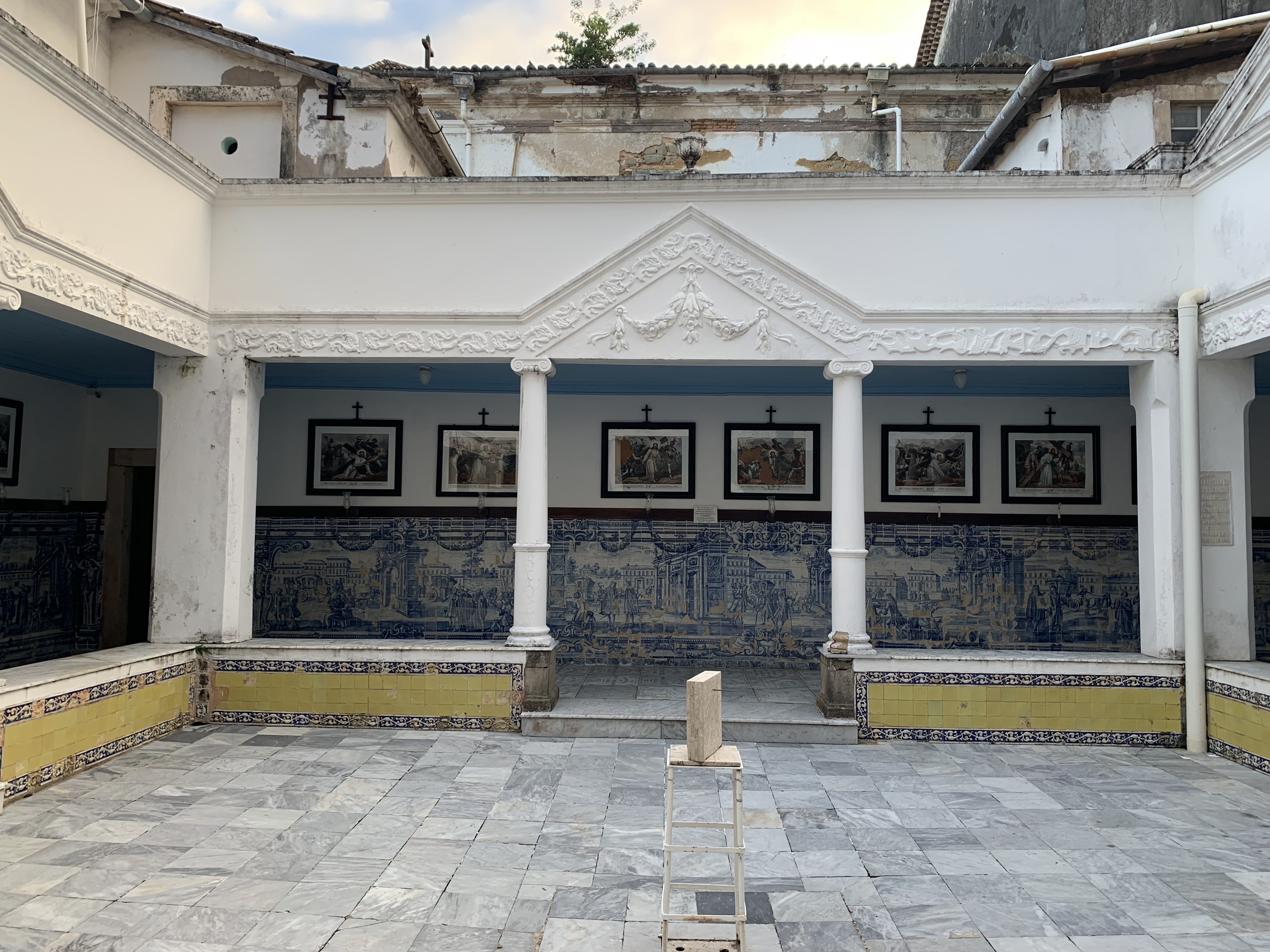
The São Francisco cloister corridor lined with azulejo tile murals
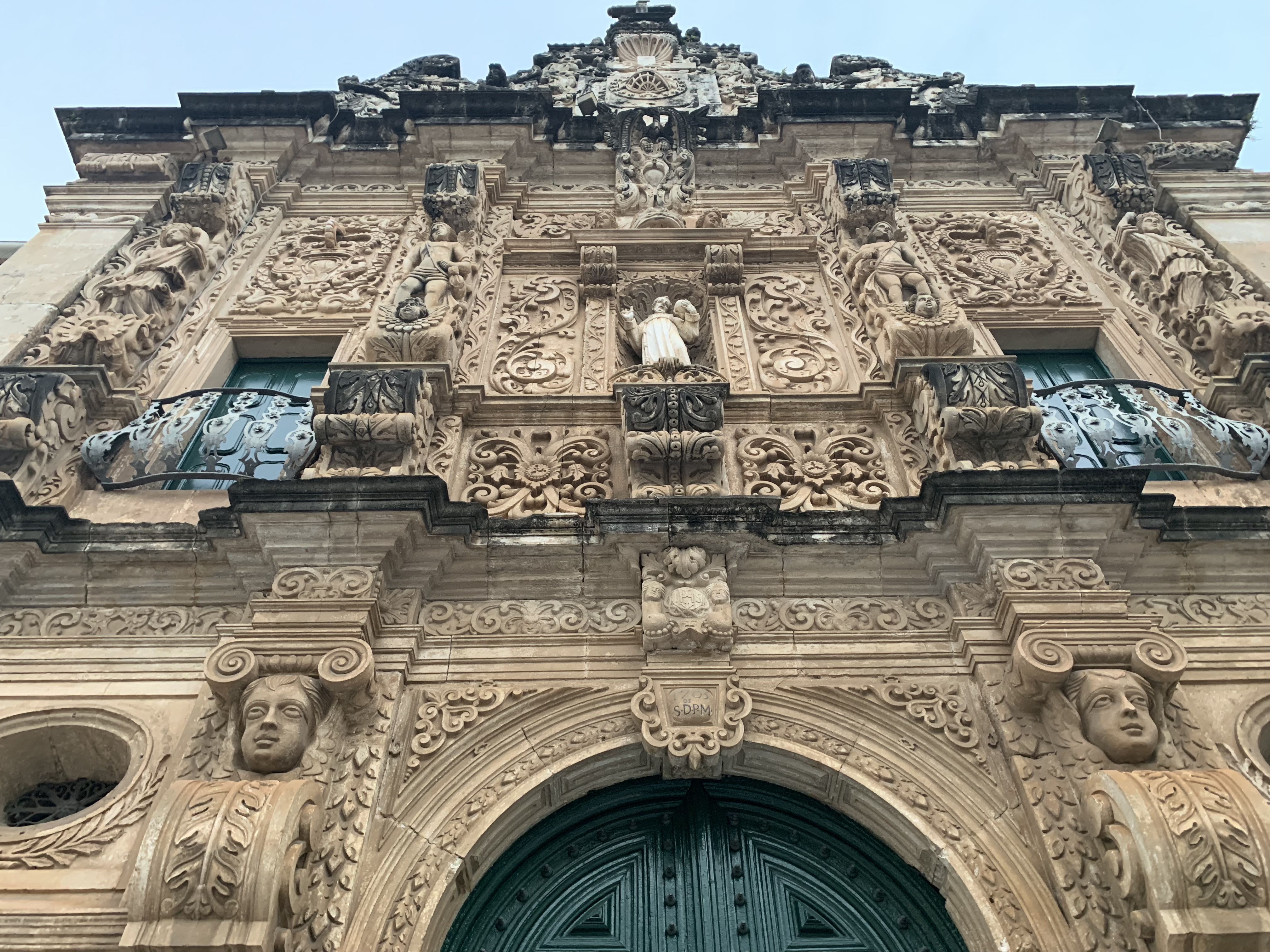
The São Francisco upper baroque facade with royal crest and statues
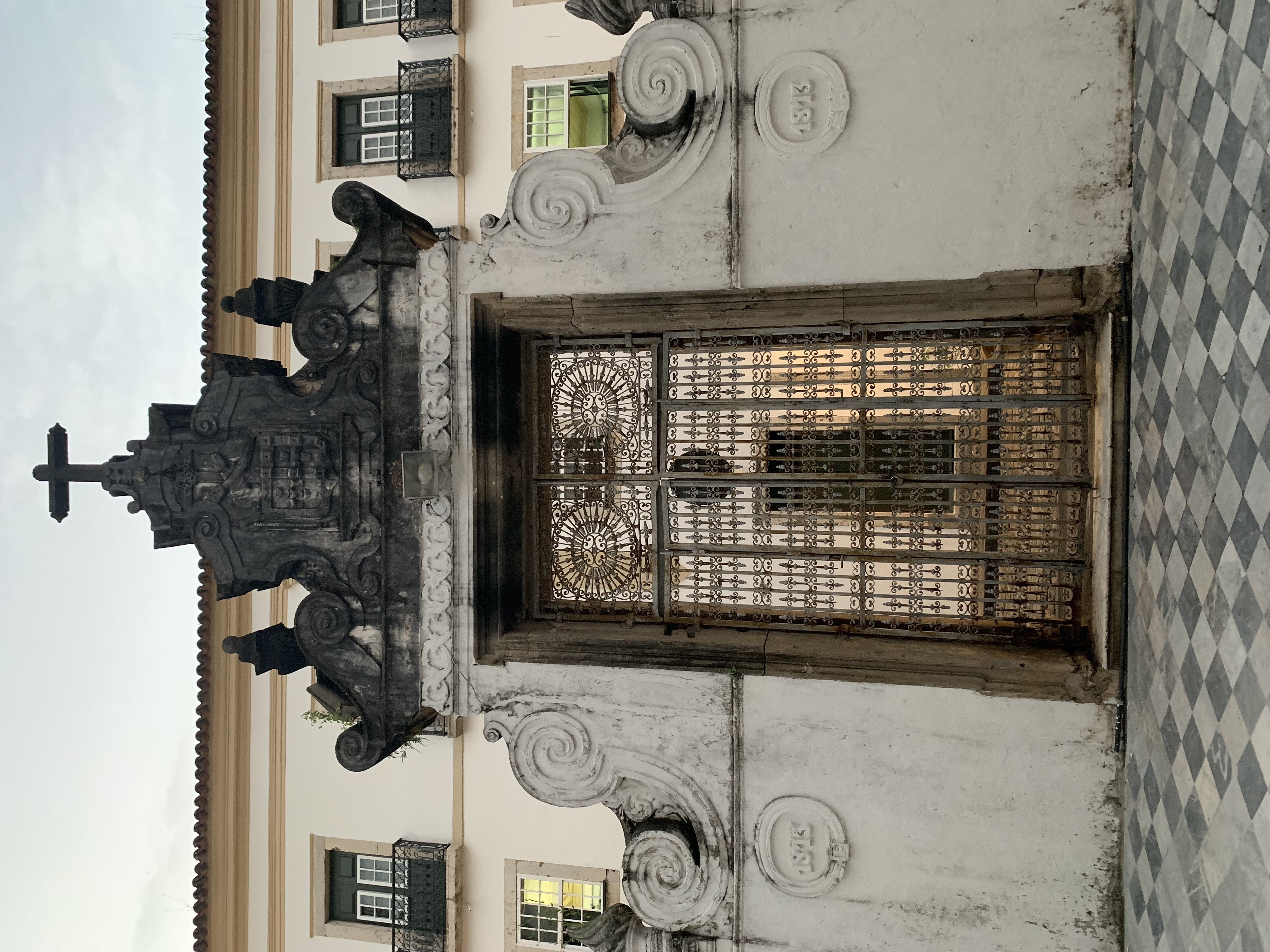
A white baroque church exterior with an ornate iron gate
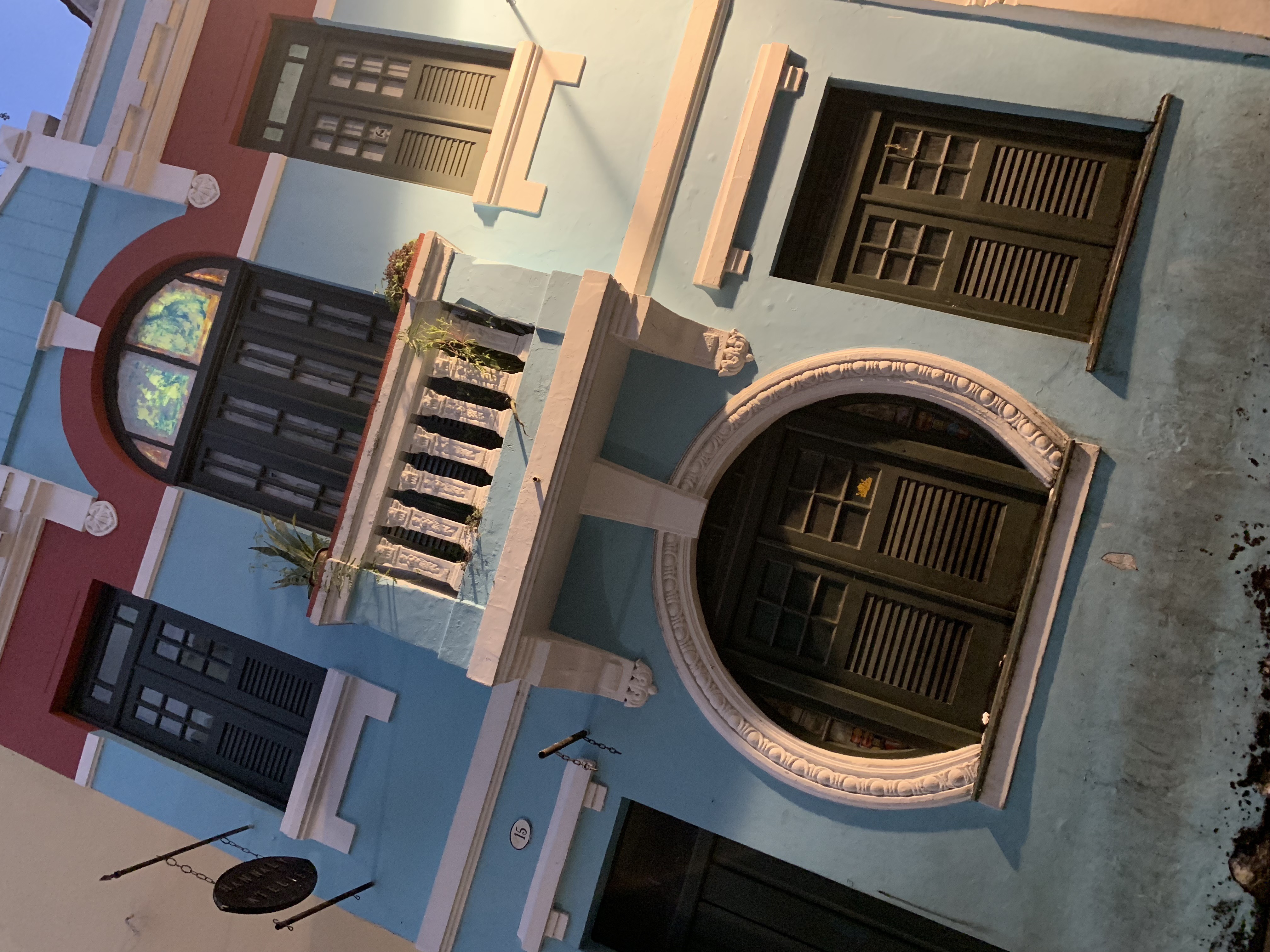
A blue colonial facade with a circular window in the upper city
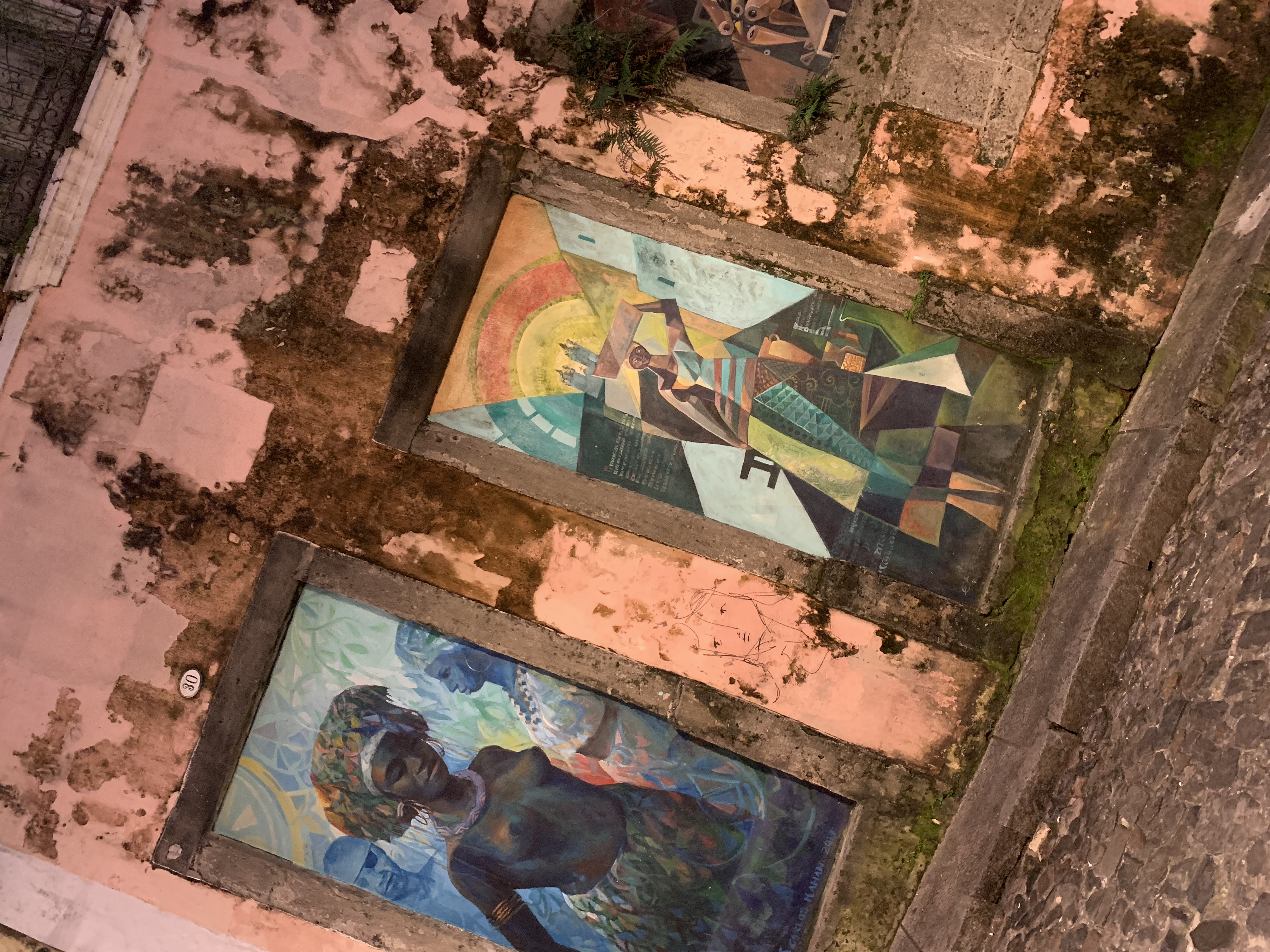
Two floor murals viewed from above — a cubist and an Afro-Brazilian figure
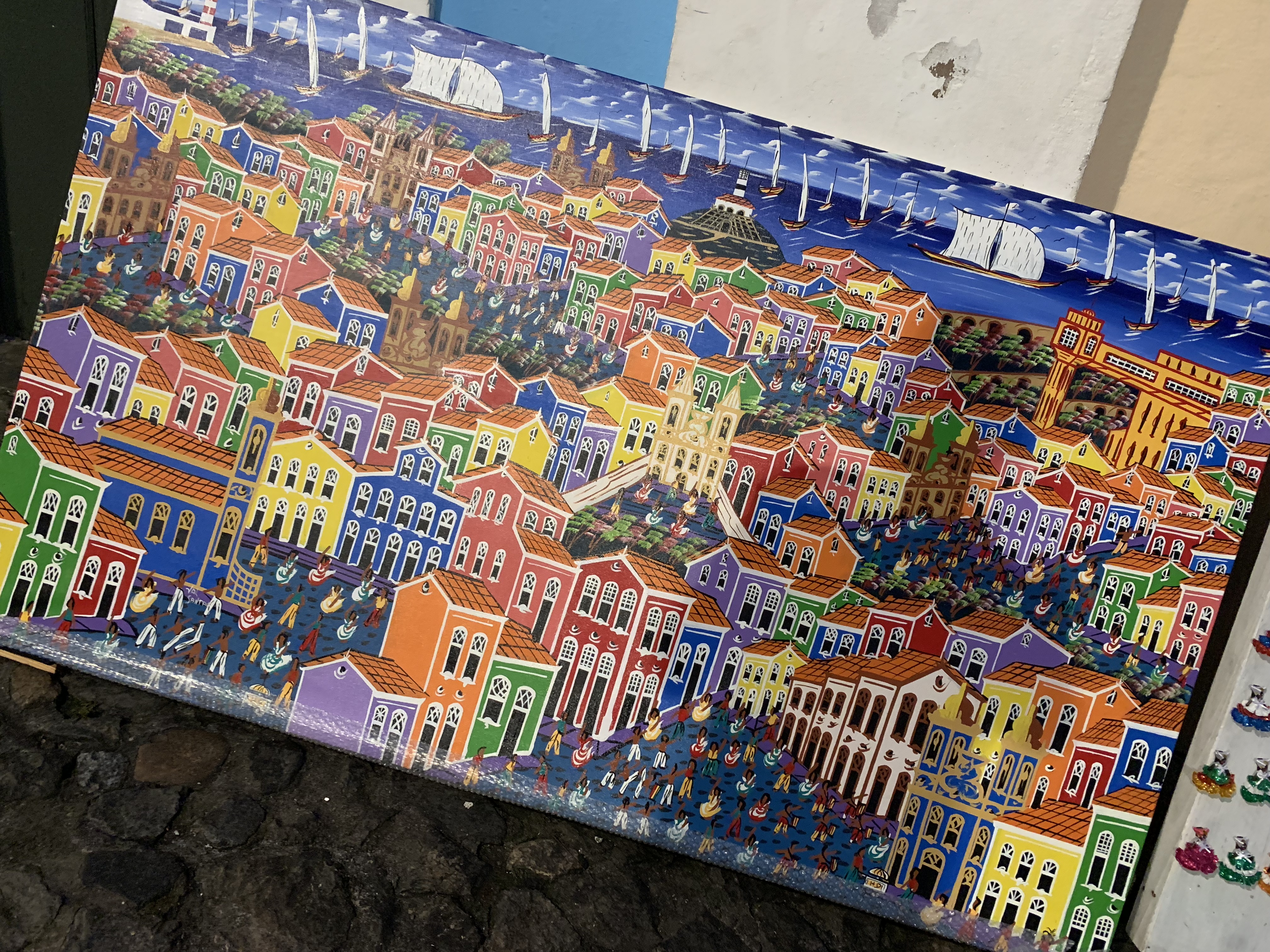
Naïve folk art painting of Pelourinho for sale in the street
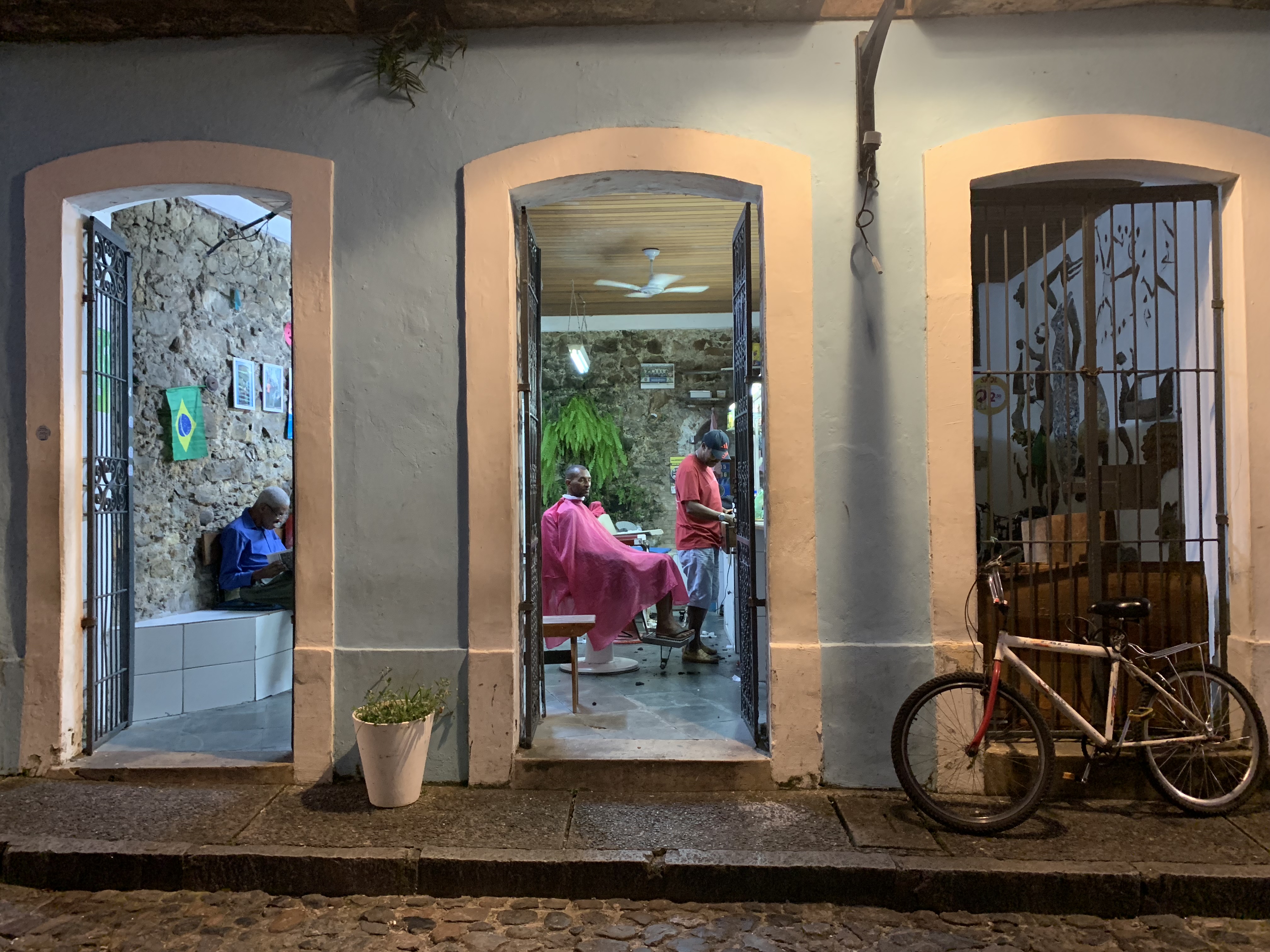
A barbershop at night seen through an open colonial doorway in Pelourinho
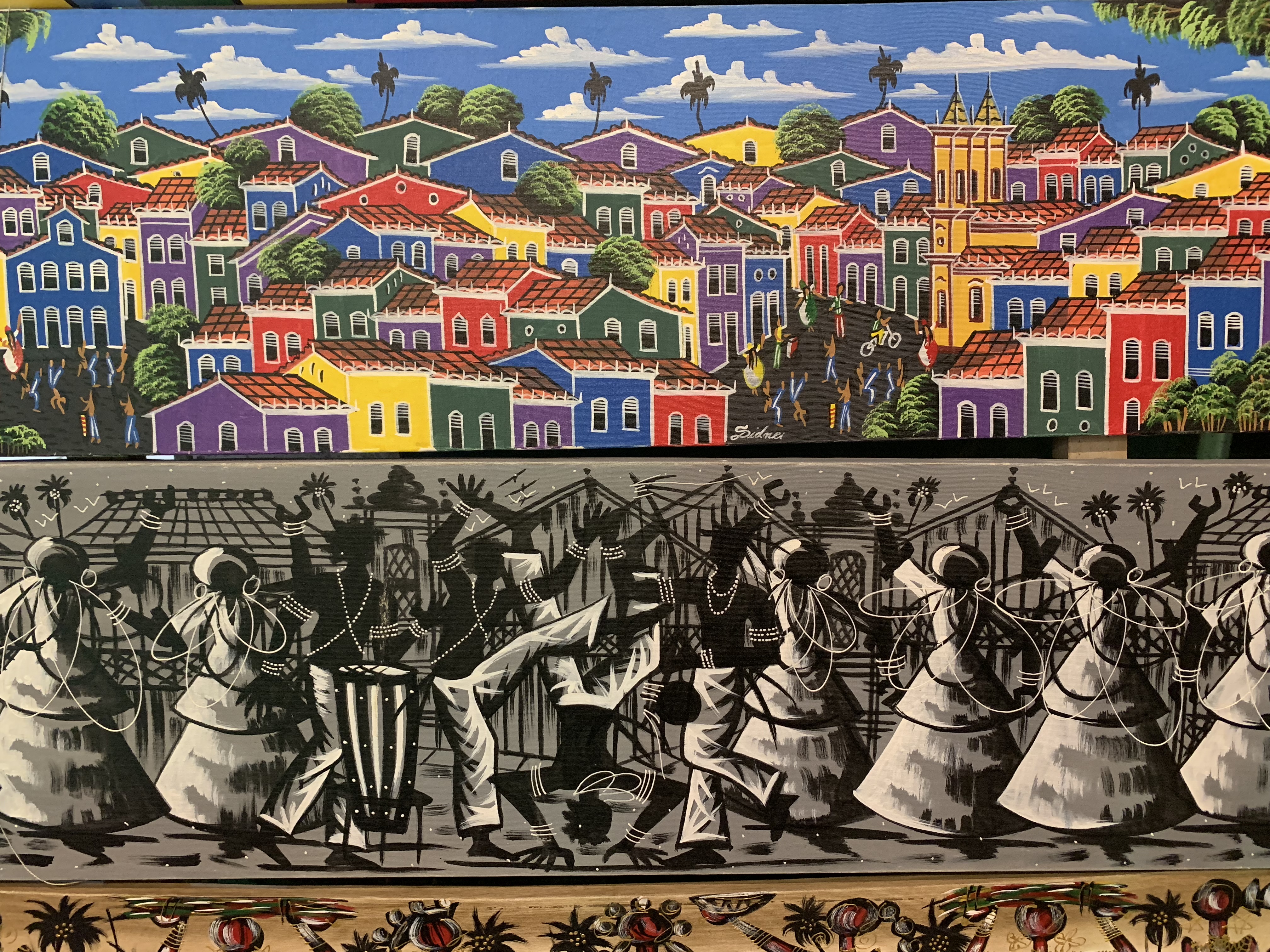
Two stacked naïve art canvases — colorful Pelourinho scene above, capoeira silhouettes below
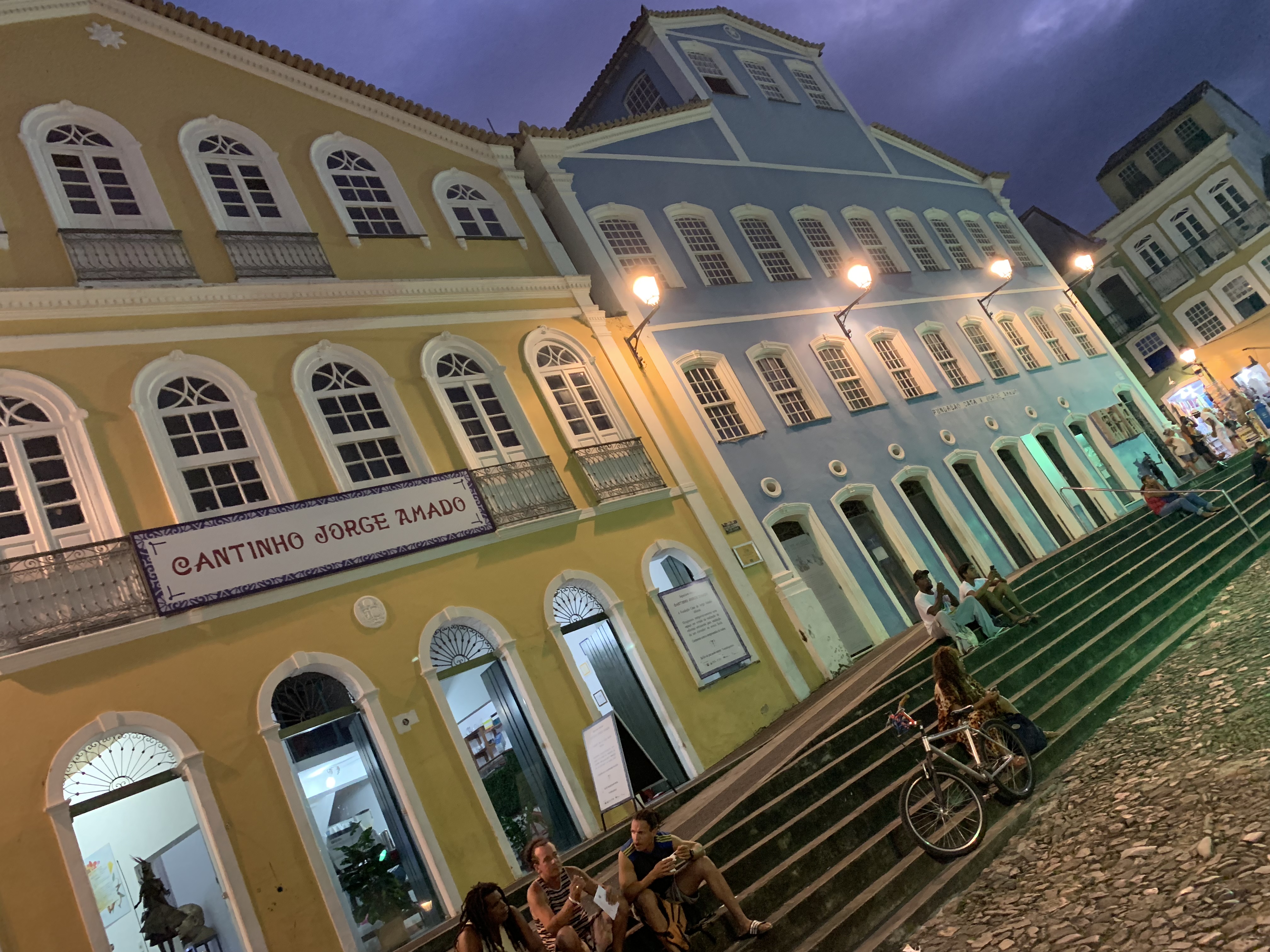
The 'Cantinho Jorge Amado' cultural museum in a yellow building at dusk in Pelourinho
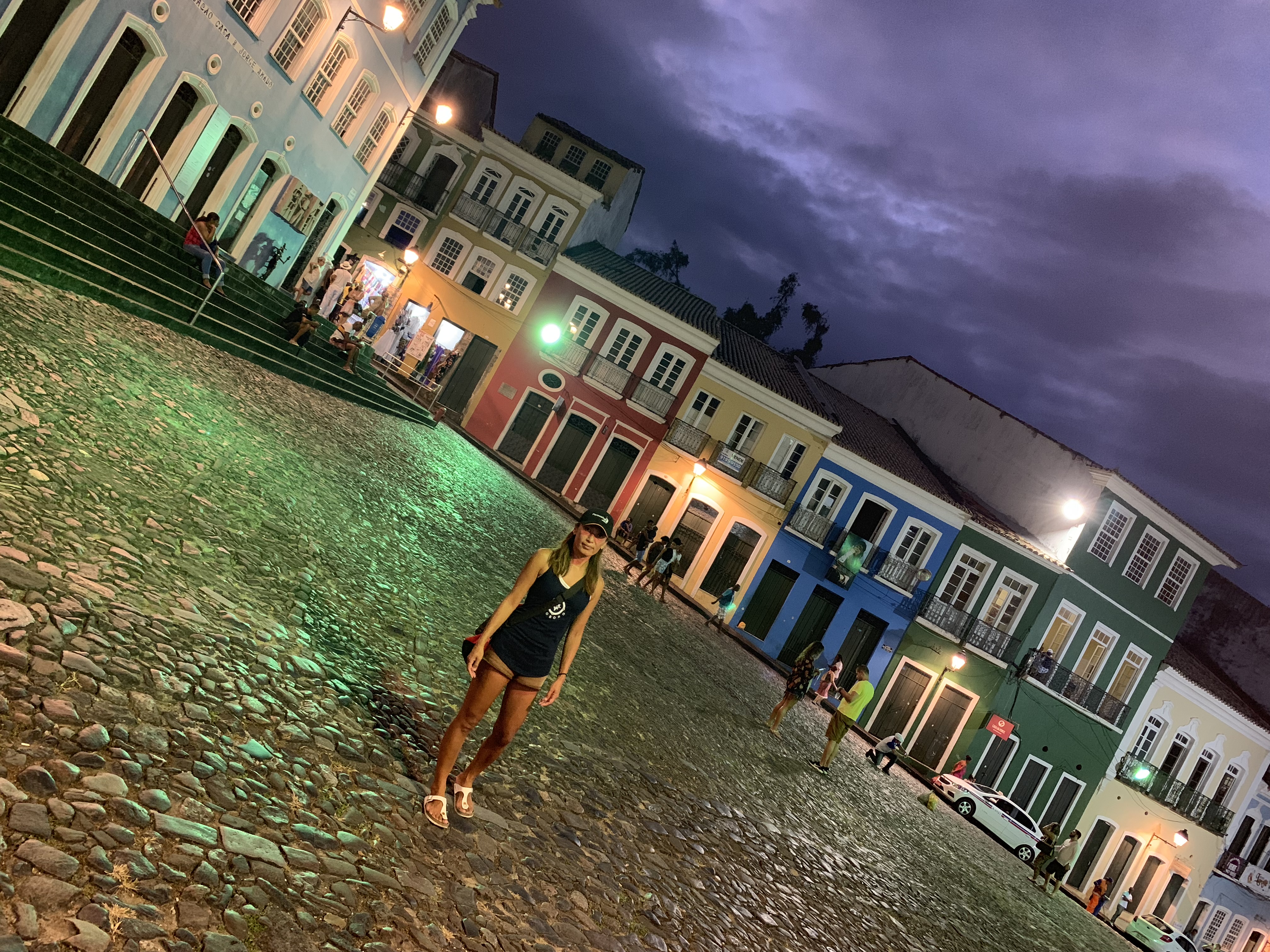
Yuka in Largo do Pelourinho at night
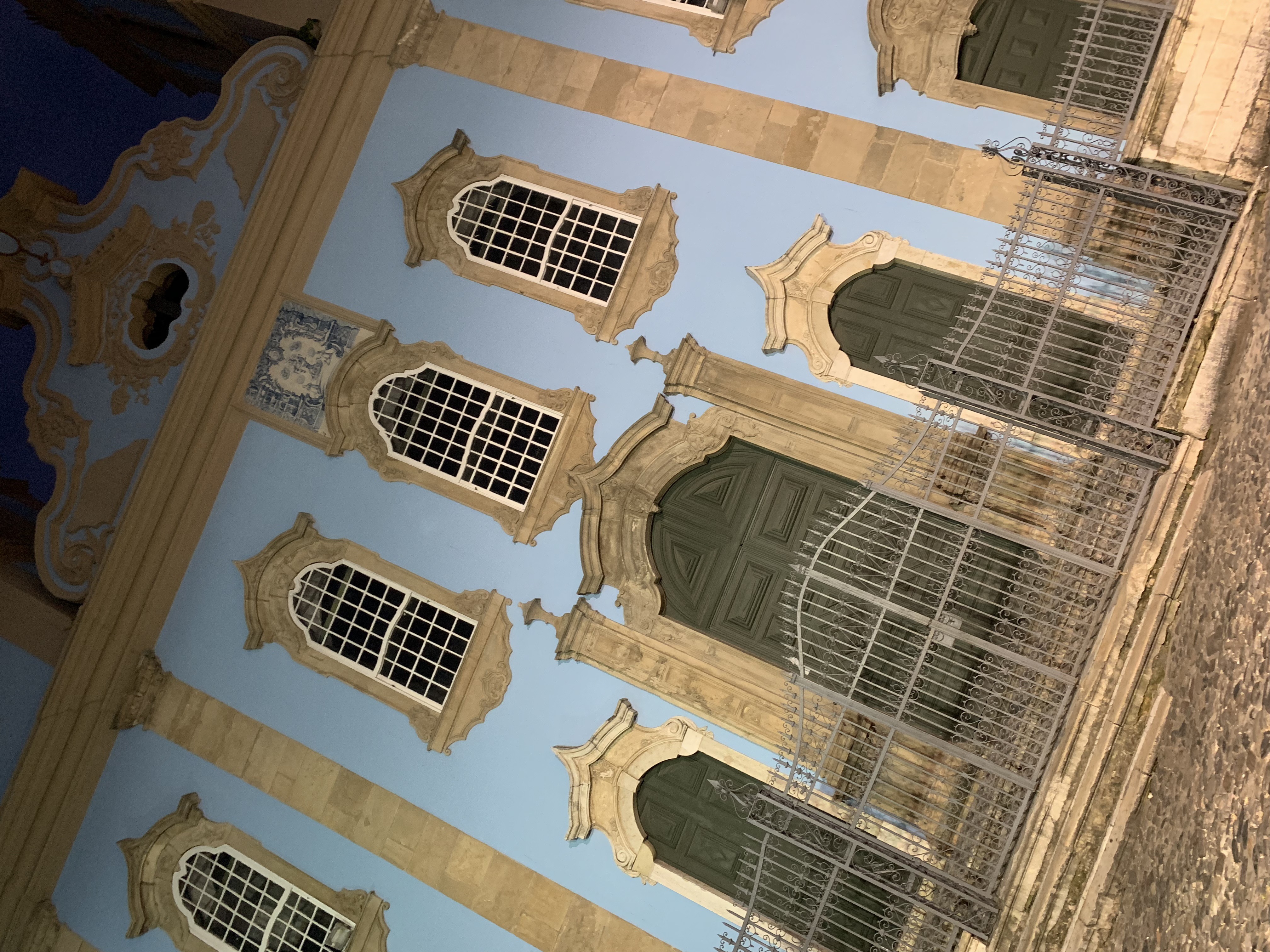
A baroque church under scaffolding at night, looking up from below
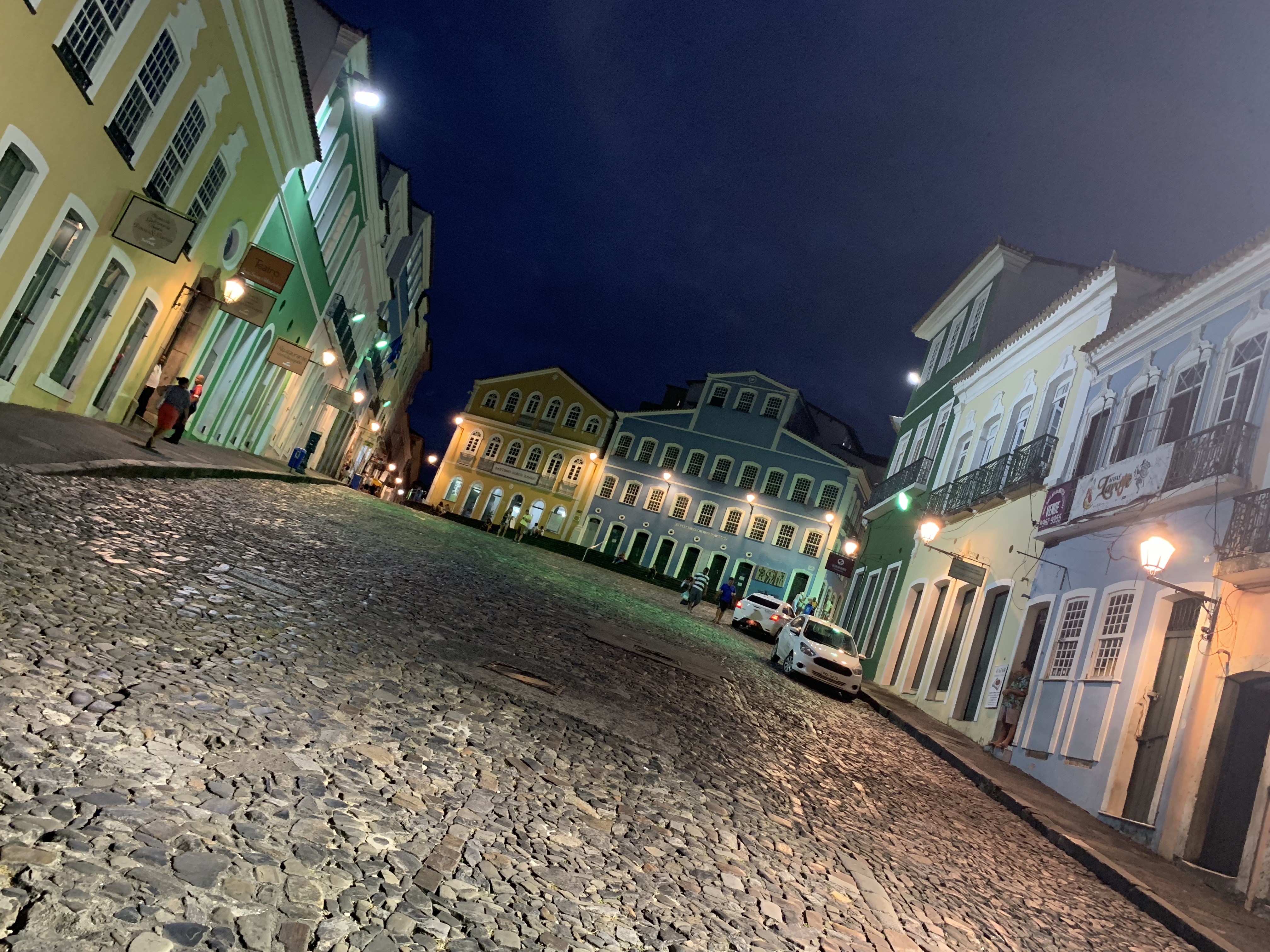
Pelourinho cobblestone square at night, deserted
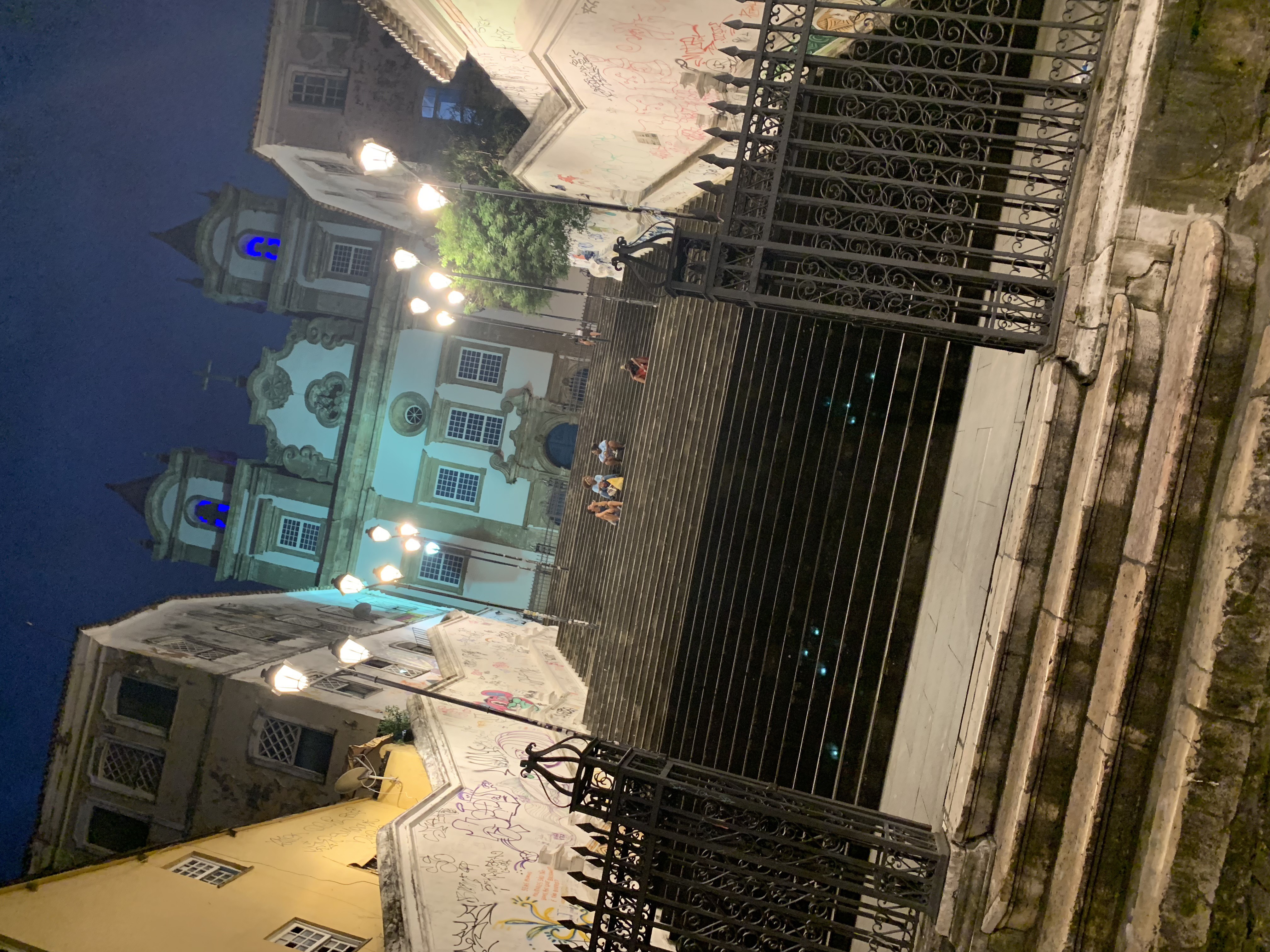
Igreja Nossa Senhora do Rosário dos Pretos at night, seen through an iron gate
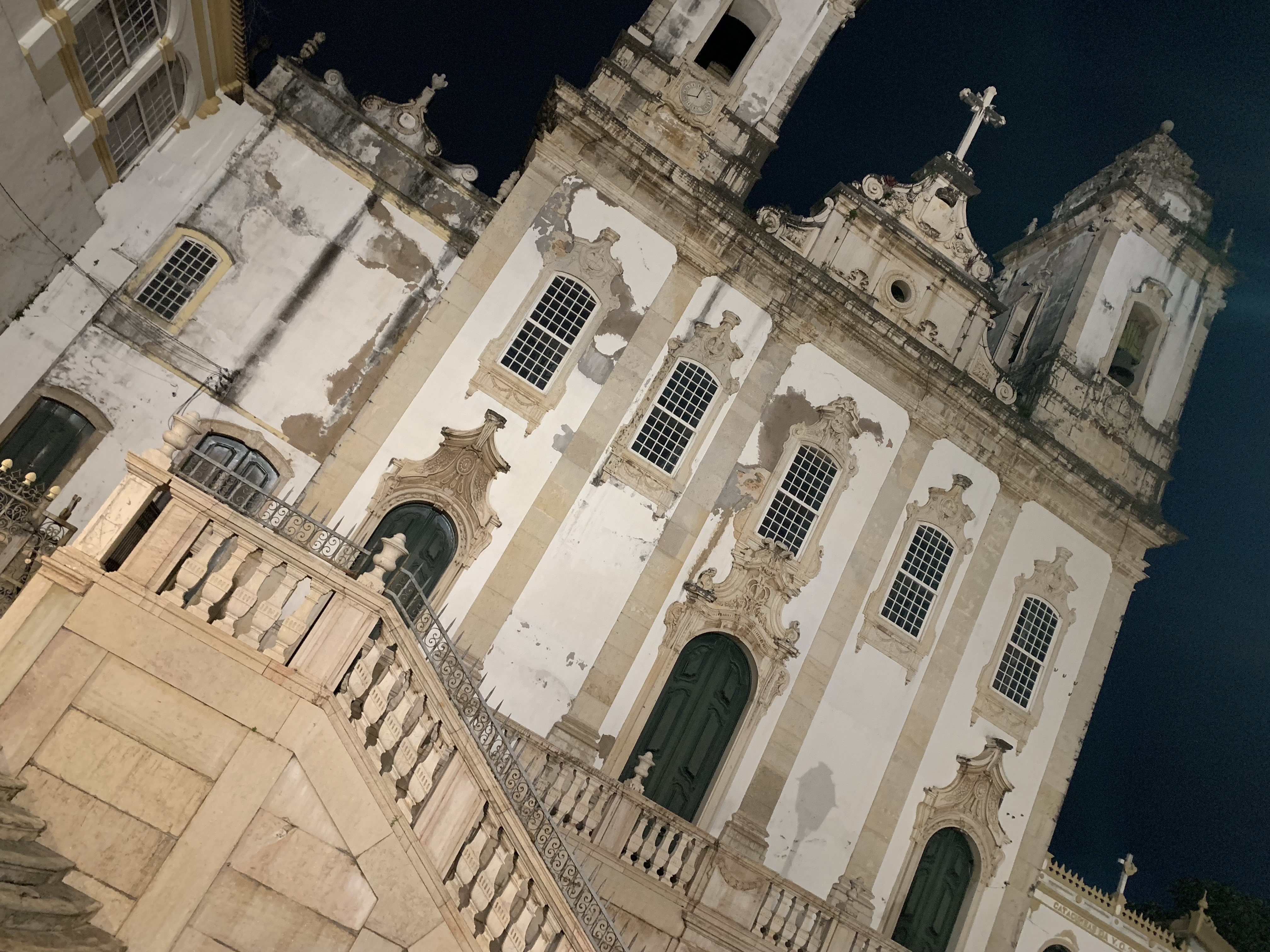
A white baroque church at night, worm's-eye view
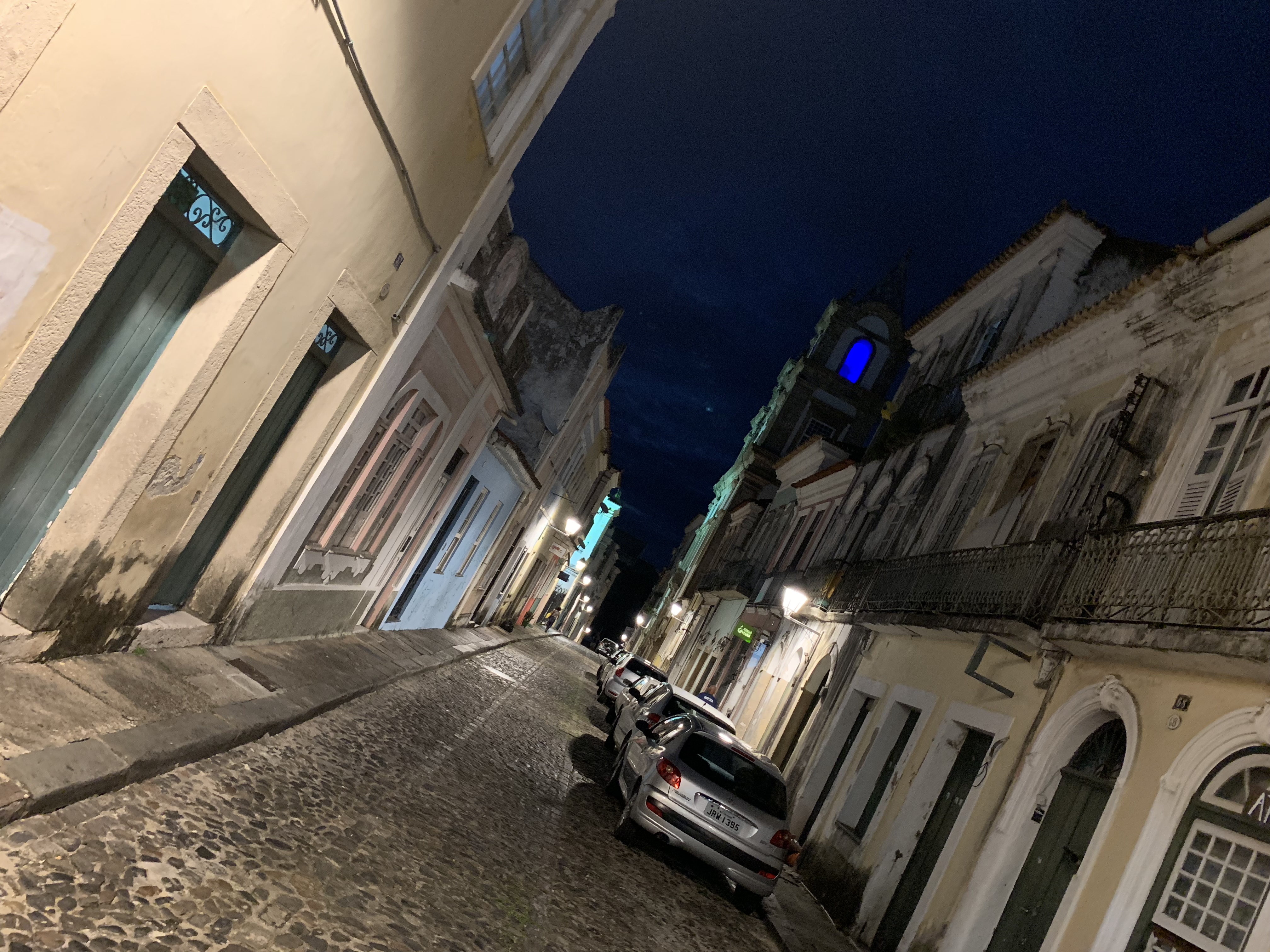
Pelourinho cobblestone street at night with parked cars
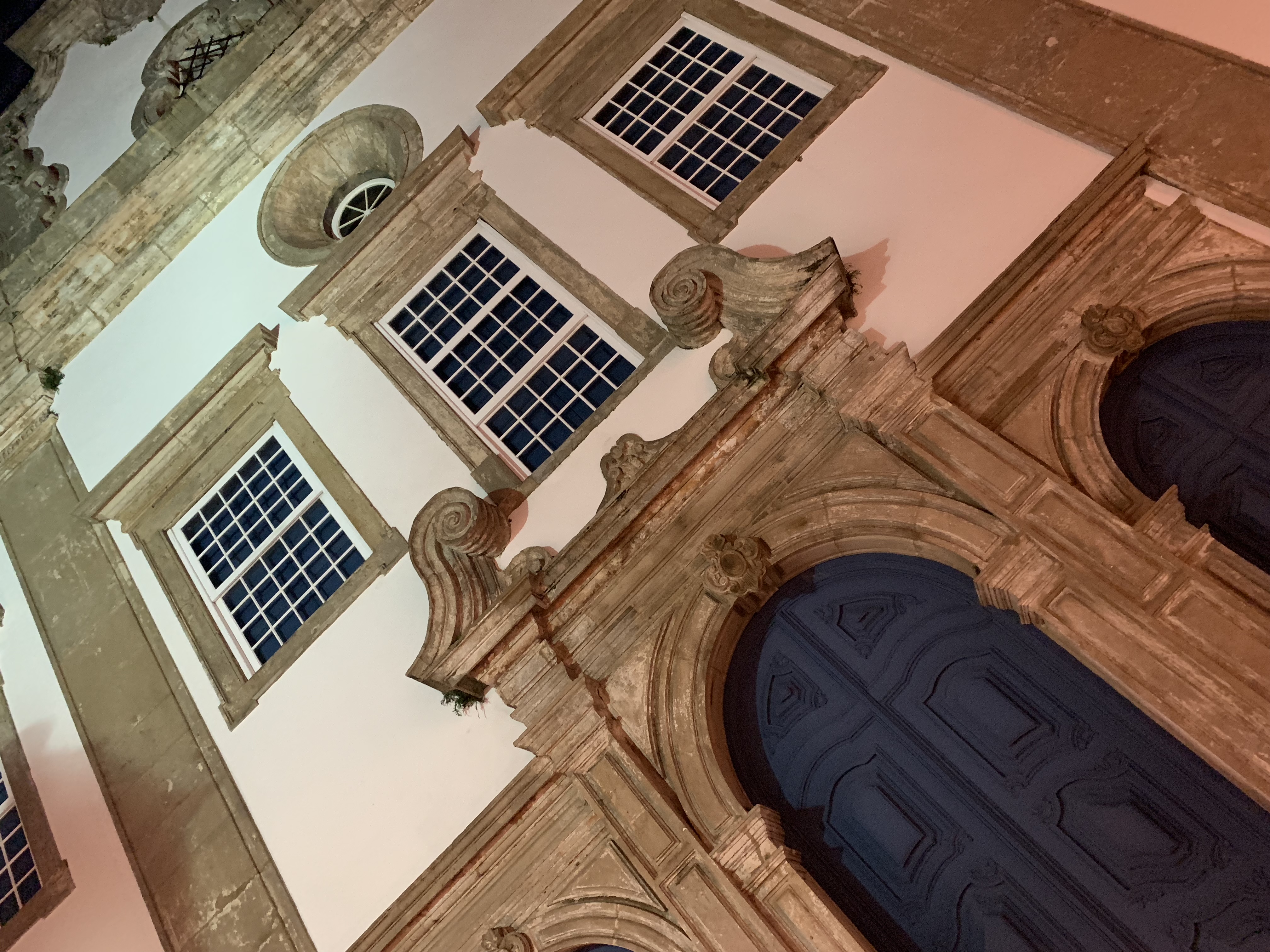
A baroque church entrance from below at night
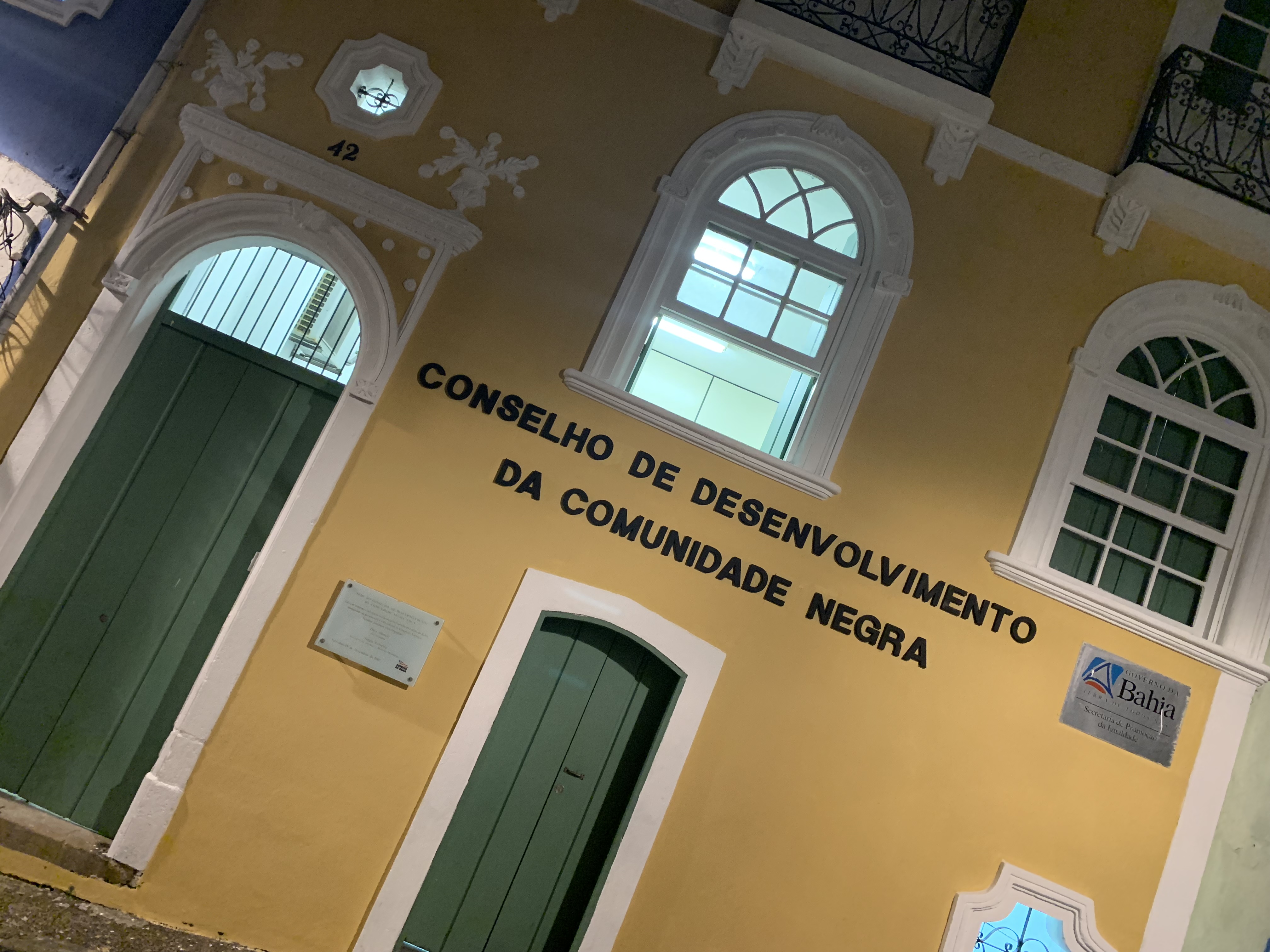
The 'Conselho de Desenvolvimento da Comunidade Negra' yellow building at night in Pelourinho
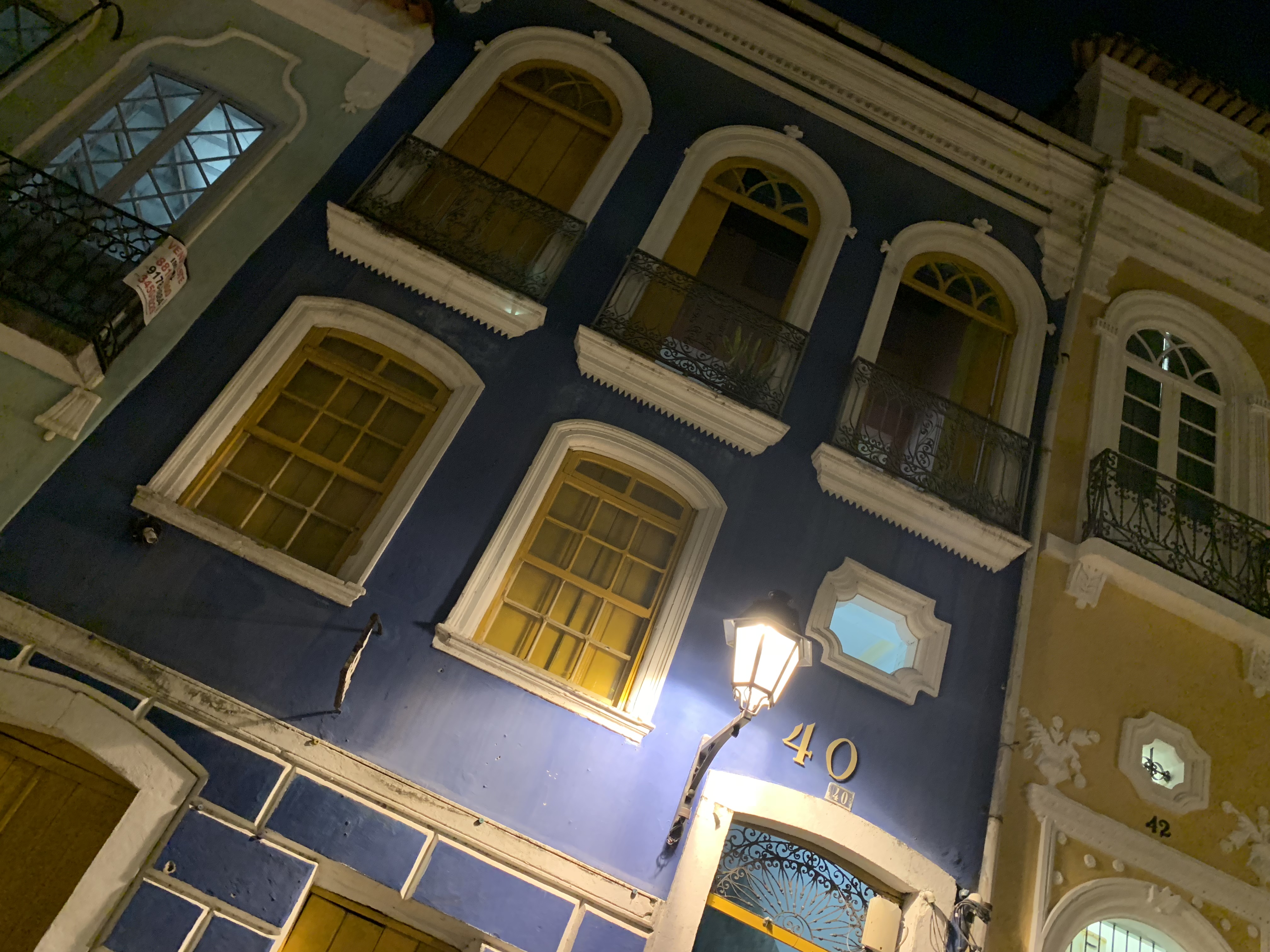
A blue colonial building #40 at night in Pelourinho, with glowing windows
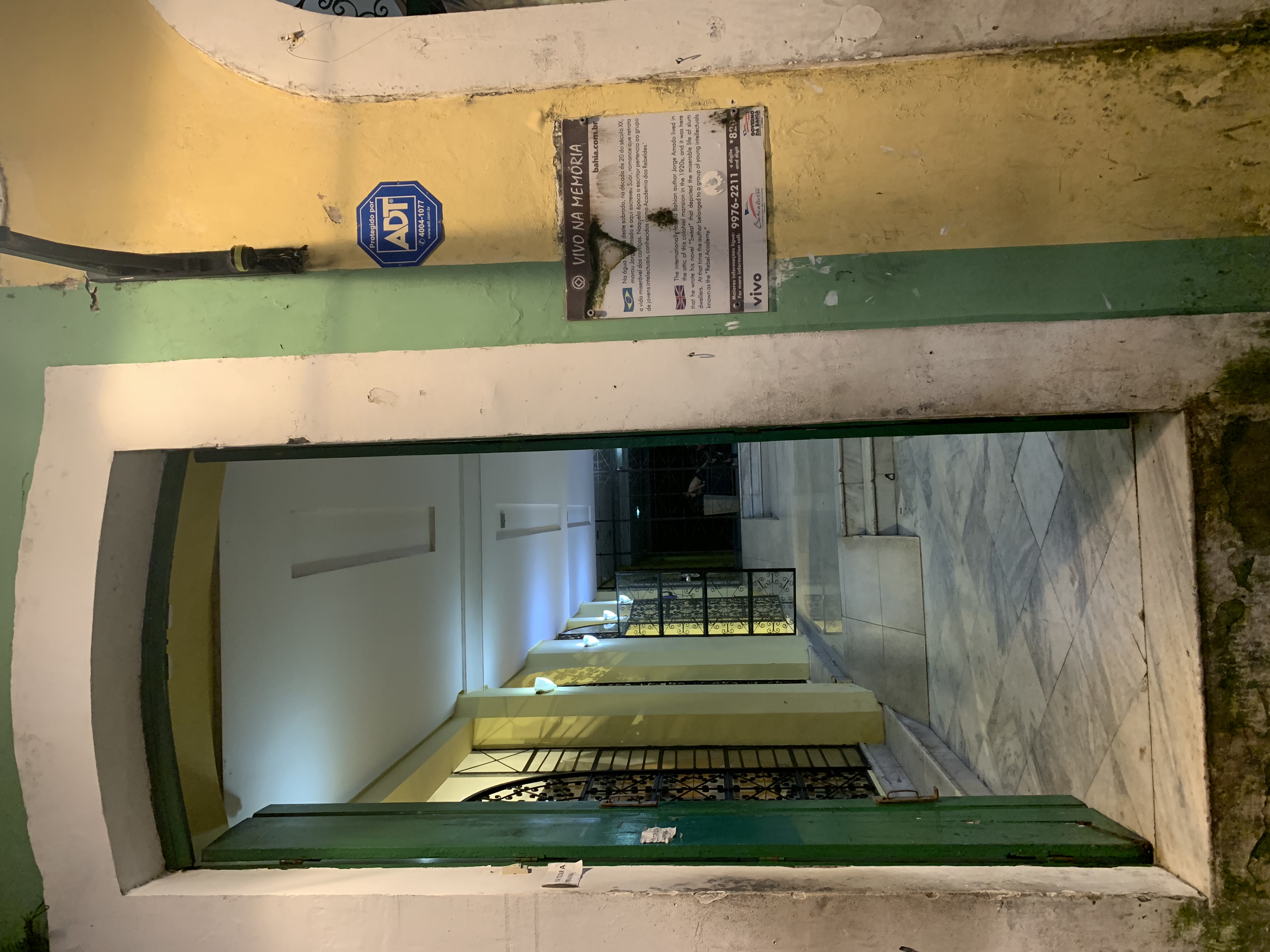
Looking down through a narrow arched colonial stairwell in Pelourinho
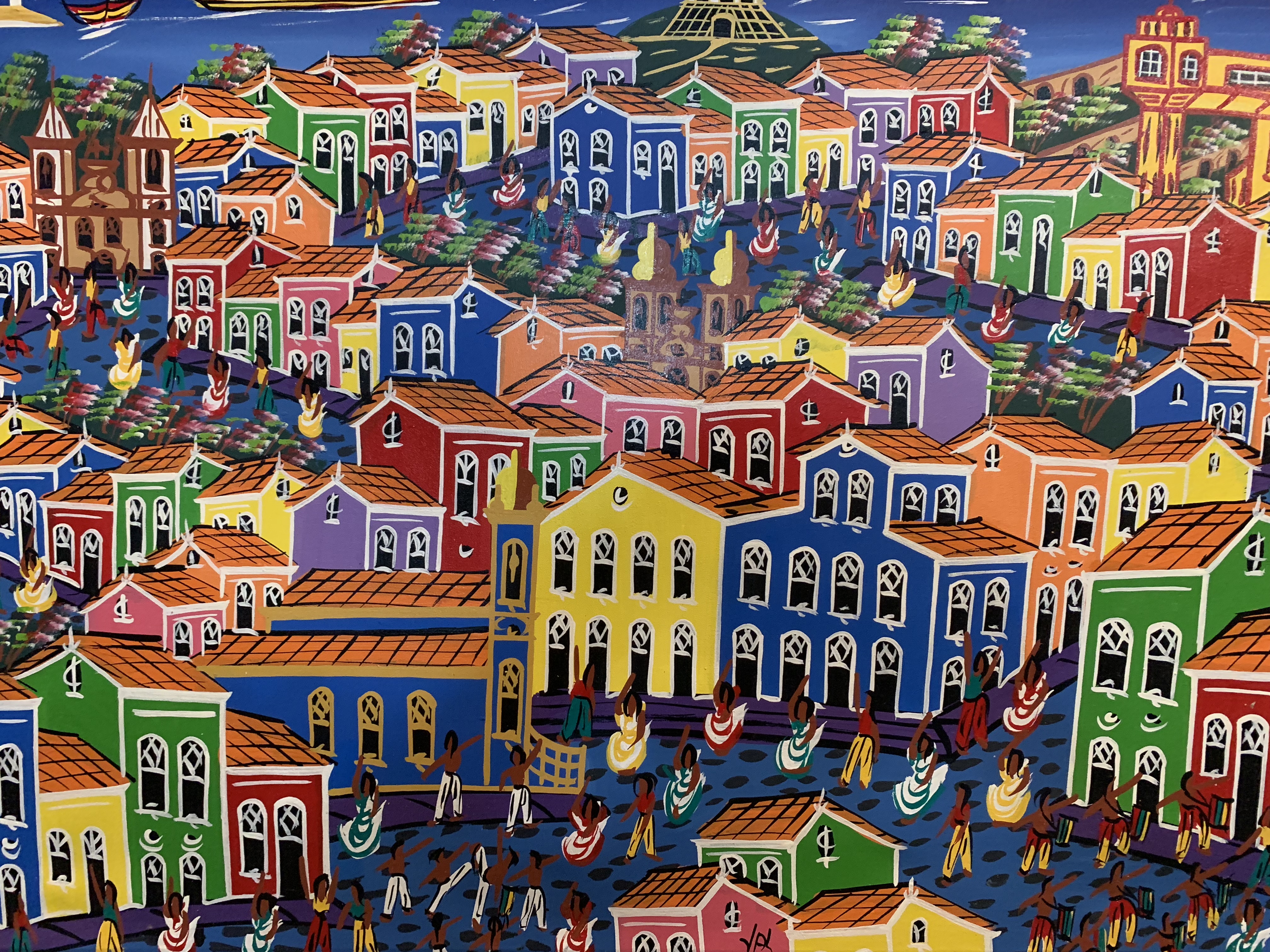
Naïve folk painting of a Pelourinho carnival scene
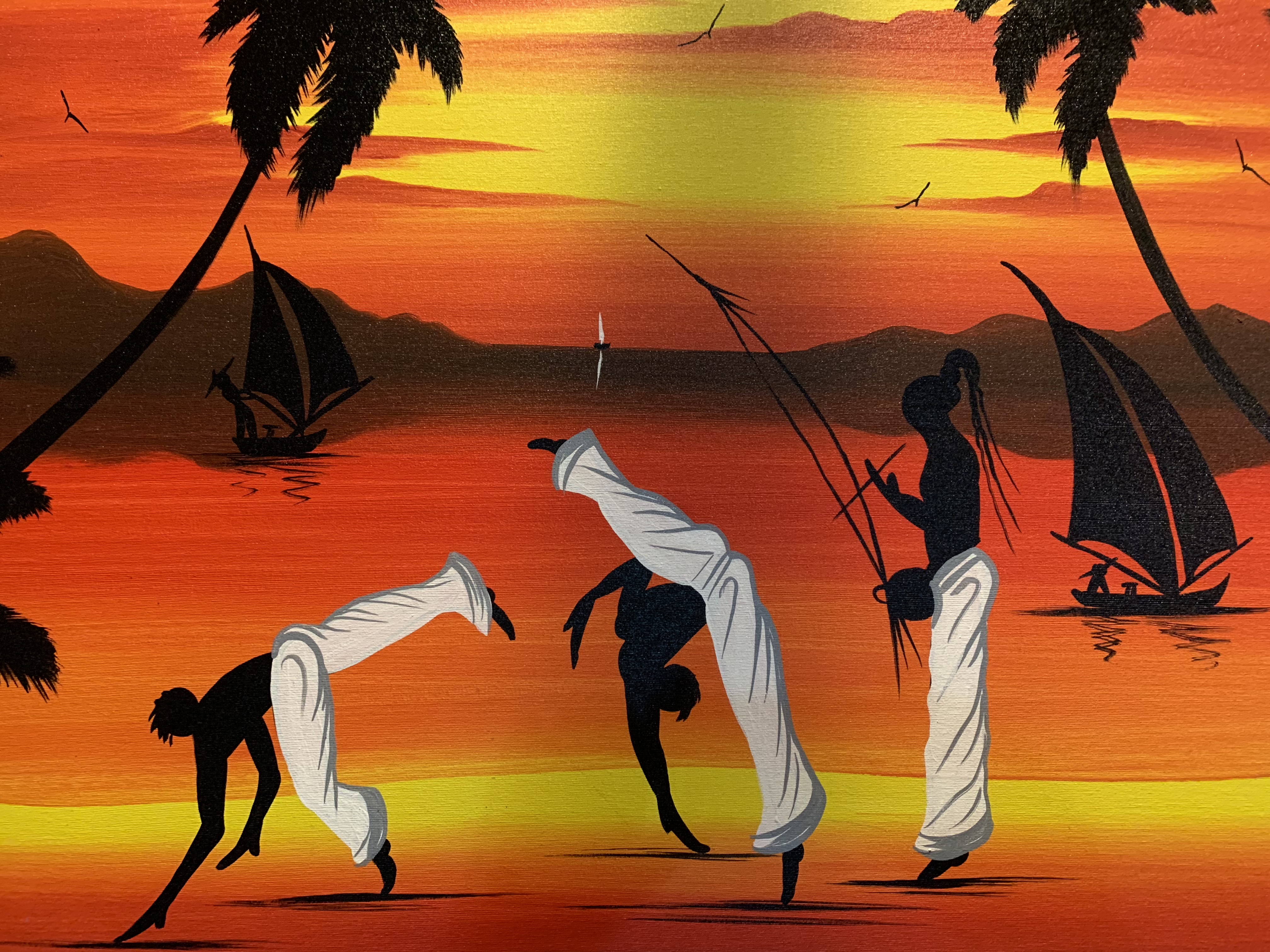
Naïve painting of capoeira silhouettes at an orange sunset, with sailboats on the bay
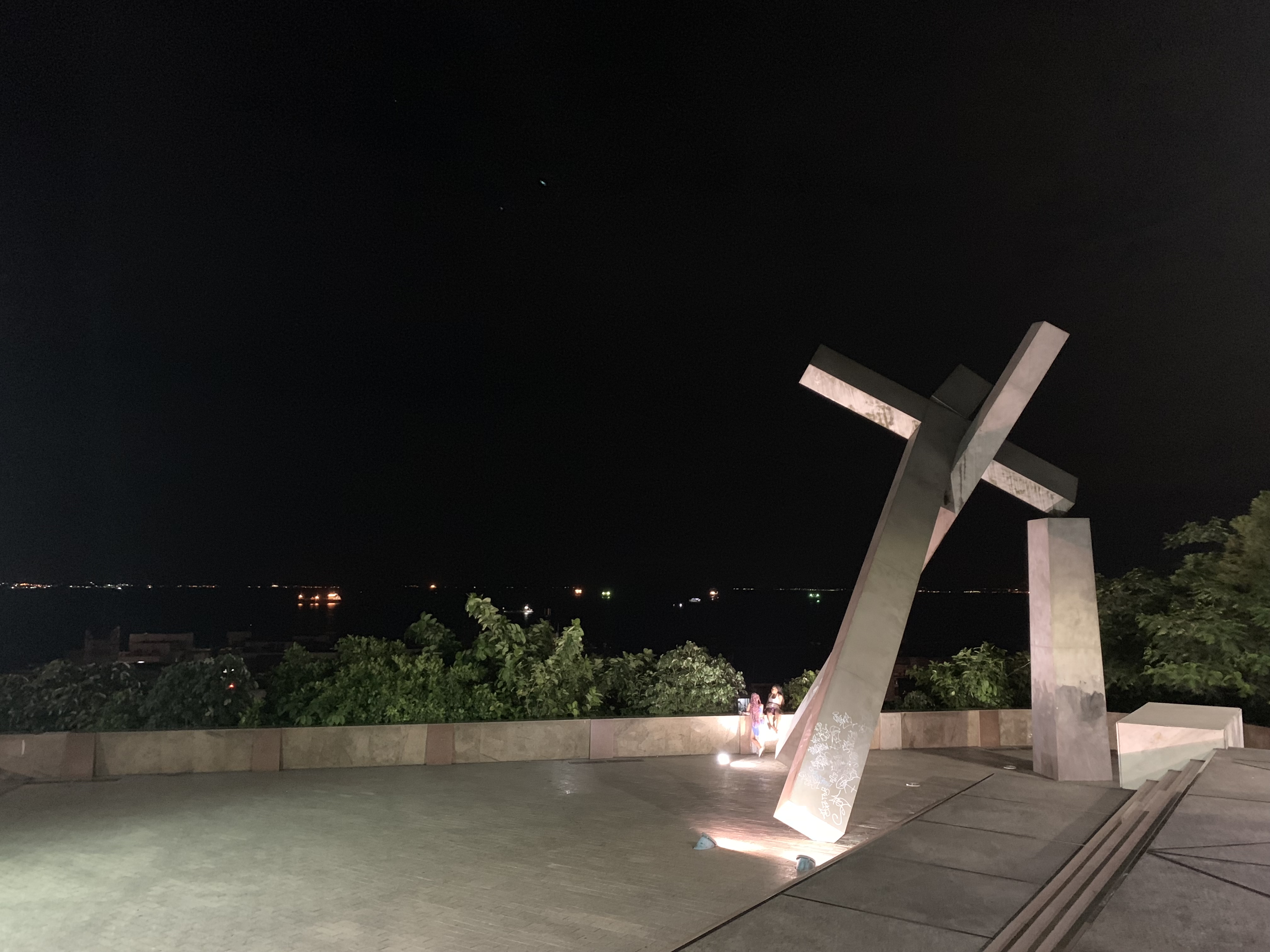
The large angled stone cross monument overlooking the Baía de Todos os Santos at night
Sunday mass at Igreja Nossa Senhora do Rosário dos Pretos — packed congregation facing the gilded altar
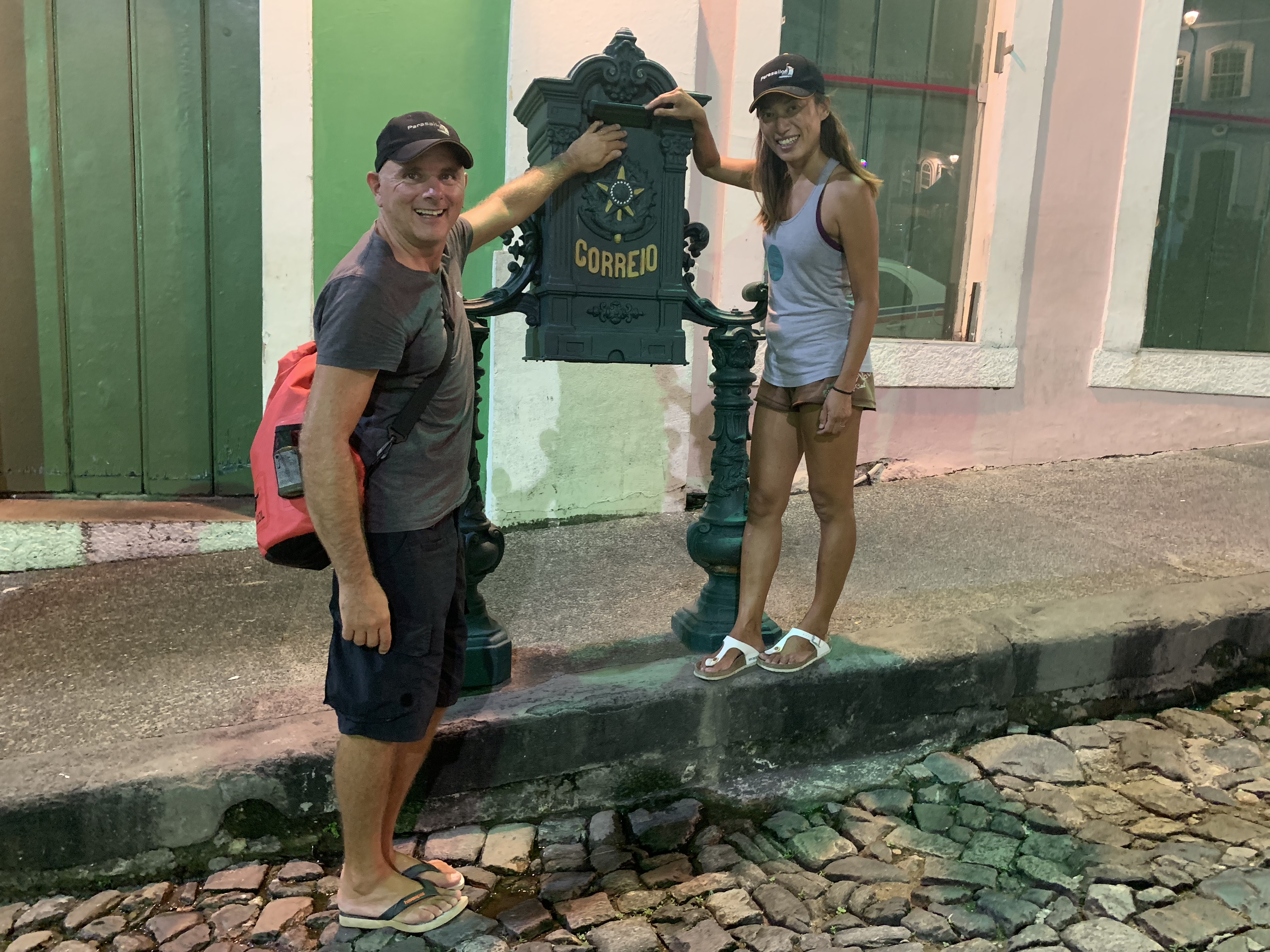
Francesco and Yuka posing with the antique green 'Correio' post box in Pelourinho at night
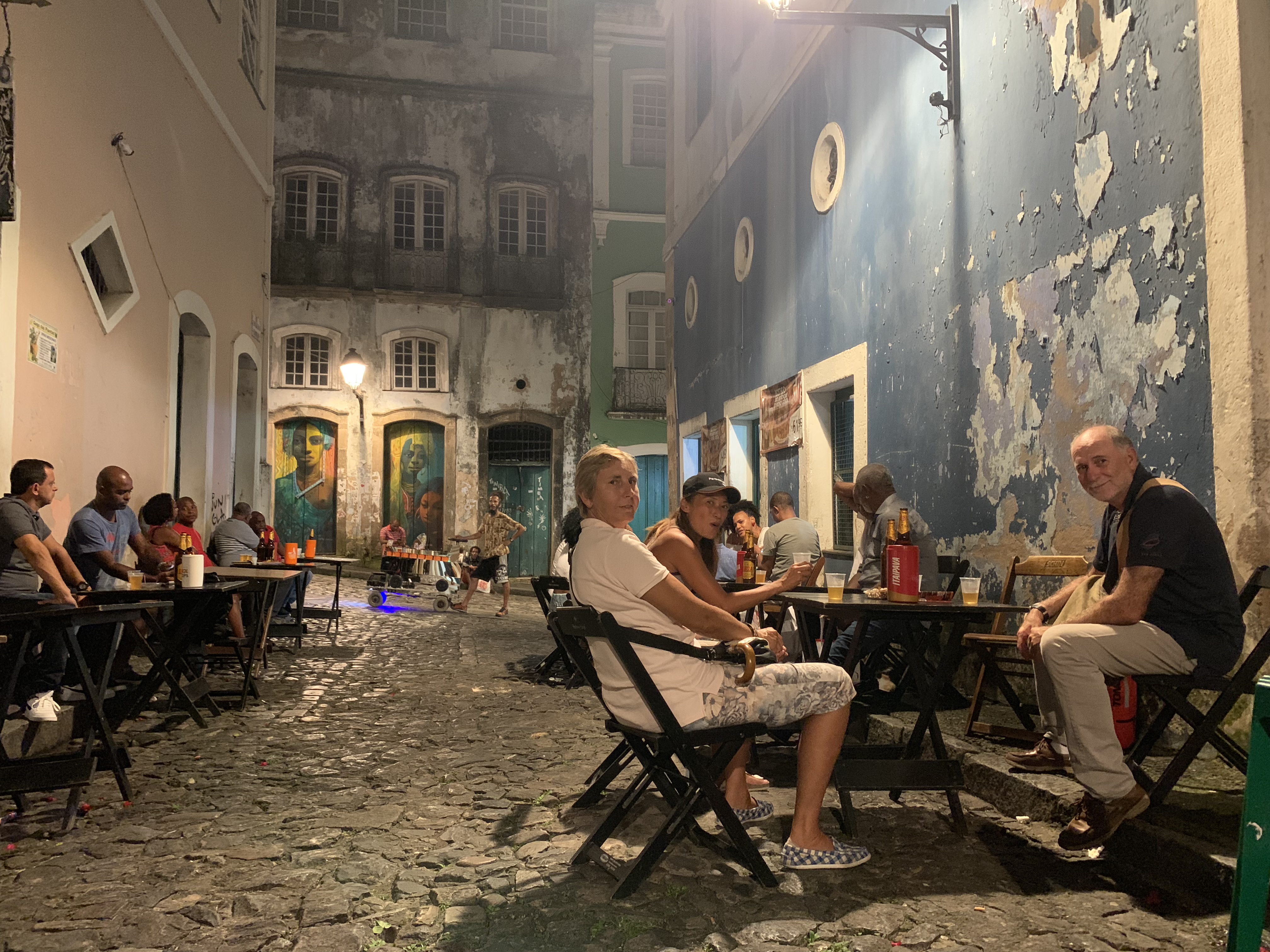
Outdoor restaurant in a Pelourinho alley at night, Yuka seated at the table
African-Brazilian cultural performance — women in Candomblé dress dancing with leafy branches
Male dancers in colorful skirts performing on stage
The full ensemble in Bahian-style dresses, samba rhythms
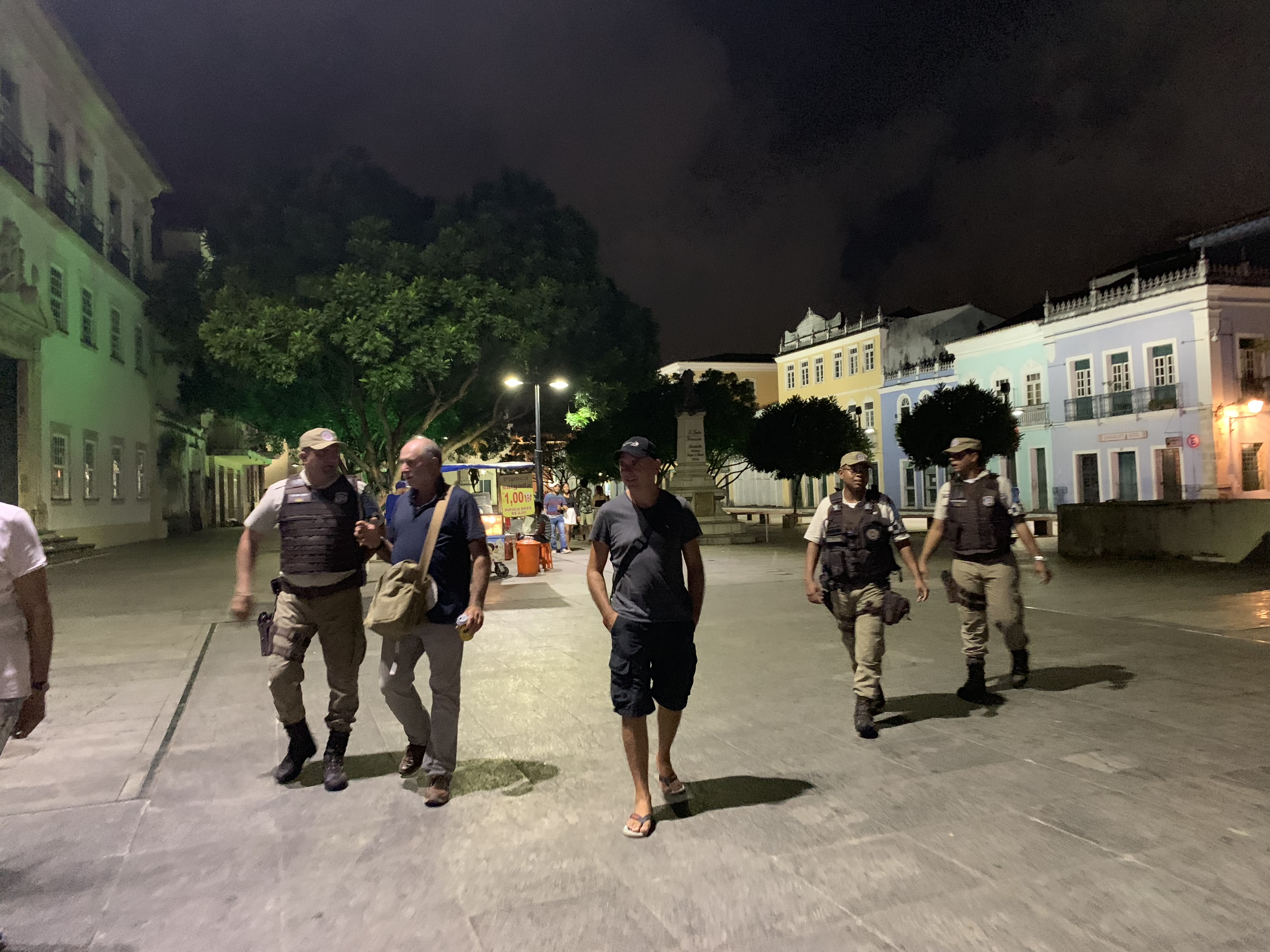
Francesco walking through Pelourinho with a military police escort
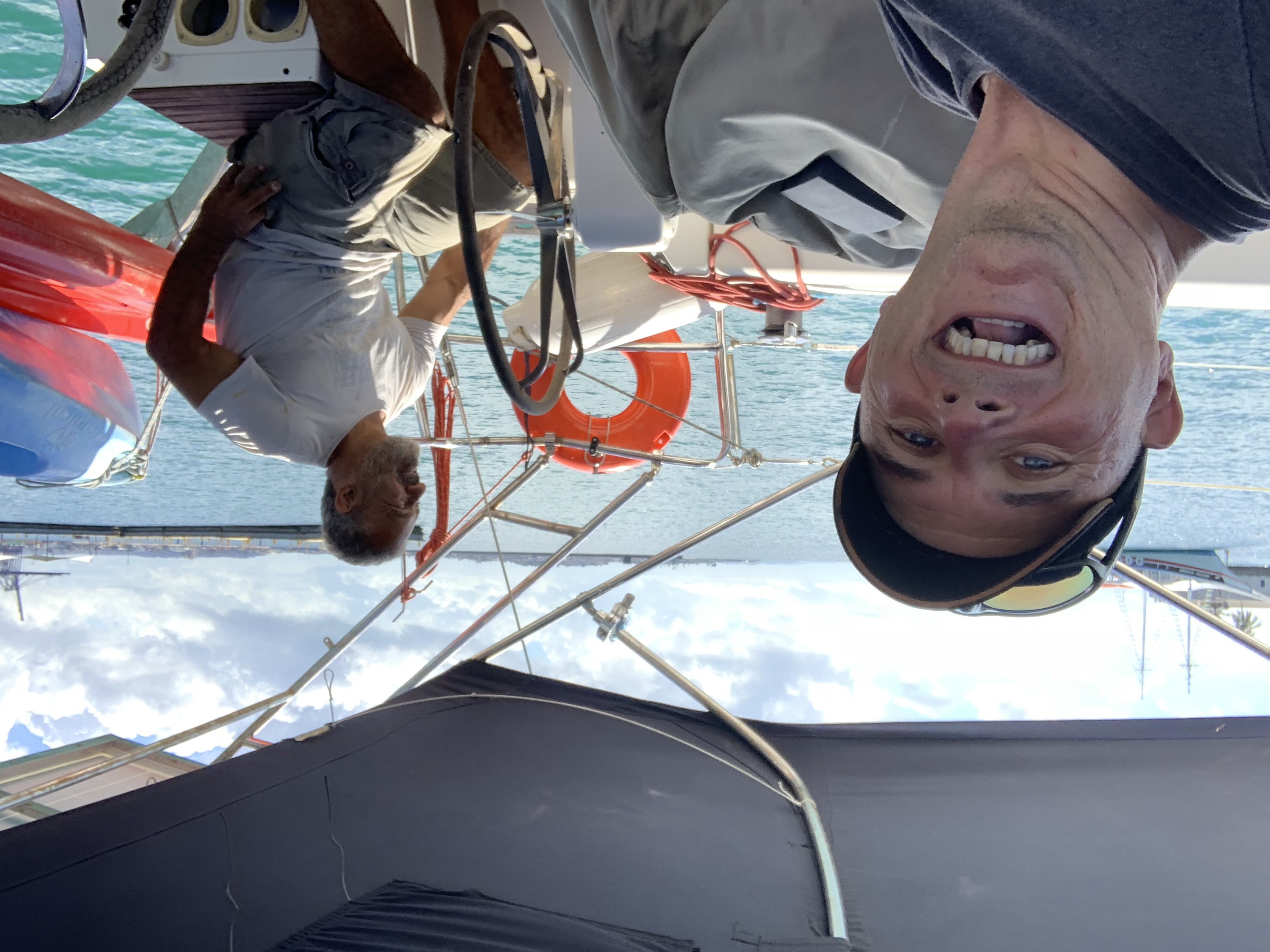
Francesco and a local boat helper on Oroboro's cockpit in the marina
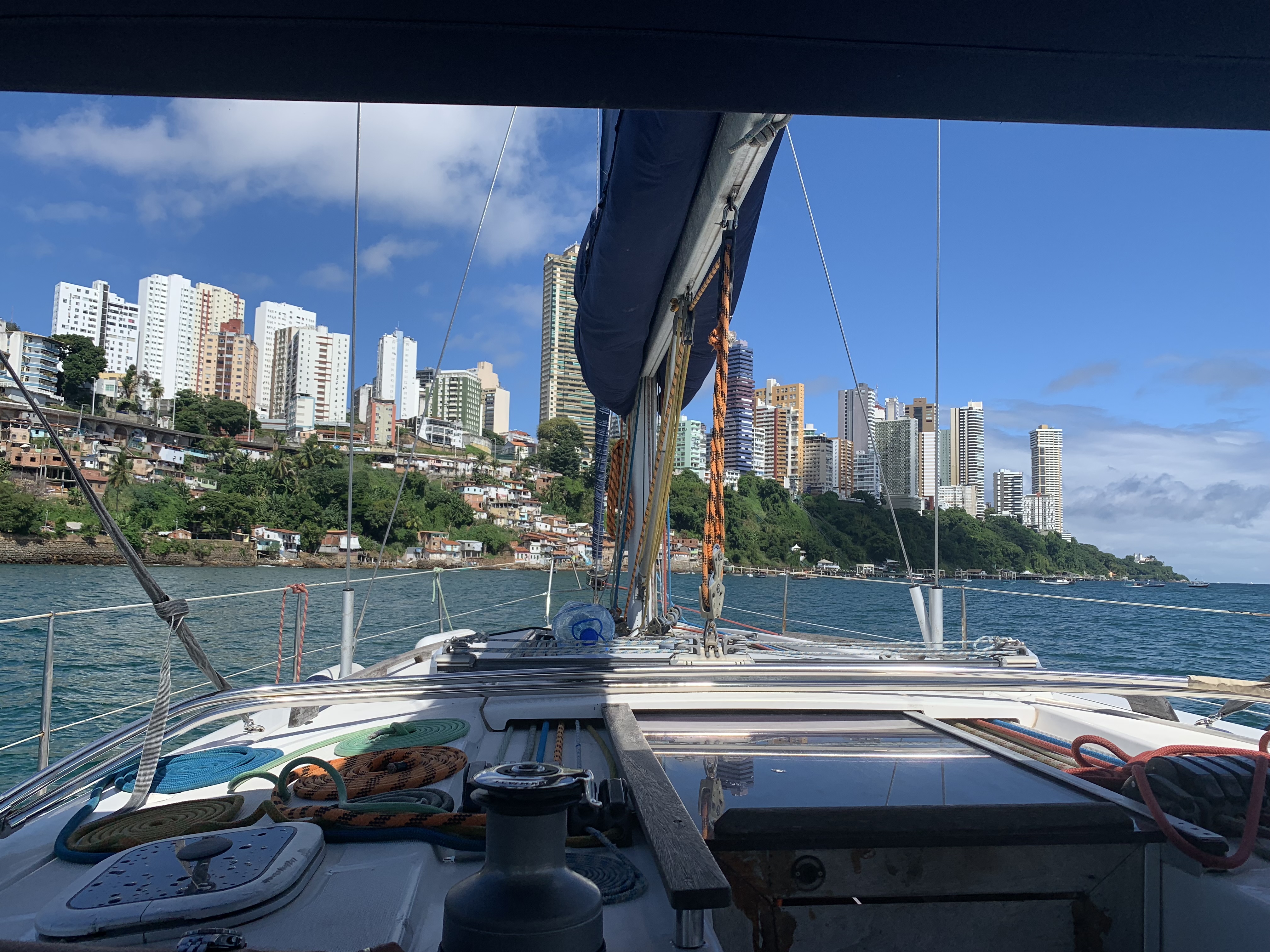
View from Oroboro's helm looking toward the Salvador skyline across the bay
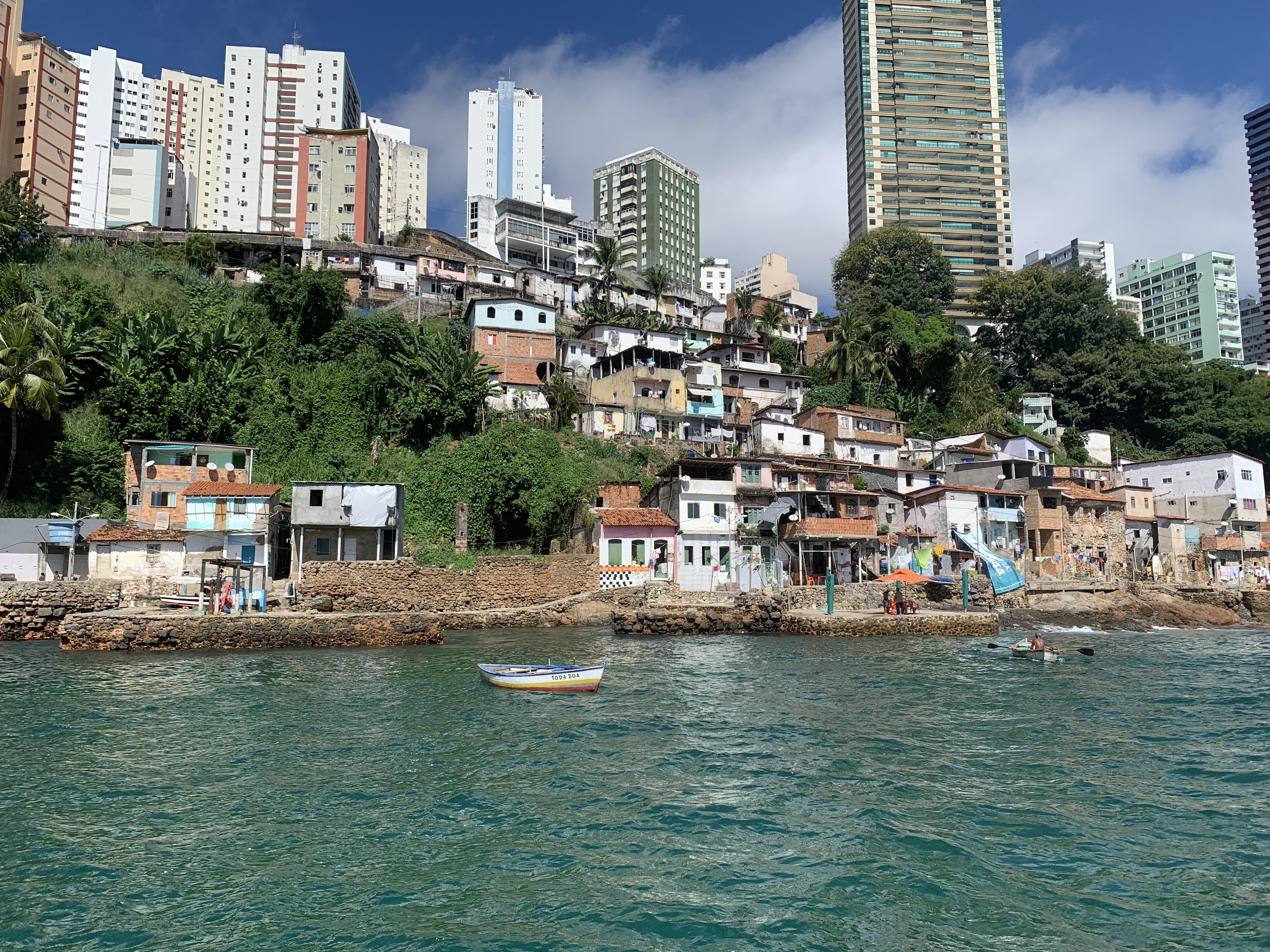
The Salvador favela waterfront seen from the water — the contrast between the favela and modern towers behind it
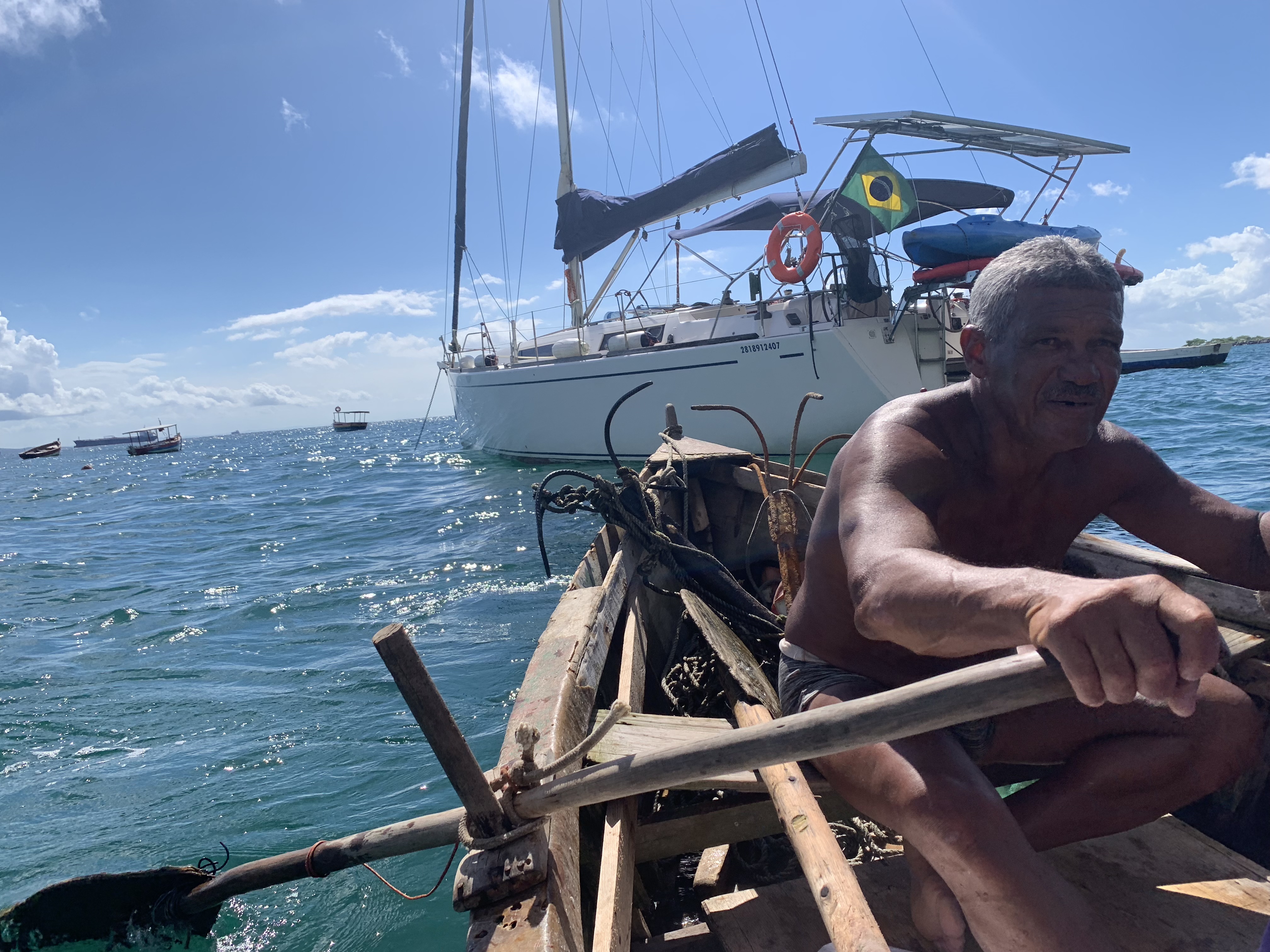
A local fisherman on a rustic wooden rowing raft, with Oroboro visible behind him
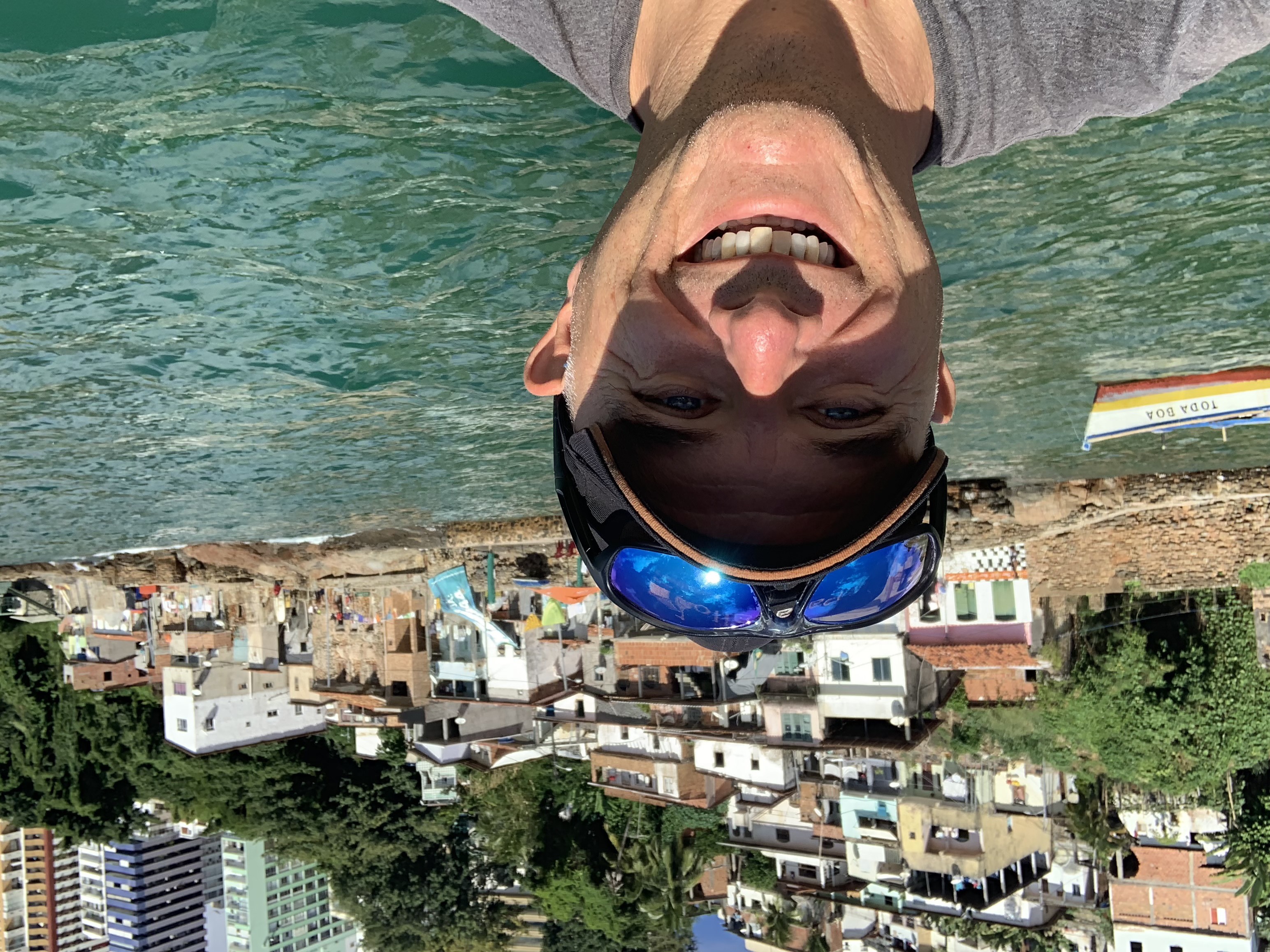
Francesco selfie on the water, with the Salvador waterfront behind him
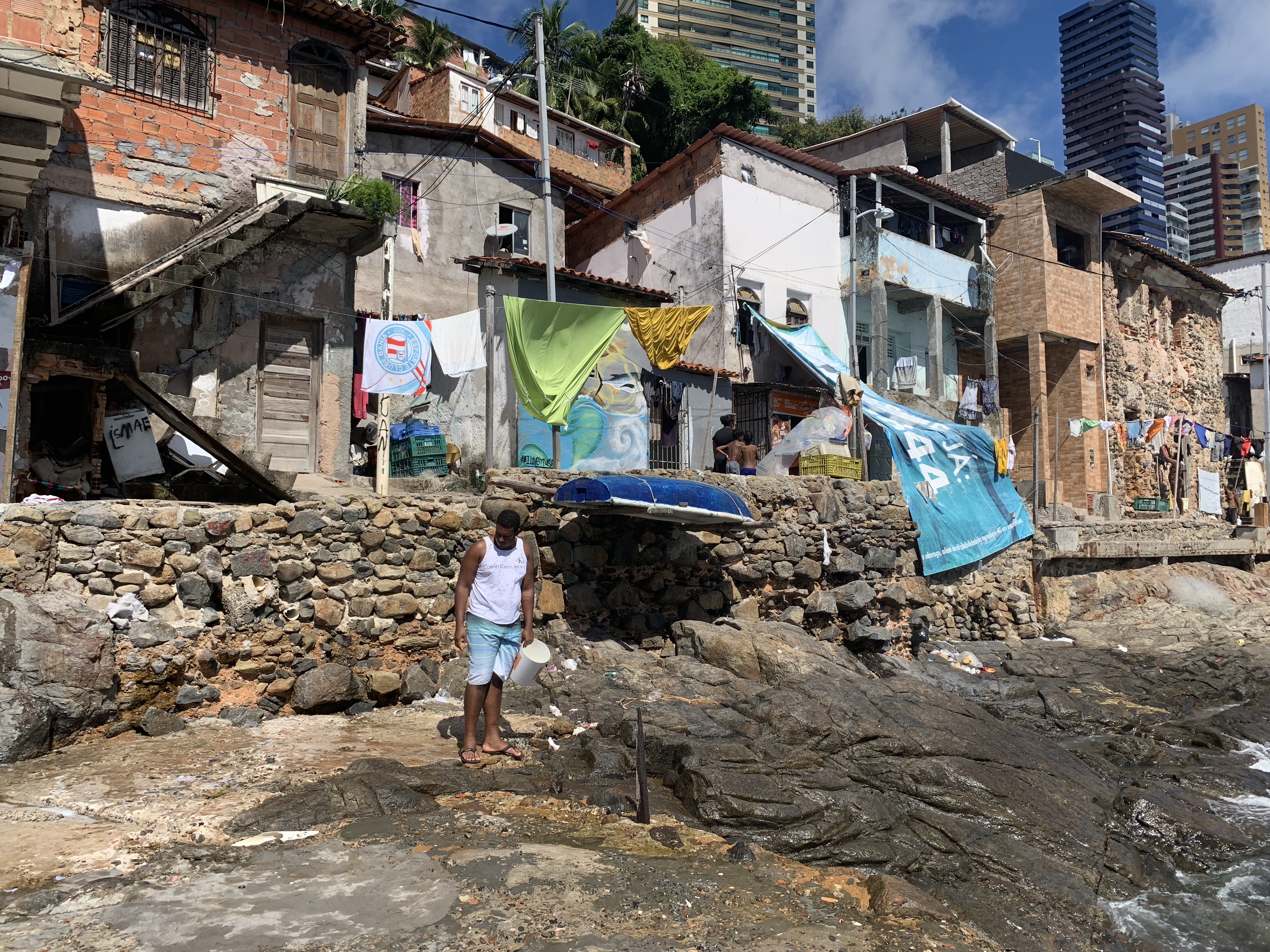
The waterfront fishing community — colorful laundry drying on the rocks, a local woman below
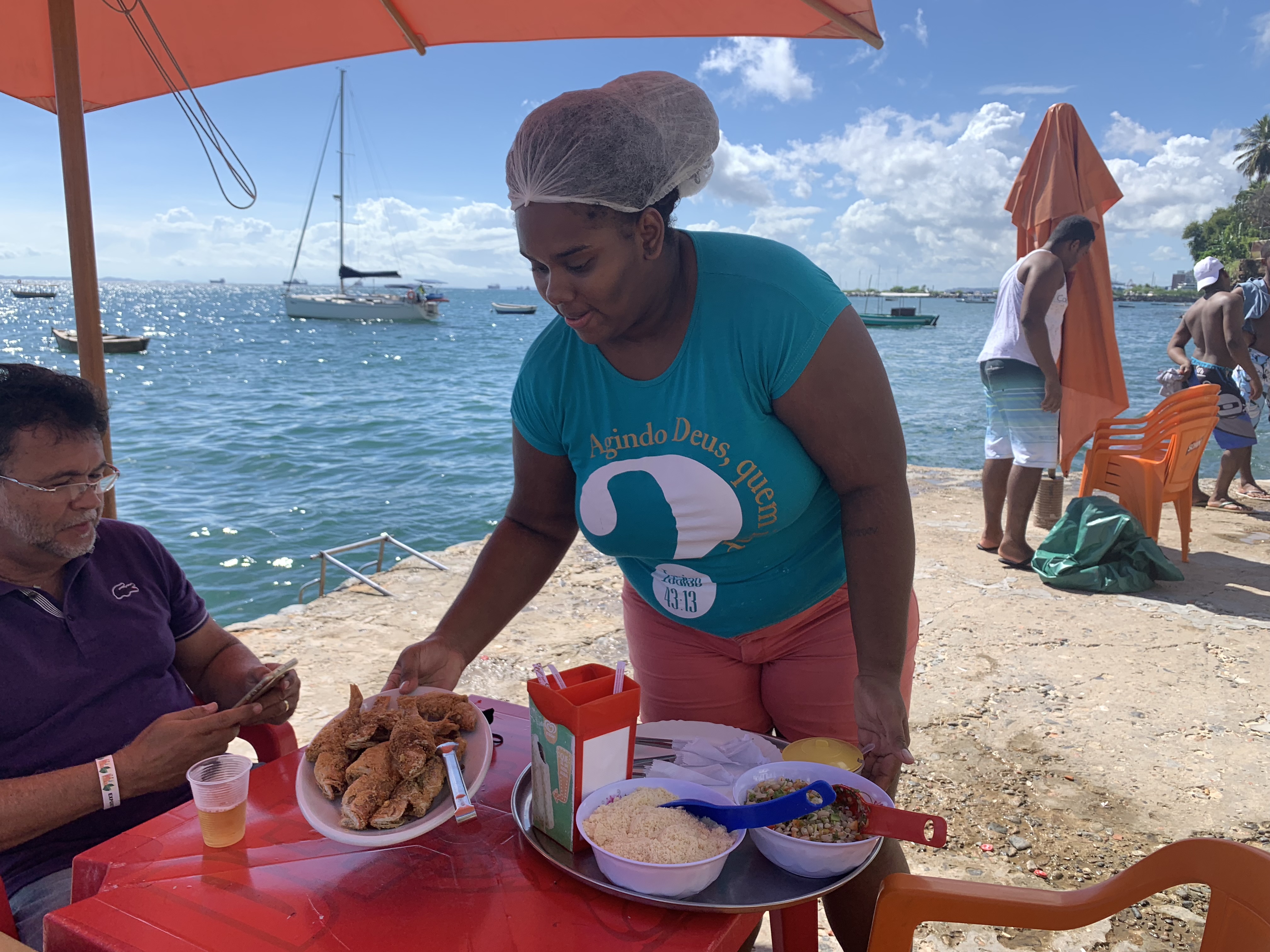
A waitress serves fried fish at a waterfront stall, with the bay visible behind her
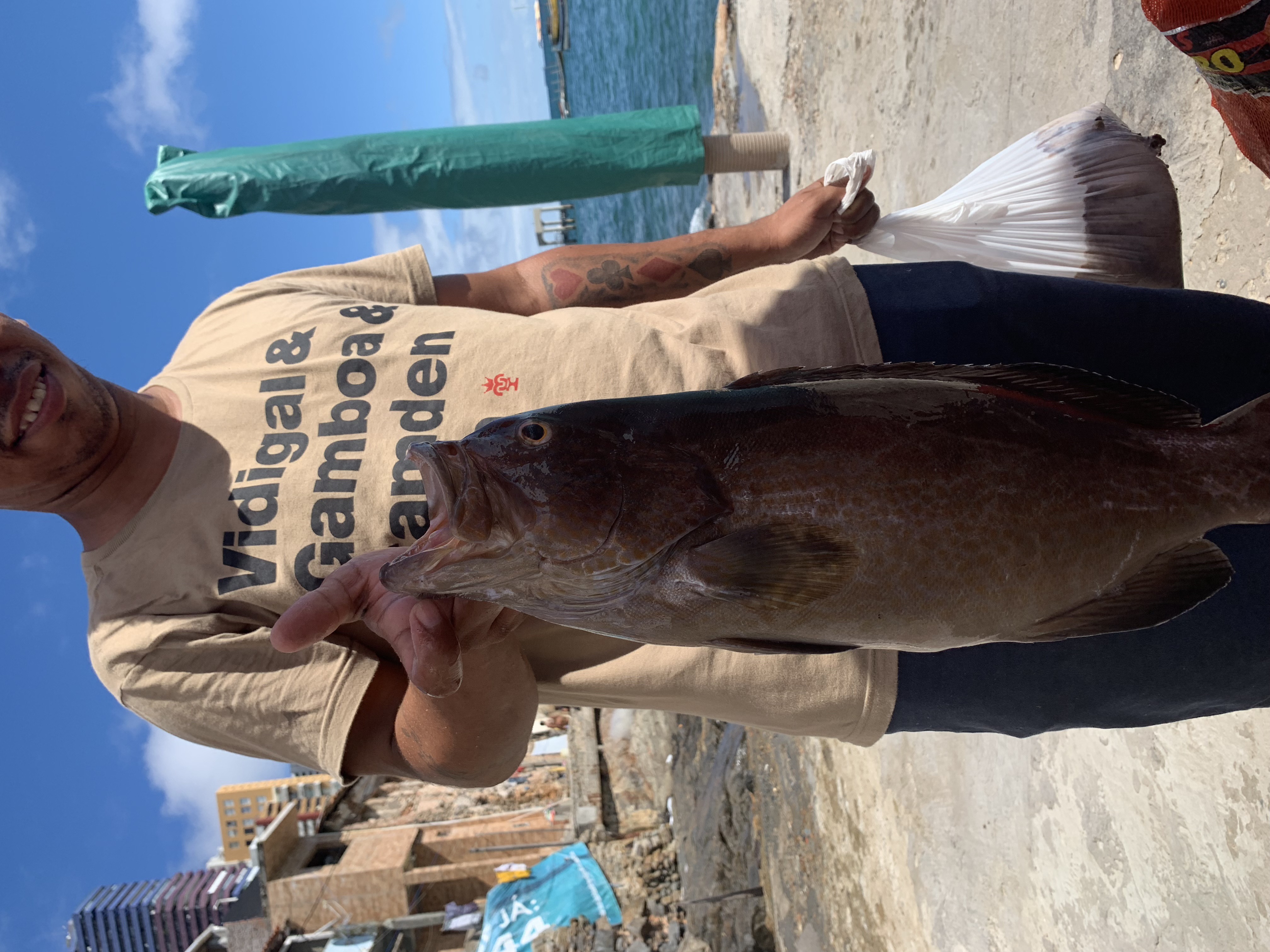
A fisherman holding a large grouper at the waterfront fish market
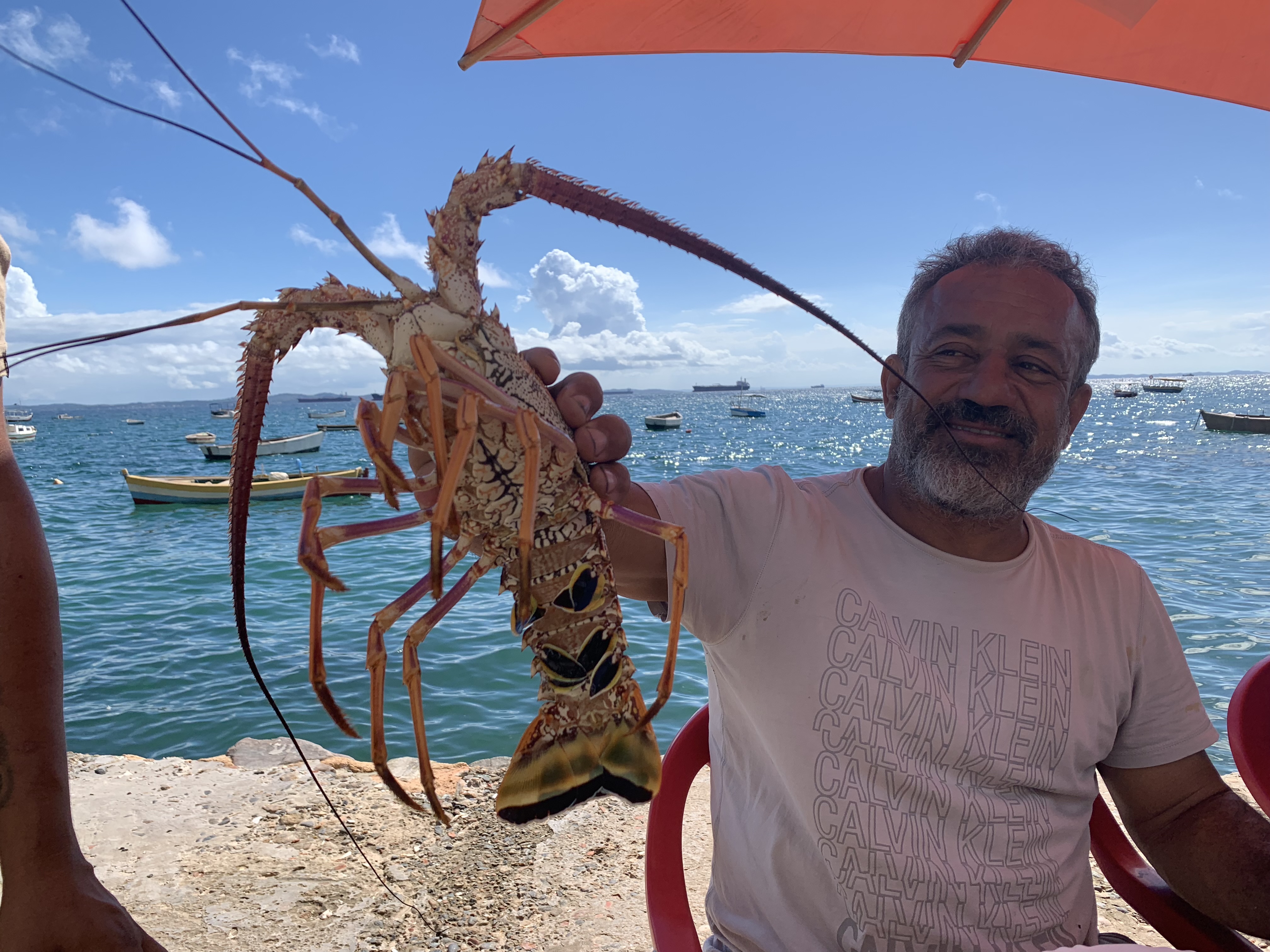
Holding a huge spiny lobster at the quay, with the Baía de Todos os Santos behind
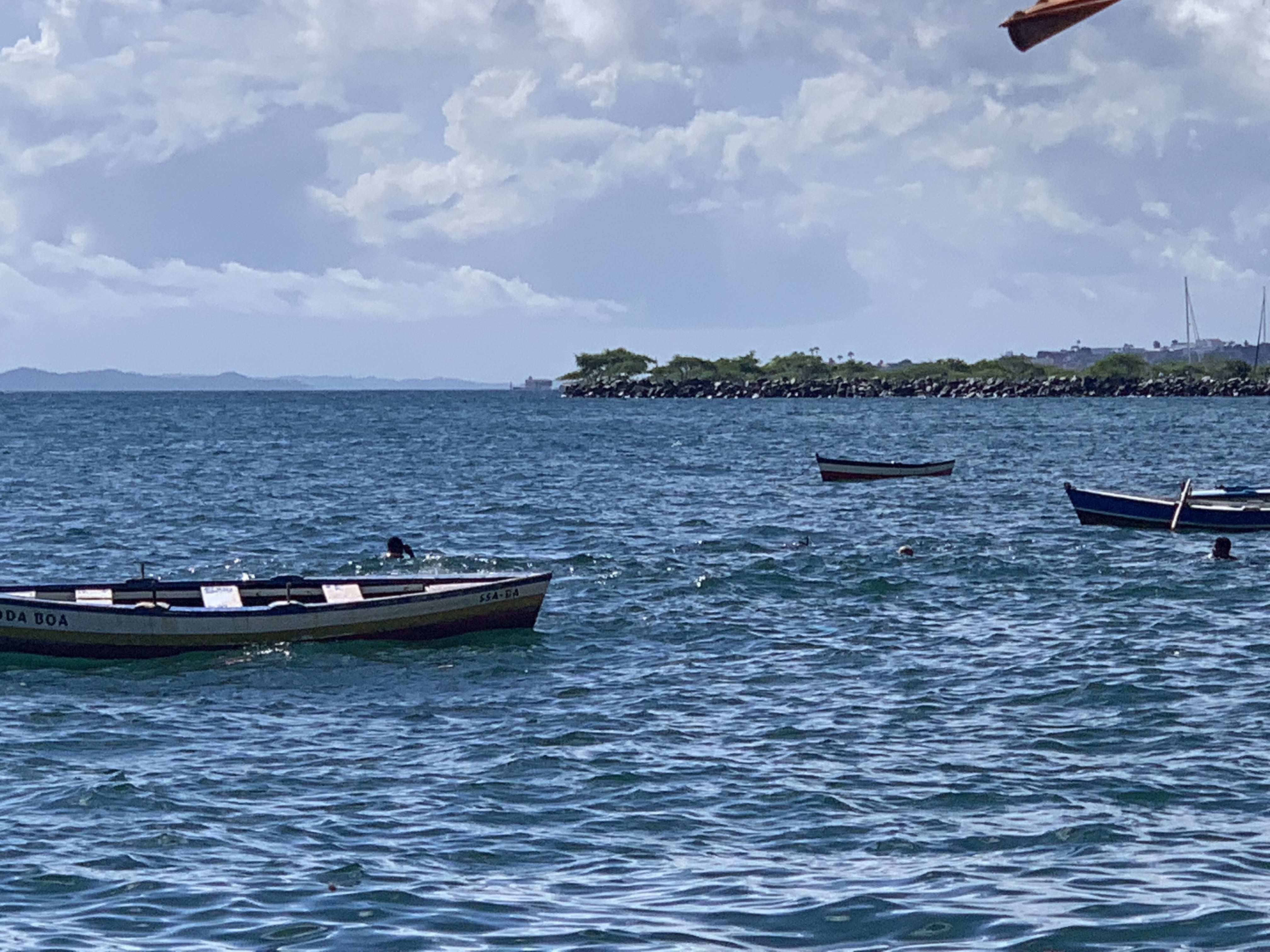
Local fishing boats moored in the Baía de Todos os Santos
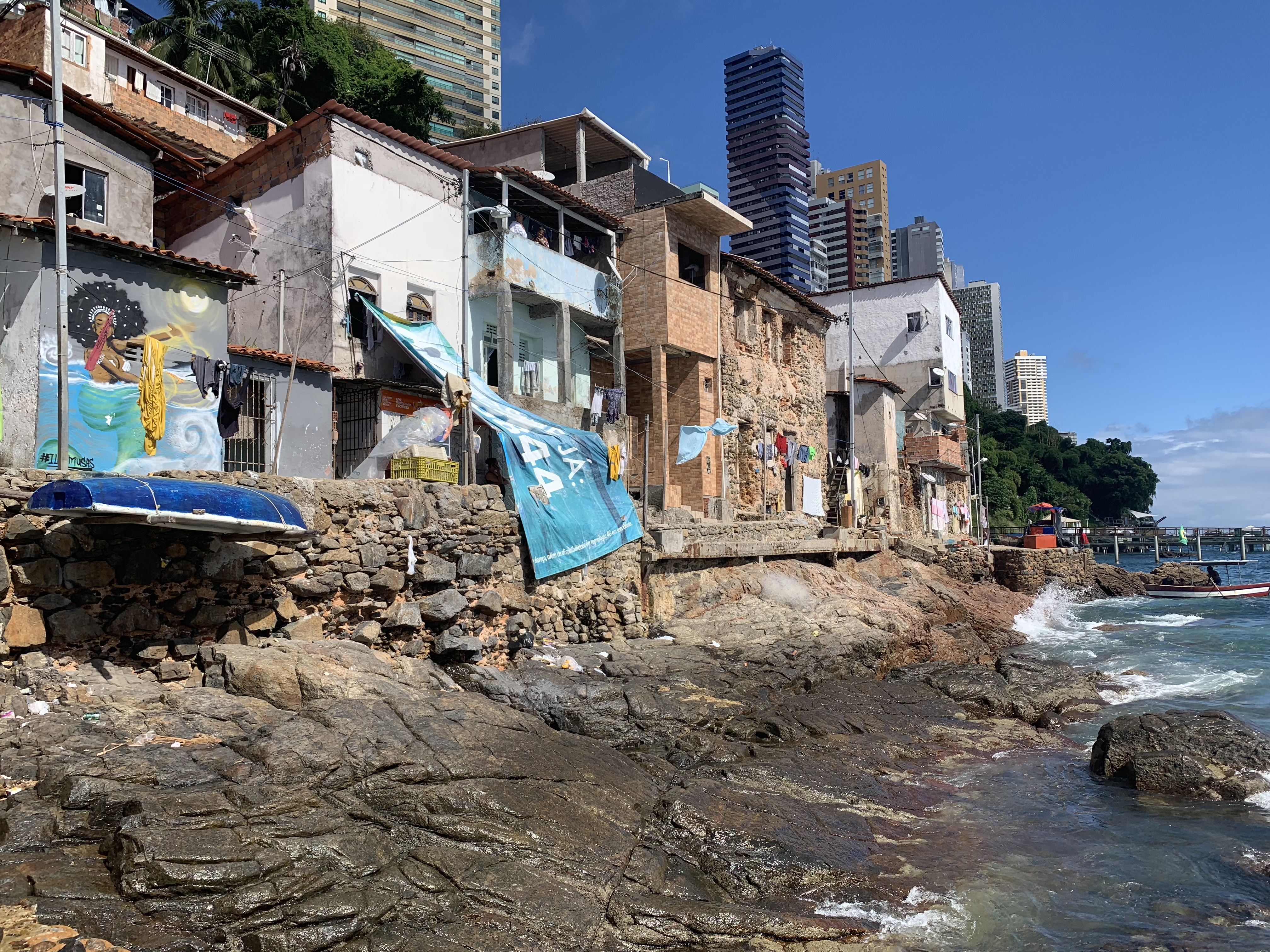
Fishing village waterfront homes on the rocky coast, with murals on the walls
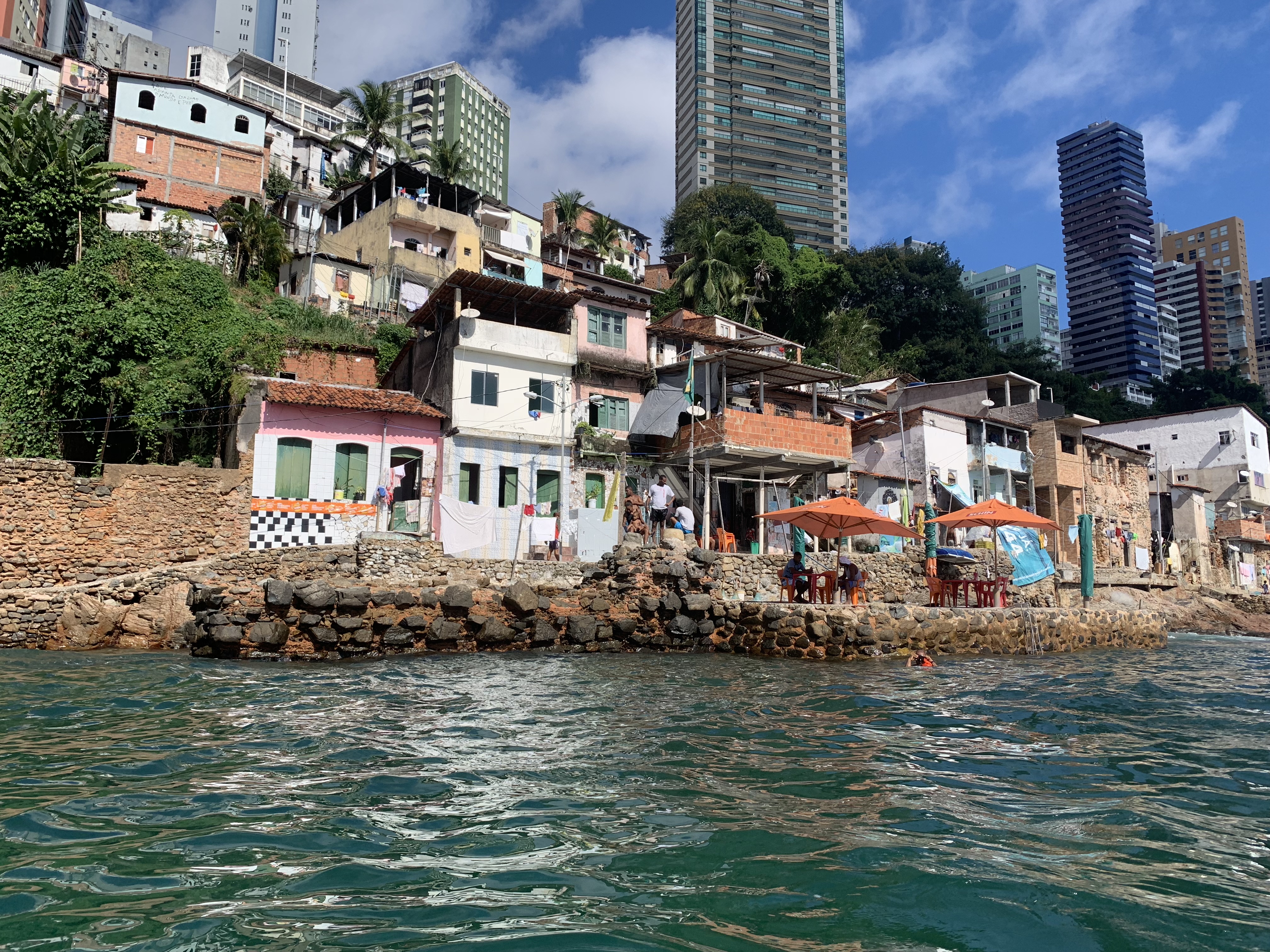
The fishing village seen from the water, the orange bar umbrella still visible
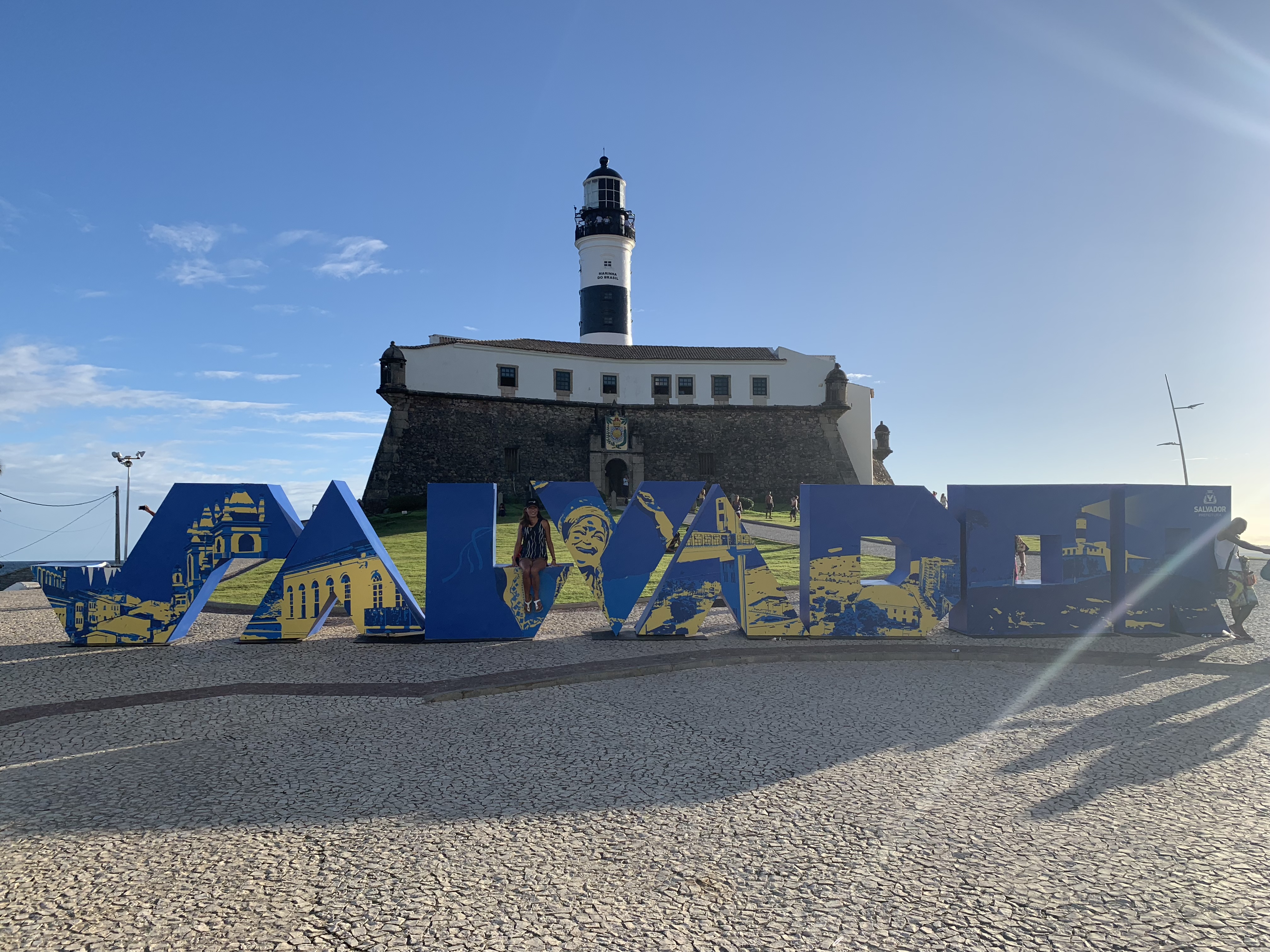
The 'Salvador' tourist letter sign in front of Forte Santo Antônio da Barra lighthouse
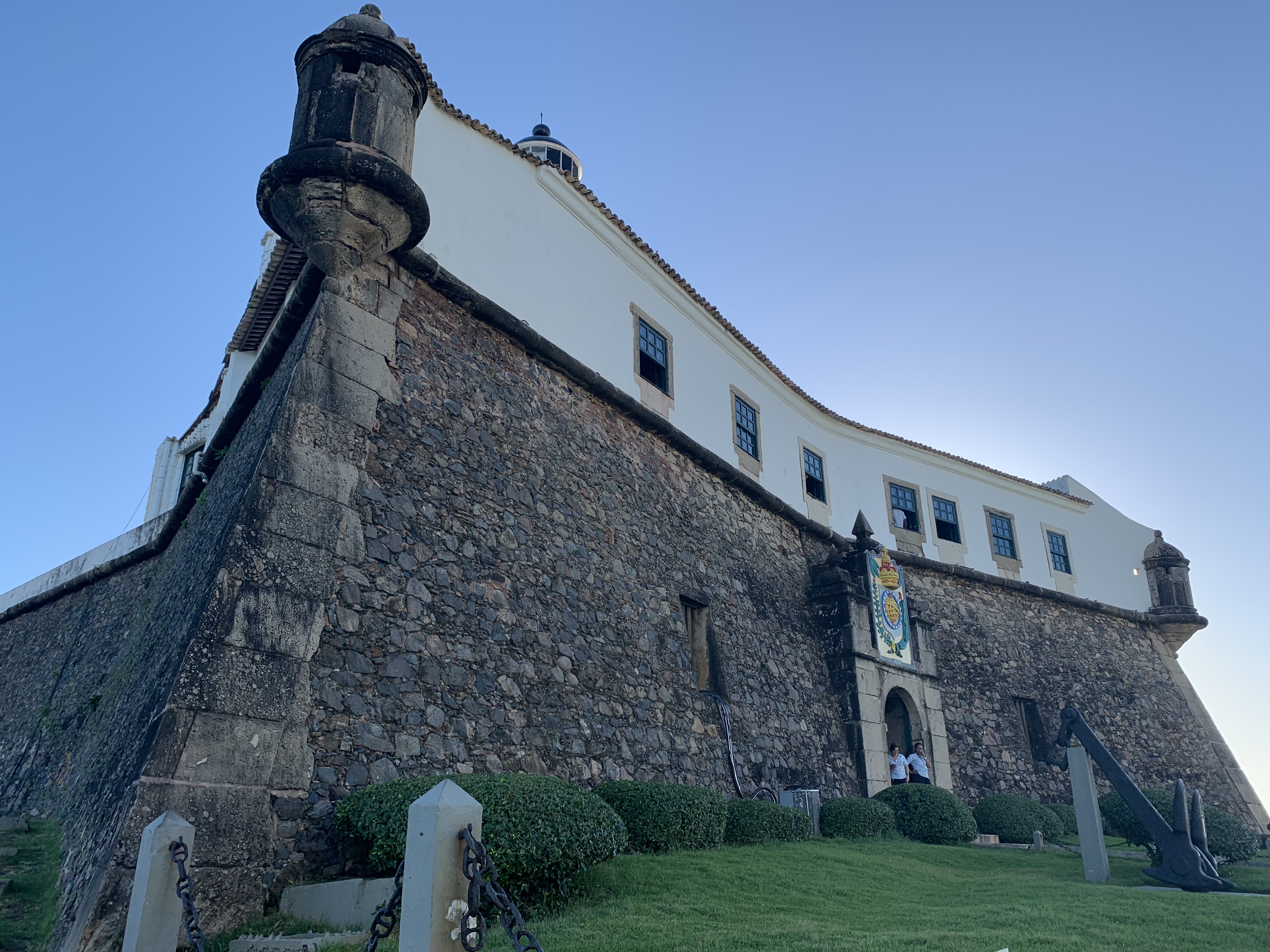
The massive 16th-century stone walls of Forte Santo Antônio da Barra
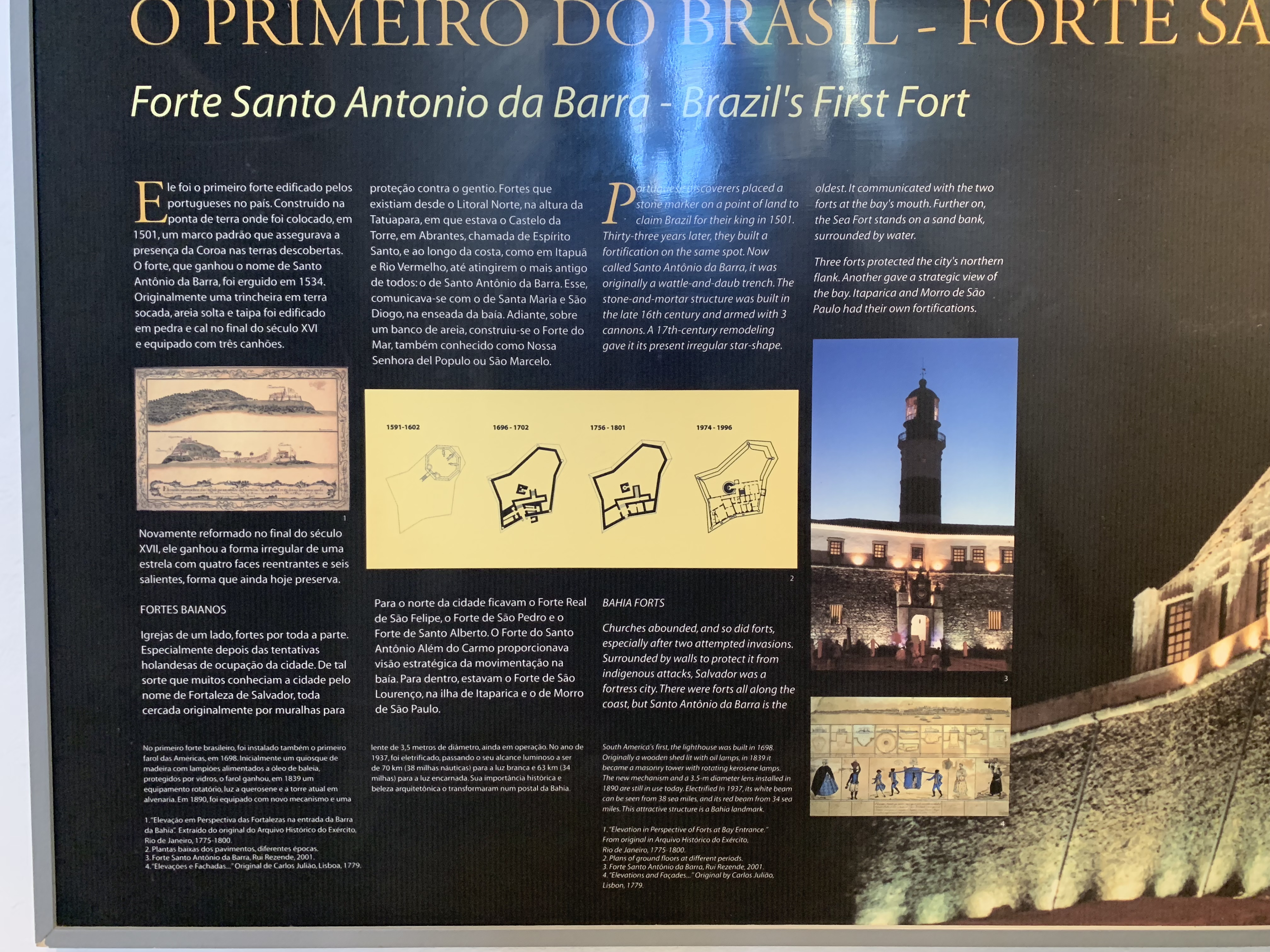
The historical information sign for Forte Santo Antônio da Barra — 'Brazil's First Fort'
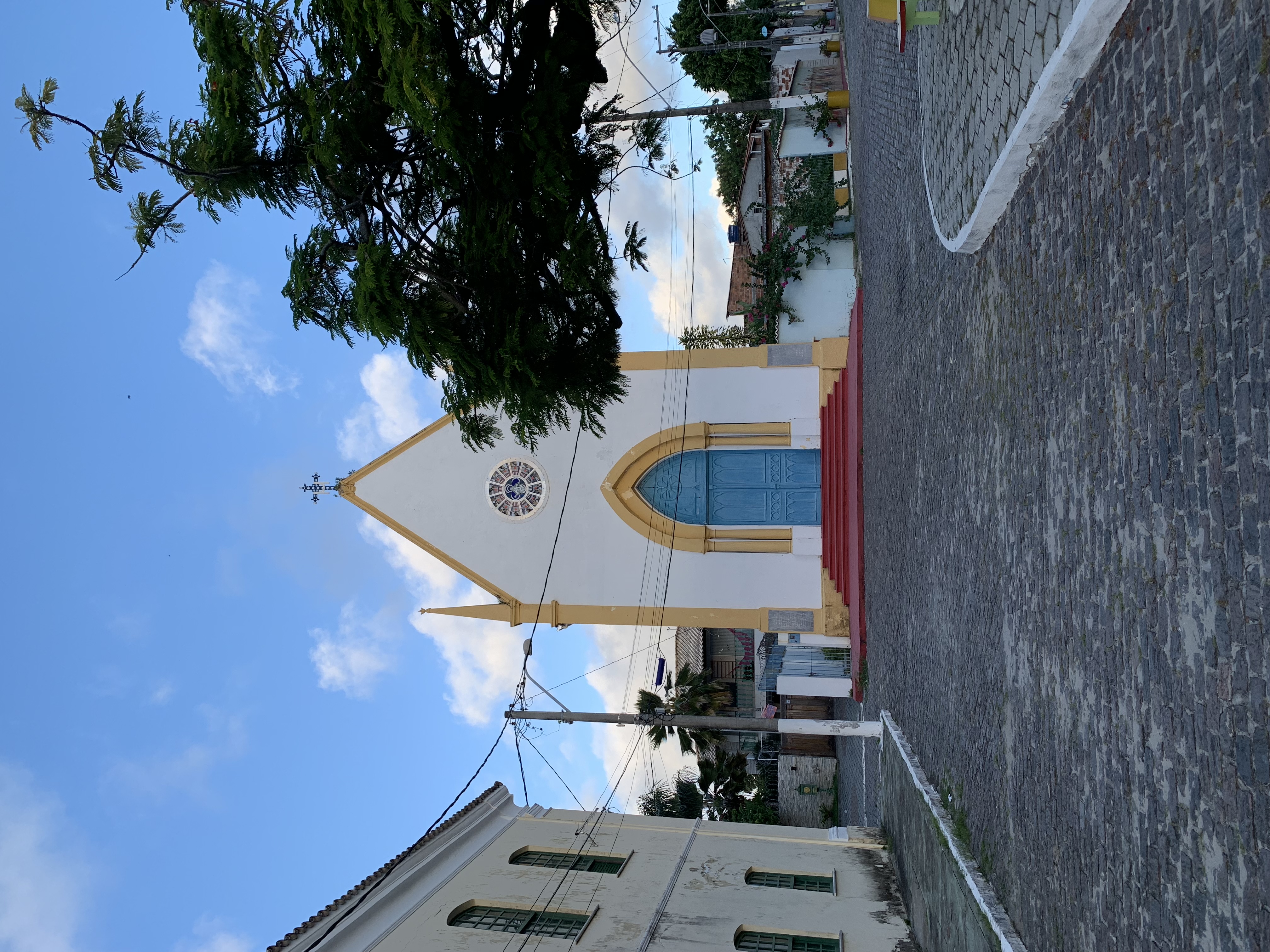
A small white and yellow colonial church with a triangular gable
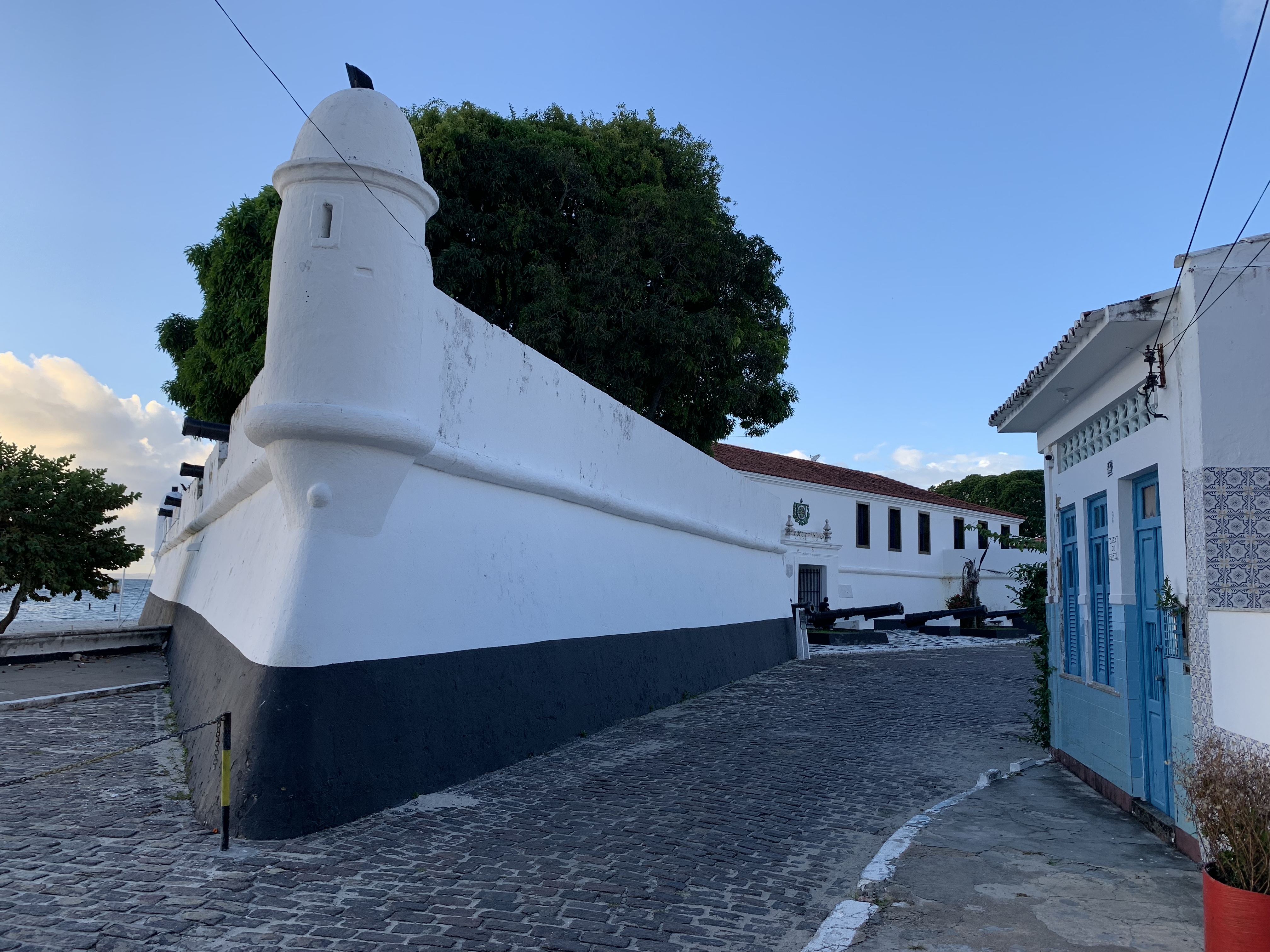
Forte de Santo Antônio Além do Carmo — white fort walls with a watchtower
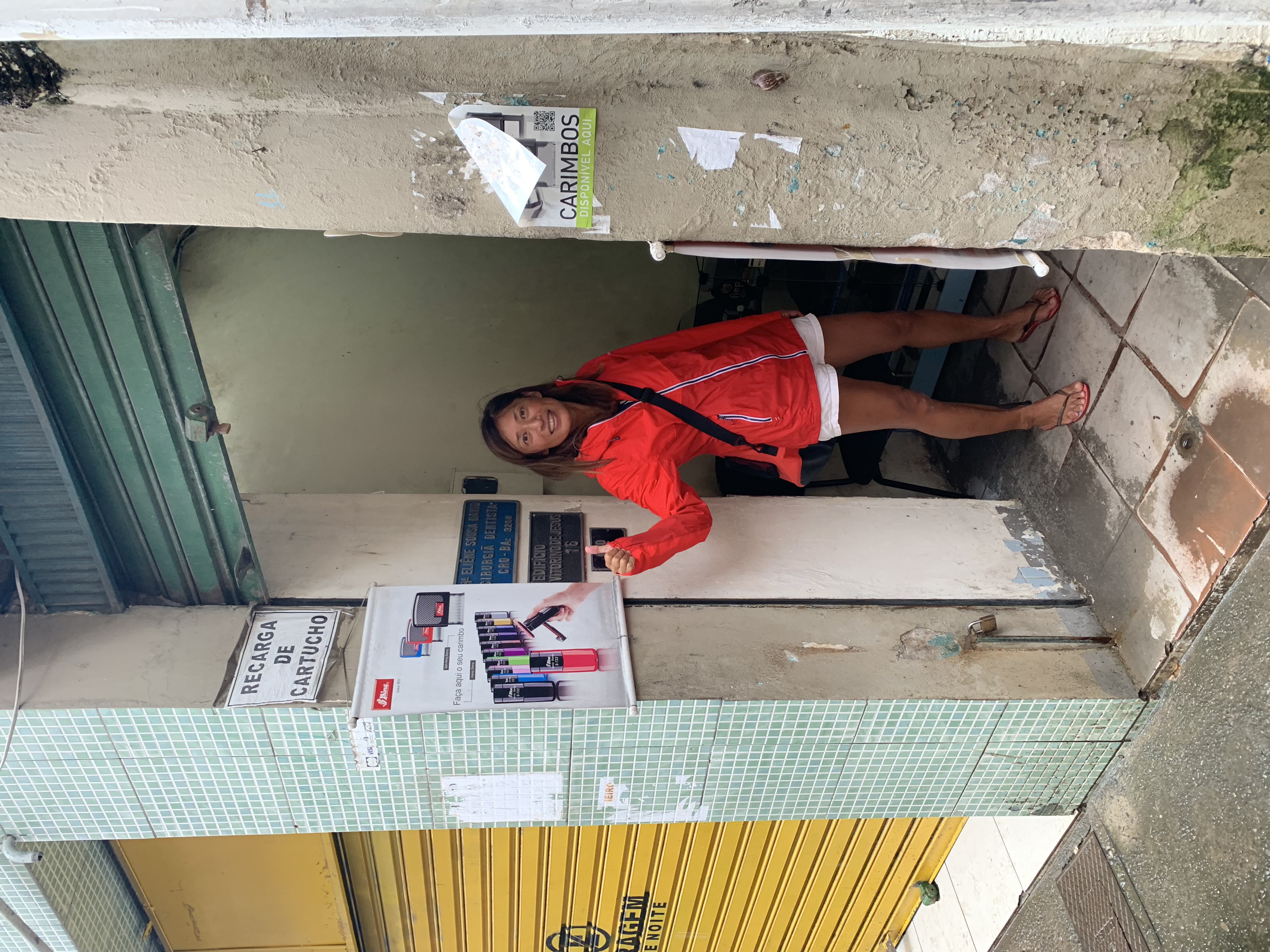
Yuka at the 'Carimbos' woodblock printing kiosk in the Comércio district
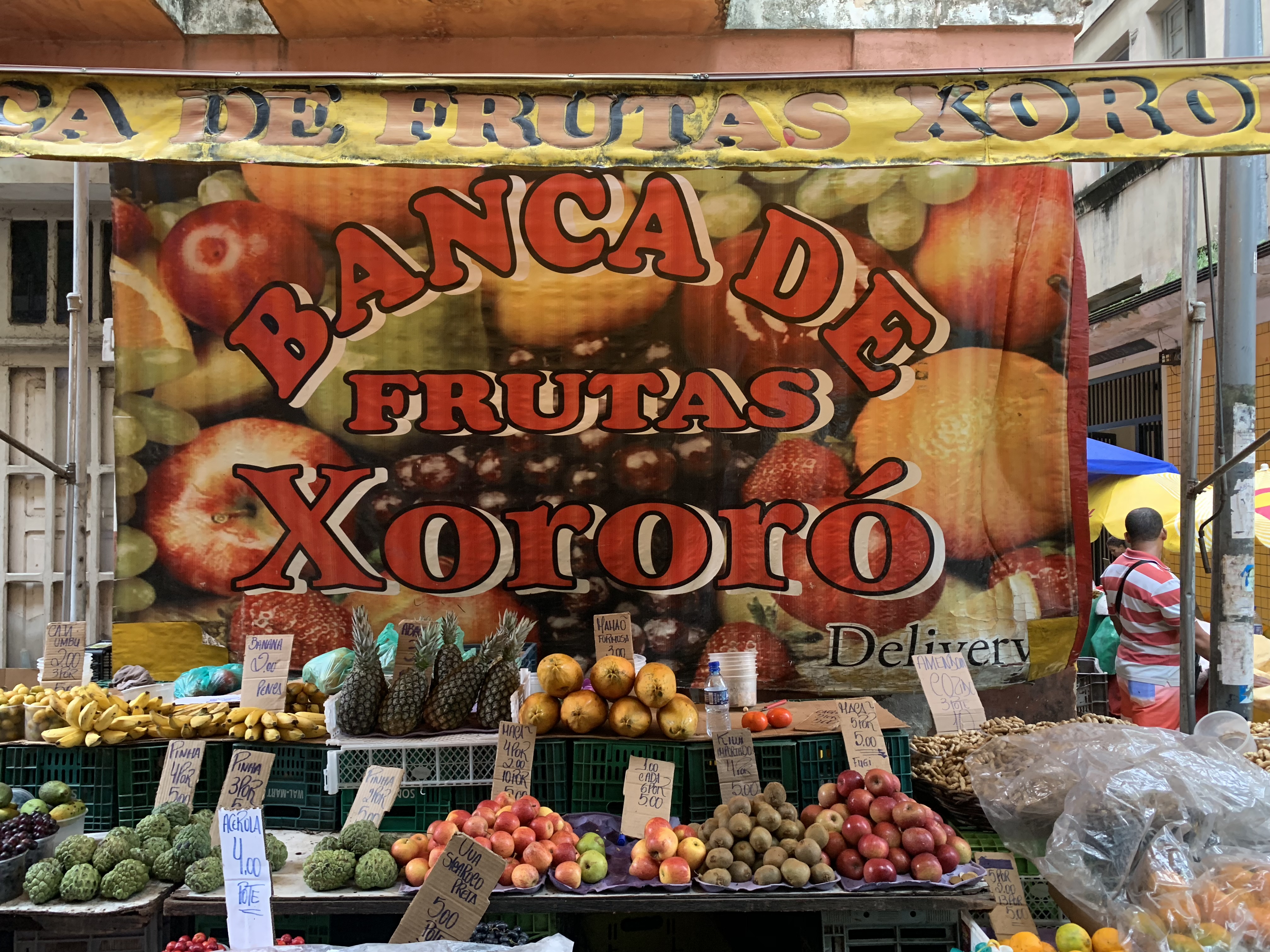
'Banca de Frutas Xororó' — a colorful tropical fruit market stall
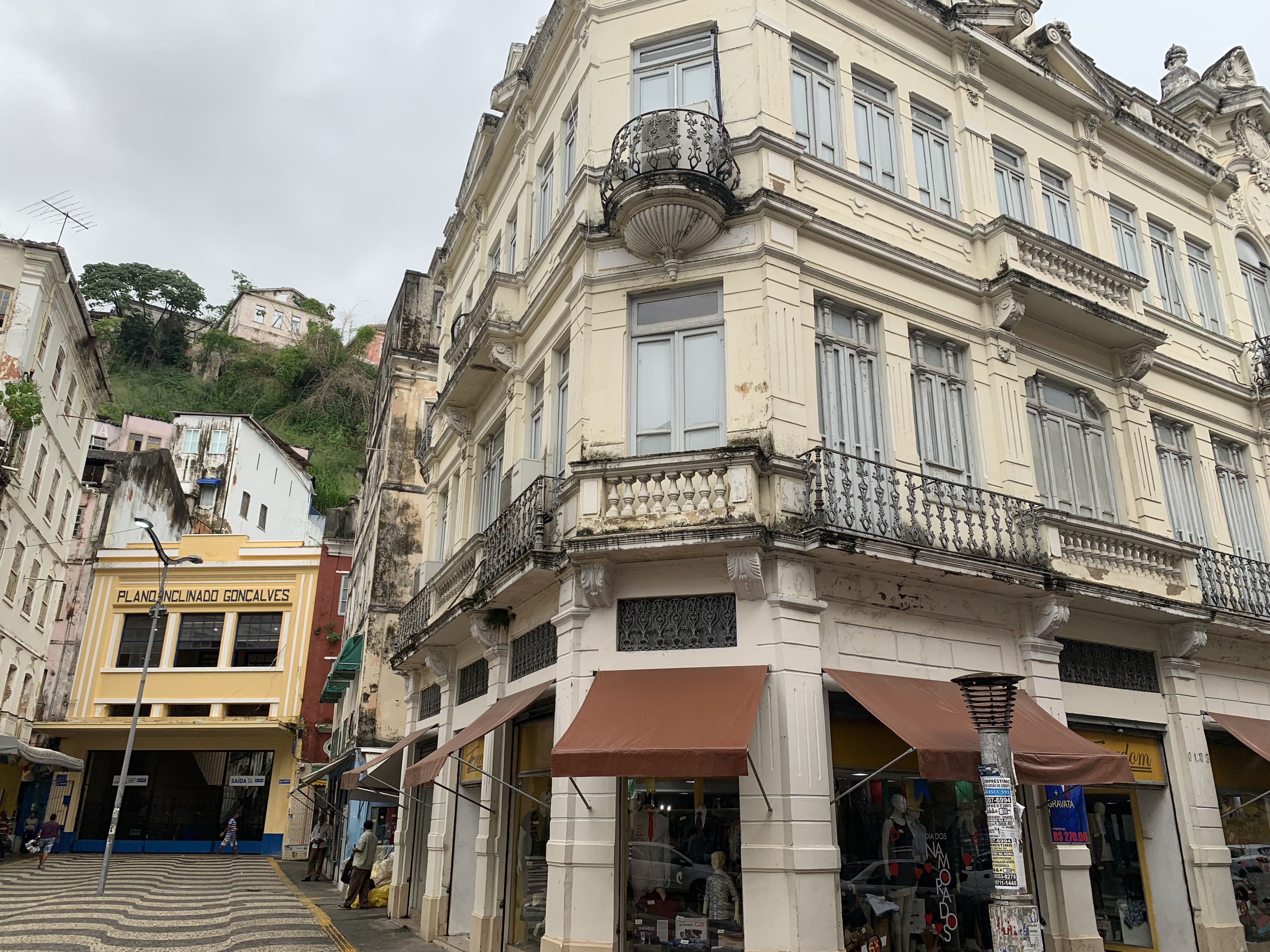
An ornate beaux-arts building corner with the Plano Inclinado Gonçalves funicular behind
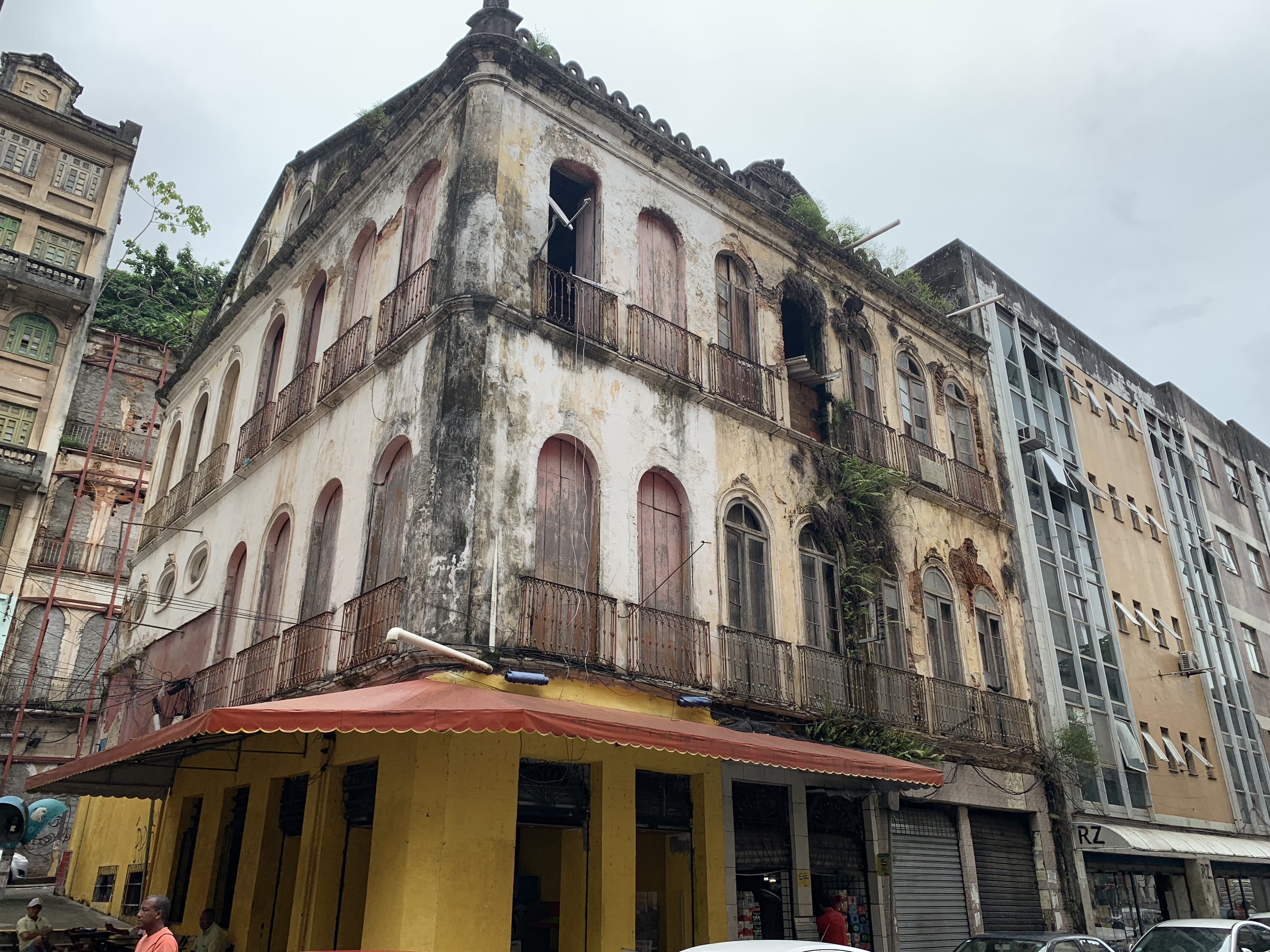
A decaying abandoned ornate beaux-arts building in the Comércio area
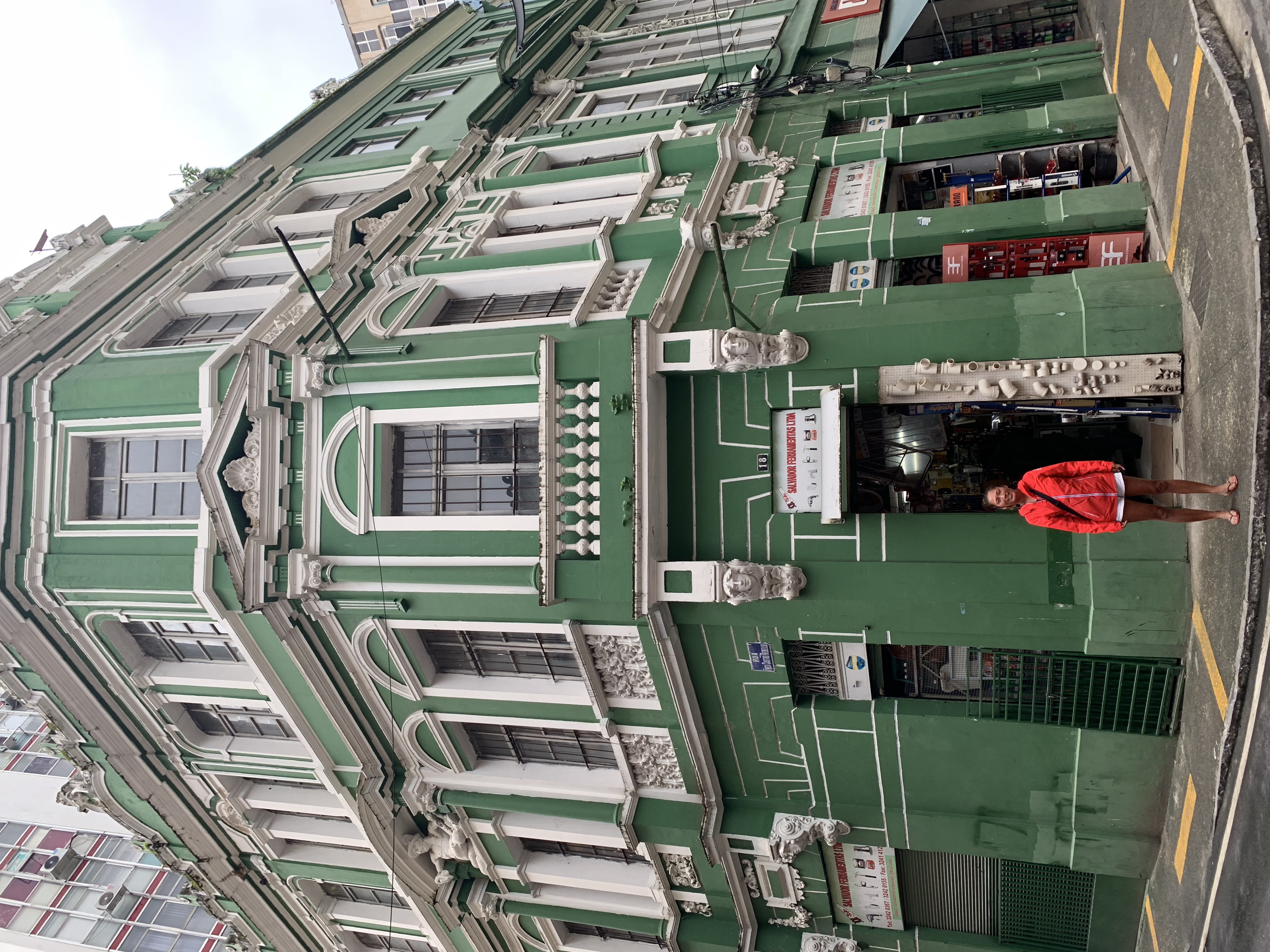
Yuka in her orange jacket in front of a magnificent green Art Nouveau corner building
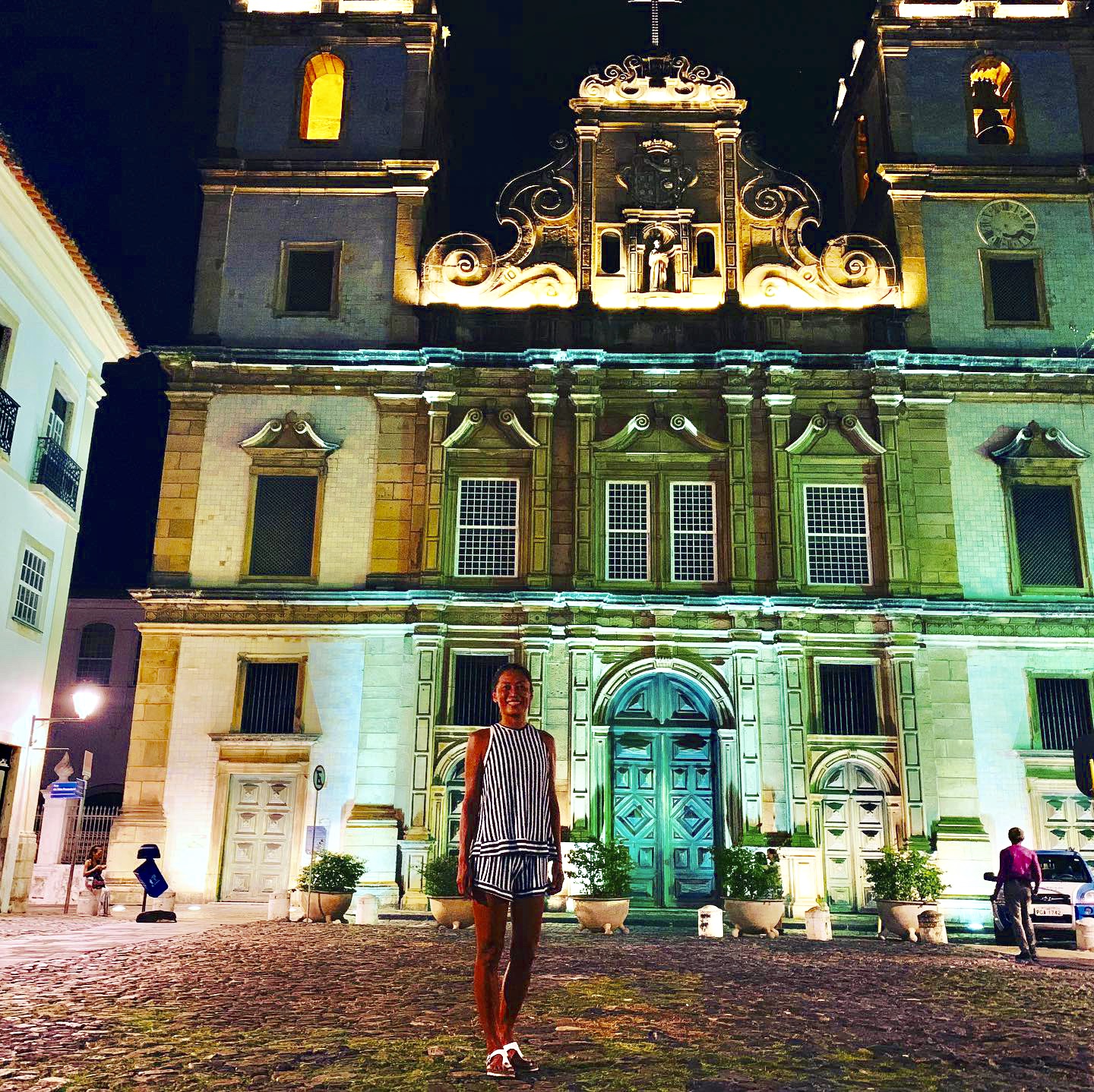
Yuka standing in front of an illuminated baroque church in Pelourinho at night
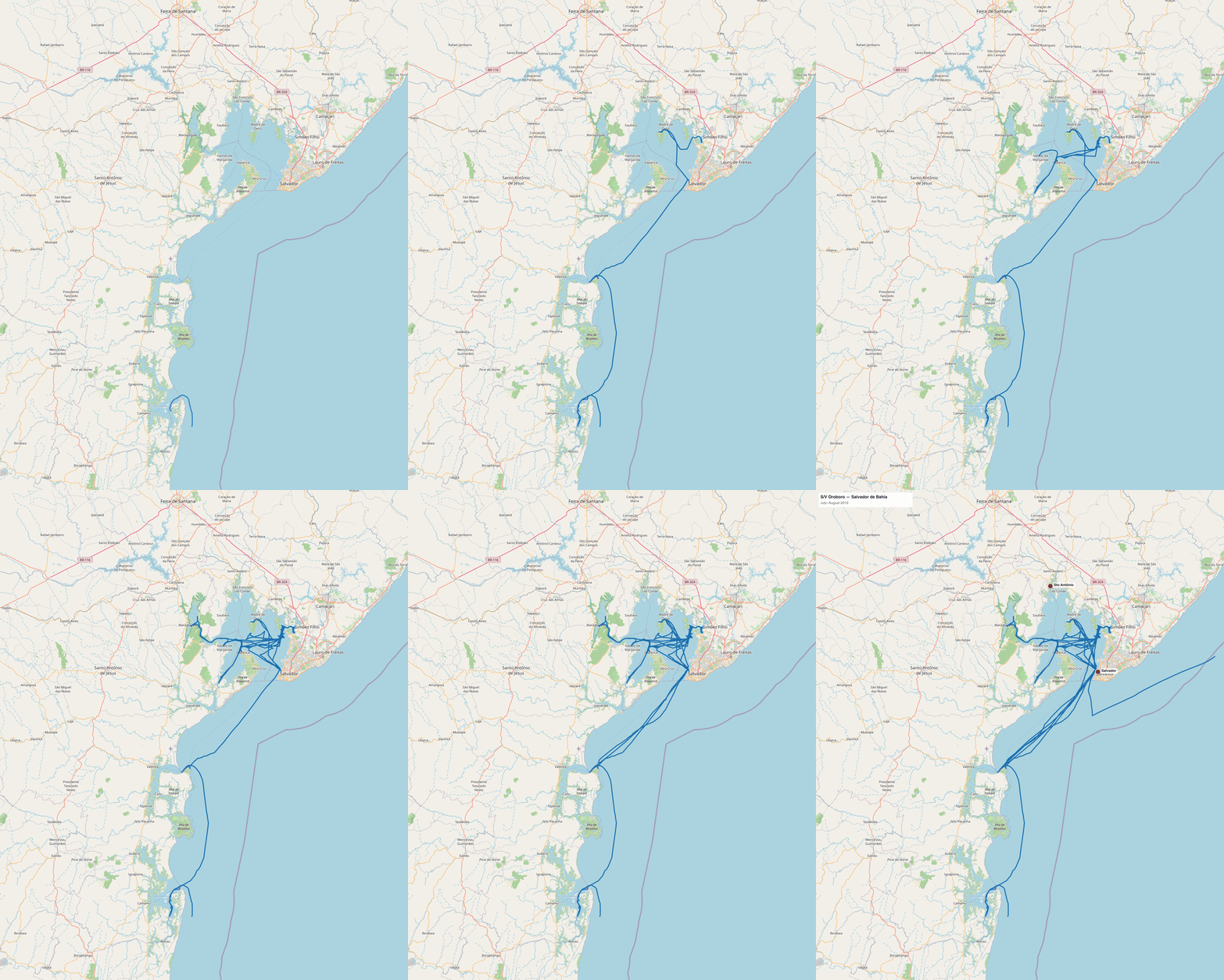
S/V Oroboro GPS track — Salvador de Bahia — July–August 2019 • GPS data from Raymarine chartplotter • Map © OpenStreetMap contributors
Every anchorage — Brazil — Salvador de Bahia, July–August 2019
Two bases during our two-month HQ in Salvador, exploring the city and the Bahia de Todos os Santos.
| Stop | Date | Notes |
|---|---|---|
| Salvador — Terminal Náutico | July–Aug 2019 | HQ · Candomblé · favela lunch |
| Sto Antônio do Paraguaçu | Aug 2019 | Paraguaçu river · Apocalypse Now feeling |
Anchorage maps
Zoomed-in charts of our Salvador bases, with GPS track overlay.
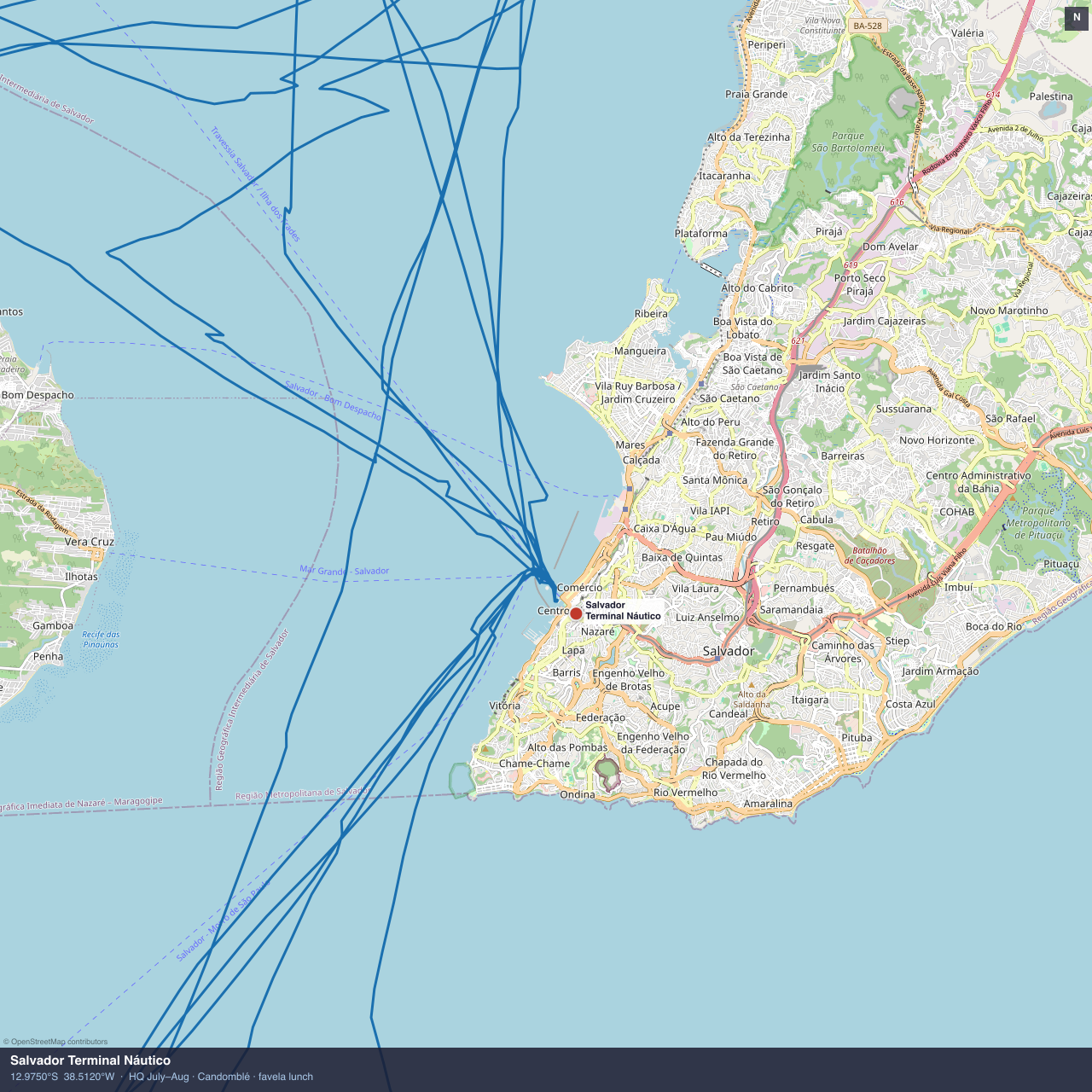
Salvador — Terminal Náutico
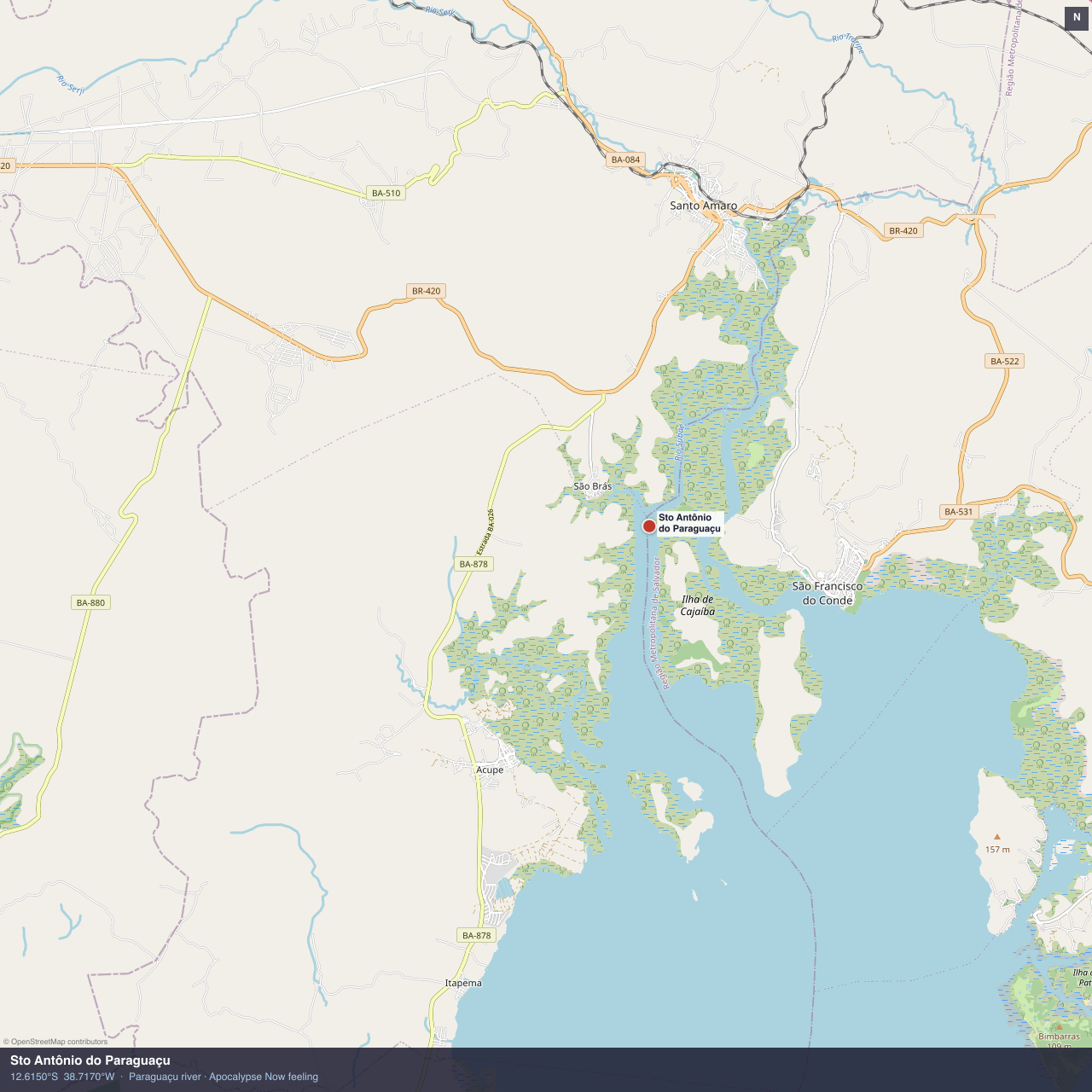
Sto Antônio do Paraguaçu
Map data © OpenStreetMap contributors. GPS tracks from Raymarine chartplotter, archived July–August 2019.