Ilha Grande, February 2019
Sailing Oroboro Podcast — Episode 5
Paraty & The Opera Singer
Seven months in Brazil was never the plan. But Paraty — with its cobblestone streets, bossa nova, and tides that flood the town like Venice — made it hard to leave. And one night at anchor in Ilha Grande, an Argentine opera singer and a guitarist who had never met began talking to each other across the water.
Ilha Grande (The Big Island) is a perfect ground for cruising: there are 365 little islands and 2,000 wild white sandy beaches within 3 to 6 hours of navigation among each other at the most. This is where the rich and famous Brazilians have their holiday homes, and it can get pretty busy in summer, with lots of motorboats (floating discos) and sailboats (few foreigners, mostly from Argentina). Here you can go from one beautiful anchorage to another in just a few hours, you can always find a place that is protected from the wind and the swell. It is so diverse, that you can easily spend years exploring the area.
I think that on day one at our first anchorage in Sitio Forte, Yuka told me "forget the Caribbean, I want to spend a couple of years here, not just a few months!".
And she is right, this place deserves a longer stay. But unfortunately our 3 months Visa can only be extended for an extra 3 months, and we have a long way to go to reach the Caribbean, about 4,000 nm, which is just as long as the ocean crossing from Cape Town. And we also want to explore other parts of Brazil. So we limited our stay to exactly 2 months.
Abraão
What makes Ilha Grande really special is the fact that there are no roads and no cars. There is only one village called Abraão which is almost as charming as Paraty. The streets are mostly unpaved, just sand and sometimes cobblestones. The waterfront is filled with bars and restaurants, charming pousadas and a few campgrounds. At night, live music everywhere. Enchanting!
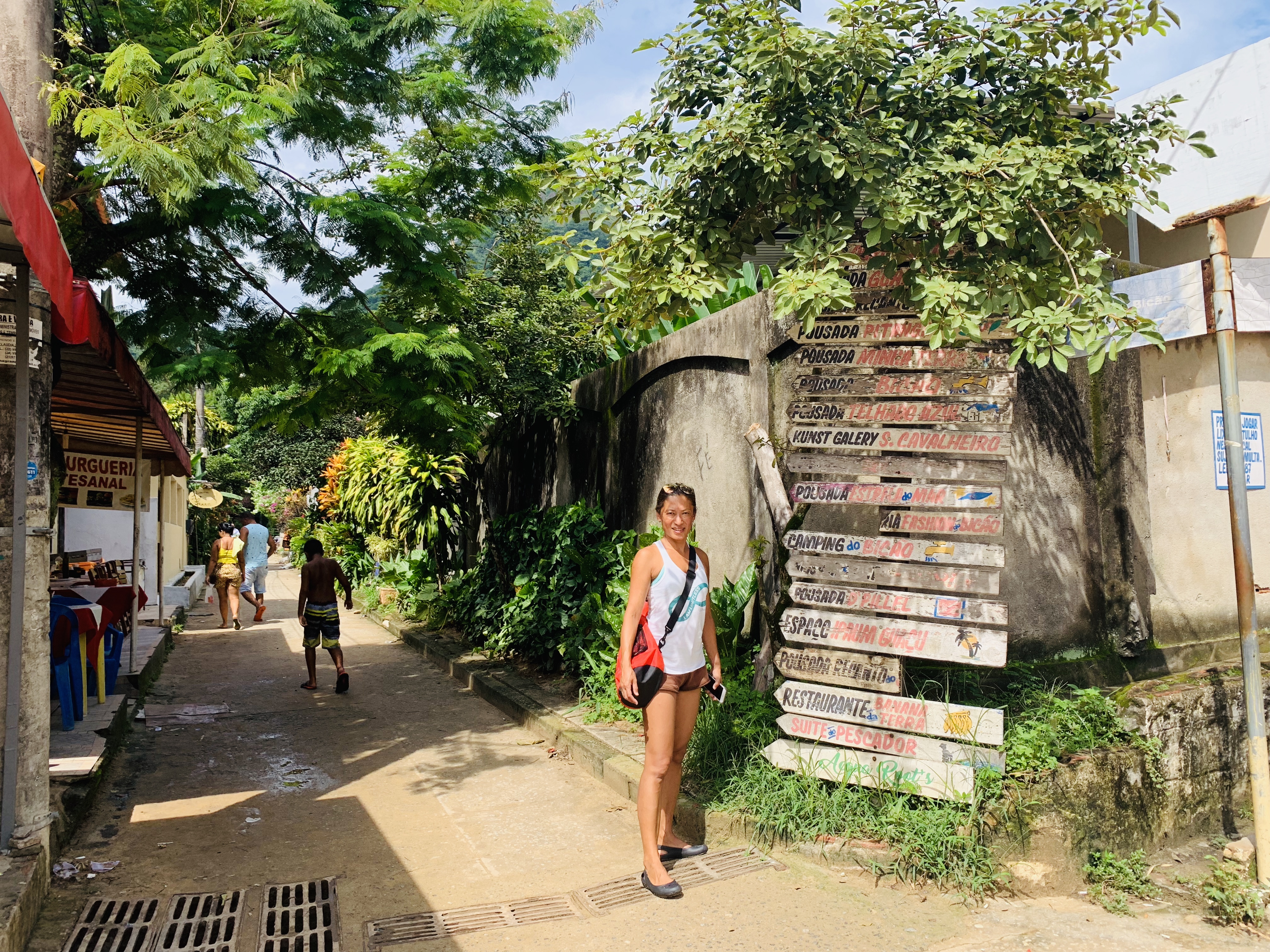
Abraão, Brazil
Sitio Forte
This is a great anchorage with a small restaurant on the beach run by Thelma, on Praia da Tapera. She makes a fantastic Fish Lasagna that you can also order through VHF radio and take on board. We spent many days in this anchorage, SUPing and snorkeling. Here we met Philippe and Federique, French/Swiss sailors who live in Brazil most of their lives and helped us a lot with local knowledge during our stay in Ilha Grande.
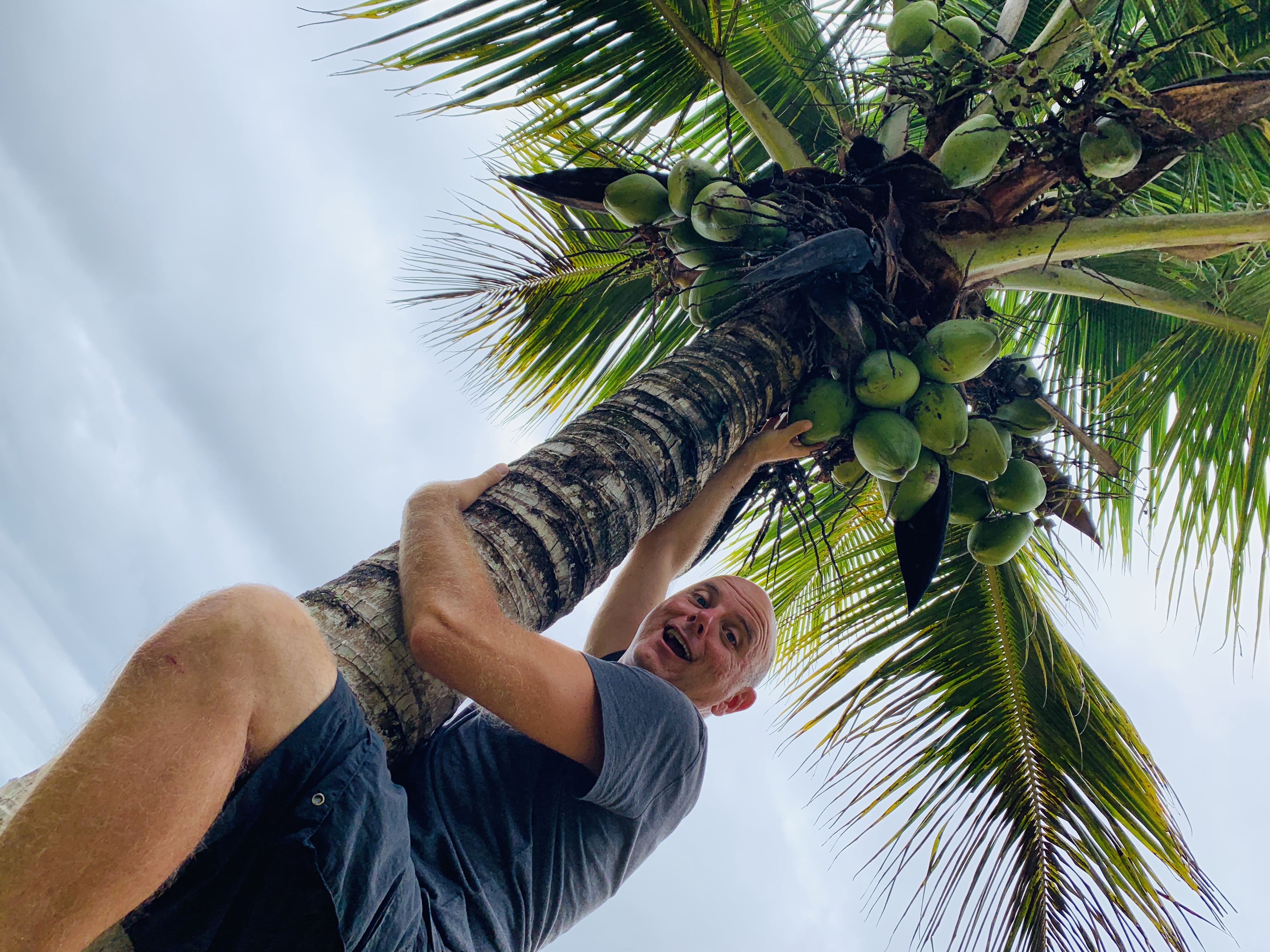
Sitio Forte, Brazil
Praia dos Meros
In Praia dos Meros we reunited with Plan B, a Leopard 45 owned by the Spanish couple Joaquin and Monica. We met them for the first time in Cape Town. Like us, the took delivery of the boat in South Africa and set sails for Brazil a couple of months before us. I'll dedicate a separate blog to them, because we will be sailing along with them all the way to the Caribbean.
Plan B had some friends visiting, Ricardo and Isabel, who on top of being great sailors (circumnavigated the globe on a wooden monohull), are also great singers, particularly the style called Habaneras. We spent an incredible good time with them at anchor in this little bay.
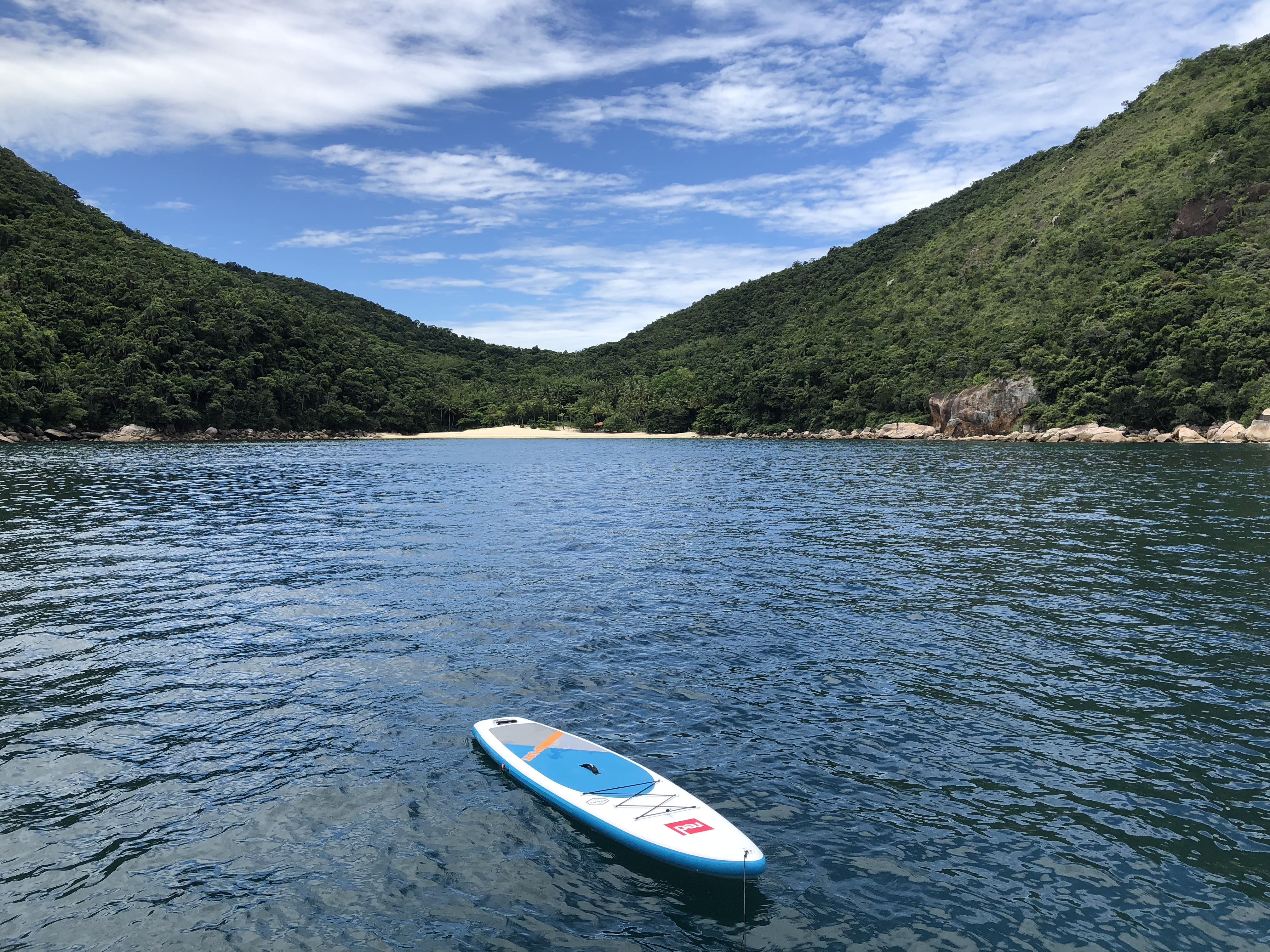
Praia dos Meros, Brazil
One night, after dinner, Ricardo took out the guitar and started singing habaneras. Unbeknown to us, on the only other boat at anchor in the cove there was a professional Argentinian opera singer, who responded to each one of the Habaneras sung by Ricardo with an aria of famous operas. There was no moon, and the stars reflected on the water.
Mamangua
Mamangua is like a tropical fiord, 8 km long and 2 km wide. There is a very secluded fishing village with a few houses and a beach restaurant. We were there with Joaquin and Monica of Plan B. Joaquin took this shot of us.
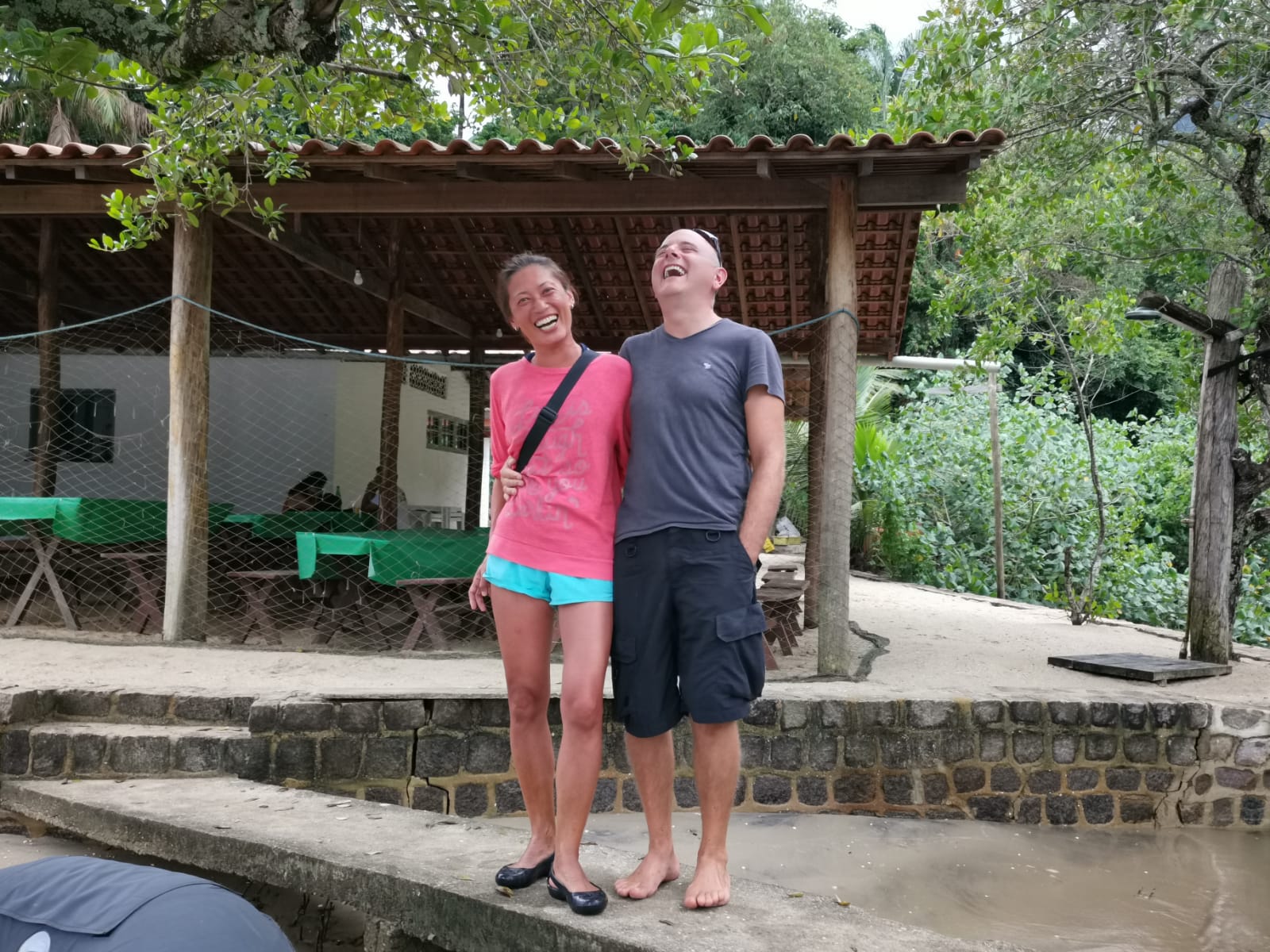
Mamangua, Brazil
There are so many other anchorages that we visited, some with poetic names like Saco do Ceu or Enseada das Estrelas.
Ilha Grande is a great cruising ground, it's a pity that boats that circumnavigate don't stop here and go straight to the Caribbean. They would love it.
My friend Allan Ward was right about Brazil, and we are happy to be here, despite all the negative feedback from other cruisers we told us to avoid this country.
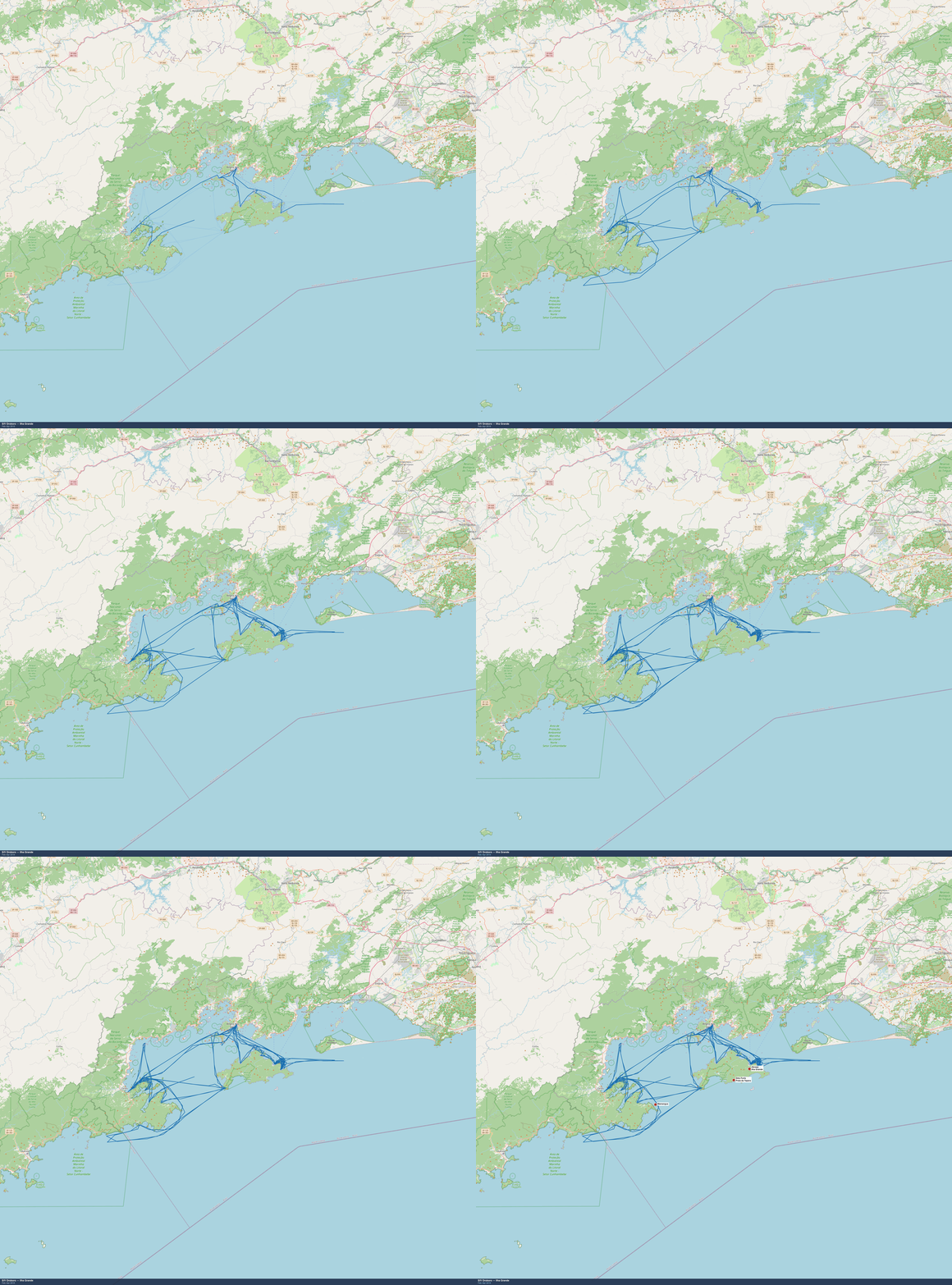
S/V Oroboro GPS track — Ilha Grande, Brazil — Feb–Apr 2019 • GPS data from Raymarine chartplotter • Map © OpenStreetMap contributors
Every anchorage — Ilha Grande, Feb–Apr 2019
First Brazil landfall after the South Atlantic crossing — a tropical island paradise.
| Stop | Date | Notes |
|---|---|---|
| Abraão | Feb 2019 | Brazil landfall · no cars · cobblestone streets · first caipirinhas |
| Sítio Forte — Praia da Tapera | Feb–Mar 2019 | Thelma's fish lasagna · SUP · snorkeling · best anchorage on the island |
| Mamanguá | Mar–Apr 2019 | Tropical fjord · 8km-long inlet · secluded fishing village |
Anchorage maps
Zoomed charts of each Ilha Grande anchorage, with GPS track overlay.
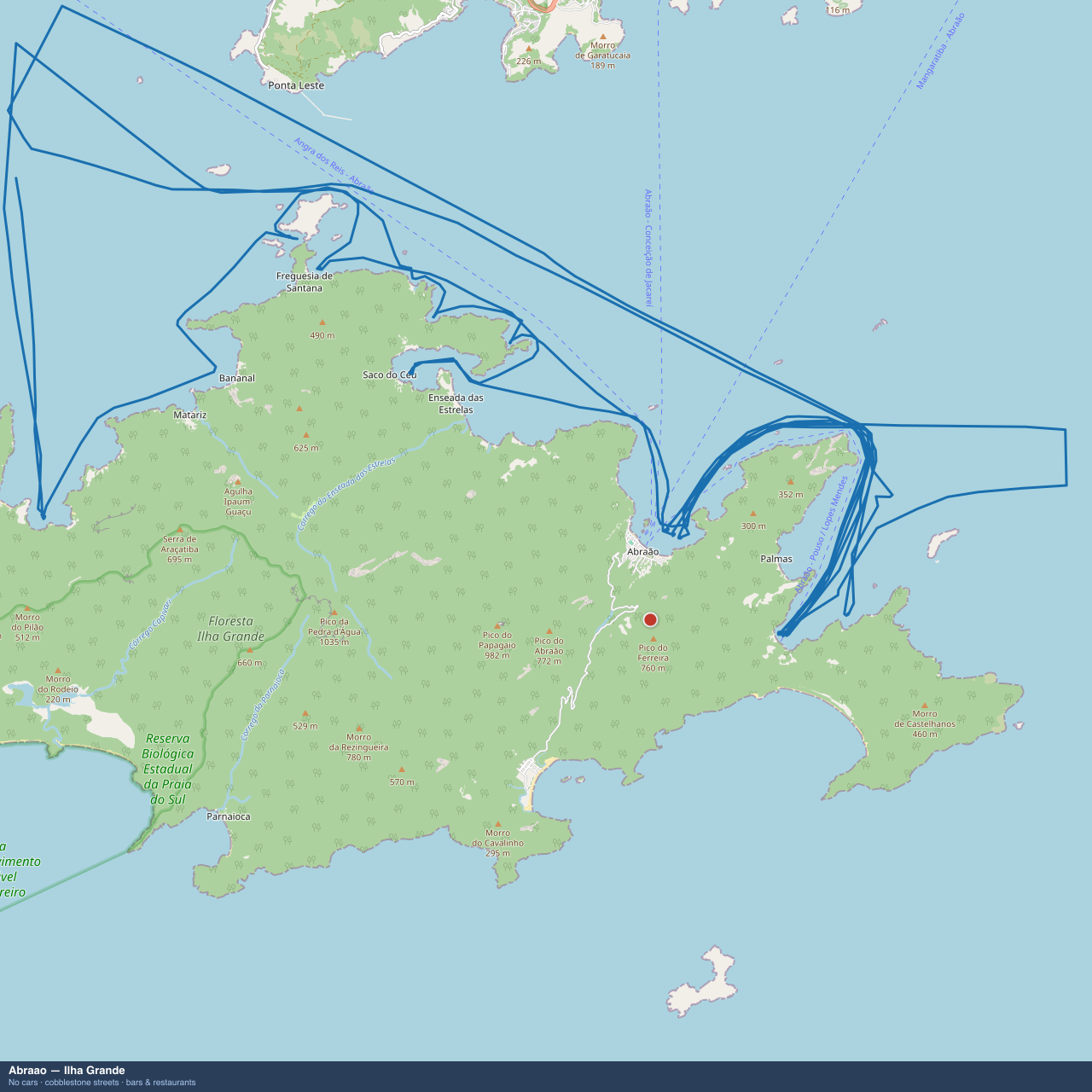
Abraão
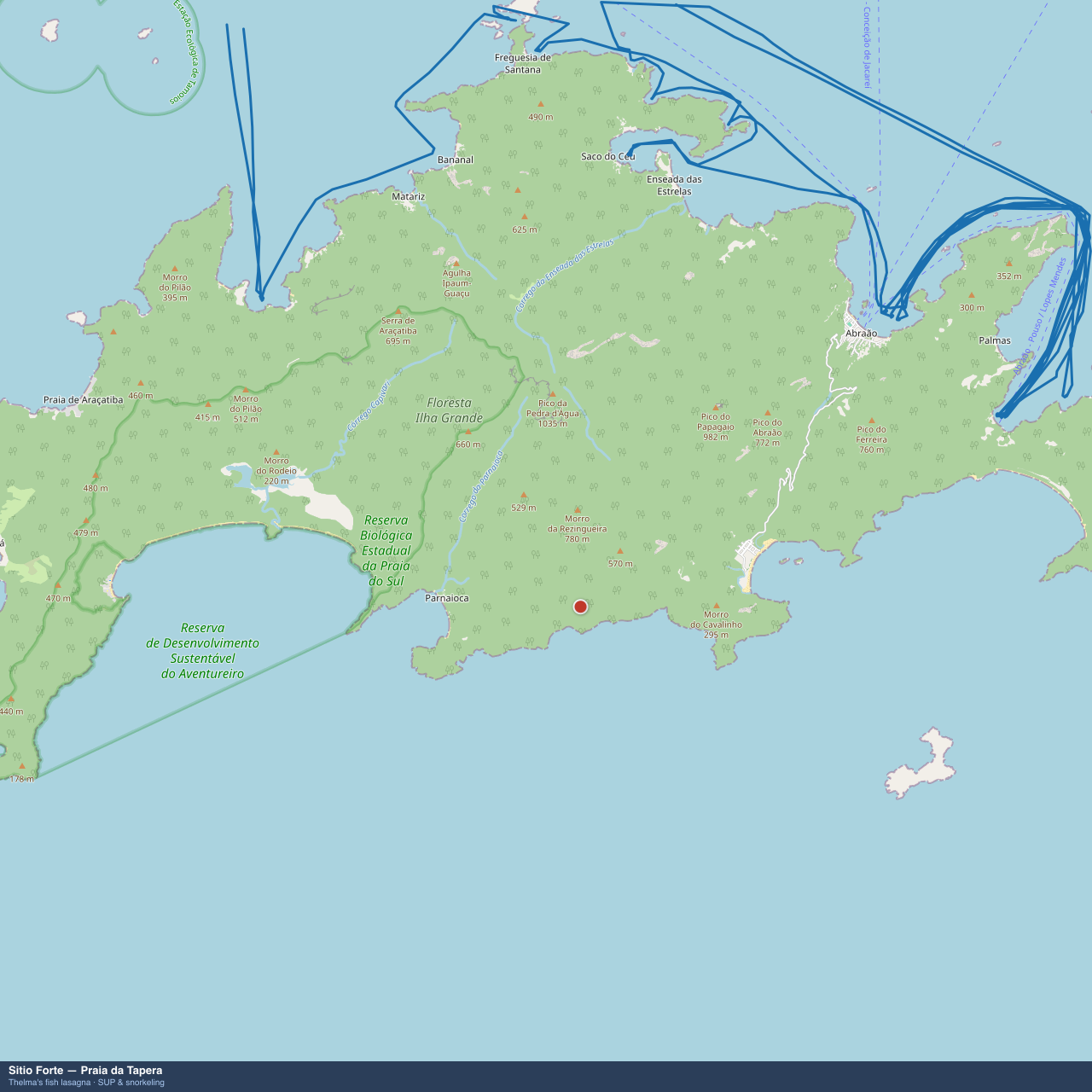
Sítio Forte — Praia da Tapera
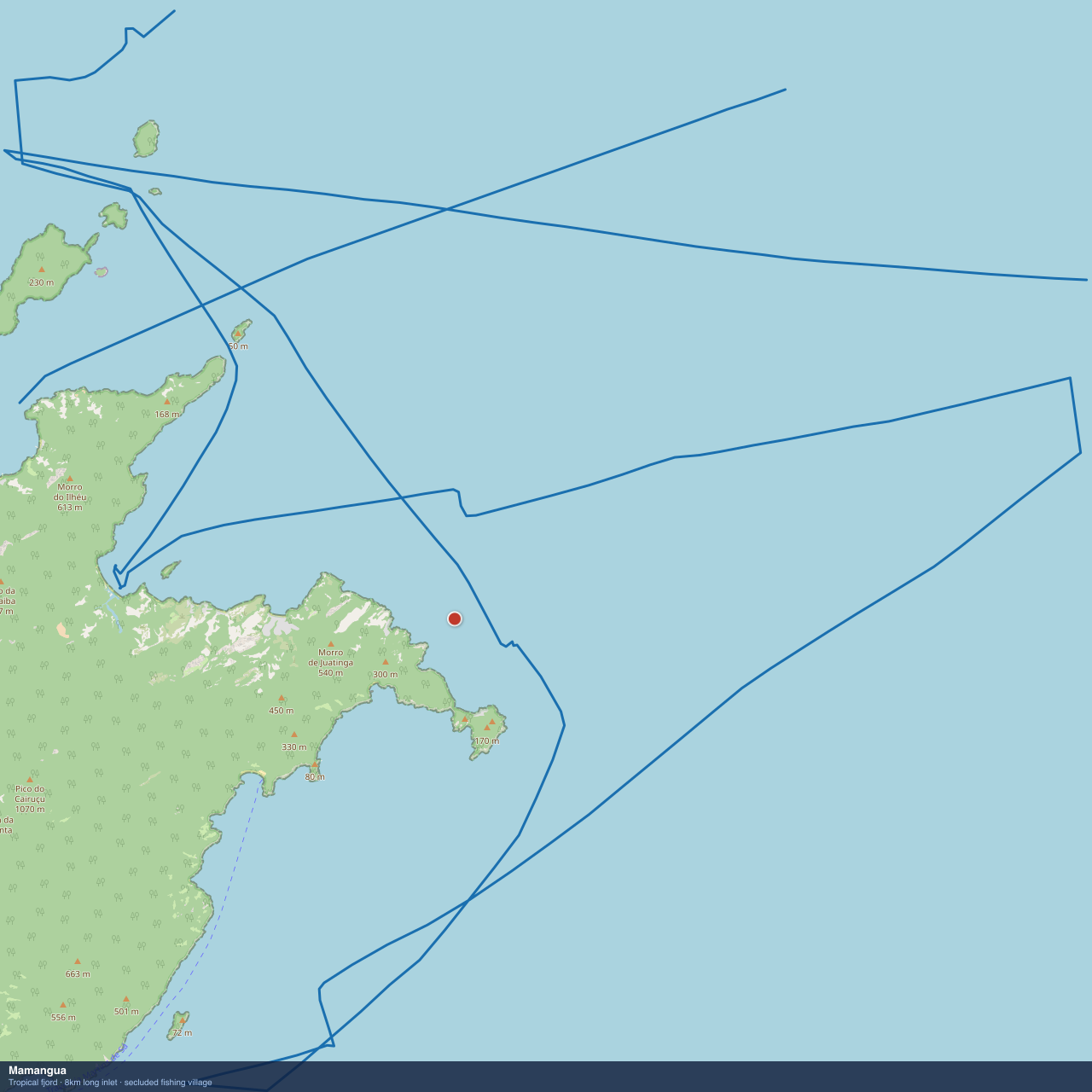
Mamanguá
Map data © OpenStreetMap contributors. GPS tracks from Raymarine chartplotter, archived February–April 2019.
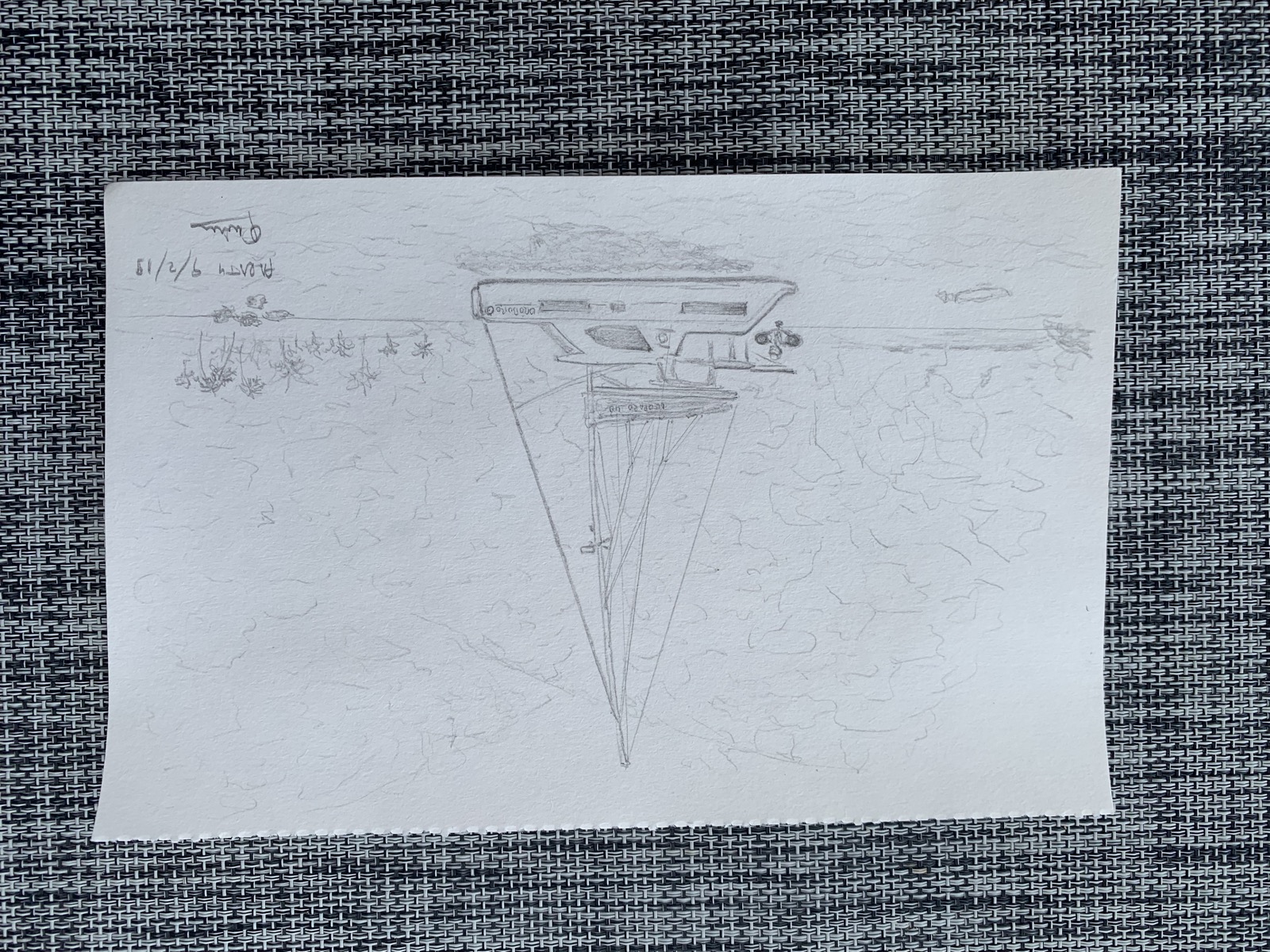
A pencil sketch of Oroboro at anchor in Ilha Grande — drawn by Joaquin from Plan B and given to us as a memento
Clearing in
Arriving in Brazil by sea means going through Brazilian Federal Police and customs — paperwork and patience, in that order. The officials in Abraão were friendly and thorough; the notice on the wall set the tone for the whole transaction.
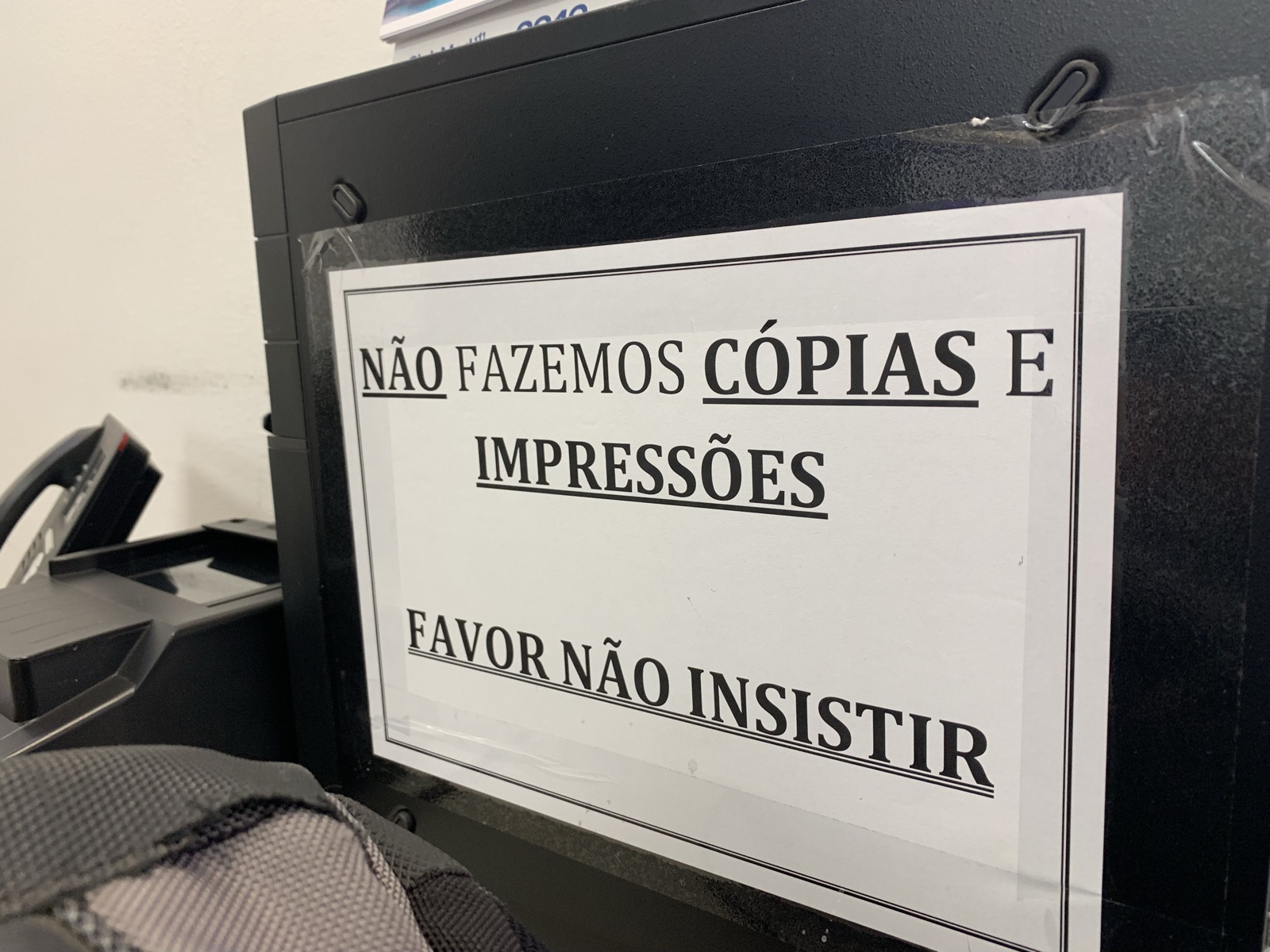
"We do not make copies or printouts — please do not insist" — the sign at the Brazilian Federal Police customs office on arrival
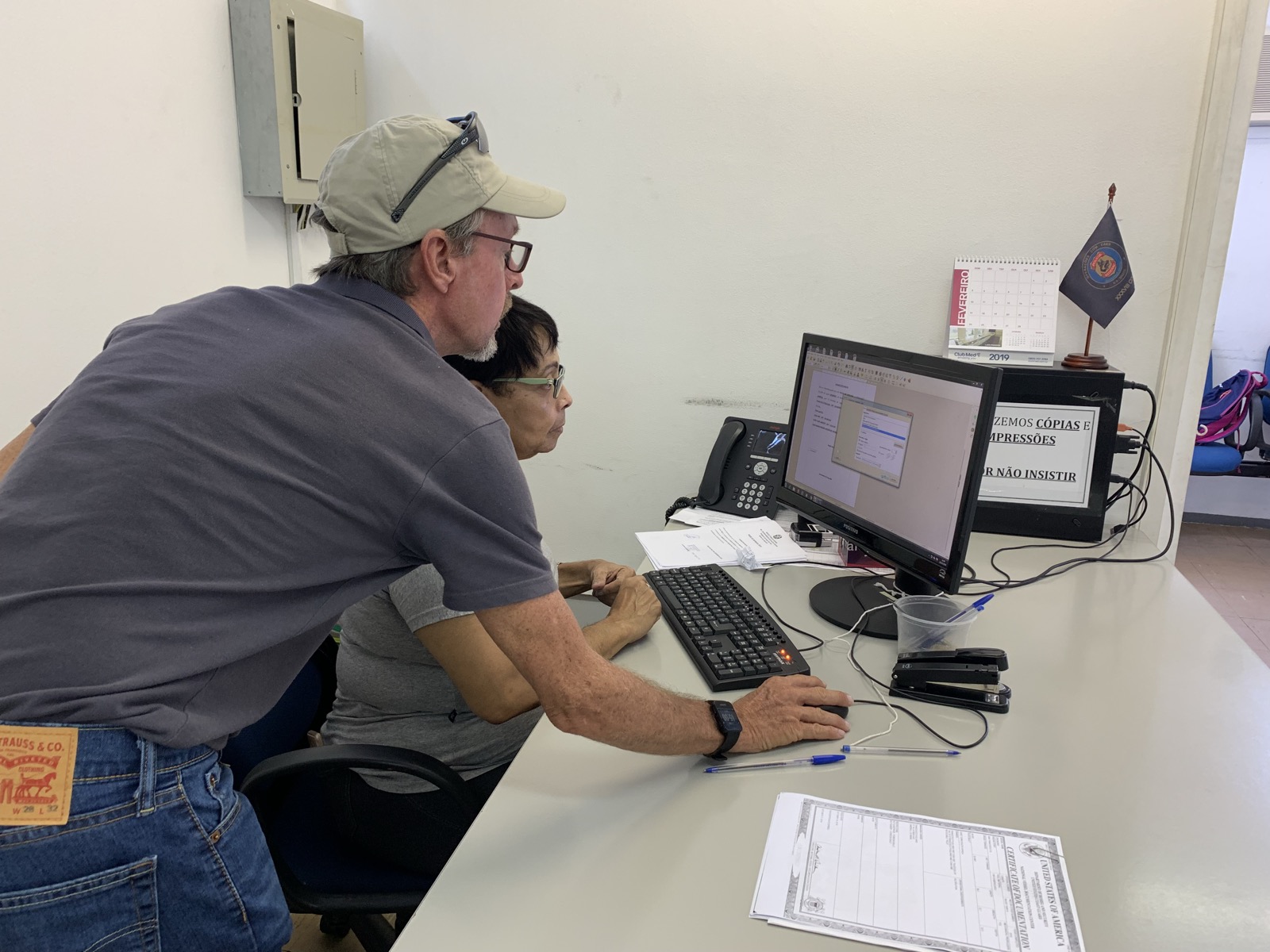
Clearing into Brazil — working through the cruising permits and despacho paperwork at the Federal Police office in Abraão
Food
Moqueca — the Brazilian seafood stew cooked in a thick clay pot with dendê oil, coconut milk, tomatoes, and peppers — is the dish of coastal Brazil. Every restaurant along the coast makes it differently; every version is good.
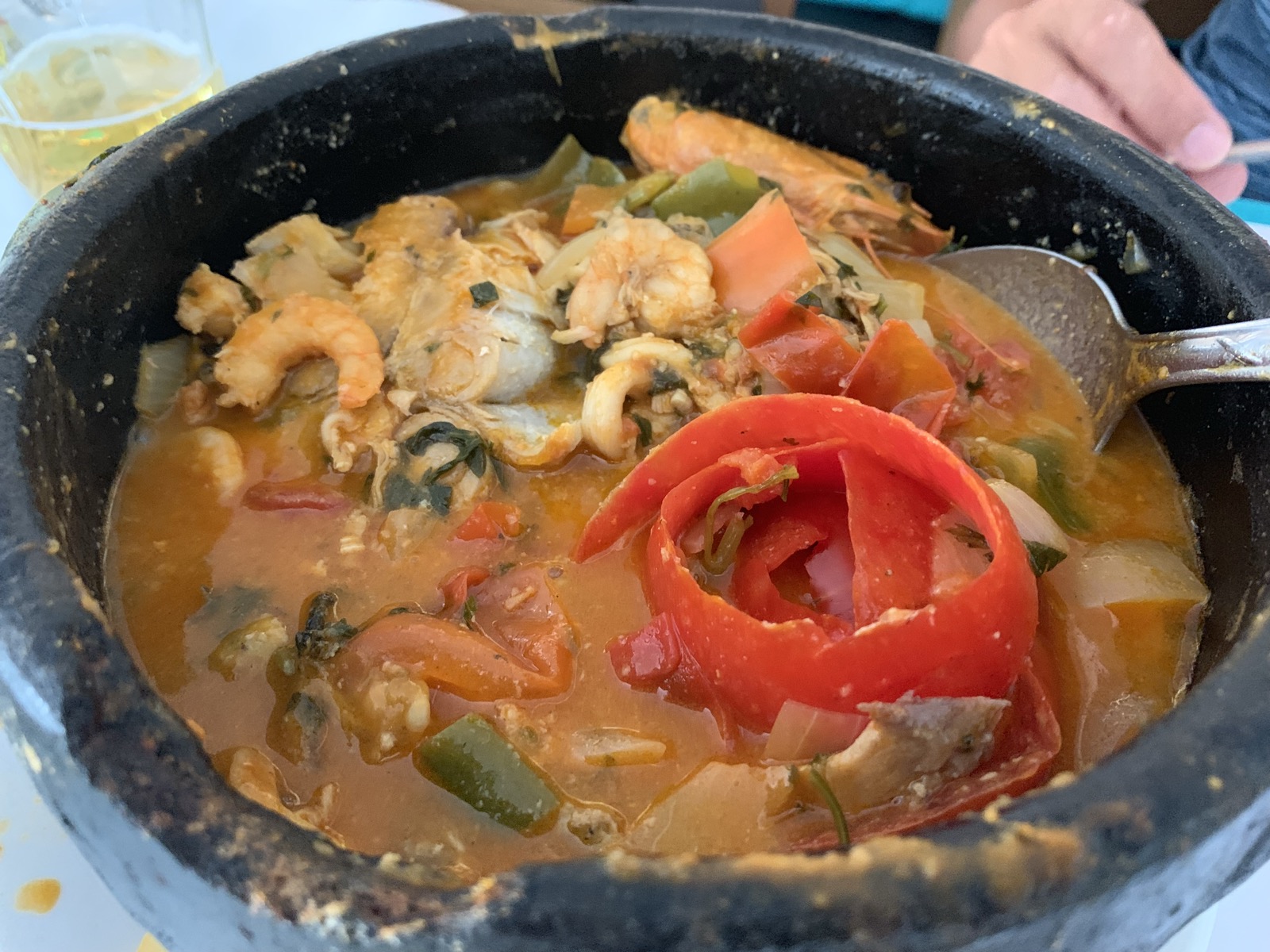
Moqueca capixaba — shrimp and fish in a clay pot with dendê oil, coconut milk, and peppers; one of the great dishes of the Brazilian coast
Back in Abraão, the village lives at a slower pace — handpainted wooden signs point every direction, street art covers the walls, and the whole place has the feel of somewhere entirely at ease with itself.
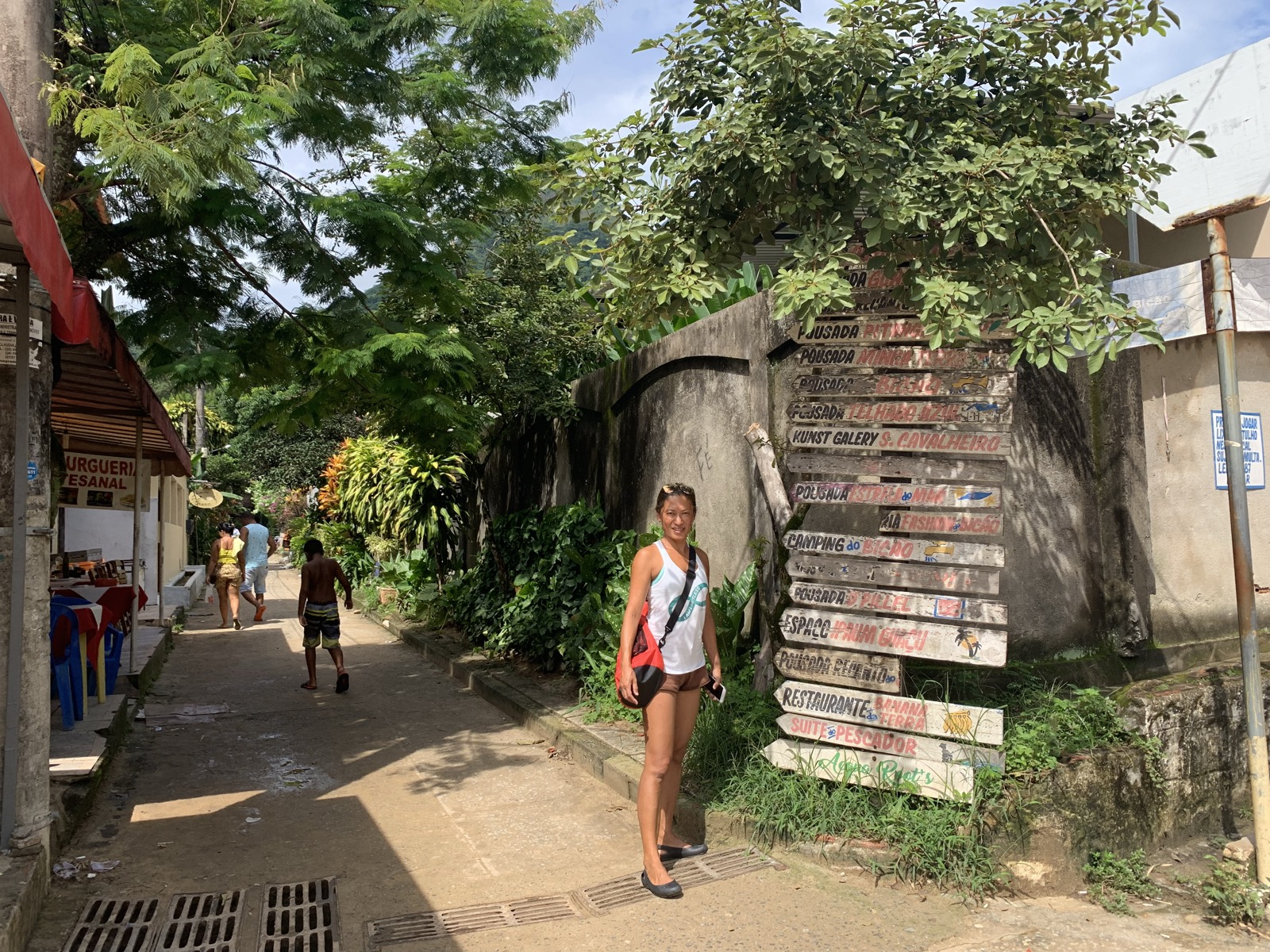
The village signpost — every beach, trail, and pousada in Abraão seems to have its own handpainted board pointing the way
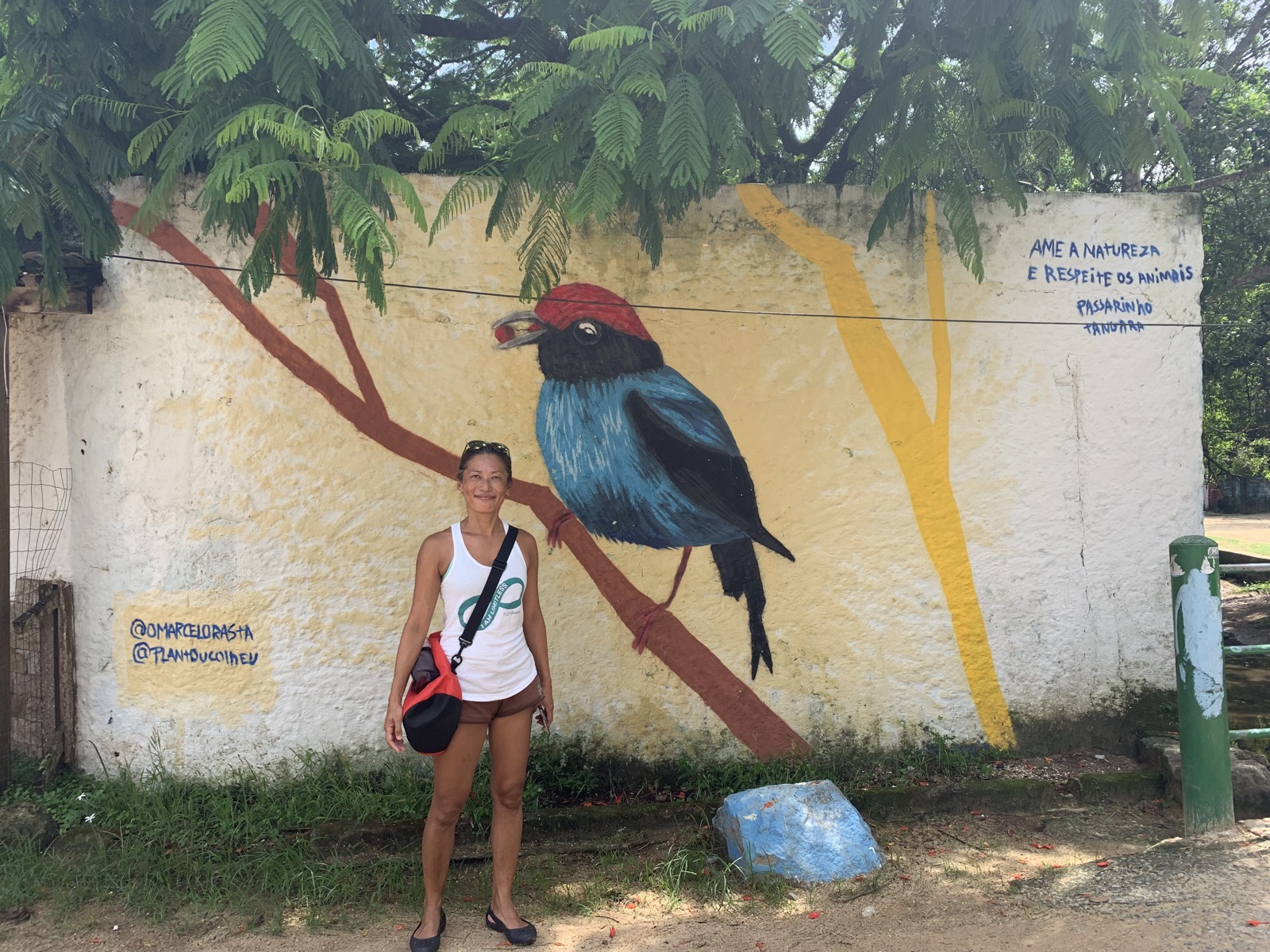
Street art in Abraão — a red-capped manakin with the message "love nature and respect animals"; the island's no-roads policy extends to a broader ethic about the environment