Paraty, Rio de Janeiro — February and March 2019
The gold was the making and the undoing of Paraty. In the early eighteenth century the Portuguese discovered vast deposits in the mountains of what is now Minas Gerais, and they needed a port. The Caminho do Ouro — the Gold Road — wound down through the Serra do Mar in steep stone-paved switchbacks to emerge here, at the mouth of the bay. For decades Paraty was one of the wealthiest ports in colonial Brazil. The gold bought the cobblestones, the plastered walls, the baroque churches, and the extraordinary proportions of the streets.
Then a new road was built directly to Rio de Janeiro, bypassing Paraty entirely. The trade collapsed. The port became a backwater. And because there was no money for development, nothing was demolished or rebuilt. The colonial town was left exactly as it was, behind its ring of green mountains, while the rest of Brazil modernized around it. By accident of poverty, Paraty preserved what nearly every other Brazilian city destroyed. In 2019, while we were anchored in the bay, UNESCO added the town to its World Heritage List.
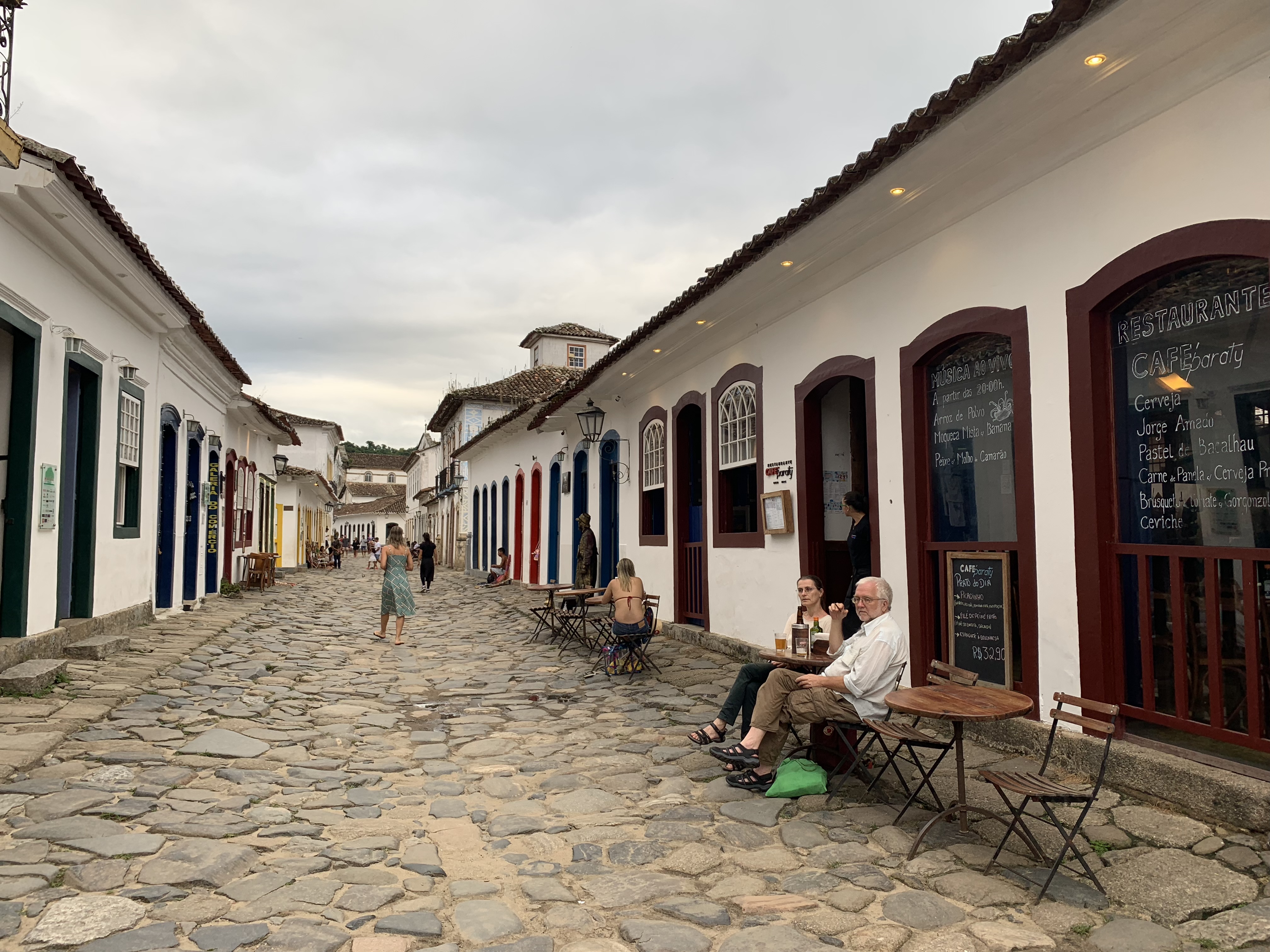
Dusk on the cobblestones — restaurants spill their chairs onto the street as Paraty's evening begins
The historic centre is a pedestrian zone: no cars are permitted inside. The only wheeled traffic is the charrete, the horse-drawn carriage, which still rattles over the irregular cobblestones as it has for three centuries. The streets themselves are an engineering curiosity: they slope gently toward the sea, and the central stones are set slightly lower than those at the edges, so that at high tide the sea rises naturally into the streets, drains across the camber, and recedes — a self-cleaning drainage system designed by people who understood the tidal rhythms of this bay precisely.
The region around Paraty is the cachaça capital of Brazil. The mountains provide clean water; the altitude and climate perfect the fermentation of the local sugarcane. The alambiques — small-batch copper pot stills — have been running in the valleys above town for centuries. The boutiques along the Rua do Comércio sell aged, single-estate spirits with complexity and character entirely unlike the industrial cachaça of the supermarkets.
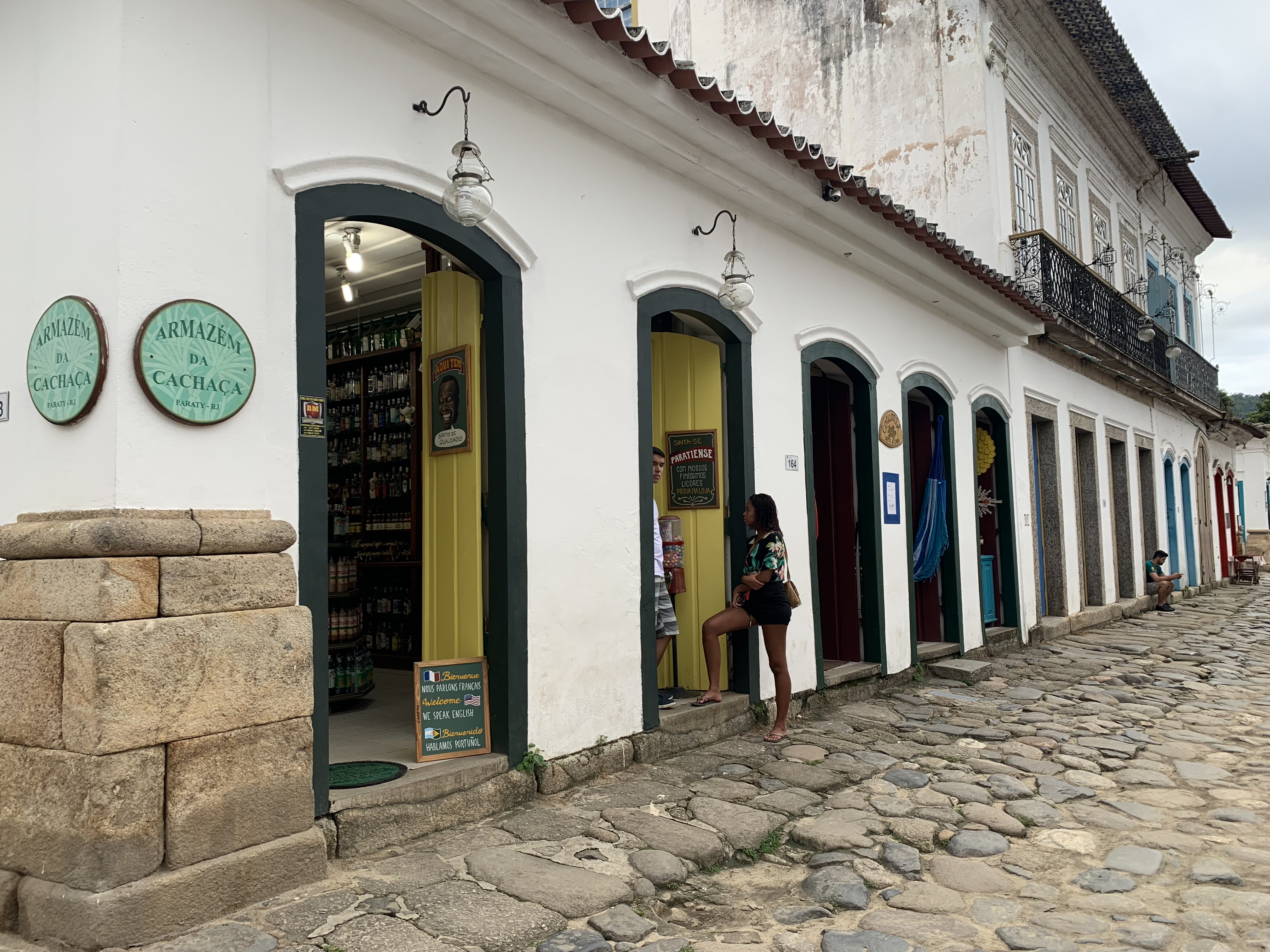
Armazém da Cachaça — Paraty's cachaça culture is as old as the town itself
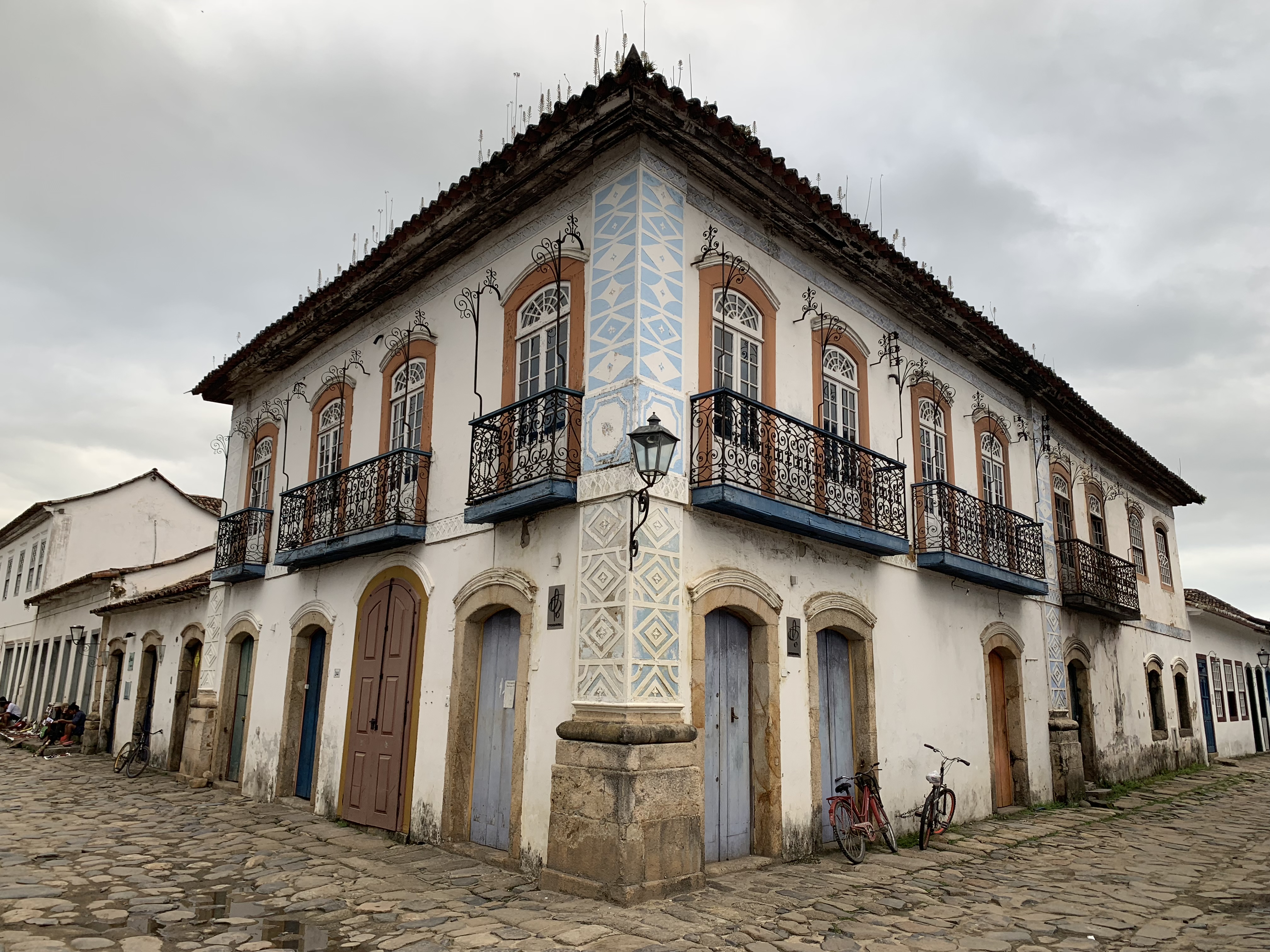
A corner building in the historic centre — the geometric facade ornamentation and deep blue woodwork are characteristic of Paraty's 18th-century architecture
We arrived in early February 2019, on two unhurried visits in warm sunlight. We walked every street in the historic centre, stopped at restaurants that had pushed their tables out onto the cobblestones, and sat for a long while under the great figueira tree in the Praça da Matriz watching Paraty move at its own pace. The town has the effect of slowing the mind to the rhythm of its stones.
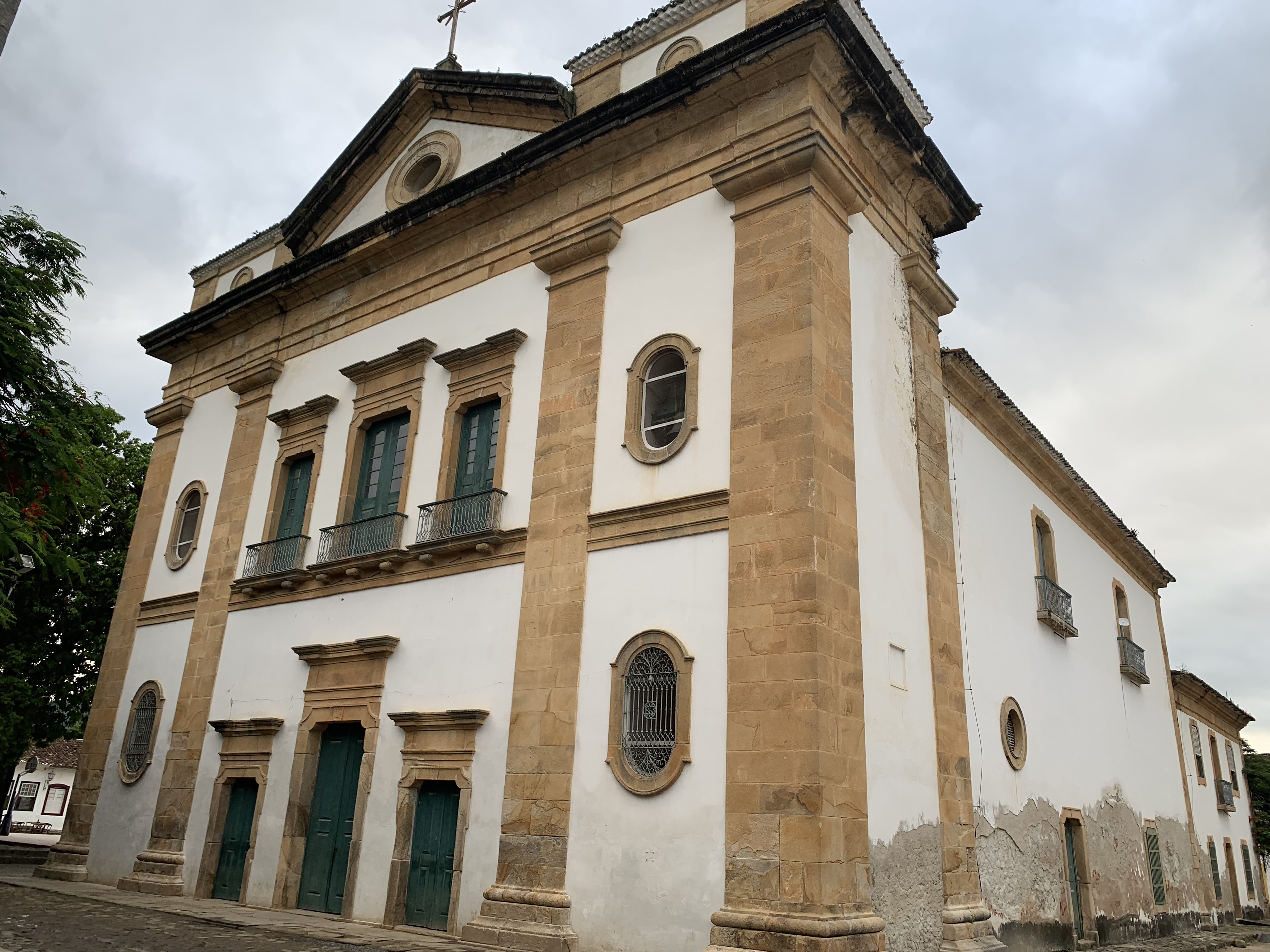
One of Paraty's colonial churches — the town has four, each built by a different community: the ruling class, freed Africans, indigenous converts, and enslaved people
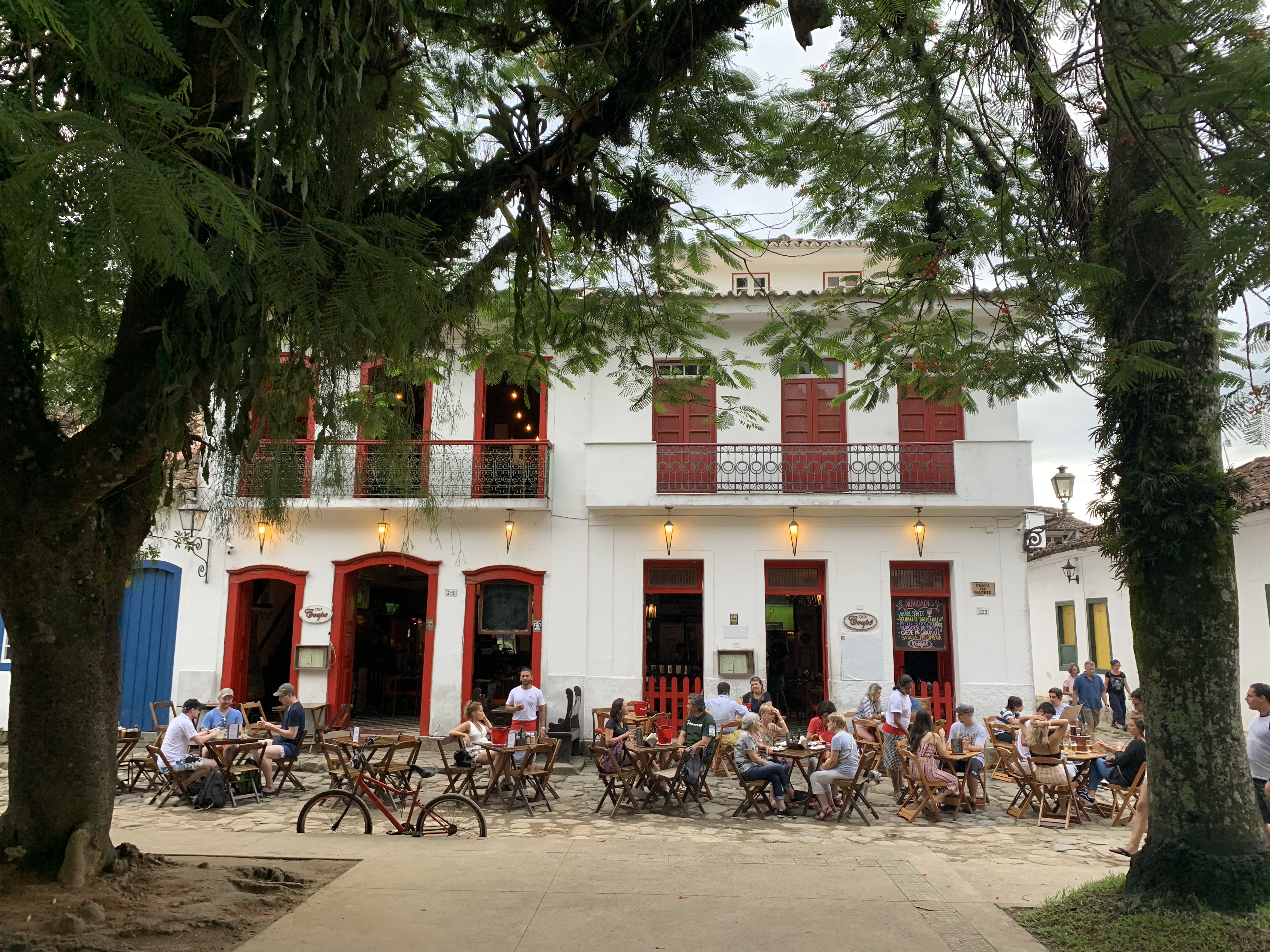
A square in the historic centre — in Paraty, the restaurants claim the cobblestones and nobody minds
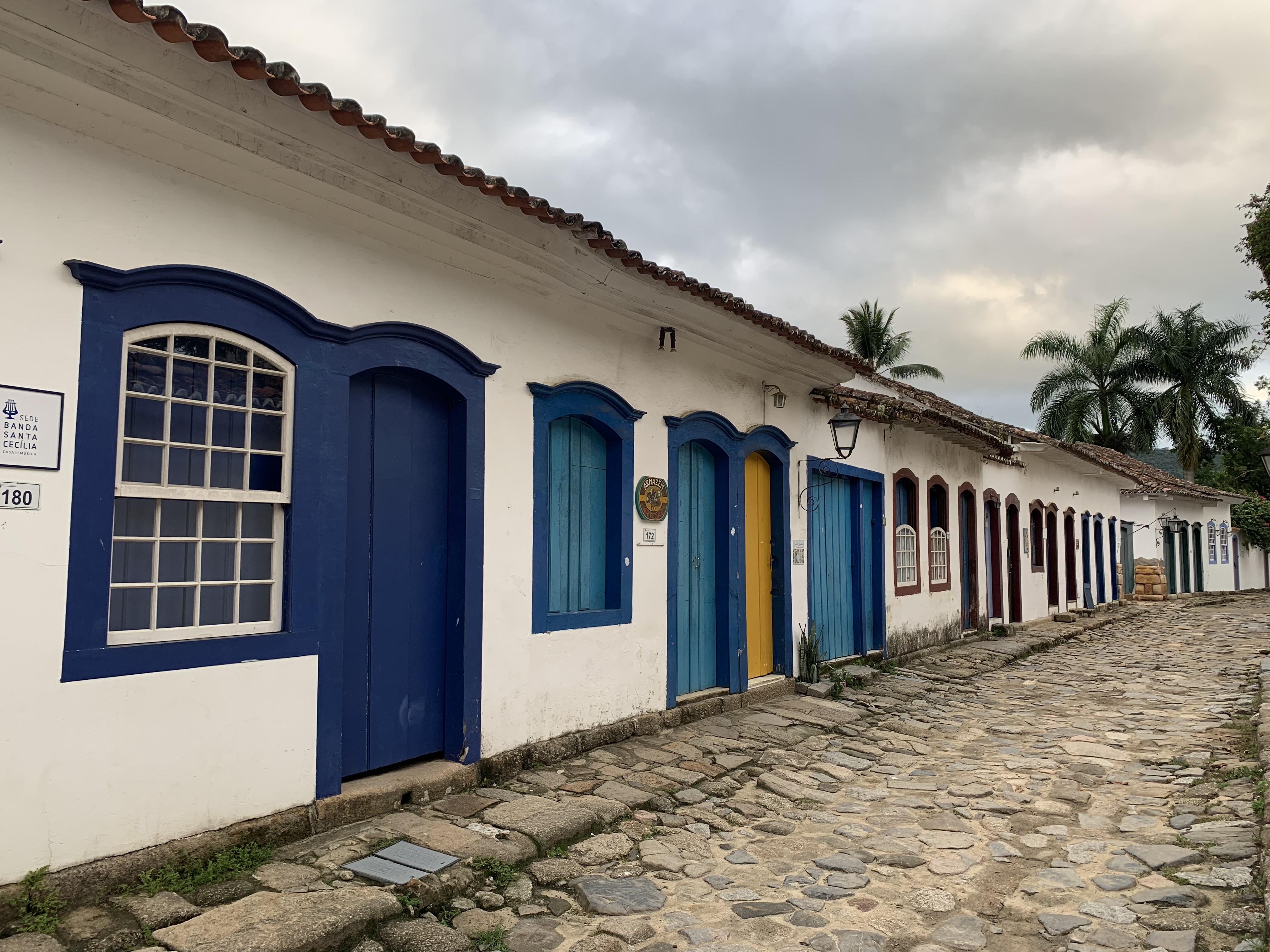
Cobblestone perspective — every lane in the historic centre ends in a view like this
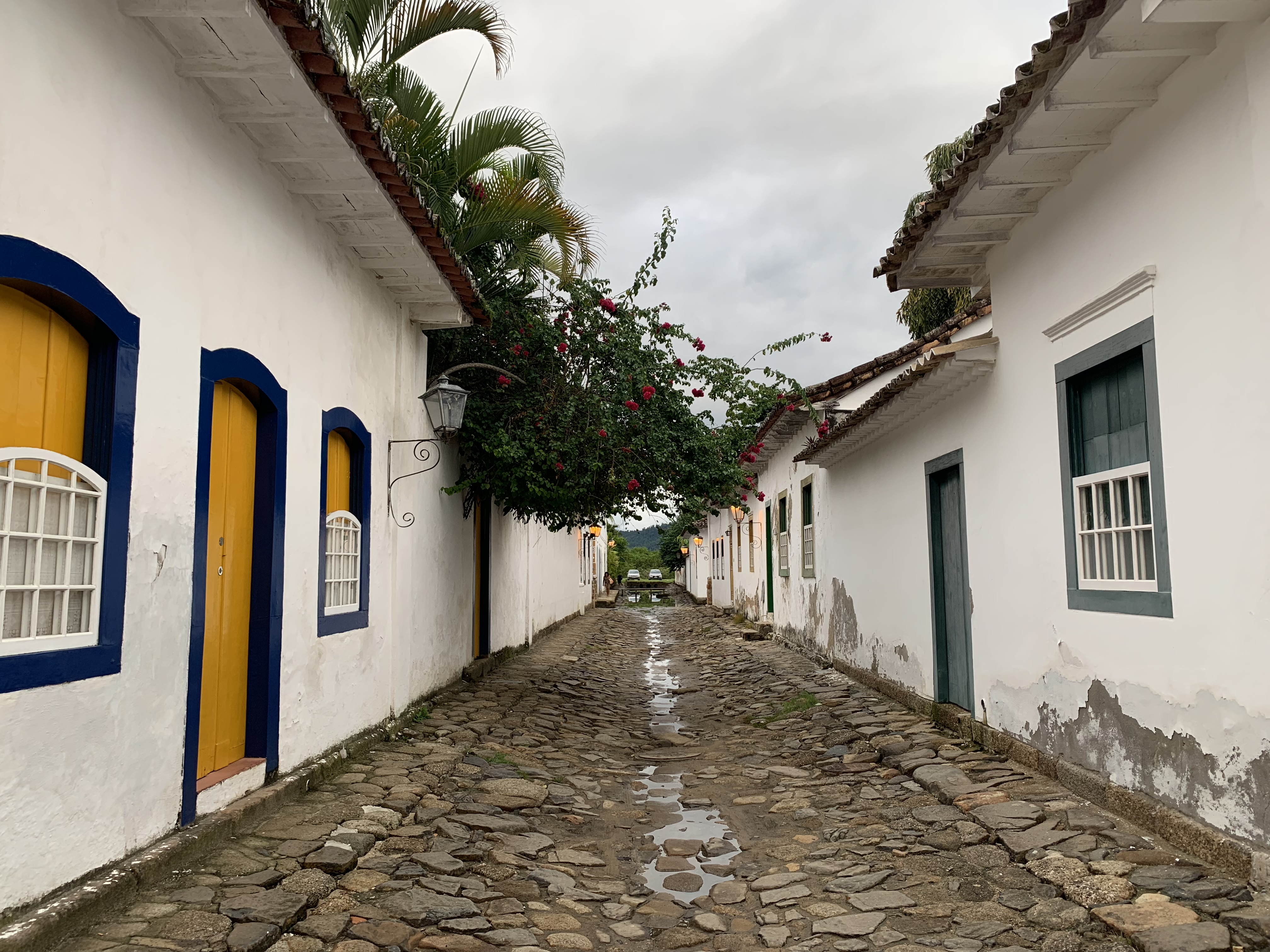
Bougainvillea over wet cobblestones — even on a dry afternoon, the stones keep the dampness of the last tide
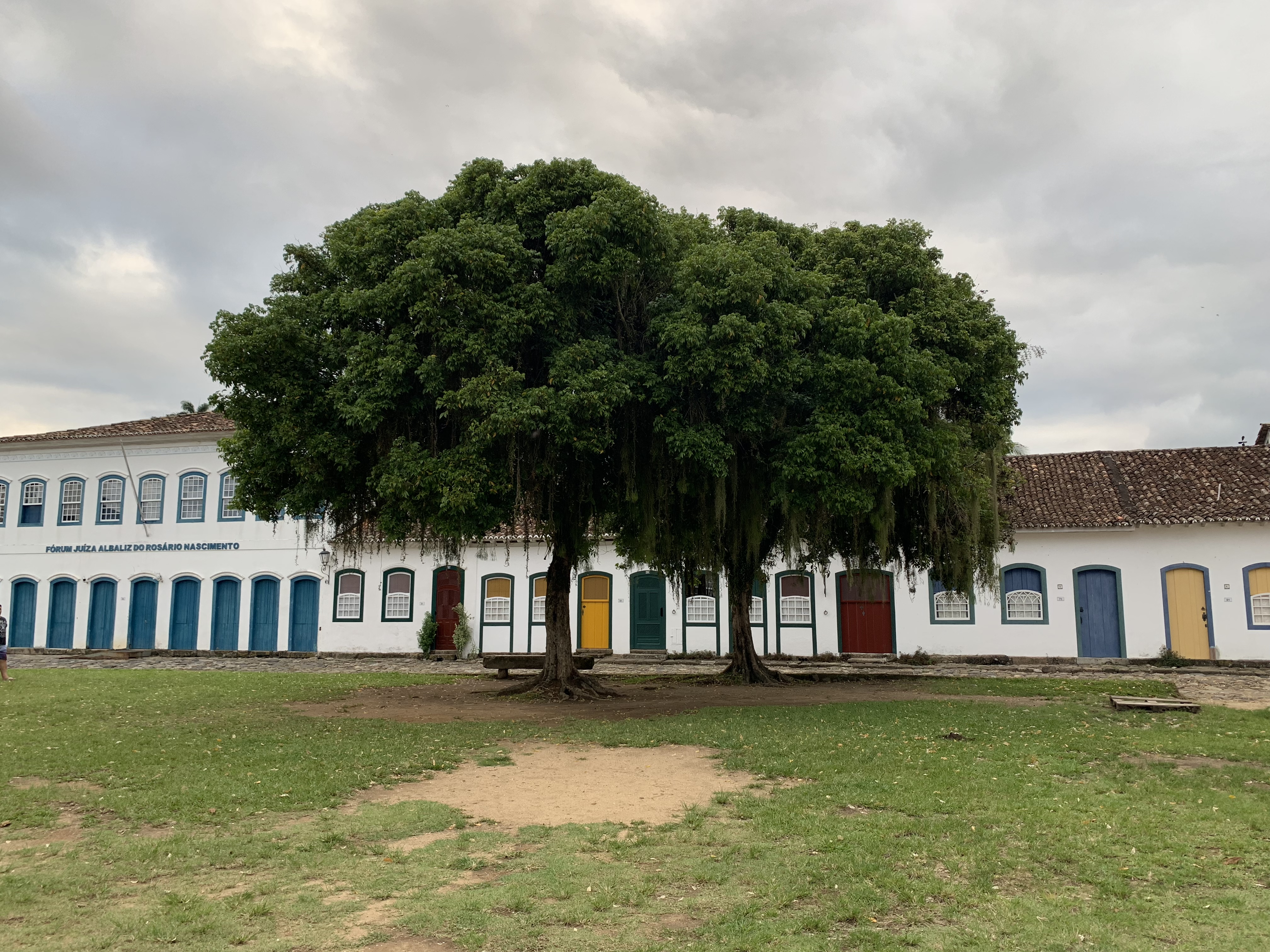
The great figueira of the Praça da Matriz — the fig tree has watched over this square for longer than anyone in Paraty can remember
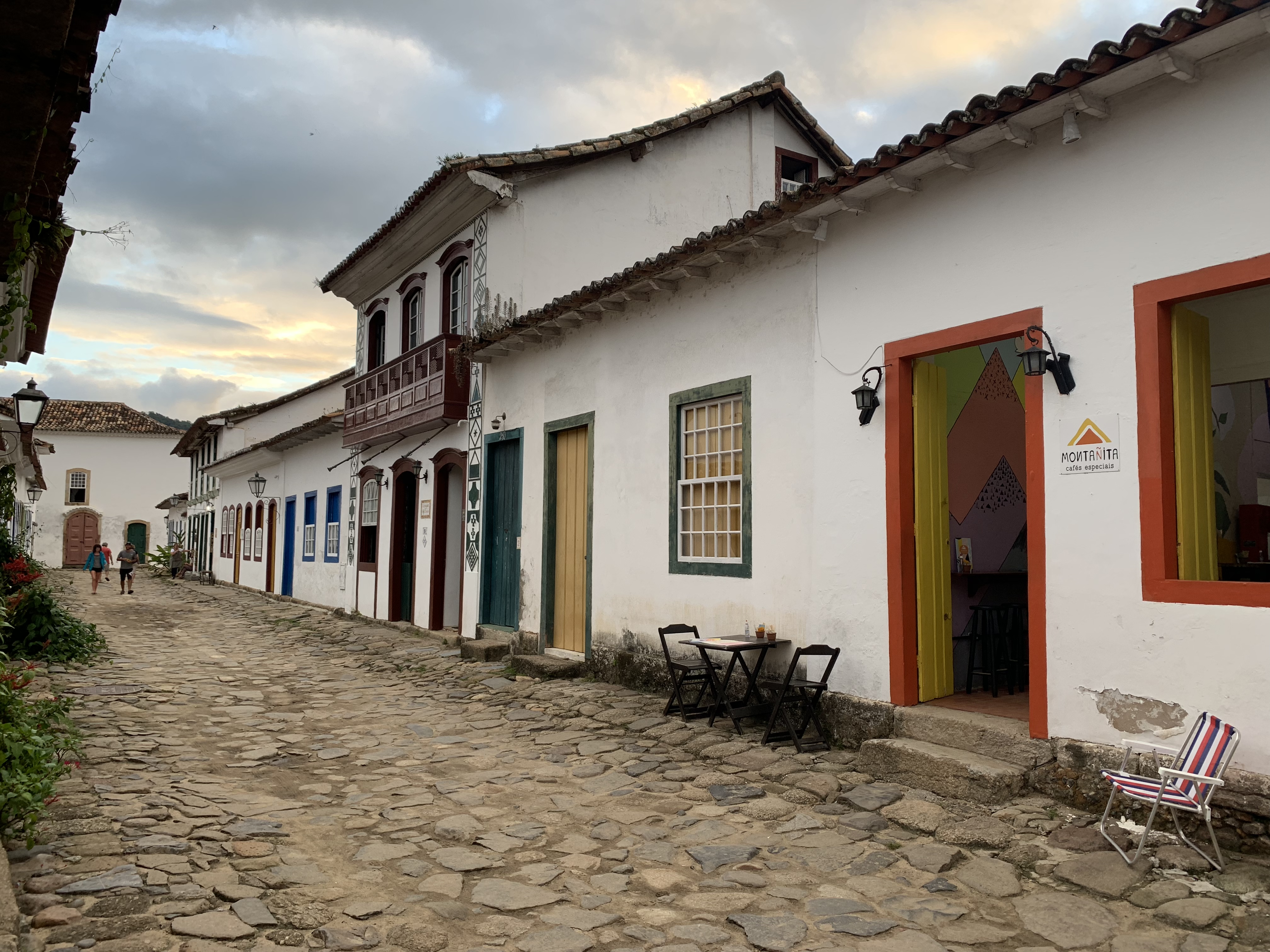
Golden hour in the historic centre — the clouds come down from the Serra da Bocaina every afternoon
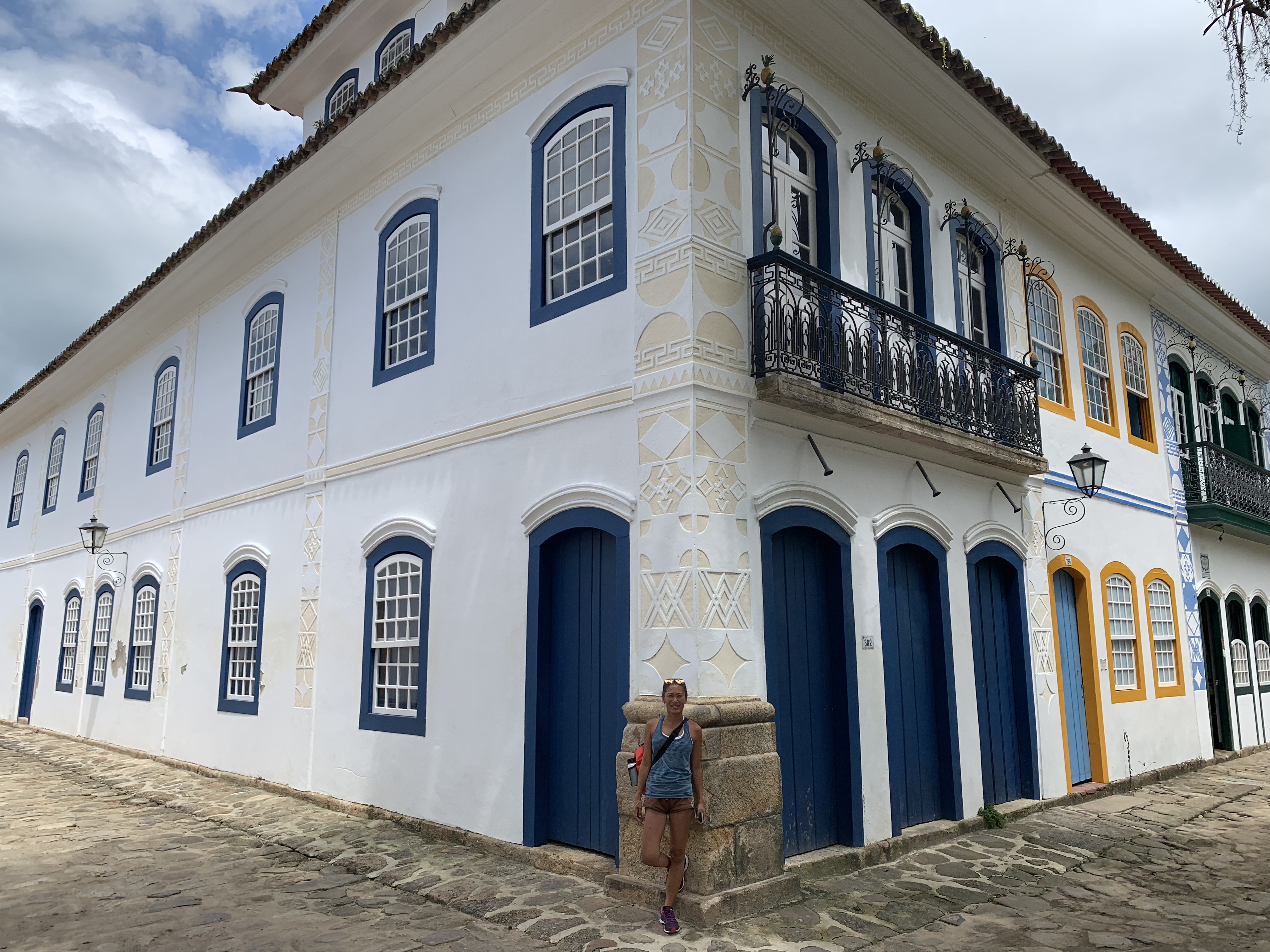
Yuka at the corner of one of Paraty's most striking buildings — the decorative plasterwork and deep blue woodwork date from the town's 18th-century golden age
We came back in the third week of February, on the eve of a local festival. The streets were strung with twisted paper streamers — the kind Brazil hangs for every festa junina and saint's day — that caught the last light and turned the lanes into something between a carnival and a dream. We found a table outside on the cobblestones and stayed until the candles were the only light on the square, the church facade rising dark behind us.
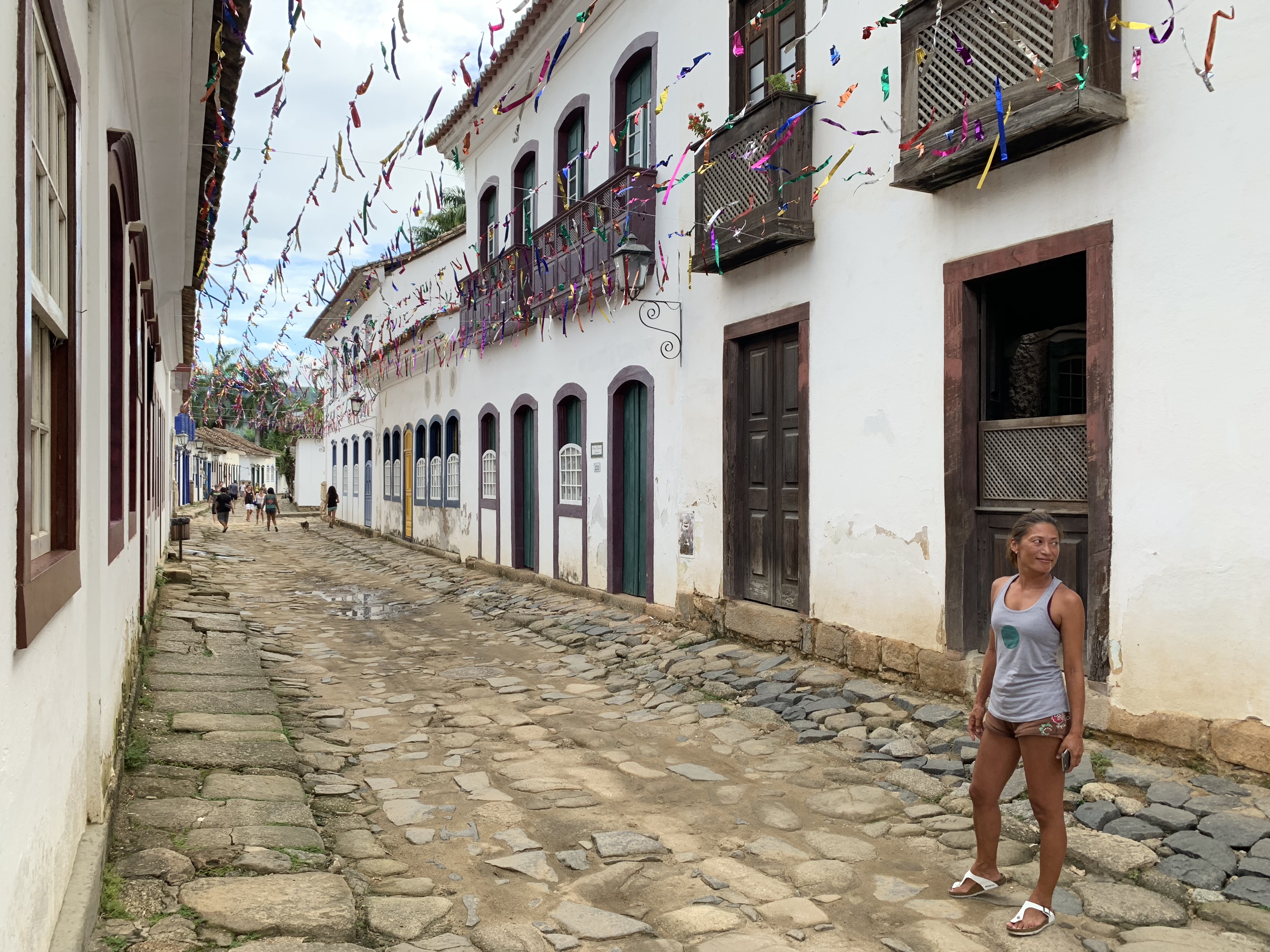
Festival streamers over the cobblestones — Paraty marks every occasion with paper, colour, and music
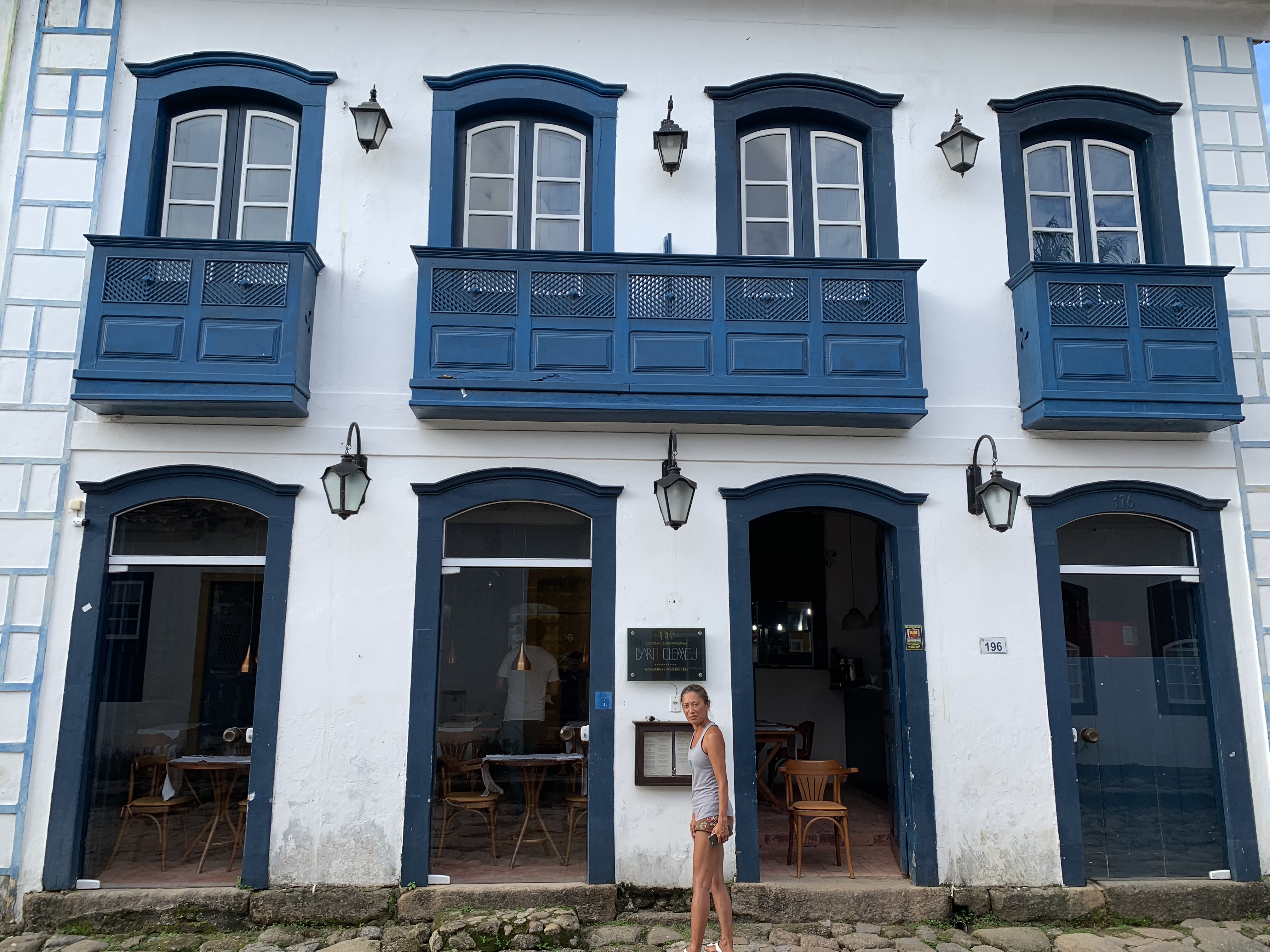
An evening café in a beautifully restored colonial building — Paraty has turned its 18th-century merchant houses into some of the finest restaurants on the Brazilian coast
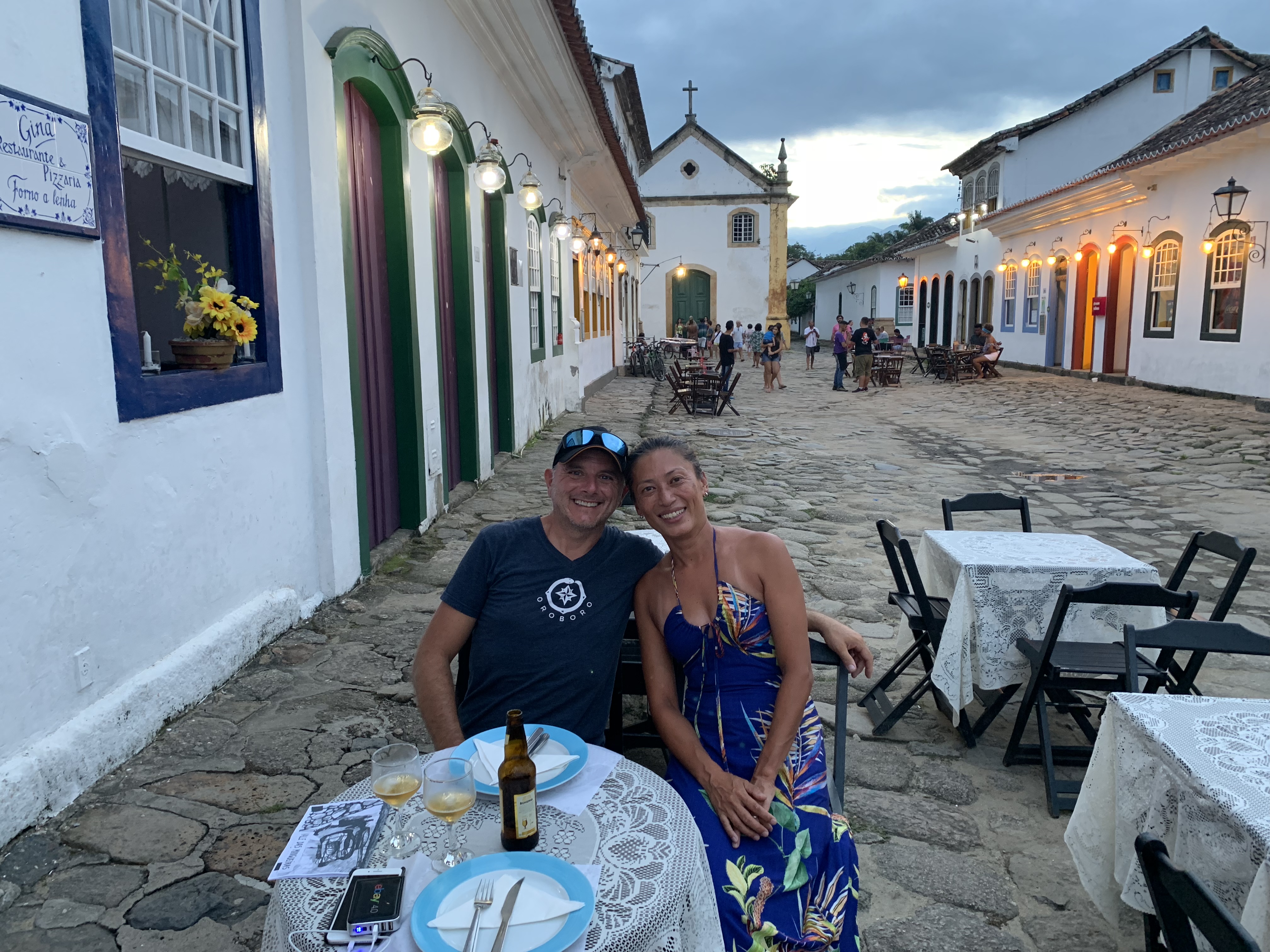
Dinner on the cobblestones with the church behind — an evening that lasted longer than planned, as they always do in Paraty
We returned a third time in late March, the morning after heavy rain and a high spring tide. Every street in the historic centre had become a shallow canal. The tidal drainage system — so elegant in theory — had simply run over capacity: the sea had come in through the streets, and stayed. Locals were navigating on planks. The horse-drawn carriages were still running, their wheels throwing great fans of spray from the cobblestones. The baroque churches rose from the floodwater as if they had always stood at the edge of the sea.
The floods happen two or three times a year at the highest tides, especially after rain. Residents keep rubber boots by the door and know which routes stay navigable. The restaurants move their chairs. The charretes do not stop. In a town that has survived three centuries of neglect, colonial wars, the collapse of the gold trade and the long indifference of the modern world, a little seawater is nothing to worry about.
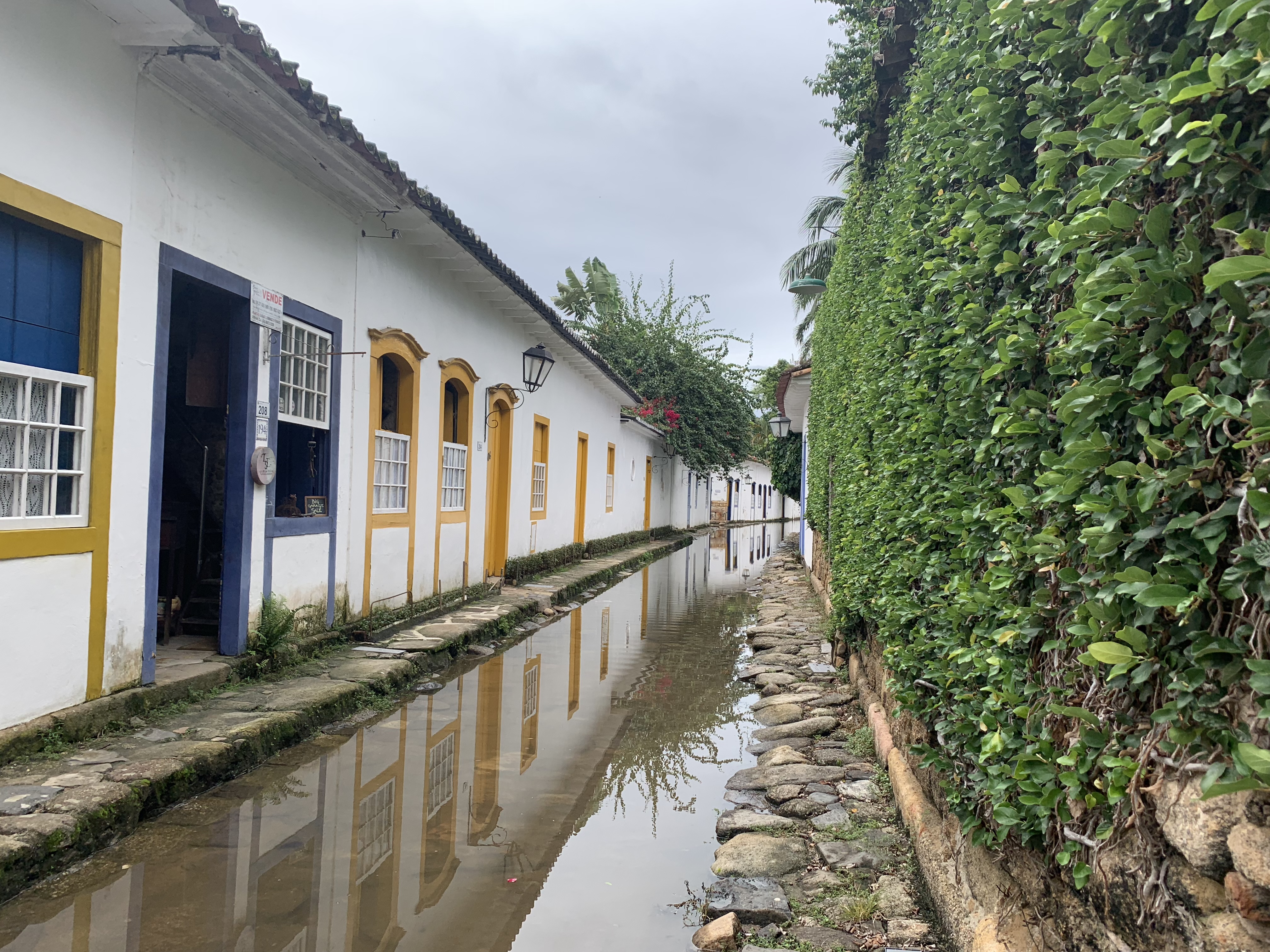
High tide in the alleyways — the flooding turns Paraty's narrow lanes into canals, the houses perfectly reflected in the still water
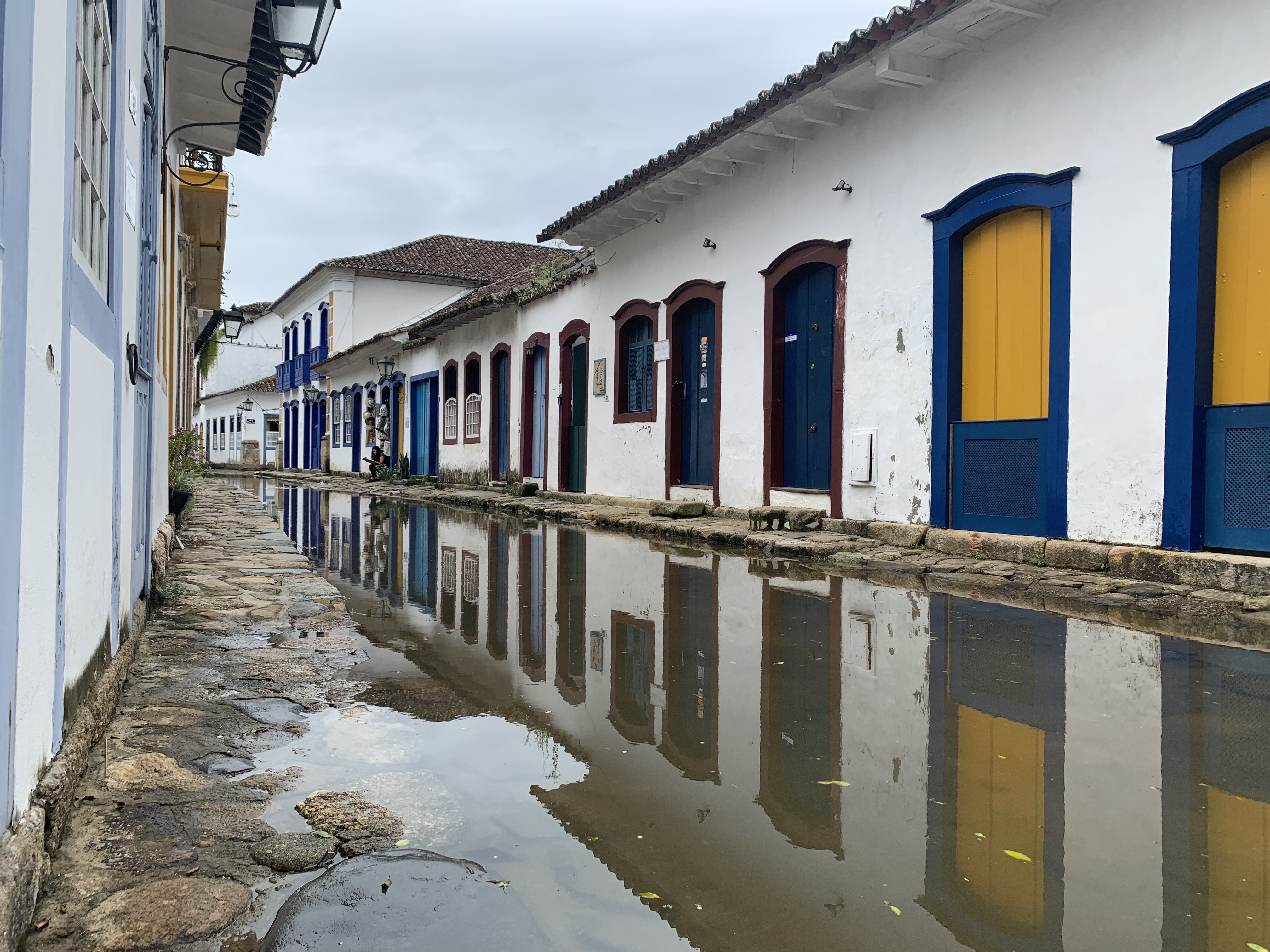
The street as mirror — every doorway and roofline doubled by the flood
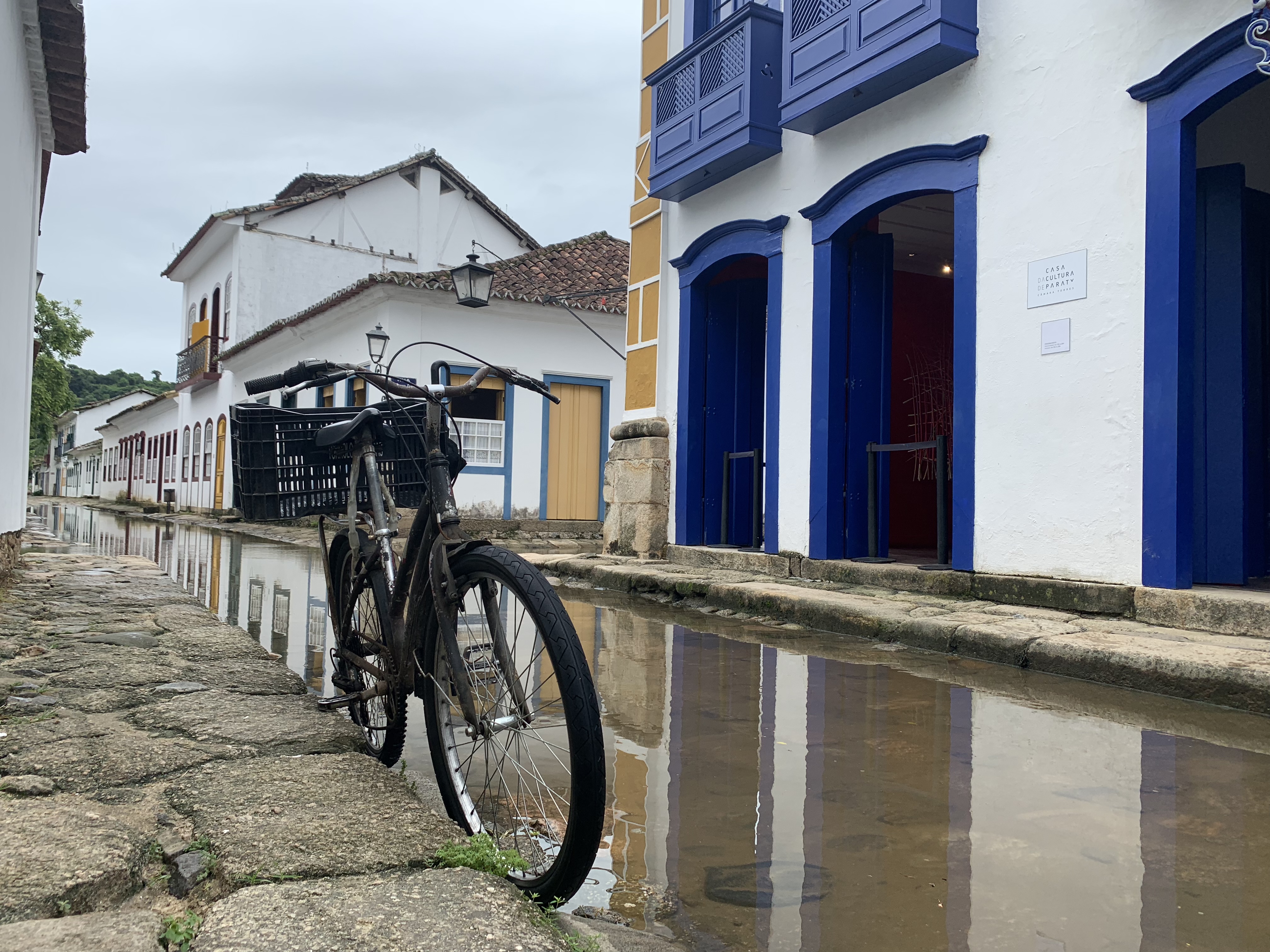
On the dry margin — a bicycle parked at the edge of the flood, the colonial facades perfectly mirrored in the water
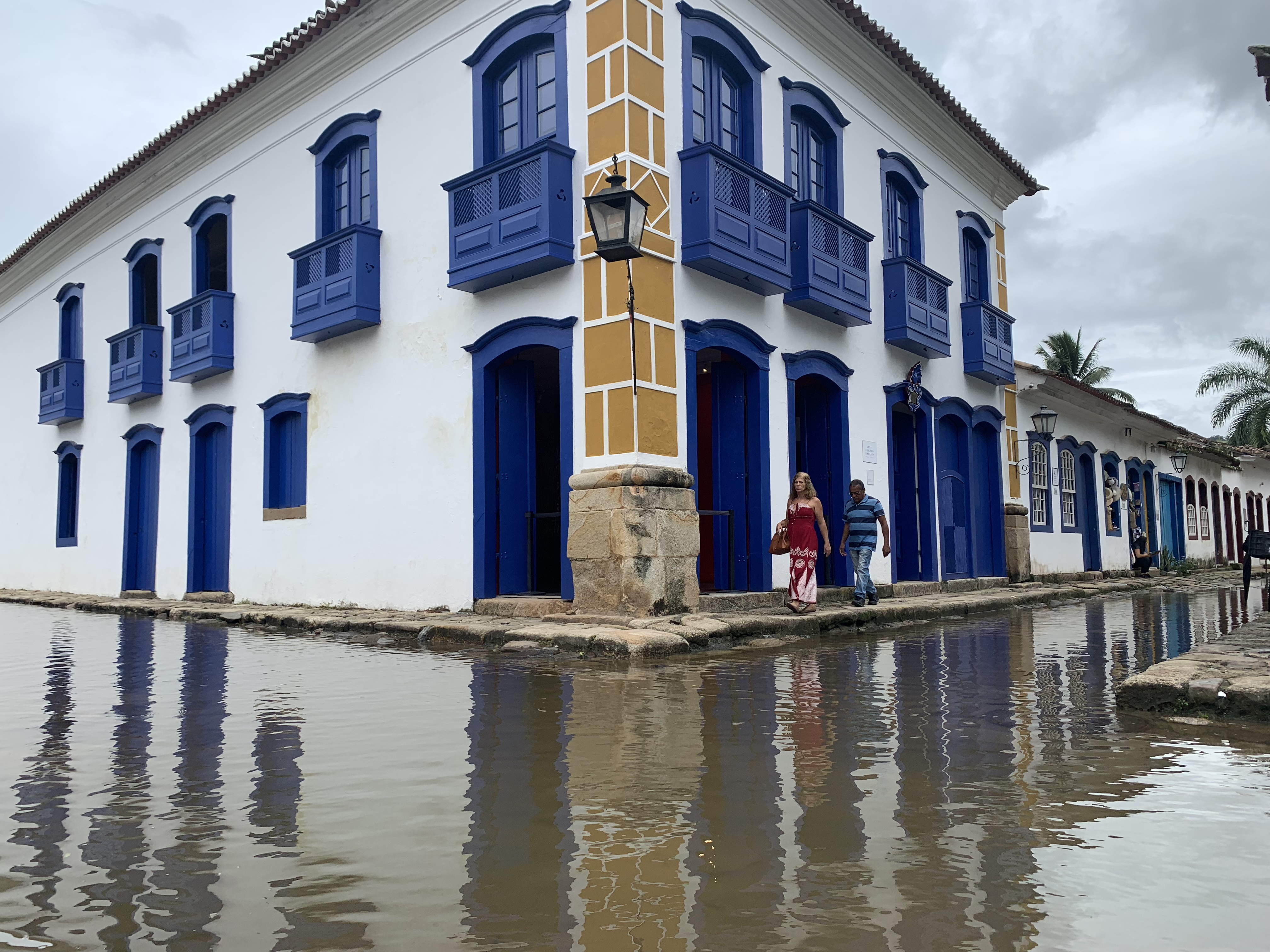
Wading at the corner — the iconic blue-and-ochre building presides over the flooded intersection as locals navigate ankle-deep
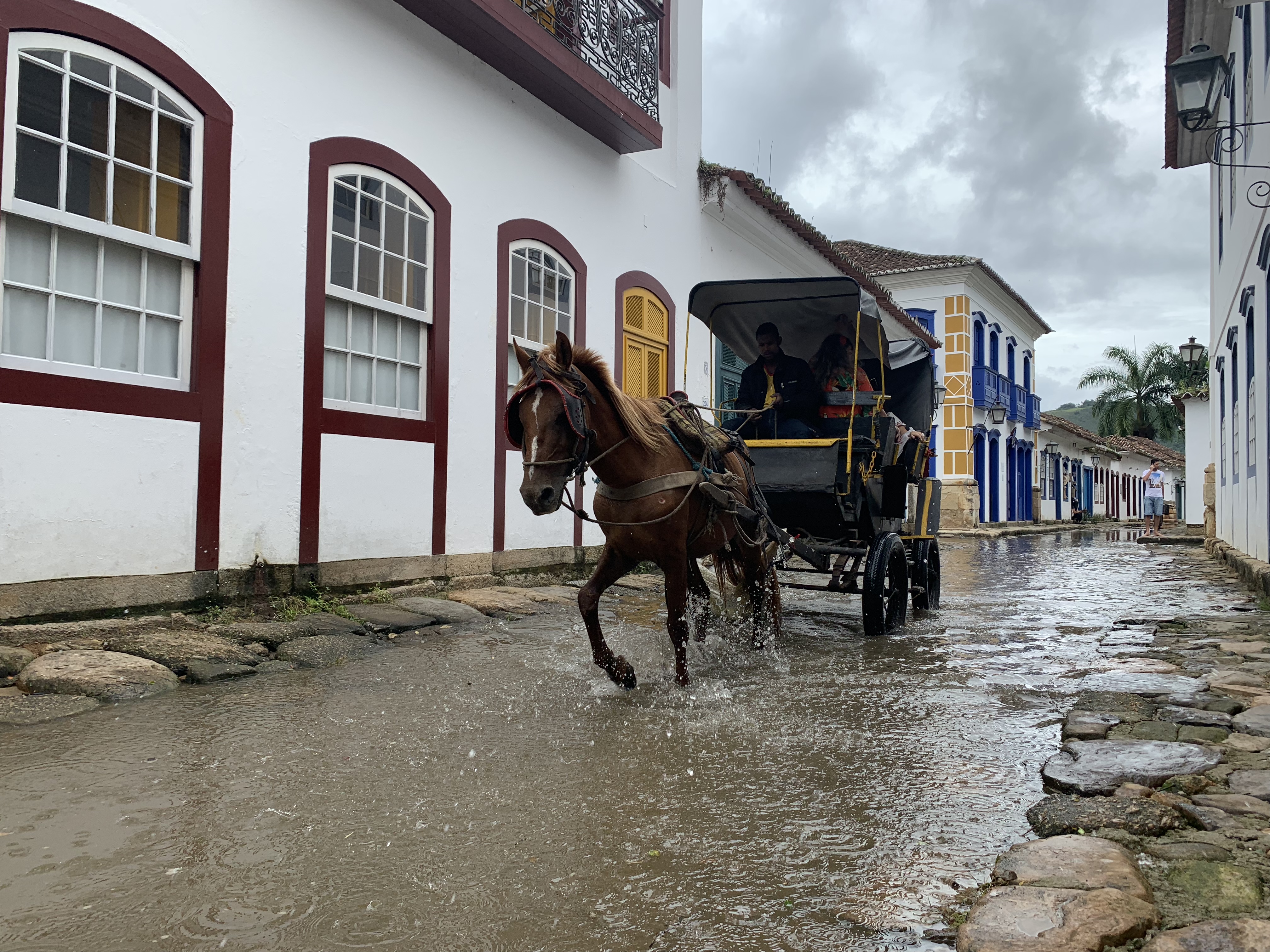
The charrete does not stop — no cars are permitted in the historic centre, and the horse-drawn carriages run regardless of the tide
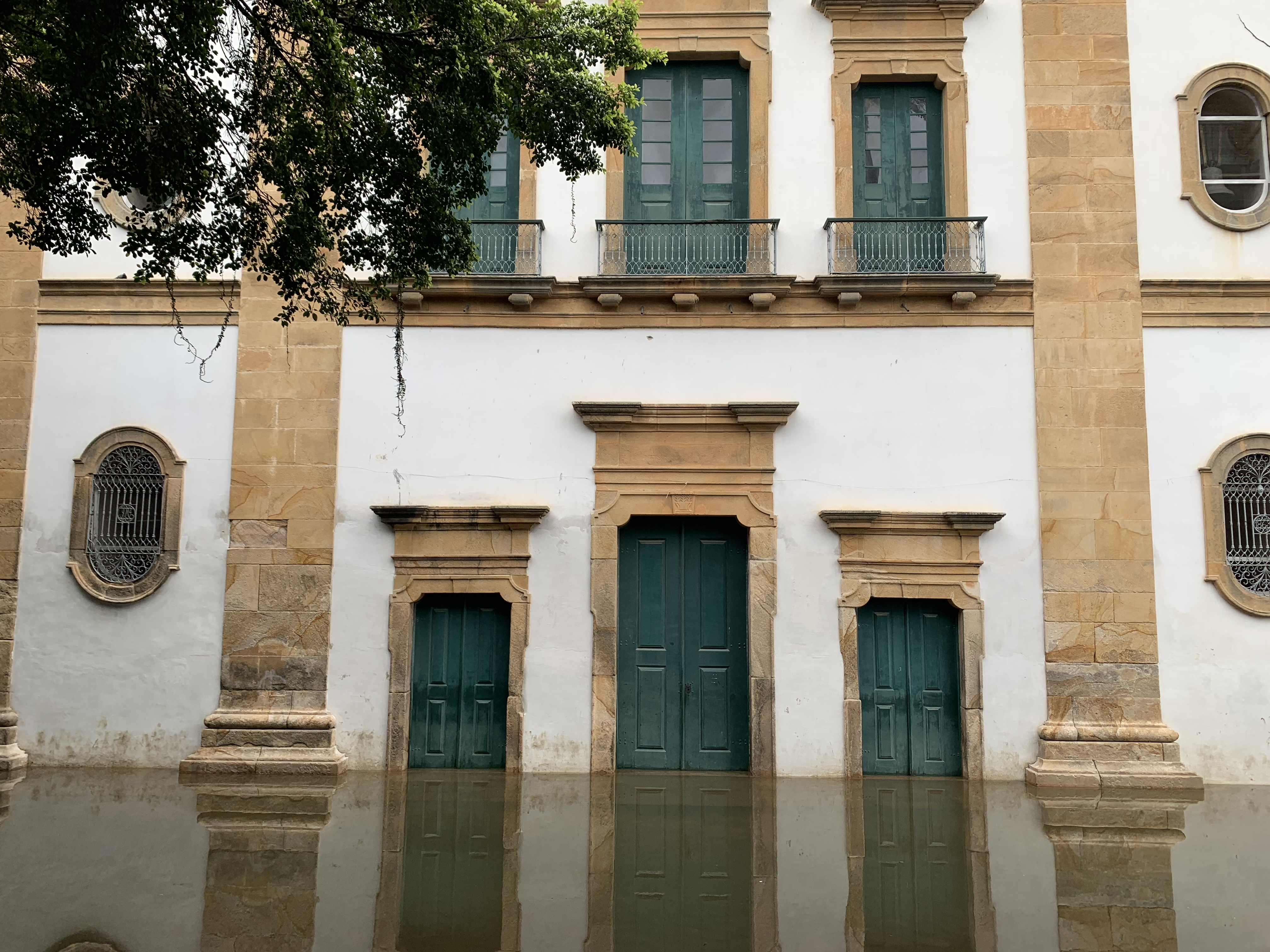
The church in the flood — one of Paraty's four colonial churches, its 18th-century stone facade rising from the tidal water as if it had always stood at the edge of the sea
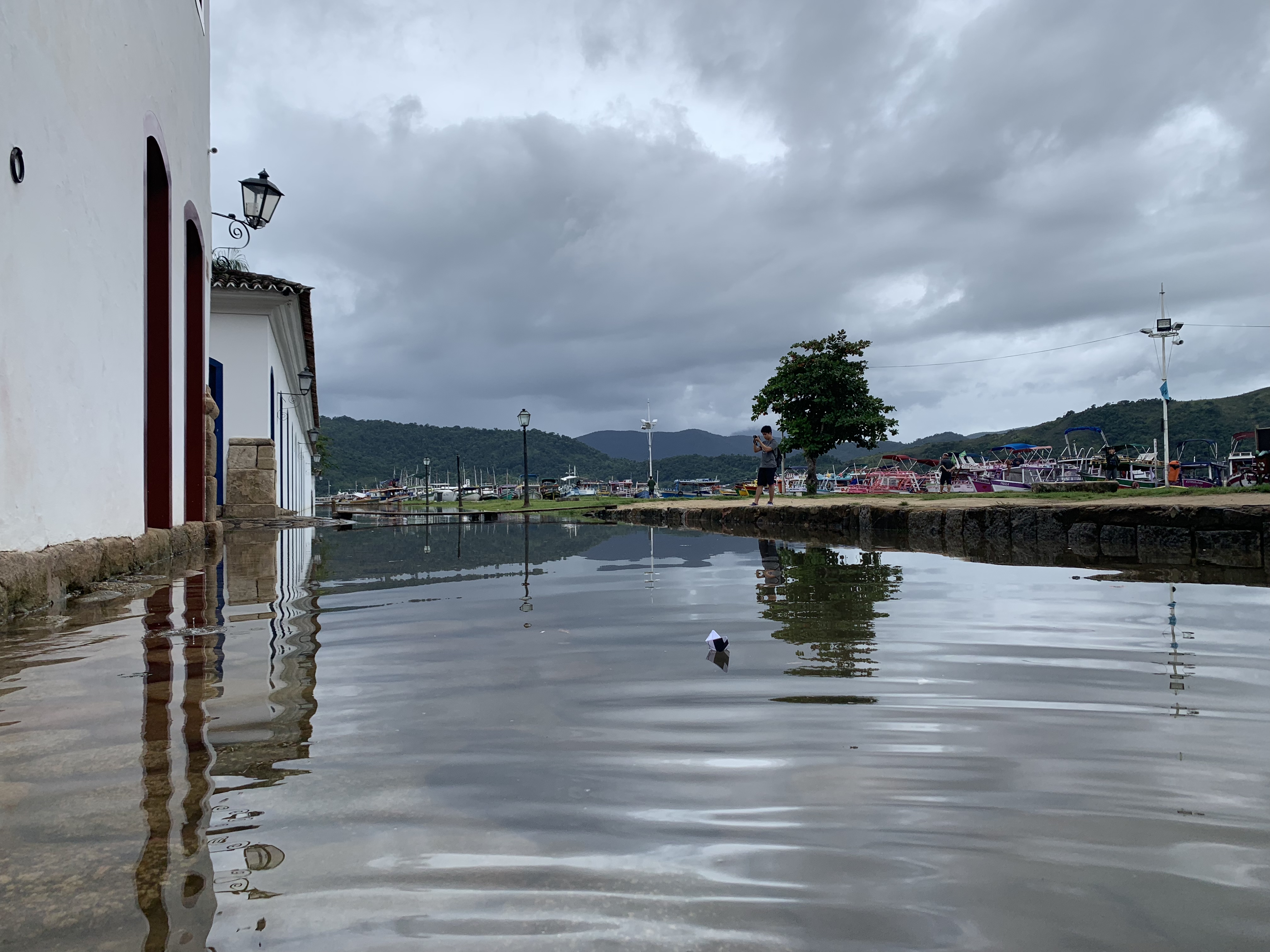
The waterfront at high tide — the promenade has vanished, the marina floats behind, and someone's paper boat navigates the flood with more confidence than the rest of us