Sailing Oroboro Podcast — Episode 2
The Boat
Two hulls, two engines, and a dream. In this episode, Francesco explains how he and Yuka spent years choosing the right boat for a world voyage — and describes the moment they first stepped aboard Oroboro in Cape Town.
As we got on the docks at Cape Grace marina and we saw Oroboro for the first time, we were just ecstatic! It looked more beautiful than we ever dreamt of.
Naval architects Alexander Simonis and Maarten Voogd have done an excellent job in optimizing space, setting a new standard for cruising catamarans. The innovative layout makes the interior space feel like a larger yacht. As soon as you step in the saloon it's hard to believe that this is "only" a 40 foot. Compared to a same length catamaran of only a few years ago, it feels so much bigger.
Oroboro at Cape Grace marina — our new home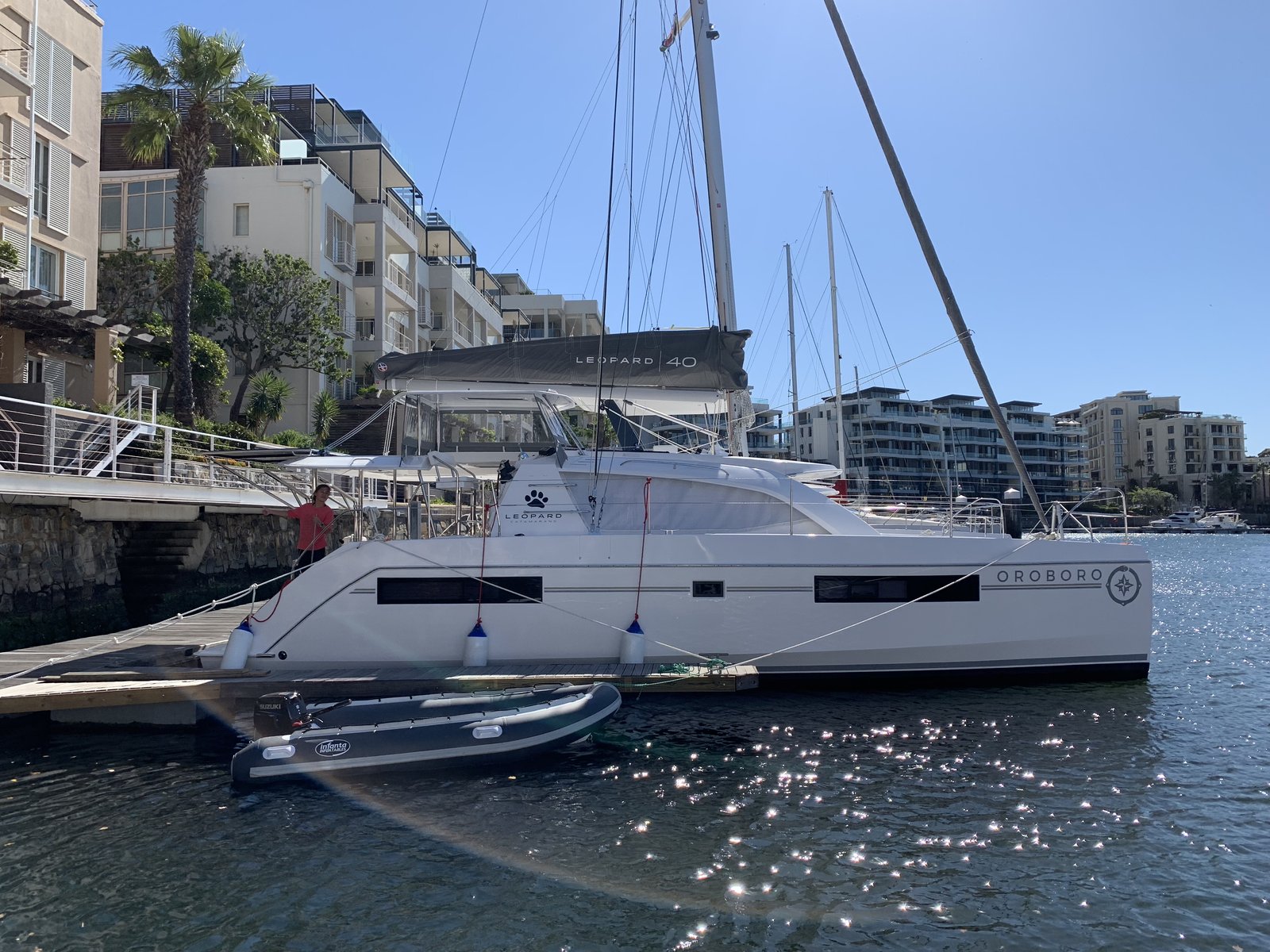
Yuka at the saloon table — the heart of the boat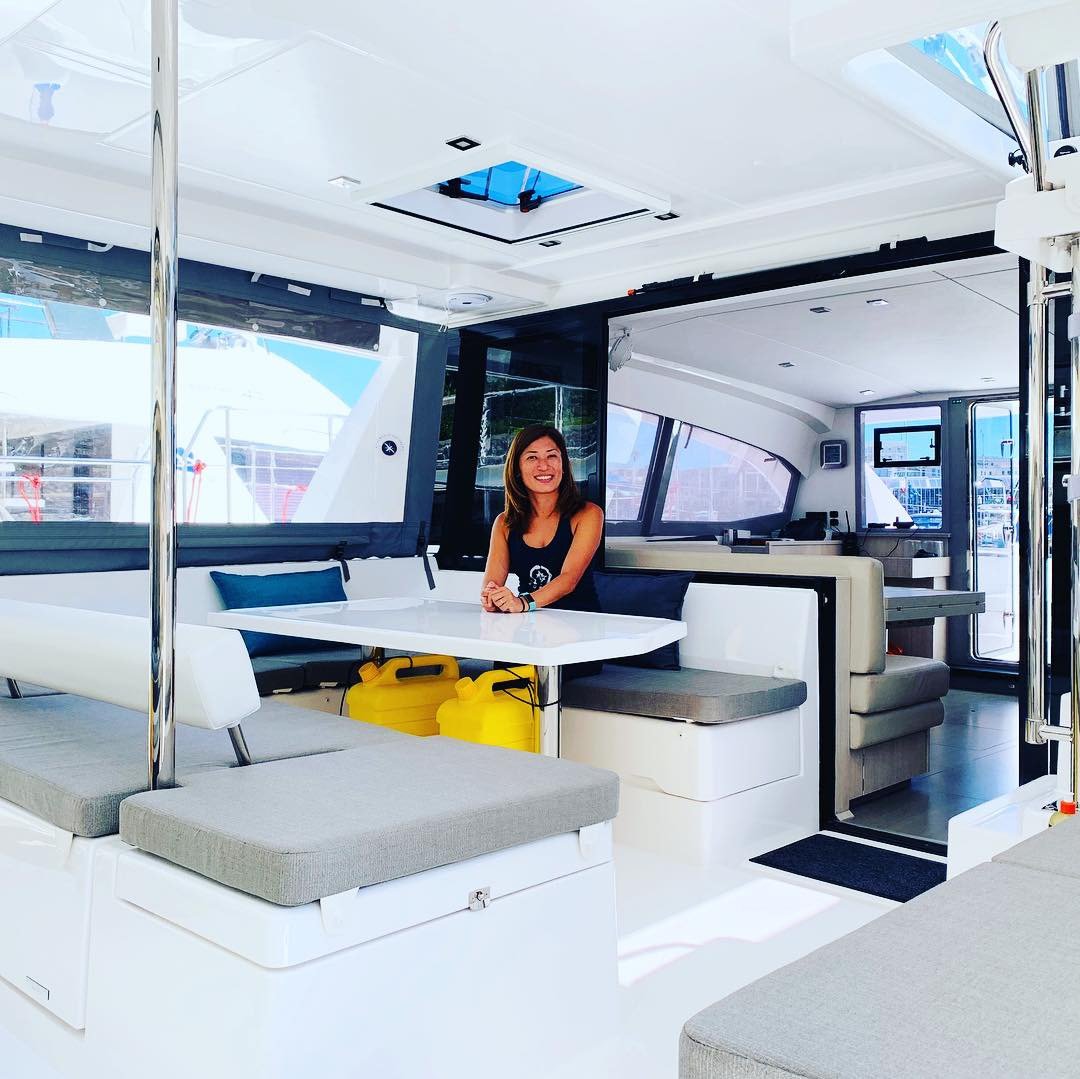
Francesco making himself at home on the cockpit daybed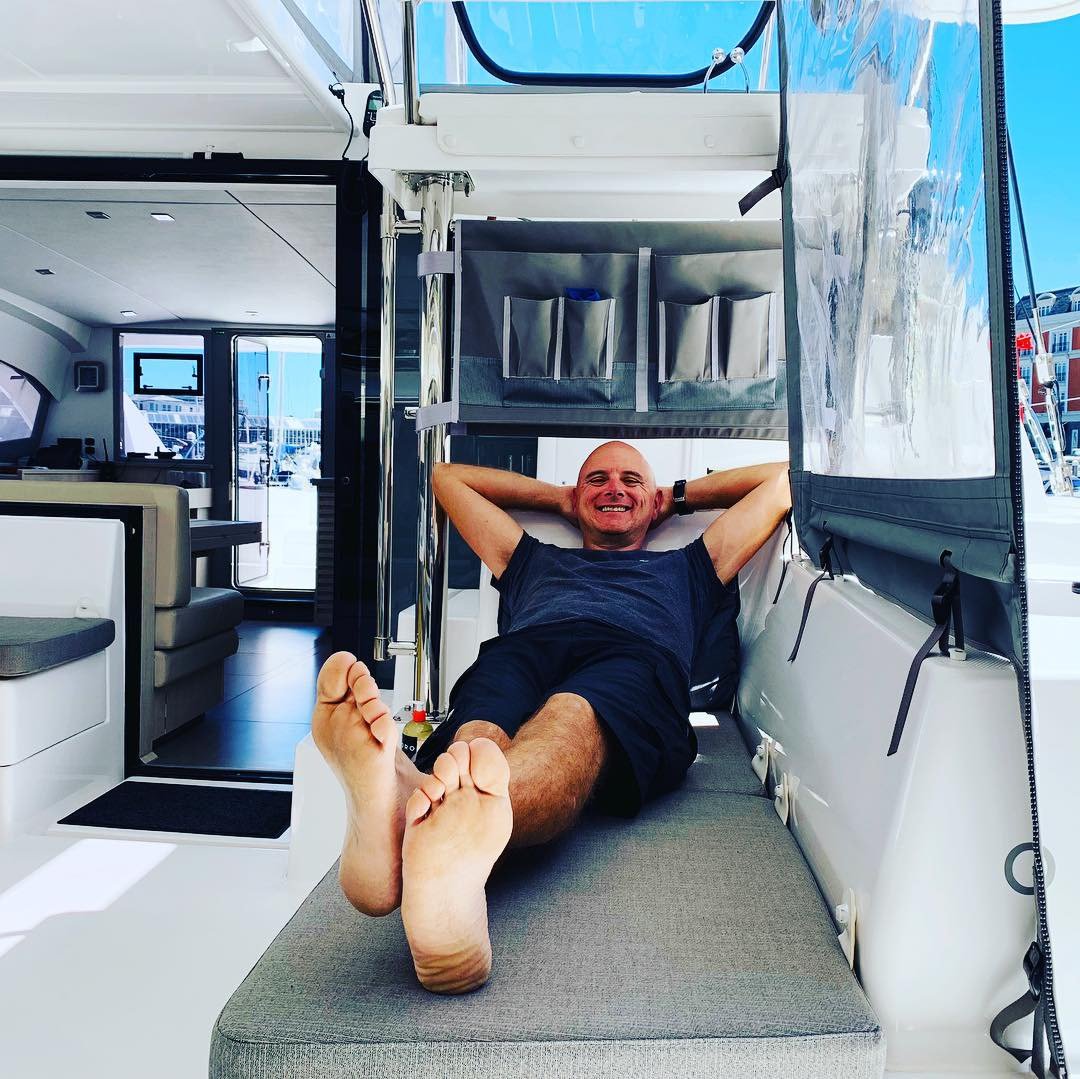
On the outside, the deck is uncluttered with flush hatches and well positioned grab handles. The raised helm station has great visibility and with two electric winches and all lines coming right at the helm, it is very easy to sail this boat short-handed. Every aspect of this yacht is meticulously designed for comfort, safety, and blue water cruising. We are impressed with the finishes and the attention to details. South Africans know how to build boats!
During the sea trial I was impressed of how well it sails, making a SOG (Speed Over Ground) of 6.4 knots in 10 knots of True Wind, close hauled point of sail. The square main top looks stunning. It's easy to hoist thanks to the electric winch at the helm station and has an innovative reefing system that allows you to reef without having to go to the mast. The genoa is also very easy to hoist and furl, with all the lines right by the helm.
Yuka on the foredeck during the sea trial — Table Mountain rising behind her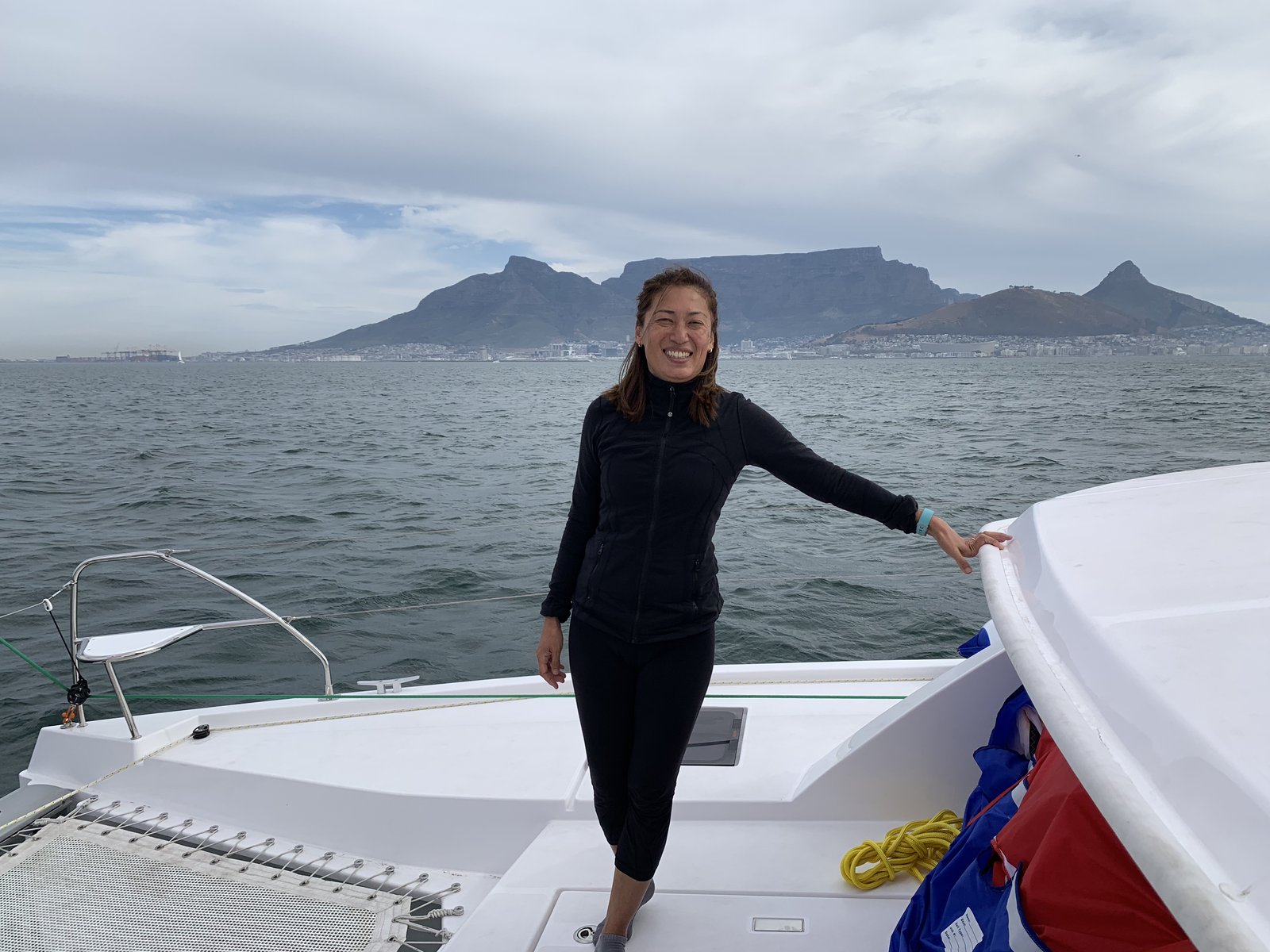
Yuka under the Oroboro parasailor on its first test — the custom compass logo on orange and white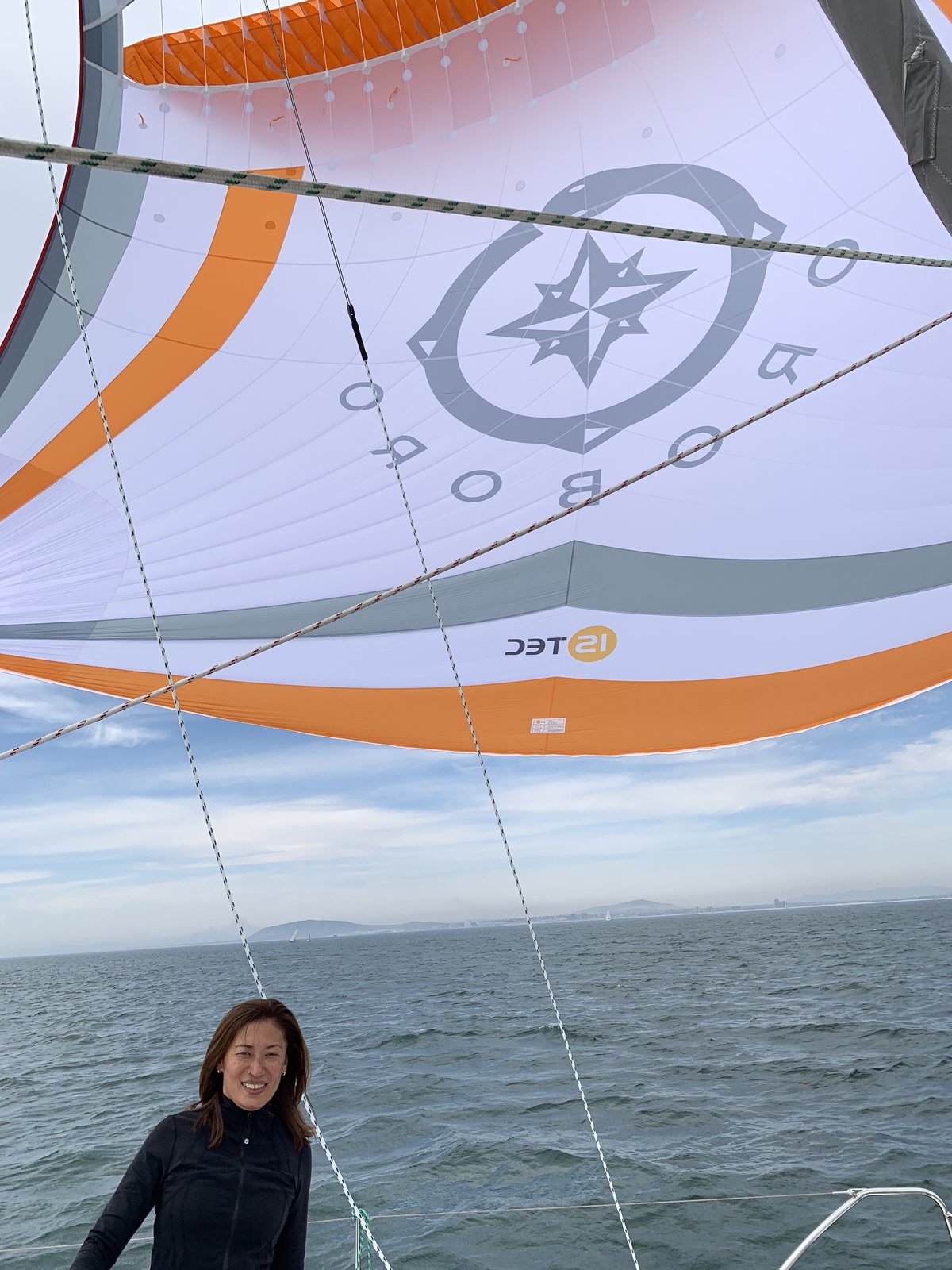
Oroboro at anchor off Camps Bay, Lion's Head mountain rising behind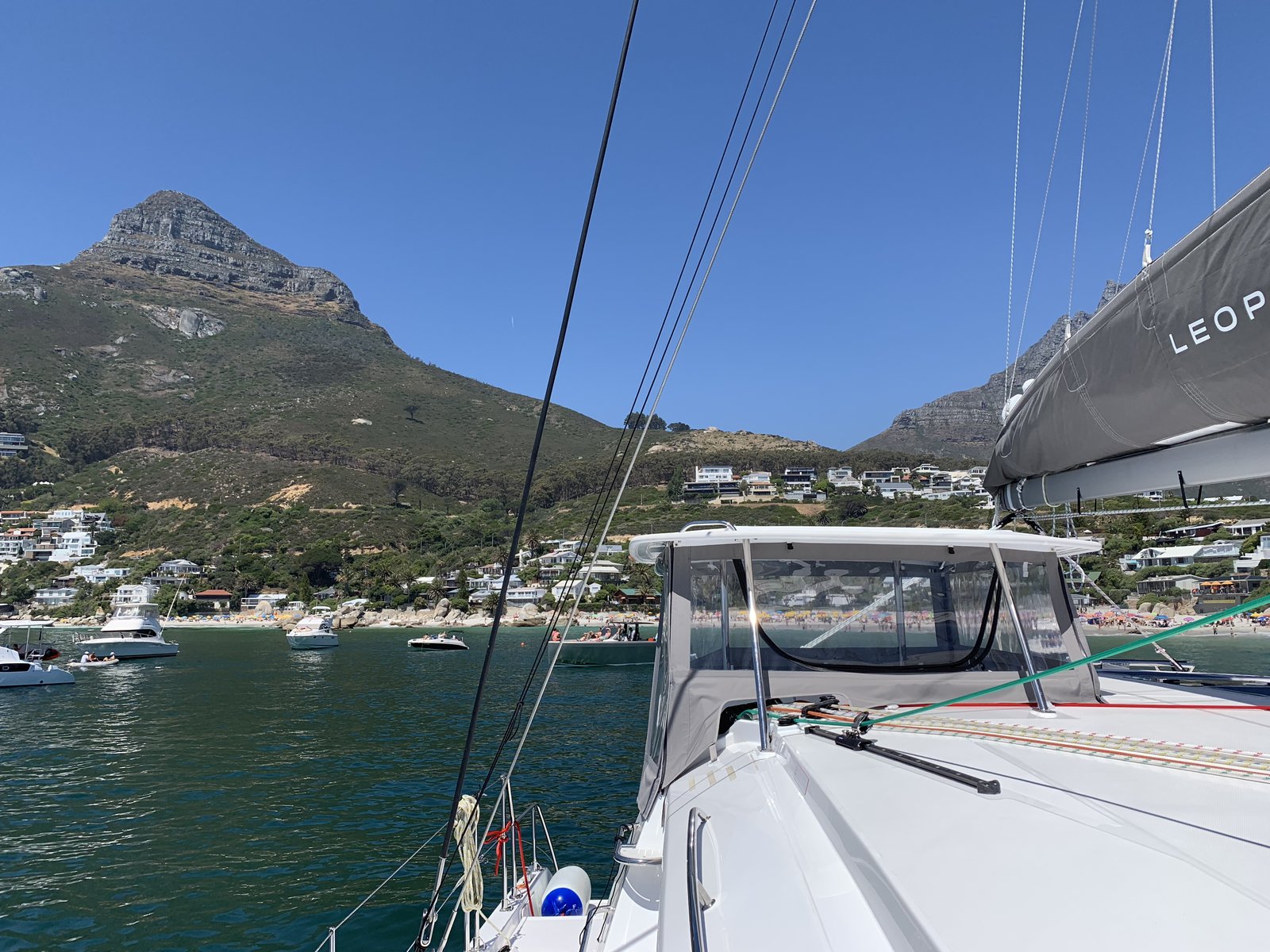
Now the fun part begins: we have a lot of systems that we need to install:
- Battery charger/Inverter (Victron 3KW MultiPlus)
- Smart battery monitor (Victron MV-712)
- Battery control unit (Victron Venus GX)
- Alternator to battery charger (Sterling)
- Water Maker (Spectra Newport 400)
- AirCon (Dometic 12000 BTU)
- Rigid and flexible solar panels (SunPower)
- Solar panel controllers (Victron PWM and MPPT)
- Custom stainless steel structure for rigid solar panels
- Helm and cockpit enclosure (North Sail)
- Some extra cabinets in the galley
- Stand up blocks on the bow for the Parasailor (Harken)
- New anchor (Spade 35kg)
I'll write a series of posts in the future on each one of these systems to explain what they are and why you need them.
It will take up to three weeks to get most of this work done. The stainless steel structure and enclosure canvas will take even a few more weeks. By mid October we should be able to start daily sailings to test the boat. Maybe even spend a few nights at anchor in Langebaan.
The weeks at Cape Grace were a blur of deliveries, installations, and testing. Here is some of what went into fitting Oroboro out for blue water cruising.
The Raymarine radar display — vessels around us and the 3.3m marina depth at a glance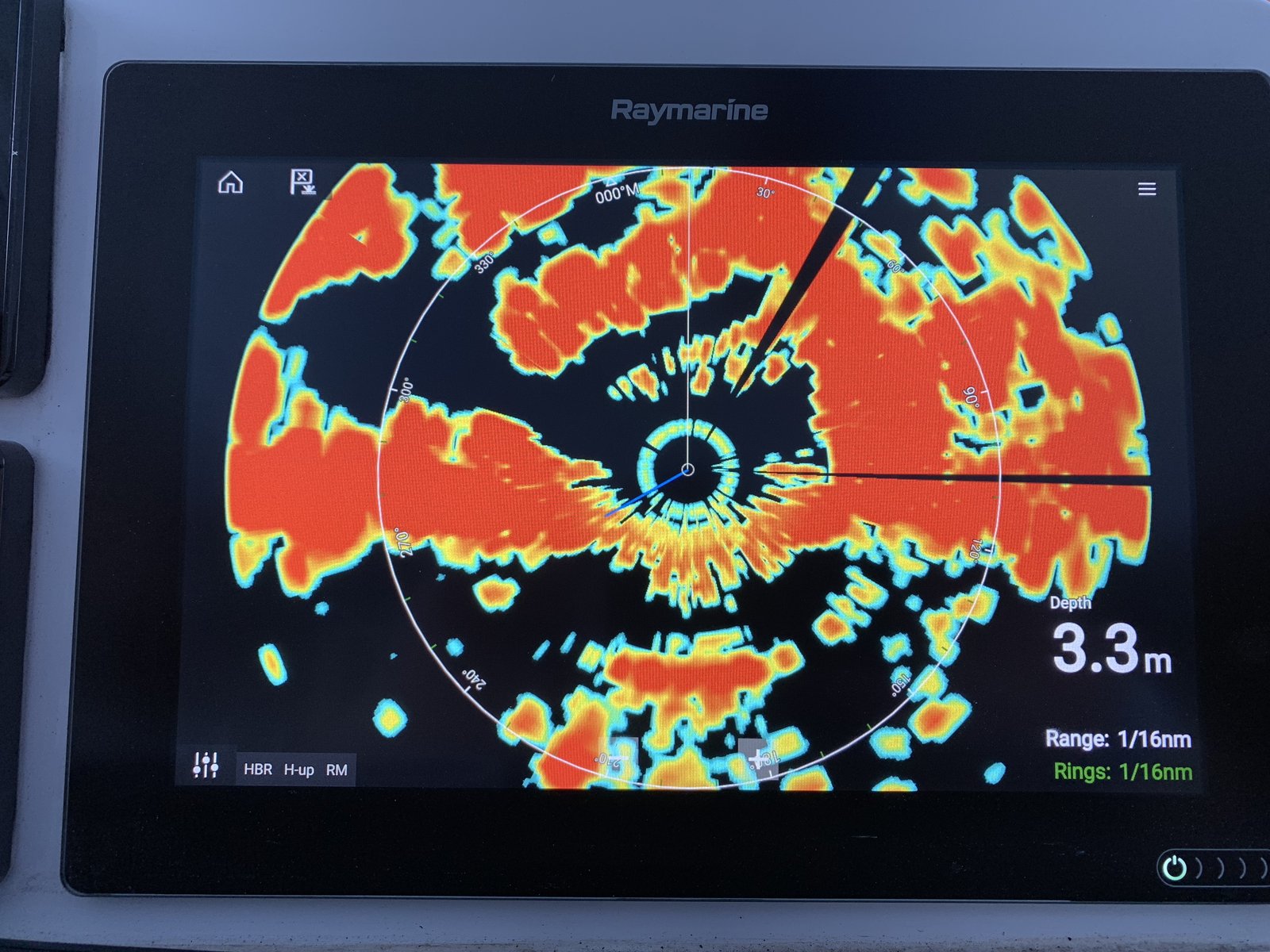
The cockpit enclosure being fitted — the solar panel arch taking shape above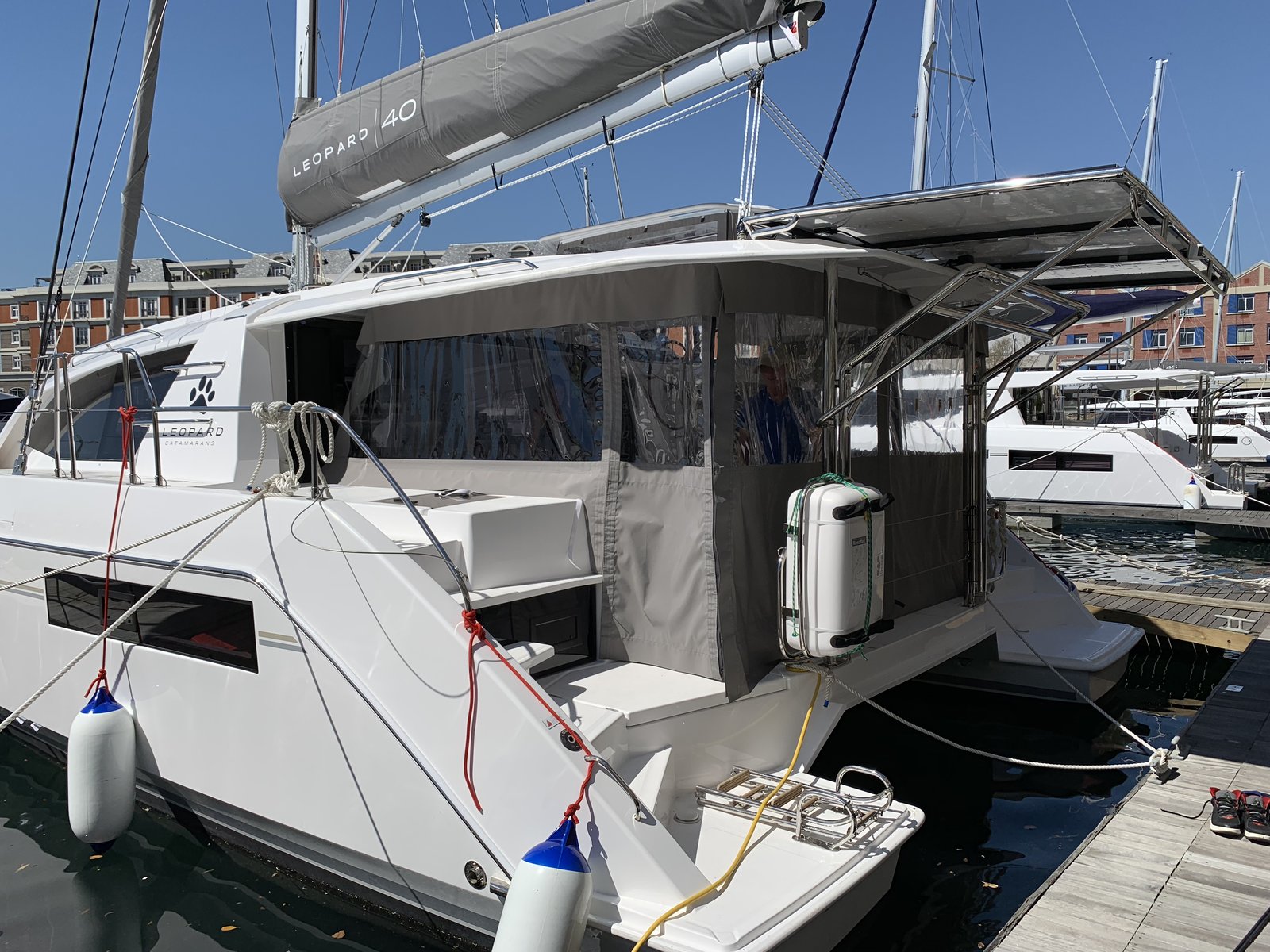
Flexible SunPower solar panels laid across the coachroof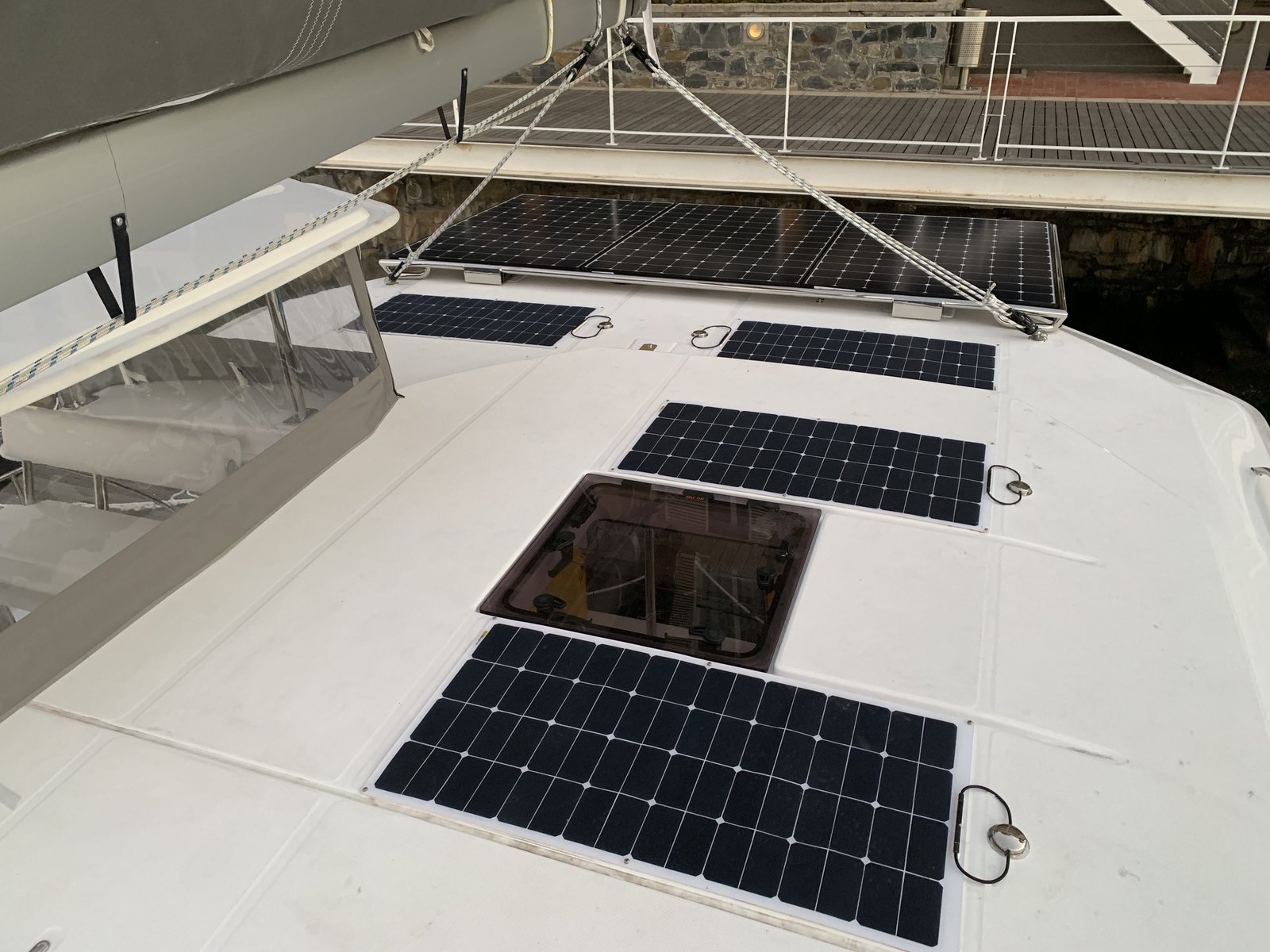
Three rigid SunPower panels mounted on the custom stainless steel arch on the bimini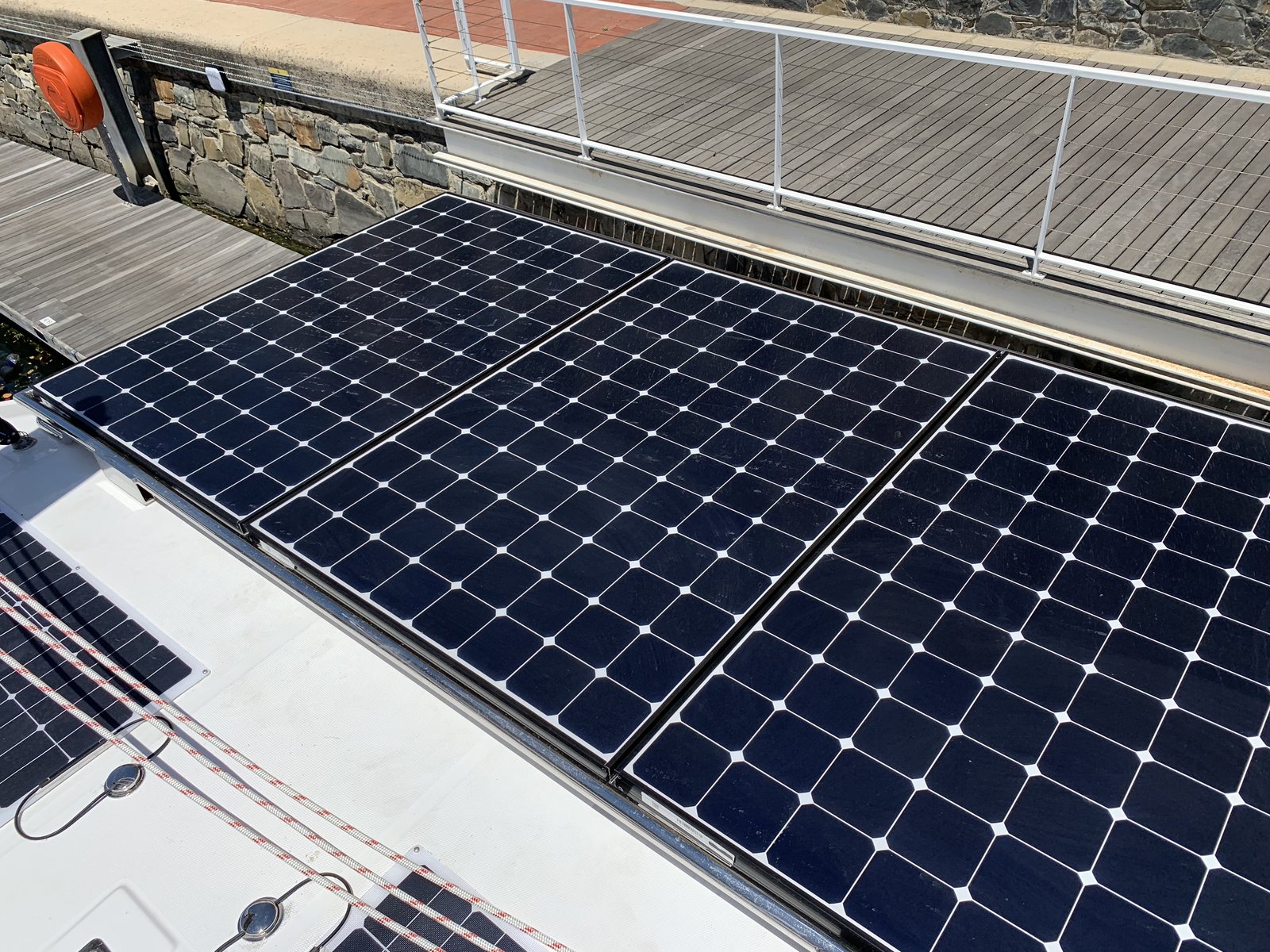
Yuka at the helm with the completed solar panel arch overhead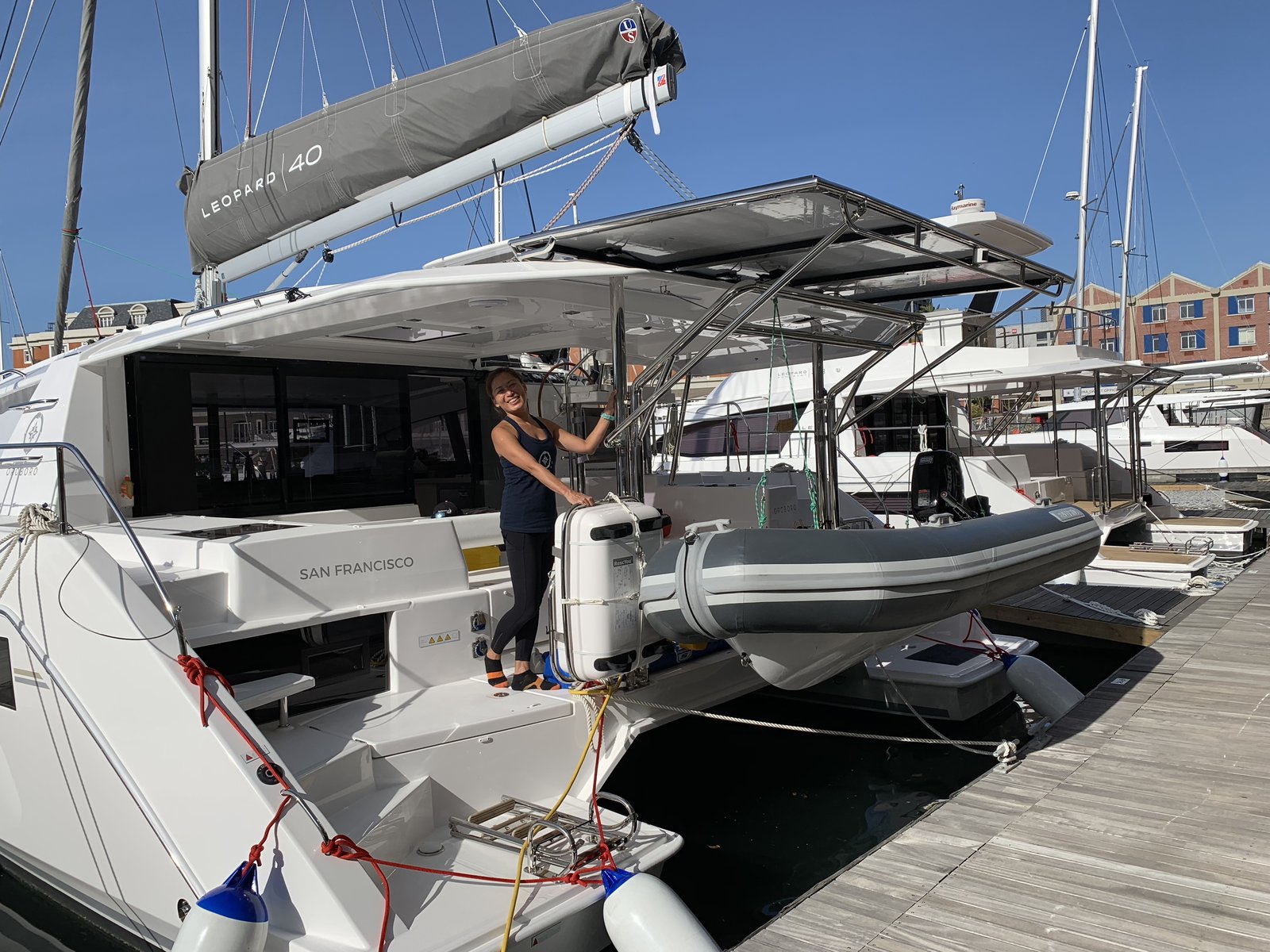
All sail controls run to the helm — labeled clutches for genoa, spinnaker, reefing, and halyards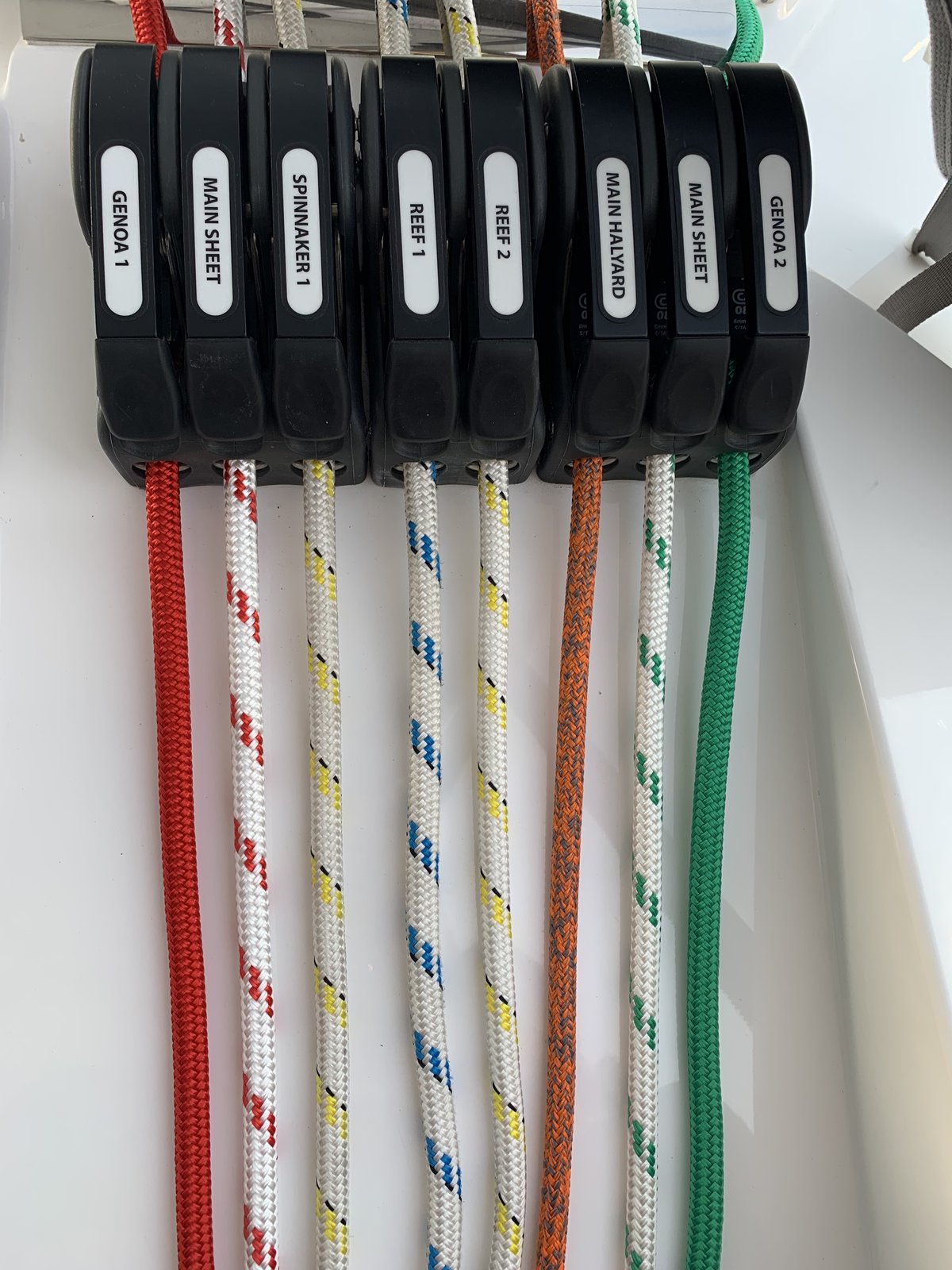
Checking the shroud tension with a QuickCheck rig tension gauge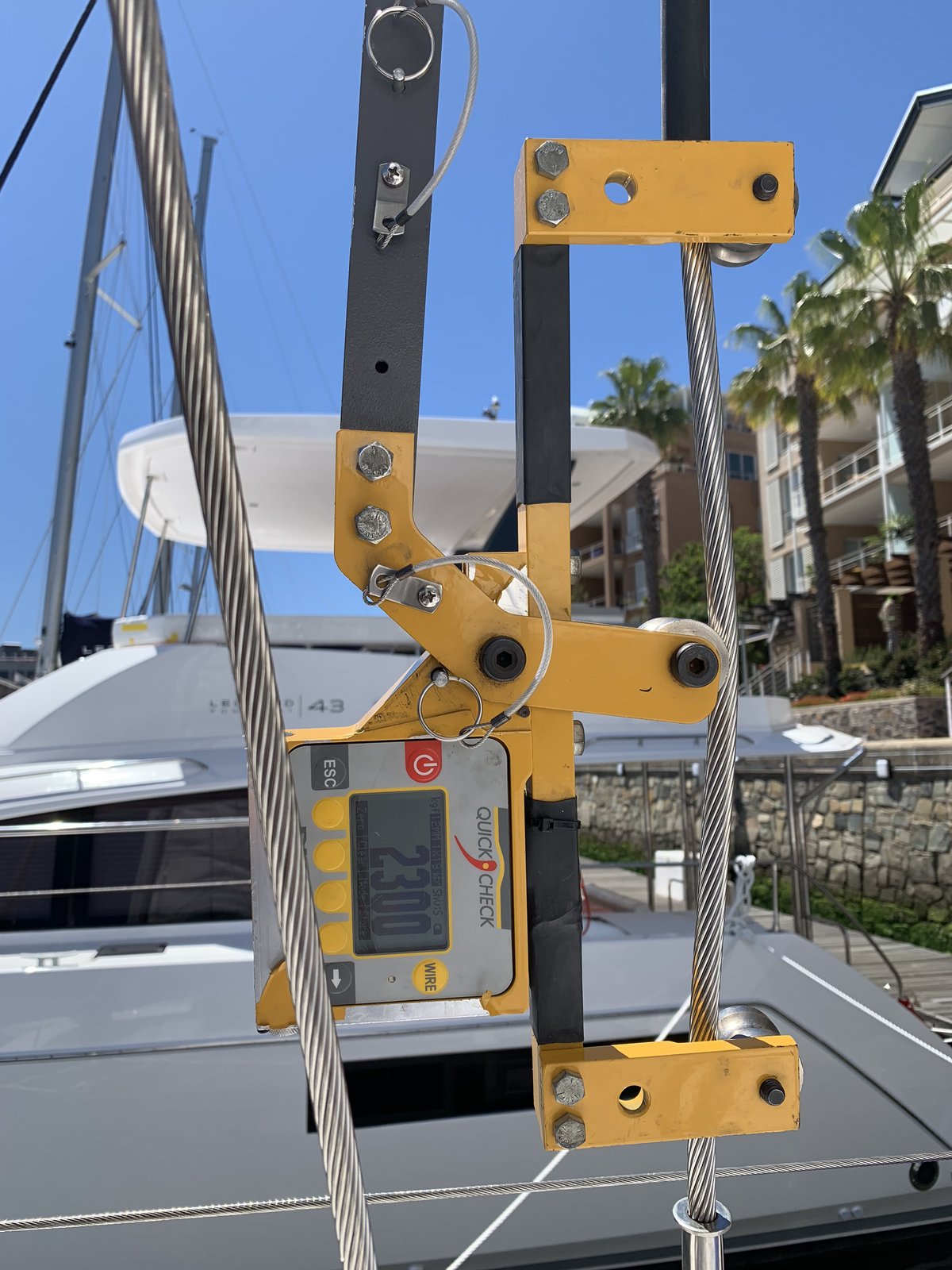
A custom line organizer mounted at the helm station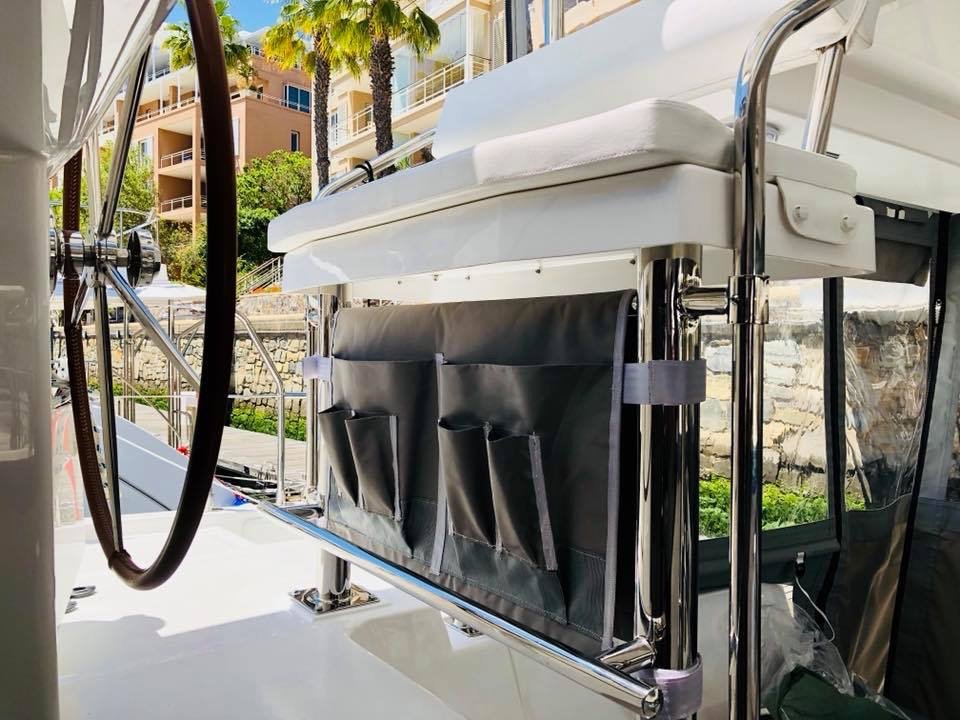
San Francisco — our home port, lettered on the hull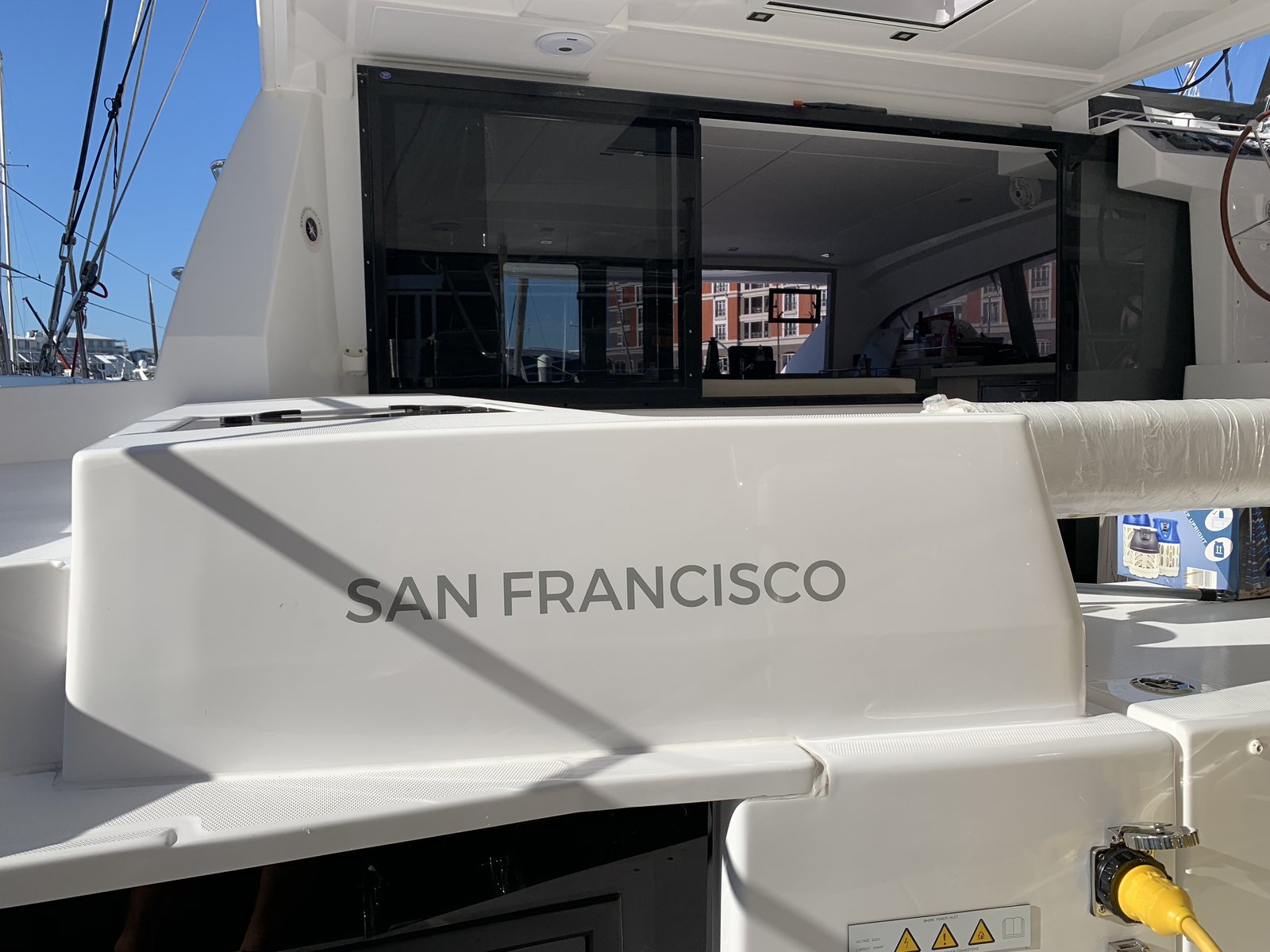
Yuka unpacking the ISTEC parasailor bag on the foredeck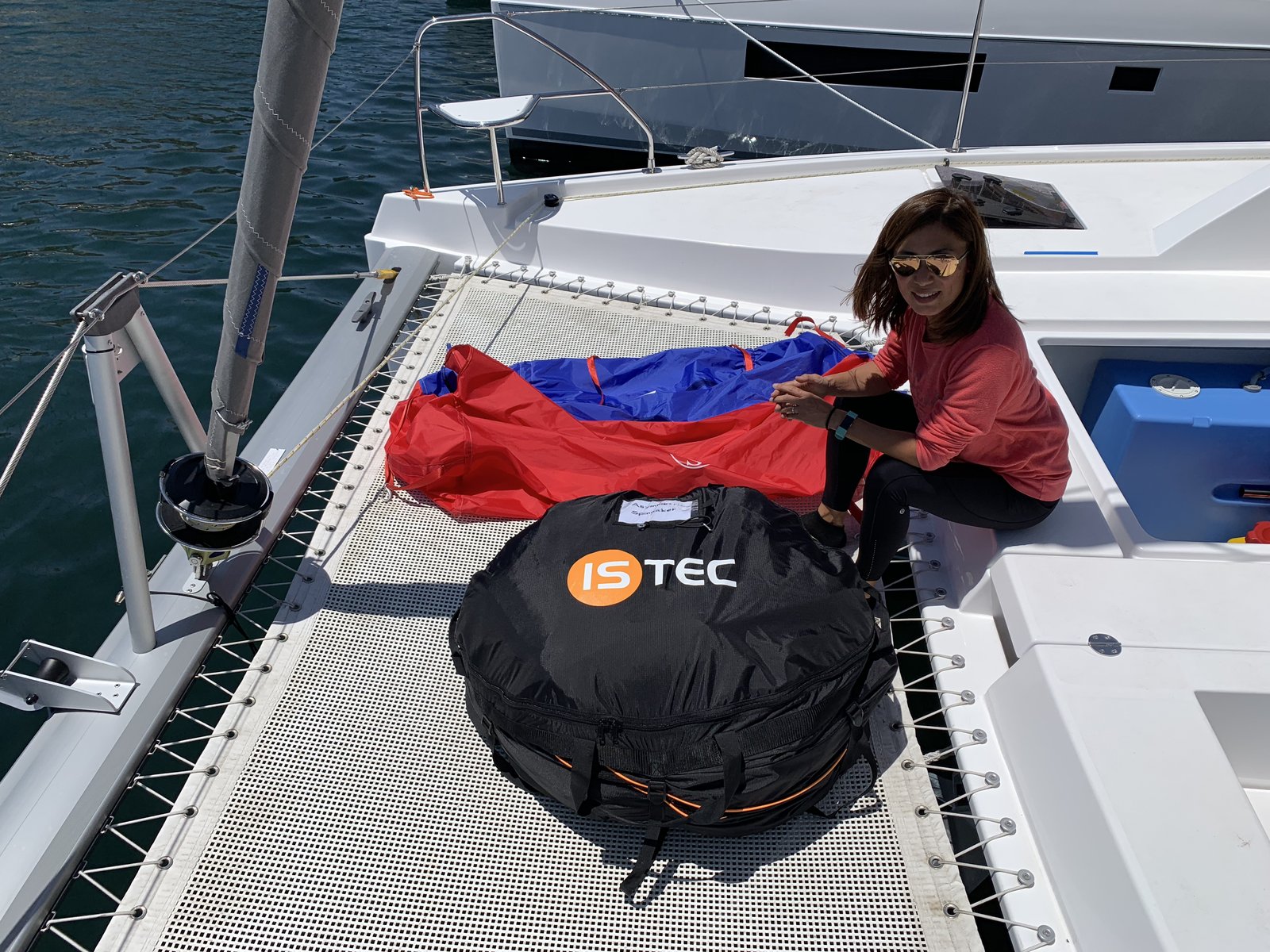
The yellow parasailor pulling Oroboro on a grey day off Cape Town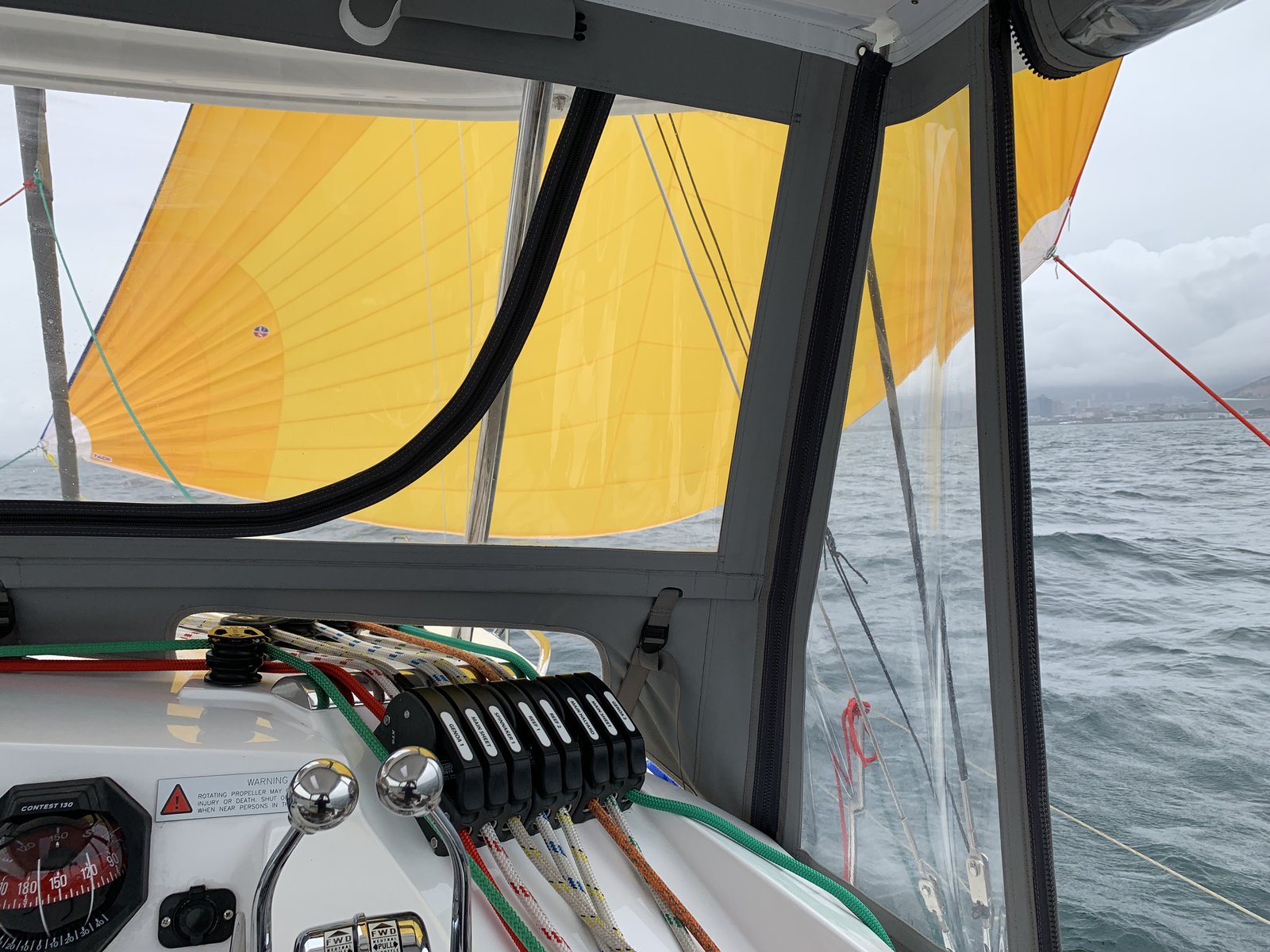
Oroboro at Cape Grace — fully fitted out and ready for sea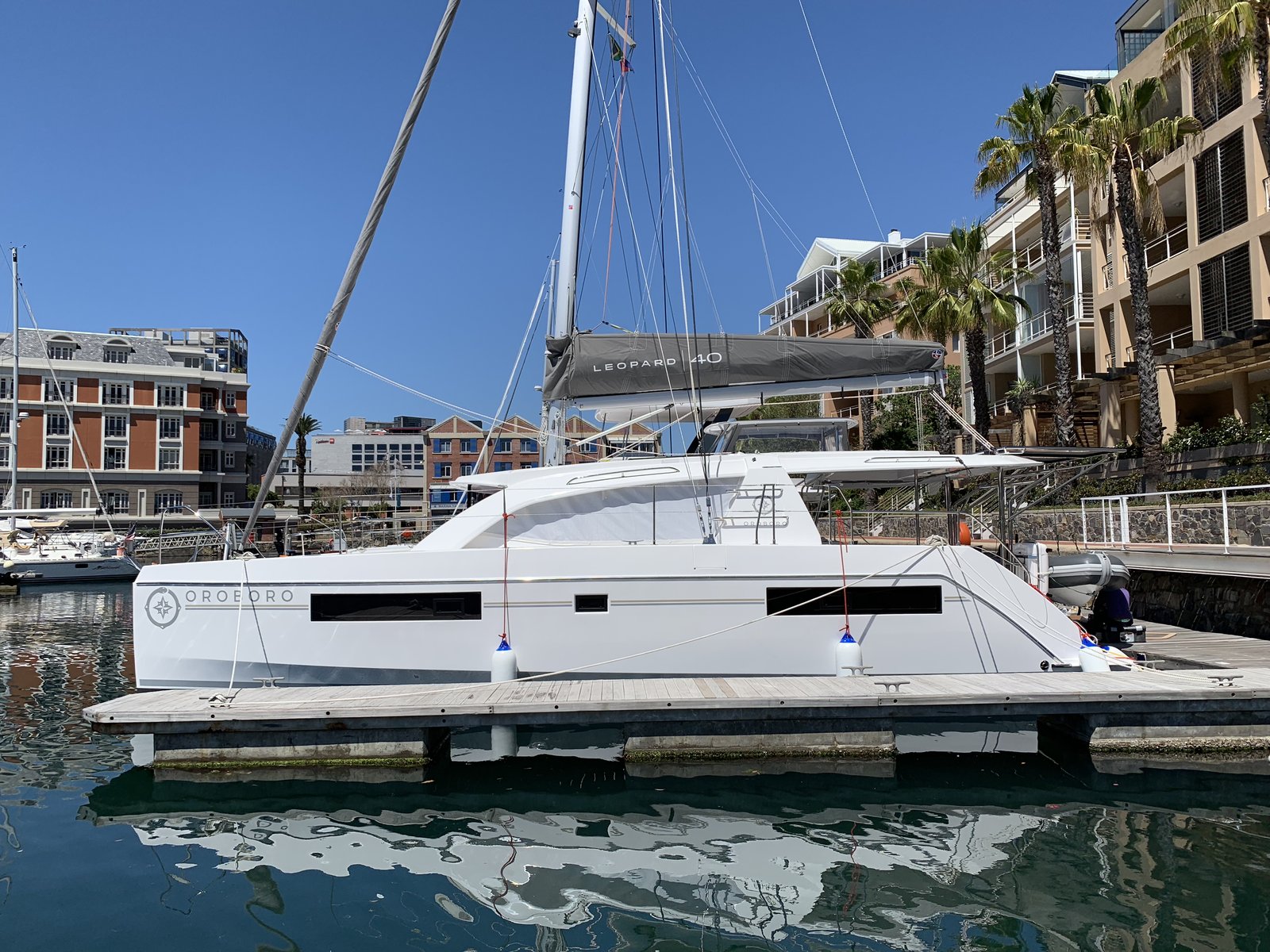
For the shake-down sail we headed north to Langebaan, a sheltered lagoon about 100 miles up the coast. The turquoise water and flat anchorage made for a perfect test of everything we had installed.
Oroboro anchored in the turquoise lagoon at Langebaan during the shake-down sail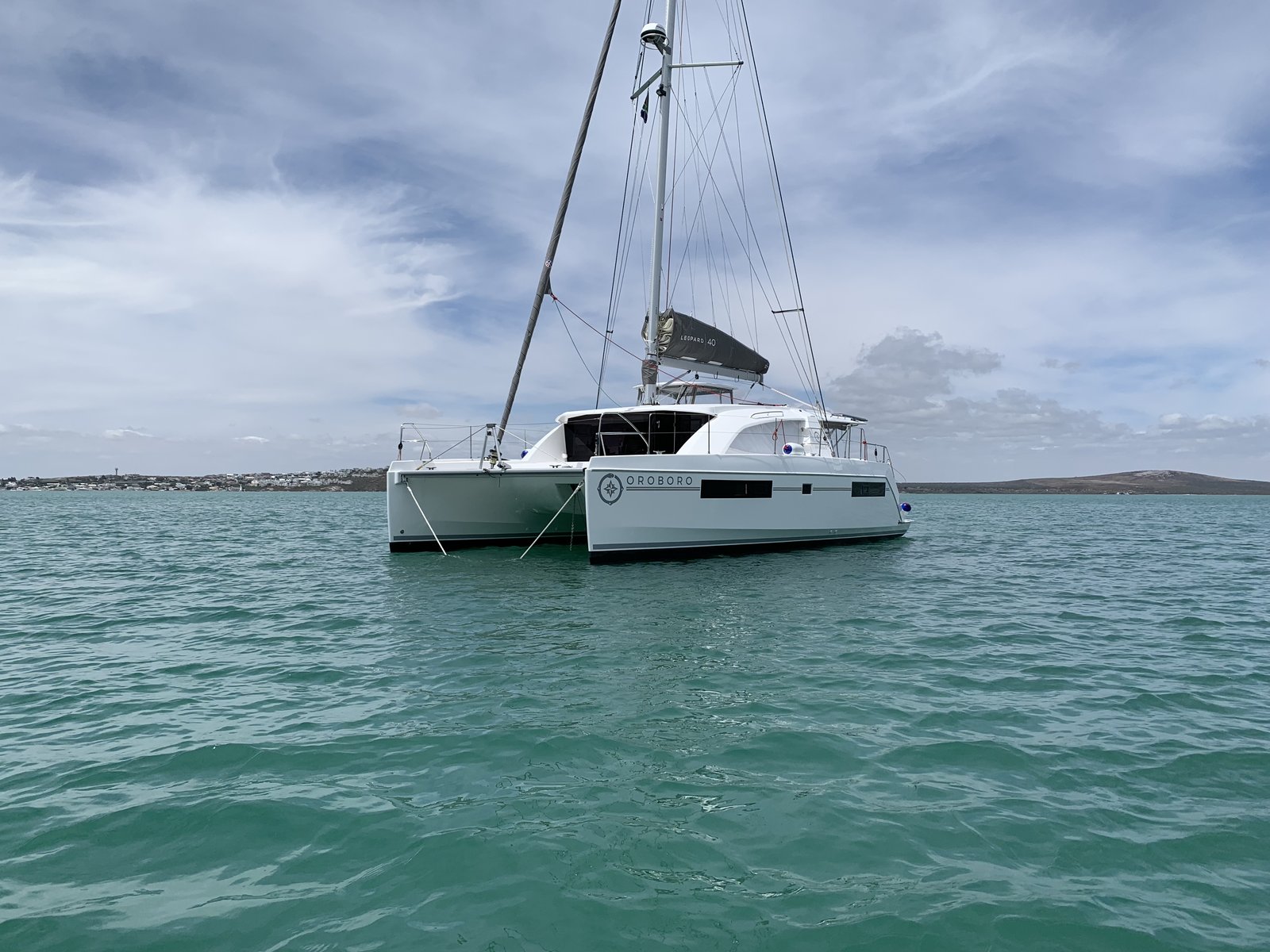
Oroboro at anchor at Langebaan — the Saldanha peninsula in the distance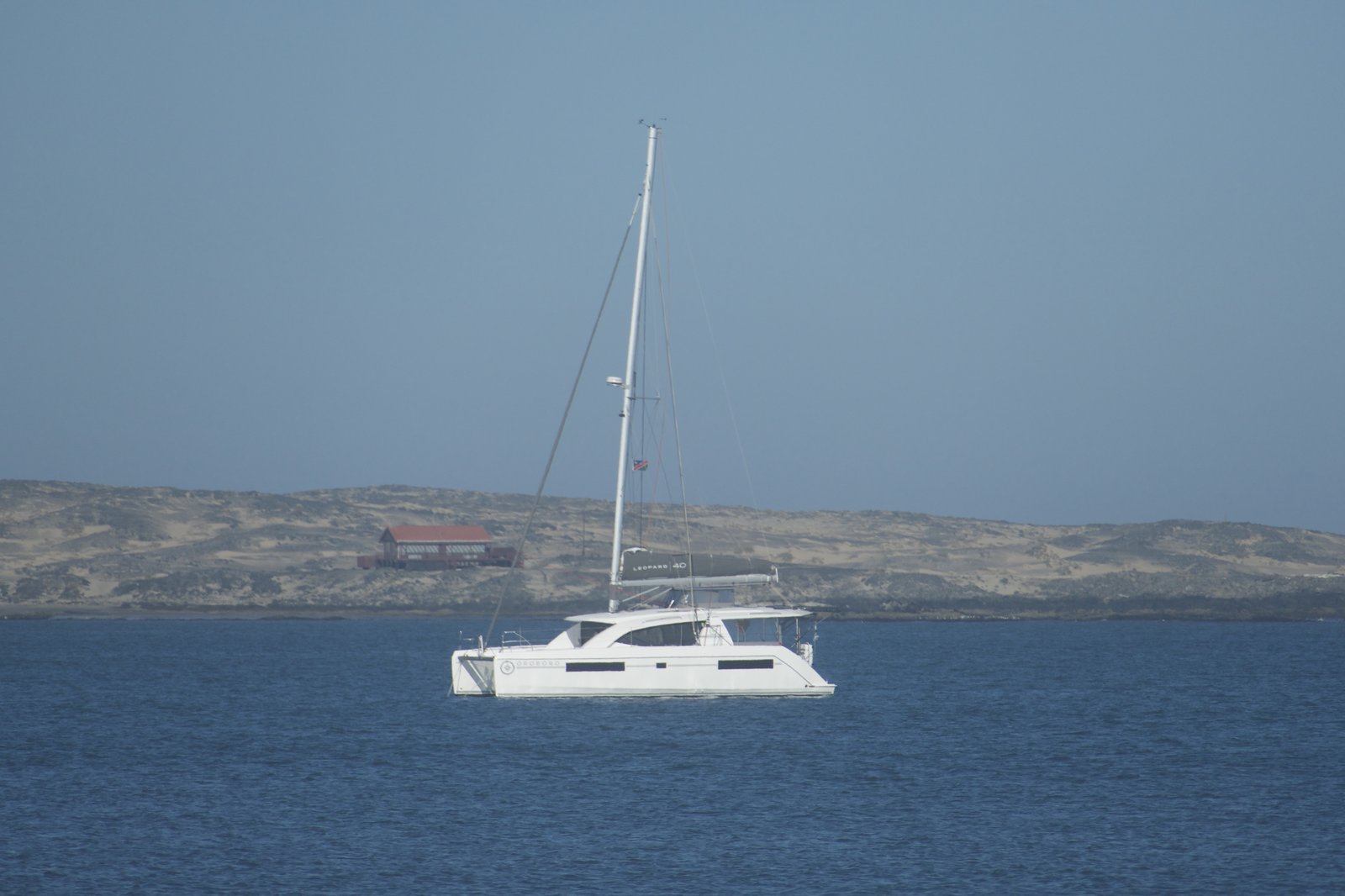
Yuka at the helm during the Langebaan shake-down, a cargo ship on the horizon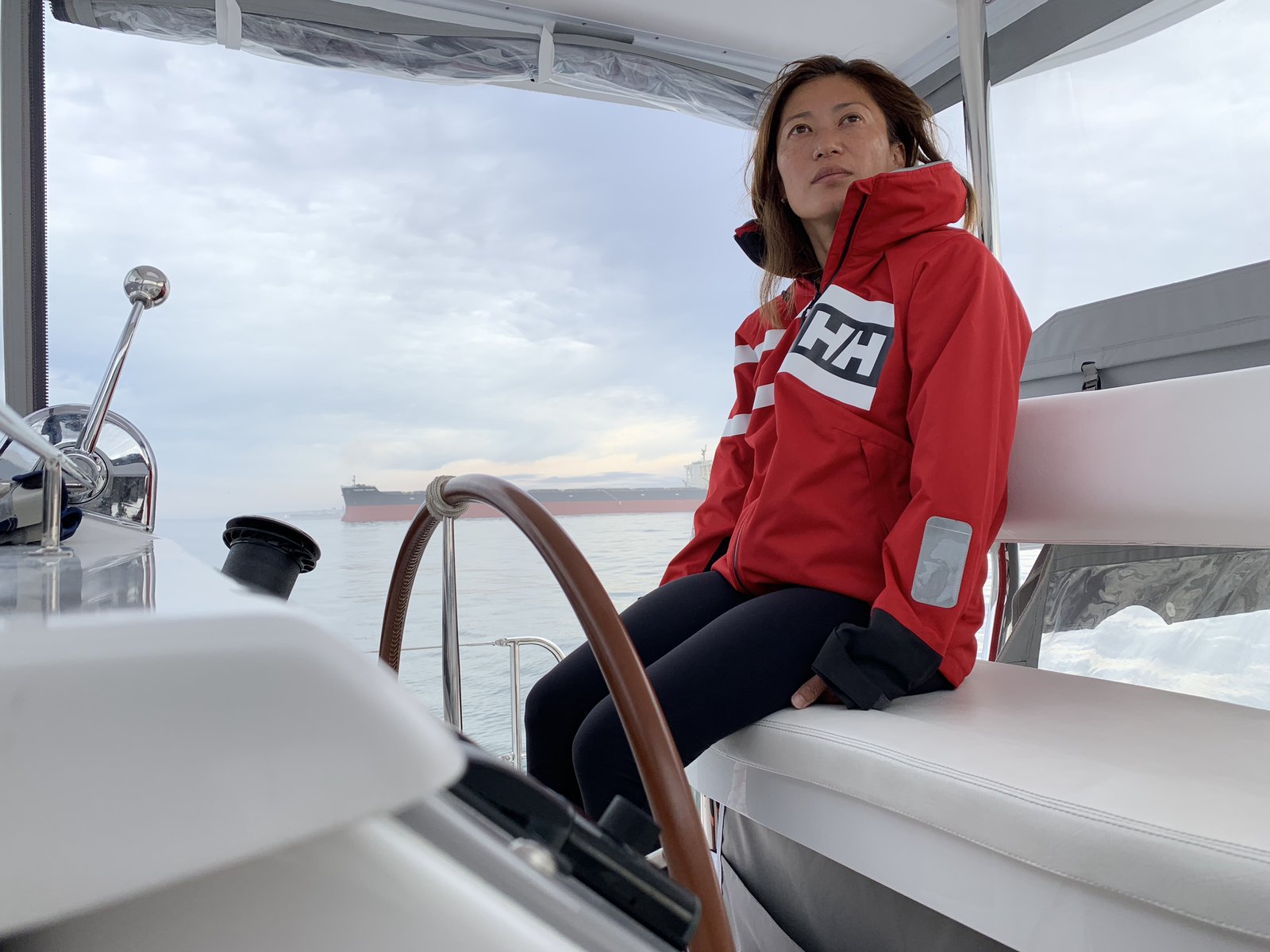
Yuka holds the Oroboro banner at Cape Grace — departure day almost here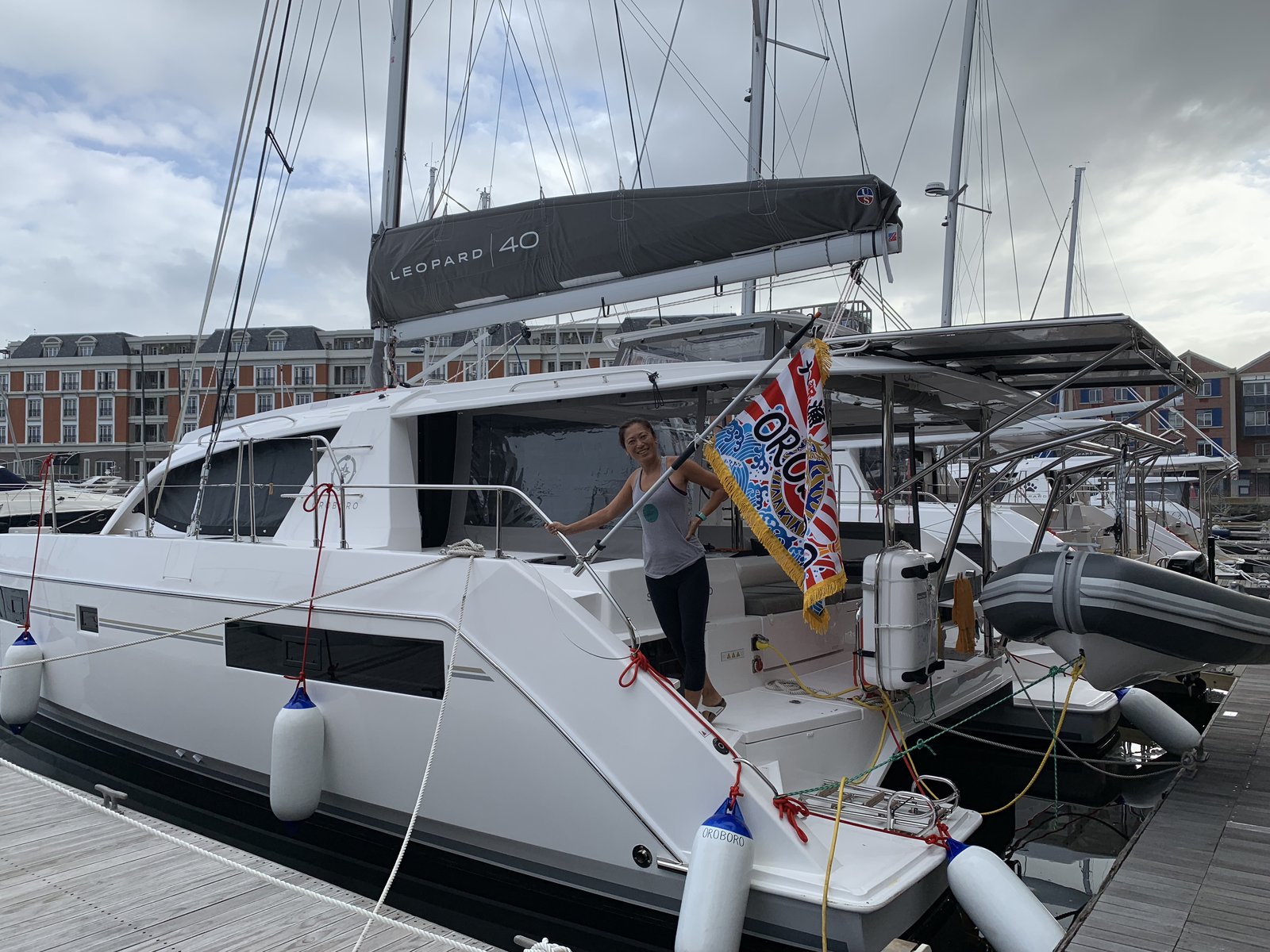
On December 15, 2018, we cast off and headed north into the Atlantic.
Sunset through the saloon forward windows — the first night at sea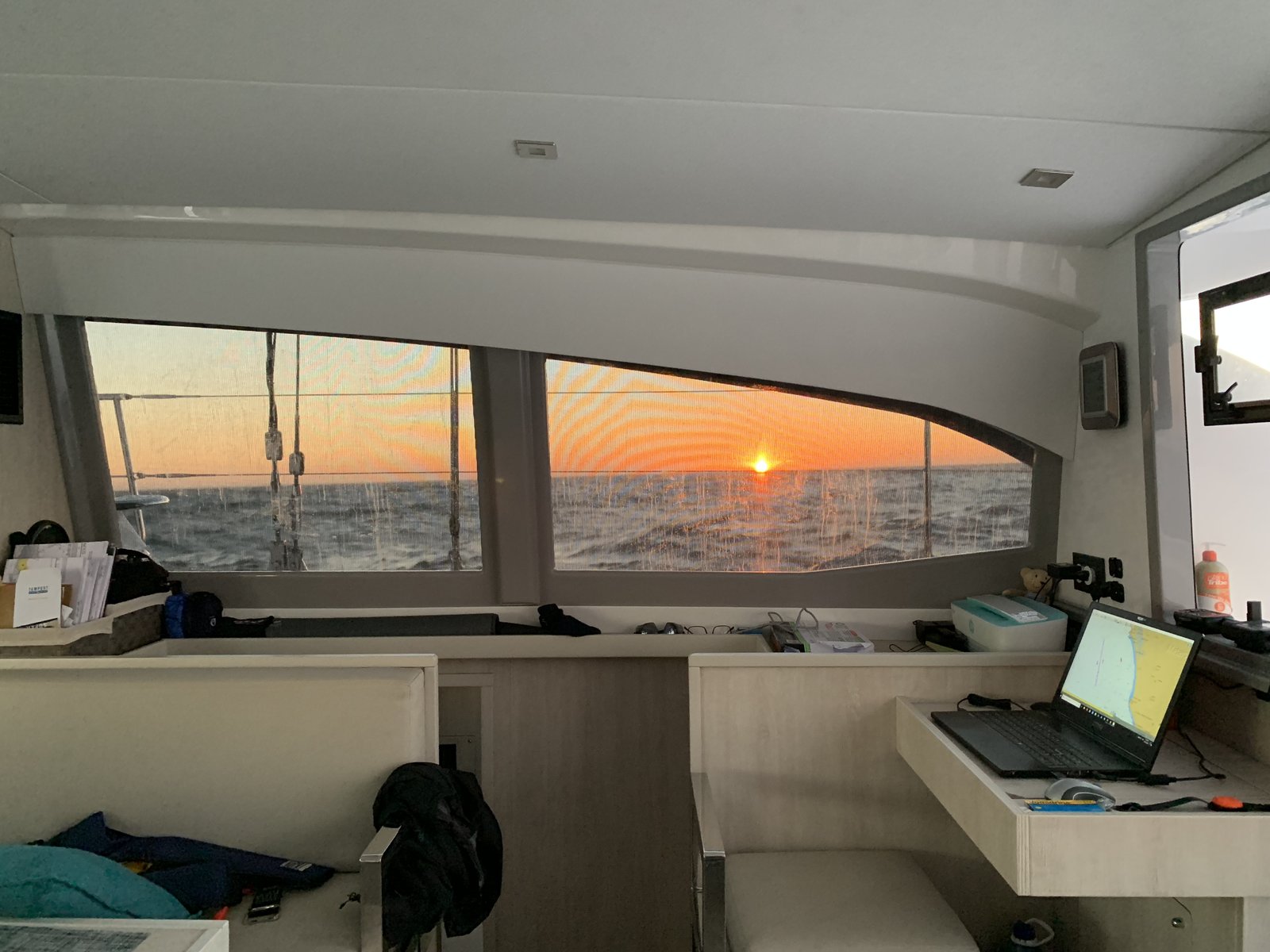
The Oroboro parasailor filling with wind on the first full day of the Atlantic passage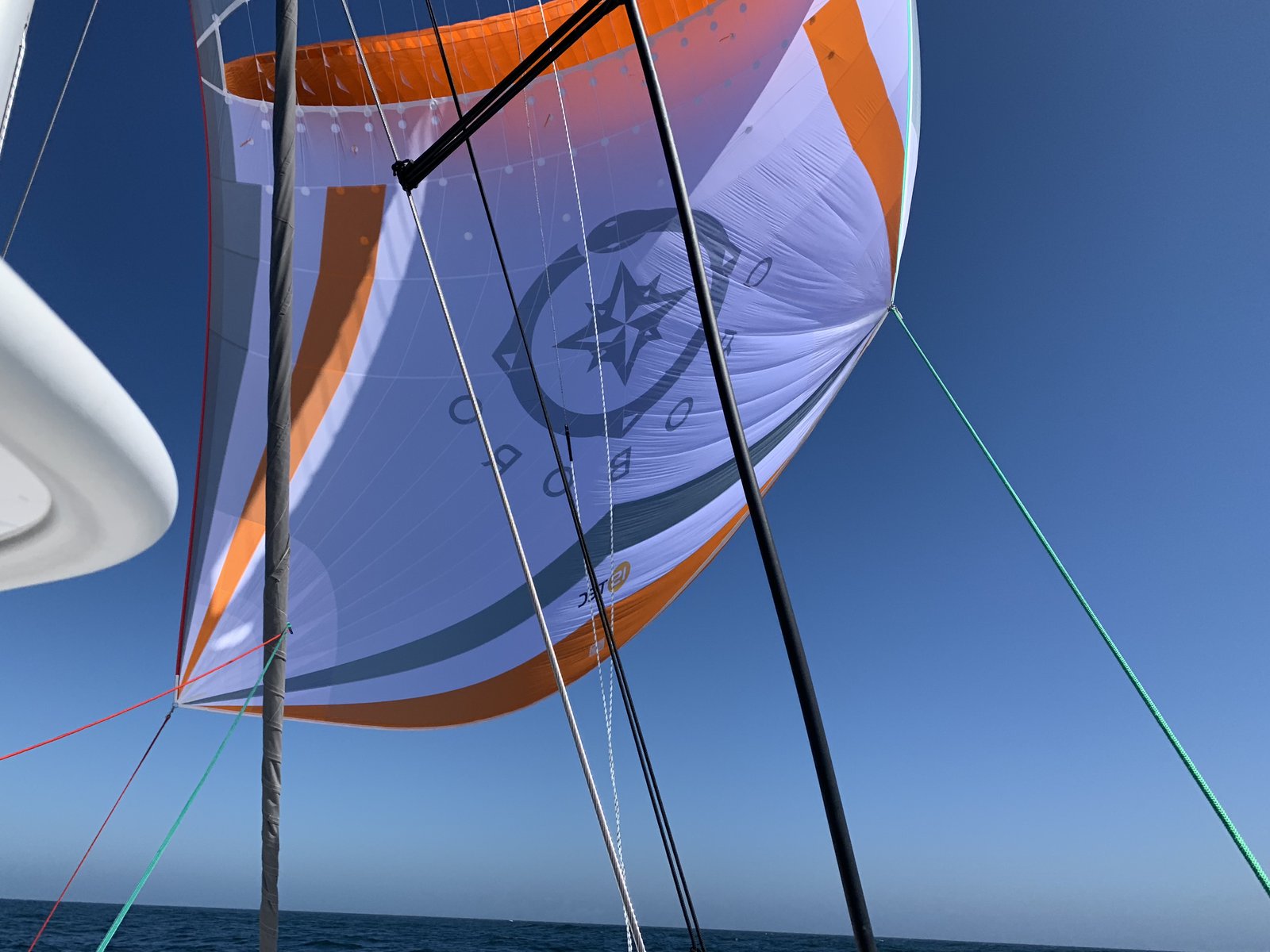
Our first stop in the South Atlantic was St. Helena, the remote British island where Napoleon spent his last years. After weeks at sea, that tiny speck of volcanic rock in the ocean felt like paradise.
Oroboro at anchor in James Bay, St. Helena — volcanic cliffs rising behind her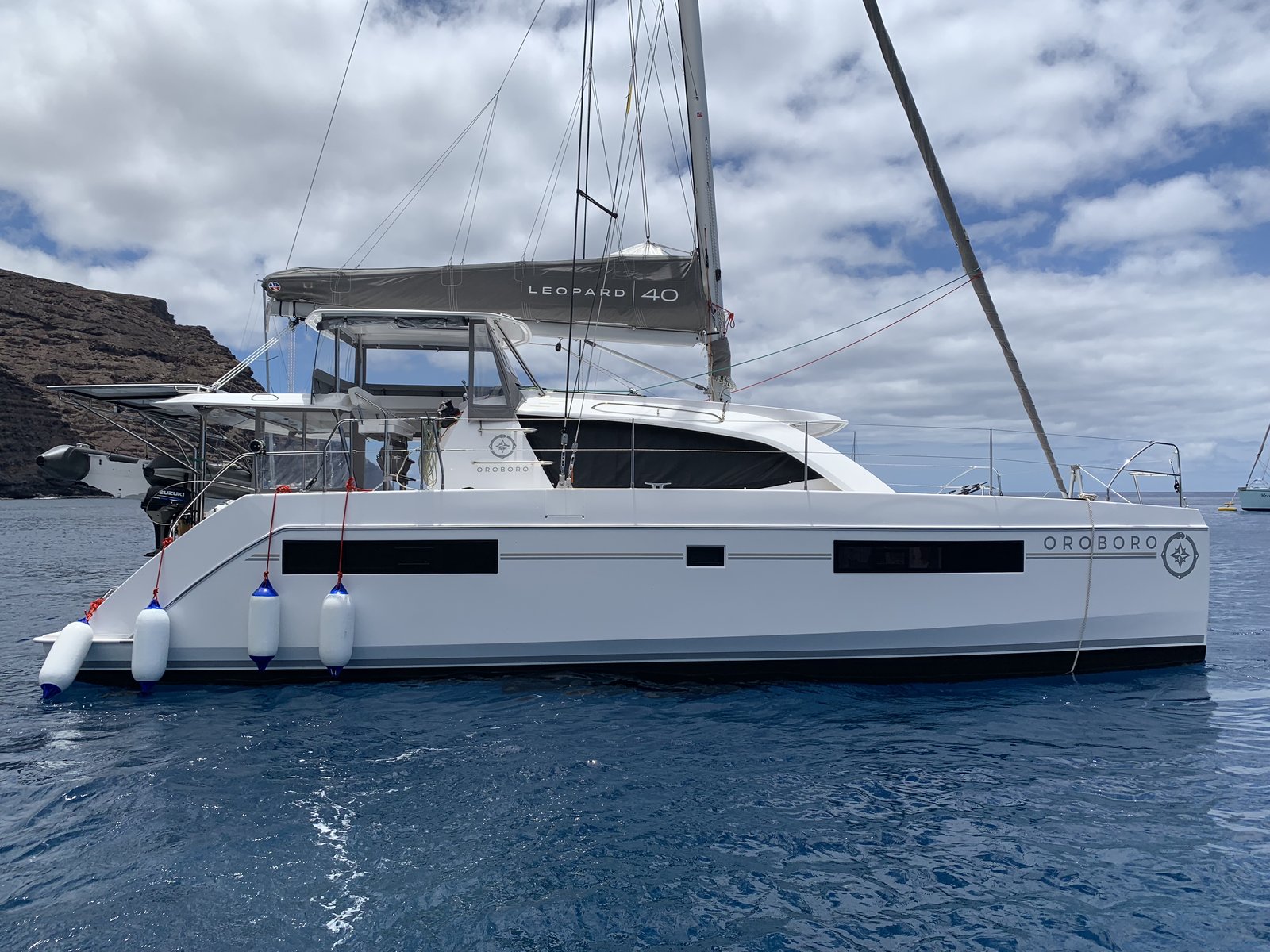
Oroboro seen from the St. Helena clifftops — a small white hull in the deep blue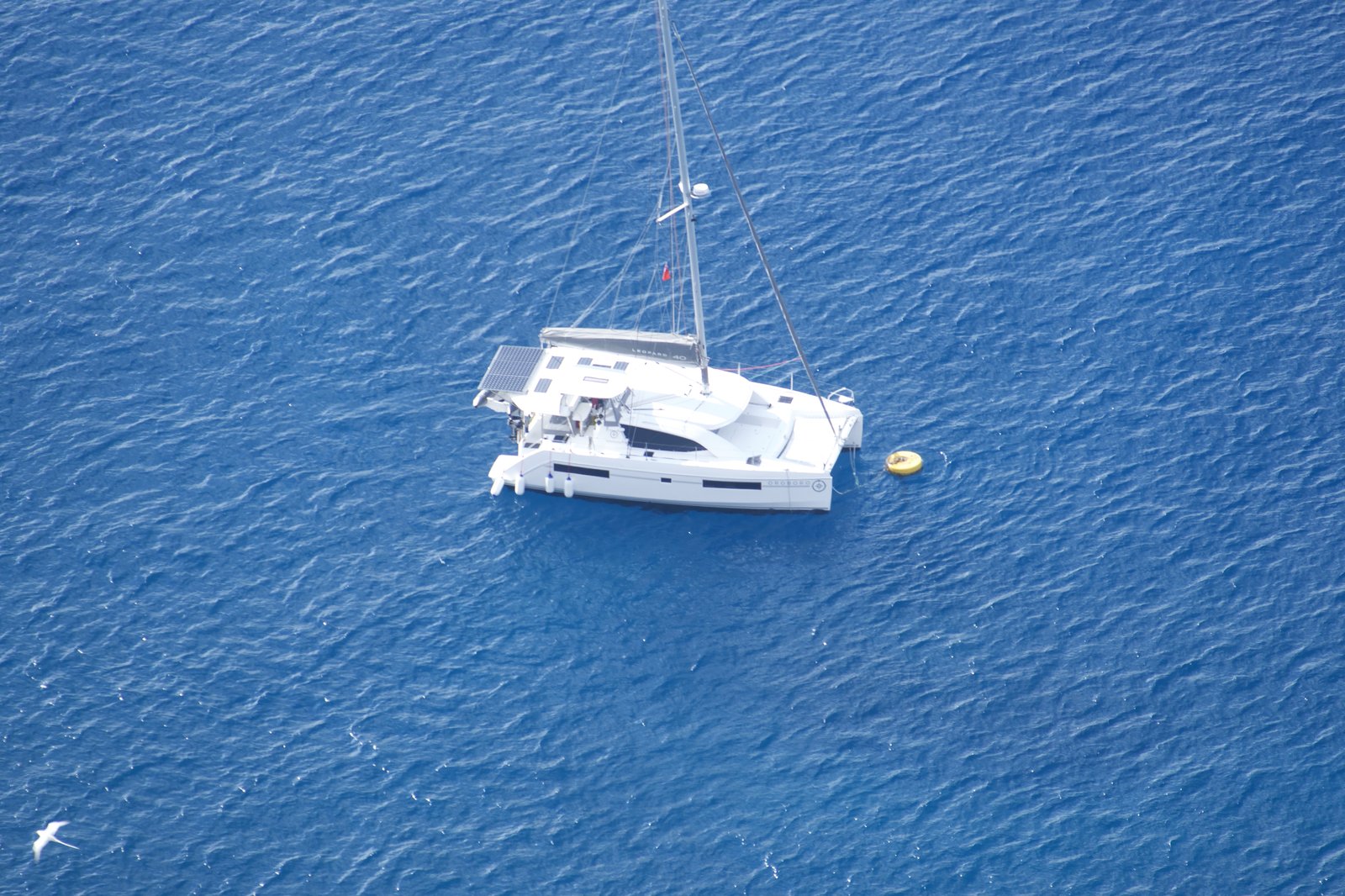
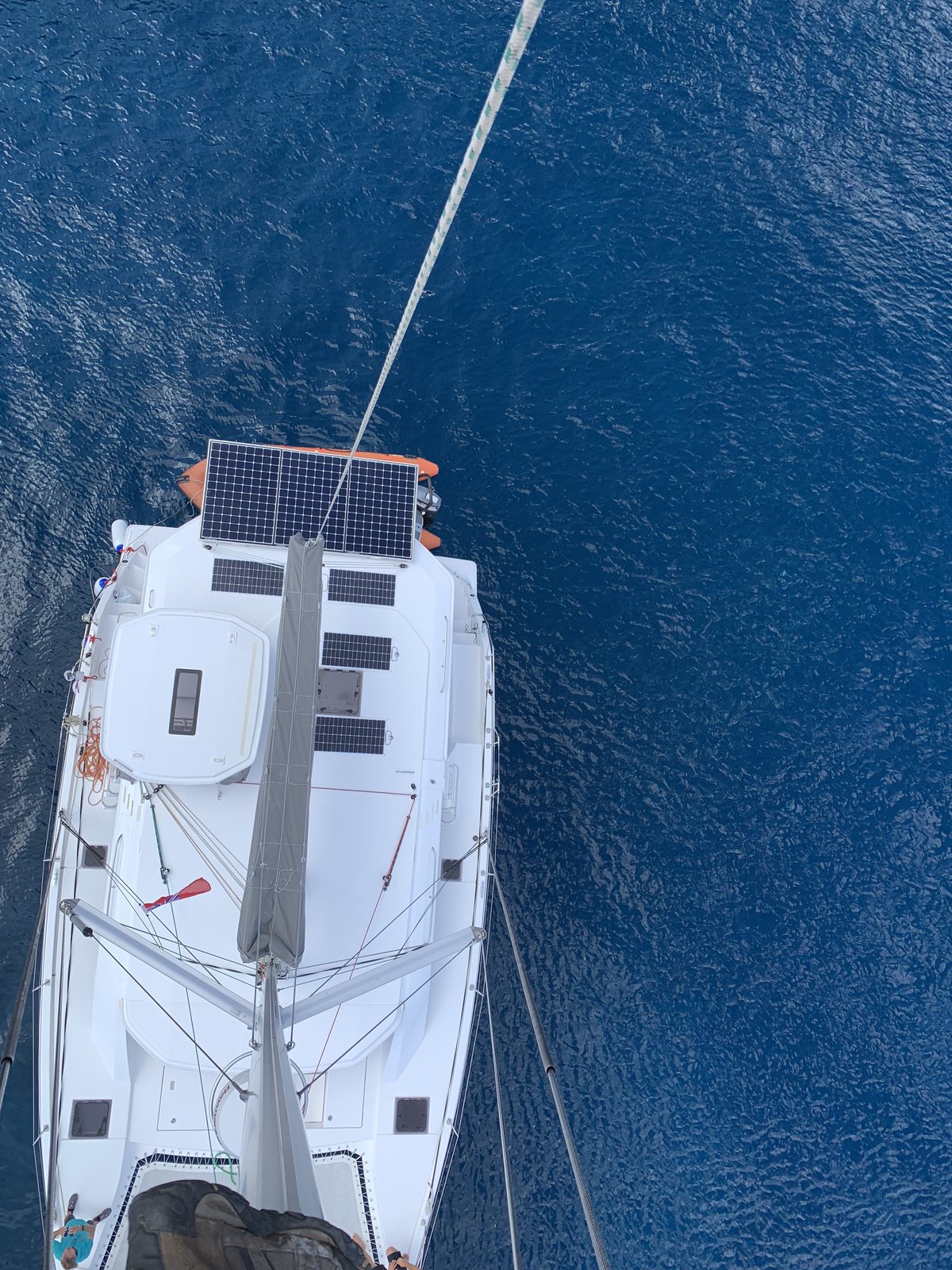
Oroboro from the masthead — solar panels covering the coachroof, open ocean in every direction