Rio de Janeiro, Brazil, February 2019
To be honest, at the beginning I wasn't particularly interested in visiting Rio, especially during Carnival. Rio was very low on my personal list of places to visit. But my Catalan friends Joaquin and Monica invited us to sail all the way there as guests on their boat, a beautiful Leopard 45. How could we turn down such an offer?
Joaquin and Monica had also some old time friends visiting, Ricardo and Isabel. For Yuka and I this sailing trip as guests was also like a full immersion Spanish culture class (and cuisine). Learning something new every day from very experienced sailors! Ricardo and Isabel, on top of being a great singer/guitar players and having circumnavigated on a classic wooden sailboat, are also excellent cooks, and taught Yuka how to make bread and the Arros a banda, a very popular dish along the Valencian coast of Spain.
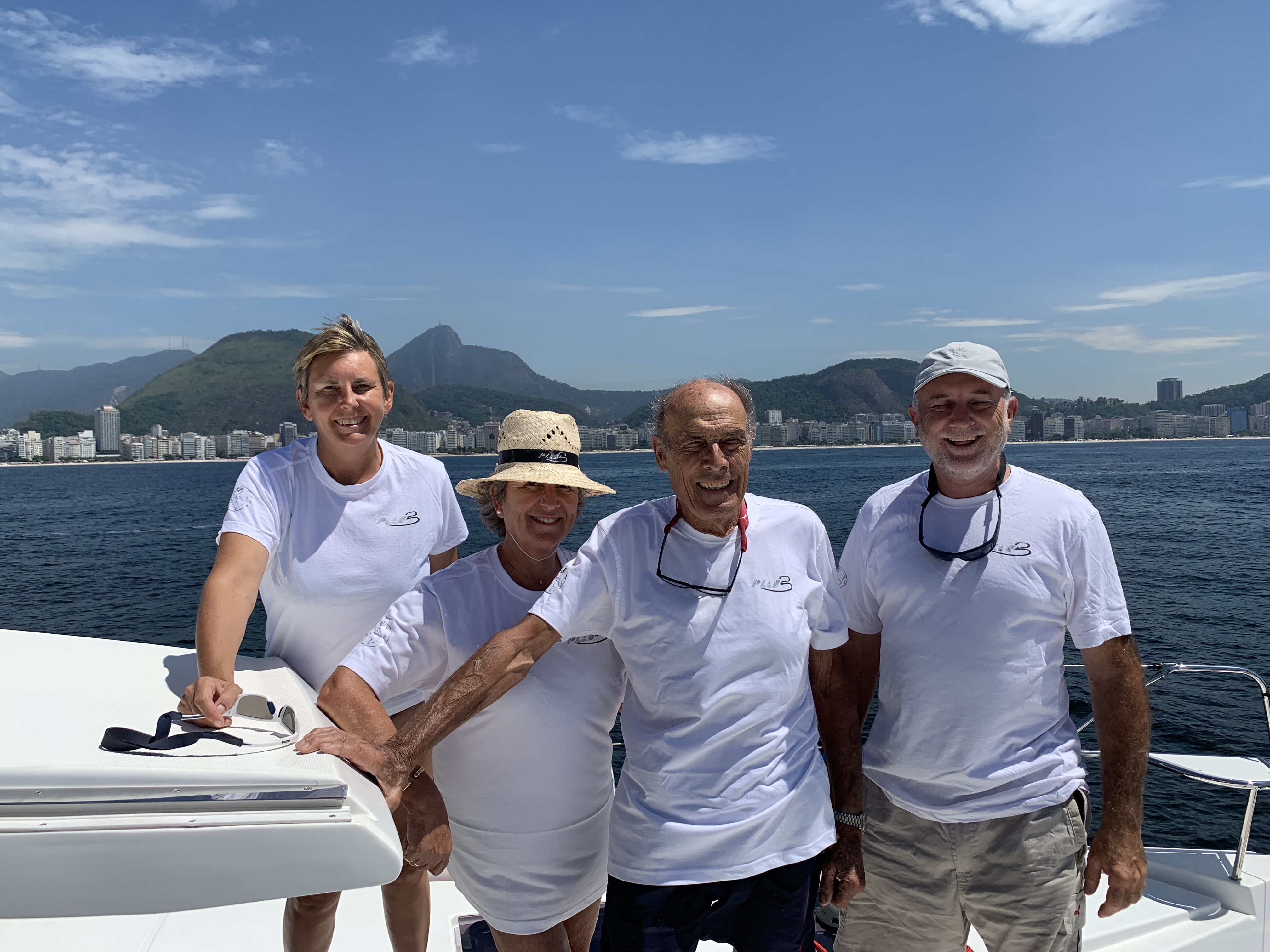
Arriving in Rio de Janeiro by sea
Ricardo fills the cockpit with music on an evening at anchor — Catalan ballads on guitar were the soundtrack of the passage north to Rio
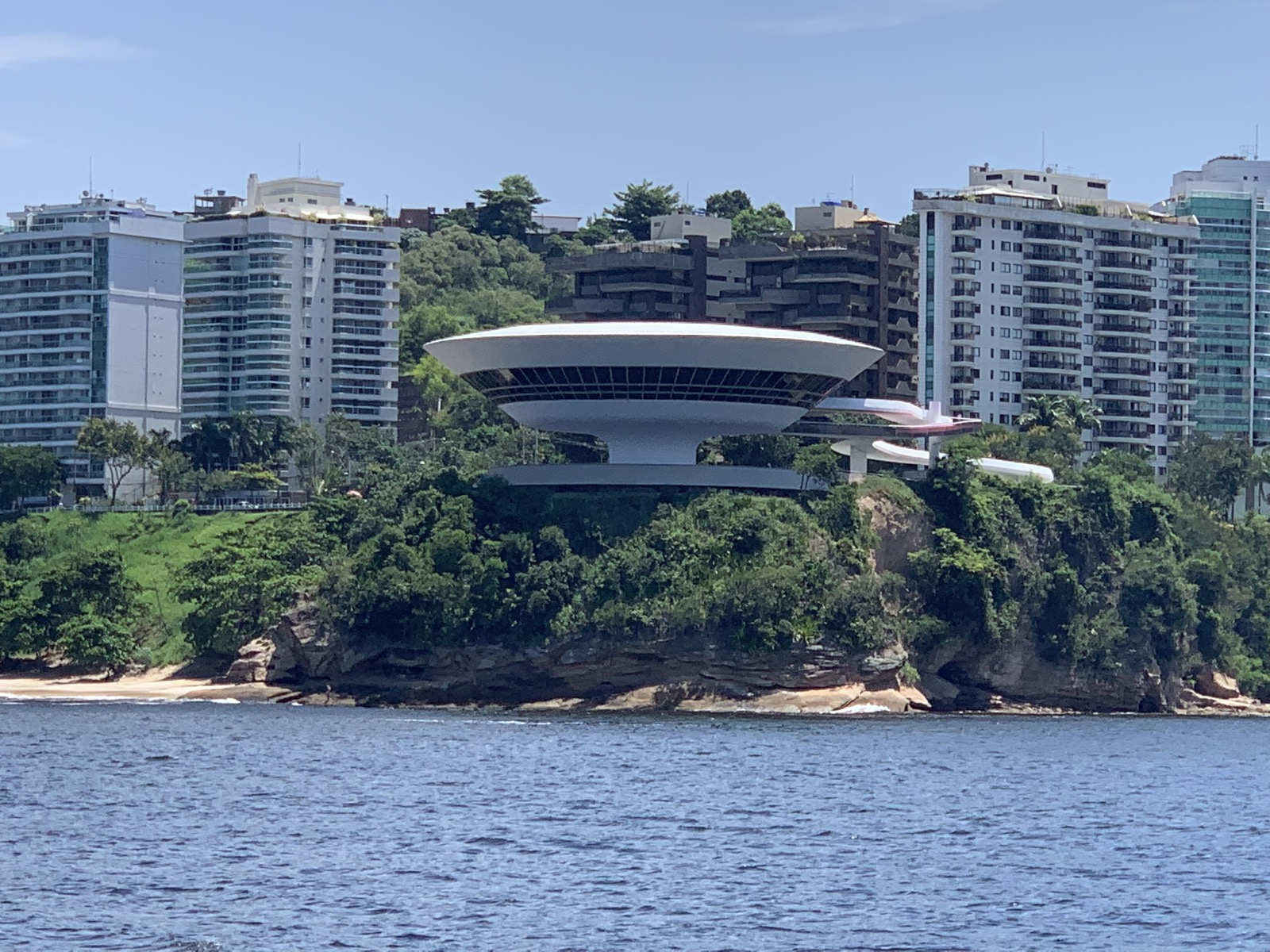
The Niterói Contemporary Art Museum — Oscar Niemeyer's iconic flying-saucer building — seen from the water as we sailed into the bay
Well, once again it turned out to be one of the best decision of our lives. We liked Rio and the company so much, that instead of staying just one week as scheduled, we stayed two weeks. The whole duration of the Carnival!
Seeing Rio for the first time from the ocean on a sailboat is a unique experience. We were coming from the south, so at day break we sailed along Leblon, Ipanema and Copacabana first, and when we got to the entrance of Guanabara bay we understood why the first explorers gave it the name of Rio de Janeiro: it really seems like the entrance of the mouth of a river!
The bay is surrounded by spectacular geographic features: The Sugar Loaf mountain, the Corcovado Peak and the hills of Tijuca. It is breath taking! Entering Rio by sea is just as spectacular as entering San Francisco and seeing the Golden Gate bridge for the first time. The bay well deserves to be one of the Seven Natural Wonders of the World!
According to some historians, the original name given by the exploration team to the bay was Ria de Janeiro "January's Lagoon", then a confusion took place between the word Ria (lagoon) and Rio (river). I can only imagine how beautiful this bay must have been until just a couple of centuries ago, when it was a breeding ground for whales.
Unfortunately, today it's heavily polluted by sewage, garbage and oil spins. More than 70% of the sewage from the 12+ million inhabitants of Rio de Janeiro flows untreated into the bay. A real environmental disaster for which the Brazilian government should really do something.
We took a berth in the Marina de Gloria, which is conveniently located near the neighborhood called Botafogo. It's a great marina, and when we arrived they were putting up a big screen to show the match between Barcellona and Real Madrid. Could there be a better way to welcome our Spanish friends? Of course we couldn't miss that match!
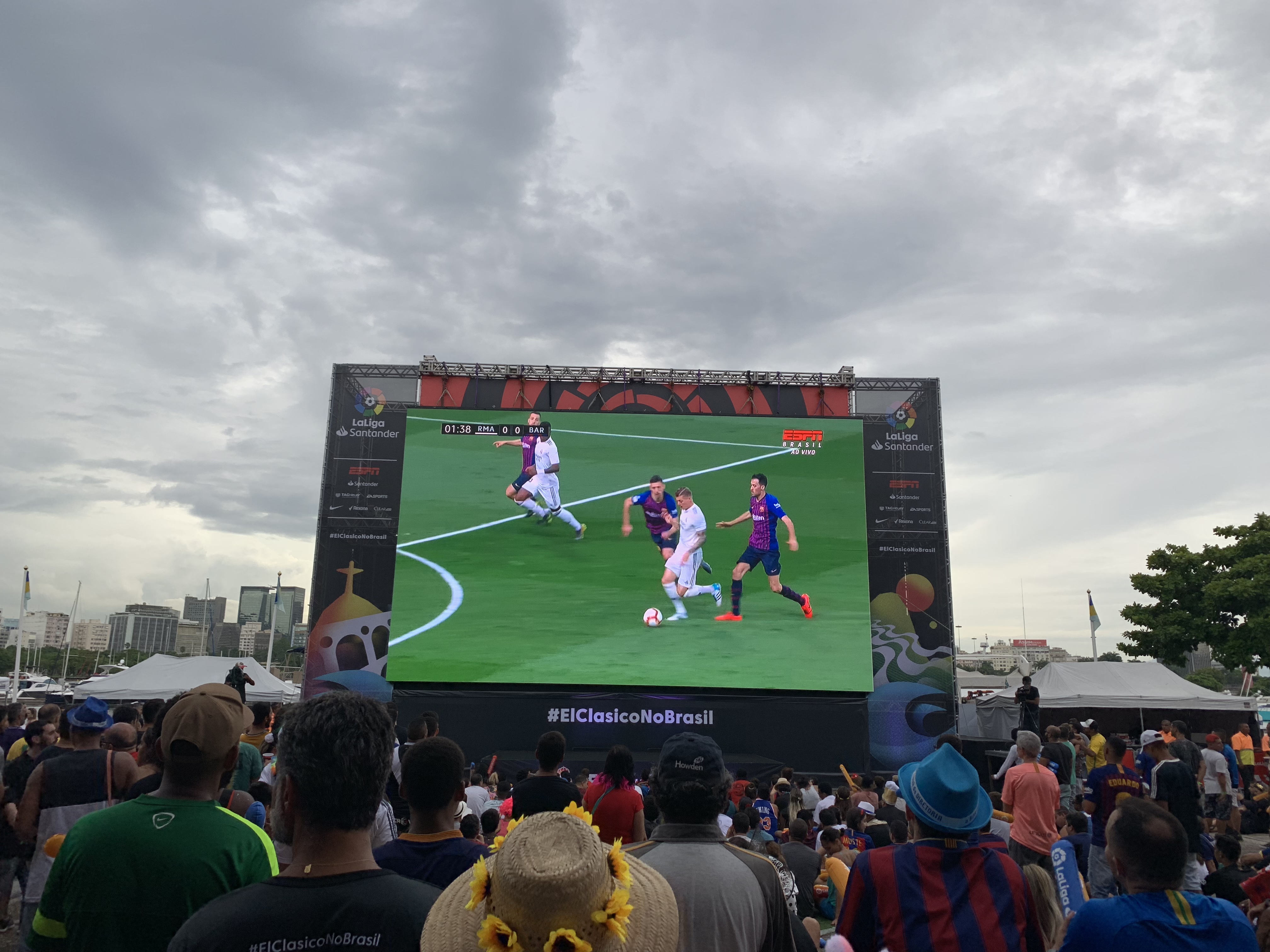
Watching Barcelona Vs Real Madrid in Brazil
From the Marina, a Uber to Ipanema or Copacabana was only a few dollars. We had a blast visiting Copacabana, Ipanema, the Christ on the Corcovado, the Pao de Azucar, the botanical garden and the old historic downtown.

Ipanema, Brazil
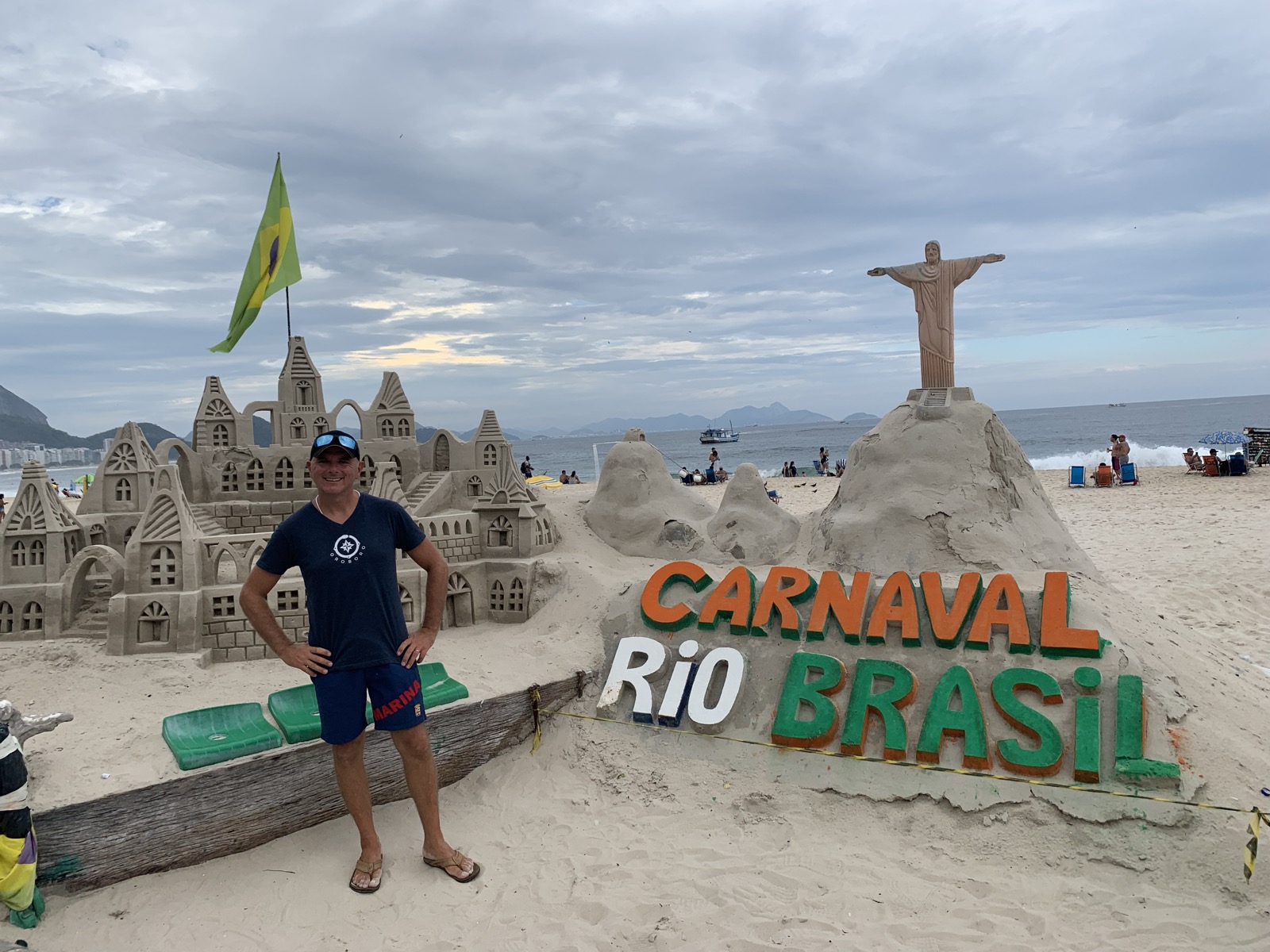
Carnival on the beach — a sand sculpture at Copacabana, with the famous crescent of beach and the Tijuca mountains behind
We did everything we wanted to, except one thing: We couldn't visit any museum because they were all closed for the Carnival! How crazy is this?
Oh well, we'll have to come back here again, once we start sailing north, so there's going to be another occasion to visit the museums!
The Carnival
My guide book for Brazil "Moon Handbooks" (not sure how I got that, probably someone gave it to me), warmly discourage tourists to attend the Carnival at the Sambadrome saying "it's hot, crowded, and there are unbearable lines for bad food, worse beer and filthy bathrooms. You're bound to sit next to loud and obnoxious people who through food and chain-smoke the entire time".
You can understand how I felt when Joaquin proposed to go to the Sambadrome. Once again, I'm glad we did, because it was far from what the guide book said, and we all had great time (and excellent Caipirinhas, by the way).

Carnival in Rio de Janeiro
An allegorical float rolling through the Sambódromo — each escola de samba performs its entire show on the move, pushing floats by hand through the avenue
The parade was spectacular, with very elaborated allegorical floats up to 9 meters high, pushed by hand, and each school performing a different theme-plot.
During the Carnival, the city of Rio is probably the safest city in the world. There is police everywhere 24/7! We never felt unsafe.
The Bloques
All the different neighborhoods in Rio organize their own carnival parties, called Bloque. The one that we enjoyed the most is called Sargento Pimiento: They play Beatles music with samba rhythm.
To know what's going on in the city, you simply download an app that tells you what Bloque is performing where and what time. Great stuff.
These Bloques cause quite a bit of traffic jam, because the whole neighborhood gets shut down, but nothing compared to Highway 101 going to San Francisco on a Friday afternoon. And since we were moving around with Uber, not a big deal.
And of course there are a lot of night clubs with live music in town.
We embraced Carnival fully — face paint on the docks, all-night Carnival lounges, and morning blocos where entire streets became dance floors.
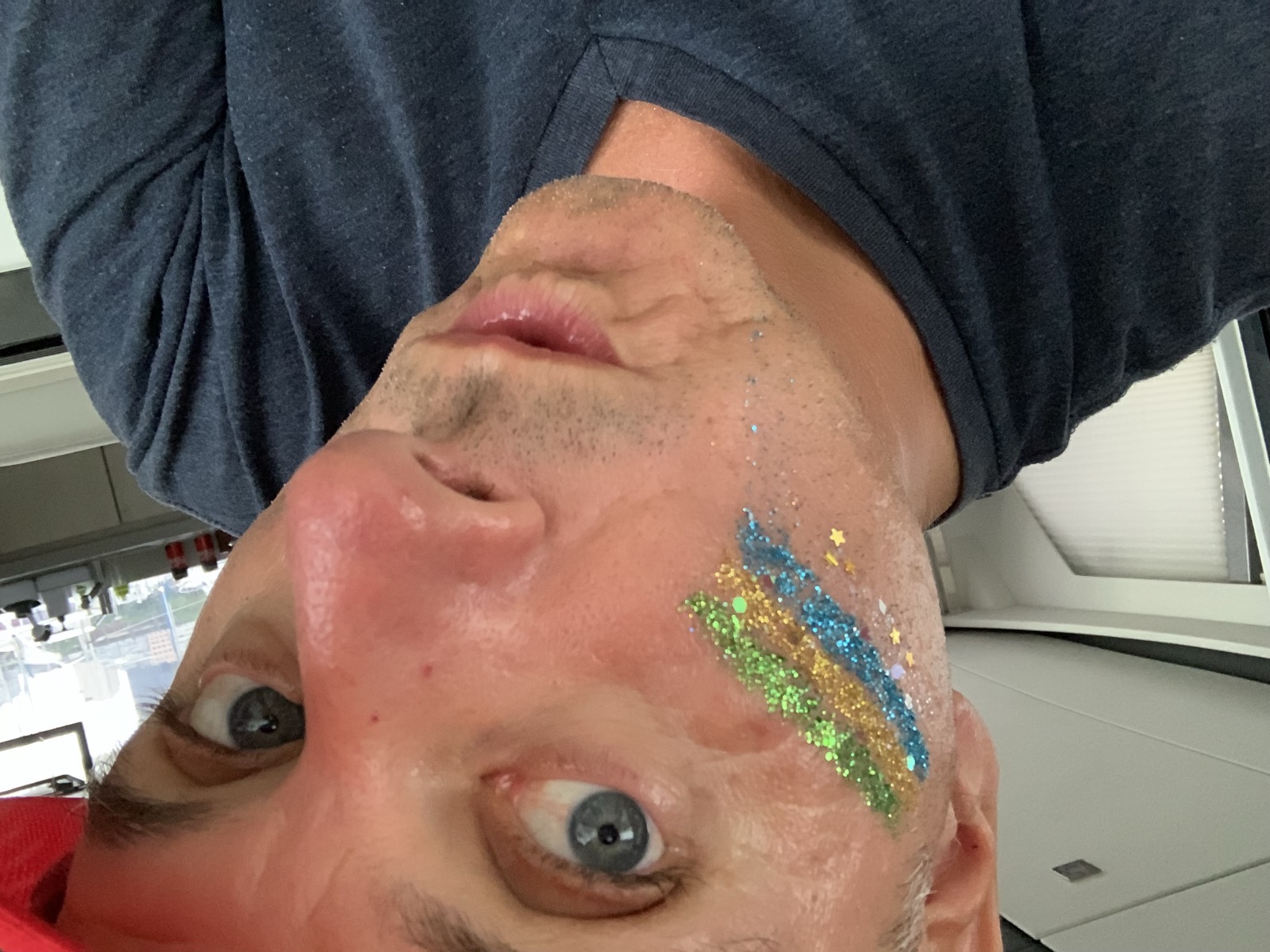
Carnival finds you everywhere — even back at the boat
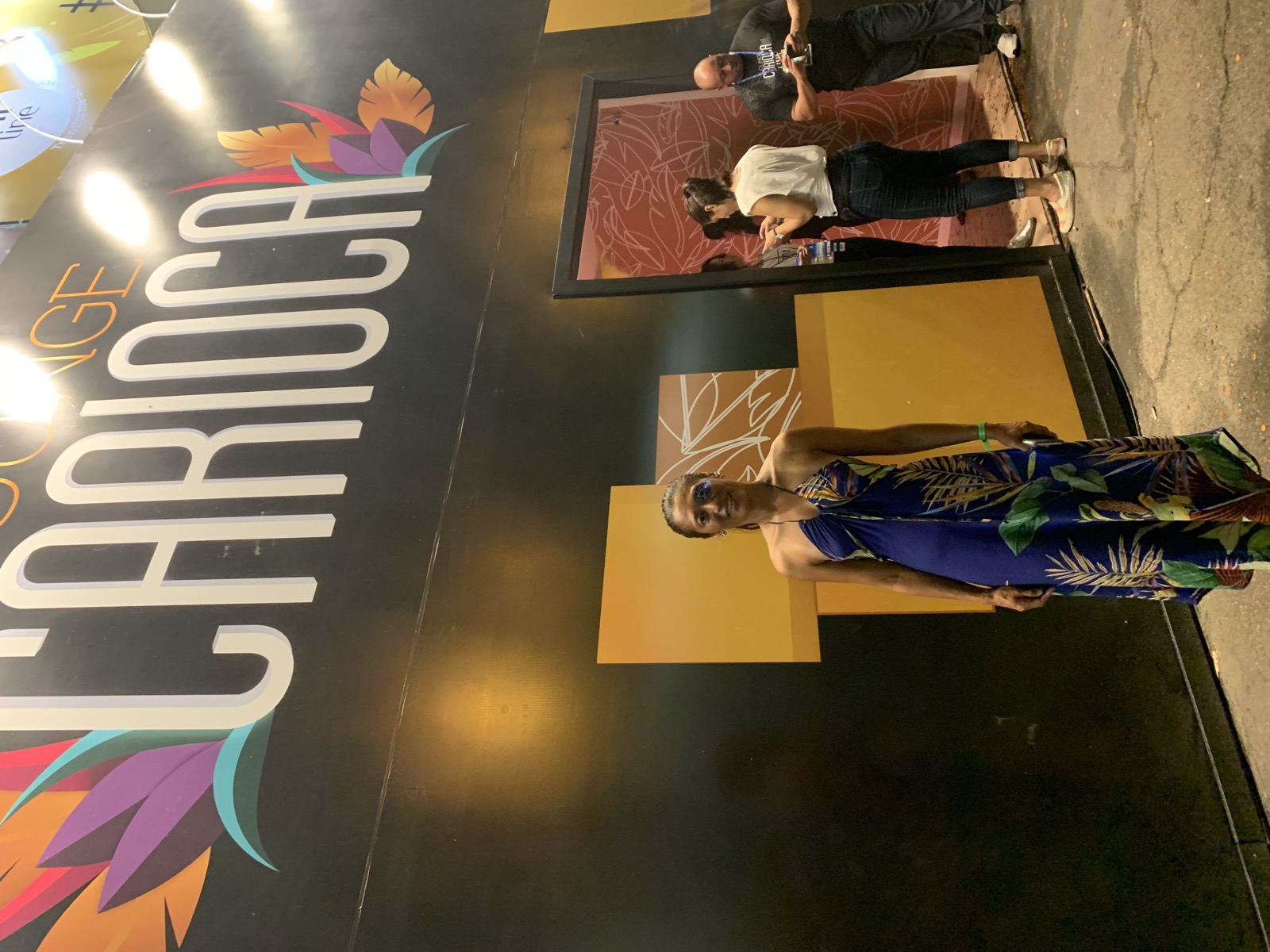
Yuka at the Lounge Carioca — one of Rio's dedicated Carnival venues, open through the night
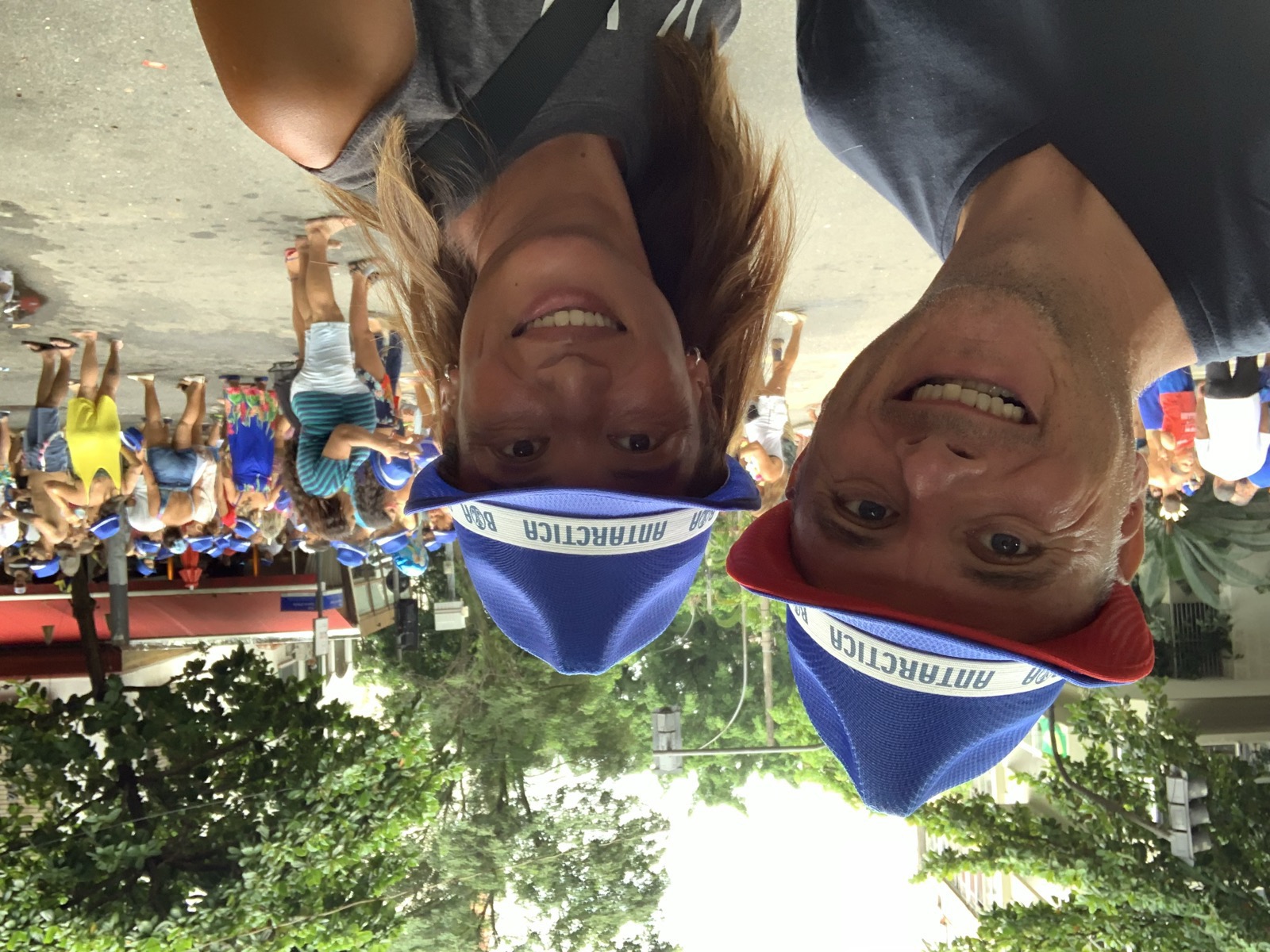
At a morning bloco with Antarctica beer hats — the sponsors handed them out at the bigger street parties
A bloco float moving through the streets — neighbourhood Carnival parties spread through every district of Rio during the weeks around Carnaval
The crowd at a street bloco — thousands of people dancing together, the whole neighbourhood transformed into an open-air dance floor
We had great time in Ipanema at night. Great food and great live music! The Picanha we had at the Garota de Ipanema was the best so far!
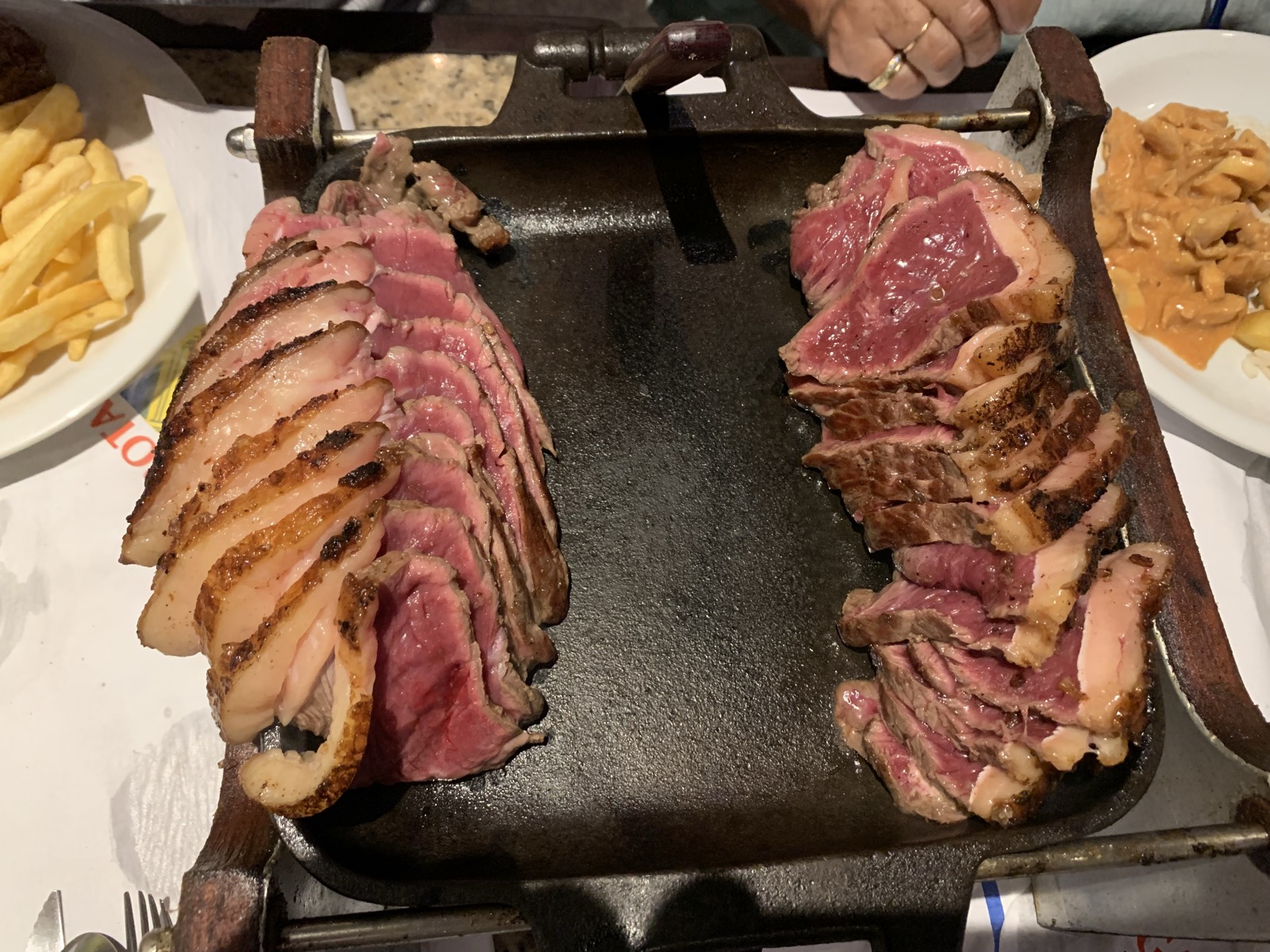
Picanha at a Rio churrascaria — Brazil's signature cut of beef, served on a skewer and carved tableside
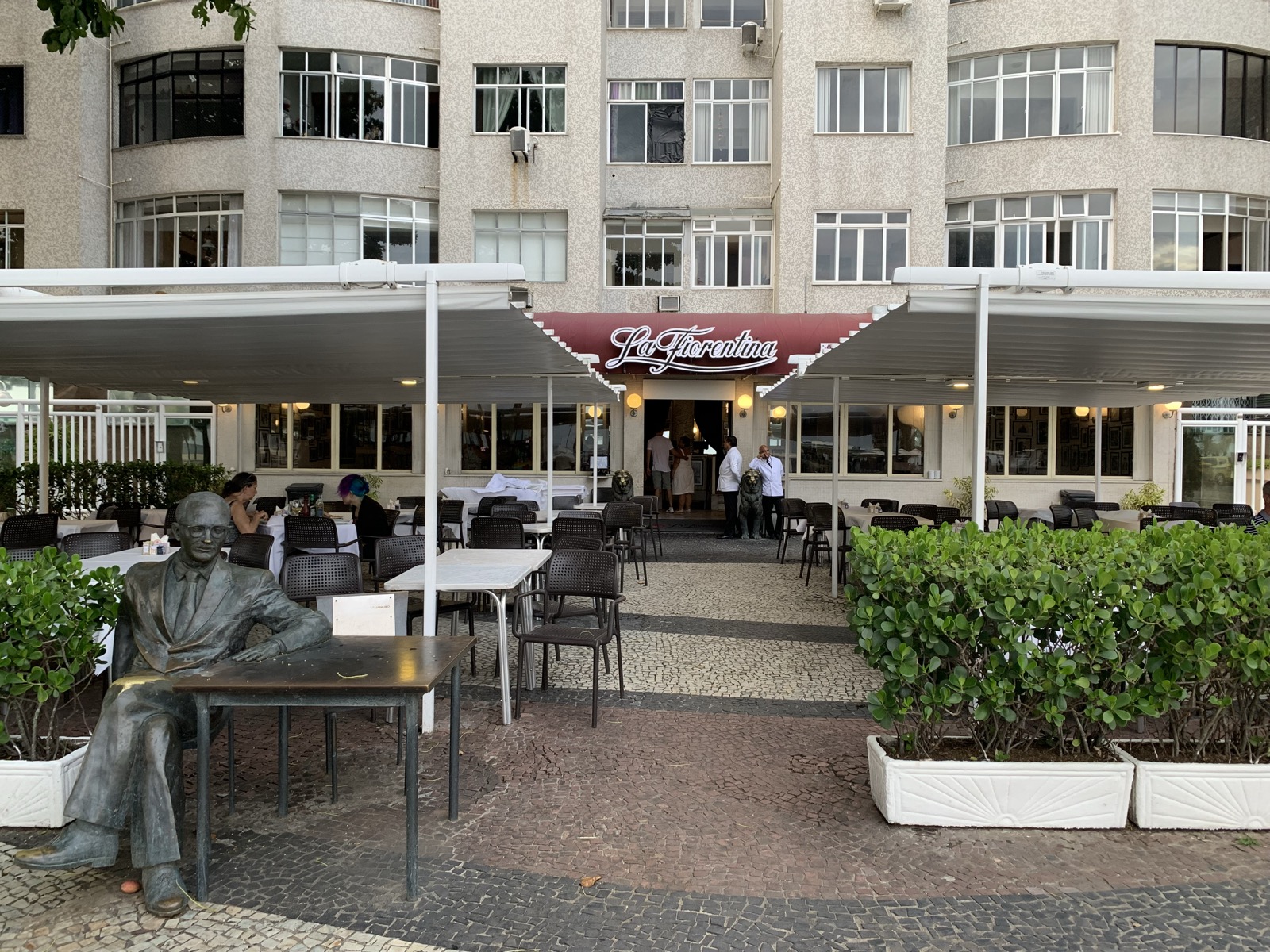
La Florentina on the Copacabana promenade — a Rio institution since 1954, with a bronze statue of the bossa nova poet Vinícius de Moraes at the entrance
Day Trips from Rio
With two full weeks in Rio, we had time to explore beyond the city. We made several remarkable day trips into the surrounding landscape.
Corcovado — the peak where Christ the Redeemer stands with his arms outstretched — is one of those things you have to see. A rack railway climbs through the Tijuca rainforest to the summit, where the whole geography of Rio unfolds below: favelas cascading down the hillsides, the Lagoa Rodrigo de Freitas glinting in the afternoon light, and Guanabara Bay stretching east. On the Pão de Açúcar you get the inverse: looking back from the summit, Copacabana curves in a perfect crescent, hemmed by granite mountains on one side and the open South Atlantic on the other.
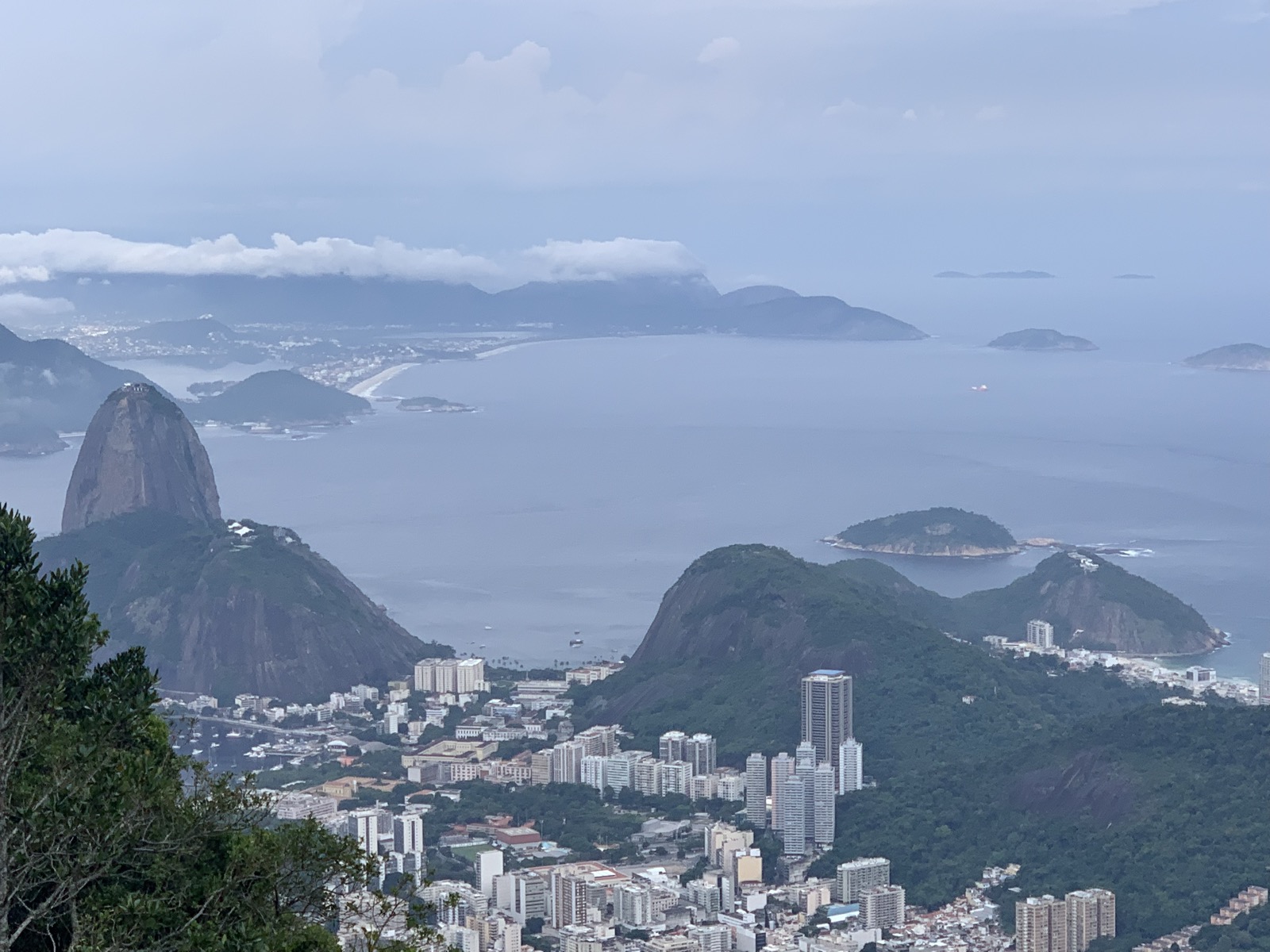
The view from Corcovado — the Pão de Açúcar rising above Botafogo Bay, with Niterói and Guanabara Bay stretching into the distance
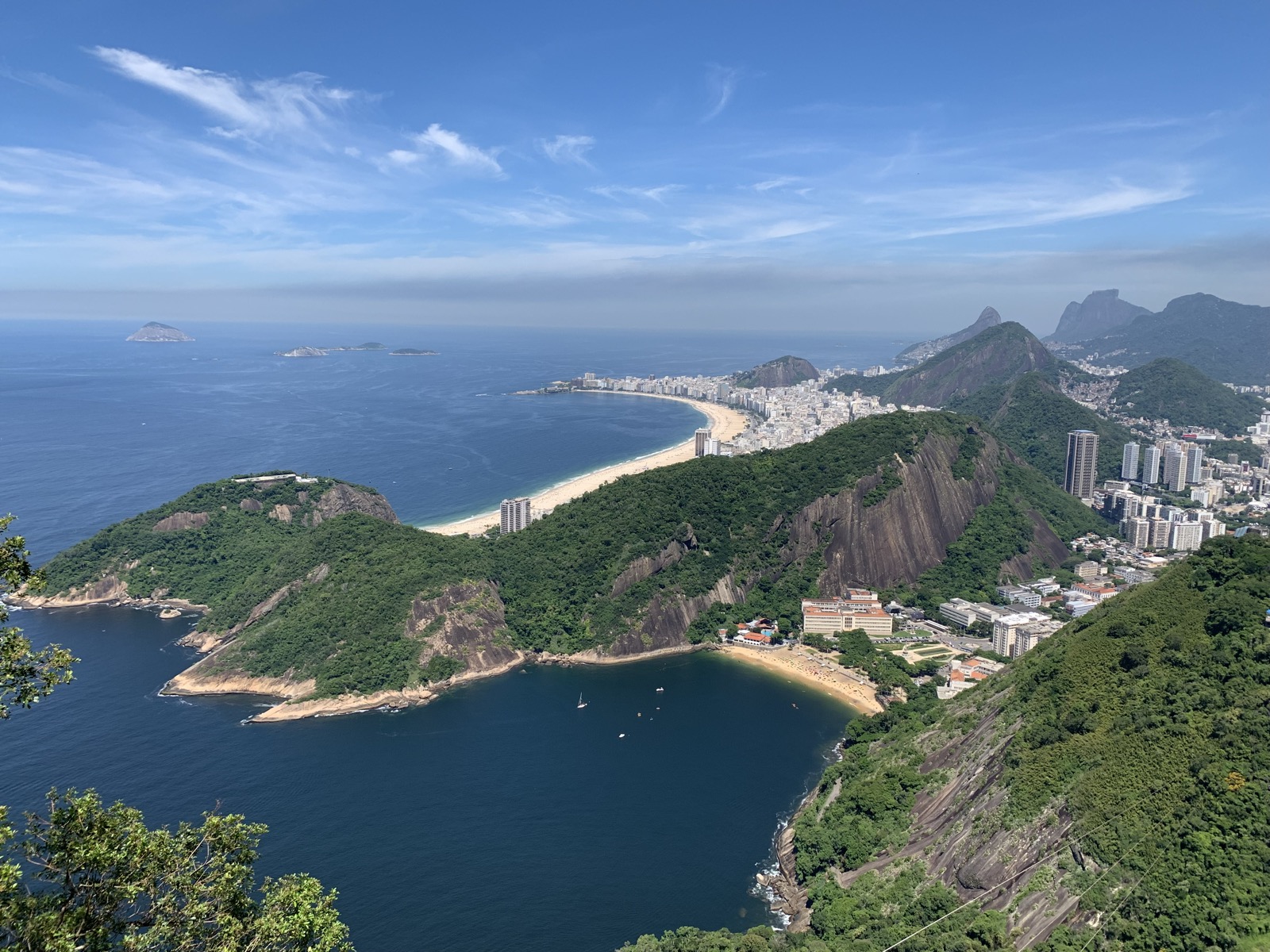
Copacabana from the Pão de Açúcar — the famous crescent of beach backed by the mountains of the Tijuca, one of the great views in the world
An hour north of Rio by car, winding up into the Serra da Mantiqueira, lies Petrópolis — the imperial mountain retreat where Emperor Pedro II spent his summers. The centrepiece is the Museu Imperial, a butter-yellow neoclassical palace set in formal gardens, now a museum of the Brazilian empire. Around it, Victorian-era chalets and European mansions cluster in the cool mountain air. A Gothic cathedral dominates the main square. It feels entirely unlike the Rio of the beaches and the samba — a reminder that Brazil has layers upon layers.
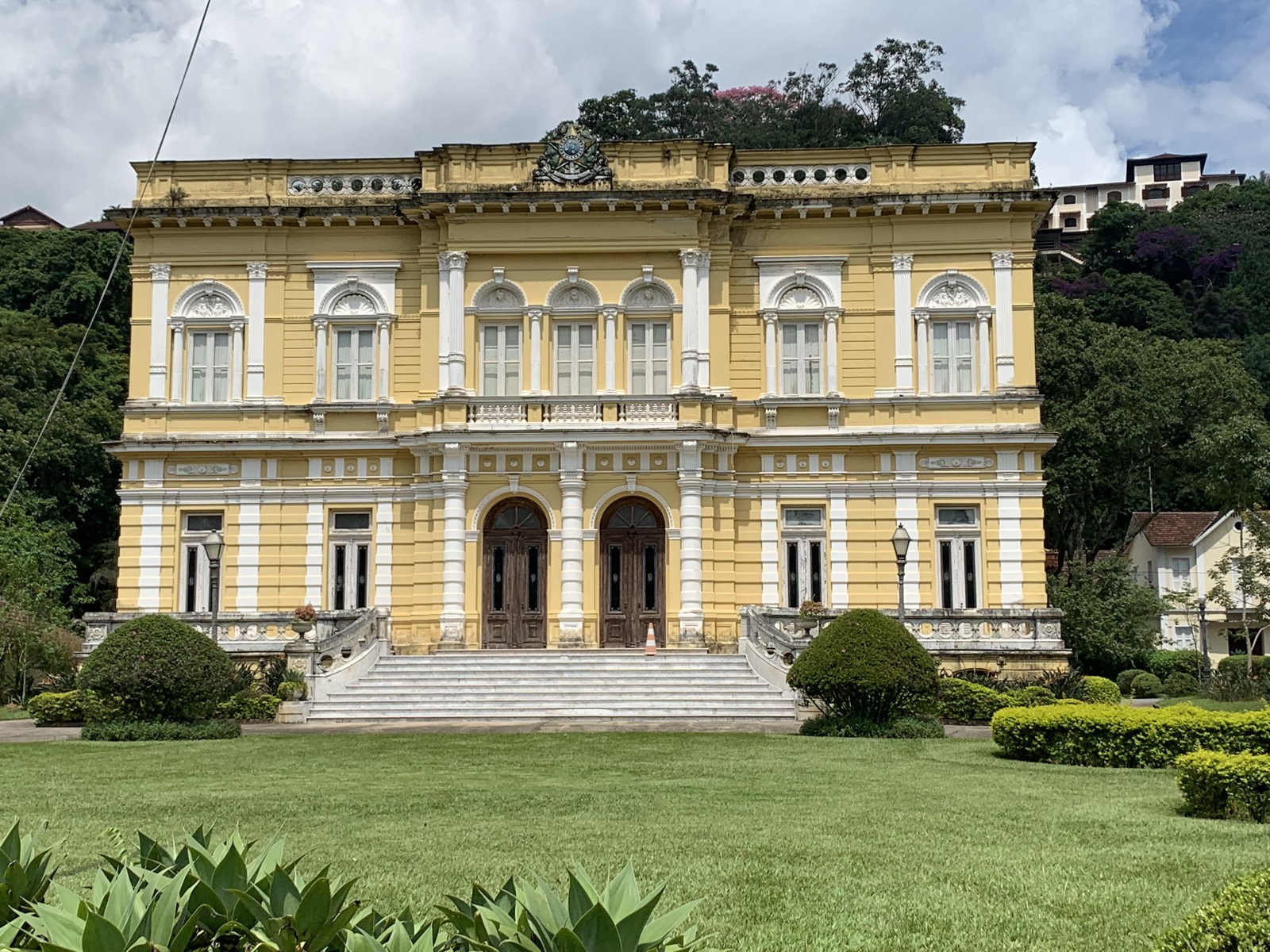
The Museu Imperial — the former summer palace of Emperor Pedro II, set in formal gardens in the mountain city of Petrópolis
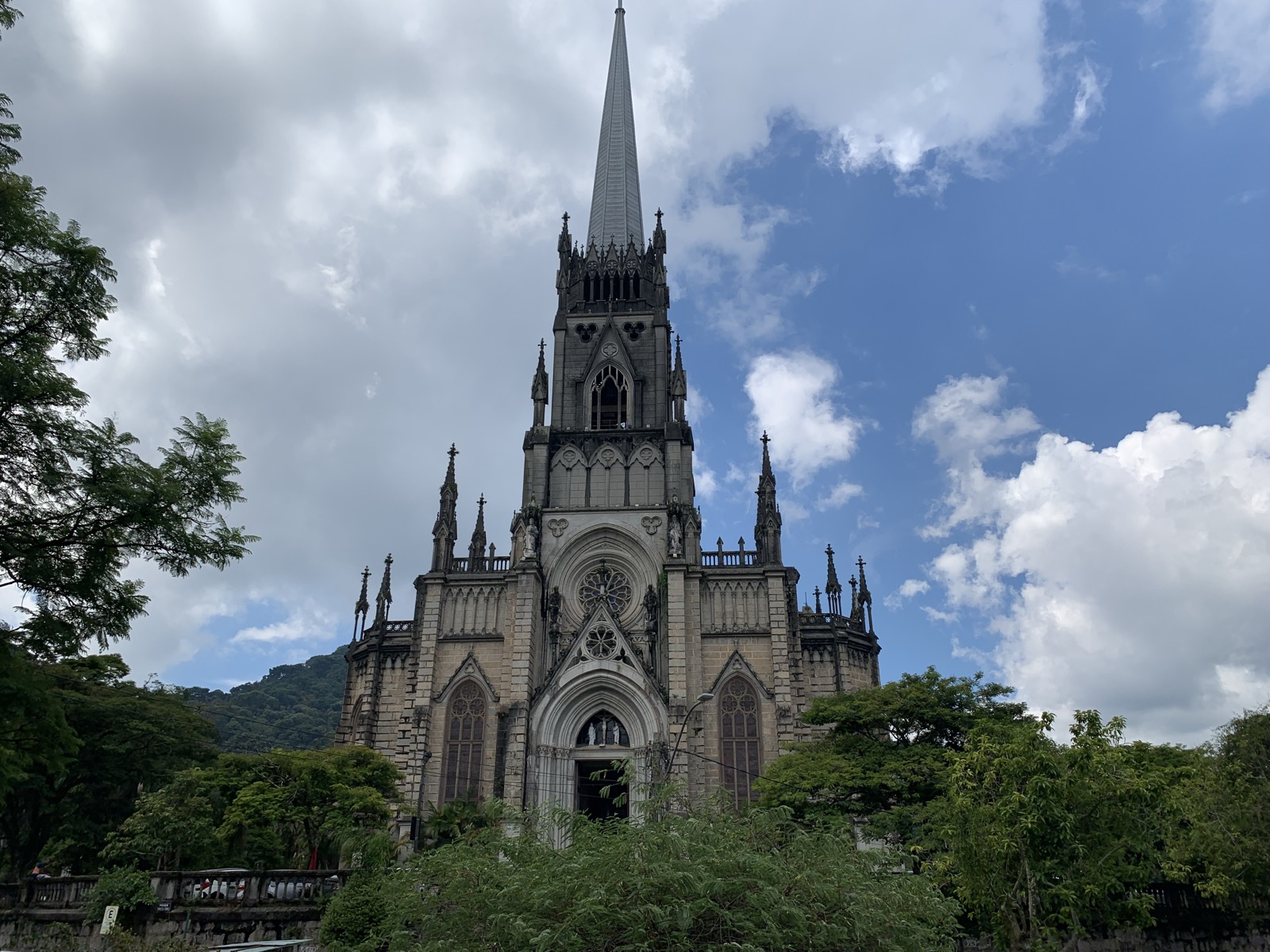
The Cathedral of São Pedro de Alcântara — a Gothic cathedral containing the tombs of the Brazilian imperial family
Ouro Preto is further — five hours into the mountains of Minas Gerais — and worth every kilometre. Once the richest city in the Americas, the source of the gold that funded the Portuguese crown through the 18th century, it is now a UNESCO World Heritage site and one of the most beautiful Baroque towns in the world. During Carnival, the cobblestone streets are strung with colourful streamers between whitewashed colonial facades, baroque churches loom at the top of every hill, and the whole city feels caught between history and celebration. We descended into one of the old gold mines, still open to visitors — a network of shafts and tunnels where men once worked in the dark for wealth that left the country by ship.
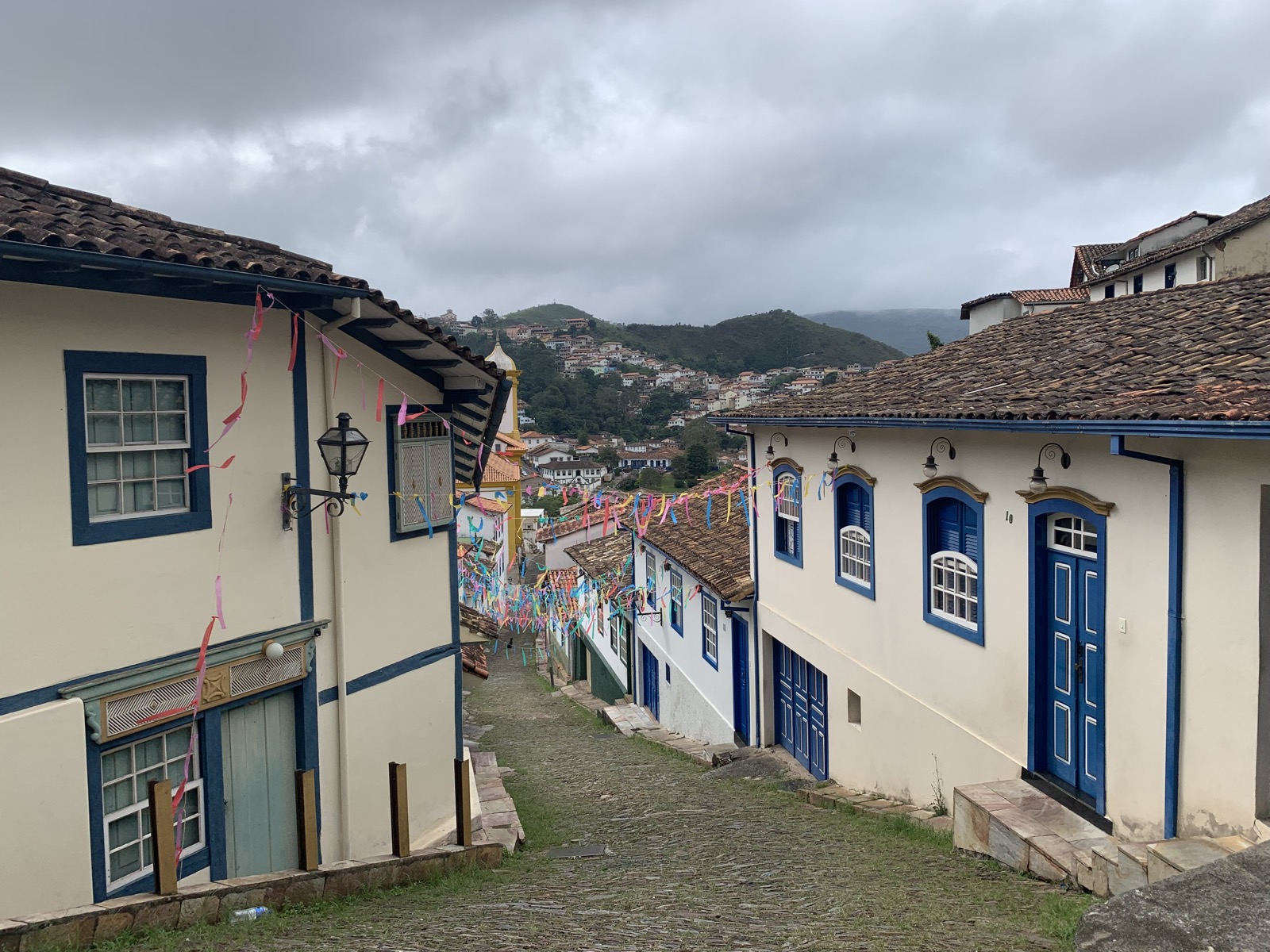
A cobblestone street in Ouro Preto during Carnival — colonial facades, baroque church towers, and Carnival streamers catching the grey sky
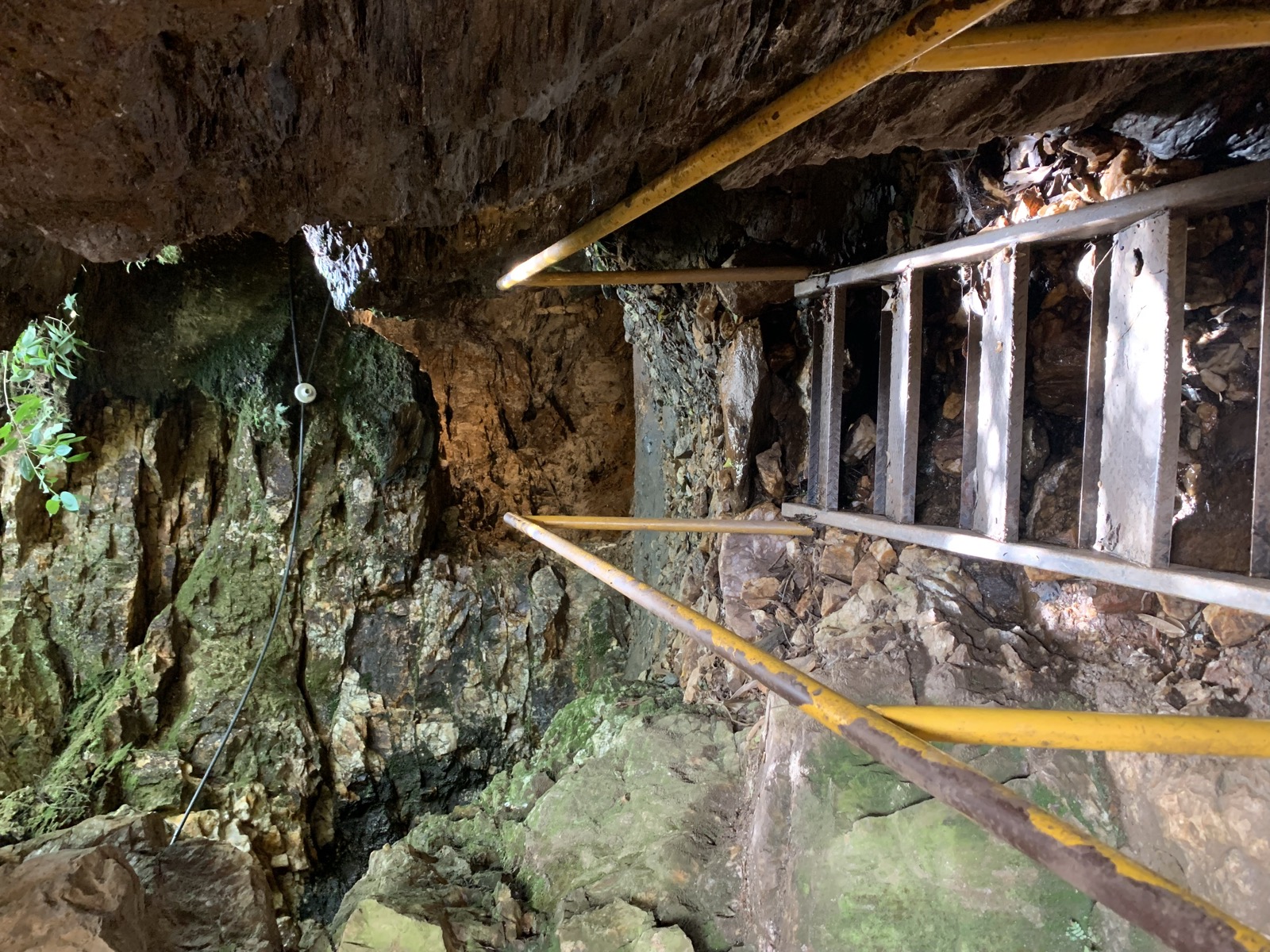
Inside one of Ouro Preto's historic gold mines — the shafts descend through solid rock into the mountain, still open to visitors
Inside the gold mine — tunnels carved by hand over centuries, extracting the ore that funded the Portuguese crown and made Ouro Preto the richest city in the Americas
Meeting Alex Thomson
One of the highlights of the trip to Rio is that one day, out of the blue, a beautiful boat quietly moored next to us. To our surprise, it was the Hugo Boss IMOCA Open 60 race yacht skippered by Alex Thomson! Exactly the one that finished second in the last Vendée Globe, the solo around the world race that takes place every four years!
Alex graciously agreed to have us visit the boat (which has just been sold to an undisclosed party). For me, it was a dream come true! I've followed last edition of the Vendée Globe very closely two years ago, when Alex arrived second because he damaged on of the foils.
The Vendée Globe is a 28,000 nautical miles course, and Armel Le Cléac's managed to finish it two years ago in only 74 days. The race instructions are simple: Depart Les Sables d'Olonne in France, leave Cape of Good Hope, Cape Leeywin and Cape HOrn to port, leave Antarctica to starboard and finish in Les Sables. More that 500 astronauts have been launched into space, fewer than 50 sailors have sailed solo, non-stop, around the world, without assistance. Alex is one of them! What an honor meeting him in person, casually, on the docks somewhere around the world...
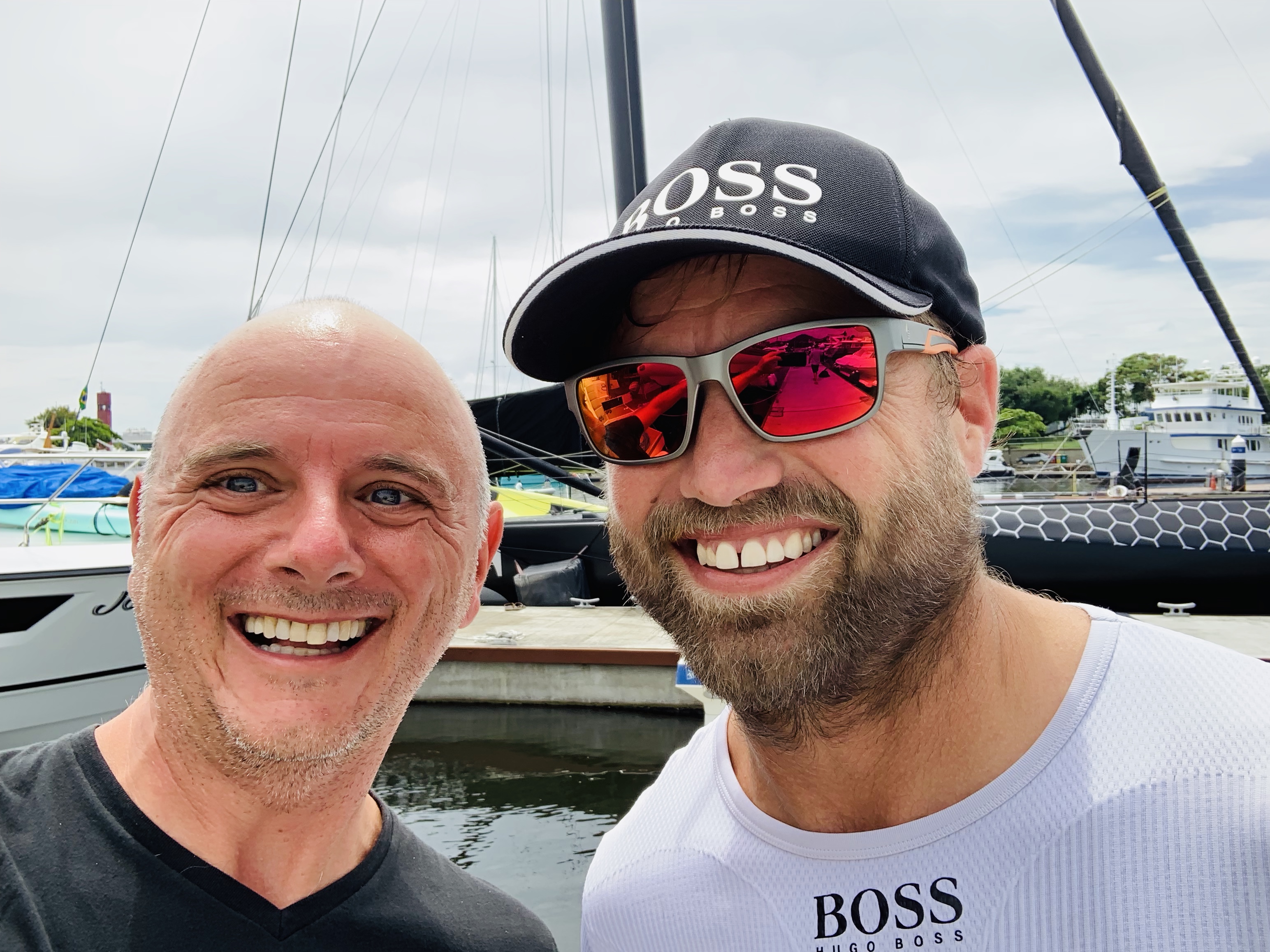
Selfie with Alex Thomson, Hugo Boss Open 60 skipper
After two weeks in Rio, we were tired but happy. It was time to go back. The sail back to Ilha Grande was a fantastic downwind sail.
We have an unfinished business in Rio. Visiting the museums. So we'll be back! And next time, on Oroboro!
We Came Back — Museu do Amanhã
We promised we would come back to visit the museums. We kept that promise, sailing into Rio again on Oroboro a few weeks later. The one place we hadn't wanted to miss was the Museu do Amanhã — the Museum of Tomorrow — Santiago Calatrava's spectacular white structure on the Praça Mauá waterfront, opened in 2015. From the water it looks like a ribbed shell unfolding into the bay. From inside it feels like a building designed to make you look up.
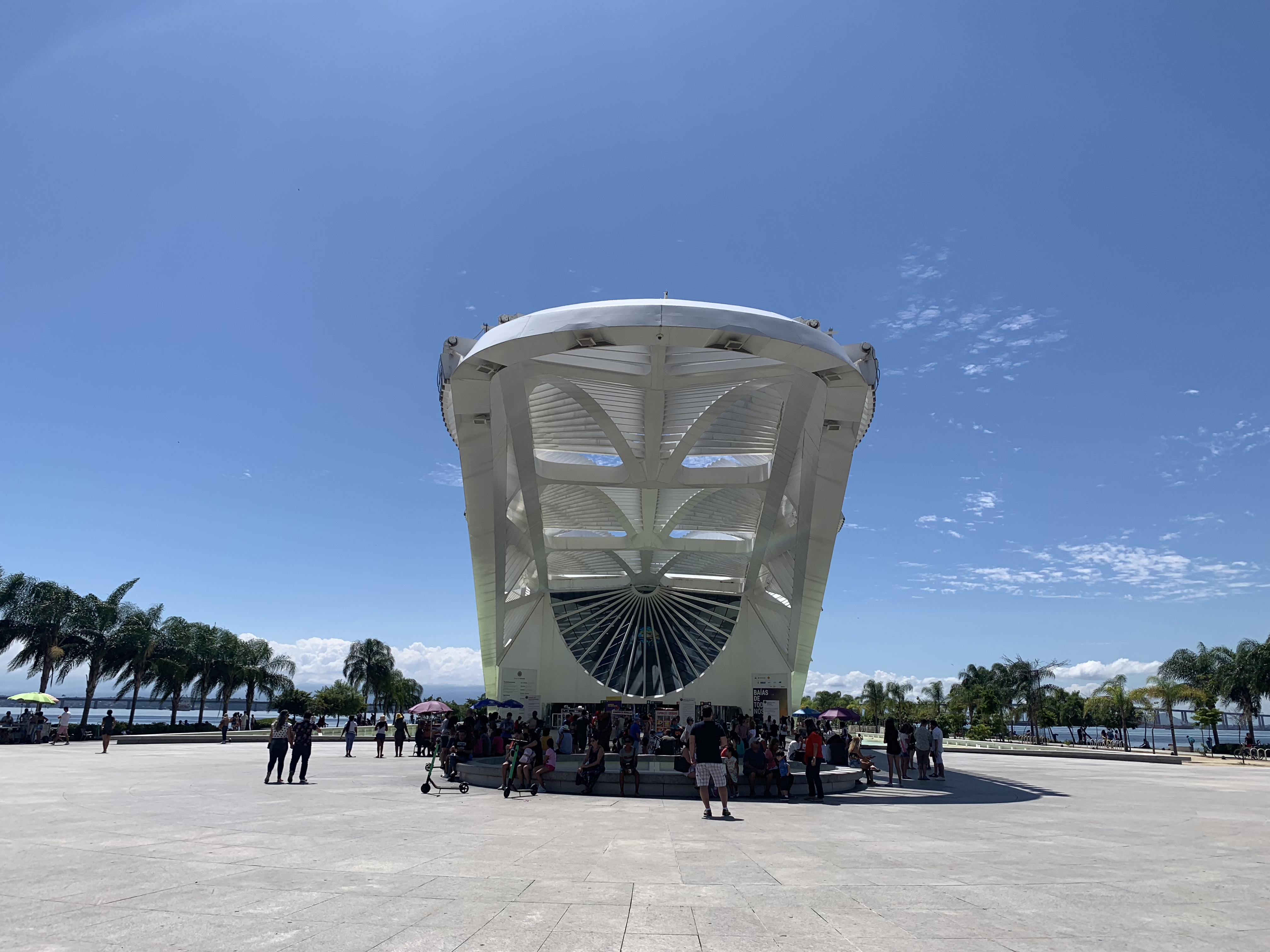
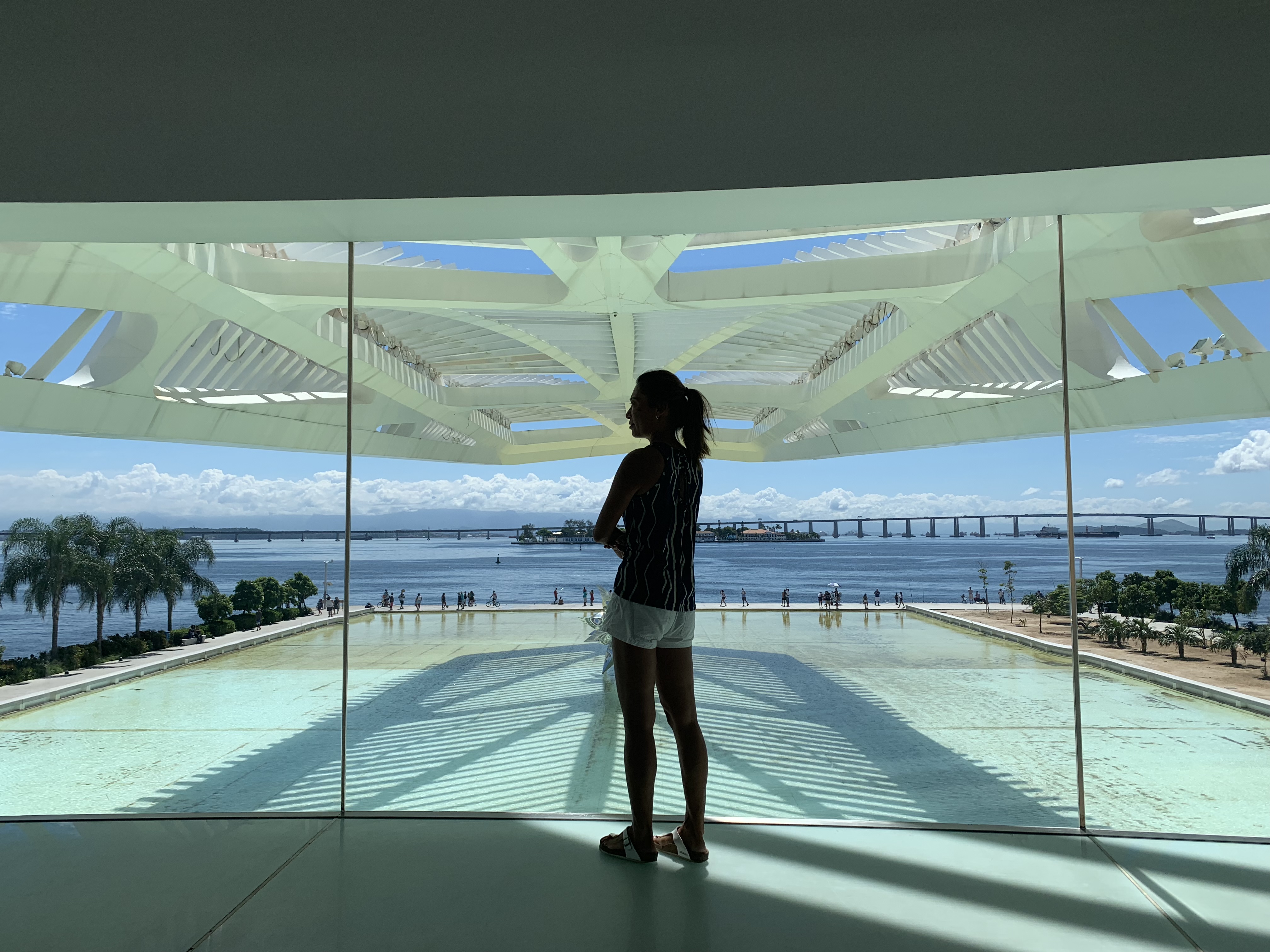
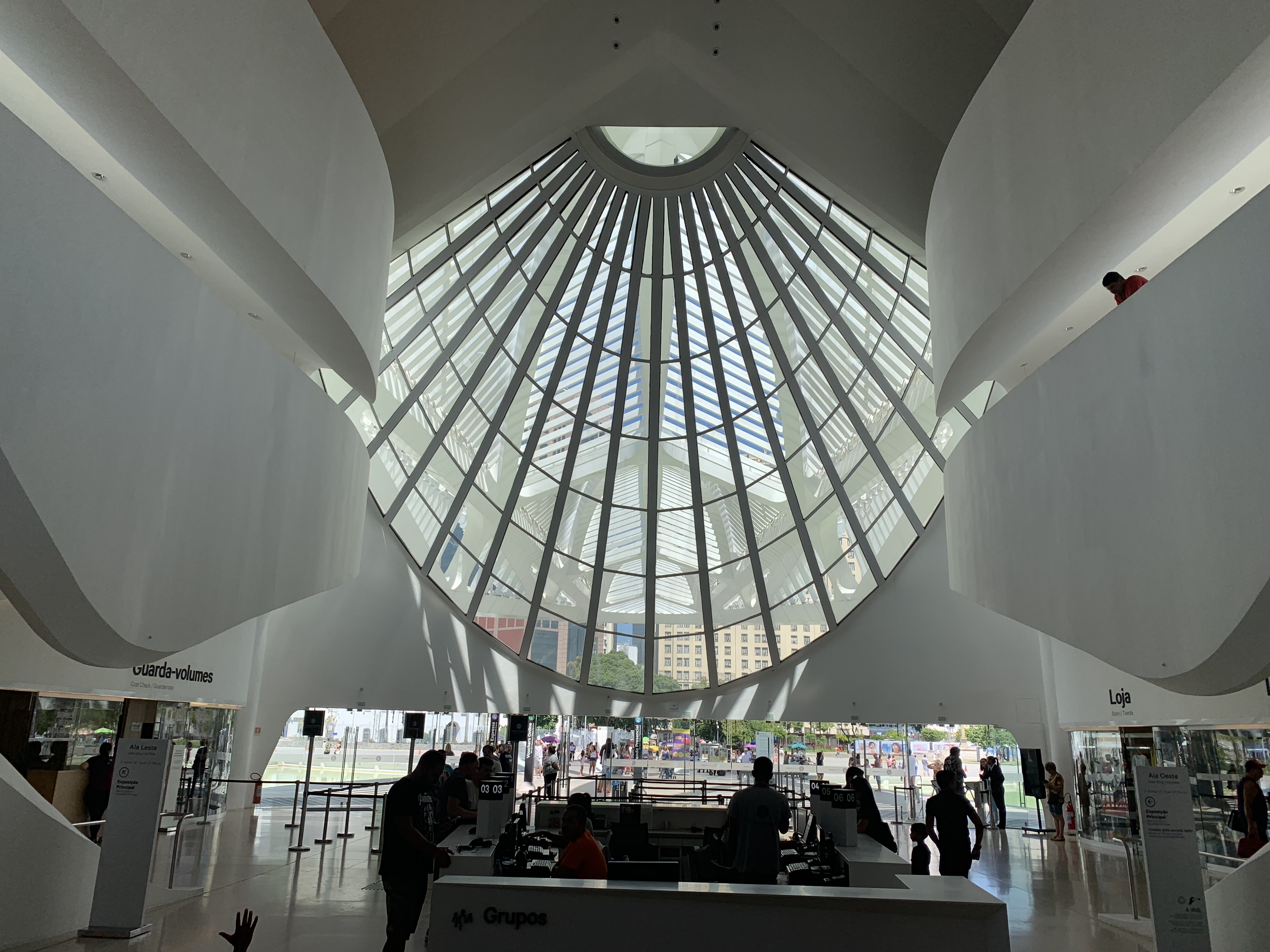
The museum itself is about humanity's future on the planet — the choices ahead — presented through immersive installations that shift between hopeful and sobering. We left thinking about it for days. Worth the trip back to Rio, and worth the extra weeks.